How the US Open 2026 Kept Arthur Ashe Running Through an $800 Million Transformation
The US Open 2026 welcomed spectators into an Arthur Ashe Stadium that was visibly changing. New courtside seating and luxury suites had opened, but the venue was still one year away from completing the largest redevelopment in tournament history. Familiar routes had changed, major improvements remained under construction, and the 2026 tournament attracted more than 1.2 million fans across Fan Week and the main draw.
The tournament could explain that transformation through maps, signs and pre-arrival information. The more difficult work began when people reached the grounds. First-time visitors needed help understanding a vast tennis campus, while returning spectators sometimes needed to forget what they already knew about the stadium.
That tension makes the tournament a useful event operations case study. Arthur Ashe did not need to resemble its completed 2027 version, but every part open to the public had to work convincingly in 2026. The success of that temporary configuration depended on whether guests could enter, navigate, confirm access and leave without carrying the construction project as part of their own mental workload.

Executive Summary
Arthur Ashe Stadium was operational throughout the 2026 tournament, although several circulation and hospitality improvements remained unfinished. The case demonstrates how US Open guest services, access knowledge and schedule-responsive staffing can make a changing venue feel complete during the period when guests are using it.
The US Open Opened Between Two Versions of Arthur Ashe Stadium
Arthur Ashe Stadium opened in 1997 and has since become a familiar part of the New York sporting calendar. For regular attendees, the stadium is more than a collection of numbered sections. They remember particular entrances, escalators, concourse turns, food locations and routes from the grounds to their seats.
The 2026 tournament disrupted some of that accumulated knowledge. The USTA was midway through an $800 million transformation of Arthur Ashe Stadium and the surrounding player facilities, described as the largest single investment in US Open history. The programme included a $250 million Player Performance Center and a three-phase stadium redevelopment scheduled for completion before the 2027 tournament.
The first construction phase took place before the 2025 US Open and concentrated largely on structural work. It reinforced the stadium to support later alterations and began the building that would eventually contain the Player Performance Center. Most of those changes remained behind the scenes, so the spectator experience stayed relatively familiar.
Phase two, completed between the 2025 and 2026 tournaments, was much more visible. The existing courtside and suite levels were removed and replaced, courtside seating increased from approximately 3,000 to 5,000, and two dedicated luxury-suite levels were introduced. The President’s Suite was also redesigned as part of the new hospitality configuration.
Several changes most likely to affect general movement remained scheduled for the third phase. These included a new grand entrance, a 40 percent larger promenade-level concourse, additional restrooms, upgraded retail and food areas, two new escalator sets and two new elevator banks at the south entrance. Detailed reporting on the Arthur Ashe Stadium redevelopment confirmed that spectators in 2026 would experience a functioning midpoint rather than the completed stadium.
The USTA planned the work so scheduled play and fan access could continue during the 2025 and 2026 tournaments. That was a significant construction and event-planning achievement, but “no interruption” does not mean “no change” from the visitor’s perspective. A building can remain open while the routes, reference points and access conditions inside it operate differently.
The central question is therefore more demanding than whether Arthur Ashe opened on time. The question is how the tournament converted an incomplete physical transformation into a complete event-day experience.
What Spectators Actually Encountered in 2026
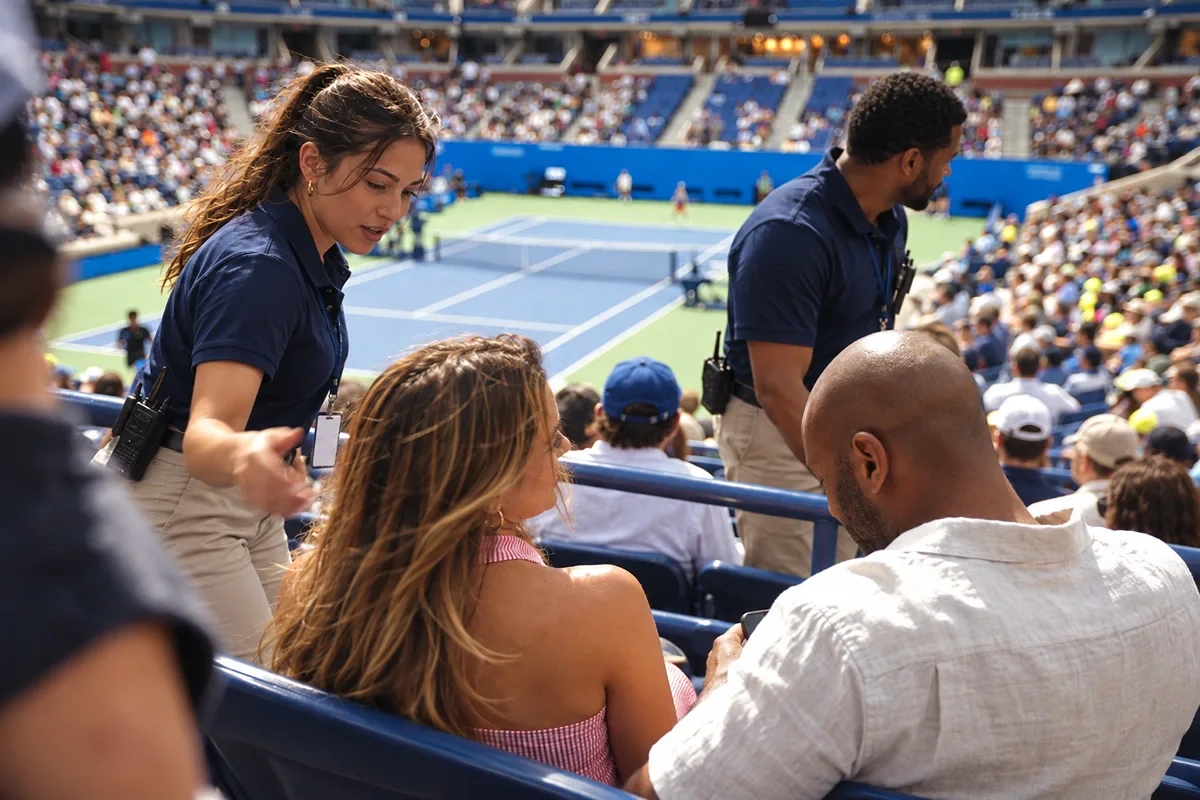
Guests entering Arthur Ashe during the tournament could see signs acknowledging the ongoing work. Reported messaging asked visitors to pardon the progress while the stadium was being reimagined, which established that the temporary condition was intentional and part of a larger programme.
That message could explain why the venue looked different, but it could not tell an individual spectator how to complete a particular journey. Someone looking for a seat, elevator, suite entrance or accessible route needed information specific to their location and entitlement. Construction messaging set expectations, while operational guidance determined whether the altered stadium remained usable.
The 2026 configuration also created an unusual mixture of completed and forthcoming improvements. Guests could experience the new courtside bowl and luxury-suite levels, yet the enlarged promenade, new entrance, additional vertical circulation and permanent clubs were still a year away. Some of the spaces generating new access demand had therefore arrived before all the infrastructure intended to support the final spectator journey.
This does not establish that the stadium failed to manage those journeys. It does, however, identify the pressure the temporary operating model had to absorb. Existing routes and teams had to support new seating and hospitality products while the completed circulation plan remained under development.
The distinction is important for anyone planning events through a venue renovation. Construction teams think in phases, completion dates and protected work areas. Guests think in immediate questions: Where do I enter? Can I use this route? How do I reach my seat? Does my ticket grant access here?
Good event operations translate the construction programme into answers that work at guest level. Visitors should not need to understand which phase delivered a suite level or when an elevator bank will open. They need accurate instructions for the building that exists on the day they attend.
Returning Fans Could Be Harder to Direct Than First-Time Visitors
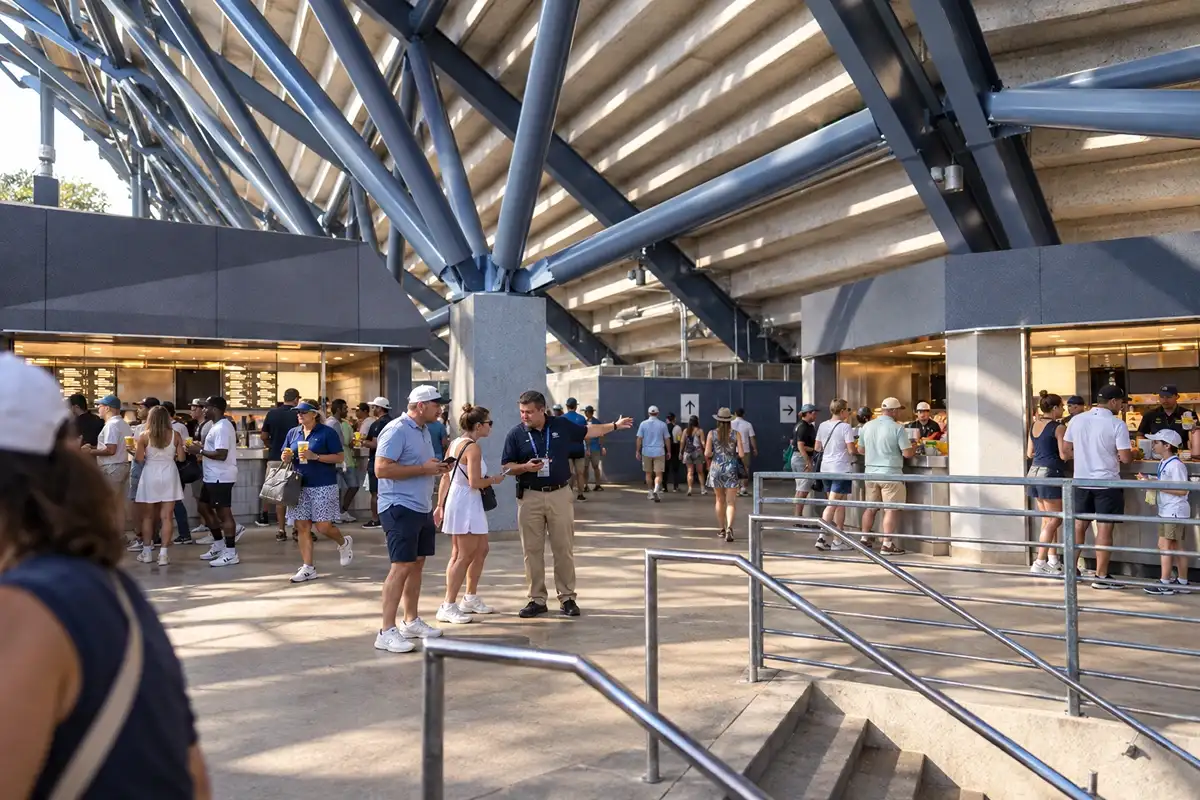
First-time visitors usually recognise that they need help. They may study the event map, approach a greeter or confirm their stadium route before committing to it. Their lack of familiarity makes them more likely to seek information early.
Returning spectators often behave with greater confidence. They remember where they entered last year, which concourse they used and how they reached a familiar seating level. That memory saves time when the venue stays consistent, but it creates a different problem when the environment changes.
The 2026 tournament therefore carried what can be described as familiarity debt. Every altered entrance, route or access point created a gap between what a returning visitor believed and what was now true. US Open guest services had to close that gap before old knowledge sent people too far in the wrong direction.
Confident mistakes tend to travel farther than uncertain ones. A first-time visitor may ask for help near the entrance, while a returning spectator can continue until a barrier, credential checkpoint or missing landmark finally proves that the remembered route no longer works. By that stage, the person may already have crossed a busy concourse or reached the wrong stadium level.
Timing increases the effect of the mistake. Someone arriving comfortably before play begins may accept a correction without concern, but a guest approaching the same obstacle minutes before the first point experiences the situation differently. The route has not become physically harder, yet the perceived cost of the mistake has increased.
This changes where assistance creates the most value. Teams positioned only at final checkpoints can correct errors after they occur. Teams positioned before decision points can prevent spectators from committing to unsuitable routes in the first place.
The content of the briefing matters as much as staff placement. “Direct guests to Arthur Ashe” is too broad when the stadium contains multiple seating levels, hospitality areas and access conditions. Staff need to know which parts of the journey have changed, where outdated assumptions commonly lead and what recovery route applies when someone has already gone wrong.
This is a useful lesson beyond the US Open. Venue changes should be briefed from the perspective of returning attendees, not solely through a list of newly opened features. Organisers should ask what regular visitors are likely to remember and identify where that memory will conflict with the current layout.
Fan Week Created Its Own Million-Scale Operating Challenge
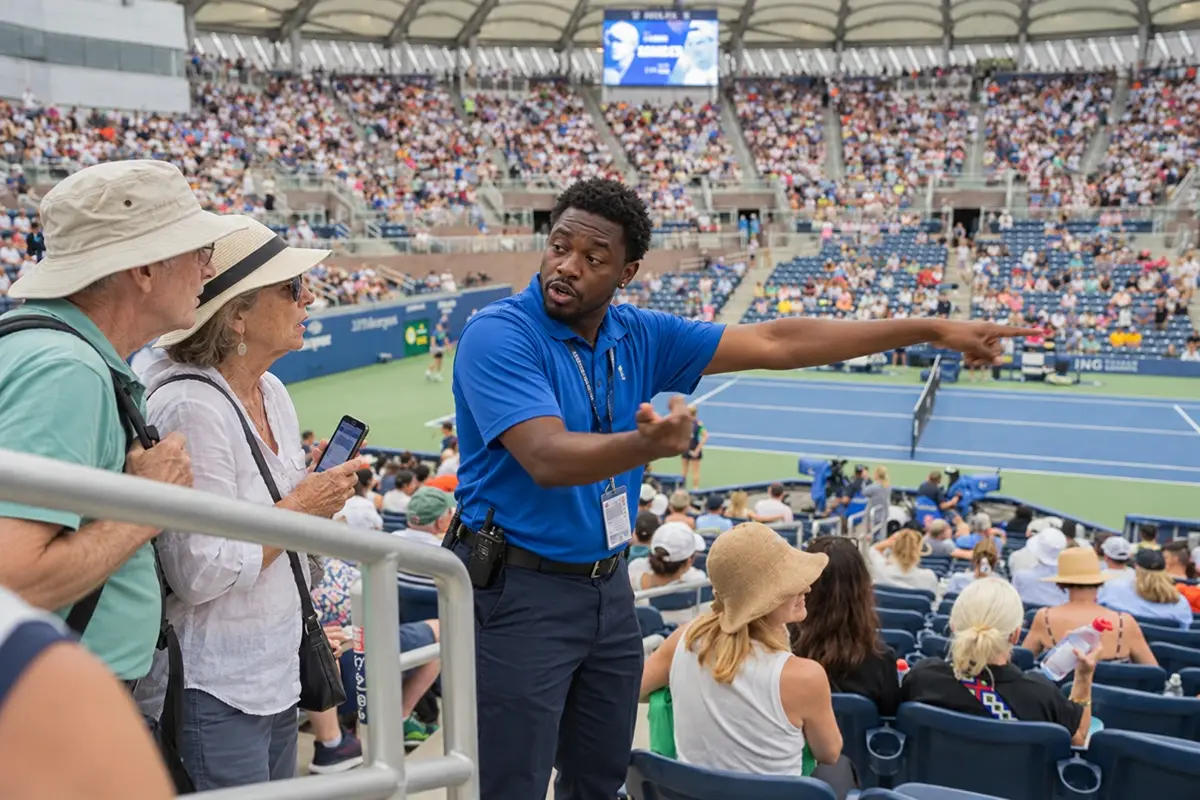
The US Open did not begin with the first round of the main draw. Fan Week occupied seven days and transformed the USTA Billie Jean King National Tennis Center into a largely free public programme combining qualifying matches, practices, entertainment, sponsor experiences and ticketed stadium events.
More than 300,000 people attended the 2026 US Open Fan Week. Fan Access Pass registrations increased by 66 percent from 2025, showing how strongly demand had grown before the main tournament began.
The programming was extensive. Visitors received access to nearly 2,500 hours of player practice, more than 30 stage performances, six live podcast productions and qualifying matches across the grounds. Sponsor giveaways and family activities added reasons to move between the sporting and entertainment parts of the site.
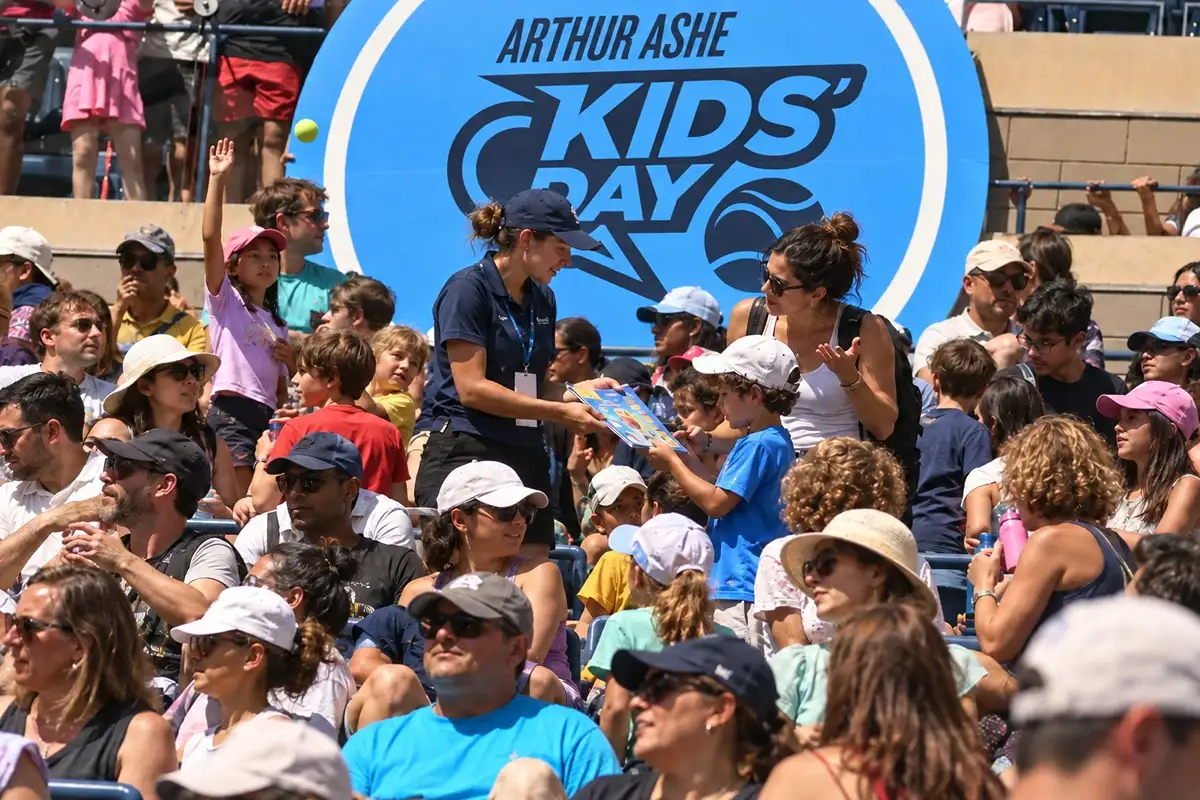
Arthur Ashe Kids’ Day attracted more than 54,000 people over 12 hours. That duration matters because it produces a different operating pattern from a stadium event with one defined start. Families could arrive, leave and move between activities throughout the day, causing crowd levels to change continuously rather than rise through one predictable entry wave.
The Marvel comic-book giveaway offers a smaller but revealing example. Organisers distributed 45,000 free copies during Fan Week, including five limited covers linked to New York’s boroughs. An item intended to create engagement could also create early arrival, repeat interest and queues around specific distribution points.
These examples show why free access should not be confused with operational simplicity. Removing a general admission charge can encourage discovery and flexible arrival, but it does not remove capacity limits, destination urgency or the need for accurate information. Guests may plan less rigidly while still caring deeply about one practice, giveaway or performance.
Fan Week also included separately ticketed events inside Arthur Ashe Stadium. The Mixed Doubles Championship, Roger Federer exhibition and Stars of the Open drew sellout crowds, creating controlled stadium admission within a wider programme promoted around free access.
That combination changed the meaning of a basic question such as “Can I go inside?” A visitor could have valid access to the grounds while lacking the ticket required for a particular stadium programme. Another guest may have registered for Fan Week but still need help understanding where free access ended and reserved admission began.
Frontline teams therefore needed to establish what the visitor meant before answering. Were they asking about the tennis center, a practice court, a Fan Week stage event or Arthur Ashe Stadium? Each destination could involve a different condition even though all were presented within the same event week.
This is also where crowd planning moves beyond headcount. The OSHA crowd-management guidance recommends advance planning, trained personnel, clear communication, managed entry areas and protected exit routes when large groups are expected. The document was written for crowded retail events rather than tennis tournaments, so it should not be presented as US Open-specific regulation, but its principles remain relevant when free products and limited experiences draw people toward the same point.
The Main Draw Changed the Rules Without Changing the Site
The arrival of the main draw shifted the operating rhythm. Visitors increasingly arrived around defined sessions, specific matches, reserved seats and stronger access controls. Discovery remained part of the experience, but the consequences of missing a route or misunderstanding a ticket became more significant.
A Fan Week visitor could abandon one activity and choose another with relatively little loss. A main-draw spectator who reached the wrong stadium entrance shortly before a scheduled match had fewer equivalent alternatives. Their ticket and emotional investment were attached to a particular time and place.
The same physical campus was therefore supporting two different relationships with time. Fan Week encouraged people to explore, pause and change direction. The main draw placed more visitors on journeys with deadlines, reserved destinations and limited opportunities to recover from delay.
Staffing requirements should respond to that change rather than treating all tournament days as scaled versions of one model. The skills used to welcome a family exploring free programming overlap with those used to guide a reserved-seat spectator, but the urgency and information required are different.
The transition also affected how queues should be interpreted. A Fan Week line may have formed around a giveaway or open practice with flexible participation. A main-draw queue could lead to security, a stadium gate, a premium entrance or a ticket-resolution point. Directing guests based on the appearance of the line would be risky because visually similar queues could lead to entirely different outcomes.
Effective US Open event operations depended on identifying purpose early. Staff needed to establish what the guest held, what they were trying to reach and how much time remained before giving directions. That short conversation could prevent a visitor from joining a plausible-looking queue that did not serve their journey.

Premium Hospitality Redrew the Access Map
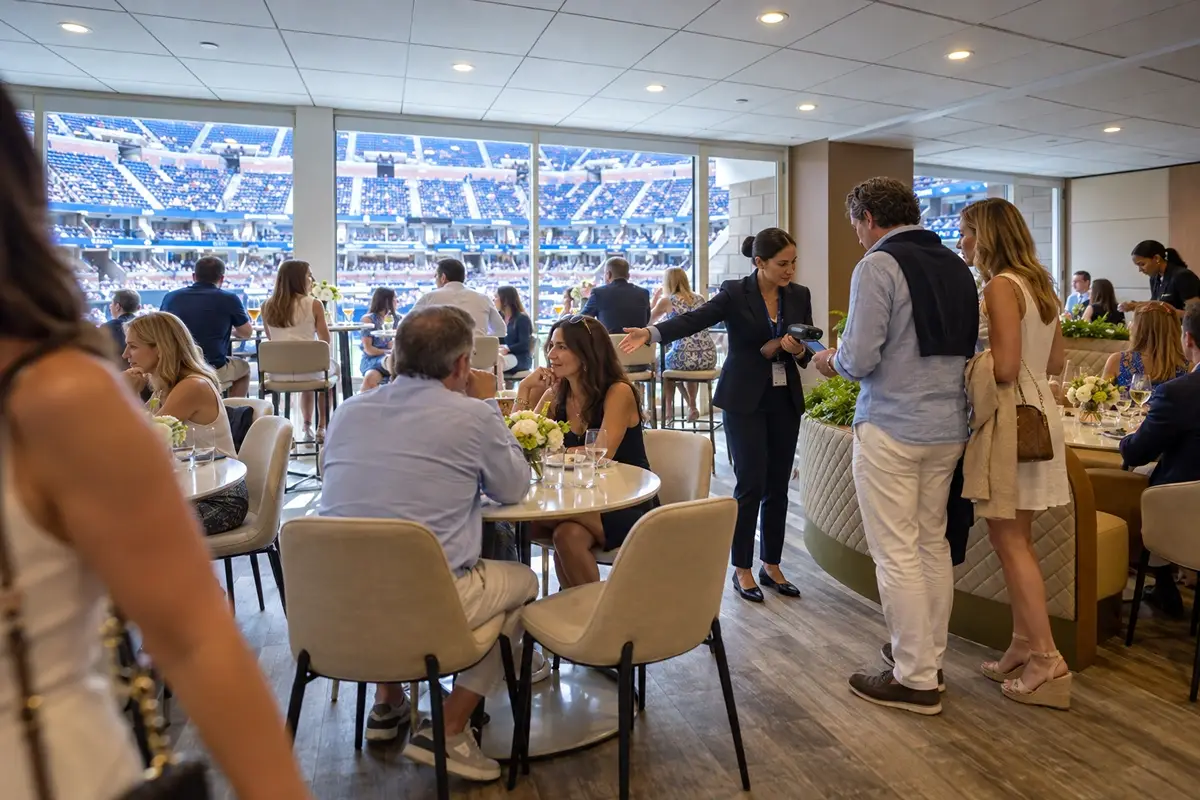
The 2026 stadium changes were closely connected with the growth of premium hospitality. Arthur Ashe introduced two dedicated luxury-suite levels, increased its courtside seating from approximately 3,000 to 5,000 and unveiled a redesigned President’s Suite. Permanent clubs and further hospitality spaces remained scheduled for the final construction phase.
These additions changed more than the appearance of the lower bowl. Every new seating and hospitality product created another access condition that had to be understood at entrances, elevators, concourses and restricted checkpoints.
A grounds pass, reserved stadium ticket, courtside seat, suite invitation, sponsor credential and working accreditation can all be valid while granting different permissions. Confusion develops when general entry is mistaken for access to a restricted area or when someone is directed toward a checkpoint that cannot process their credential.
The tournament’s own recruitment material shows how the US Open separated these responsibilities. Published event-services roles included guest services team members, guest-access supervisors and premium-seating coordinators. Its hospitality recruitment separately covered the President’s Suite, Premier Suite and concierge functions, while other categories supported facilities, credentials, technology and player services.
This is valuable evidence because it confirms that the tournament required differentiated teams. The staffing structure described publicly was based on distinct responsibilities rather than one large group expected to handle every interaction.
The distinction becomes more important when premium spaces are new. Guests may not know which entrance or level applies, and even returning suite visitors may be learning a different route. Sponsor representatives can also arrive with clients whose access needs to be confirmed without creating discomfort at the checkpoint.
Premium service begins well before refreshments or lounge hospitality. It begins when the first person approached understands the guest’s access and can provide a confident route. A polished interior cannot repair an arrival experience in which guests are repeatedly redirected because nobody recognises where they belong.
Public and premium journeys also share parts of the same venue. Suite guests still pass through the broader transport environment, security perimeter and sections of the grounds. The operation must preserve restricted access without making the public route feel secondary or allowing premium arrivals to disrupt general movement.
The commercial direction of the transformation is well documented. The Financial Times reported on the shift toward premium sales, while a detailed examination of Arthur Ashe’s hospitality expansion described the new suite levels and the permanent clubs due to open in 2027. These changes help explain why access knowledge had become an increasingly important part of the stadium experience.
Free Entry and Premium Access Pulled the Event in Two Directions
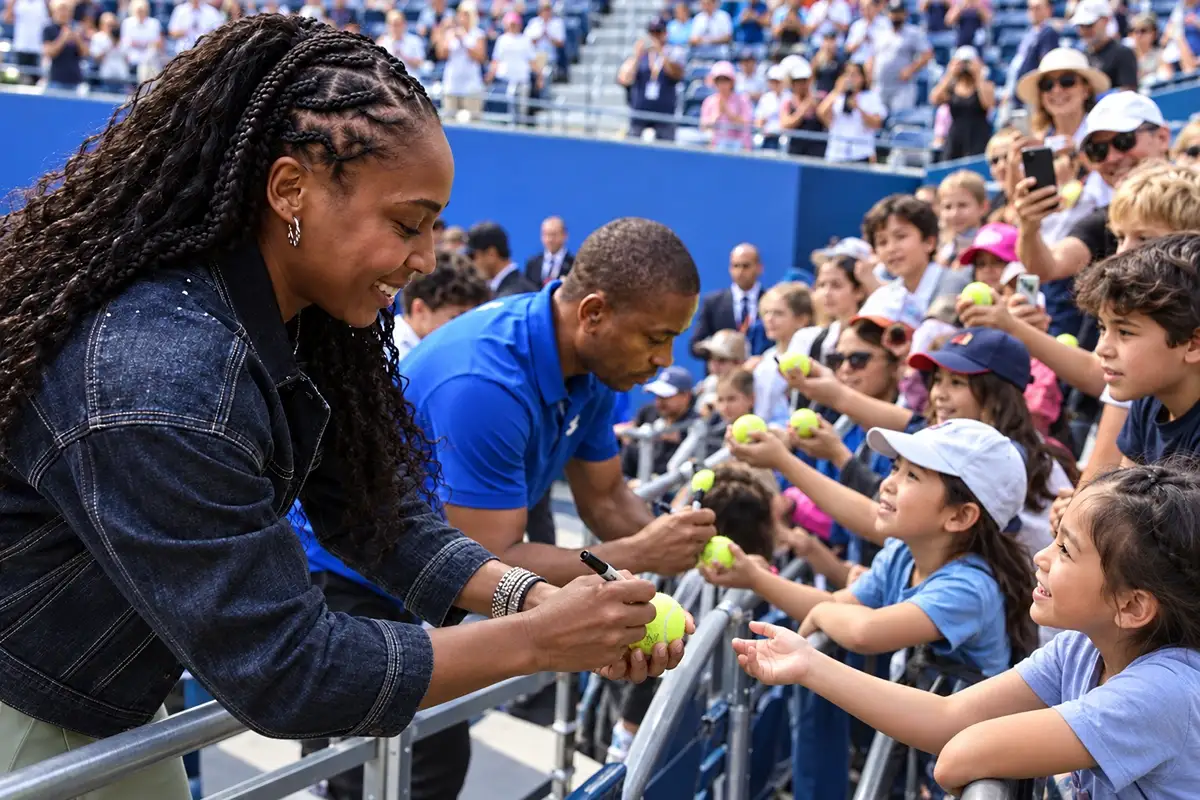
The 2026 US Open expanded access and premiumisation at the same time. Fan Week provided seven days of free entry, while Arthur Ashe added more courtside inventory and luxury hospitality. Both developments were central to the tournament’s growth, although they served very different audiences.
The free programme gave families, newer spectators and local residents a way to experience a Grand Slam without buying a main-draw ticket. The premium transformation responded to strong demand for suites, clubs and high-value seating integrated with hospitality.
This created an unusually wide access range within one event ecosystem. A family attending Arthur Ashe Kids’ Day, a grounds-pass visitor, a reserved-seat holder and a corporate suite guest could all arrive through the same transport network while expecting different levels of assistance and control.
Those audiences should not receive identical service scripts. The family may need practical information about free activities, restrooms and realistic walking distances. The grounds-pass holder may need a precise explanation of accessible courts, while the suite guest may require credential recognition and a controlled route.
The difference is not a question of being more attentive to one audience. It is about providing the information that makes each purchased or registered experience usable. Equal professionalism can involve very different language, pace and escalation processes.
Ticket-price criticism during the tournament added sensitivity to these interactions. Reporting on the tournament’s hospitality growth and rising access costs described high secondary-market prices and raised questions about moderately priced seating being replaced by more courtside and premium products. Staff did not create those commercial decisions, but they encountered the expectations produced by them.
A visitor who paid substantially above face value may arrive with heightened expectations even when the event did not receive the full resale amount. A staff member cannot resolve the economics of the ticket market, but clear information and competent access management can prevent avoidable frustration from compounding that dissatisfaction.
The wider lesson is that pricing and hospitality strategy eventually reach frontline operations. Every commercial distinction introduced during ticketing becomes a real-world question about where someone enters, what they can access and what service they expect after arrival.
A 3:33 A.M. Finish Tested the Meaning of an Event Schedule
Construction created one kind of uncertainty, while tennis created another. The sport has no dependable finishing time, so a published session schedule cannot determine precisely when the venue will empty or when every operational requirement will end.
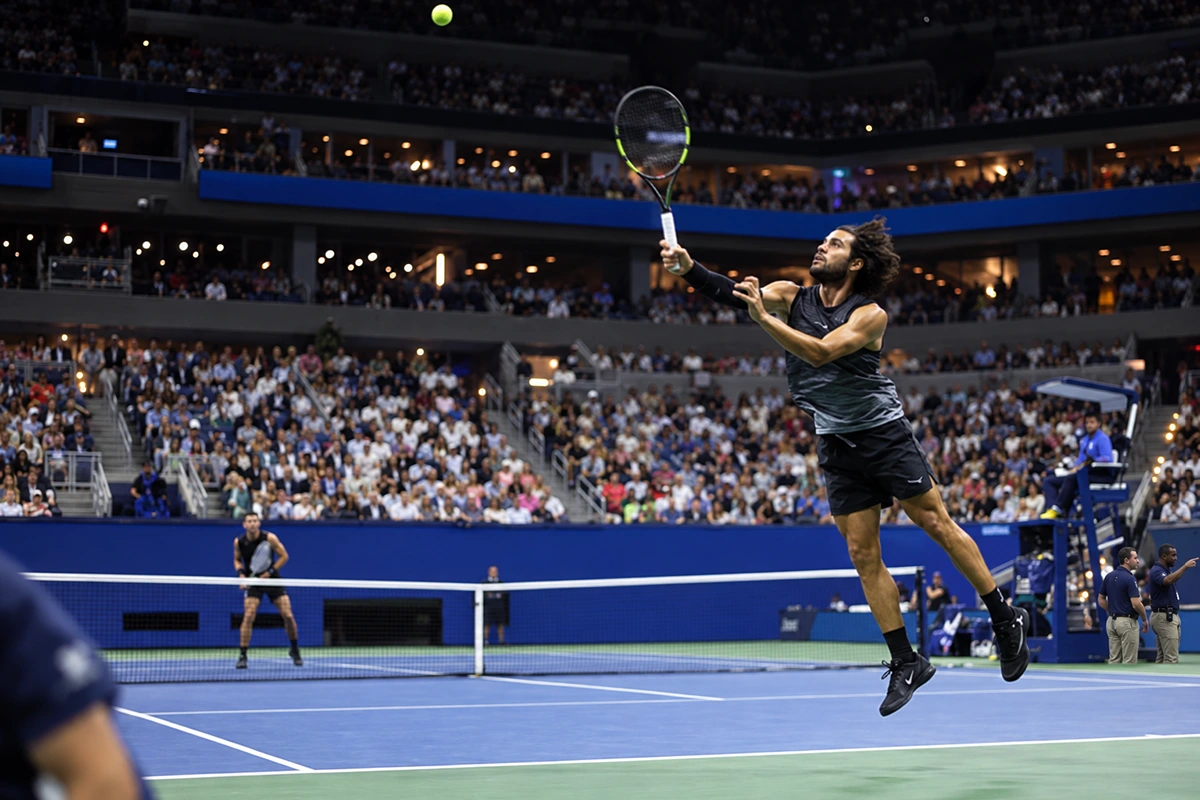
That uncertainty became highly visible on September 8. Carlos Alcaraz and Ben Shelton played a quarterfinal lasting four hours and 28 minutes, with Shelton eventually winning after one of the tournament’s most demanding nights. The match finished at approximately 3:33 a.m., making it the latest conclusion in US Open history.
The television window itself illustrates the scale of the overrun. ESPN’s post-tournament figures show that its quarterfinal coverage ran from 7:30 p.m. until 3:40 a.m. An average of 967,000 viewers remained for the final quarter-hour, demonstrating that interest continued until the competition was resolved.
The onsite operation could not treat those final hours as an insignificant tail. Spectators still inside Arthur Ashe needed supervised seating areas, functioning restrooms, safe exit routes and reliable information. Facility and cleaning teams also had to wait for parts of the building to clear before completing their work.
The length of that day becomes even clearer in the tournament’s published statistics. Arthur Ashe hosted 13 hours and 47 minutes of tennis during the quarterfinal programme, with every match going to a deciding set. The operational strain came from the accumulated day rather than the final match alone.
This creates what can be called an elastic closing time. The operational day stretches according to the competition, weather and order of play rather than ending at the time most convenient for the staffing schedule.
A strong event plan therefore requires more than an average match-duration forecast. It needs a late-running version that identifies which services remain active, which positions can be consolidated, how relief coverage is introduced and who has authority to extend a shift or redeploy a team.
Shift handovers become especially important. A person arriving as relief at midnight needs more than the original morning briefing. They require an updated understanding of ongoing play, open facilities, transport conditions, restricted routes and any guest issues already developing.
Food and beverage operations face their own decisions. Some locations may close progressively, but enough service and water access must remain available for spectators still attending. Cleaning schedules also need flexibility because a stadium section cannot be fully reset while a record-length match continues.
Staff welfare belongs in the same discussion. Planning for an exceptional finish cannot mean expecting the original team to remain indefinitely without breaks, transport considerations or supervisory support. Resilience comes from relief capacity and predetermined decisions rather than endurance alone.
The public record does not reveal exactly how the US Open scheduled or extended its teams that night. We should not invent shift structures, staffing numbers or internal responses. The documented finish still gives us a genuine pressure point against which any large-event staffing plan can be assessed.
The Event Continued Beyond the Stadium Gates
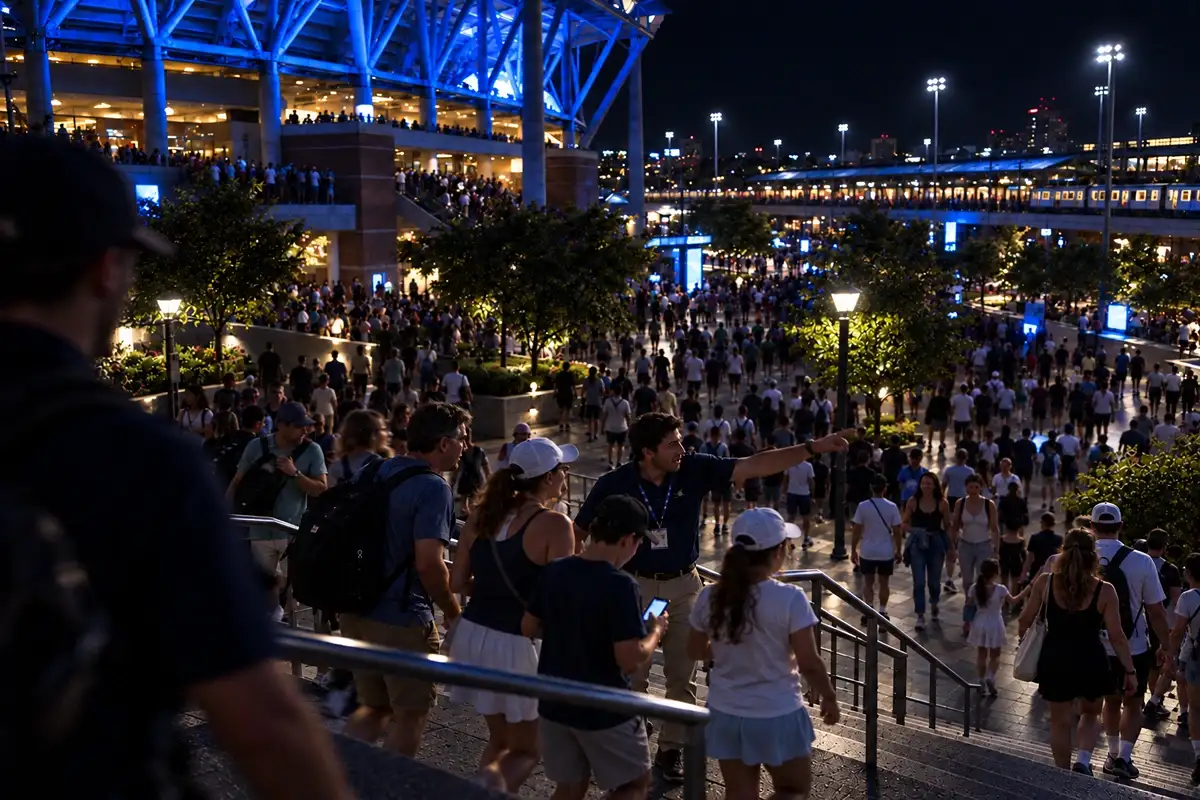
The final point did not end the guest journey. Spectators still had to leave Arthur Ashe, move across the grounds and reach the subway, Long Island Rail Road, accessible transport or another collection point.
Mets–Willets Point is therefore part of the practical US Open experience even though it sits outside the ticketed venue. For 2026, the MTA and USTA added subway and Long Island Rail Road service to help handle tournament demand.
Additional No. 7 trains were scheduled after the final Arthur Ashe match. That detail is particularly important because the transport response followed the actual completion of play rather than relying solely on a fixed departure timetable.
Selected Port Washington Branch trains also made additional Mets–Willets Point stops, and extra services supported travel during the tournament. The wider plan had to account for days when US Open sessions overlapped with New York Mets home games at nearby Citi Field.
Two major venues drawing from the same transport environment can alter pedestrian density, train demand and road access. A route that works smoothly during an isolated afternoon session may face different pressure when baseball and tennis crowds arrive or depart within a similar period.
Venue staff do not control the subway or Long Island Rail Road, but guests still ask them how to leave. The usefulness of the answer depends on whether staff know the correct station approach, official information source and any event-specific transport provision. The MTA’s National Tennis Center travel guide confirms the direct subway and Port Washington Branch options that teams could reference without improvising travel advice.
Late-night play increases the value of that knowledge. Visitors who arrived confidently during daylight may feel less certain after midnight, particularly if they are unfamiliar with Queens, travelling with children or reconsidering a route because the event finished several hours later than expected.
Accessibility crosses the same organisational boundary. A designated Access-A-Ride pick-up and drop-off point operated near the Champions’ Entry, meaning a useful direction had to identify the correct location rather than gesture generally toward the surrounding roads.
New York City’s Accessible Events Guide advises organisers to consider the full route through an event, including arrival, entrances, seating, activities and internal movement. That principle is particularly relevant at a venue where construction changes can affect familiar paths and where a transport handoff forms part of the departure journey.
Transport information should therefore be included in frontline briefings without turning event teams into transit authorities. Staff need verified guidance and a clear escalation source, while timetable guarantees and disruption updates should remain with the MTA.
The guest’s judgement of the event continues until they can leave with confidence. A successful match followed by a confusing departure can still produce a poor final impression, especially at the end of an exceptionally long day.
Where the 2026 Operating Model Was Strongest
The US Open entered 2026 with several structural advantages. The construction programme had been phased specifically to preserve tournament access, which allowed the event to open with major new seating and suite areas already available. The organisers also communicated that the stadium was progressing through a larger transformation.
Fan Week provided an extensive period of public access before the main draw. More than 300,000 visitors experienced the grounds, and sellout stadium events tested controlled admission within that wider programme. This created an opportunity to observe movement patterns before the two-week main draw reached its most consequential stages.
The tournament also maintained visitor information covering travel, accessibility, prohibited items and venue procedures. These resources gave spectators several opportunities to prepare before arriving, reducing uncertainty for guests who actively consulted them.
Public transport planning recognised that the US Open affected movement beyond the National Tennis Center. Added subway and rail service, including trains connected to the final Arthur Ashe match, aligned the citywide response with the event’s uncertain schedule.
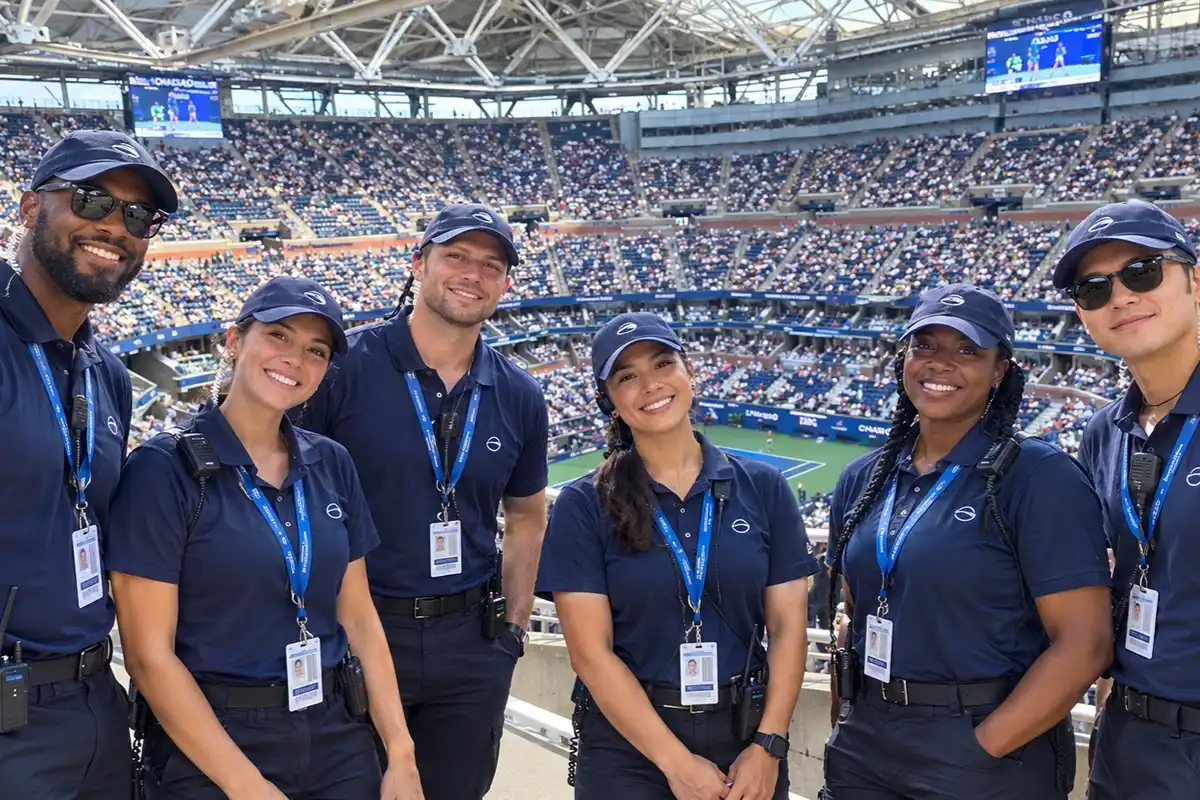
The publicly advertised staffing categories also reflected operational specialisation. Guest access, premium seating, hospitality, facilities, credentials and player services were treated as distinct functions. That division supports more precise training and escalation than asking every worker to provide the same form of assistance.
Together, these systems helped protect the event from becoming defined by the unfinished stadium. Construction remained visible, but the tournament continued to offer free programming, premium hospitality, global competition and late-night spectacle within the transitional venue.
Where Pressure Remained
The same strengths generated additional complexity. New seating and hospitality environments introduced more access distinctions before the final concourse, entrance and vertical-circulation improvements were complete. Staff had to support newly opened destinations through a venue still moving toward its intended final layout.
Returning visitors also brought expectations formed by previous tournaments. Published information could describe current conditions, but it could not guarantee that regular attendees would read it or abandon remembered routes. The operation needed to correct outdated confidence in real time.
Fan Week’s popularity added another pressure. Free access attracted record participation, while limited giveaways and sellout ticketed events created pockets of urgency inside the open programme. The audience could disperse widely and then concentrate rapidly around something scarce or time-sensitive.
Premium expansion raised the number of entitlement questions. A greater variety of suites, courtside seating and hospitality products meant more guests required precise directions and credential recognition. Every additional category increased the cost of vague or inconsistent information.
The late quarterfinal demonstrated the limits of schedule-based assumptions. A match ending at 3:33 a.m. required the venue and surrounding transport journey to remain usable far beyond the normal shape of an evening session.
None of these pressures invalidates the tournament’s operating model. They show where delivery depended most heavily on informed people rather than permanent infrastructure alone.
What Other Large Events Can Learn From the US Open
Brief the Change From the Guest’s Perspective
Construction updates often focus on what has opened, what remains closed and when the project will finish. Frontline teams need a different version of that information: which guest journeys changed, where the old route now fails and what alternative should be offered.
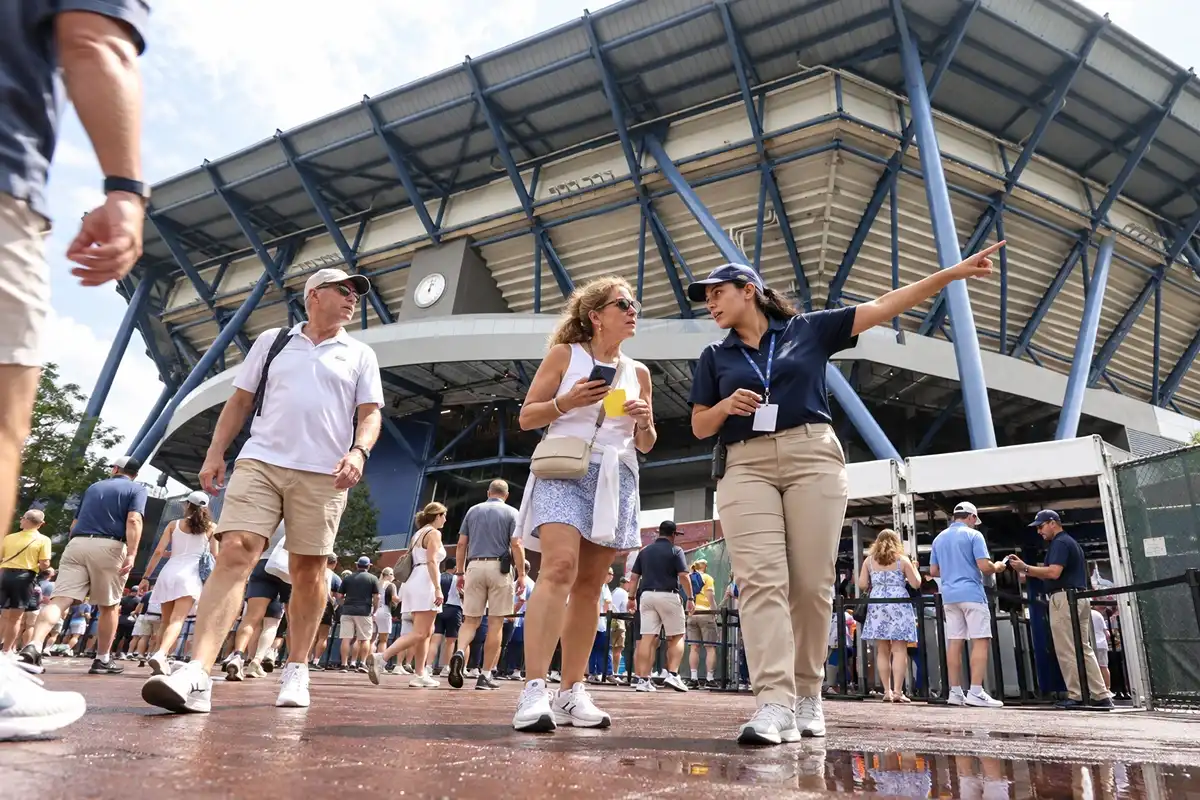
Returning attendees deserve particular attention because they may not recognise that they need help. Organisers should map the routes regular visitors are most likely to remember and position assistance where those memories stop being accurate.
Train for Entitlements and Locations
Knowing where a suite, stadium or activation is located does not establish whether a guest can enter. Staff positioned near controlled experiences need to understand the ticket, credential or invitation required and know where exceptions should be resolved.
This avoids sending visitors toward destinations that will reject them. It also protects restricted teams from becoming general information desks for incorrectly directed guests.
Change Staffing Behaviour Across the Event Calendar
Fan Week and the main draw occupied the same site, but they did not create identical service demands. Open exploration, family programming and giveaways required a different emphasis from reserved sessions, stadium seating and premium hospitality.
Large multi-day events should identify when the audience’s relationship with the venue changes. Staffing plans, scripts and escalation priorities should change with it.
Build a Late-Running Version of the Plan
Average timings help establish baseline coverage, but live sport regularly moves beyond averages. Organisers should decide before opening which positions remain essential during an overrun, how relief teams are activated and which guest services remain available.
The plan should also address staff transport and welfare. A resilient event does not depend on exhausted people improvising after the final scheduled shift has ended.
Treat the Departure as Part of Delivery
Transport systems sit outside the venue’s direct control, but arrival and departure information still affects the event experience. Staff should know the official transport channels, accessible collection points and immediate walking routes.
This becomes particularly important when events finish late or overlap with activity at a nearby venue. Local conditions can change the usefulness of directions that appeared straightforward earlier in the day.
Aim for Operational Completion
A venue can remain physically unfinished while being operationally complete for the current event. That standard is reached when open routes are understandable, access conditions are consistently enforced and guests can recover when they make a wrong turn.
The 2026 version of Arthur Ashe did not need to provide every improvement promised for 2027. It needed to make the available version work for the people attending that year.
CEO Excerpt
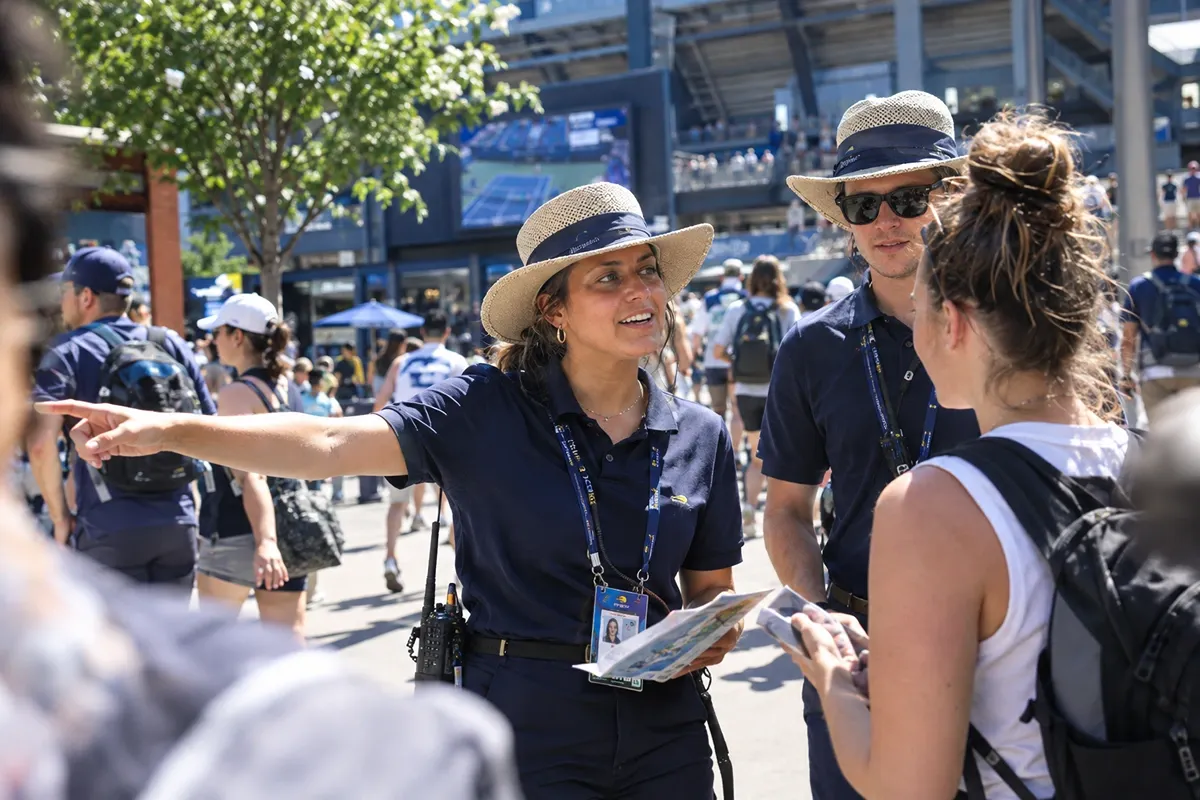
“I would treat every changed route as a new guest journey, even if most of the audience had visited before. Returning guests often move faster because they believe they know the building, which means confusion may only become visible after they have gone too far. My priority would be placing informed staff before those decision points and giving them one verified explanation of what changed, who can access each area and how to recover the journey when the original route no longer works. That preparation is what allows the guest to experience the event instead of experiencing the renovation.” -- Daniel Meursing, CEO, Eventstaff
How Eventstaff Services Map to a Tournament in Transition
An event with the scale and access range of the US Open requires specialised teams working from a shared understanding of the venue. Free public programming, reserved stadium sessions, sponsor activations, premium hospitality and late-running competition cannot all be supported through one generic staffing brief.
Greeters can establish a visitor’s purpose near the beginning of the journey and direct them toward the appropriate entrance or information point. Their role is especially valuable when returning guests are likely to follow familiar routes that no longer apply.
Ticket checkers can manage assigned scan lanes and confirm entry status, while check-in staff handle lists, credentials and defined exceptions at designated points. Keeping those functions distinct prevents every access problem from accumulating at the same checkpoint.
Ushers can support the doors-to-seat journey inside Arthur Ashe and other stadiums. They need current section routes, accessible alternatives and a reliable escalation point when the ticket is valid but the expected path has changed.
Crowd control personnel can protect queue structures, concourse movement and temporary areas of concentrated attention. Their deployment should respond to the destinations attracting people at a particular time rather than remaining based only on total attendance.
Hospitality staff can support registration desks, information points, entrances and programme desks. Hostesses can manage guest-list and VIP protocols where recognition, discretion and controlled access carry greater importance.
Brand ambassadors, booth staff and experiential staff can support sponsor environments without drawing stadium guest-services teams away from wayfinding and access duties. Production teams can assist programme flow and transitions across live entertainment, stage activity and supporting experiences.
Event servers and bussers can maintain service within hospitality areas whose operating periods may expand when play continues longer than expected. Their shift planning should reflect the uncertainty of live sport rather than assuming a dependable final point.
Eventstaff provides role-specific personnel for major events in New York City and other leading U.S. markets. The 2026 case shows why the staffing brief must describe the venue guests will actually encounter, including temporary routes, different permissions and the possibility that the operating day will extend far beyond its forecast.
Final Words
The US Open 2026 delivered a major international tournament while Arthur Ashe Stadium stood between its familiar past and its planned 2027 form. New courtside seating and suite levels had opened, while the entrance, promenade and several circulation improvements remained part of the final construction phase.
That midpoint affected more than the appearance of the stadium. Returning fans carried old directions, Fan Week and the main draw imposed different access conditions, premium hospitality expanded the credential map, and a quarterfinal kept the operation active until 3:33 a.m.
The case demonstrates why construction continuity must be judged through the guest journey. A venue can remain open throughout redevelopment, yet its event operation still needs to translate every physical change into current directions, access rules and recovery options.
For organisers planning a stadium event, convention or multi-day programme inside a changing venue, Eventstaff can build specialised teams around those real conditions. Construction may continue between events, but every guest attending today still needs an experience that feels fully considered.