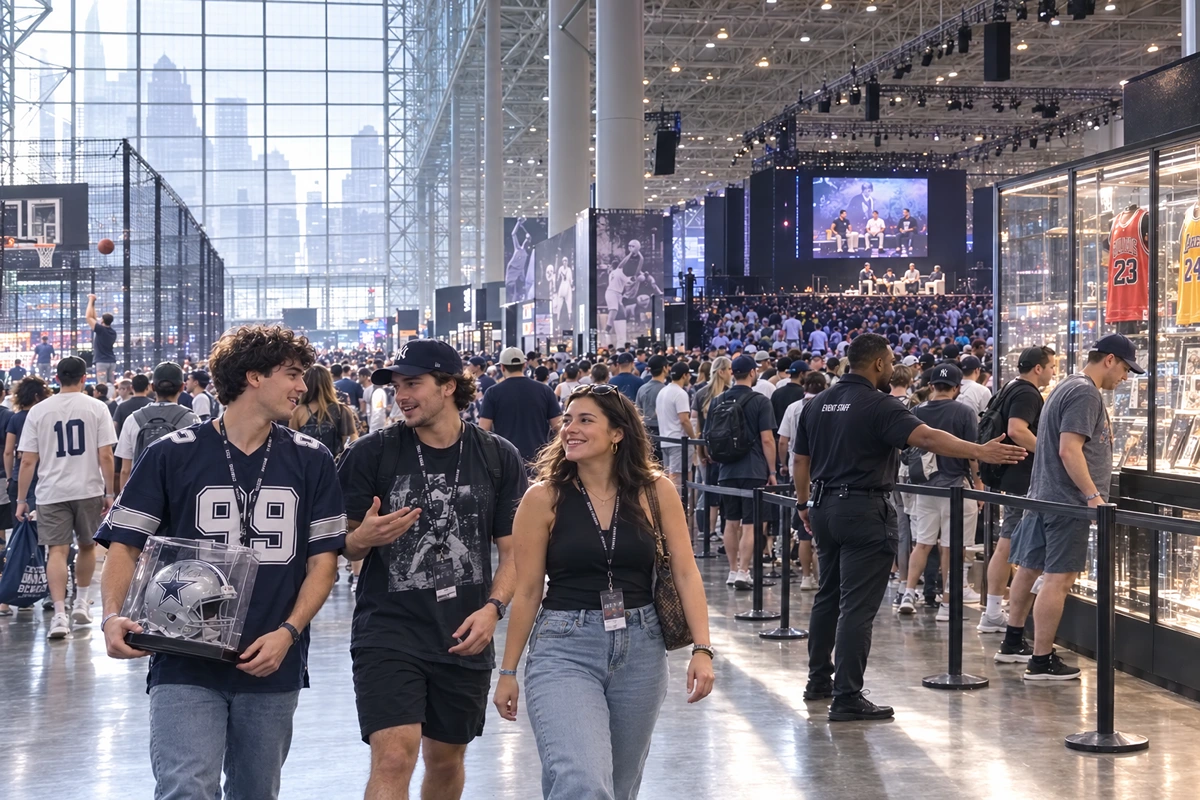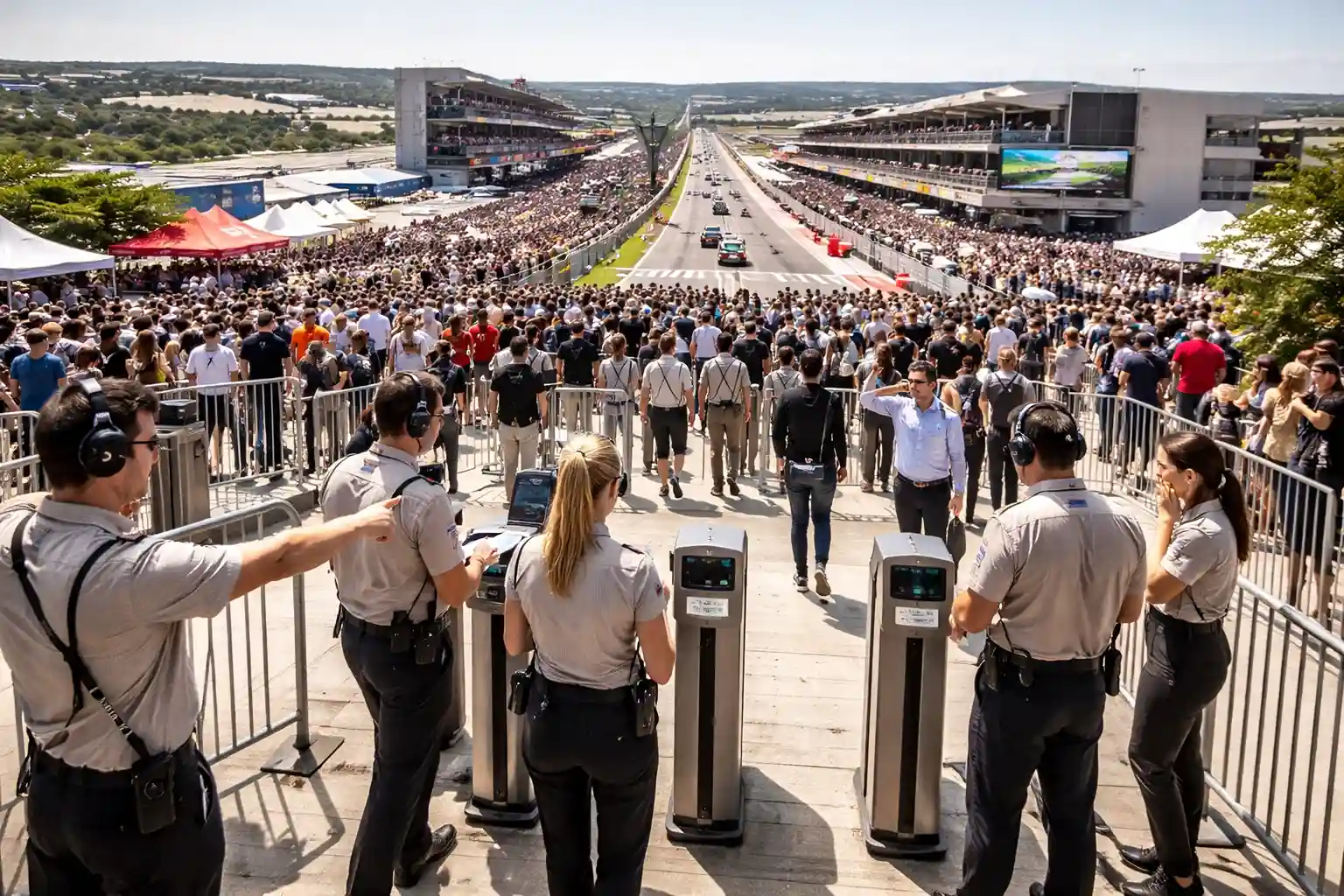
Fanatics Fest 2026 took over more than one million square feet of the Javits Center from July 16 to 19. Across four days, 200,000 visitors came to see athletes and entertainers, explore brand experiences, buy rare collectibles, attend live shows and compete in sports challenges. The official Fanatics Fest website called it the world’s leading sports fan festival, but its size only tells part of the story.
What is Fanatics Fest from an event operations perspective? It is a collection of personal, time-sensitive experiences delivered inside one enormous convention. A visitor may enter alongside thousands of other people, yet judge the entire day by whether they reached one autograph session, acquired one limited product or briefly saw the athlete they travelled to meet.
That dynamic made the 2026 edition a valuable large-event case study. Fanatics successfully expanded its audience, programme and physical footprint, while the event’s visible pressure points demonstrated how easily a personal experience can be affected by a queue, schedule change or incomplete update.
CEO Excerpt
“When people attend an event for one athlete, one autograph or one exclusive product, every instruction carries more weight. The size of the floor matters, but the quality of the experience is often decided at a queue entrance or access checkpoint. Fanatics Fest shows why large events need staff who understand what each guest is trying to reach, how long that opportunity remains available and what to communicate when plans change.” -- Daniel Meursing, CEO, Eventstaff
Design note: Infographic
How Fanatics Fest Became a Million-Square-Foot Sports Ecosystem
Place 200,000 Fans at the centre. Surround it with eight lightly illustrated environments: athlete appearances, photo opportunities, Fanatics Games, trading-card dealers, brand activations, live shows, exclusive releases and VIP hospitality. Keep the labels short and allow the scale of the central number to lead the design.
Why Fanatics Fest 2026 Became the Defining Test of Personal Access at Scale
Fanatics Fest has grown at a pace few young events experience. The inaugural 2024 edition attracted approximately 70,000 people. Attendance passed 125,000 in 2025, before reaching 200,000 in 2026. Fanatics confirmed that the latest edition filled more than one million square feet with over 400 athletes and celebrities and 250 hobby shops (Fanatics Events).
The organisers responded to demand by adding a fourth day and increasing the event’s Javits Center footprint by 25 percent. Those decisions provided more hours, more floor space and more opportunities to distribute visitors across the programme. The expansion was supported by over 100 leagues, teams, brands and sponsors, more than 50 live shows and podcasts, and approximately a dozen stages.
Every addition also created another possible destination. Guests had to distinguish between open activations, scheduled programmes, paid photo opportunities, separate autograph purchases, exclusive product releases and invitation-controlled hospitality. The event therefore became more spacious and more complex at the same time.
That combination produced what we can describe as experience density. It measures how many different, time-sensitive reasons people have for moving through the same venue. Two events can welcome identical attendance figures while creating completely different staffing requirements if one has far more appointments, access types and schedule dependencies.
Fanatics Fest’s reported production investment illustrates the value placed on the experience. Michael Rubin said Fanatics and its partners expected to spend between $80 million and $90 million on the 2026 event. The programme included more than 100 event-exclusive products, at least 100 participating organisations and over $2 million in Fanatics Games prizes (Sports Business Journal).
The event’s growth depended on far more than fitting additional people through the doors. Each expansion had to preserve the reason those people wanted to enter.
What Happened Across Four Days at the Javits Center
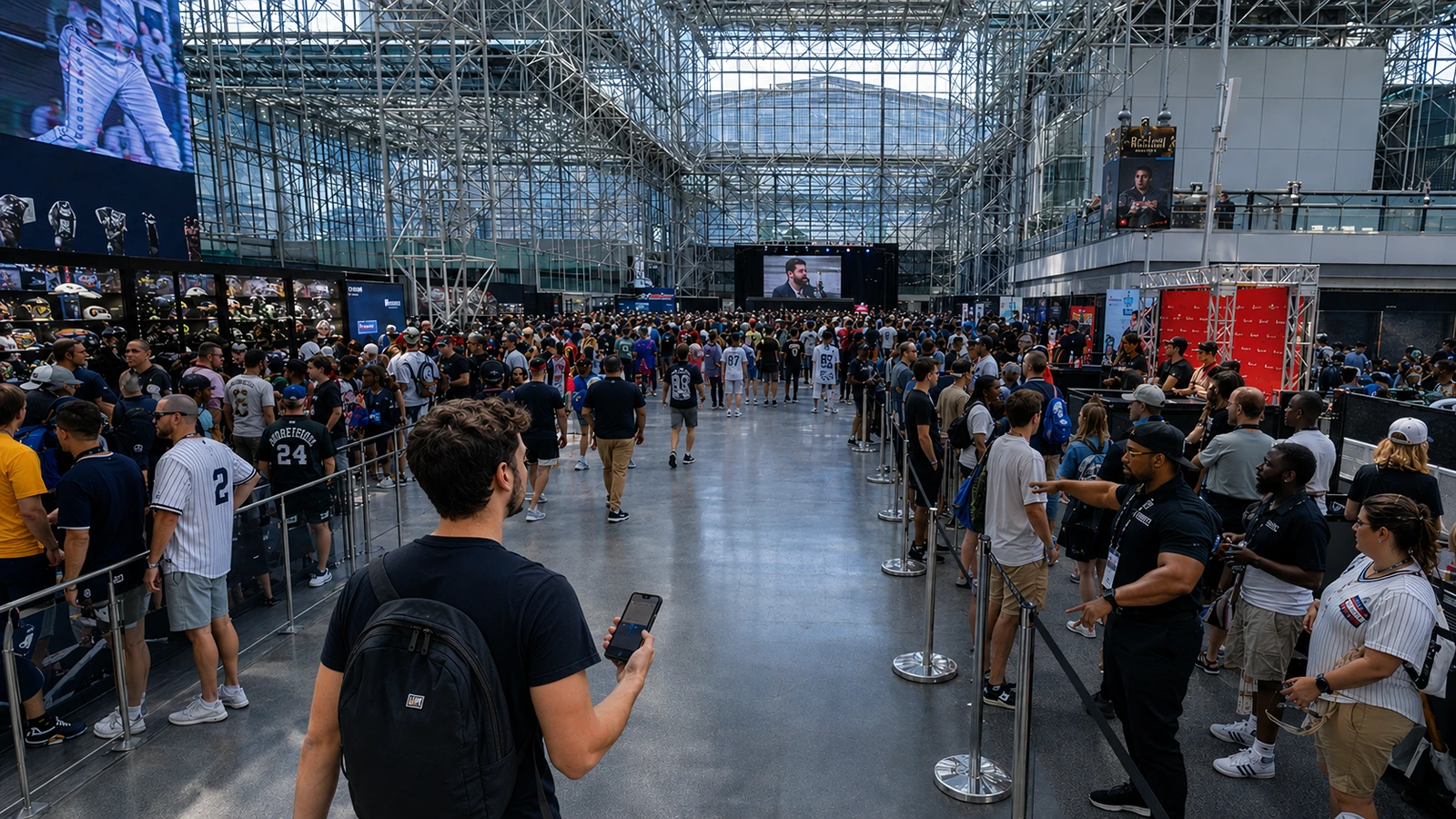
Fanatics Fest combined the scale of a convention with the timing demands of a live entertainment programme. Visitors could attend stage conversations, buy collectibles, meet athletes, enter competitions, watch podcasts, explore activations and purchase exclusive merchandise. Several of those activities ran concurrently and required different forms of access.
The 2026 hours created distinct operating patterns across the four days. Thursday ran from 1:00 p.m. to 8:00 p.m., Friday and Saturday from 10:00 a.m. to 7:00 p.m., and Sunday from 10:00 a.m. to 5:00 p.m. Thursday concentrated arrivals into the afternoon, while the two full programme days gave guests more time to combine scheduled and unscheduled experiences.
Sunday’s earlier finish compressed the final opportunities into a shorter window. A visitor attending on that day had less room to recover from a missed session, an unexpectedly long queue or a delayed arrival. Accurate advice carried greater value as the remaining programme time decreased.
General-admission guests were directed to Gates 1 and 4, while eligible early-access ticket holders entered through Gate 1. Paid autograph and photo experiences required admission to the festival plus a separate purchase. Some free photo opportunities were available, but their limited capacity could encourage guests to queue early.
These distinctions began shaping the experience before guests reached the main floor. A person standing at the wrong gate or joining a line without the necessary entitlement could lose valuable time. The challenge for frontline teams was therefore to establish purpose early: what the guest had booked, where it was located and when access would begin.
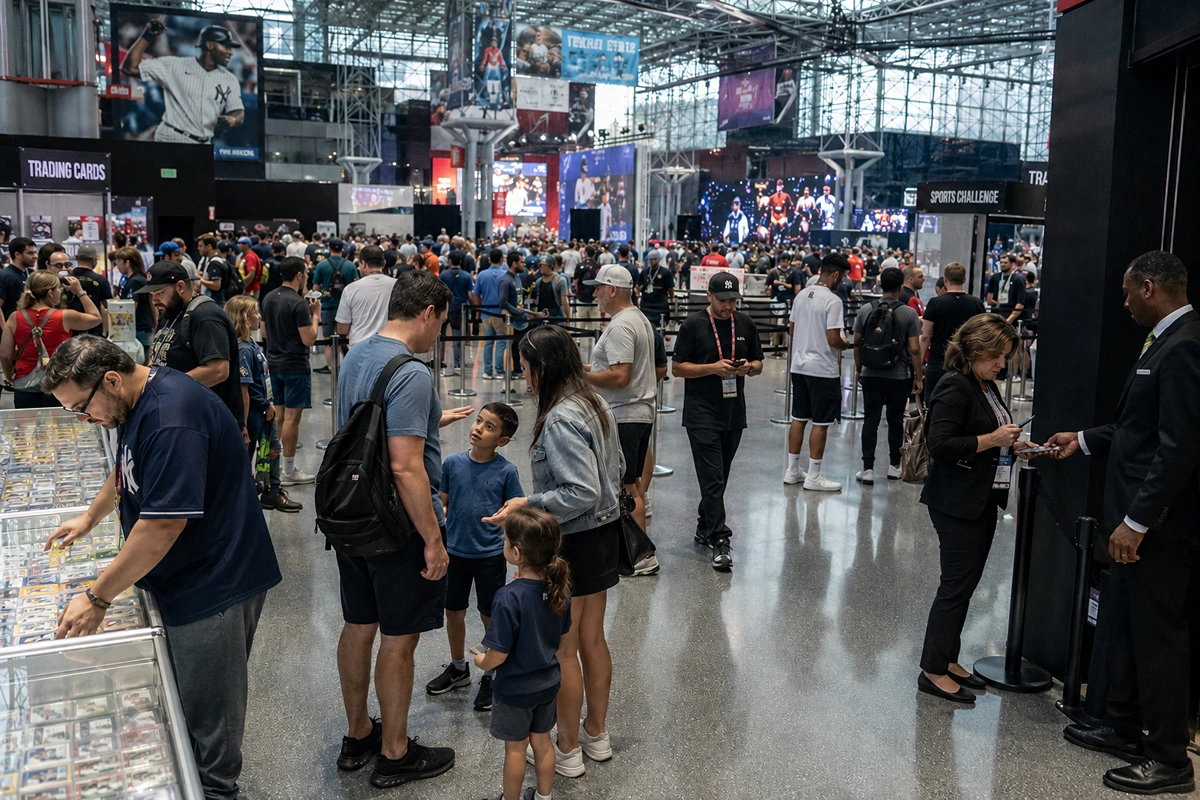
Once inside, visitors entered an event containing hundreds of potential destinations. The trading-card marketplace alone included more than 250 dealers. Beyond it were league experiences, sponsor installations, merchandise areas, stages, signing zones and the competitive environment created by the Fanatics Games.
Large venues can absorb substantial numbers, but distance becomes an operational variable. A schedule that appears manageable on a phone may become difficult when two experiences sit far apart and the route passes through heavily attended areas. Staff must understand the relationship between time and distance rather than directing every question through a static map.
A Million Square Feet Did Not Make Navigation Simple
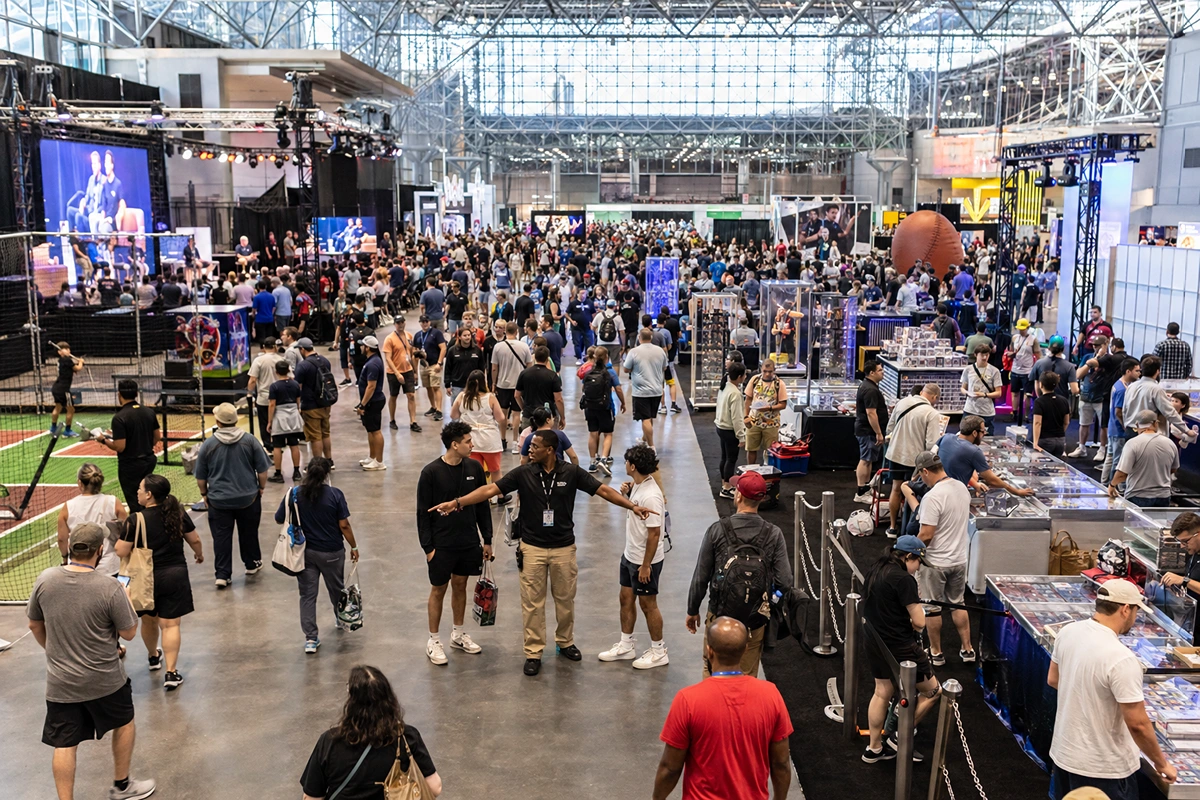
More floor space helped Fanatics Fest distribute its audience, but scale changed what guests needed from event information. “It is over there” offers limited help when a guest has a signing appointment approaching, an unfamiliar access condition and several crowded zones between their current position and the destination.
Collectors could browse dealer tables with relative flexibility. Appointment holders faced a firmer timetable. Families might prioritise free activities and shorter waits, while visitors pursuing limited merchandise could arrive with a carefully planned sequence of stops.
The result was a venue filled with different levels of urgency. A staff member needed to identify that urgency before giving directions. The fastest physical route might still lead to the wrong queue, credential checkpoint or entrance side.
Official entry procedures show that Fanatics Fest had already divided arrival flows according to ticket type. That principle had to continue inside the building. Paid autograph queues, free photo opportunities, live-stage audiences and general activation lines could look similar from a distance while serving entirely different purposes.
The Occupational Safety and Health Administration advises organisers expecting large crowds to create detailed staffing plans, prepare barriers in advance, communicate updated information and position personnel throughout arrival areas. It also recommends using multiple entrances where possible and assigning workers to explain entry procedures (OSHA crowd-management guidance).
Although that guidance was developed around crowded retail events, its communication principles apply closely to an experience driven by limited products and scheduled access. Physical barriers can establish a line, but informed staff help guests understand why the line exists and whether it serves what they came to experience.
Good navigation at Fanatics Fest therefore required more than visible signs. It depended on people who could interpret the programme, recognise access types and explain the next step before a guest committed time to the wrong route.
Every Fan Was Following a Different Version of the Event
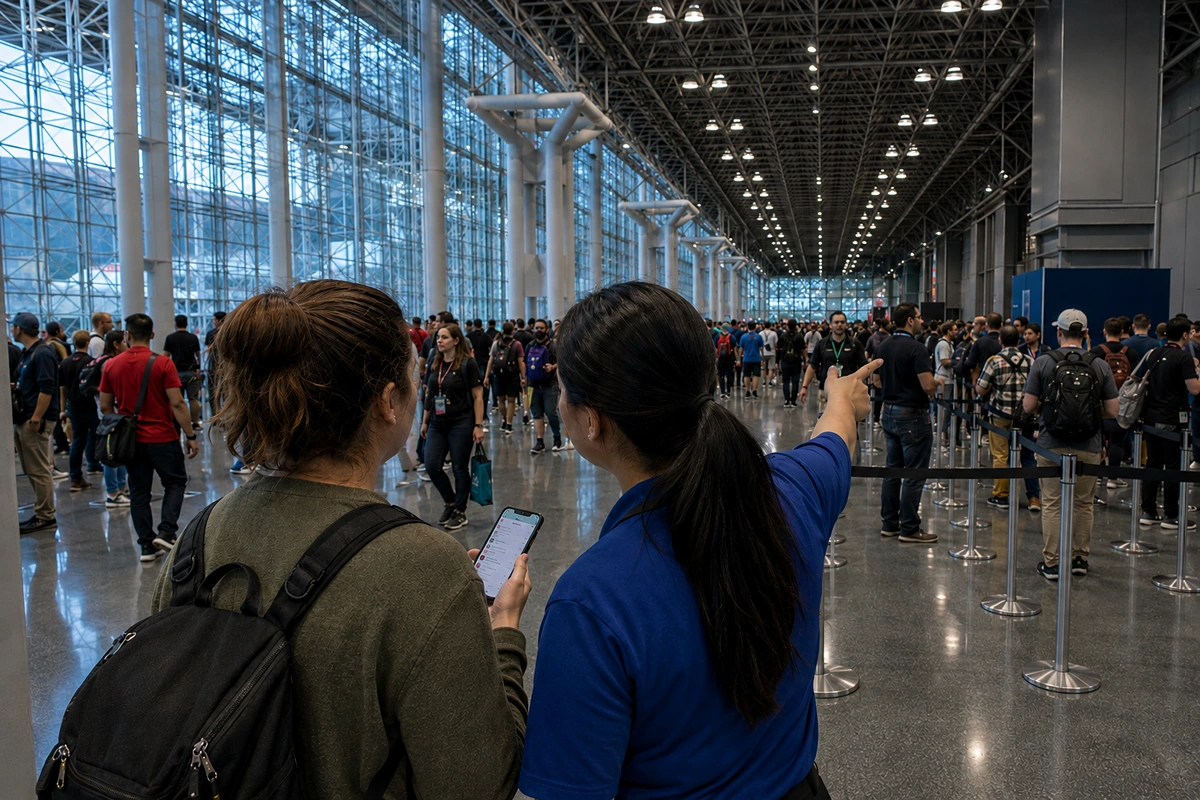
The headline attendance number joined several audiences that behaved very differently once inside the Javits Center. Treating all 200,000 visitors as one crowd would conceal the operational demands created by their individual objectives.
A general sports fan could build the day around atmosphere and discovery. They might move between live discussions, interactive challenges and league activations, changing plans when a surprise appearance attracted attention. Their experience benefited from energy, visible opportunities and staff who could recommend what was happening nearby.
A collector approached the floor with greater commercial focus. They may have wanted a specific dealer, exclusive release or trading opportunity. Valuable items, concentrated browsing and longer conversations created different movement and security considerations from a fast-moving activation.
An autograph or photo-op customer carried a separate entitlement and an appointment. Admission to the building did not guarantee the interaction. That visitor needed to know the correct zone, check-in process, session status and acceptable arrival time.
Families had another set of requirements. Adults might be balancing several interests, children’s patience and the practical need to find amenities, food and rest. A realistic wait-time update could help them redesign the day before frustration affected the whole group.
VIPs, athletes, representatives and invited guests followed controlled routes between green rooms, stages, public appearances and hospitality environments. Their movement required credential recognition, discretion and coordination that would remain largely invisible to the general audience.
Accessibility also had to extend through every version of the event. New York City’s Mayor’s Office for People with Disabilities advises planners to consider how attendees obtain directions, reach the site, move through the venue, enter exhibits and participate in activities. It states that accessible routes should connect arrival points, entrances and every event activity (NYC Accessible Events Guide).
For a million-square-foot programme, that means accessibility cannot end at the building entrance. Staff need to know which routes, seating areas, service points and activity spaces support different access needs. A correct destination reached through an unsuitable route still produces a failed direction.
The staffing implication is clear: audience size cannot determine the deployment plan by itself. Organisers need to understand the different journeys contained inside that audience and position people where those journeys intersect.
The Fanatics Games Turned Spectators Into Part of the Programme
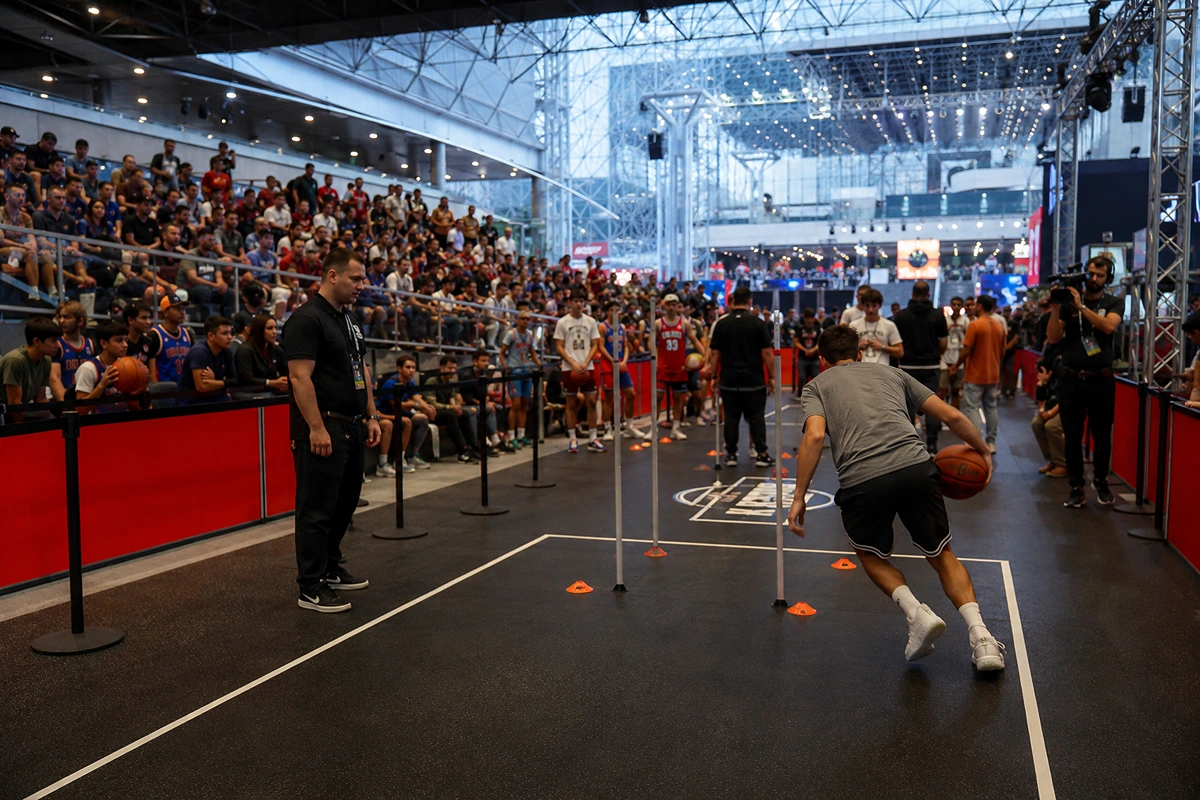
The Fanatics Fest Games gave the event one of its clearest differentiators. Fifty fans competed alongside 50 athletes, celebrities and creators in sports challenges, with more than $2 million in prizes attached to the competition.
The format transformed visitors from spectators into participants. That shift carries important operational consequences because participation requires verification, sequencing and clear rules. A person watching a basketball challenge can arrive or leave freely, while a competitor must appear at the correct place and time, understand the format and remain ready for their turn.
Each challenge also needed its own practical controls. Equipment had to be reset, participant areas kept clear and audiences positioned safely. Media teams required sightlines, while stage or floor staff had to maintain momentum between recognisable names and members of the public.
AT&T’s Connection Cup provides a useful example of the programme’s layered design. The activation combined celebrity captains, sports trivia, memorabilia tasks and physical challenges, while an associated customer lounge introduced a separate eligibility requirement (AT&T at Fanatics Fest).
For staff, the question “Can I enter?” could therefore have several answers within a small area. A guest might be able to watch, require verification to compete or need customer status to enter a lounge. Clear access explanations protected both the activation and the surrounding experience.
The Fanatics Games also had the power to draw people who had never planned to watch. A high-profile competitor or unexpected participant could rapidly change the audience around a challenge. The competition team needed enough structure to protect the format and enough flexibility to respond when attention increased.
This is a recurring feature of large experiential events. An activation succeeds in attracting attention, and that success immediately creates a new crowd-management requirement. Planning has to account for the operational consequence of popularity.
One Autograph Queue Exposed the Fragility of the Schedule
A queue involving New York Knicks player Josh Hart offered one of the event’s clearest operational lessons. Hart left an autograph session while people appeared to remain in line, and a video of the waiting fans began circulating online.
The initial image was easy to interpret: guests had paid for an experience and the athlete was no longer at the table. Some criticism focused on Hart, but the fuller account showed that he had another scheduled appearance at 4:15 p.m., a live recording of The Roommates Show with Jalen Brunson and Aaron Judge.
Hart explained that he did not control when or how long he was scheduled at each location. He later returned and completed the outstanding signings, according to his public response (Yahoo Sports).
The eventual resolution matters, but so does the period of uncertainty. Guests had purchased festival admission and a separate signing experience. Their expectation was tied to one person, which made the absence more consequential than a temporary delay at a general attraction.
The episode exposes the dependency between celebrity schedules. Allowing one appearance to run longer could affect a podcast taping, stage audience, production crew and other advertised participants. Moving the athlete on time could leave the earlier queue requiring an immediate explanation and recovery plan.
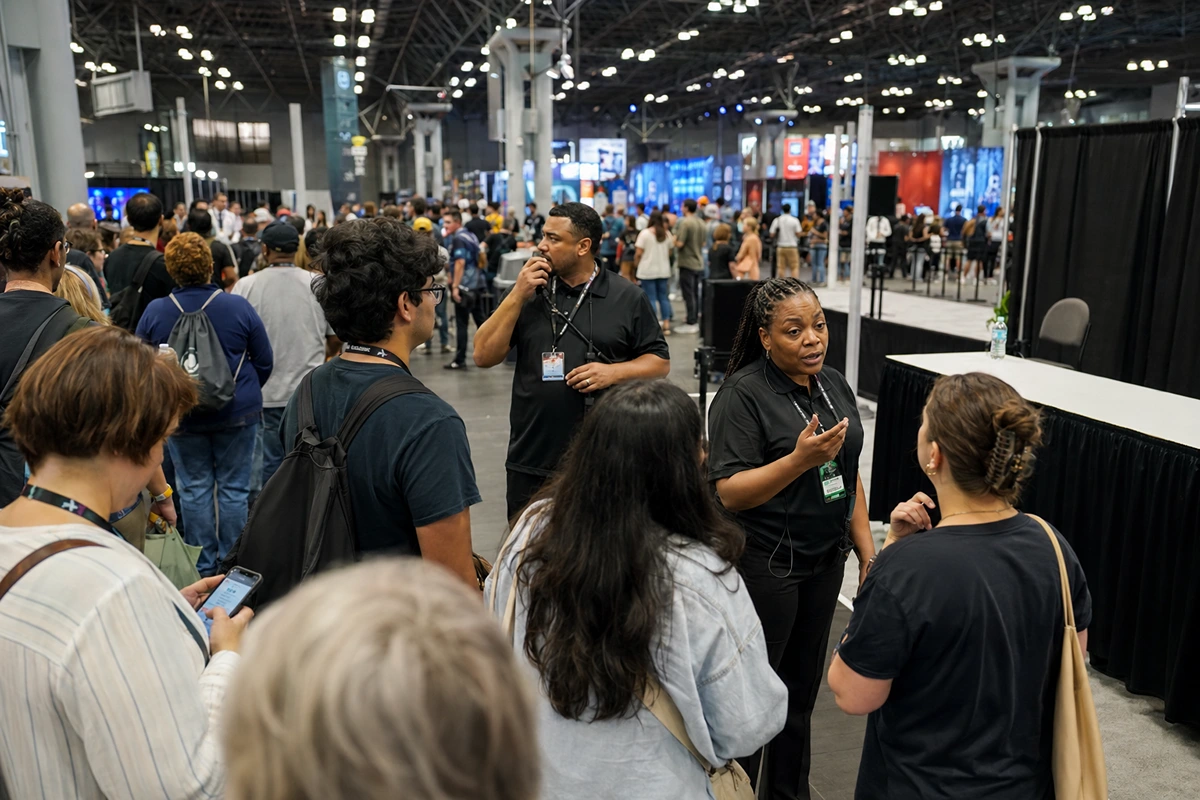
Staff at the signing area therefore needed more than confirmation that the athlete had departed. Guests needed to know why the session had paused, whether Hart would return, whether their purchase remained valid and what they should do while waiting.
A short communication gap allowed an operational transition to become a reputational story. Once the video appeared online, the empty table carried more influence than the schedule behind it.
This is where queue communication becomes part of product delivery. The guest purchased access to a specific interaction, so information about that interaction has tangible value. A prepared update can preserve confidence even when the original timing changes.
Fanatics ultimately delivered the remaining signings, according to Hart’s account. The case still demonstrates how quickly a successful programme can place two valid guest expectations in competition with each other.
Surprise Appearances Created Value and Operational Volatility
Justin Bieber’s appearance demonstrated another side of the event’s appeal. Bieber performed inside the Javits Center and joined sporting activity during a weekend already filled with high-profile personalities.
Surprise appearances give attendees the possibility of witnessing something unavailable on the published schedule. They generate excitement, social coverage and a sense that any part of the event could produce a memorable encounter.
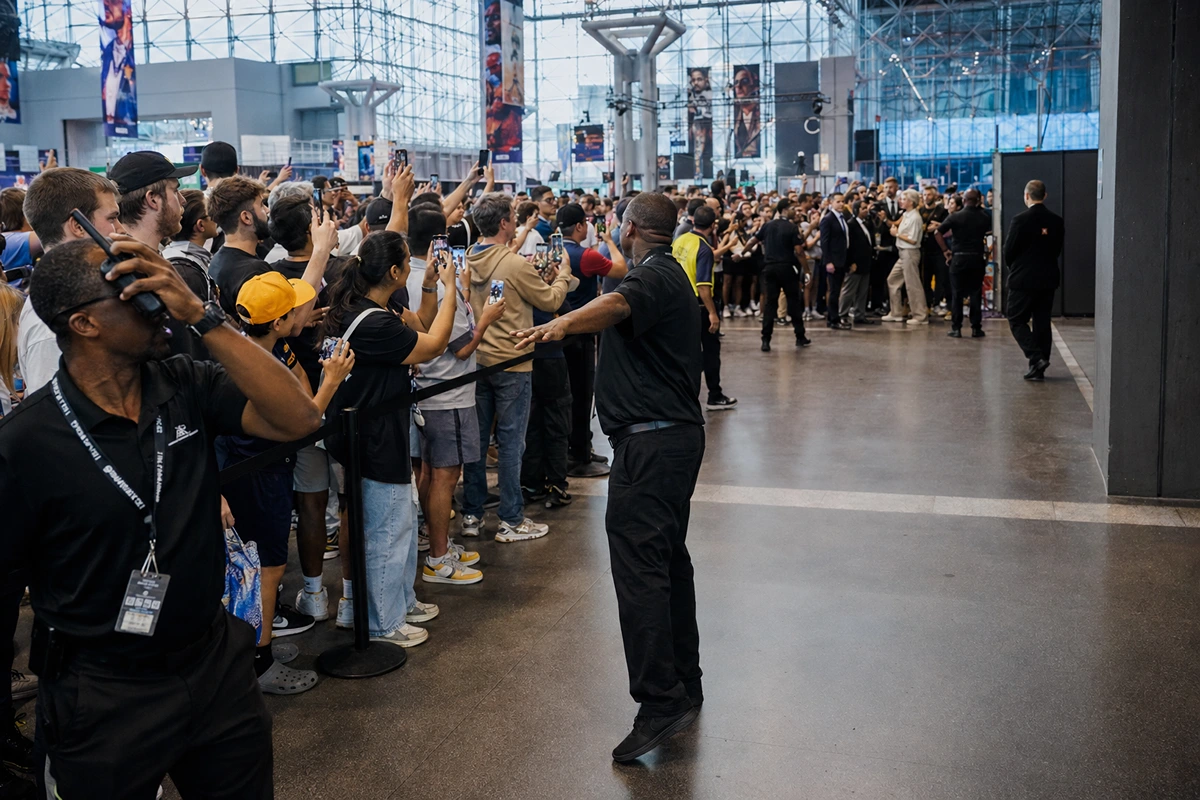
That excitement affects movement. Guests may change direction after hearing a recognisable voice, seeing phones raised ahead or receiving a message from someone elsewhere in the venue. A walkway can quickly become a viewing area, and nearby activations may experience a temporary drop or sudden increase in traffic.
Frontline staff need verified information during those moments. Speculation can send visitors towards a restricted space or create expectations around an appearance that has already ended. A concise operational update helps teams redirect movement without disclosing private talent information.
Security boundaries may also need to form rapidly. Staff must protect the appearance, maintain emergency routes and allow guests to enjoy the moment from safe positions. Afterwards, the concentrated audience needs to disperse without simply transferring congestion into the next zone.
The audience experiences spontaneity because the operational team absorbs the uncertainty. Surprise therefore requires preparation at the system level, even when the precise moment remains flexible.
Federal Emergency Management Agency training for special-event contingency planning emphasises coordinated responsibilities, communications and preparations for changing conditions. Those principles become especially relevant when a major personality can alter crowd behaviour within minutes (FEMA Special Events Contingency Planning).
At Fanatics Fest, surprise value formed part of the product. Protecting it required mobile supervision, connected communication and teams capable of responding beyond their initial fixed positions.
The 40/40 Club Created a Different Event Inside the Same Building
The recreated 40/40 Club brought premium hospitality into the centre of Fanatics Fest. The invitation-only environment reportedly welcomed figures from sport, entertainment and media, including Jay-Z, LeBron James, Tom Brady, Justin Bieber, Megan Thee Stallion, Novak Djokovic and Victor Wembanyama.
Its operational rhythm differed from the public exhibition floor. General areas depended on visible information and high-volume assistance. The lounge required controlled recognition, discretion and a service style appropriate for high-profile guests.
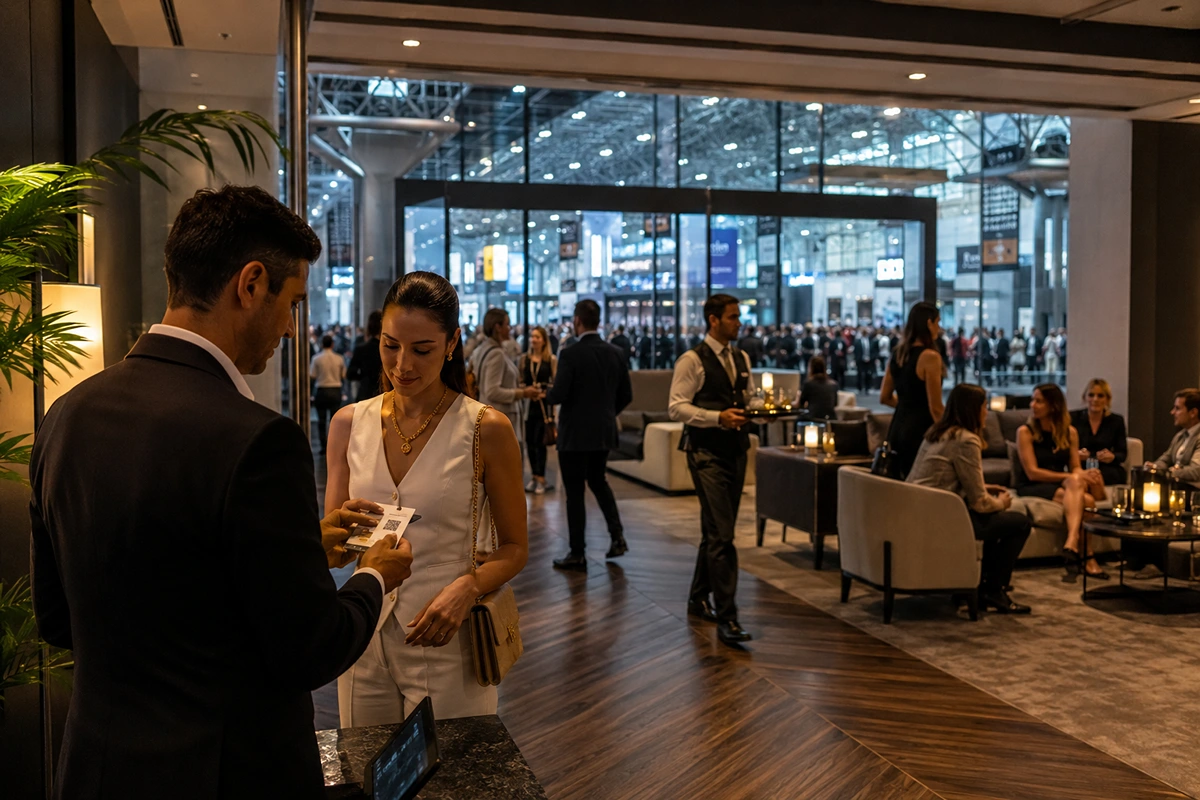
A guest-list checkpoint needed to establish eligibility without creating unnecessary attention. Hosts had to identify invited guests, representatives and approved companions while maintaining the atmosphere of a premium venue.
Inside, food and beverage service operated alongside conversations, arrivals and departures that could change quickly. A celebrity might move from a public panel to the lounge, then leave for another appearance. Hospitality teams had to support the transition without making the wider schedule visible to everyone in the room.
The lounge also sat within a convention attracting 200,000 people. Its boundaries had to remain clear while the presence of recognisable guests naturally increased curiosity outside them. Credential knowledge and calm communication were essential at every access point.
This environment shows why a large event cannot rely on one interchangeable staffing brief. A person effective at processing a public activation queue may require different preparation before handling an invite-only entrance. Both roles depend on professionalism, but their pace, language and decision-making authority differ.
The 40/40 Club added significant cultural value to Fanatics Fest. Operationally, it also demonstrated how a mass-attendance event can contain a separate high-touch experience whose success depends on privacy, hospitality and precise access control.
Where Fanatics Fest Protected the Main Attraction and Where Pressure Remained
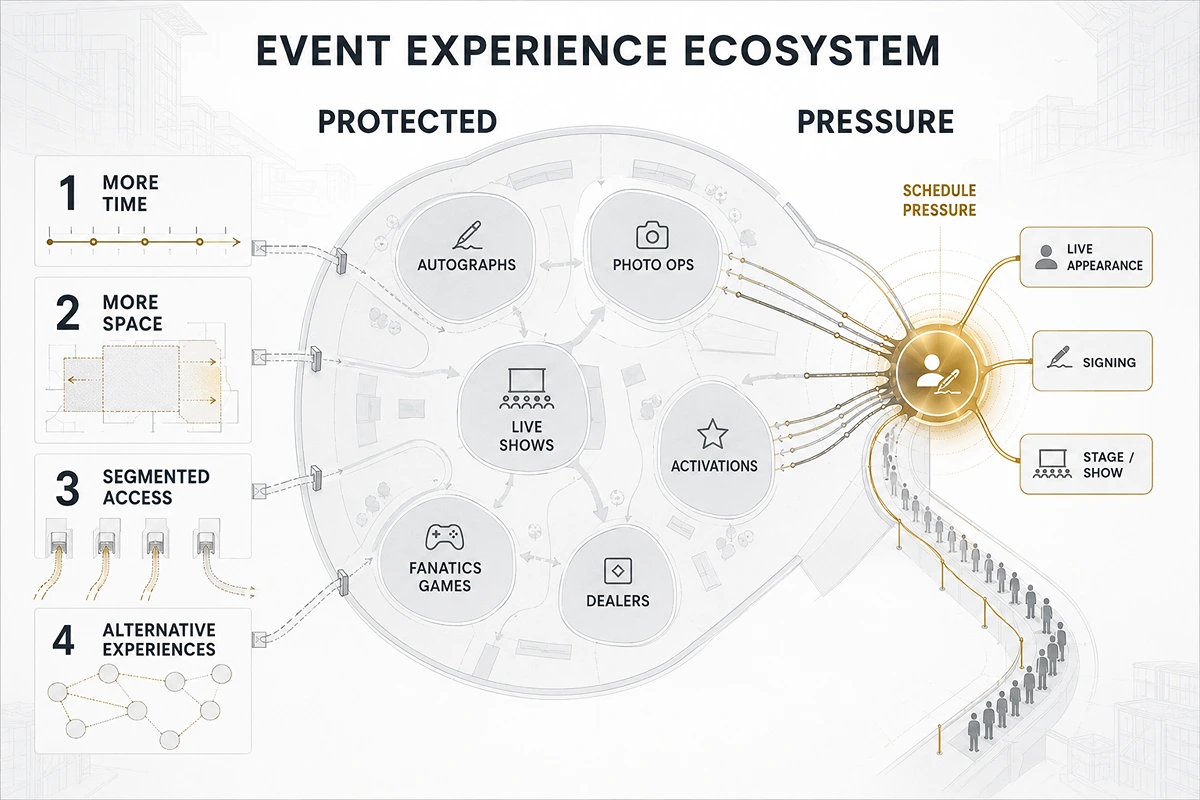
Fanatics Fest used several structural decisions to accommodate its growth. The fourth day created additional programming time, while a 25 percent increase in floor space allowed more attractions and visitors to be distributed across the Javits Center.
Multiple entry gates and early-access procedures separated some arrival demand. Paid autograph and photo-op purchases clarified capacity for limited interactions, and sold-out labels helped prevent further sales once sessions became unavailable.
A broad programme gave visitors alternatives. Someone unable to access one athlete could still explore dealers, live shows, challenges, merchandise and brand installations. That variety gave the event more resilience than a programme dependent on a small number of headline moments.
Yet alternatives do not always replace the main reason a guest attended. A visitor who travelled for one autograph may value other attractions while still viewing the missed interaction as the defining outcome of the day.
That is why schedule communication remained so important. Celebrity appearances had fixed durations, while demand and signing speed could vary. Separate purchases also raised the emotional and commercial stakes attached to delays.
The event’s scale intensified this challenge. A visitor redirected after a schedule change may have needed to cross a substantial part of the venue. The usefulness of an alternative depended on travel time, remaining capacity and how clearly staff explained the new option.
Fanatics Fest therefore protected personal access through added time, larger space, segmented tickets and a wide programme. The Josh Hart episode showed the fragility that remained when one scheduled experience ran into another.
The main attraction survived because Fanatics Fest created thousands of possible moments rather than one universal route. Its operational lesson lies in recognising that every guest still carried a personal definition of what the main attraction meant.
Design note: Infographic
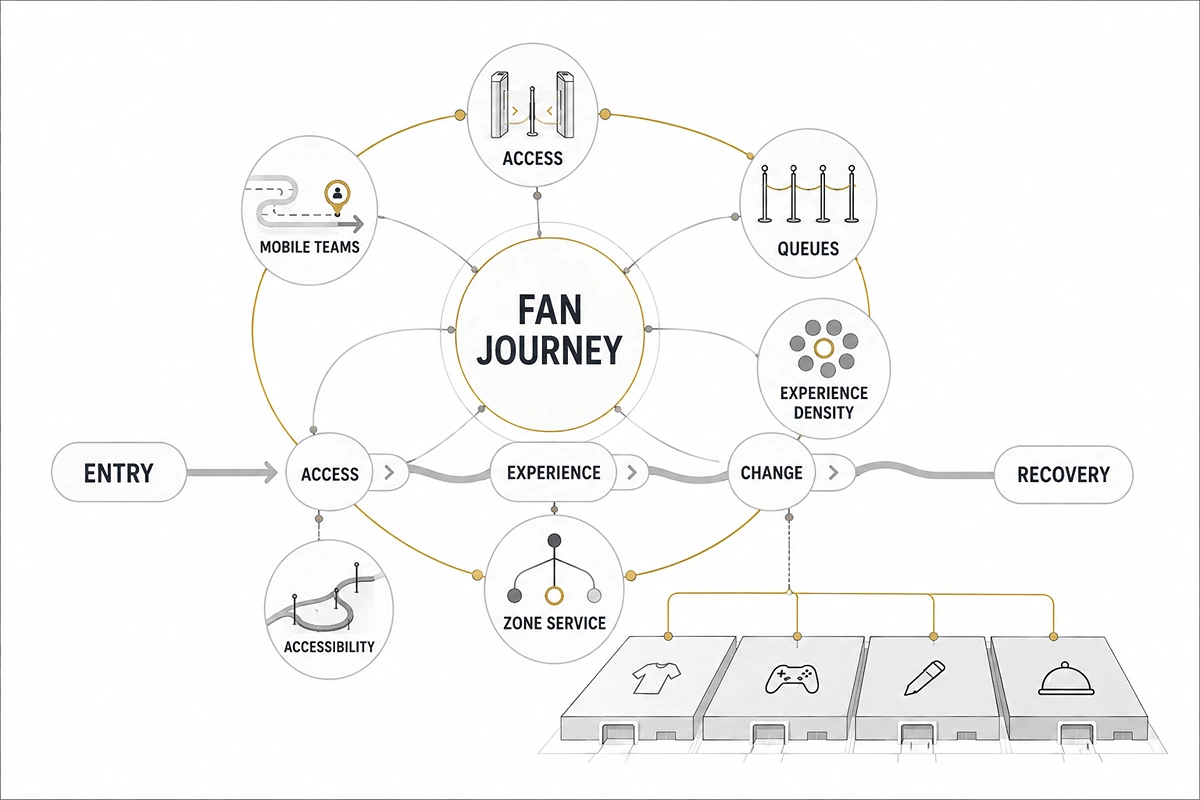
The Fan Journey Through Fanatics Fest
Present five connected stages:
- Enter: General admission, early access and gate selection
- Verify: Tickets, autograph vouchers, photo access and invitations
- Navigate: Stages, dealers, activations and competition areas
- Experience: Athlete interaction, product release, show or game
- Recover: Schedule changes, sold-out sessions and redirected plans
Use a clean horizontal or gently curved journey. Keep each stage visual and avoid turning the graphic into an operational checklist.
What Fanatics Fest 2026 Revealed About Staffing Large Fan Events
Fanatics Fest demonstrates why staffing plans must follow the structure of the experience. Attendance establishes the overall scale, but access rules, schedule density and audience purpose determine where pressure develops.
Staff Need to Understand Entitlements
Guests can hold valid admission while lacking access to a particular autograph, photo opportunity or lounge. Staff need to distinguish those permissions quickly and explain them without making the guest feel passed between departments.
This requires a working understanding of the programme. A staff member positioned near a paid experience should know the relevant ticket requirement, check-in process, session status and escalation route.
Queue Communication Protects Paid Experiences
Waiting becomes more sensitive when a guest has purchased a separate interaction. Silence can create doubts about availability, timing and whether the experience will be honoured.
Updates should answer the questions guests are already asking: what has changed, what remains valid and what action they should take. The Hart signing demonstrates how quickly unanswered questions can shape public perception.
Mobile Teams Matter Around Celebrity Movement
Static assignments provide coverage, but celebrity appearances can change crowd density beyond fixed positions. Mobile supervisors and redeployable staff can reinforce routes, create temporary boundaries and support nearby teams when interest rises unexpectedly.
These staff need a clear communication hierarchy. Speed loses value if different teams circulate conflicting explanations.
Deployment Should Follow Experience Density
An area containing several timed attractions may need more support than a larger space used primarily for browsing. Staffing formulas should therefore account for the number of decisions, entitlements and transitions occurring in each zone.
This approach also helps identify where guests are most likely to need intervention. Queue entrances, schedule intersections and transitions between public and restricted spaces often carry more operational weight than open floor area.
Accessibility Must Continue Through the Experience
An accessible entrance represents the beginning of the journey. Attendees also need appropriate routes to signings, stages, activations, seating, amenities and exits.
Staff should know those routes and understand how schedule pressure may affect someone who requires additional travel time or assistance. Equal access depends on practical event-day knowledge as well as physical venue features.
Different Zones Require Different Service Behaviours
The dealer marketplace, Fanatics Games, family activities, autograph stations and 40/40 Club served different expectations. Each environment required its own briefing, communication style and escalation process.
A single event can therefore need high-volume greeters, access-focused ticket checkers, informed ushers, promotional teams, production support and discreet hospitality staff working within the same building.
How Eventstaff Services Map to an Experience Like Fanatics Fest
An event with Fanatics Fest’s mix of timed access, live programming, public activations and VIP hospitality would require several specialised teams. Treating the entire venue as one staffing environment would leave important differences in access, pace and guest expectation unaddressed.
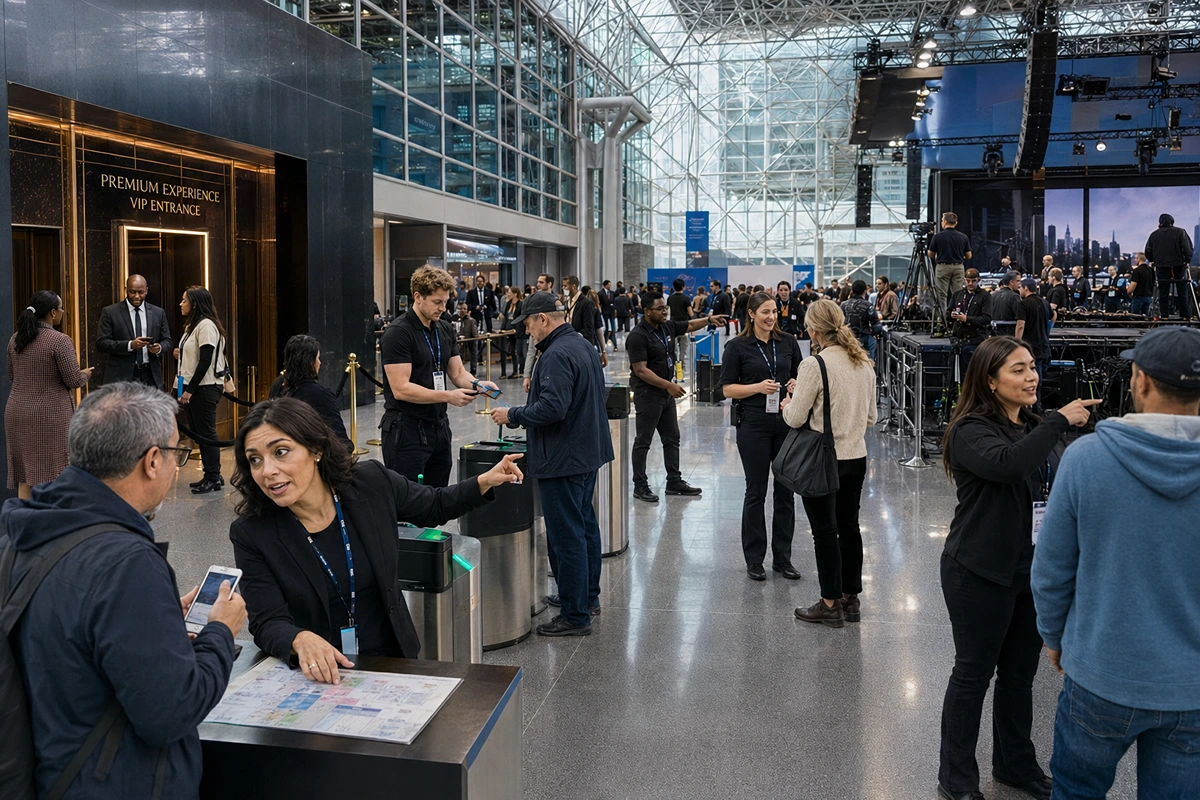
Check in staff and ticket checkers can separate admission types, confirm entitlements and direct guests before they commit time to the wrong queue. Greeters and ushers can interpret the programme, support wayfinding and help visitors recover when a preferred experience reaches capacity.
Crowd control personnel can protect entrances, signing zones, stage boundaries and temporary areas of concentrated attention. Their value increases when celebrity movement or surprise programming changes the expected audience pattern.
Brand ambassadors, booth staff and experiential staff can operate sponsor experiences while explaining participation mechanics, managing demand and keeping interactions consistent across thousands of visitors. Production teams can support transitions between live shows, competitions and scheduled appearances.
Hostesses can manage restricted hospitality entrances and guest-list protocols, while event servers and bussers can maintain premium lounge environments. Each team needs a service-specific brief connected to the larger operating plan.
Eventstaff provides trained personnel across these functions for major events in New York City and other leading U.S. event markets. The Fanatics Fest case shows why staffing decisions should begin with the journeys guests are trying to complete.
Final Words
Fanatics Fest 2026 reached 200,000 visitors by expanding its time, space, programme and cultural reach. Yet the event remained compelling because guests could still pursue individual experiences with athletes, creators, products and competitions.
Its success came from offering many routes through the same venue. Collectors, families, appointment holders, general sports fans and VIP guests could each build a different version of the event.
The visible pressure points were equally instructive. A celebrity moving between commitments, an unexplained pause in a signing queue or a surprise appearance could change the experience for hundreds of people within minutes. Space could absorb the audience, while informed staff were needed to protect the purpose behind each journey.
For organisers planning a convention, festival or fan experience at this scale, staffing must connect admission, access, scheduling, navigation and recovery. Eventstaff can build specialised teams around those requirements, helping guests reach the experiences that brought them through the door.