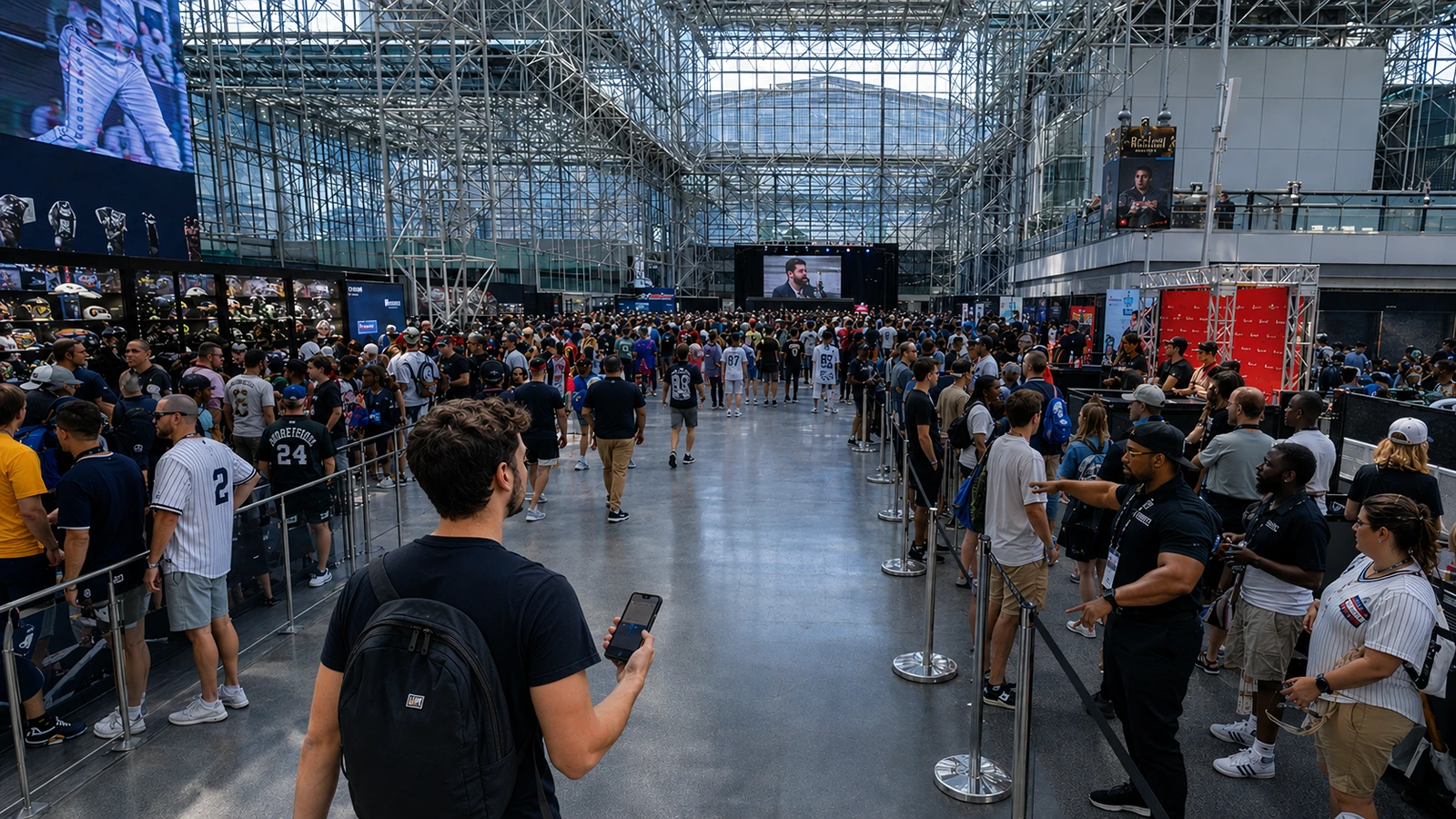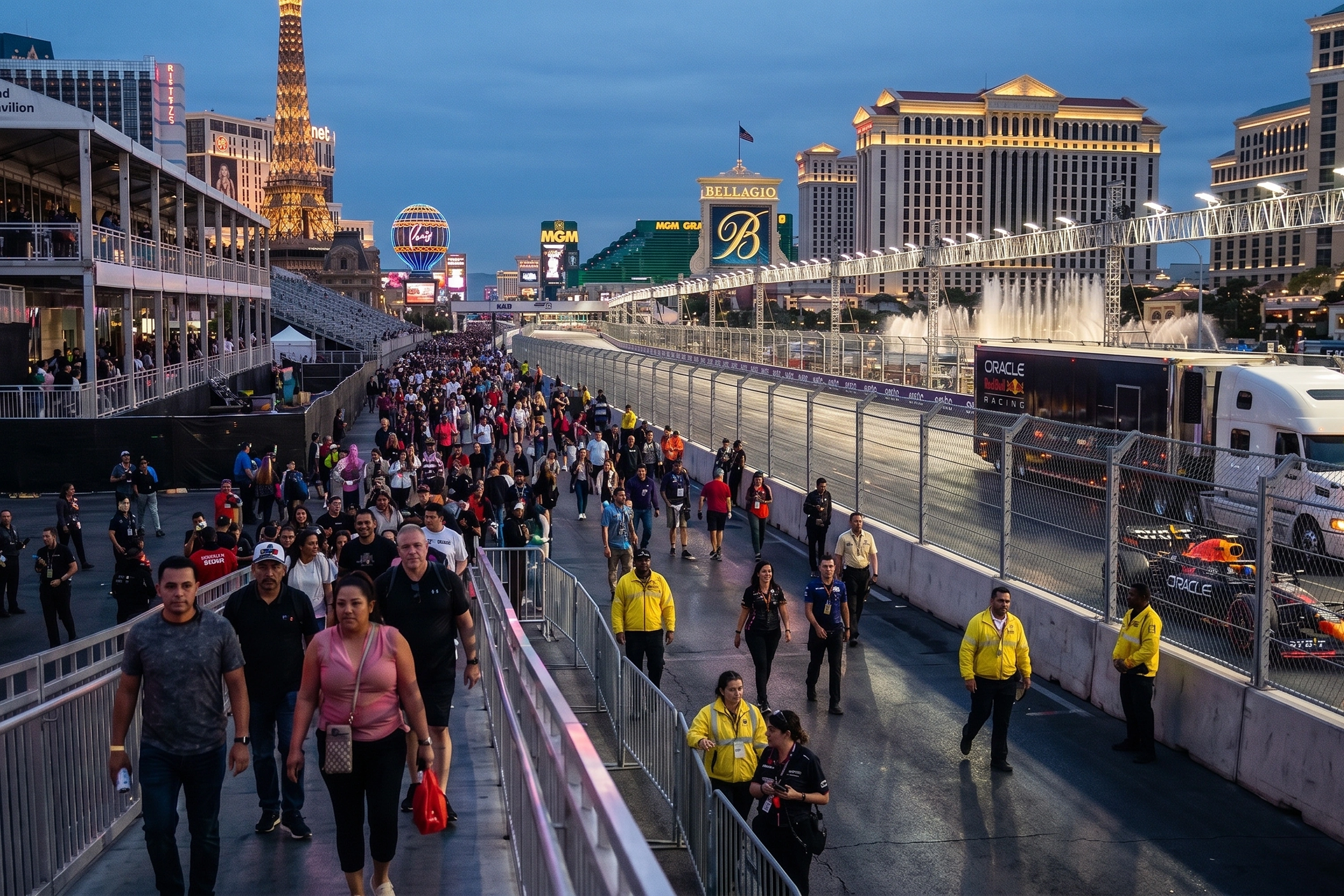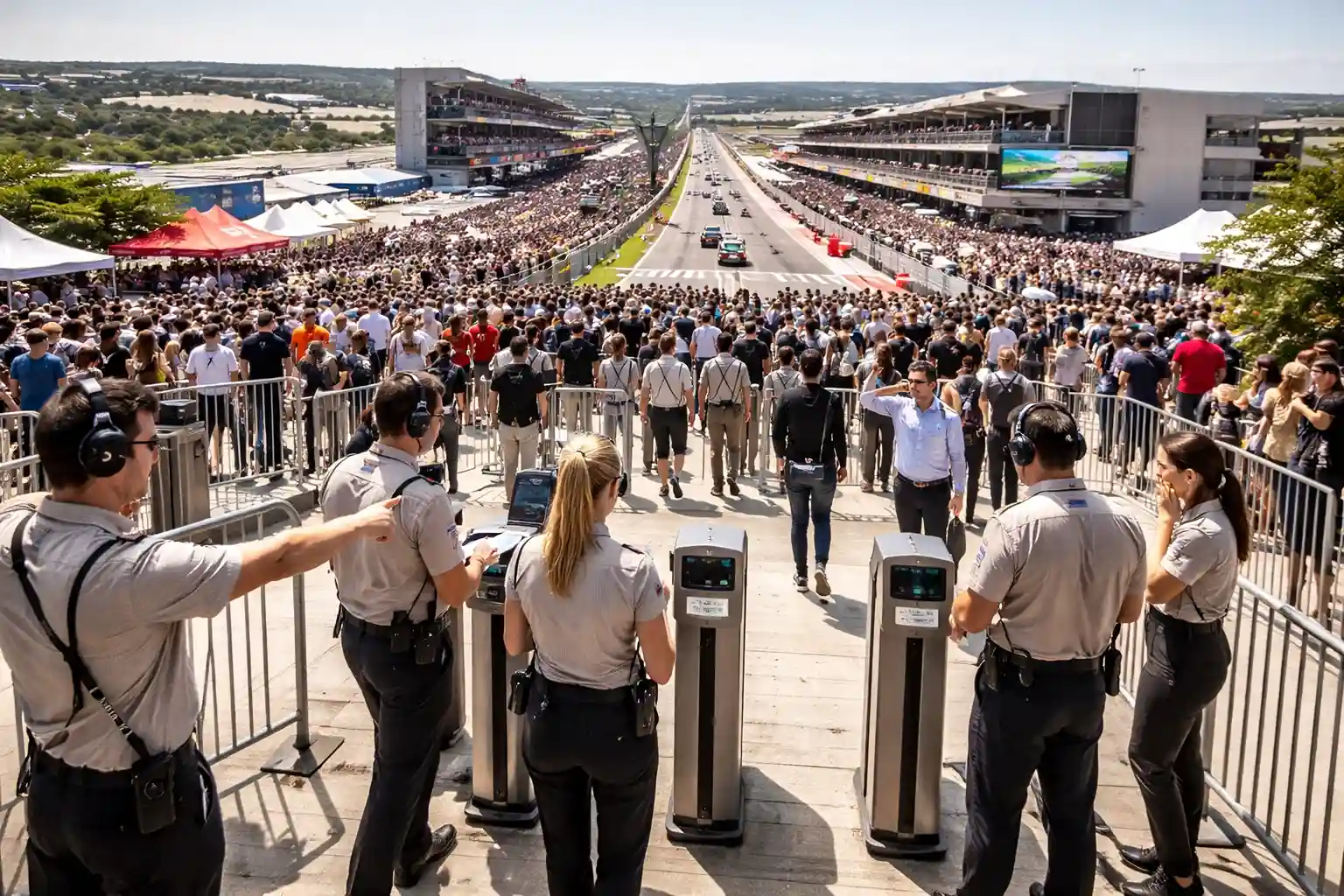

CES 2026 ran in Las Vegas from January 6 to January 9, 2026, and the official event recap framed it as a show of 148,000+ attendees, 141 countries, territories, and regions, and 4,100+ exhibitors. That scale matters, but it is only the starting point. The stronger case-study question is what that scale looked like operationally once guests had to register, pick up badges, move between campuses, reach keynotes on time, support exhibitor meetings, and navigate a show built across a much larger footprint than one convention hall. That is why CES works so well as a case study in trade show staffing in Las Vegas. It was not only a major technology show. It was a city-scale business event whose success depended on how clearly people could move through a layered event environment in one of the country’s most demanding hospitality markets (CES 2026 recap.
The venue structure made that even more obvious. CES 2026 operated across 12 official venues and more than 2.5 million net square feet of exhibit space, grouped into three main campuses: LVCC Campus, Venetian Campus, and C Space Campus. Once a trade show is built that way, staffing stops being a simple matter of covering a registration area and a show floor. It becomes a live operating system. Attendees, exhibitors, speakers, buyers, media, and executives are no longer moving through one contained environment. They are moving through several linked ones, each with its own pace, audience behavior, timing pressure, and service expectations.
CEO Excerpt
“At a show like CES, guests do not judge the event only by the booths or the keynote lineup. They judge it by how easy it is to get oriented, get moving, and stay on schedule. Strong staffing protects that confidence at every transition.” - CEO, Eventstaff

Why CES 2026 Is a Defining Case Study for Trade Show Staffing in Las Vegas
CES is a stronger case study than a typical trade show because it exposes several operational systems at once. Many shows are large but still behave like one-venue events. CES did not. It behaved more like a distributed business ecosystem, which makes the staffing lessons clearer and more commercially useful.
- It was a global business event with enough scale to make weak support immediately visible.
Once a show attracts more than 148,000 attendees and 4,100+ exhibitors, support failures do not stay local for long. A slow badge process, a vague shuttle transition, or unclear wayfinding can affect not only one guest’s experience but also the pace of meetings, keynote attendance, booth interactions, and time-sensitive movement across the day. That is why CES 2026 is best understood as a systems case study rather than a “busy convention” story. - Its structure created several concurrent attendee journeys rather than one uniform show path.
A buyer trying to move between campuses behaves differently from a startup exhibitor anchored to one floor. A keynote attendee has different timing pressure from someone browsing Eureka Park. Media moving between briefings face a different rhythm again. Good trade show staffing in Las Vegas has to reflect that reality. It cannot assume one generic attendee type and one generic support model. - It happened in a city that already rewards speed, clarity, and visible organization.
Las Vegas is not a neutral host market. The LVCVA’s visitor statistics page positions the city through ongoing tourism indicators drawn from multiple agencies, which underlines the point that major events here land inside a mature visitor economy, not in a low-pressure market. For staffing, that matters because guests in Las Vegas are already used to dense movement, hospitality standards, and large-format public experiences. They notice immediately when a show feels easy to navigate and when it does not.
What Happened at CES 2026 and Why It Mattered Operationally
The event facts themselves already tell part of the staffing story. CES 2026 was not designed as a static expo where most guests could park once, enter once, and spend the rest of the day inside one predictable footprint. The show was spread across multiple campuses and official venues, and the attendee-facing materials treated navigation, transportation, and badge pickup as core planning issues, not side notes. That is the first sign that what happened at CES mattered operationally.
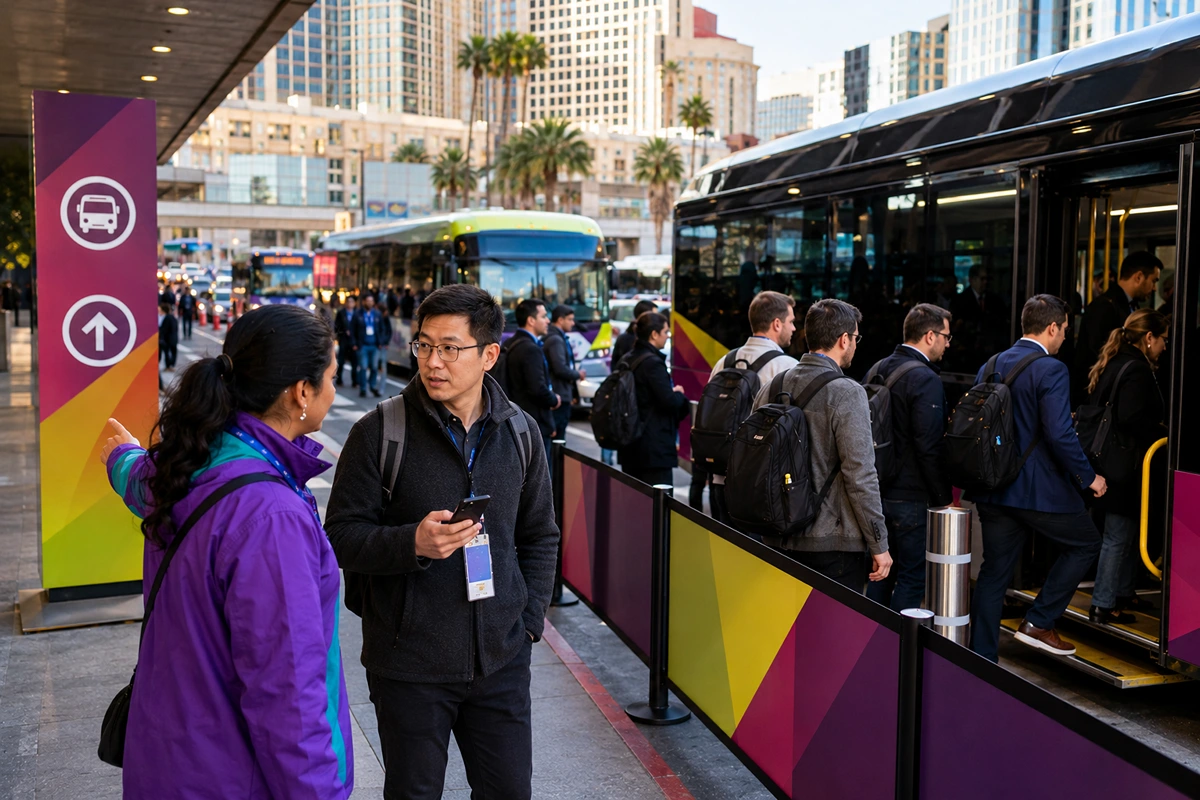
The second sign is how attendee movement was formalized. CES offered complimentary hotel shuttle service to and from the LVCC and Venetian Expo from Monday, January 5 through Friday, January 9. It also ran Tech Express between the LVCC and Venetian Expo and a C Space Shuttle to ARIA from both LVCC and Venetian Expo from Tuesday to Thursday. Those are not minor convenience features. They show that venue-to-venue movement was central to the event design. Once an event has to actively move guests between campuses on that scale, staffing becomes critical not just at entrances but at transfer points, loading points, drop-offs, and wayfinding moments between destinations.
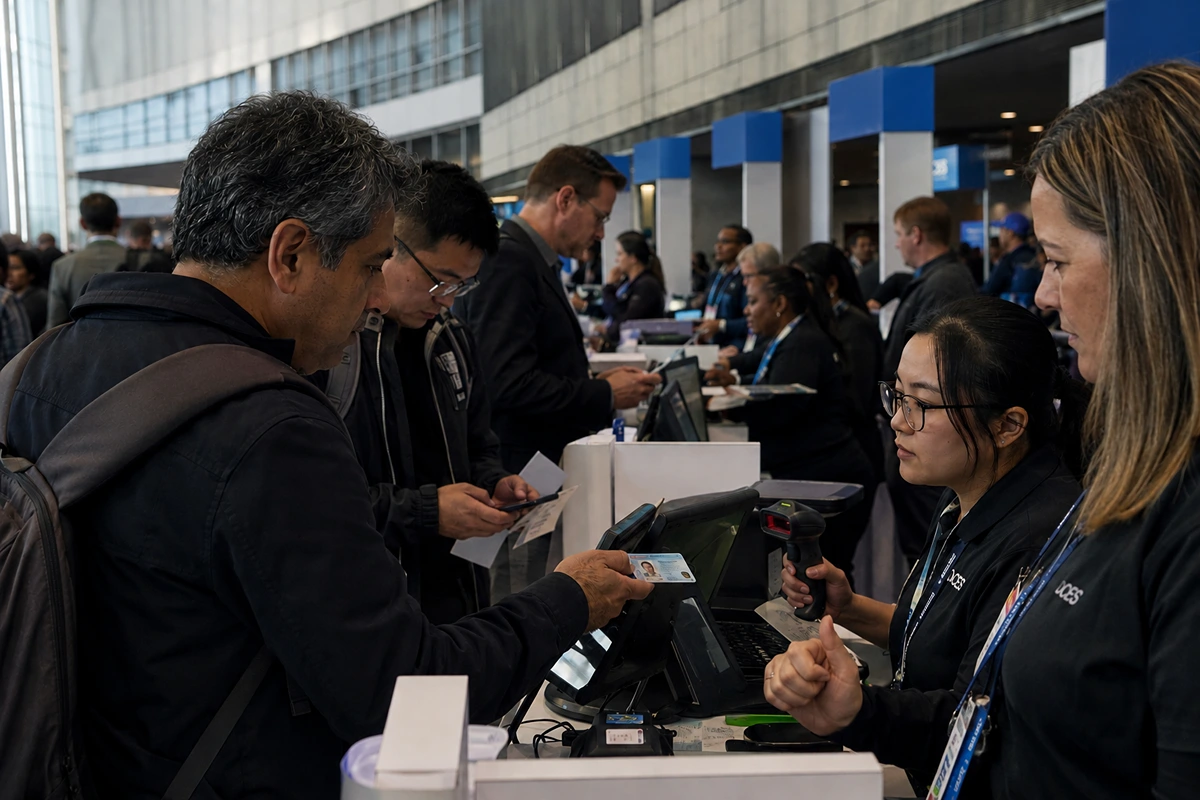
Badge access was handled the same way: as a serious first-touchpoint requirement. CES required attendees to pick up their own badge before entering show facilities and present both a government-issued photo ID and a registration confirmation with QR code. That is a strong sign that badging was not just administrative housekeeping. It was part of the guest experience architecture. It also means first-touchpoint staffing mattered earlier than many exhibitors or attendees may have realized. The first pressure at CES did not begin only when someone stepped onto a show floor. It began when they had to prove identity, find the right pickup location, and complete access steps without losing time from a tightly scheduled business day.
Why Las Vegas Changes the Trade Show Staffing Equation
A trade show of this size would be operationally demanding in almost any city. In Las Vegas, the demands become more layered because the city itself encourages movement across hotels, venues, rides, shuttles, hospitality settings, and meeting environments.
- Las Vegas normalizes multi-venue behavior.
Guests do not think in one simple venue-to-parking pattern. They think in hotel-to-campus, campus-to-keynote, exhibit-to-meeting, meeting-to-dinner, and venue-to-venue transfers. That changes the staffing equation because the event has to feel coherent across a wider behavioral map. At CES, the official shuttle model made that especially explicit. When a show needs structured transport between campuses, it is telling you that movement between places is part of the show itself, not just a prelude to it. - The market raises expectations around pace and clarity.
Las Vegas visitors are used to a city that explains itself quickly. Signage, front-of-house support, concierge behavior, transportation flow, and guest services all tend to operate with visible urgency. A trade show that feels slow to decode or hard to navigate therefore stands out more sharply here. This is one reason Las Vegas trade show staffing cannot be reduced to booth labor alone. It also has to include the visible human layer that keeps the show understandable under pressure. - Trade show staffing agencies las vegas cannot think only in terms of floor coverage.
A show like CES makes that clear. Staffing needs extend from registration and badge pickup to campus transitions, keynote flow, guest support, exhibitor hospitality, and wayfinding across multiple environments. Agencies that think only in terms of handing out brochures or standing beside a booth are not solving the real problem. The real problem is how to keep several attendee journeys moving cleanly through a distributed business event.

The Attendee and Exhibitor Journeys CES 2026 Created
One reason this case study matters is that CES did not create one simple audience path. It created several.
- The attendee journey was structured around access, timing, and movement.
An attendee first had to complete badge pickup requirements, then orient themselves around campus maps, session schedules, exhibit priorities, and transport options. That means the event experience was defined early by whether someone could get verified, get oriented, and get moving without losing schedule control. In a smaller trade show, those moments may be compressed enough to feel trivial. At CES, they were large enough to become part of the event’s public-facing quality. - The exhibitor journey was different, but no less staffing-sensitive.
Exhibitors had to think about booth readiness, meeting schedules, buyer traffic, hospitality, and how guests were finding or failing to find their part of the show. A strong stand design is not enough if the surrounding event environment makes movement difficult or delays badge-based access. Exhibitor performance is partly dependent on the show’s staffing environment because the event’s visible clarity influences who arrives on time, who lingers, and who gives up on a route or hall change. - The keynote and conference journey added concentrated surges to the day.
CES publicly centered keynotes and conference programming as major attractions. That creates time-compressed movement where attendees are less tolerant of delay and more likely to judge the event by how well it handles transitions. For staffing, this means support around session flows has to anticipate urgency rather than merely respond to it. The show is no longer only about browsing. It is also about hitting schedules. - International attendance widened the support challenge.
With attendees from 141 countries, territories, and regions, clear orientation becomes even more important. Visible support, direct guidance, and confidence at first-touchpoint moments matter more when the audience is globally mixed and operating across multiple venues, time pressures, and business goals. That is one reason CES 2026 is such a strong example of how trade show staffing in Las Vegas needs to support comprehension as much as coverage.
Where Trade Show Staffing Pressure Built First at CES 2026
This is where the case study becomes most useful. The real question is not whether CES was large. It is where pressure likely became visible first.
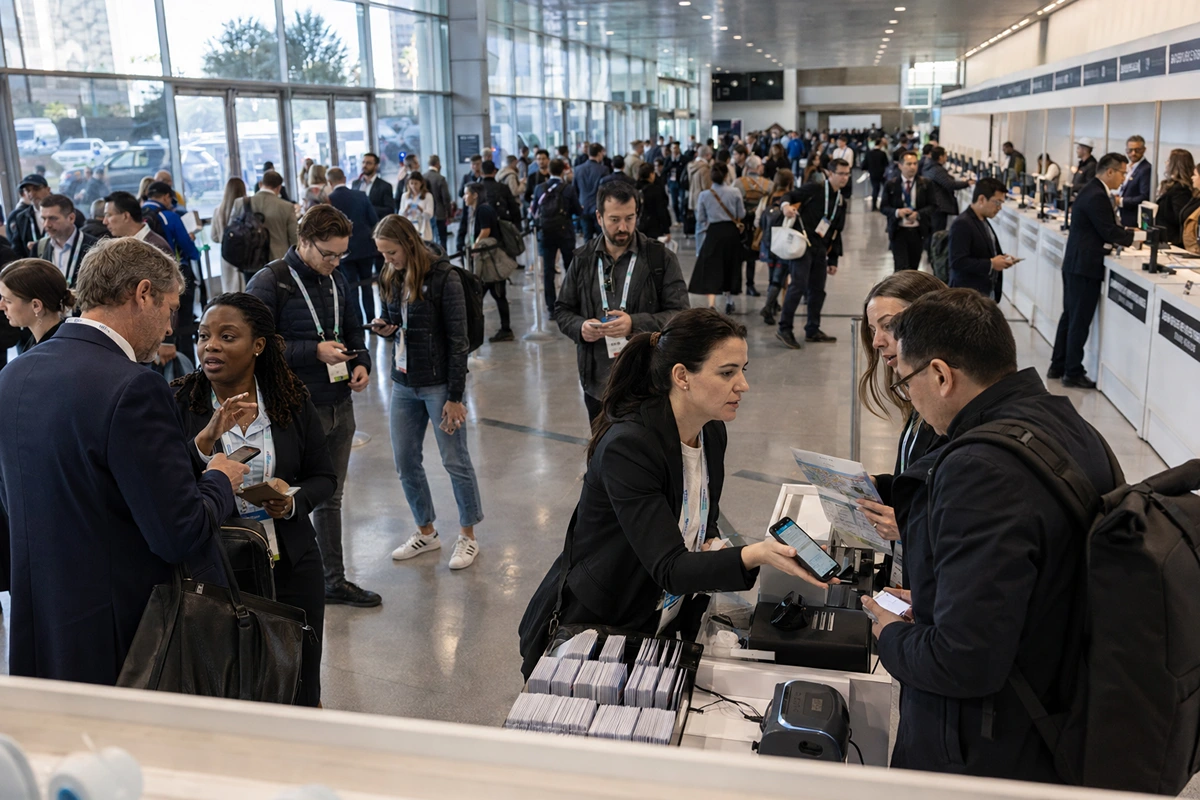
- Badge pickup and verification were an obvious first pressure point.
The official requirement that every attendee pick up their own badge before entering show facilities, using photo ID and a registration confirmation, means first-touchpoint control was central to the event. This is the kind of point where strong staff presence changes the entire day. Clear instructions, visible assistance, and efficient triage reduce confusion before it spreads into delayed arrivals, missed meetings, or irritated first impressions. Weak staffing here would have been felt immediately because guests were being asked to complete a formal access process before they could participate in the show at all. - Inter-campus movement created a second major pressure zone.
CES did not simply rely on attendees to solve venue changes themselves. It formalized movement with hotel shuttles, Tech Express, and C Space shuttles. That means transfer points were part of the official event experience. At those points, staffing value is straightforward: guests need confirmation, direction, timing clarity, and reassurance that they are getting to the right place. If transitions between campuses feel loose, the show feels fragmented even when each hall is well run. - Wayfinding across a 12-venue show was not a design detail. It was a core service requirement.
The official maps page itself acknowledges this by positioning campus maps and floor plans as essential orientation tools. Once an event reaches that scale, signage alone does not do all the work. Human guidance becomes important because guests are making time-sensitive decisions in real time. That is especially true for business attendees who are not wandering casually. They are trying to make appointments, catch keynotes, meet exhibitors, and cover ground quickly. - Exhibitor-facing support likely became one of the clearest on-floor differentiators.
At a show with 4,100+ exhibitors, a booth’s success is tied partly to how effectively it can convert passing attention into usable interaction. That is where booth staff, brand ambassadors, and guest-facing support matter. The event environment can bring people to the vicinity, but human support inside the stand determines whether that traffic becomes a conversation, a lead, a demo, or a dead stop. This is one of the most practical lessons for exhibitors studying CES retrospectively.

What CES 2026 Showed About Las Vegas Trade Show Staffing at Scale
CES made one point especially clear: distributed shows need staffing across transitions, not just destinations.
A one-venue convention can often get away with concentrating support in registration, key halls, and a few peak rooms. CES could not. Its official structure forced guests to think in campuses, routes, transfers, and timing windows. That means Las Vegas trade show staffing at this level is really about maintaining confidence across the entire chain of movement. A show can have excellent exhibitors and still feel difficult if the spaces between those exhibitors are hard to navigate or if access processes slow down the day before it starts.
It also showed that business events still depend heavily on guest-facing human clarity. There is a tendency to speak about large trade shows as if they are primarily built on technology, app schedules, and floor plans. CES 2026 is a good reminder that the visible human layer still matters. People trust a show more when someone can confirm where to go, what line is correct, how to handle a badge issue, when the shuttle boards, or how to reach the next campus. That kind of confidence is not decorative. It is part of the event’s operating system.

What Planners and Exhibitors Should Learn From CES 2026
The retrospective value of CES is that it gives planners and exhibitors a concrete model for what to prioritize at a large distributed show.
- Staff around pressure zones, not broad headcount assumptions.
Badge pickup, route decisions, shuttle transitions, keynote surges, and booth engagement points are where staffing changes outcomes first. A broad “we have enough people” mindset is weaker than a “we have support where timing and confusion matter most” mindset. - Treat movement between venues as part of the event experience.
CES formally built transport and campus navigation into the attendee journey. That is a signal to every planner working on a distributed event. The show is not only the hall. It is also the distance between halls and the confidence guests feel while crossing it. - Give first-touchpoint control more strategic importance.
If badge pickup and identity verification are required before entry, those moments deserve operational attention equal to major session rooms. The first touchpoint sets emotional tone and time pressure for the rest of the day. - Remember that exhibitor success depends partly on the surrounding staffing environment.
Exhibitors perform better when the wider show feels easy to use. Better wayfinding, better transition support, and better access processes improve not only guest mood but also commercial interaction on the floor.
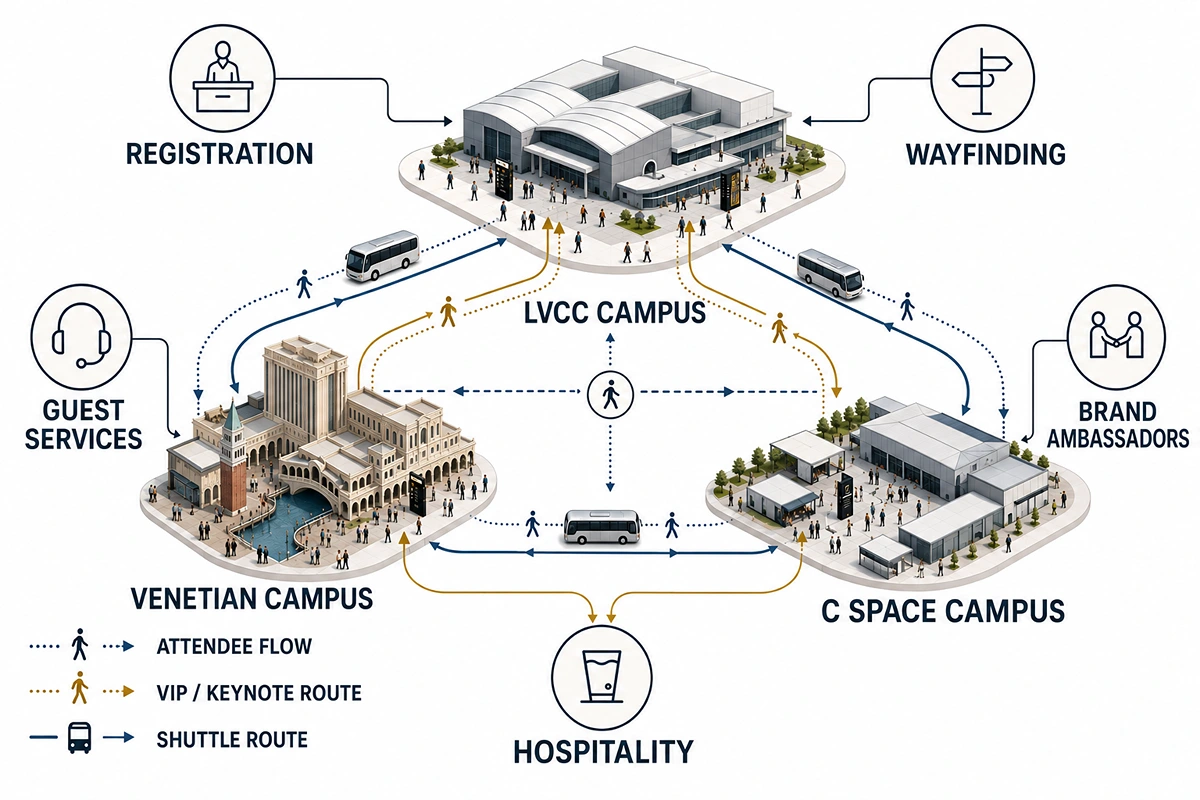
How Eventstaff Services Map to a Multi-Campus Trade Show Like CES
- Registration and check-in support matter where access rules create first-touchpoint pressure.
CES showed how identity verification and badge pickup can shape the whole day. That is a direct staffing opportunity for teams trained to keep first-contact moments clear and efficient. - Guest services and wayfinding matter where the event footprint is too large to rely on signage alone.
Multi-campus events need visible staff who can help guests stay on schedule across venues, transfers, and changing priorities. - Booth staff and brand ambassadors matter where exhibitors need to convert traffic into interaction.
At a show with thousands of exhibitors, on-stand human support remains one of the most practical differentiators. - Hospitality support matters where executive, keynote, or premium environments raise the service standard.
Business-facing events still carry premium touchpoints, and those zones need staff who can combine professionalism with speed.
Final Words
CES 2026 is a strong retrospective case study because it showed that trade show staffing in Las Vegas cannot be reduced to a convention-hall headcount exercise. The official structure of the show made that impossible. With 12 venues, three campuses, formal badge-pickup requirements, and organized inter-campus transport, CES functioned as a distributed live business environment where guests had to keep moving, orienting, verifying, and arriving on time. What that revealed is straightforward: the visible quality of a major trade show is shaped as much by the human support around transitions as by the content inside the halls. For planners, exhibitors, and buyers evaluating future shows, that is the main lesson CES left behind.