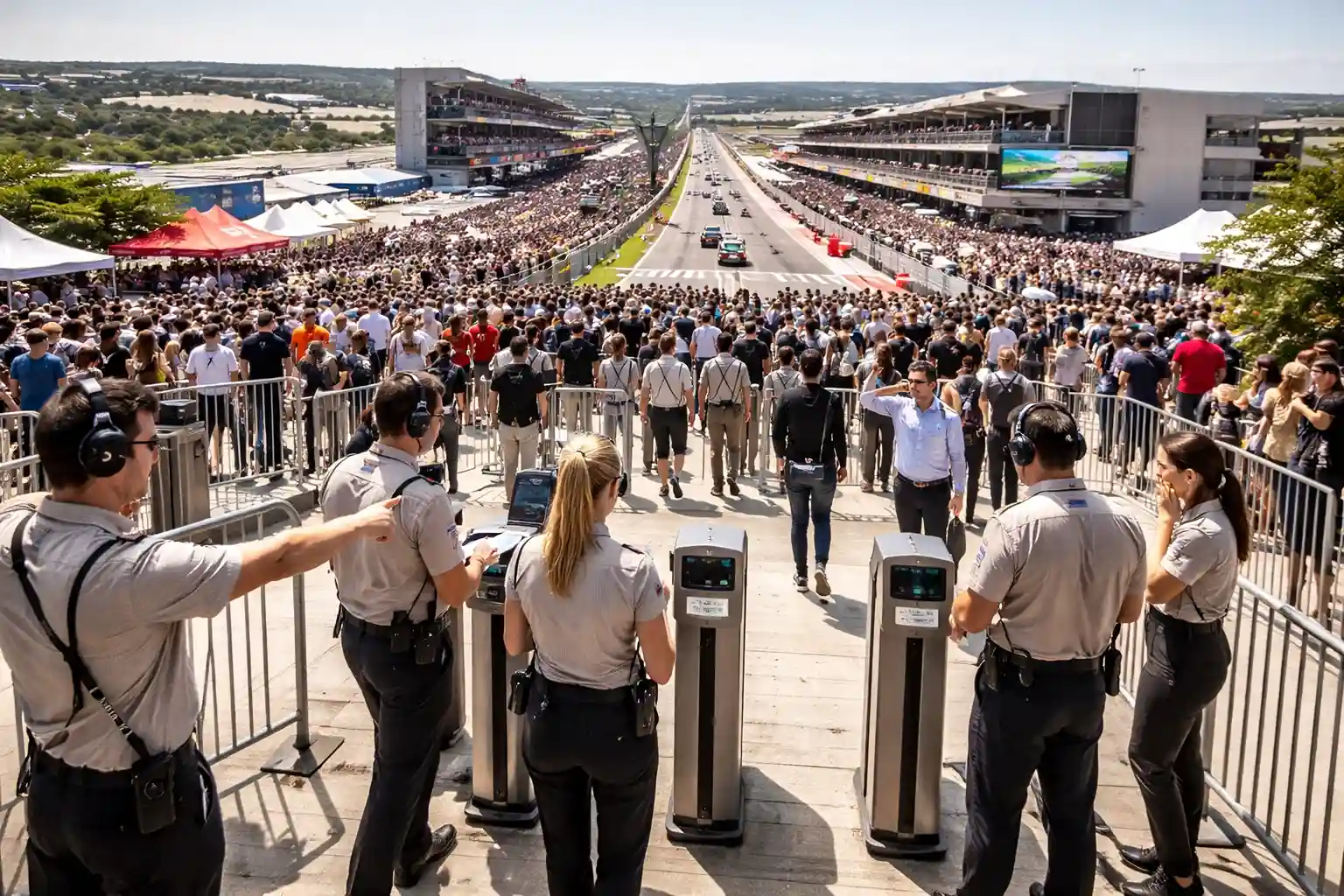

WrestleMania 42 is a useful case study because it forces planners to look beyond the old idea that a major wrestling event is simply a stadium crowd problem. The official event page positioned it as a two-night return to Allegiant Stadium on April 18 and 19, 2026, with parking opening at 11:30 AM, doors at 12:30 PM, premium options, transportation planning, and official hospitality packages already built into the public-facing event experience. That alone tells you this was not just about what happened in the ring. It was about how guests were expected to arrive, access the venue, move through it, and experience a much broader event environment across a full Las Vegas weekend.
Las Vegas makes that challenge more demanding. The city is designed around visitor movement, hospitality spend, and visible service standards. The Las Vegas Convention and Visitors Authority’s research hub frames the market through ongoing tourism indicators rather than isolated event snapshots, which is exactly the right lens here. In Las Vegas, a major event is rarely judged only by attendance. It is judged by how well the guest journey holds together across arrival, access, hospitality, and release. That is why event staffing is the right keyword for this case study. The city itself raises the operating standard, and a destination event like WrestleMania makes any weakness in delivery more visible because guests interact with the experience across several different touchpoints rather than one simple entry-and-exit cycle.
CEO Excerpt
“When an event lands in Las Vegas, guests notice every moment that feels smooth and every moment that feels uncertain. Strong event staffing is what protects that experience at the points where people feel pressure first.” - CEO, Eventstaff
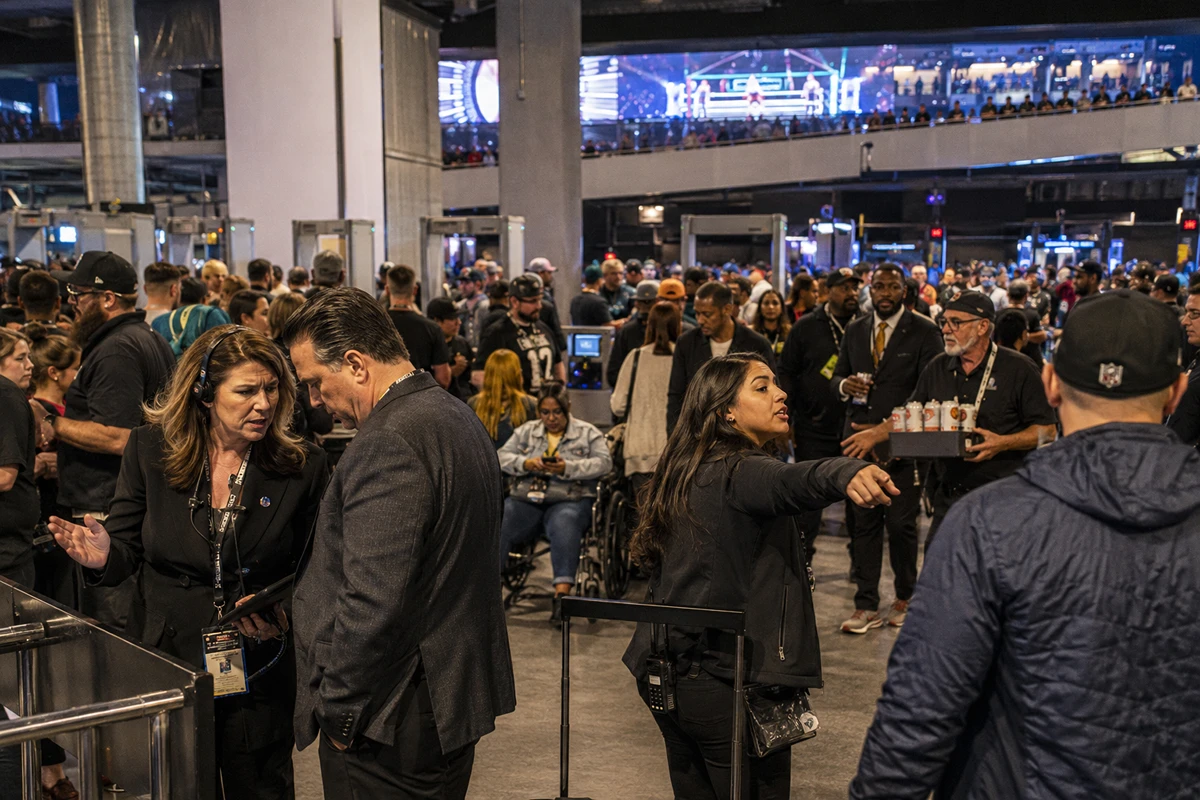
Why WrestleMania 42 Is a Strong Event Staffing Case Study
WrestleMania 42 is worth studying because it sits at the intersection of venue operations, premium service, hospitality positioning, and destination behavior. A lot of large events only test one or two systems hard. This one tested several.
- It was a two-night event, which changes the staffing question immediately.
A one-night mega-event can sometimes hide soft spots if the opening is strong enough. A two-night event is different. Staff performance has to hold through repeated ingress, repeated service demand, repeated premium-entry expectations, and a second full operating cycle after one day of guest load has already been absorbed. That makes consistency part of the product rather than a bonus. - The official event setup already points to a layered guest experience.
Public-facing information for WrestleMania 42 covered transportation, premium suites, priority pass packages, buy-now hospitality options, and pre-show access language. When an event is marketed that way, the staffing model has to support more than ticket scanning and seating. It has to support confidence, clarity, hospitality, and touchpoint quality. WrestleMania 42 therefore works much better as a destination-event study than as a simple stadium-event summary. - Las Vegas turns every major event into a broader guest-journey exercise.
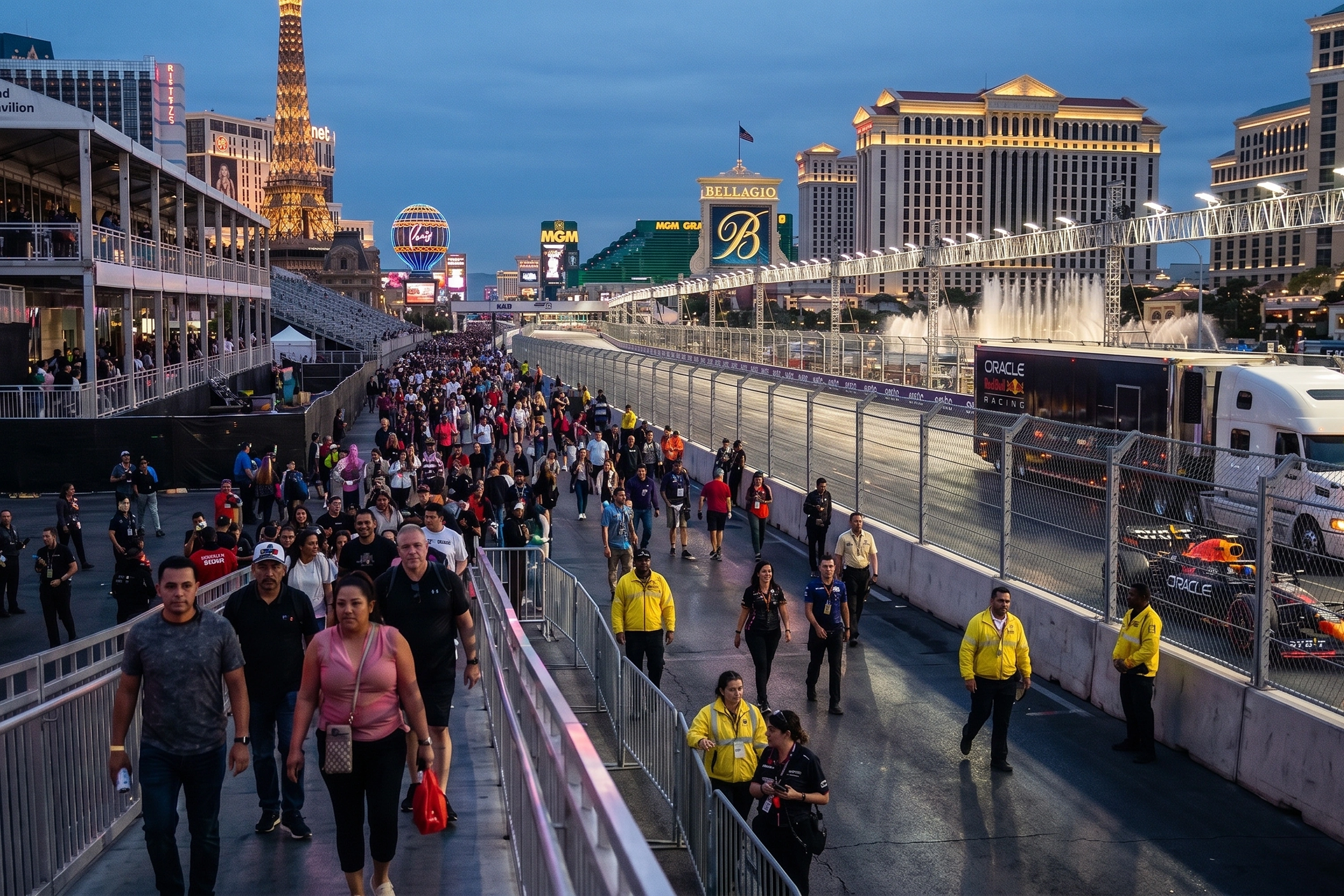
Allegiant Stadium is adjacent to the Strip and less than three miles from Harry Reid International Airport, with walking routes, rideshare points, taxi and shuttle access, and resort proximity all explicitly highlighted in official visitor guidance. That means the event begins well before the guest reaches a seat. From a staffing perspective, that matters because the most visible moments of friction often appear before venue entry or between venue touchpoints, not only once the guest is settled inside.

Why Las Vegas Changes the Event Staffing Equation
A strong case study has to explain why the host market matters. In this one, Las Vegas is not a backdrop. It is one of the reasons the staffing demands become more visible and more layered.
- Las Vegas teaches guests to expect visible efficiency.
In many cities, guests tolerate a little ambiguity because the event itself is the main attraction. In Las Vegas, visitors are already used to environments built around convenience, choice, hospitality, and service cues. They expect movement to feel intentional. They expect access points to make sense. They expect premium environments to look polished. That raises the performance threshold for event staffing because the guest is unconsciously comparing the event to the city’s broader hospitality standard. - Destination-event behavior creates more than one type of attendee.
A local fan who drives in for one night behaves differently from an out-of-town guest staying on the Strip, differently again from a premium hospitality buyer, and differently again from someone who has packaged the event into a multi-day Vegas trip. The staffing implication is important. There is no single “WrestleMania guest” profile. There are several guest journeys happening at once, and each one produces different friction points. - Las Vegas compresses travel, hospitality, and event flow into one visible experience.
Official venue guidance highlights proximity to the Strip, airport access, walking routes, drop-off points, bus access, and taxi and shuttle locations. That means the event is experienced as a chain of transitions rather than one isolated venue moment. The strongest Las Vegas event staffing strategies are built around those transitions because that is where the guest notices whether the event feels coordinated or fragmented.

The Guest Journeys WrestleMania 42 Created
This is where the case study becomes more useful than a broad “big crowd, big staffing” article. A destination event needs to be understood through the different guest paths it creates.
- The standard attendee journey was still complex.
Even the most basic attendee path involved transport choice, arrival timing, queueing behavior, entry processing, internal movement, service-zone decisions, and exit planning. In a smaller or more self-contained venue, those moments can be simpler. At WrestleMania 42 in Las Vegas, they were shaped by a larger urban entertainment environment, which meant even the standard journey still required visible support at multiple points. - The premium guest journey raised the service standard.
The official event page promoted premium suites and linked to priority pass packages from On Location, described there as the official hospitality provider, with premium seating, dedicated entrance access, pre-show events, parties, and VIP amenities throughout the weekend. Once an event publicly sells that level of experience, staffing around those guests has to reflect it. The expectation is not just access. It is a more controlled and more polished journey. - The destination visitor journey widened the operating map.
The Las Vegas Convention and Visitors Authority is charged with positioning Southern Nevada as a global leisure and business travel destination and notes the scale of the local hospitality footprint. That matters here because a high-profile event in Vegas attracts people who are not only coming to the stadium. They are moving through hotels, resorts, and the wider destination economy. In practical staffing terms, that means clarity and guest support matter across a wider emotional window. Guests are carrying the event with them longer, and they evaluate it through more than the ring card. - Accessibility creates another essential guest journey, not a minor operational exception.
Allegiant Stadium states that all gates are ADA accessible, that accessible seating is available throughout the venue, and that event-day guest-experience teams are available to assist. It also sets out accessible parking procedures and accommodation processes. That is important because first-class delivery at this scale has to include how easily guests with disabilities can actually use the venue and access support when they need it. Good event staffing at a destination event has to be prepared for that need as part of the normal guest experience, not as a last-minute adjustment
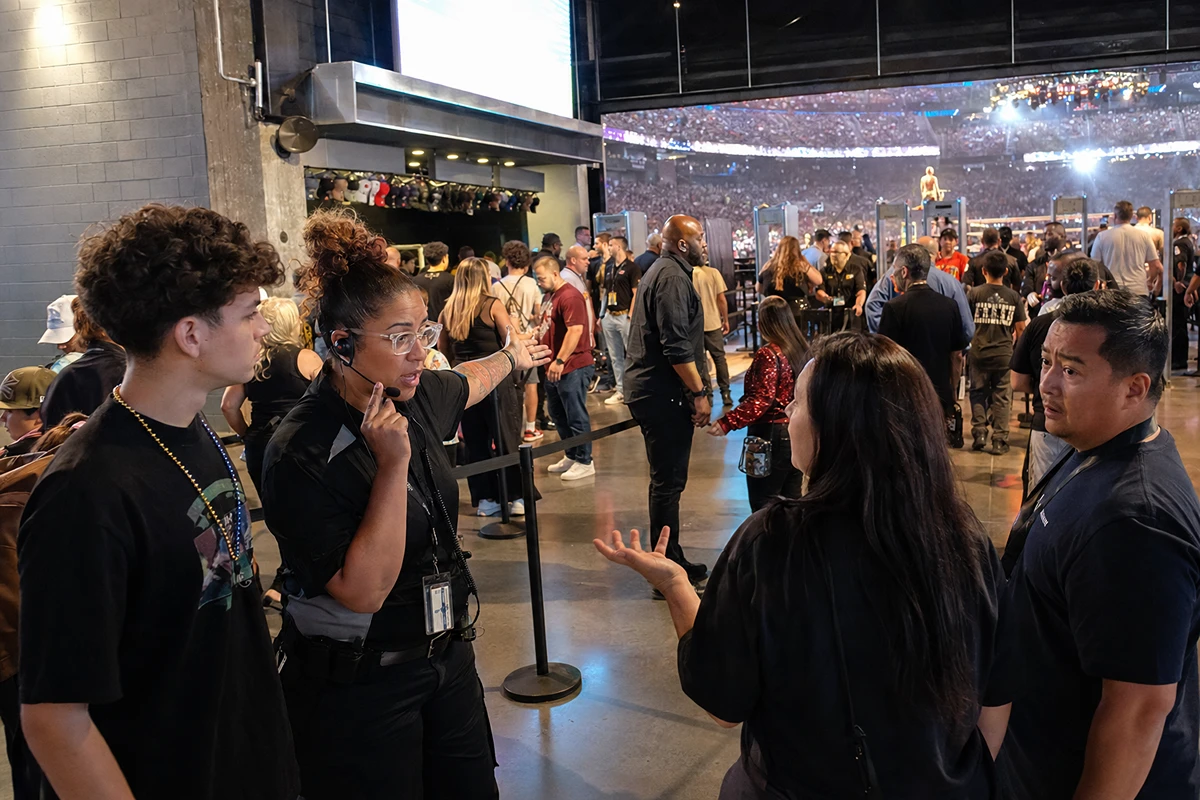
Where Event Staffing Pressure Builds First
At destination-event scale, pressure appears first at the points where the guest either has to decide something, wait for something, or transition from one part of the experience into the next. WrestleMania 42 is a strong example of that pattern.
- Arrival pressure builds before venue entry.
Official venue guidance calls out walking access from Las Vegas Boulevard via Hacienda Bridge, rideshare pick-up and drop-off zones, 24/7 Deuce bus access, taxi and shuttle areas, and advance parking arrangements. That means arrival is not a single stream. It is a mix of mobility types converging on one event. Staff do not need to solve all transport. They do need to help the guest feel like the transition from city to venue is legible and under control. That is often the first point where the event proves whether it is organized. - Ingress is where confidence becomes public.
Once guests reach the venue, line pacing and access clarity become highly visible. If lanes feel decisive, the event begins with confidence. If they feel uncertain, the event starts by creating doubt. This matters even more in Las Vegas, where guests expect the visible layer of the experience to feel sharper. Entry teams, queue support, directional staff, and hospitality-facing greeters all influence this moment because the guest does not separate “security,” “ticketing,” and “welcome” in real time. They simply decide whether arrival feels smooth. - Internal circulation pressure is concentrated, not evenly distributed.
Inside the venue, guests do not create equal demand across every space. Pressure grows around points of decision, around concourse intersections, around premium access points, and around concessions and merchandise. The strongest staffing plans are not the ones that spread labor evenly. They are the ones that recognize which moments are most likely to create hesitation and then place calm, visible support there early enough to keep the venue feeling readable. - Premium touchpoints carry disproportionate reputational weight.
A guest in a premium experience has bought a different promise. When the event offers dedicated entrances, VIP amenities, premium seating, and exclusive pre-show access, staffing has to reflect the value of that promise. Slow premium check-in or uncertain premium routing damages the experience faster because the guest is not only comparing it to general admission. They are comparing it to the premium story they were sold. This is where hospitality teams, premium-entry staffing, and polished guest-facing support matter most. - Exit and release are often underweighted in event planning.
By the time a major show ends, guests are more tired, less patient, and more likely to move with urgency. At that point, visible clarity matters as much as it did at ingress. A destination event in Las Vegas also means many guests are not simply heading home. They are moving back into the city’s hotel and entertainment environment. That makes release another major test of event staffing because the end of the show is not the end of the guest experience.
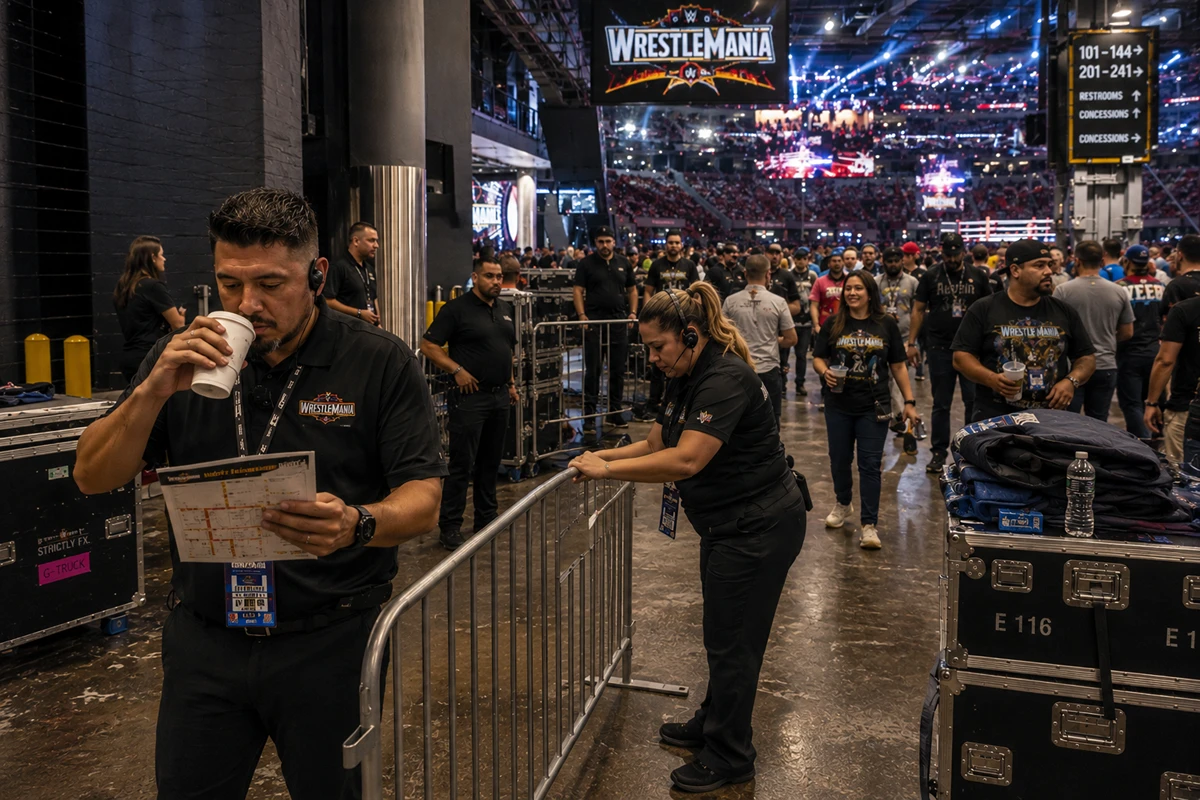
What Two-Night Execution Reveals About Event Staffing
The two-night format is one of the biggest reasons WrestleMania 42 works so well as a case study. It reveals whether staffing design is genuinely durable.
- Night one can flatter an event plan.
A strong opening can cover a lot of minor issues because the staff is fresh, the guest energy is high, and the novelty of the event carries some emotional weight. That is why a one-night event can sometimes look more operationally mature than it really is. - Night two exposes whether the staffing model is repeatable.
Repeat-night delivery tests reset discipline, team endurance, role clarity, and whether touchpoint staffing was designed well enough to reproduce quality. If entry was only barely manageable on night one, that weakness is easier to feel on night two. If premium touchpoints were under-supported, returning pressure makes that clearer. If guest movement relied too heavily on improvisation, that becomes harder to hide the second time through. - The value of staffing rises when the event has to be re-earned.
A multi-night event asks staff to recreate confidence rather than just sustain it. Guests still expect pace, polish, and clarity. The event cannot behave as if one good first impression is enough. That is why case studies of repeat-night events are so useful. They show whether staffing is part of the design or merely part of the deployment.

How Eventstaff Services Map to a Destination Event Like WrestleMania 42
This is where the case study becomes commercially useful without sliding into service-page copy.
- Hospitality staff matter where the event promise is most visible.
Premium entrances, VIP amenities, guest-support points, and high-touch environments all need staff who can combine clarity with polish. These are the roles that protect the parts of the event where hesitation feels most damaging. - Crowd-management support matters where movement becomes uncertain.
Ingress, concourse routing, queue organization, and exit release all benefit from staff whose value lies in keeping a busy environment readable rather than dramatic. Good crowd support reduces visible friction before it becomes a larger problem. - Promotional and experiential teams matter where branded value intersects with the guest journey.
Destination events in Las Vegas often stretch beyond a single venue moment. Partner spaces, pre-show experiences, and hospitality activations all need staff who can create engagement without making the environment feel messy or overmanaged. - Large-format event staffing matters because the event is made up of several systems at once.
WrestleMania 42 was not one staffing problem. It was a linked set of arrival, access, circulation, premium, service, and release challenges. That is exactly why the right Eventstaff angle is a systems angle.

What WrestleMania 42 Teaches Planners About Las Vegas Event Staffing
The broader lesson is not about wrestling. It is about how a destination market changes the staffing model for a major event.
- The venue is only one part of the operating picture.
Guests experience the event across travel, approach, entry, internal movement, hospitality, and departure. Staffing plans that focus only on what happens after ticket scan leave too much of the experience exposed. - Premium expectations raise the cost of visible friction.
In Las Vegas especially, uncertainty stands out quickly. Guests are used to environments built around service cues. That means small points of hesitation can feel more damaging than they would in a less hospitality-led market. - Strong event staffing is built around guest journeys rather than abstract role counts.
A destination event creates several guest paths at once, and each one needs support at different moments. That is the main operational lesson from WrestleMania 42. The smartest staffing plans are not the broadest. They are the most precisely matched to the moments where guests actually need help.
Final Words
WrestleMania 42 is a strong case study because it shows what event staffing looks like when a major event is also a Las Vegas destination weekend. The official event details emphasized not just dates and match card, but transportation, hospitality, premium seating, dedicated entrances, and city-adjacent access. Allegiant Stadium’s own visitor guidance reinforced how tightly the venue is tied to the Strip, the airport, rideshare systems, walking routes, and guest-experience services. Together, those details make the event a clear example of how Las Vegas event staffing has to support more than attendance. It has to support a full guest journey in one of the country’s most visible hospitality markets.