Formula 1 race weekends in the United States are engineered for scale, speed, and precision. The event footprint runs like a layered operation: global media schedules, sponsor deliverables, VIP hospitality, crowd movement, and access control all happening at once. That environment makes F1 weekends a useful case study for event staffing best practices, especially for enterprise teams that need stable execution across multiple zones and multiple show days.
This article is not a client story and not a testimonial. It is a best-practices analysis of how U.S. Grand Prix weekends typically operate, and what those operating standards teach about staffing at scale. The same principles apply to corporate events, stadium events, trade expos, and experiential tours where timing is tight and expectations are high.
CEO Excerpt
“Formula 1 weekends show what happens when staffing plans are built for density and enforced with discipline. Every zone has its own operating rules, every credential tier changes how teams interact with guests, and every transition needs coverage that does not drift under pressure. The lesson for the industry is clear: preparation only matters when it shows up on-site through role clarity, trained zone leads, and a real redeployment plan. At Event Staff, we build teams and supervisory structure so high-visibility weekends run consistently from first gates to final exits.” - CEO, Event Staff

Formula 1 Race Weekends in the United States
U.S. Grand Prix weekends are not one continuous event. They are a sequence of daily peaks, resets, and transitions that must stay coordinated across a complex footprint. The staffing model has to work for fans, sponsors, media, and premium guests at the same time.
Multi-Day Event Timelines (Practice, Qualifying, Race Day)
The weekend format creates predictable operational peaks. Gates, pre-session surges, post-session exits, and sponsor moments all concentrate demand into short windows.
Many U.S. Grand Prix weekends also run the Sprint format, which adds an additional competitive session and a short race across the weekend. Formula 1’s own Sprint guide describes the Sprint as a shorter race (about 100km), designed to create meaningful action and more high-attention moments across the weekend.
From a staffing standpoint, more meaningful moments means more moments when staffing has to hold standard under crowd pressure. It also means more transitions to manage, and more chances for small mistakes to cascade.
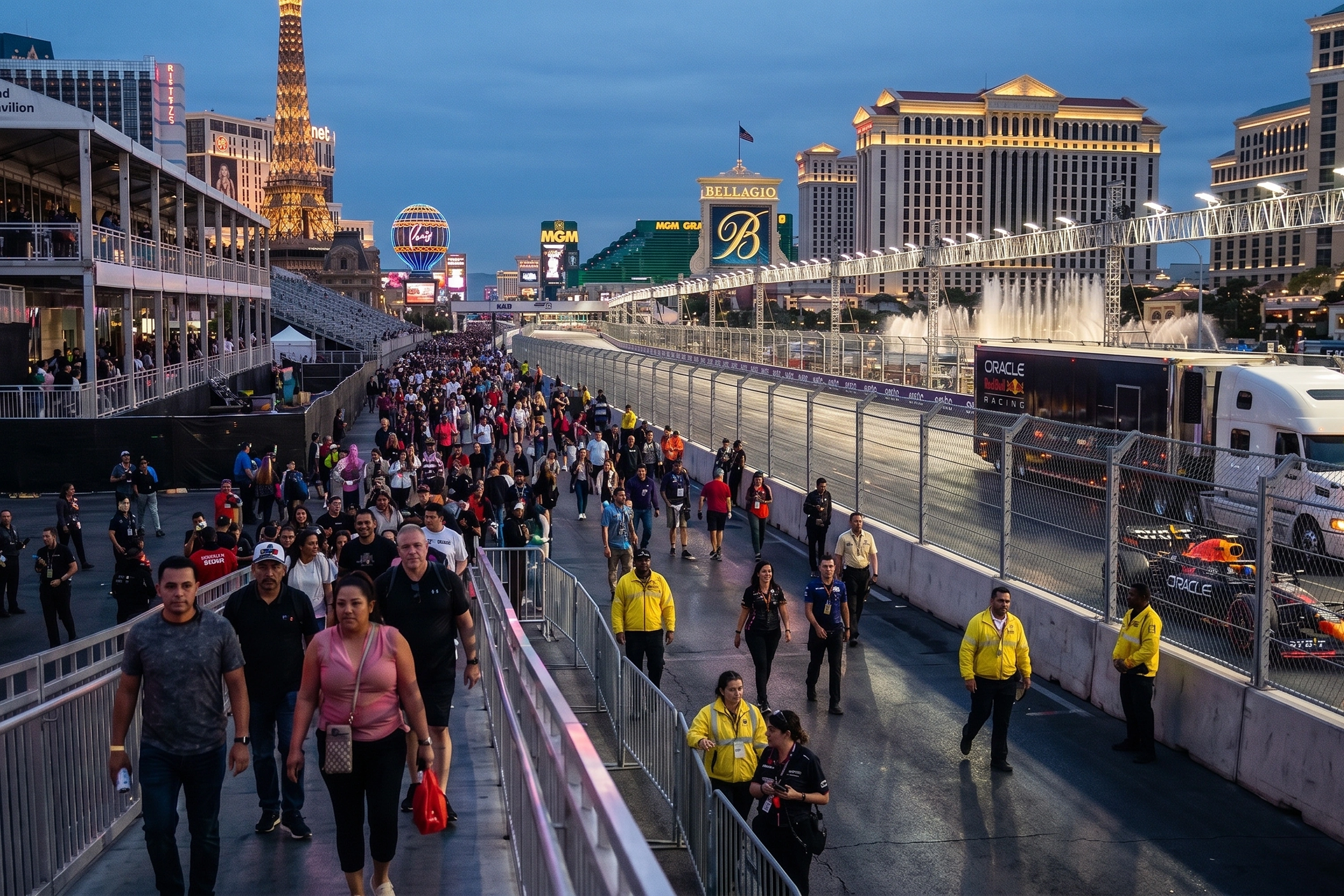
Multi-Zone Venues (Track, Paddock, Fan Zones, VIP Suites)
A Grand Prix footprint is multi-zone by design. The operational reality is that each zone behaves like a different event with different service standards.
Common zones include:
- Track and grandstands with high-throughput entry and constant crowd movement
- Paddock-adjacent areas with strict access control and high VIP density
- Fan zones and concourses where queues and wayfinding shape the guest experience
- VIP suites and hospitality lounges where privacy, pace, and polish define success
The staffing lesson is simple. A single “general staff” approach breaks down when zones have different rules. The better model is zone ownership, with leads and teams assigned to protect performance inside their area.
Global Audiences, Media, and Sponsor Expectations
F1 weekends run under global visibility. Media schedules are fixed, sponsor deliverables are time-bound, and premium stakeholders notice operational drift quickly.
That pressure changes what “good staffing” looks like. It rewards teams that can execute consistently without improvising away from compliance, security protocols, or brand standards. It also rewards supervisors who can make fast decisions without creating disruption.
Staffing and Logistics Behind Formula 1 Race Weekends
The staffing and logistics challenge is not only headcount. It is placement, supervision, and timing across multiple audiences running in parallel. Strong event staffing best practices show up in how the plan handles density and how the plan holds up when conditions change.
Staffing Density Across Zones
At this scale, staffing is a density equation. You need the right volume of people in the right positions during predictable peaks, with enough coverage left over to absorb surprises.
A common best-practice approach is layered coverage:
- Entry and screening teams for throughput and first impression
- Wayfinding and guest support teams placed at decision points, not only at endpoints
- Zone-specific teams for hospitality, sponsor activations, and premium handling
- Float coverage for queue spikes, gate surges, and incident response
- Zone leads and supervisors who own decisions and redeployment
That layering is a practical way to keep one pressure point from draining resources from the entire site.
VIP Hospitality and Paddock Staffing
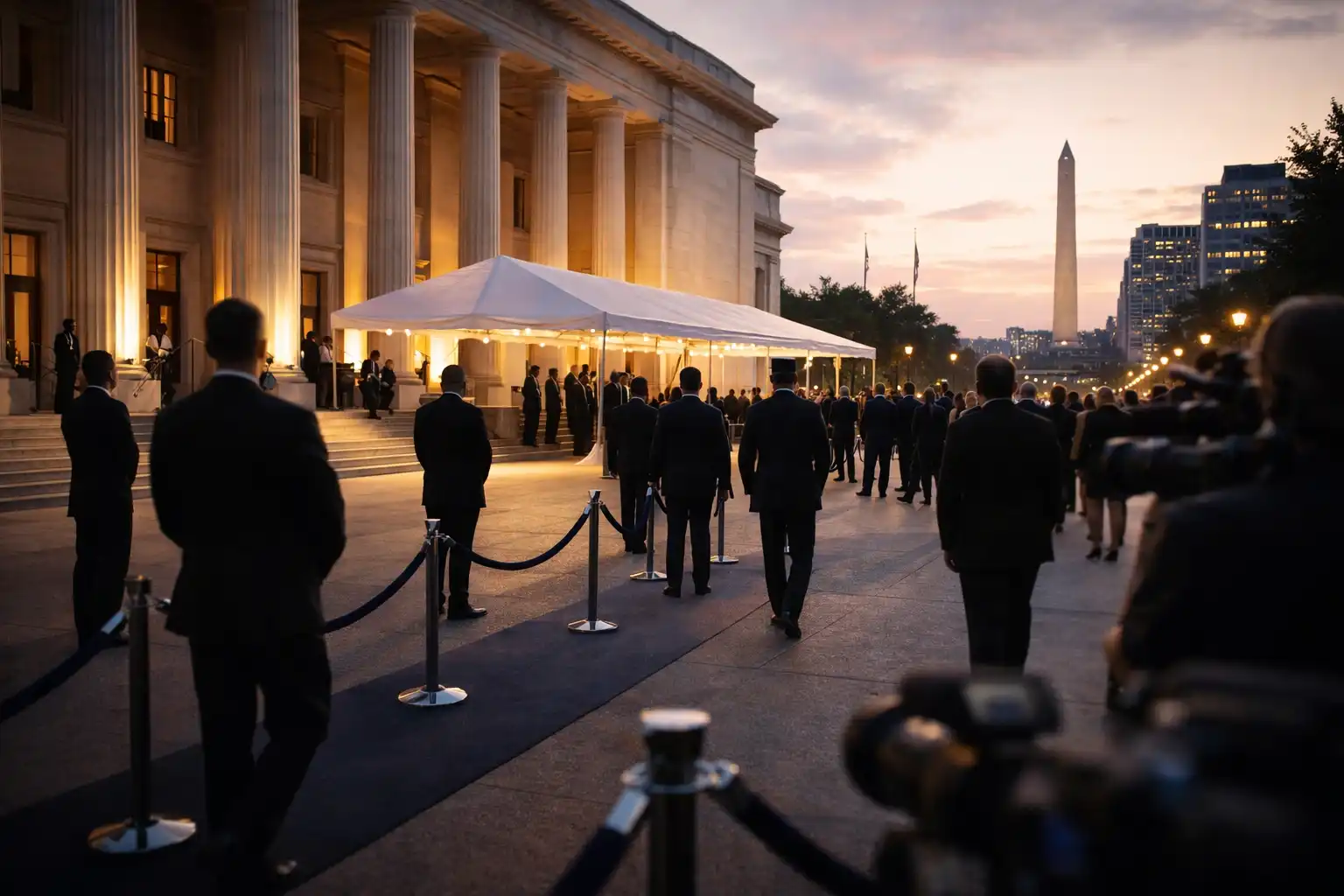
VIP event staffing is operationally different from general admission. Premium guests expect speed, discretion, and consistent professionalism, even when the venue is busy.
Hospitality event staff in these environments typically need to deliver:
- Fast, calm check-in that prevents backups and preserves privacy
- Escorting and routing without visible confusion or stop-and-start movement
- Consistent service cadence through long show days
- Tight adherence to access rules, sponsor protocols, and restricted areas
A key best practice is protecting VIP and hospitality roles from constant cross-coverage. Pulling suite staff into crowd control fixes one problem and creates another by lowering premium service quality.
Fan Experience and Crowd Flow Management
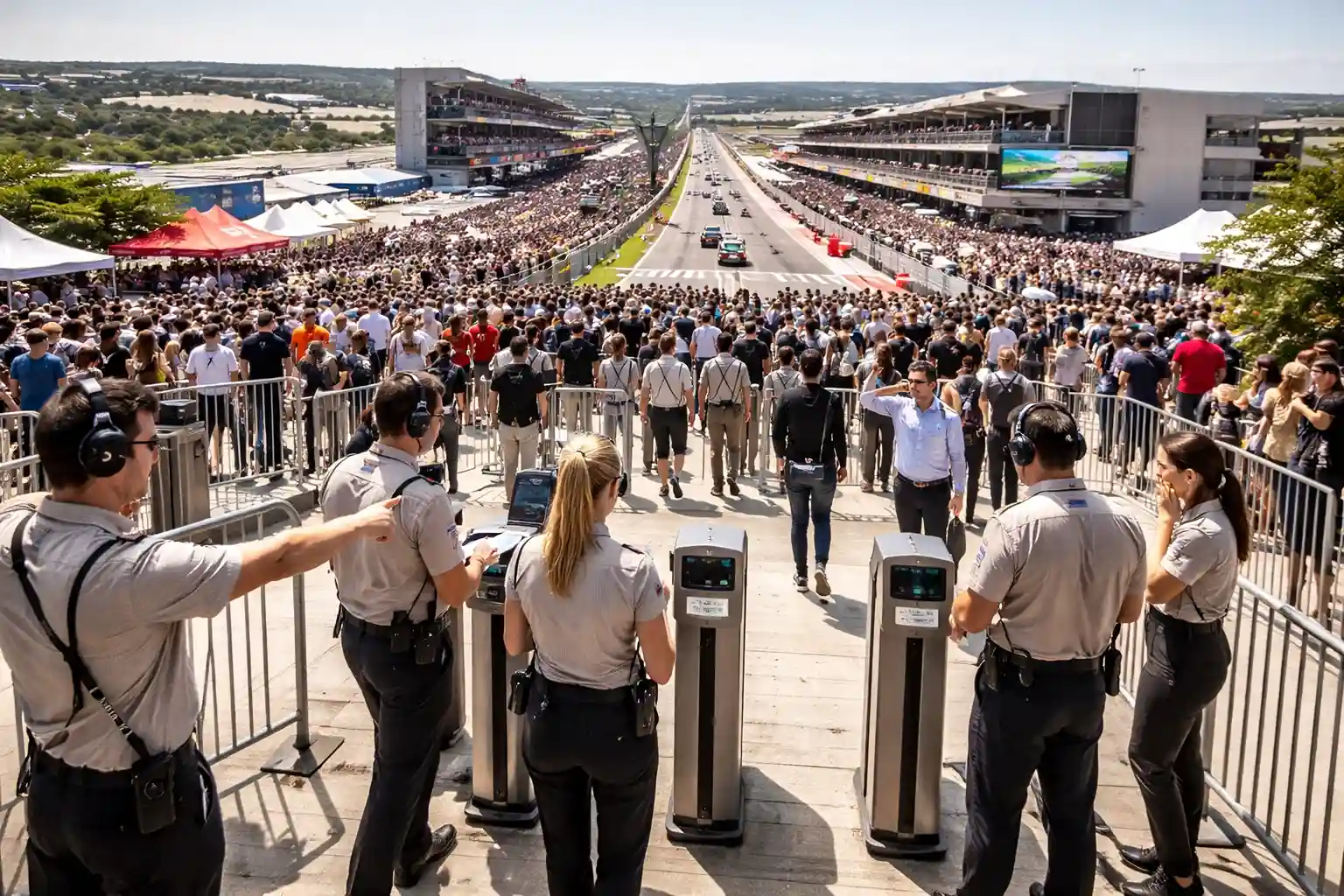
Fan experience is shaped by movement. Entry speed, clarity of directions, queue behavior, and staff demeanor determine whether the day feels controlled or chaotic.
Strong crowd flow staffing focuses on:
- Placement at bottlenecks and decision points
- Queue management that prevents backflow into walkways
- Clear direction language that avoids confrontation
- Early intervention when lines start to spill or guests start to cluster
This is where sports event staffing becomes measurable. A small improvement in flow reduces complaints, reduces security escalations, and protects vendor performance.
Sponsor Activations and Brand Experience Teams
Sponsor activations carry brand pressure and crowd pressure at the same time. They need strong optics, controlled lines, and consistent brand communication while thousands of fans circulate around the footprint.
This is where large-scale event staffing intersects with brand delivery:
- Staff need training on capacity control, line etiquette, and when to pause intake
- Activation leads need authority to make real-time adjustments
- Teams need coordination with venue operations so activations do not block lanes or egress
When brand experience teams are pre-briefed and supervised closely, sponsors spend less time correcting basics and more time driving outcomes.
Security, Access Control, and Credential Management
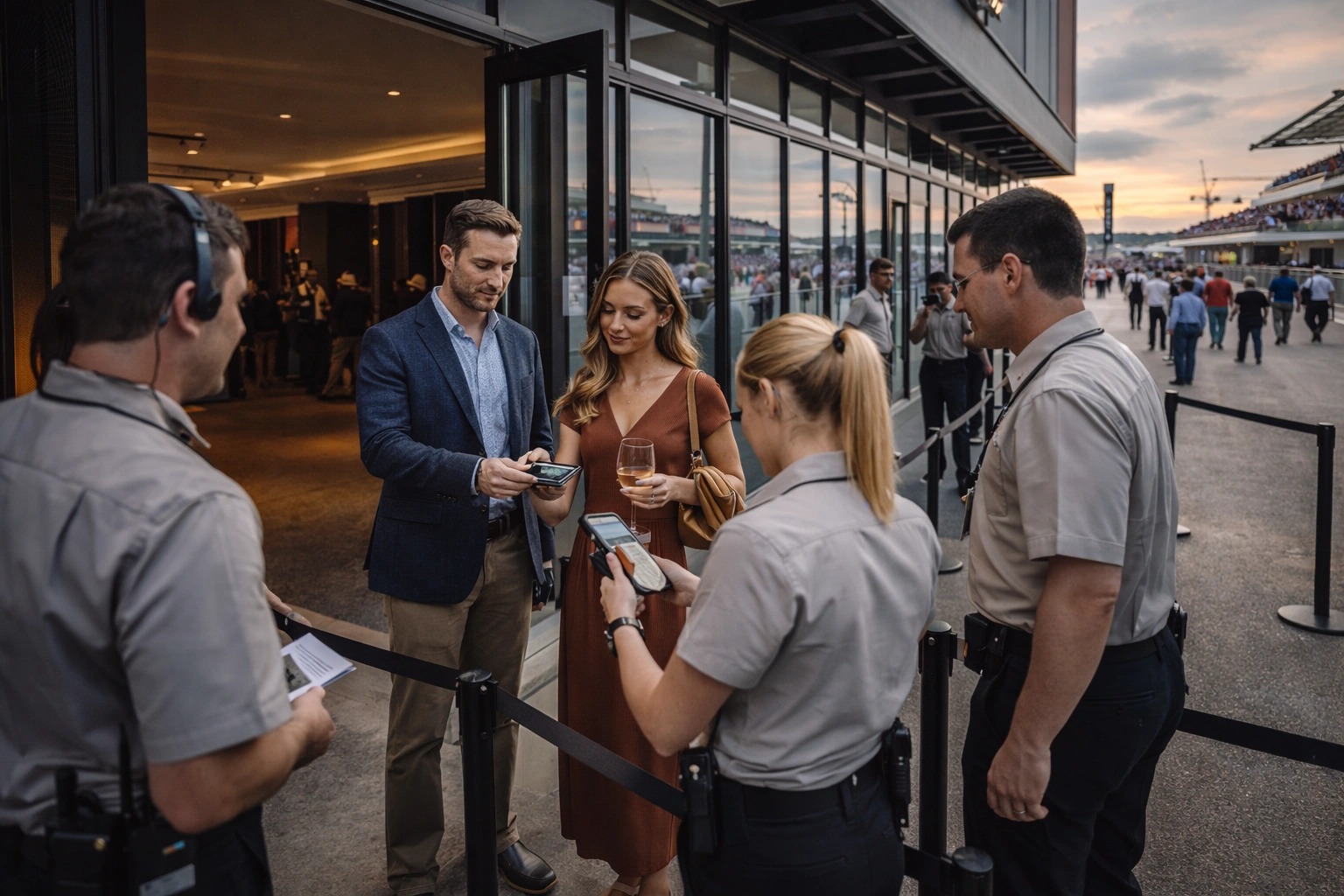
Credentialing defines the operational model at an F1 weekend. Zones are layered by access, and access rules are strict. Consistency matters because inconsistency creates conflict and slows throughput.
The strongest staffing setups separate responsibilities:
- Credential checkers focused on scan and validation
- Guest service staff trained to explain routing and resolution steps
- Supervisors empowered to handle exceptions and VIP escalations
- Tight coordination with security on denied access and disputes
This structure reduces “argument time” at checkpoints and keeps the guest experience stable even when access issues occur.
Real-Time Coordination in High-Pressure Environments
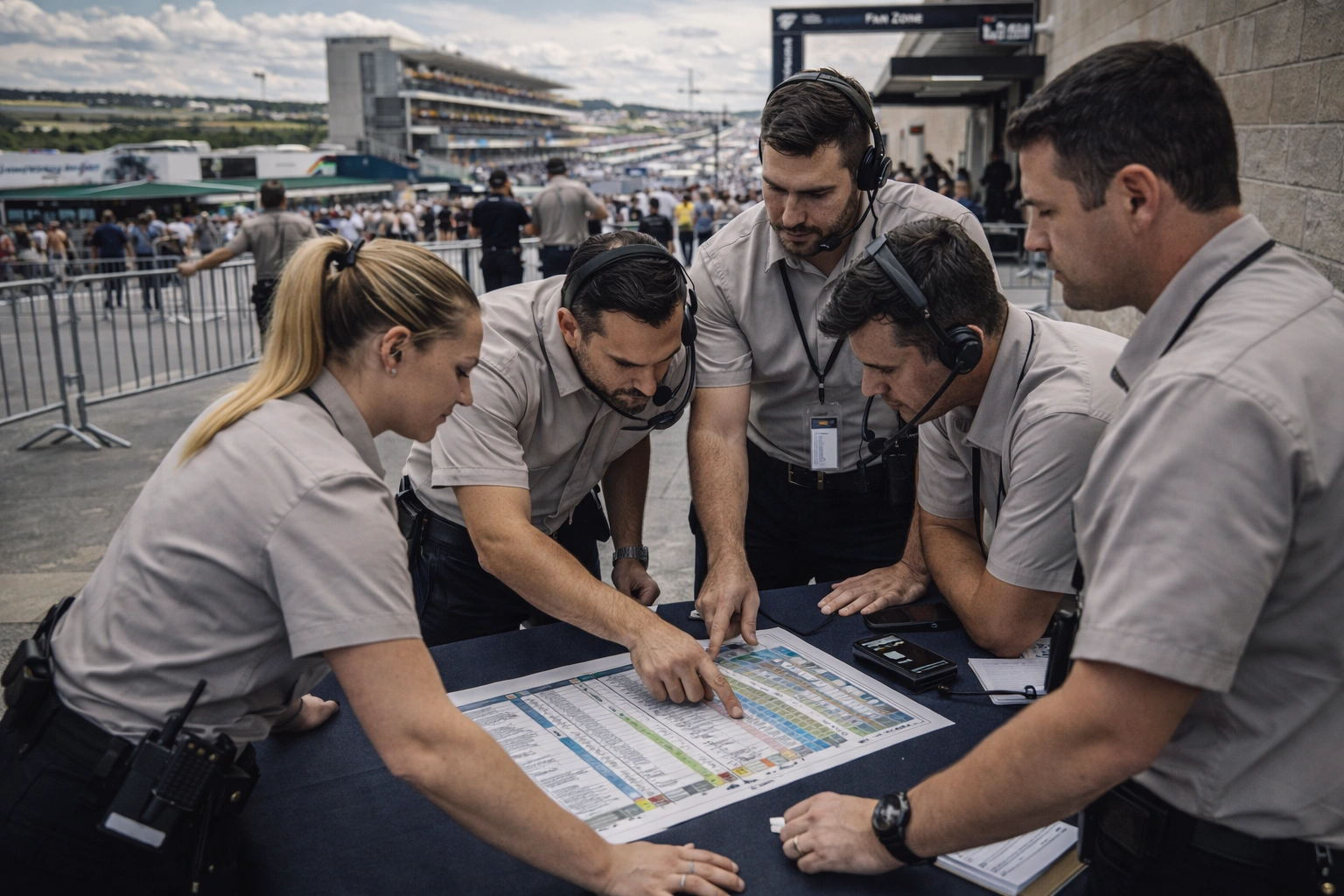
The plan matters. The coordination system matters more. Under pressure, the quality of event staff coordination is what keeps execution consistent across zones.
Live Communication Between Zone Leads
Zone leads translate the staffing plan into decisions that protect flow and service. The best operations use:
- Standardized radio language, short calls, and clear location references
- Predictable check-in cadence during peak windows
- A central coordination point that watches patterns and supports redeployment
- Clear rules for what stays inside a zone and what escalates
This reduces decision lag and stops small issues from becoming repeated problems.
Contingency Planning for Weather and Delays
Weather and delays do not only affect schedules. They affect traffic patterns, guest mood, staff fatigue, and the ability to maintain standards.
Effective contingency planning includes:
- Reroute and shelter protocols that staff understand before gates open
- Heat and exposure rotations for positions that cannot move
- Adjusted VIP routing and arrival pacing when conditions change
- Communication scripts that inform guests without overpromising
Training matters here. A written plan helps, but performance comes from staff who know what to do when the shift happens.
Rapid Staff Redeployment During Peak Moments
Peak moments are predictable. Gates, pre-race build-up, major sponsor beats, and post-event exits create repeatable surges. What varies is how these peaks stack.
Redeployment works when:
- Floaters are truly available and not quietly assigned
- Zone leads can move staff without breaking chain-of-command clarity
- Staff can take short, specific assignments without confusion
- Break coverage is protected so the weekend does not drift into fatigue failure
This is where multi-day event staffing becomes a discipline, not a hope. A three-day weekend will punish an approach that burns people down on day one.
Coordination Between Staffing, Security, and Production Teams
F1 weekends are production-heavy. Broadcast and production schedules create fixed windows when movement pauses, lanes change, or certain areas become restricted.
Strong operations align staffing, security, and production on:
- Restricted movement windows and guest-facing routing changes
- Unified rules of engagement for access disputes
- Hold points that pause movement briefly for safety or production timing
- Escalation ladders that keep decisions fast and documented
Guests experience this as competence. Stakeholders experience it as control.
Staffing Insights from Formula 1’s Operational Model
Formula 1 weekends reinforce a set of principles that apply across enterprise events. These principles are not exclusive to motorsport. They show up anywhere the footprint is complex and the timeline is compressed.
Role Specialization at Scale
Role specialization is one of the clearest event staffing best practices visible in high-pressure environments. As scale increases, vague roles create inconsistent outcomes.
Specialization helps because:
- Staff train for a narrow set of tasks and execute faster
- Supervisors know exactly which skills belong in which zone
- Accountability becomes measurable by function and time block
- Errors drop because responsibility boundaries are clear
It also protects guest interactions. When staff know their role and handoff path, answers are faster and escalation stays clean.
Training for Speed, Accuracy, and Professionalism
Throughput depends on speed and accuracy together. High-visibility weekends demand both.
Training that translates across event types includes:
- Consistent briefing routines with zone-specific expectations
- Scenario drills for credential problems, guest frustration, and VIP exceptions
- Service standards for posture, language, and escalation
- Short rehearsals for known surges such as gates and session transitions
Professionalism is operational value. It reduces conflict, protects brand perception, and lowers supervisor load.
Managing Staff Fatigue Over Multi-Day Events
Multi-day event staffing requires a fatigue plan. Without one, performance drifts and issues repeat more often as the weekend progresses.
Fatigue management best practices include:
- Rotations for high-intensity positions, especially entry and crowd control
- Protected breaks that are scheduled and monitored
- Zone lead awareness of performance drift signals
- Relief coverage that does not strip a zone when someone steps out
Fatigue planning is a safety control and a service quality control.
Why Pre-Vetted, Experienced Staff Are Non-Negotiable
At this scale, “learning on-site” is expensive. It increases mistakes, slows throughput, and forces supervisors to do constant correction.
Pre-vetted, experienced teams reduce risk because they:
- Follow access control and compliance rules without improvisation
- Use radio and escalation norms correctly
- Recognize early crowd friction and respond before it escalates
- Maintain sponsor-facing and VIP standards under pressure
For enterprise teams, reliability is the core value. That is why staffing partner selection matters.
Applying Formula 1 Staffing Best Practices to Other Events
The value of this case study is translation. F1 weekends show how to structure staffing for density, complexity, and high visibility. Those standards map directly to other event categories.
Corporate Conferences
Corporate conferences often fail at transitions: registration peaks, session breaks, and VIP arrivals colliding inside tight corridors.
Useful takeaways:
- Separate registration throughput teams from VIP arrival teams
- Assign zone leads to keynote rooms, sponsor lounges, and high-traffic hallways
- Use float coverage to absorb session break surges
- Build escalation routines so schedule changes do not create confusion
This approach supports event staff coordination that keeps the event stable even when attendance patterns shift.
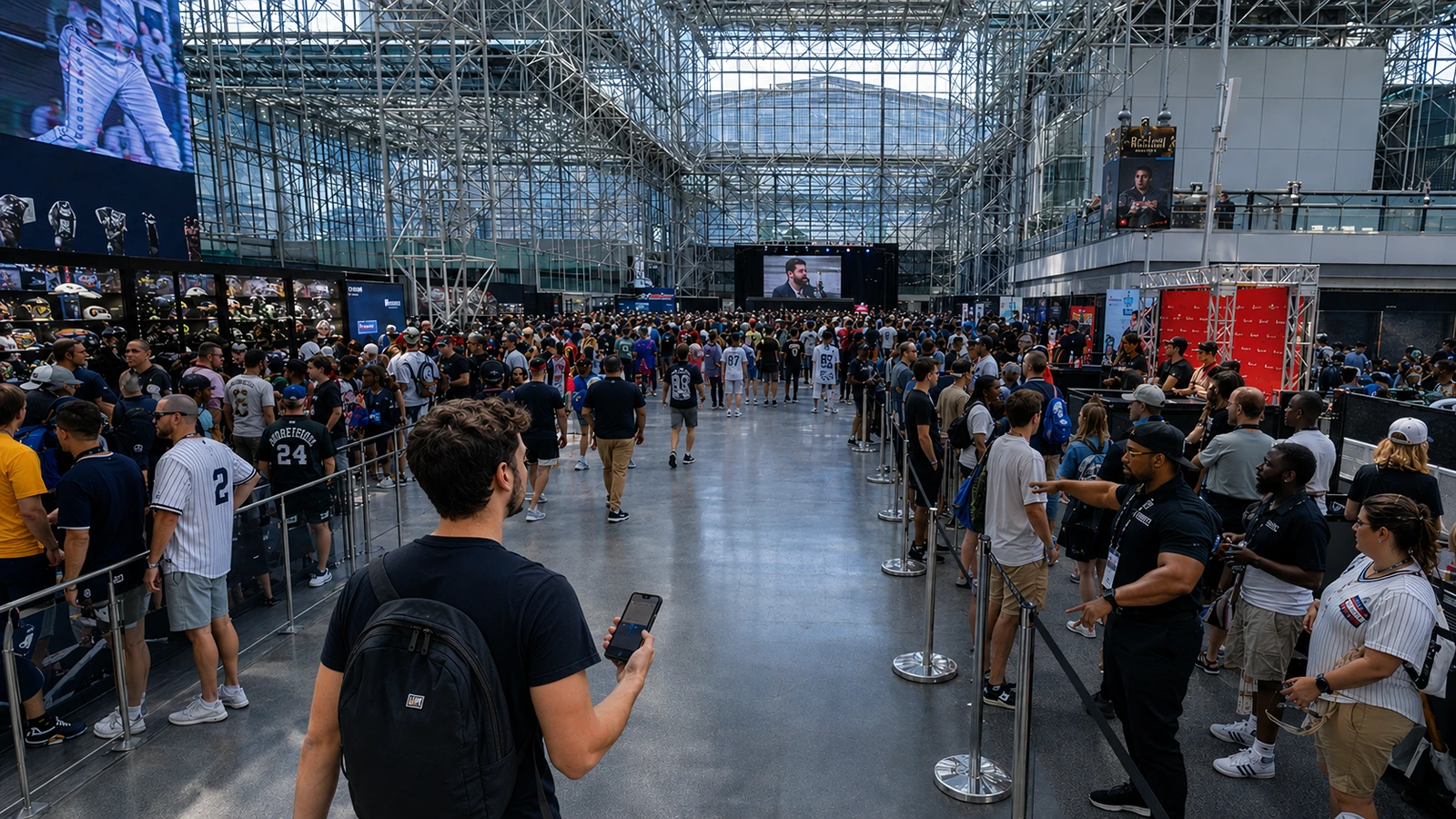
Large Trade Shows
Trade shows have heavy foot traffic, sponsor demands, and exhibitor expectations. Staffing breakdowns show up as clogged aisles and inconsistent support.
Useful takeaways:
- Plan staffing density at entrances, intersections, and high-value exhibitor clusters
- Place staff at decision points to reduce wandering and congestion
- Separate operational roles from hospitality roles so service standards hold
- Create a clear redeployment method for predictable spikes
These are event staffing best practices that protect show-floor flow and stakeholder experience.
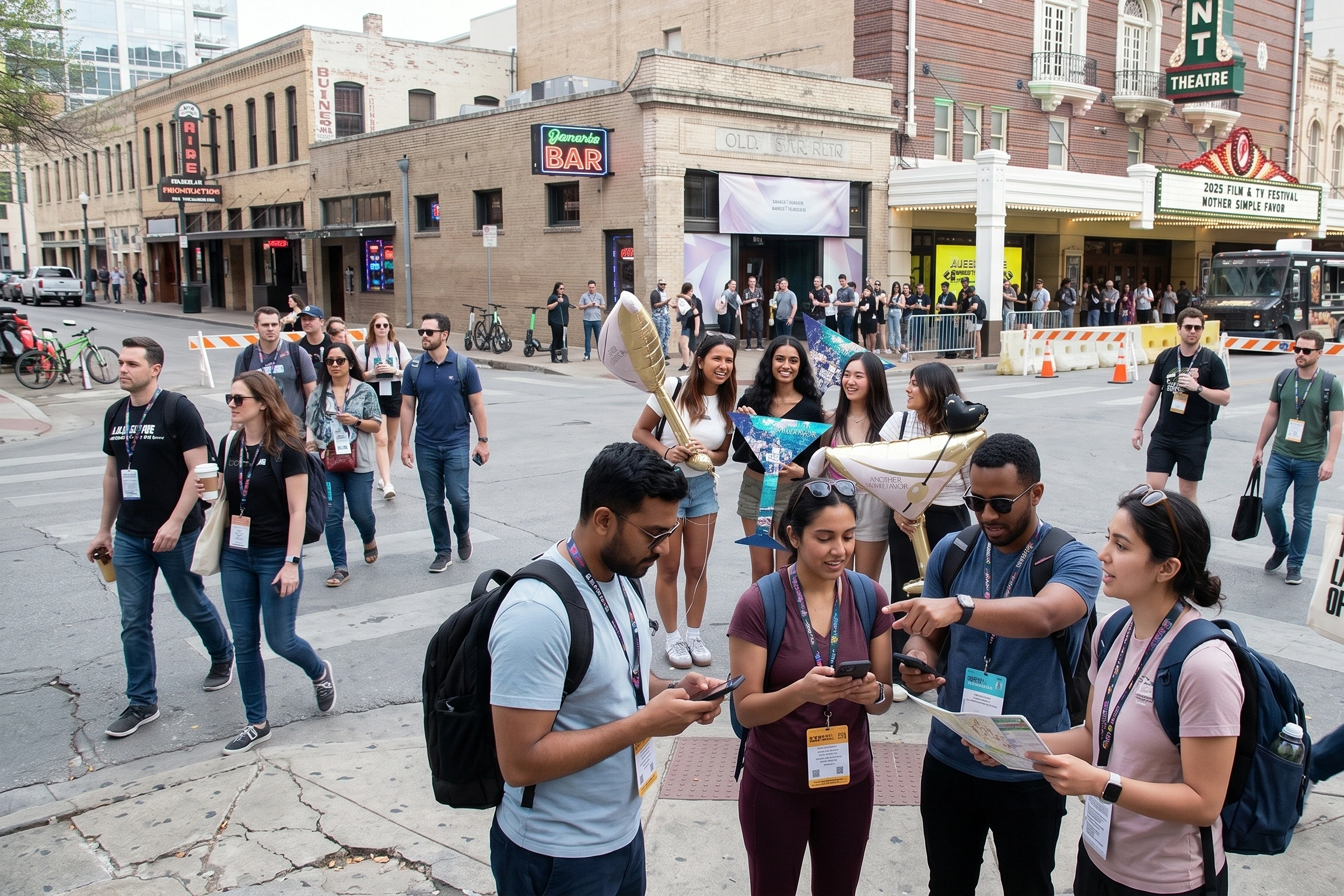
Brand Activations
Brand activations are judged in real time. Optics matter. Line control matters. Messaging consistency matters.
Useful takeaways:
- Pre-brief staff on scripts, escalation rules, and capacity limits
- Assign an activation lead who owns line behavior and optics
- Use pause points when capacity is reached rather than letting spillover happen
- Coordinate with venue ops so activations do not block lanes or egress
This is where large-scale event staffing directly influences brand performance.
Sporting and Entertainment Events
Stadium and arena operations already share key dynamics with F1: crowd waves, premium zones, strict access control, and short windows where everything hits at once.
Useful takeaways:
- Tight credential processes for premium and back-of-house zones
- Staffing built around predictable peaks: gates, intermissions, exits
- Rapid redeployment for incidents and queue surges
- Unified coordination between staffing, security, and venue operations
Here, sports event staffing and VIP event staffing are often the difference between a smooth night and a night where complaints dominate the post-event report.
Local Authority Section – Why U.S. Grand Prix Cities Demand Elite Staffing
Local conditions change the staffing problem. The same event model behaves differently depending on venue access, city infrastructure, and how demand concentrates across hotels and transport systems.
For this case study, the focus city is Austin, Texas.
Why This City Is Unique for Global Sporting Events
Austin hosts the United States Grand Prix at Circuit of the Americas and regularly absorbs major event weekends that pull national and global visitors into the same travel corridors. During race week, the audience mix spans local fans, corporate stakeholders, international sponsor teams, and premium guests, all expecting different handling inside one footprint.
A record-setting 2022 U.S. Grand Prix weekend was widely reported at roughly 440,000 attendees across three days, which shows how quickly Austin can operate in a peak-capacity posture during race week.
Venue Scale, Visitor Volume, and Infrastructure
Circuit of the Americas is a purpose-built motorsports facility. Engineering and project documentation commonly cites a campus capacity around 120,000 fans.
That scale makes access and egress a primary operational pressure point. Local reporting has highlighted congestion challenges and venue investments intended to ease those constraints, including a new parking garage planned to improve access flow during major weekends.
Austin’s broader event infrastructure also affects how large events distribute across the market. The Austin Convention Center is scheduled to close for redevelopment and is expected to reopen in 2029, which increases pressure on alternative venues and routing patterns for other major citywide events during that period.
Why Staffing Precision Is Critical in This Market
Austin’s hotel and tourism economy is closely tied to major event weekends. The City of Austin reports an 11% hotel occupancy tax rate. Public reporting on hotel occupancy tax collections also references an FY2024 approved budget in the $152 million range, which underscores how material event travel volume is to the city.
For operators, the implication is practical. When a market’s revenue and reputation hinge on event weekends, visible staffing breakdowns become reputational risk. Entry friction, access disputes, and VIP delays turn into stakeholder complaints quickly. Precision staffing protects guest experience and protects the event’s credibility with sponsors and partners deciding whether to return.
Final Words
Formula 1 U.S. Grand Prix weekends are a practical case study in staffing execution under extreme visibility and compressed timelines. The operation rewards role clarity, credential consistency, supervisor coverage, and fast redeployment across zones. Those are event staffing best practices that translate directly to corporate conferences, large trade shows, brand activations, and major sports and entertainment weekends.
When your footprint is multi-zone and your stakeholders include sponsors and premium guests, performance depends on disciplined event staff coordination, reliable multi-day event staffing, and teams built for large-scale event staffing. Event Staff applies these best-practice standards to deliver consistent execution when the margin for error is small and outcomes are judged in real time.