
Super Bowl logistics are never limited to the stadium. Super Bowl LX made that clear because the game was anchored at Levi’s Stadium in Santa Clara, while the wider operating footprint stretched across San Francisco, Santa Clara, regional transit systems, road closures, fan experiences, hospitality venues, sponsor events, media activity, and visitor movement.
The useful story is how one championship event became a multi-city delivery model.
For Eventstaff, this case study is valuable because large event staffing at this level is about the full guest journey. Staff are needed where people arrive, transfer, ask questions, wait, enter, move between zones, encounter access rules, and leave under pressure.
Super Bowl LX created three connected operating environments:
- The stadium environment in Santa Clara. Levi’s Stadium carried the game-day surge, including ticketed entry, security screening, seating, concessions, broadcast operations, halftime production, premium hospitality, and egress. Every function had to work under tighter timing, greater visibility, and higher security expectations.
- The fan environment in San Francisco. Super Bowl Experience at Moscone Center created a major public destination before game day. That meant separate crowd flows, queues, sponsor touchpoints, merchandise activity, family groups, accessibility needs, and guest-service demands outside the stadium footprint.
- The regional movement environment. Visitors moved between airports, hotels, downtown San Francisco, Santa Clara, San Jose, Oakland, transit stations, rideshare areas, private events, and hospitality venues. That turned Bay Area logistics into one of the defining parts of Super Bowl event management.
Super Bowl LX works as a serious case study because the event required more than a strong stadium plan. It required coordination between cities, agencies, venues, transit providers, security teams, hospitality operators, sponsor partners, and frontline staff.
CEO Excerpt
“Super Bowl LX shows where modern event delivery is heading. The strongest operations are built around the full guest journey, from the first travel decision to the final exit. When events stretch across cities, staffing becomes the human infrastructure that keeps movement, access, and service aligned.” - CEO, Eventstaff
Case Background
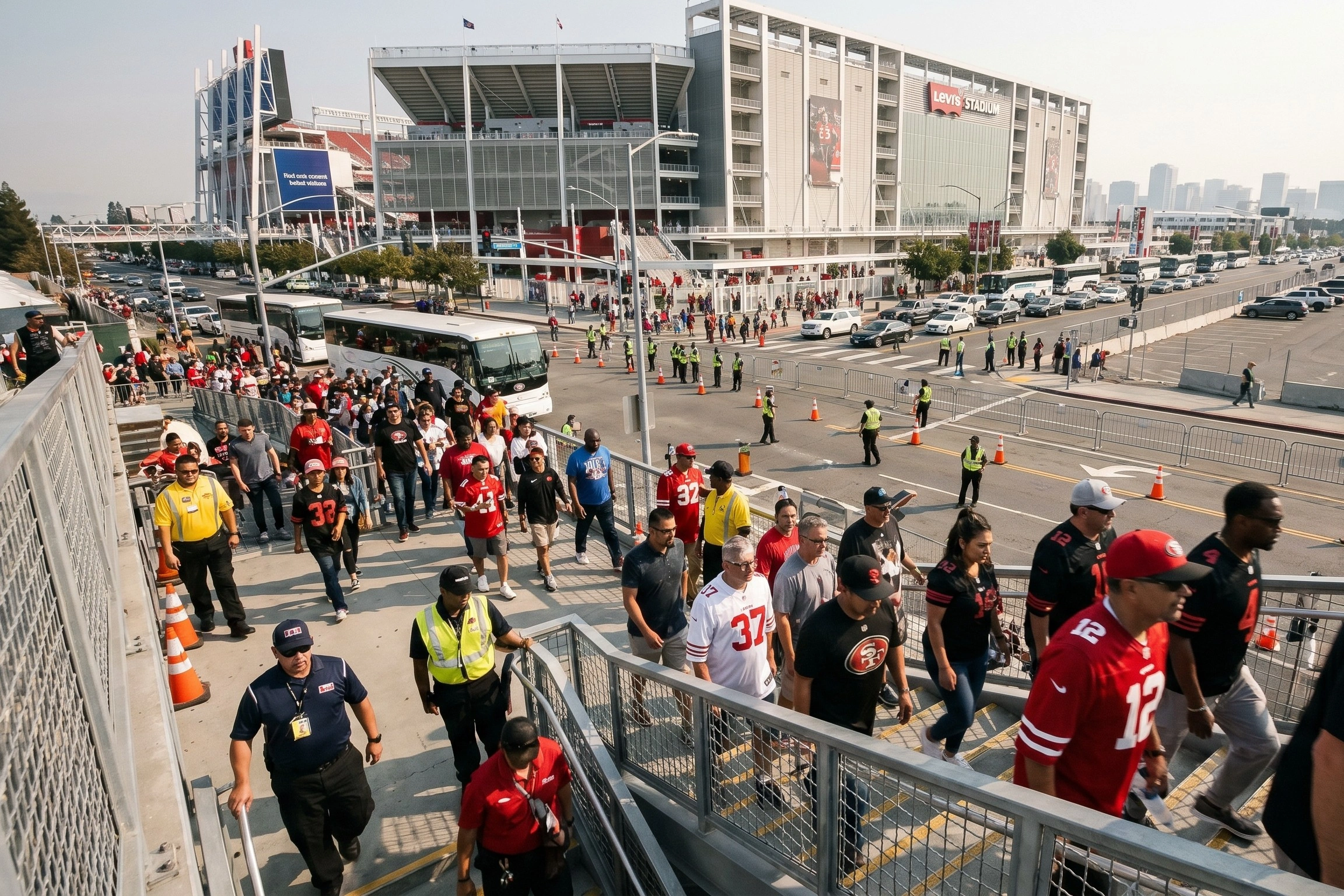
Super Bowl LX was held at Levi’s Stadium in Santa Clara on February 8, 2026. The stadium was the anchor, but the delivery model reached across the Bay Area through official fan programming, transportation planning, civic closures, and public communication.
The NFL directed attendees toward current information on transportation, parking, rideshare, and road closures through the NFL Super Bowl LX transportation guide (). That source matters because it shows that event delivery was framed around controlled movement before guests reached the stadium.
Regional visitor planning
The Bay Area Host Committee positioned the event as a regional visitor experience through the Bay Area Host Committee Plan Your Visit guide . The guide referenced the region’s airports and transit systems, including BART, Muni, Caltrain, VTA, ferries, buses, and local travel options.
That mattered because the event could not be planned around one venue address. A visitor might stay in San Francisco, attend a fan event at Moscone Center, travel to Santa Clara for game day, and use more than one transit system across the week.
For event teams, that shifts the planning question. The issue is not simply how people enter Levi’s Stadium. The issue is how they stay informed, confident, and on schedule across a full regional journey.
Public fan programming
San Francisco carried a major share of the public-facing event experience. Super Bowl Experience at Moscone Center ran before game day and created a controlled fan destination through Super Bowl Experience at Moscone Center.
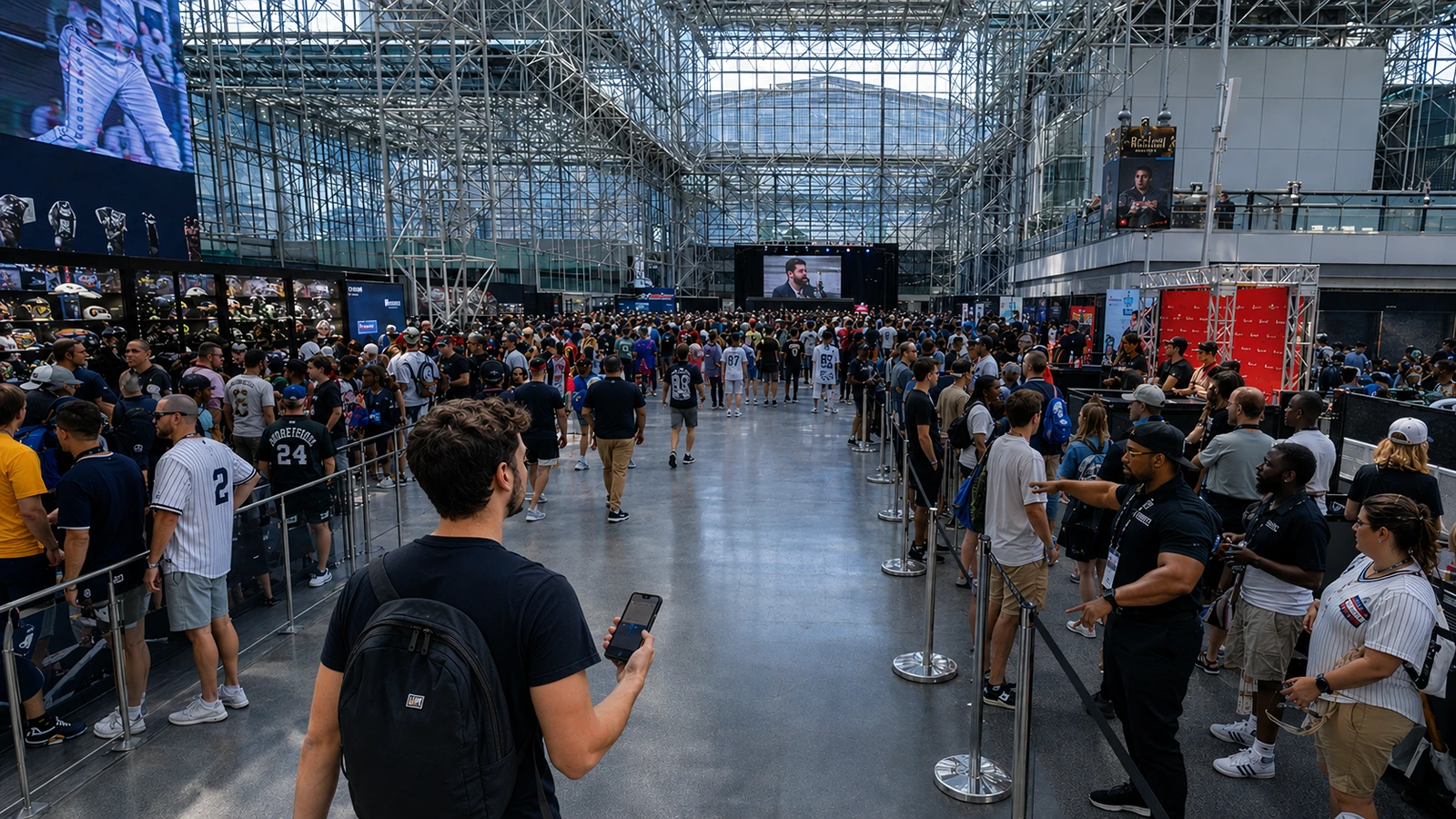
A public fan hub changes the staffing model. It draws families, tourists, casual fans, corporate visitors, local residents, and people who may have no game ticket. That creates a separate operating environment with its own entries, queues, sponsor zones, merchandise areas, photo moments, activity lines, accessibility needs, and guest-service points.
Santa Clara stadium pressure
Santa Clara carried the heaviest game-day infrastructure pressure because Levi’s Stadium sat inside a controlled event zone. Road closures, traffic changes, pedestrian routes, bike detours, resident impacts, and stadium-area access were covered through the Santa Clara road closures guide . The guide stated that closures and detours would affect Santa Clara around Levi’s Stadium and nearby entertainment hubs.
That created a clear operational challenge. The closer people moved toward the stadium, the more precise the guidance had to become. A closure may be necessary for public safety, but to a guest it still means a changed route, a delayed arrival, or a moment of uncertainty.
San Francisco city impact
San Francisco also had its own closure and detour planning around fan activity through the San Francisco road closures guide . The guide covered Super Bowl week impacts around Moscone Center and Super Bowl Experience hubs.
This is where the case becomes especially useful. The game was in Santa Clara, but the operational impact reached downtown San Francisco. That meant the event had to serve ticketed fans, fan-festival visitors, local workers, commuters, residents, hotels, businesses, vendors, sponsors, and civic agencies at the same time.

Why Super Bowl LX Was a Difficult Event to Deliver
Super Bowl LX was difficult because it combined several event models in one week. Each model had its own audience, movement pattern, risk profile, and staffing requirement.
Stadium delivery at global scale
Levi’s Stadium had to support the highest-pressure part of the event. Game-day operations likely required alignment across access control, security screening, premium hospitality, team movement, broadcast activity, concessions, restroom flow, emergency response, halftime production, and post-game exit.
The stadium environment carried several difficult operating conditions:
- Entry had to be controlled without feeling chaotic. Guests needed to understand when to arrive, where to go, what they could bring, and how to move through security. When screening is tight and crowd volume is high, unclear communication can quickly become a line-management problem.
- Premium guests needed separate handling. Super Bowl audiences include sponsors, executives, celebrities, media partners, athletes’ families, and high-value hospitality guests. These groups require accurate routing, credential clarity, privacy, and calm service even when public crowds are building nearby.
- Production movement had to stay protected. A Super Bowl is also a live media and entertainment production. Broadcast teams, halftime crews, camera operators, talent handlers, technical staff, and credentialed production teams need controlled routes that do not interfere with public movement.
- Departure required a separate plan. Egress after a major game is compressed. People leave tired, emotional, rushed, or trying to reconnect with groups. A strong egress model needs staffing, signage, lighting, accessible routes, rideshare direction, and transit guidance designed for the post-event surge.
Fan festival delivery away from the stadium
Super Bowl Experience at Moscone Center created a separate public-facing event environment. That made the overall Super Bowl logistics model more complex because a major audience was gathering in San Francisco before game day.
Fan festival staffing has to account for behavior that is different from stadium behavior:
- Guests explore instead of moving in one direction. In a stadium, most guests eventually move toward seats. In a fan experience, people move between exhibits, merchandise, games, photo areas, sponsor zones, restrooms, and food points. Staff must manage movement without making the space feel restrictive.
- Queues form unevenly. A popular attraction, autograph moment, or merchandise area can create sudden crowd pockets. The staffing model has to manage these clusters before they block circulation paths or frustrate nearby guests.
- The audience is broader. Families, tourists, casual fans, local visitors, corporate groups, and children may all use the same space. That increases the need for patient wayfinding, visible guest support, accessibility awareness, and clear escalation routes.
Regional transportation delivery
Bay Area logistics were central to the event because visitors were not all starting from the same place. Some arrived through San Francisco International Airport, Oakland International Airport, or Mineta San Jose International Airport. Others stayed in hotels across San Francisco, Santa Clara, San Jose, Oakland, and nearby cities.
The Bay Area Host Committee noted that the region has many transit agencies and highlighted BART, Muni, Caltrain, VTA, and local buses as part of the visitor movement picture.
That created several delivery challenges:
- Multiple systems had to feel connected. A guest might use one transit provider for part of the journey and another provider for the next leg. Even when each agency performs well individually, the transfer between systems can still create confusion.
- Out-of-town visitors needed more support. A Bay Area resident may understand the difference between BART, Muni, Caltrain, and VTA. A visitor may not. Staff and signage had to support people who were learning the region under time pressure.
- Final-mile movement mattered. Transit does not solve the whole problem if guests are unclear after they exit a station. The handoff from rail or bus to walking routes, shuttles, security perimeters, and stadium access points is where staffing becomes especially important.
Civic delivery for people outside the event
A regional Super Bowl affects people who never enter the stadium or fan festival. Residents, workers, delivery drivers, restaurant teams, hotel employees, rideshare drivers, and commuters all experience the event through closures, parking changes, detours, and transit crowding.
That is one reason Super Bowl event management cannot focus only on ticket holders. The local public also needs clear communication, practical detours, and visible information support.
A well-run mega event protects both visitor experience and local usability.

How the Super Bowl Logistics Model Appears to Have Been Structured
The Super Bowl logistics model appears to have been built around distributed control. Different organizations owned different parts of the event footprint, but the guest experience still had to feel connected.
Stadium operations
Levi’s Stadium was the highest-intensity event zone. The stadium layer likely depended on a disciplined access model, strong credential control, guest-facing staff, security coordination, and clear separation between public and private movement.
Key staffing and operations needs likely included:
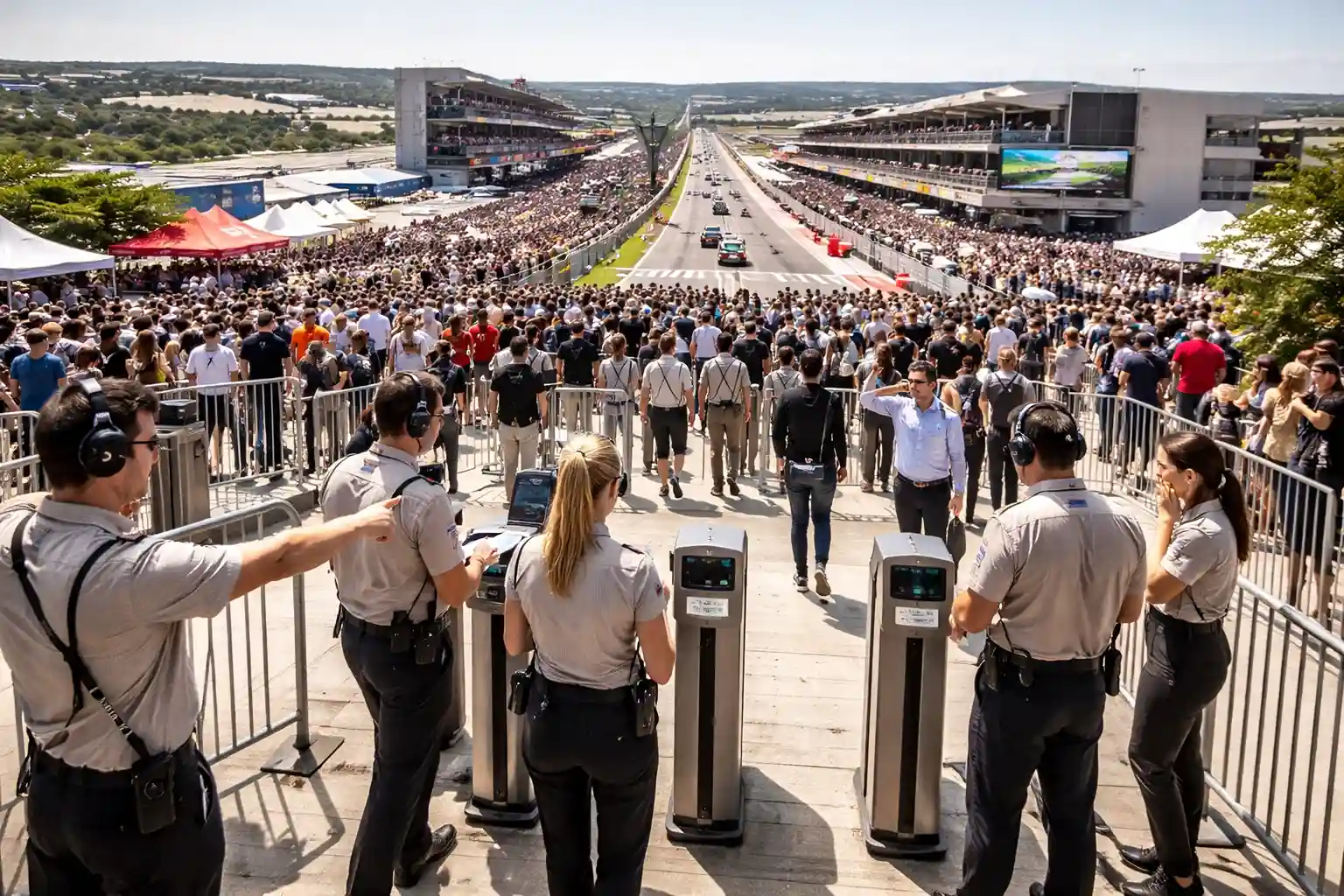
- Controlled arrival timing. Guests had to reach the stadium early enough to clear screening, locate seats, access hospitality, and avoid late gate surges. Arrival planning had to account for travel distance, road restrictions, parking limitations, transit timing, and security procedures.
- Credential interpretation. General admission tickets, premium access, media credentials, sponsor passes, staff badges, vendor credentials, and production access all carry different permissions. Frontline staff need fast recognition, clear escalation contacts, and confidence when directing people.
- Guest-service coverage near friction points. High-pressure locations include gates, bag-check points, accessible routes, transit approaches, premium entrances, and information desks. These posts matter because they are where small uncertainties can slow the whole system.
- Separated movement channels. Public guests, VIPs, staff, vendors, security, media, and production teams should not all depend on the same access logic. If separation is unclear, frontline staff are forced to solve structural problems in real time.
Santa Clara civic operations
Santa Clara had to manage the public environment around Levi’s Stadium. The road closure plan helped shape traffic, protect the event perimeter, preserve safety access, and reduce uncontrolled movement near the venue.
The operating model likely needed to cover:
- Vehicle restrictions and detours. Road closures help create a secure zone, but they also change expected routes. Drivers, rideshare operators, hotel shuttles, vendors, and private transportation providers all need precise instructions.
- Pedestrian and bike movement. Stadium access is not only a vehicle issue. Sidewalks, bike paths, pedestrian corridors, and accessible routes must stay readable when normal routes are blocked or rerouted.
- Resident and business access. People living or working near the event need practical access information. Without it, the event may feel poorly managed even if the stadium operation itself is strong.
- Emergency movement. Controlled access cannot interrupt medical, fire, law enforcement, or operational response routes. That requires pre-planned lanes, coordinated communication, and staff who understand what not to block.
Regional transit operations
Transit functioned as part of the event infrastructure. The San Francisco Chronicle’s Muni Super Bowl week report reported 3.4 million Muni trips during Super Bowl week, weekday totals near 550,000 trips, and an estimated 1.3 million visitors in the city during the festivities.
That level of movement shows why transit could not be treated as background support.
The transit layer likely depended on:
- Capacity management. Stations, platforms, sidewalks, escalators, street crossings, and bus stops can become bottlenecks during major event peaks. Staffing has to support movement before crowding becomes difficult to correct.
- Visitor confidence. Public transit only works for event guests when they understand how to use it. Signs, announcements, maps, digital updates, and staff instructions need to reinforce the same message.
- Transfer support. Guests often struggle most when they exit one system and need to find the next. Station exits, shuttle queues, walking paths, and final-mile directions are high-value staffing points.
- Post-event load. Return trips are usually harder than arrivals because more people move at once. Staff placement after the event should account for tired guests, rideshare demand, long lines, and confusion around return routes.
San Francisco fan-zone operations
The Moscone Center fan environment had to operate like a major public event in its own right. It was tied to the Super Bowl, but it carried its own crowd behavior.
The operating model likely needed:
- Entry flow and queue pacing. Fan events attract waves of arrivals across the day. Queues must be controlled without feeling rigid, especially when families and casual visitors are involved.
- Sponsor and activity support. Interactive attractions, branded displays, merchandise points, and photo moments need staff who can protect the guest experience while keeping movement steady.
- Wayfinding inside and outside the venue. Guests need help finding restrooms, exits, transit options, activity areas, accessibility routes, and pickup points. The staff role becomes partly operational and partly informational.
- Escalation readiness. Public fan events need clear procedures for medical needs, lost children, crowd pressure, guest complaints, accessibility requests, and security concerns.
Hospitality and VIP operations
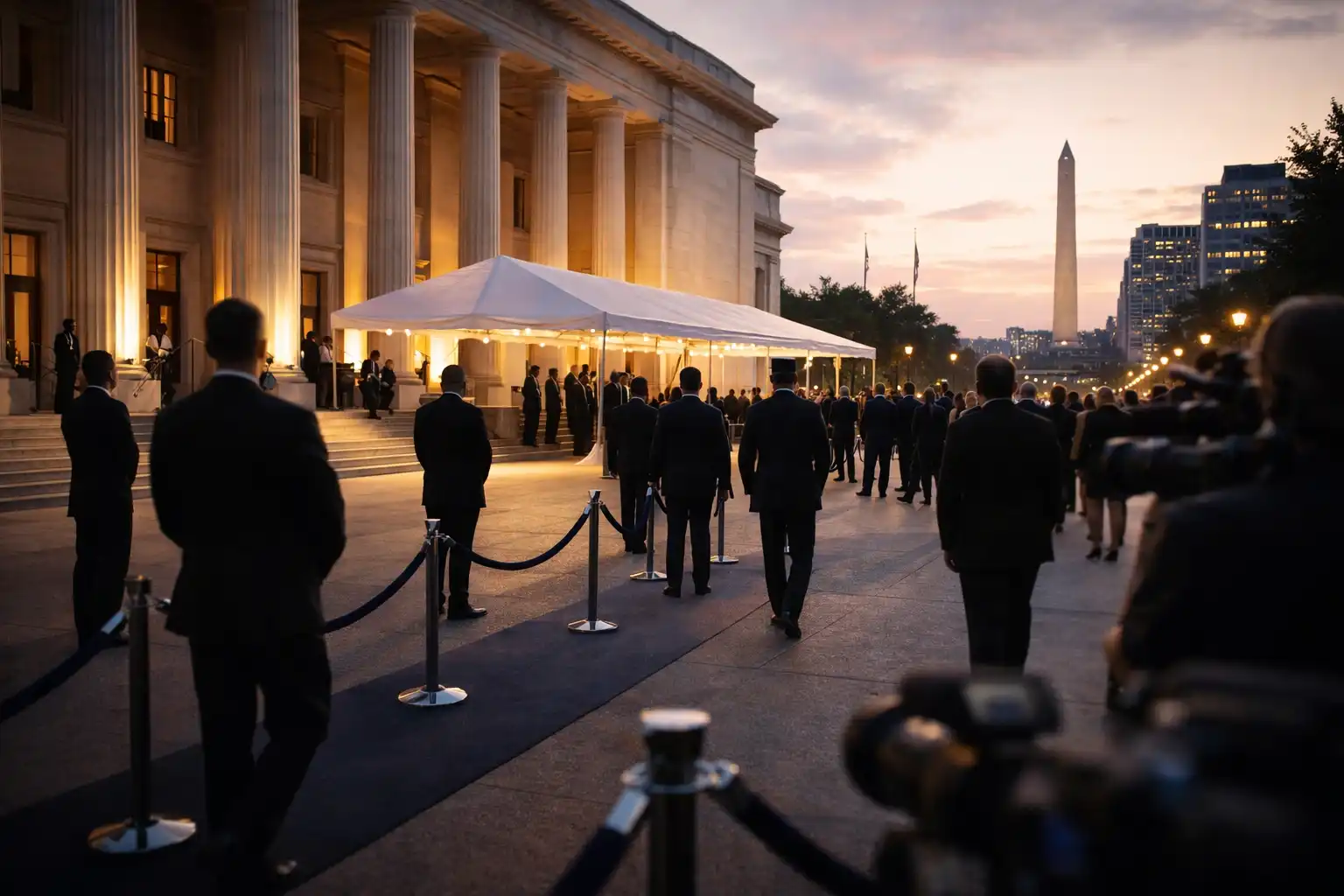
Super Bowl week also functions as a corporate hospitality environment. Private parties, sponsor gatherings, premium seating, celebrity movement, executive arrivals, and media obligations create a separate operations layer.
This layer depends on precision:
- The first direction has to be correct. Premium guests often move on tight timing. Sending someone to the wrong entrance, wrong credential point, or wrong pickup zone creates immediate service damage.
- Staff need credential confidence. A premium environment slows down when staff cannot interpret access levels. Strong briefing prevents unnecessary delays and protects the tone of service.
- Privacy matters. VIP movement often requires controlled routes, private check-in areas, black-car coordination, and separation from public crowd flows.
- Hospitality begins before the room. The guest experience starts with arrival instructions, transportation, greeting, credential handling, and first contact with staff.

The Pressure Points That Likely Carried the Most Risk
The highest-risk points were the places where people had to make decisions under pressure. At Super Bowl scale, those decisions can happen far away from the stadium gate.
Final-mile access to Levi’s Stadium
The final approach to the stadium likely carried some of the greatest pressure because guests were moving from general travel into controlled event territory.
A guest might follow official guidance for most of the trip, then encounter a closure, a longer walk, a redirected shuttle, a blocked sidewalk, a changed gate approach, or a different drop-off point than expected.
The main risk factors were:
- Security restrictions changing familiar behavior. Guests who had attended previous events at Levi’s Stadium may have expected familiar routes. Super Bowl security conditions likely changed those assumptions.
- Compressed arrival patterns. Even with guidance, many guests prefer to arrive closer to event time. That can create crowding at screening points, gate approaches, transit exits, and pedestrian corridors.
- Accessibility and mobility variation. Some guests can tolerate a longer walk. Others need shorter routes, accessible paths, elevators, or direct assistance. Staffing must make those options easy to find.
Information overload
Super Bowl LX had many information channels: NFL guidance, host committee pages, city road closures, transit updates, venue instructions, hotel communication, and private event notices.
The risk was relevance. A fan attending the game needed different guidance than a Moscone Center visitor, a downtown worker, a rideshare driver, a sponsor guest, or a resident near Levi’s Stadium.
That creates a practical event management problem. Information can exist and still fail if the right person does not receive the right instruction at the right time.
Transit transfer complexity
Bay Area transit gives visitors many options, but options increase decision pressure. A visitor moving from San Francisco to Santa Clara may need to understand systems, transfer points, walking routes, station exits, time buffers, crowding, and post-event return plans.
The most sensitive locations were likely:
- Station exits and transfer points. A wrong exit or missed connection can add stress quickly. Staff at these points help guests recover before confusion turns into congestion.
- Shuttle and pedestrian handoffs. Guests often assume the next step will be obvious after transit. At major events, that assumption can fail because closures and crowd controls change the normal environment.
- Return travel after the game. Post-event travel creates more pressure because many guests leave at the same time. Staff must direct, separate, and reassure people while lines build.
Downtown San Francisco disruption
San Francisco had major Super Bowl week activity even though the game took place in Santa Clara. The San Francisco road closure guide showed that downtown streets around Moscone Center and Super Bowl Experience hubs were part of the event footprint.
That created a different type of risk because some affected people were not attending Super Bowl events.
The affected audience likely included:
- Residents and workers. They needed useful information about detours, parking changes, street closures, and access to buildings. Their experience matters because local frustration can shape public perception.
- Hotels and hospitality venues. Visitors often ask hotel teams, concierges, drivers, and event staff for directions. These teams become part of the event information network, even if they are not part of the official event organization.
- Restaurants and businesses. Major events can increase foot traffic while also complicating deliveries, curb access, staff commutes, and customer arrival patterns.
- General city visitors. Tourists or local visitors may encounter closures without understanding the event footprint. They still need clear direction and visible support.
VIP and sponsor movement
Super Bowl event management becomes especially sensitive around premium movement. VIP guests, sponsors, executives, media partners, celebrities, and hospitality attendees move differently from general spectators.
Risk increases when:
- Routing is unclear. A premium guest sent to the wrong entrance may feel mishandled before the main hospitality experience begins.
- Credentials are misunderstood. If staff are unsure what a pass allows, lines slow down and guest frustration increases.
- Private and public flows overlap. VIP movement, media access, staff routes, vendor routes, and public entrances need to be separated early. Fixing that separation on event day is difficult.
Staff fatigue across the week
Super Bowl week stretches across several days of public events, private events, media activity, rehearsals, hospitality schedules, sponsor programming, and game-day execution.
Fatigue risk increases when staff lack:
- Specific daily briefings. Staff need updates on closures, access points, timing changes, transportation instructions, prohibited items, and escalation contacts.
- Protected breaks. Long shifts in high-pressure environments can affect tone, speed, and attention to detail. Break planning is part of quality control.
- Clear role ownership. Staff should know what they can solve, what they should escalate, and who owns the next decision.

What the Organizers Seem to Have Gotten Right
Based on the public information available, the delivery model appears to have made several strong choices.
They treated the event as regional
Official guidance connected Santa Clara, San Francisco, airports, transit systems, fan events, road closures, and visitor planning. That was the right foundation because the event could not function through a single-venue mindset.
A Bay Area Super Bowl needed Bay Area logistics. Guests were not all staying near the stadium, and major event activity was not contained to the stadium campus.
They separated information by audience need
The public information model separated different layers of the event:
- The NFL handled core Super Bowl guidance. The NFL transportation page directed fans toward current information on parking, rideshare, road closures, and transportation systems.
- The Host Committee handled regional visitor planning. The Plan Your Visit guide helped visitors understand airports, transit options, and regional movement.
- Santa Clara handled stadium-area disruption. The Santa Clara road-closure guidance focused on impacts around Levi’s Stadium and nearby entertainment hubs.
- San Francisco handled downtown event-week impacts. The San Francisco closure guidance focused on Moscone Center and Super Bowl Experience areas.
This separation helped keep each information source more usable. The tradeoff was that frontline staff needed enough awareness to send guests toward the right answer when questions crossed city or venue boundaries.
They gave Super Bowl week a clear public destination
Super Bowl Experience at Moscone Center gave fans a controlled destination before game day. That helped the event feel like a full week of programming rather than a single stadium moment.
From an operations perspective, this was valuable because:
- It distributed fan energy. Public excitement did not need to concentrate only near Levi’s Stadium. A downtown fan hub gave visitors another place to engage with the event.
- It created a structured guest experience. Instead of informal gathering points, fans had an official venue with programmed activities and clearer management.
- It supported sponsor delivery. Brand partners need controlled spaces where they can interact with guests, manage lines, protect presentation, and measure engagement.
- It expanded the staffing map. Guest services, queue control, accessibility support, information staff, and brand ambassadors were needed beyond the stadium environment.
They leaned into transit
The Muni ridership reported during Super Bowl week shows that public transportation carried a major share of the event-week burden. Extra service, temporary signage, event permits, and enforcement support suggest that San Francisco treated mobility as an active operations issue rather than a background condition.
This was important because Bay Area logistics could not depend only on private cars. A car-heavy model would have increased road pressure around Santa Clara, downtown San Francisco, hotels, bridges, and airport corridors.
They created advance visibility around closures
Road closures are often necessary for major events. They protect security zones, support emergency access, manage traffic, and create safer pedestrian conditions.
The problem is that closures create frustration when people discover them late. Publishing closure information in advance gave residents, workers, drivers, businesses, and visitors time to adjust.
For future large-scale event management, this is a simple but important lesson: restrictions are easier to accept when people know what is coming.

Where the Model Still Carried Risk
Even strong event systems carry risk at this scale. Super Bowl LX appears to have had a serious regional operating structure, but that structure still created exposure points.
Fragmented public information
Multiple official sources were necessary, but fragmentation creates risk.
A guest could read the NFL transportation page but miss a city closure update. A resident could understand San Francisco impacts but not Santa Clara restrictions. A sponsor guest could receive private instructions that conflict with a public route.
The problem is not whether information exists. The problem is whether the right person receives the right information at the right moment.
Uneven guest preparedness
Some guests plan carefully. Others arrive with only a ticket, a hotel address, and a broad idea of where to go.
That difference creates pressure at the worst places:
- Transit exits. Guests need quick direction toward the next stage of the trip. If they pause too long, congestion can form behind them.
- Shuttle and rideshare zones. Guests often expect direct access, but major-event restrictions can move pickup and drop-off areas away from the most obvious locations.
- Bag-check and screening points. Prohibited items and unclear rules slow down lines and create frustration.
- Parking approaches. One wrong turn near a closure can push a vehicle into a restricted area or delay an entire group.
- VIP entrances. Timing and credential accuracy matter more when the guest is part of a sponsor, media, executive, or hospitality group.
Large event staffing has to assume that a meaningful portion of guests will arrive underprepared.
Downtown San Francisco disruption
Because the game was in Santa Clara, some people may have underestimated how much Super Bowl week would affect San Francisco.
That matters because the affected audience included residents, commuters, hotel teams, restaurants, delivery drivers, office workers, tourists, and local businesses.
A regional event has to protect the visitor experience and the local experience at the same time. When the local experience feels ignored, even a successful event can face public frustration.
Transfer complexity
The Bay Area transit network gives guests options, but options create complexity.
A technically accurate route can still feel difficult if the guest has to understand multiple agencies, station exits, service changes, walking distances, crowd levels, and post-event timing.
This is where staff matter most. They help convert the transportation plan into usable directions.
Premium hospitality pressure
Premium guests expect accuracy from the first touchpoint.
That means the hospitality experience begins before a guest reaches a suite, party, or sponsor area. It starts with arrival instructions, transportation, greeting, credential handling, security experience, route separation, and the first staff interaction.
A weak first handoff can make a high-value guest feel like the event is disorganized, even when the main hospitality program is strong.
Egress compression
Departure is often more difficult than arrival because it happens faster.
Arrival can be spread across several hours. Departure compresses thousands of people into a shorter window. Guests want restrooms, transportation, group reunions, hotel routes, rideshare updates, and clear answers at the same time.
For Super Bowl logistics, egress needed to be treated as its own operating phase:
- Exit routes needed staff coverage. Guests leaving the stadium need direction before they reach a decision point. If staff are placed only at the exit itself, confusion can shift farther downstream.
- Transit approaches needed separation. Guests using rail, shuttle, rideshare, walking routes, and private vehicles should not all merge into the same unclear path.
- Accessible routes needed protection. Accessible egress can fail if paths are blocked by general crowd movement. Staff need to keep those routes visible, open, and clearly communicated.
- Information had to stay calm after the event. Guests are more tired and less patient after the game. Staff tone, clarity, and confidence matter more during this phase.
For large-scale event management, egress should be designed separately from arrival. It needs its own staffing posts, signage, escalation points, timing assumptions, and communication plan.
Inconsistent staff knowledge
Regional events involve many agencies, venues, contractors, vendors, transportation providers, and security teams.
If guest-facing staff only understand their immediate post, they may struggle with common questions. A staff member at a stadium approach may still need to know the nearest transit direction, accessible route, prohibited-items policy, rideshare location, fan-zone location, or escalation contact.
For Super Bowl event management, staff knowledge has to extend beyond the post. That does not mean every staff member needs the full event command plan. It means they need enough practical knowledge to keep guests moving and to escalate correctly when a question is outside their lane.

Lessons for Future Festival and Citywide Event Delivery
Super Bowl LX is useful because its lessons apply beyond football. Festivals, trade shows, conventions, citywide corporate events, championship games, brand activations, and major hospitality programs all face similar issues once the footprint expands.
Plan the footprint before assigning staff
Staffing should follow the guest journey.
That means mapping where guests arrive, transfer, queue, hesitate, ask questions, check in, enter, move, and leave. The staffing model should be built around those pressure points, not only around obvious entrances.
A practical staffing map should include:
- Primary arrival points. These include transit stations, parking approaches, shuttle stops, hotel pickup zones, rideshare areas, and pedestrian corridors. Staff here help prevent confusion before it reaches the venue.
- Decision points. These are locations where guests choose between routes, entrances, queues, access lanes, or transportation options. A staffed decision point can prevent congestion from forming.
- Service points. These include information desks, accessibility support, lost-party support, credential issue areas, and guest-relations posts. These points need staff with better briefing and stronger escalation access.
- Exit points. Post-event pressure is different from arrival pressure. Exit staffing should support fast decisions, calm redirection, and clear transportation guidance.
Treat transportation as part of the event experience
Guests judge transportation as part of the event.
A confusing rideshare point, unclear station exit, long transfer, crowded platform, or poorly marked walking route can affect how someone remembers the entire day. Transportation needs staffing support, signage, digital guidance, and live escalation.
For regional events, transportation planning should be reviewed through a guest lens:
- Can a first-time visitor understand the route? If the answer depends on local knowledge, more staffing and signage are needed.
- Can a tired guest leave easily after the event? If the return path is less clear than the arrival path, egress support needs to improve.
- Can staff answer basic mobility questions? If staff do not know nearby transit, rideshare, shuttle, or accessible routes, the transportation plan will feel weaker than it is.
Use staff as communication infrastructure
At complex events, staff are not only greeters, scanners, or line monitors. They become the human layer that turns plans into usable instructions.
Good staff reduce confusion, answer quickly, direct movement, identify issues early, and help guests recover when something changes.
That requires better briefings:
- Staff need common questions in advance. They should know what guests are most likely to ask at each post.
- Staff need the nearest correct answer. They do not need every detail, but they need to know the closest gate, restroom, accessible route, transit point, and escalation contact.
- Staff need update discipline. Multi-day events change. Briefings should reflect what changed yesterday, what changes today, and what guests are likely to misunderstand.
Separate public, VIP, media, and staff movement early
Different groups move on different timelines and require different handling.
VIPs, media teams, staff, vendors, athletes’ families, sponsors, and general guests should not all depend on the same access logic. Separation needs to be designed before event day and reinforced through credentials, signage, route planning, and staff briefings.
When separation is unclear, the pressure falls on frontline staff. They have to interpret credentials, calm frustrated guests, protect restricted areas, and keep lines moving at the same time.
Build daily briefing updates into the staffing model
Multi-day events change as they unfold.
Road closures shift. Attendance patterns vary. Weather can affect movement. Fan-zone crowds can peak unexpectedly. Private event schedules create new demand. Staff need short, repeated, useful briefings that explain what changed and what they should do differently.
A practical daily briefing should cover:
- Route changes, including closures, detours, shuttle updates, and access restrictions.
- Audience changes, including expected crowd peaks, VIP arrivals, sponsor events, and family-heavy periods.
- Escalation updates, including who to contact for security, medical, credential, accessibility, transportation, and guest-service issues.
- Known friction points, including yesterday’s confusion and what staff should clarify today.
Place trained staff where decisions happen
The most valuable staff posts are often decision points.
Those include station exits, shuttle queues, bag-check areas, rideshare approaches, VIP doors, information desks, accessible routes, fan-zone entrances, elevator banks, and post-event corridors.
These are the places where uncertainty turns into congestion. If staffing is only placed at obvious entrances, the operation may miss the earlier moments where confusion begins.
Protect the resident experience
Citywide events affect people who never bought a ticket.
Residents, workers, commuters, delivery drivers, hotel teams, restaurants, and nearby businesses need clear detours, early notices, visible information points, and practical access support.
This matters for event reputation. A major event may be judged publicly by people who never attended it, simply because it changed how they moved through their city.
Design egress as its own operating phase
Egress should never be treated as arrival in reverse.
Departure has different behavior, different pressure, and different staffing needs. Guests are tired, less patient, and often trying to reconnect with groups or transportation.
A strong egress plan should include:
- Pre-positioned staff. Staff should be placed before guests reach the decision point, not after confusion has already formed.
- Separated outbound flows. Transit, rideshare, shuttles, walking routes, VIP pickups, and accessible exits should be directed clearly and early.
- Real-time communication. If a route backs up, staff need an approved alternate instruction. Guesswork creates inconsistent answers.
- Accessible exit protection. Accessible routes should remain open, marked, and staffed through the departure surge.
This is one of the clearest lessons from Super Bowl logistics. The event is not finished when the final whistle blows. The event is finished when guests, staff, vendors, VIPs, media, and local traffic have exited safely and predictably.
Final Assessment
Super Bowl logistics at Super Bowl LX provide a strong case study in regional mega-event delivery.
The event was anchored at Levi’s Stadium, but the operational reality extended across Santa Clara, San Francisco, transit systems, fan programming, road closures, private hospitality, sponsor activity, and public-facing city services.
The strongest lesson is that large events now operate as connected environments. A stadium may host the main moment, but the guest experience begins much earlier.
It begins in:
- Hotels and airports, where visitors first make timing and route decisions.
- Transit stations and rideshare zones, where guests need to choose the right path under time pressure.
- Downtown streets and closure points, where residents and visitors need clear direction.
- Fan zones and sponsor spaces, where the public event experience expands beyond the main venue.
- Security queues and access points, where staffing, signage, and policy clarity directly shape guest confidence.
The Bay Area model appears to have recognized this by distributing official information across the NFL, the Host Committee, Santa Clara, San Francisco, venue sources, and transportation systems.
That helped separate game-day guidance, regional planning, road closures, fan programming, and city impacts into clearer channels.
The remaining risk was the same risk every distributed event carries: guests do not experience operations by agency, department, vendor, or jurisdiction. They experience one continuous journey.
When that journey crosses multiple systems, the staffing model becomes critical.
For Eventstaff, the case reinforces a practical point. At major events, trained staff help convert complex plans into calm public experiences. They reduce uncertainty, protect access points, support movement, answer questions, maintain hospitality standards, and keep the event readable for people who do not see the plan behind it.
That is the real lesson of Super Bowl LX. Regional event delivery succeeds when Super Bowl logistics, Bay Area logistics, staffing, transportation, security, and guest communication are planned as one operating system.