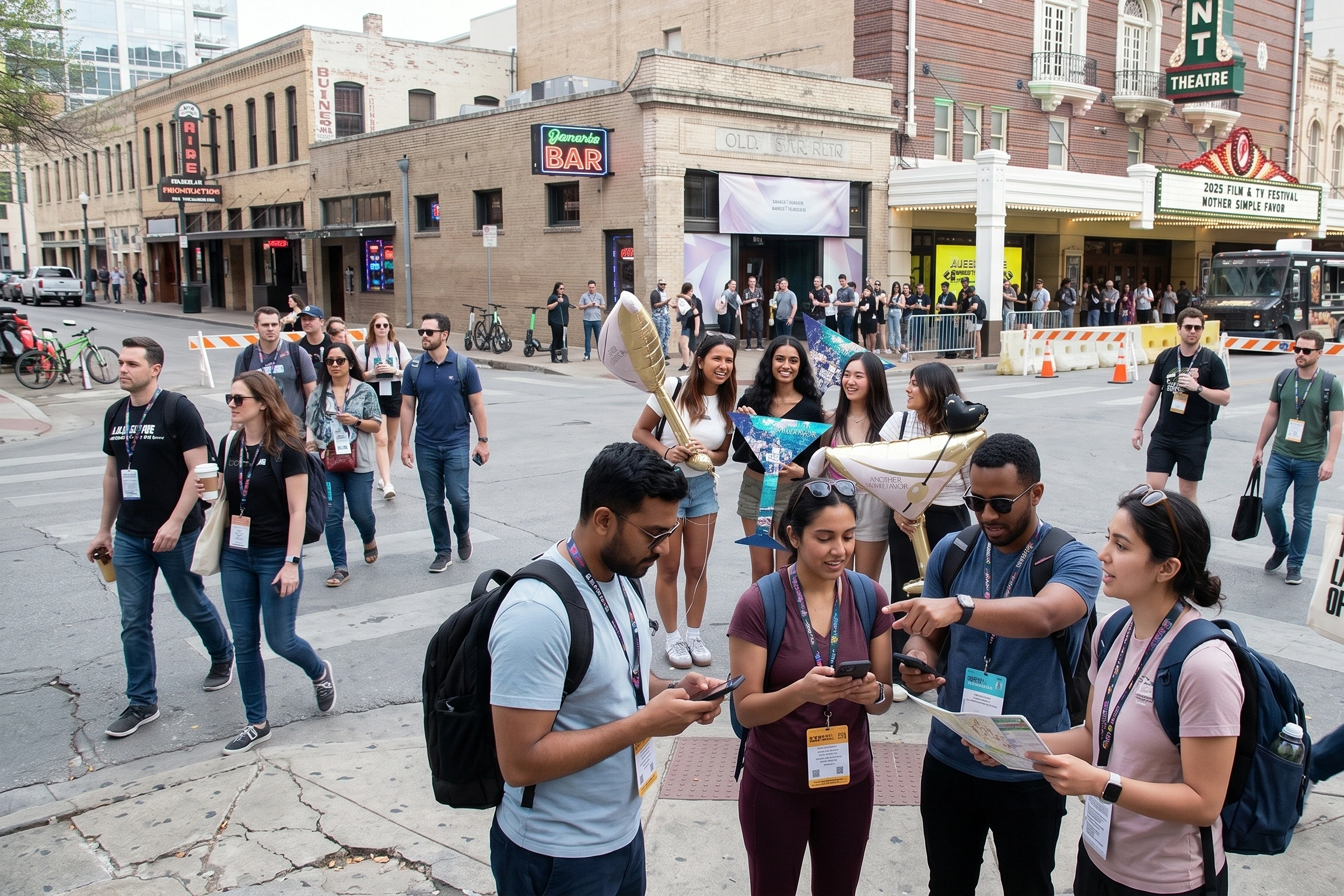
SXSW 2026 deserves case-study treatment because it was not simply a large festival year. It was a structural reset in event logistics. SXSW’s official 2026 launch materials show the event ran from March 12 to March 18, 2026, brought Innovation, Film & TV, and Music together concurrently for seven days, and reorganized downtown Austin around a village model anchored by three dedicated clubhouses.
That shift matters because SXSW was no longer leaning on a single dominant indoor spine to organize the guest journey. At the same time, the City of Austin’s spring festival season announcement warned of tens of thousands of attendees, traffic congestion, road closures, added public-safety presence, and larger, more dispersed crowds across downtown. Read together, those conditions make SXSW 2026 a strong example of how event logistics, festival operations, and live information design can keep a decentralized event coherent in a busy city core.
Case Background
The most important operational fact about SXSW 2026 was not just scale. It was concurrency. SXSW announced that, for the first time, all programming would run simultaneously across Innovation, Film & TV, and Music for seven days, including an extra night of music. That compressed more audience types, more priorities, and more movement patterns into the same downtown window, which immediately raised the bar for event logistics and day-to-day festival operations.
SXSW did not respond to that pressure by pretending the event was simple. Instead, it created a new spatial logic. The launch materials positioned downtown Austin as a village for global creatives, anchored by the Innovation Clubhouse at Brazos Hall, the Film & TV Clubhouse at 800 Congress, and the Music Clubhouse at The Downright, with programming tracks mapped to surrounding buildings to make the event easier to navigate. That is an operational move as much as a branding move. It gives the event recognizable zones instead of an undifferentiated venue list.
The wider city context also shaped the 2026 edition. The Austin Convention Center redevelopment page states that the city is redeveloping and expanding the existing convention center, delivering a larger, more efficient facility on a smaller footprint in the heart of downtown Austin. That backdrop helps explain why SXSW 2026 needed a more distributed operating model rather than relying on the older convention-center-centered rhythm many attendees would have associated with past years.
Public attendee-facing materials show how much organizational weight SXSW placed on navigation. The SXSW Attendee Guide centralizes the schedule, reservations, shuttle, map, and info resources, and it openly acknowledges that first-time attendees can feel overwhelmed. That line is revealing. It suggests the event understood that success in 2026 depended not only on programming quality, but on how confidently people could make decisions once they arrived.
Why SXSW 2026 Was a Difficult Event to Deliver
The first challenge was behavioral complexity. Innovation, Film & TV, and Music do not produce the same attendee patterns. Innovation audiences often move around tighter calendars, meetings, and speaker priorities. Film & TV audiences care more about timed access, screening certainty, and queue confidence. Music audiences accept more fluidity, but they can generate sharp neighborhood surges around showcase timing. Running those three communities concurrently meant SXSW was managing different types of urgency inside the same downtown system, which made event crowd management a live operational issue rather than a back-end concern. This is the kind of complexity that can make a schedule look clean on paper but feel chaotic on the street if the supporting systems are weak.
The second challenge was spatial dispersion. A centralized venue can do a lot of invisible work for an event. It can simplify registration, reduce directional confusion, concentrate guest services, and provide a natural center of gravity. SXSW 2026 deliberately used a district model instead. That likely improved the event’s street energy and neighborhood identity, but it also moved more pressure onto wayfinding, information consistency, guest guidance, and travel time between touchpoints. In a decentralized event, every unclear handoff becomes more expensive because the guest has farther to recover from it.
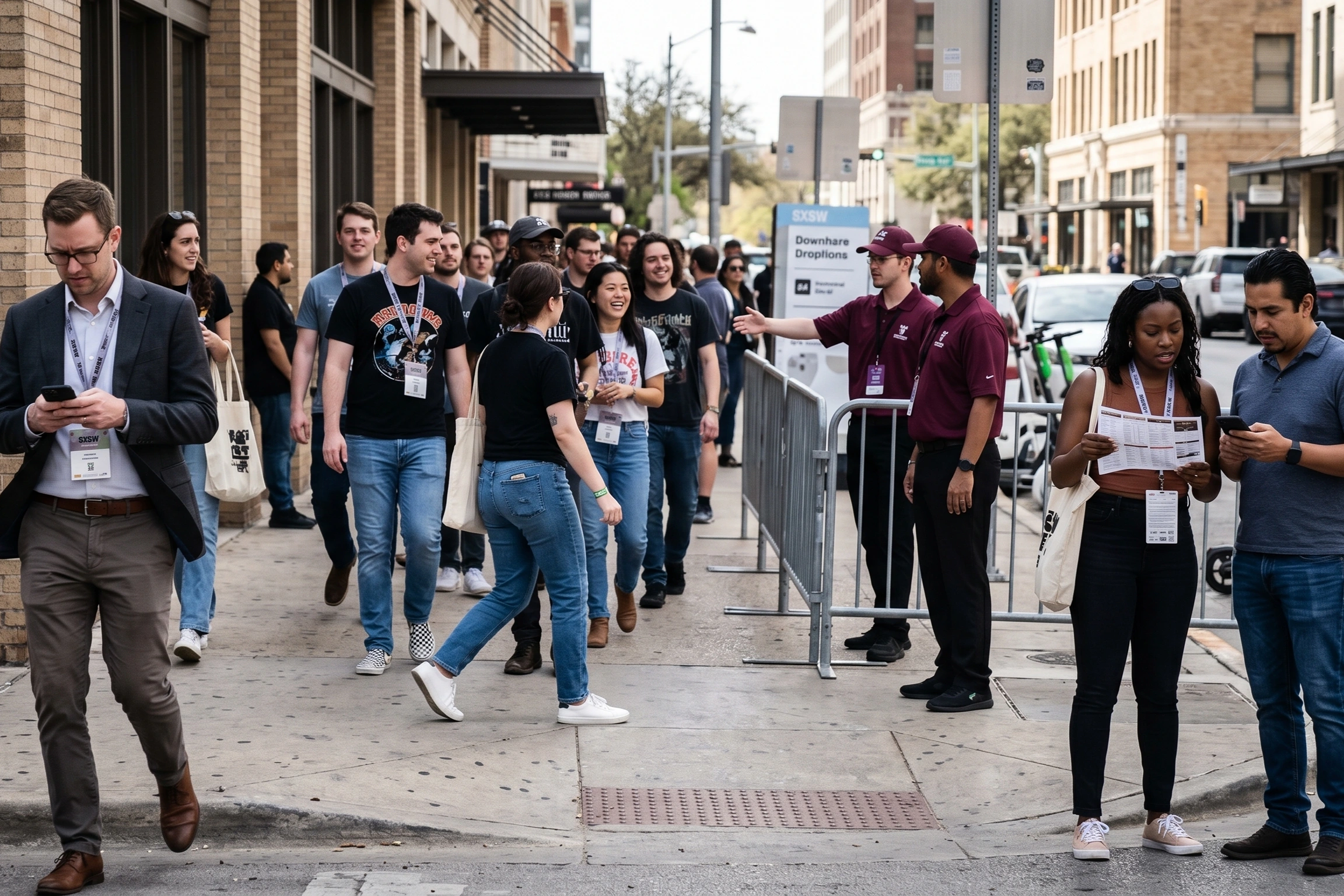
The third challenge was access management. SXSW introduced reservations for 2026 and tied daily reservation counts to badge type. That is a more sophisticated system than a basic queue model, but it is also more cognitively demanding. Guests had to understand badge rights, reservation windows, walk-up options, and event status in real time. From a delivery standpoint, that means threshold moments matter more because every entry point becomes a point of interpretation as well as access control.
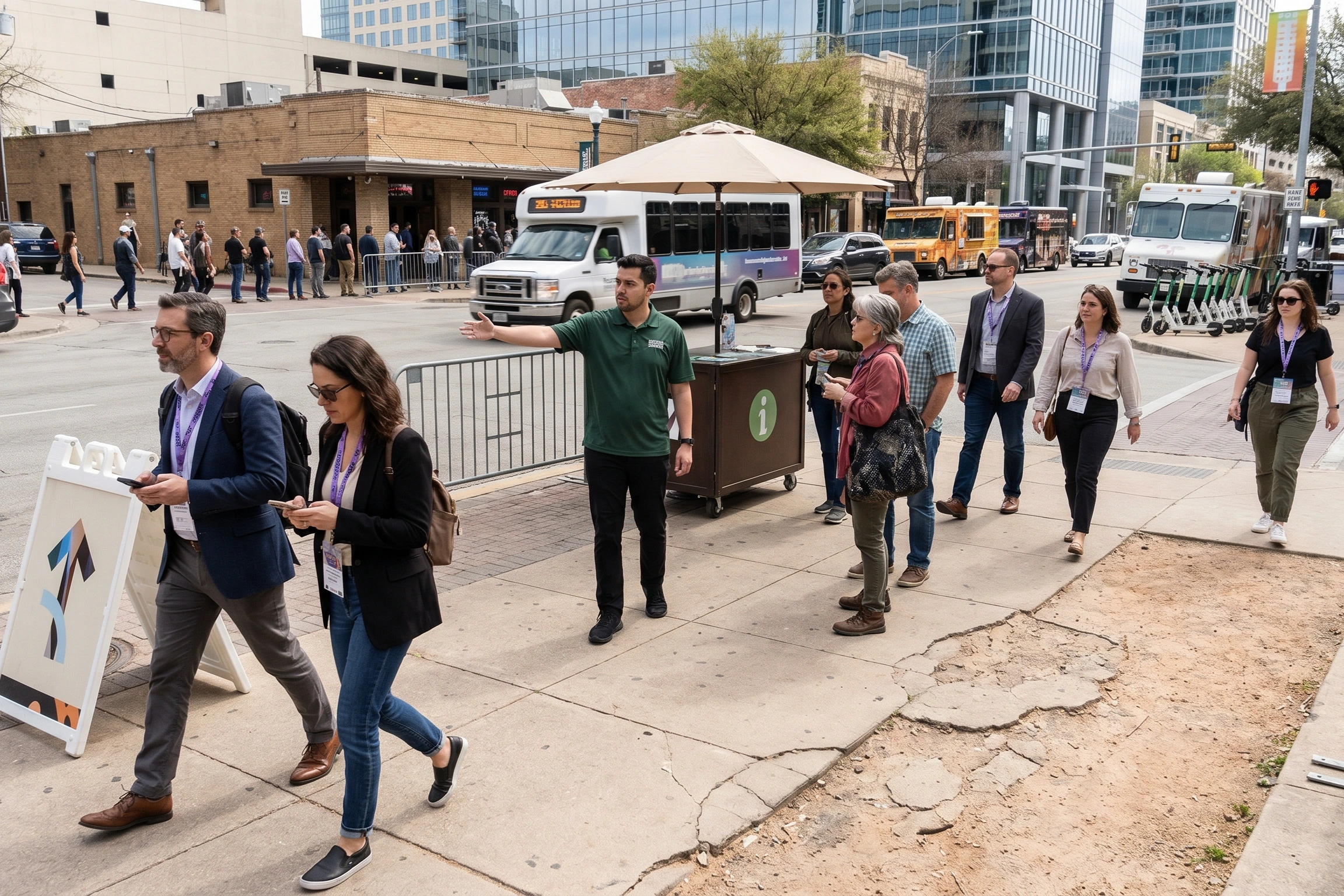
The fourth challenge was movement. An independent local traffic report from Spectrum News noted that attendees were urged to consider walking or using the free SXSW shuttle before deciding to drive, while highlighting the city’s mobility guide, road closures, and the shuttle’s circulation between most conference venues. That tells us movement between venues was not a side concern. It was part of the event’s core event logistics challenge.
The fifth challenge was perception. When an event is spread across a downtown grid, guests do not separate the programmed experience from the city experience. If the route feels confusing, if the line logic feels hidden, or if a guest arrives late because the travel layer was hard to interpret, the event itself gets blamed. SXSW 2026 had to solve not just for capacity, but for confidence. The event needed attendees to feel that the system made sense even when they could not do everything they wanted.

How the Event Logistics Model Appears to Have Been Structured
The clearest sign of a strong operating model is that SXSW seems to have built the event around anchors. The three clubhouses were not just branding devices. They appear to have functioned as neighborhood-level organizing points. That matters operationally because hubs help attendees orient themselves faster, and they also help organizers define zones for guest services, sponsor activity, staffing, issue escalation, and daily flow management. A distributed event becomes much easier to run when people can think in districts instead of memorizing a list of unrelated venues.
The second major layer was circulation. SXSW’s downtown guidance and Austin’s festival mobility framework both point to the same operating choice: movement was treated as part of the event experience, not as an inconvenience guests had to solve alone. The Austin Center for Events spring festival page (https://www.austintexas.gov/ace/spring-festival-season-including-sxsw) directs visitors to the interactive mobility guide for road closures, transportation routes, and planning before they go. That kind of redundancy is important to good festival operations. It does not assume one behavior from every guest. It creates several usable movement options and then tries to make each one legible.
The third layer was live information. SXSW centralized schedule-building, reservations, map use, shuttle details, and attendee prep in one guide rather than scattering that logic across disconnected pages. This matters because large decentralized events usually fail first at the information layer. When people stop trusting what they know about the next move, everything else starts to feel unstable. At SXSW 2026, the information system appears to have been part of the operating system, not just a support document.
The fourth layer appears to have been managed flexibility. SXSW did not fully close off access behind reservations. It preserved walk-up access and made that part of the attendee model. That is a smart compromise. A fully open system often produces volatility and frustration at high-demand moments. A fully locked system can flatten the exploratory character that makes SXSW valuable. The 2026 model appears designed to keep spontaneity alive while putting more structure around disappointment.
The fifth layer was civic alignment. Austin’s public messaging did not sit outside the event story. It helped define the wider operating environment by signaling traffic, closures, mobility options, and public-safety readiness. For a downtown event, that matters. Guests judge the handoff between official event systems and street-level reality. SXSW 2026 appears to have benefited from the fact that the city was visibly managing the same environment the event was asking attendees to navigate.
Taken together, the 2026 structure looks disciplined. SXSW could not make the event physically simple, so it appears to have made it cognitively simpler. That is a more credible operating goal for a citywide festival than trying to eliminate friction altogether, and it is the part of the case most relevant to event logistics strategy.

The Pressure Points That Likely Carried the Most Risk
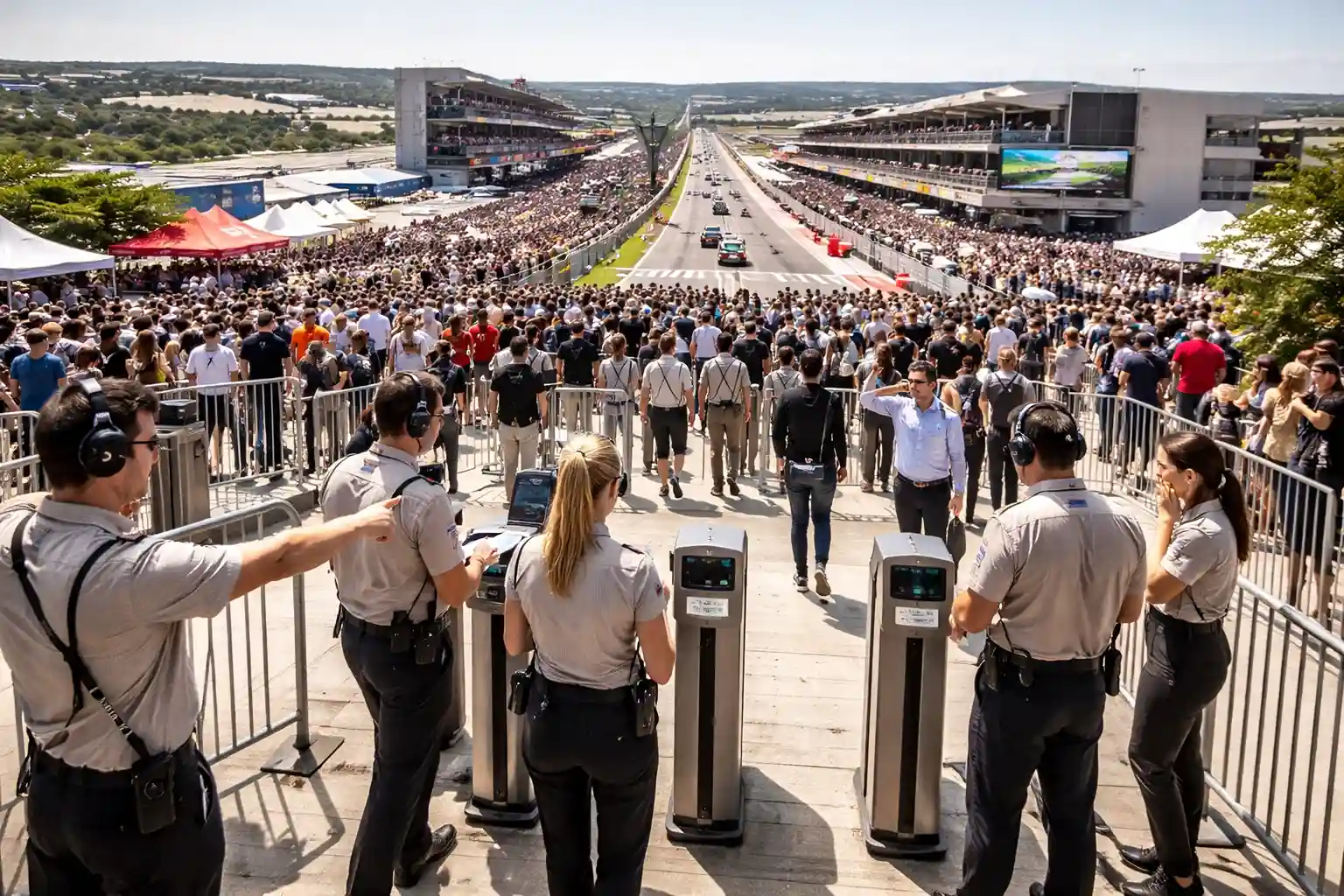
The first obvious pressure point was high-demand entry. Once reservations, limited-capacity rooms, and walk-up access all sit inside the same system, the threshold becomes one of the most sensitive places in the event. The critical moment is not just what is happening on stage or on screen. It is the public-facing point where scarce capacity, waiting time, and guest expectation meet. That is why event crowd management had to be strong at the door, not just in the room.
The second pressure point was cross-downtown transition time. A concurrent event means one programming pulse can create friction in several places at once. A keynote ending, a screening clearing, or an evening music crowd building out can all reshape demand in nearby streets, shuttle stops, and venue entries. Because the city and local media both emphasized closures, walking conditions, and mobility planning, it is reasonable to read movement timing as one of the event’s central operational risks.
The third pressure point was first-time attendee confidence. SXSW openly acknowledged that newcomers may feel overwhelmed and may not know where to start or what their badge includes. That is not a small editorial aside. It is a real operating issue. Guests who begin uncertain are more likely to queue incorrectly, miss reservation windows, overwhelm info points, or make poor movement decisions later in the day. In decentralized events, confusion has a compounding effect.
The fourth pressure point was downtown credibility. Austin publicly prepared residents and visitors for dispersed crowds, added safety presence, and travel disruption. That tells us the street experience was always going to be part of the event experience. Citywide festivals lose authority quickly when the public realm feels less managed than the programmed spaces. SXSW 2026 seems to have avoided that gap by aligning event planning with visible civic preparation.
What the Organizers Seem to Have Gotten Right
The strongest decision appears to have been replacing centralization with clarity. SXSW did not have one building doing the work of orientation, so it gave attendees a stronger mental model instead: clubhouses, surrounding program clusters, schedule tools, maps, shuttle routes, info resources, and clearer access rules. None of that is flashy. All of it is operationally valuable. Good systems reduce the effort required to understand what to do next, which is exactly what strong event logistics design should do.
The second smart move was treating transport as part of the guest experience. The movement layer here does not read like generic travel advice. It reads like event-delivery planning. The shuttle, the emphasis on walking, the warning against driving, and the link to city closures all suggest that movement was treated as a programmed condition. That is an important distinction. Many citywide events still behave as if transport sits outside the experience, when in reality it shapes how the event is remembered.
The third smart move was making scarcity more visible before it became conflict. Reservations, daily limits by badge type, event status checks, and explicit walk-up logic do not eliminate disappointment, but they do reduce ambiguity. Guests can handle limited access better when the rules feel visible and the fallback options are obvious. That is especially important at SXSW, where the event’s identity depends partly on discovery and partly on high-demand moments.
The fourth smart move was aligning event communication with city communication. Austin’s spring festival messaging supported the same reality SXSW was presenting to guests: downtown would be active, more dispersed, and mobility-sensitive. That alignment matters because it reduces the gap between the event story and the city story. In practical terms, it helps the whole environment feel governed by one coherent logic rather than several disconnected systems.
Where the Model Still Carried Risk
Even a well-designed distributed model asks a great deal from the attendee. SXSW 2026 still required people to interpret reservation systems, queue logic, schedule updates, venue locations, and travel choices throughout the day. That is manageable for experienced badgeholders. It can still create fatigue for newcomers, cross-track attendees, or anyone trying to move too aggressively across the footprint.
There is also a natural tension between discovery and control. SXSW preserved walk-up access because the festival benefits from spontaneity. That makes sense. But any blended reservation and walk-up system will still produce edge cases where demand outruns confidence. Some disappointment is built into the model. The 2026 system appears stronger than a fully open one, but it does not remove the emotional volatility of high-interest access.
Finally, downtown conditions remain partly outside the organizer’s direct control. Closures, traffic, public movement patterns, and general city intensity all shape how the event feels. Austin’s preparation clearly helped, but citywide events always trade some control for urban energy. SXSW 2026 appears to have managed that tradeoff well, but the exposure remains part of the model.

Lessons for Future Festival and Citywide Event Delivery
Decentralized events need anchors, not just addresses.
SXSW 2026 shows the value of giving people operating hubs they can recognize quickly. Clubhouses do more than create identity. They make district logic possible. That helps attendees orient faster and helps organizers deploy services more coherently across the footprint.
Movement should be designed as part of the event, not left to the guest.
The shuttle logic, walking guidance, closure planning, and city mobility tools all point to the same principle. Guests judge the event between venues as much as inside them. When travel feels explainable, the whole event feels more professional. That is one of the clearest takeaways from SXSW’s event logistics model.
Scarcity works better when the rules are visible.
Reservations, badge limits, event-status checks, and walk-up alternatives helped SXSW make uneven demand more understandable. That does not remove friction. It does make friction easier to manage without damaging the event’s authority, which is a useful lesson for both event crowd management and broader festival operations.
Live information is operational infrastructure.
Schedules, maps, and attendee prep tools were not optional extras in this model. They were part of the delivery system. In a decentralized environment, information quality determines how much confusion spills onto staff, lines, and venue entries.
Visible city coordination can strengthen an event’s credibility.
Austin’s public messaging around crowds, closures, safety, and mobility did useful work before guests even entered the SXSW footprint. For large downtown events, that kind of civic visibility helps the wider environment feel prepared, not reactive.
CEO Excerpt
“SXSW 2026 is a strong example of what modern event delivery looks like when one building can no longer do most of the organizing for you. What stands out is not that the event became simpler. It is that the system appears to have become clearer. The clubhouses, the movement planning, the access rules, and the live information tools all point to the same idea: a complex event can still feel controlled when guests understand how to move through it.” - CEO, Eventstaff
Final Assessment
SXSW 2026 is worth studying because it shows how a major live event can remain coherent after losing the convenience of a traditional central-venue model. Based on the public record, the organizers did not solve that challenge by reducing complexity. They solved it by structuring complexity more clearly through named hubs, access logic, live information tools, and a serious mobility layer across downtown Austin. That is what makes this a strong event logistics case study rather than a simple event recap.
It also makes the piece useful beyond SXSW itself. The case shows how event crowd management and festival operations become stronger when guests can feel the operating model around them. They do not need every moment to be frictionless. They need the event to make sense quickly and consistently enough that the system feels intentional. On the available evidence, that is what SXSW 2026 appears to have achieved.
If you want, I’ll do one more pass to make the link placement even more editorial, so it feels less like research markup and more like publish-ready copy.