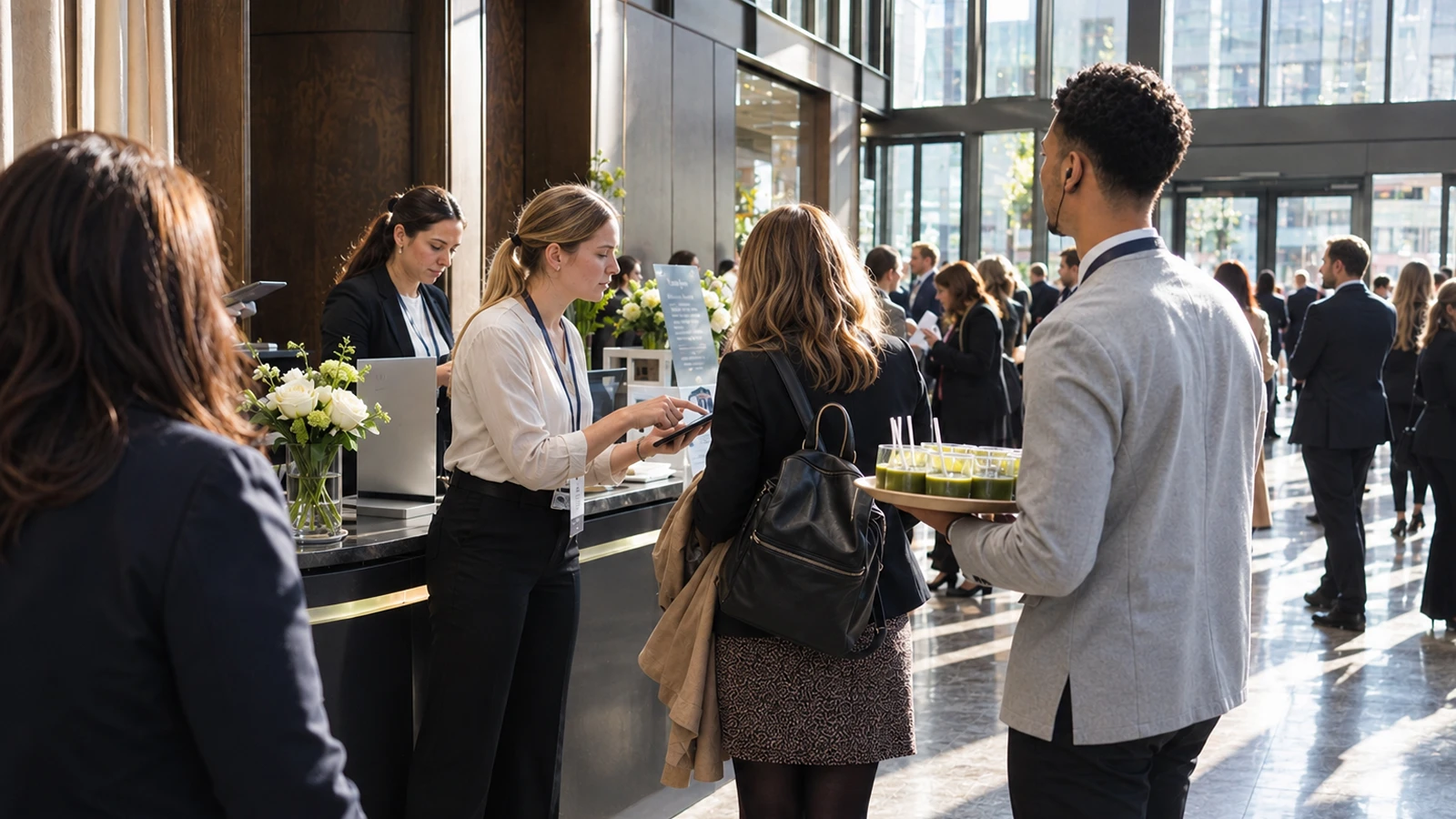

How a MAGIC Las Vegas Fashion Trade Show Exhibitor Should Staff a Booth When Buyers Only Give You Seconds
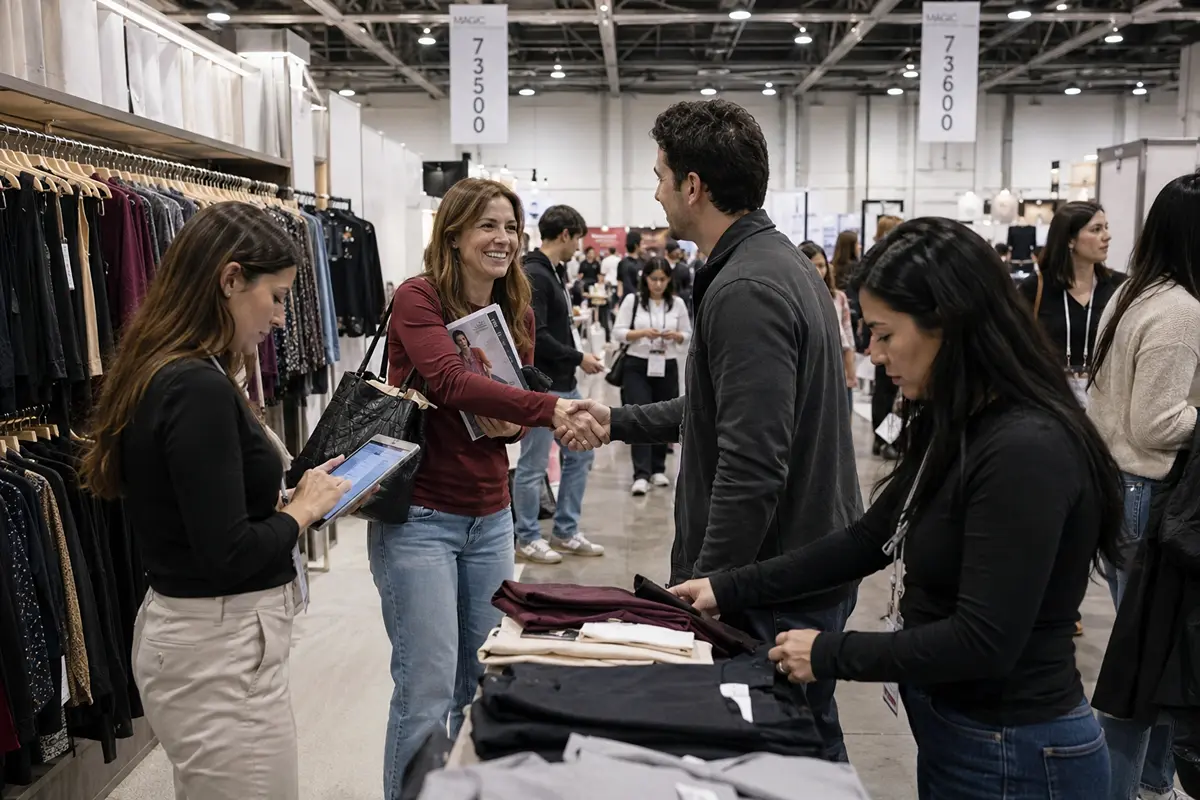
At MAGIC Las Vegas, a fashion trade show exhibitor has only seconds to turn attention into opportunity. Buyers rarely walk into a booth ready for a long conversation. Instead, they pause, scan the collection, assess category fit, and decide almost instantly whether your brand is worth their time.
That brief pause is where most exhibitors lose serious buyers without realizing it.
For a MAGIC Las Vegas fashion trade show exhibitor, booth staffing is not about having people present. It is about having the right people who can read buyer intent quickly, ask the right qualifying questions, and convert fast interest into real buying conversations.
Executive Summary
This guide explains how a MAGIC Las Vegas fashion trade show exhibitor should think about booth staffing in 2026. MAGIC is not a general foot-traffic event. It is a B2B buying environment where visitors may be boutique buyers, e-commerce retailers, distributors, or decision-makers who are quickly comparing collections. You will learn why buyer qualification matters more than booth coverage, how trade show staff should distinguish real buying intent from casual browsing, which roles belong on the booth floor, and how to brief staff before the first buyer stops by.
What Event Workers Actually Do at Festivals and Conventions
"Event worker" sounds like one job, but it can mean five different things once the shift starts. One person may be setting up signs before doors open. Another may be checking guests in, guiding crowds, helping vendors, or breaking down the site after everyone leaves. Before you apply for a shift or hire a team, understanding what event staff actually do at different event types helps clarify expectations.
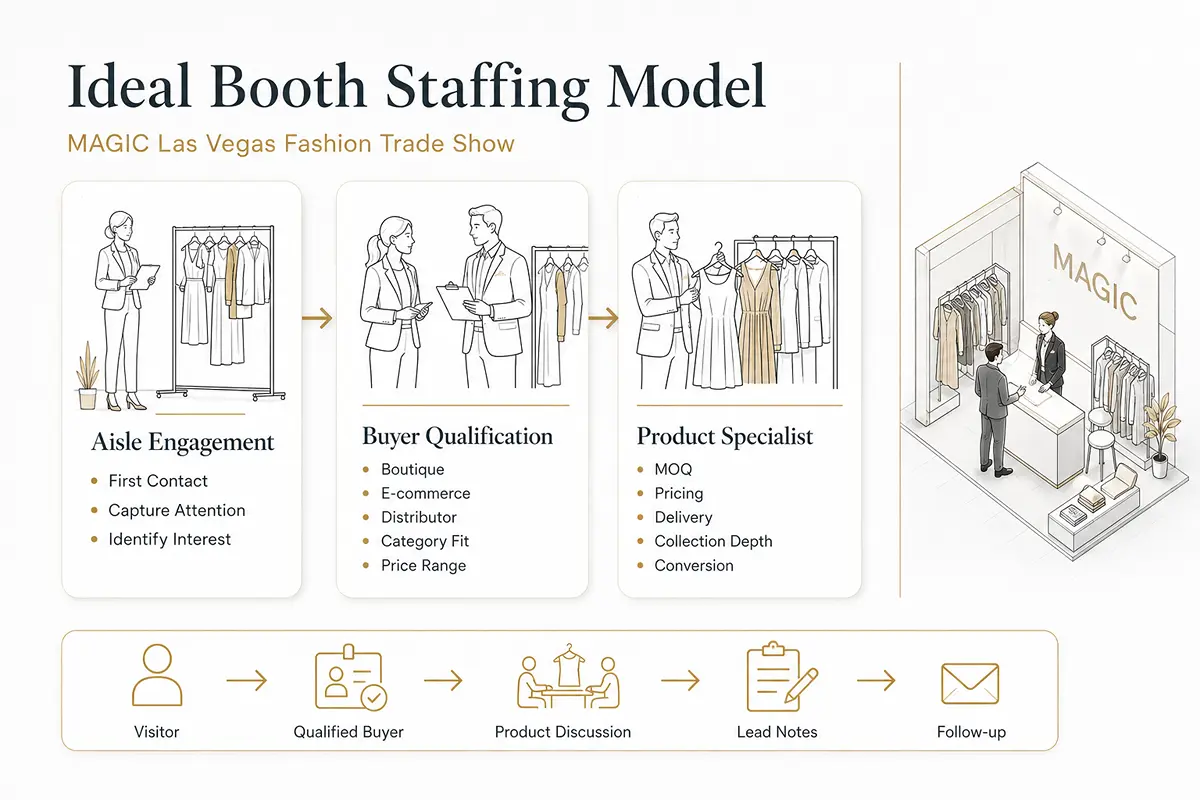
Why Booth Staffing Strategy Matters More Than Booth Traffic at MAGIC Las Vegas 2026
MAGIC Fashion Show Las Vegas 2026 is not a general-attendance event. It is a high-density B2B buying environment where every interaction has potential commercial value.
In most trade shows, only a small percentage of booth visitors convert into actual buyers. The difference is not traffic volume; it is qualification quality.
For a MAGIC Las Vegas fashion trade show exhibitor, the real risk is not a slow booth. It is a busy booth filled with unqualified conversations.
Buyers at MAGIC typically arrive with:
- Clear categories to source
- Defined price points and margin expectations
- Limited time across multiple shows
- Active vendor comparisons
This means your booth must function as a rapid qualification system, not just a visual display.
Without a clear staffing strategy, even high foot traffic can result in weak leads, missed buyers, and lost revenue opportunities. For planners, building an event staffing plan that assigns clear roles prevents the assumption that every position is the same.
A Busy MAGIC Booth Can Still Waste the Right Buyers
A booth at MAGIC can look busy and still be wasting the show.
That is the trap. A fashion booth gets visual interest quickly because buyers can read a rack from the aisle. They know the silhouette, the price lane, the customer, and sometimes the margin story before anyone says hello. For a MAGIC Las Vegas fashion trade show exhibitor, the staffing problem is not getting someone to stop. It is knowing what kind of stop it is.
MAGIC Las Vegas 2026 runs August 10-12 at the Las Vegas Convention Center, but the useful detail is not just the date or venue. The useful detail is the buyer density. The brief notes that MAGIC is built around buying power, with a large share of the floor tied to purchasing decisions. That changes what "good booth coverage" means.
A browser looks at a product, but a buyer tests the business.
A boutique buyer may ask whether the line fits a resort customer, whether the sizing runs small, or whether the minimum order makes sense for one location. An e-commerce buyer may care more about photography, replenishment, variant depth, and how fast the product can move online. A distributor may skip the compliments and go straight to pricing, delivery windows, and territory.
Those are not the same conversation. If the person at the booth treats all three visitors the same, the lead list gets bigger, but the sales opportunity gets weaker.
The Rack Gets Their Attention. The First Question Decides the Lead.
A fashion booth has one advantage most trade show booths do not: the product can speak from ten feet away.
The problem is that visual interest is cheap. A buyer can pause because the color story feels right, because a jacket looks similar to something already selling, or because the booth happens to sit between two appointments. None of that means the visitor is worth a full sales conversation yet.
At MAGIC, staff need to qualify the pause without making the buyer feel interrogated. "Can I help you?" is usually too soft. "Are you buying for boutique, e-commerce, or multi-location retail?" is more useful because it gives the staff member a lane. From there, the next question can move toward category fit, price point, season, or order timeline.
Ask the Question That Reveals the Buyer Type
A strong booth worker might say, "Are you looking for young contemporary for immediate delivery, or are you planning a later season buy?" That kind of question does three things at once. It shows the buyer that the person understands the market, it filters casual browsing, and it gives the exhibitor a better note than "interested in dresses."
This is where generic trade show staffing falls short. A friendly person can hold traffic at the front of the booth. A trained trade show team can tell whether the conversation belongs with a brand ambassador, a product rep, or the founder standing two steps behind the rack.
CEO Excerpt
I always tell exhibitors that the most expensive mistake at MAGIC is treating every pause like the same opportunity. A real buyer does not always announce themselves with a long conversation. Sometimes they ask one sharp question about MOQ, delivery timing, fabric, or price position, and that is your window.
Your Booth Is Competing With Three Other Buying Floors
MAGIC happens inside a larger Las Vegas fashion market rhythm. PROJECT Las Vegas, SOURCING by Informa, and OFFPRICE sit in the same August 10-12 window, which means buyers may be comparing finished fashion, sourcing options, margin opportunities, and off-price inventory in the same trip.
That makes the booth conversation more compressed. A buyer is not just walking the floor. They may be carrying appointments, open-to-buy limits, vendor priorities, and a mental list of categories they still need to fill.
A slow booth conversation becomes expensive in that context. If staff spend three minutes explaining the brand story to someone who only wanted trend inspiration, they may miss the buyer who needed denim, footwear, accessories, or affordable-to-moderate women's apparel right now.
Las Vegas Buyers Move Fast, So the Booth Has to Sort Fast
Trade show staffing in Las Vegas has to account for pace. The city hosts large shows constantly, and serious buyers learn how to move fast. They look, sort, scan, ask, and leave. The booth team has to match that tempo.
The better staffing model is not "put three friendly people in the booth." It is one person to catch aisle movement, one person to qualify buyer type, and one person who can handle product-specific questions without pulling the exhibitor into every half-interested conversation. Understanding event staff roles and how they differ prevents overlap and wasted labor in the booth.
What Is the Ideal Booth Staffing Model for a MAGIC Las Vegas Fashion Trade Show Exhibitor?
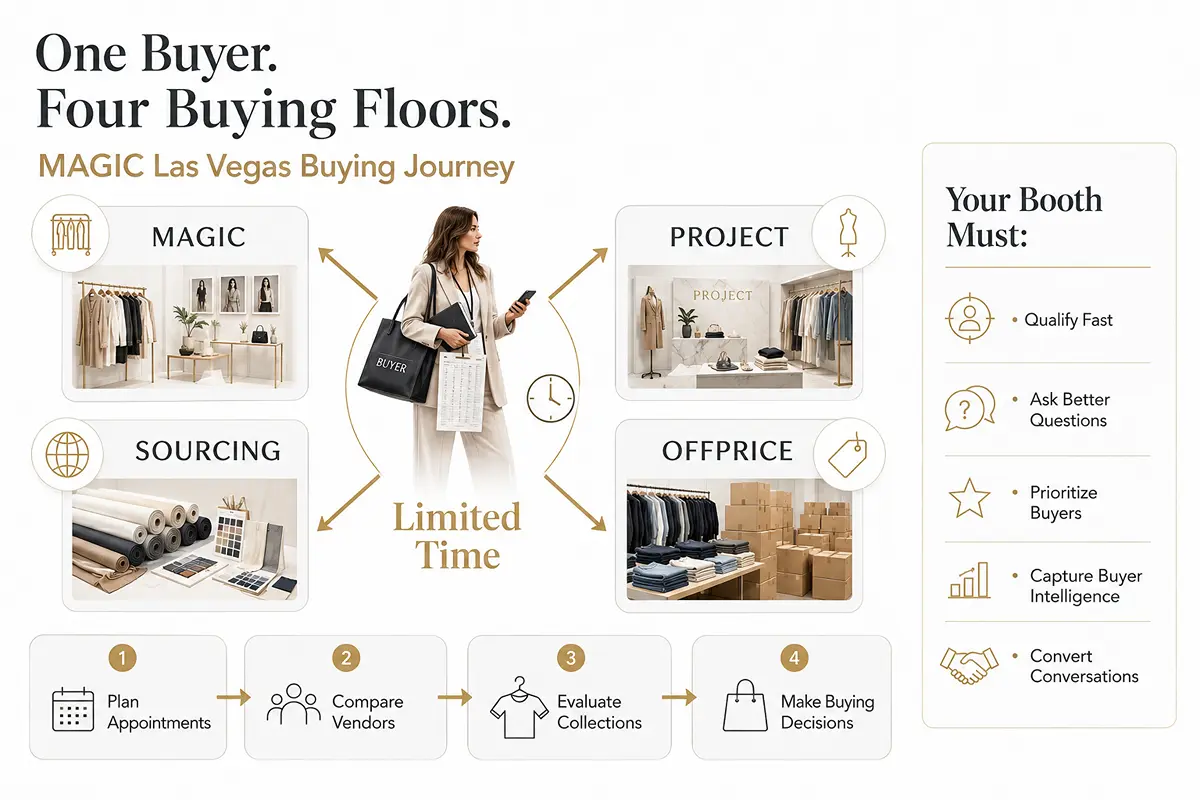
The most effective booths at MAGIC follow a simple but structured staffing model built around three roles:
1. Aisle Engagement (First Contact)
Focuses on attracting attention and initiating quick interaction. The goal is to identify if the visitor is worth deeper engagement.
2. Buyer Qualification (Filtering Stage)
This is the most critical step. Staff should ask:
- Are you buying for a boutique, e-commerce, or distribution?
- What category are you sourcing?
- What price range are you targeting?
This determines whether the visitor becomes a real lead.
3. Product Specialist (Conversion Stage)
Handles serious buyers and answers:
- Pricing, MOQ, and margins
- Delivery timelines
- Fabric, fit, and collection depth
This structure ensures serious buyers are prioritized while casual browsers don’t consume selling time.
For a MAGIC Las Vegas fashion trade show exhibitor, this role clarity is what separates high-performing booths from those that only appear busy.
Badge Scans Are Useless Without Buyer Context
The easiest way to leave MAGIC with a bad lead list is to celebrate every scan.
A badge scan tells you someone entered the booth orbit. It does not tell you whether they buy for a boutique in Scottsdale, an online store with fast-turn inventory, a regional chain, a showroom, or a distributor looking for price leverage. It does not tell you whether they liked the fabric, cared about the MOQ, asked about delivery, or only stopped because the color palette matched a trend board.
That is why the real job is not lead capture. It is lead memory.
A useful lead note should sound like the sales call has already started.
A weak lead note says: "Interested. Follow up."
A useful MAGIC lead note says: "Boutique buyer, two stores, looking for young contemporary dresses under a moderate price point. Asked about spring delivery, low minimums, and reorder options. Send line sheet and follow up next week."
That second note gives the sales team a real opening. The follow-up email can mention the exact category, the right price range, and the buyer's timing. No one has to restart the conversation from zero.
That is the point of booth staffing strategies for lead generation events. The goal is not a longer spreadsheet. The goal is a lead list that still makes sense after everyone flies home.
Do Not Put Five People in the Booth Doing the Same Hello
A MAGIC booth does not need five people doing the same version of "hello."
It needs role separation. The person closest to the aisle should not be trapped in a 10-minute fabric conversation. The product rep should not be pulled into every badge scan. The founder should not spend the morning explaining basic line-sheet details to people who were never going to buy.
Trade show staff should control the booth rhythm: who enters, who gets qualified, who needs a handoff, and who should be politely moved along. Understanding how brand ambassadors work at trade shows versus how product specialists work ensures the right person handles the right conversation type.
Product reps should protect the serious buyer conversation: fit, fabric, delivery, wholesale pricing, MOQ, seasonality, and collection story. Brand ambassadors can still matter, but their job is the opening, not the wholesale.
The Mistake Is Treating Booth Staff Like One Job
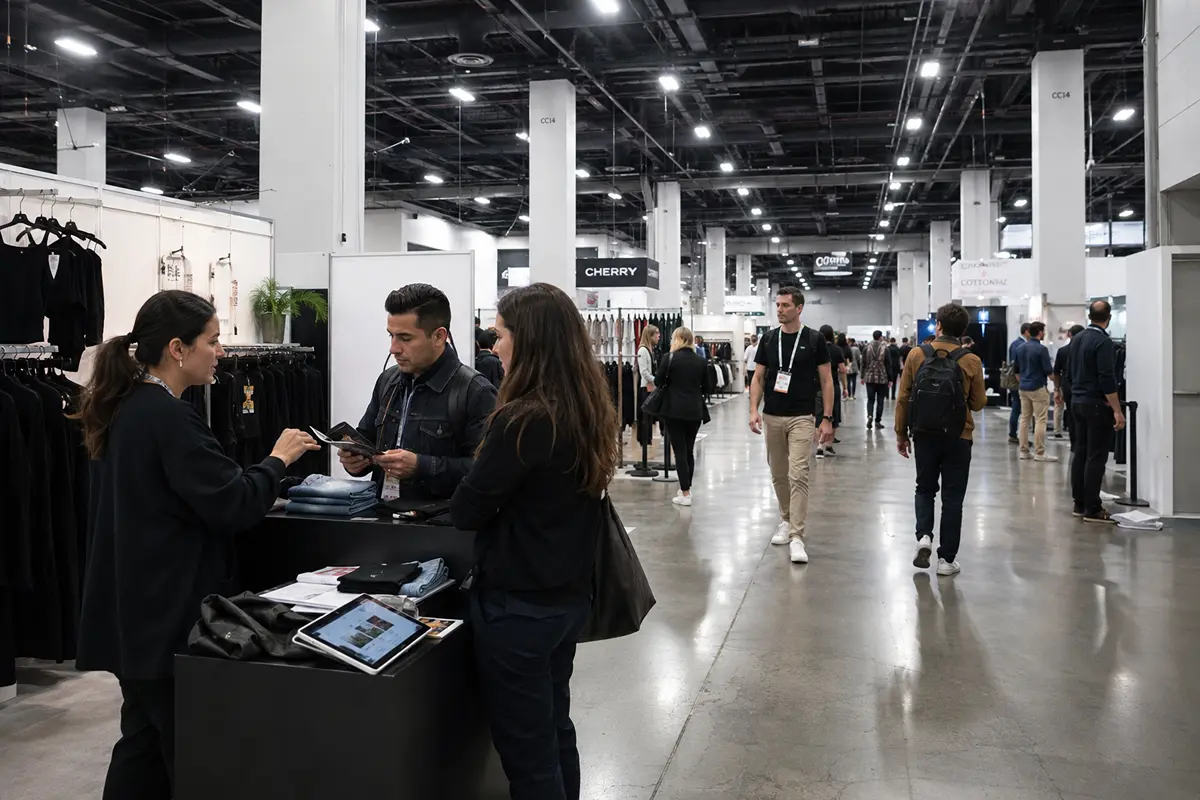
At a fashion trade show, the front of the booth and the back of the booth are doing different jobs. The front is speed, warmth, and sorting. The middle is category fit and buyer qualification. The deeper conversation is product fluency and commercial detail.
Promotional staff can hand out lookbooks, point buyers to QR codes, or support lead capture. But if they cannot tell the difference between a boutique buyer and a distributor, they should not be the person deciding who gets the sales lead's time.
Fashion Buyers Ask Commercial Questions, Not Brand-Slogan Questions
At MAGIC, product fluency does not mean memorizing every SKU.
It means knowing enough to avoid killing momentum. If a buyer asks about fabric, sizing, MOQ, delivery timing, or whether a piece is part of a broader collection, the staff member should not freeze, guess, or give a vague "I can check on that." They should know which questions they can answer and which ones need a fast handoff.
The best temporary staff are briefed around buyer questions, not brand slogans. They should know the hero pieces, the target customer, the price point, the strongest categories, the line sheet location, and the exact moment when the brand lead should step in.
Brief Staff on the Questions Buyers Will Actually Ask
Before doors open, give staff the answers that keep conversations moving:
Who is the ideal buyer for this line? Which products should they point to first? What price range should they mention or avoid? What MOQ or delivery questions need escalation? What should every lead note capture before the buyer leaves?
That is the difference between staffing for booth coverage and staffing for buyer intelligence. The booth may look the same from the aisle, but the follow-up list will not.
The Best MAGIC Booth Team Leaves With Buyer Intelligence, Not Just Coverage
A crowded booth can feel successful in the moment. The real test comes after MAGIC, when the exhibitor has to decide who deserves follow-up, who needs pricing, who should get a line sheet, and who was never a serious buyer.
That is why the best MAGIC staffing plan is not the biggest team. It is the clearest team. Everyone should know their lane: who opens the conversation, who qualifies the buyer, who answers product questions, who captures notes, and who protects the sales lead's time.
For a MAGIC Las Vegas fashion trade show exhibitor, booth staff should not be measured only by how many people they greeted. They should be measured by how much buyer intelligence they helped capture while the floor was moving.
Build a Booth That Converts Buyers, Not Just Traffic
If you are preparing as a MAGIC Las Vegas fashion trade show exhibitor, your staffing strategy will directly impact the quality of buyers you walk away with.
EventStaff helps fashion brands design booth teams built for buyer qualification, faster decision-making, and high-quality lead capture. From defining roles to training staff on real buyer conversations, we ensure your booth performs where it matters most after the show ends.
If your goal is stronger leads, better follow-ups, and measurable ROI from MAGIC Las Vegas 2026, it starts with how you staff your booth.
At MAGIC Las Vegas, a fashion trade show exhibitor has only seconds to turn attention into opportunity. Buyers rarely walk into a booth ready for a long conversation. Instead, they pause, scan the collection, assess category fit, and decide almost instantly whether your brand is worth their time.
That brief pause is where most exhibitors lose serious buyers without realizing it.
For a MAGIC Las Vegas fashion trade show exhibitor, booth staffing is not about having people present. It is about having the right people who can read buyer intent quickly, ask the right qualifying questions, and convert fast interest into real buying conversations.
Ready to elevate your next event?
Join thousands of event planners who trust EventStaff.com for reliable, professional staffing solutions.
Trusted by event professionals nationwide
1k+
Events Staffed
2 million+
Guests Served
97%
Positive reviews