
Introduction
Event planners often reach the same stage in the planning process and realize an important question still needs a clear answer.
Which event staff roles do we actually need for this event?
Many events are staffed based on a simple headcount. A planner might request 15 or 20 staff members for the evening without defining the specific event staffing roles those people will perform. While the floor may appear fully staffed, the structure behind the team is missing.
When event staff positions are not clearly defined, operational problems appear quickly. Servers may be pulled away from food service to answer guest questions. Brand ambassadors may be asked to manage crowd flow. A check-in desk that is short two staff members can create a line that stretches across the lobby within minutes of doors opening.
The scale of this challenge is significant.40% of event planners report a shortage of skilled labor as a top operational challenge, and the global event staffing marketplace for hospitality reached $6.4 billion in 2024, underscoring just how much is riding on getting the right people in the right roles.
Understanding event staff roles and how different event staffing positions work together on the floor is what allows an event to run smoothly. Each role serves a different operational purpose, from guest arrival and hospitality to food service, brand engagement, and crowd flow.
This guide explains the most important types of event staff, what each role does, and how to match the right staff positions to your event format, guest count, and service style. By the end, you will have a clear framework for building a staffing plan that supports both guest experience and operational efficiency.
CEO Excerpt
"The biggest staffing mistakes I see at events are not about numbers. They are about roles. When staff are placed in the wrong positions, small operational gaps quickly turn into visible guest experience problems. The events that run smoothly are the ones where every role on the floor has a clear purpose."
— CEO, EventStaff
Executive Summary
Understanding event staff roles is essential for building a team that can support guest experience and event operations effectively. This guide explains the most common event staffing roles, what each position does, and how roles change depending on event type. You will also learn practical staffing ratios, common roles planners forget to book, and how to structure a staffing plan that keeps events running smoothly from check-in to breakdown.
Core Event Staff Roles Explained (And What Each One Does)
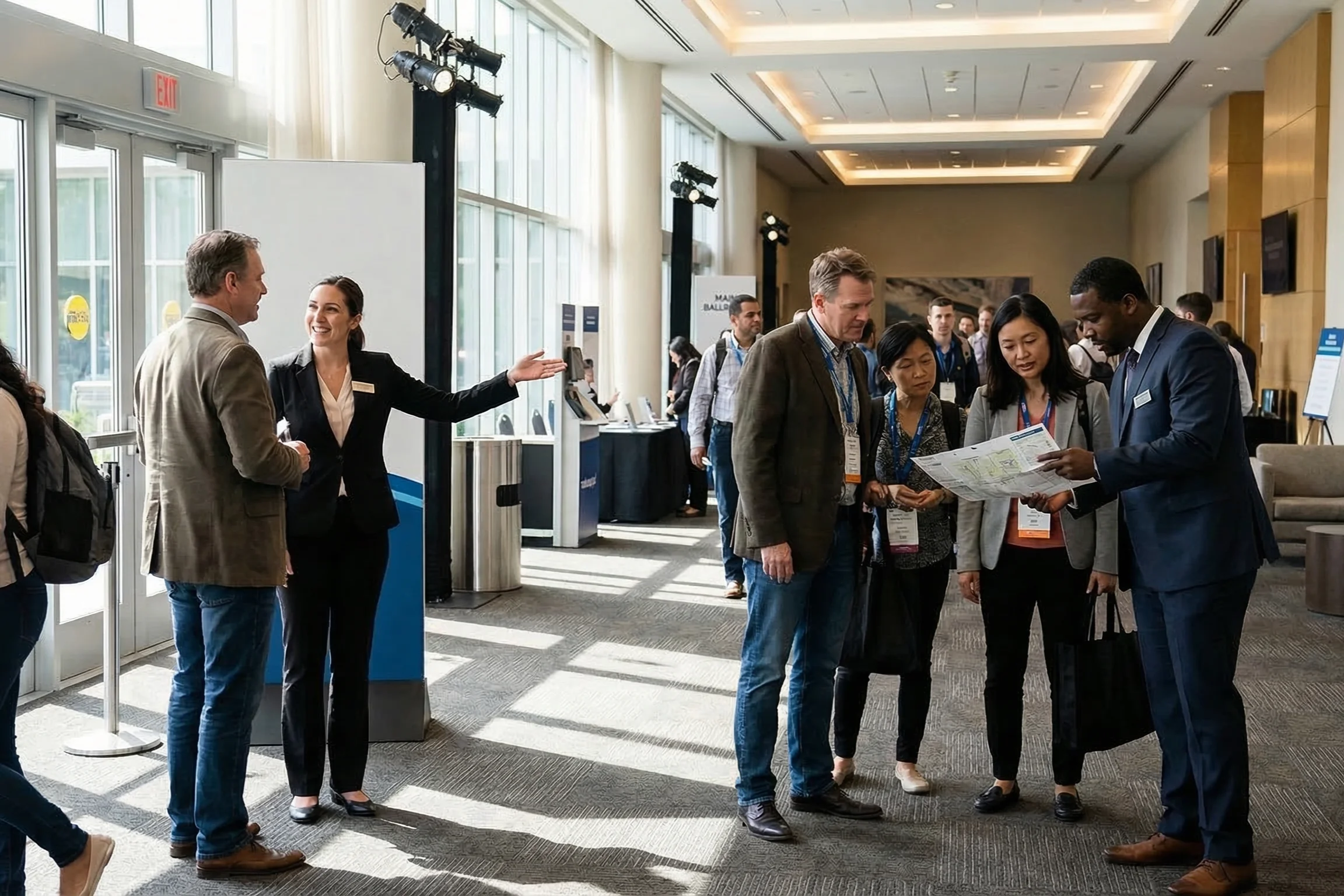
"Event staff" is often used as a broad label, but in practice it refers to a range of specialized event staffing roles, each designed to support a different part of the event experience.
Understanding the types of event staff and what each role is responsible for helps planners build a team that functions as a coordinated system rather than a group of individuals filling shifts.
Below are the core event staff positions most commonly used across corporate events, brand activations, conferences, festivals, and hospitality functions.
Hospitality Staff
Hospitality staff are responsible for managing the guest experience throughout the event. These team members are positioned across the venue to greet attendees, provide directions, answer questions, and ensure the overall service standard is maintained.
Hospitality roles are often the most visible event staffing positions because they interact directly with guests throughout the event. As explored in depth in How Hospitality Staff Elevate Guest Experience at Events, the visible quality of these interactions shapes how attendees perceive the entire event.
Common hospitality staff roles include:
- Hosts and greeters positioned at entrances to welcome guests and manage arrival flow
- Floor managers who oversee the guest experience across the venue and coordinate with other staff
- VIP attendants assigned to high-profile guests or designated VIP areas
- Guest services staff who assist attendees with directions, schedules, or event logistics
For many events, hospitality staff serve as the foundation of the staffing plan, especially at corporate functions, galas, conferences, and private receptions.
Check-In and Registration Staff
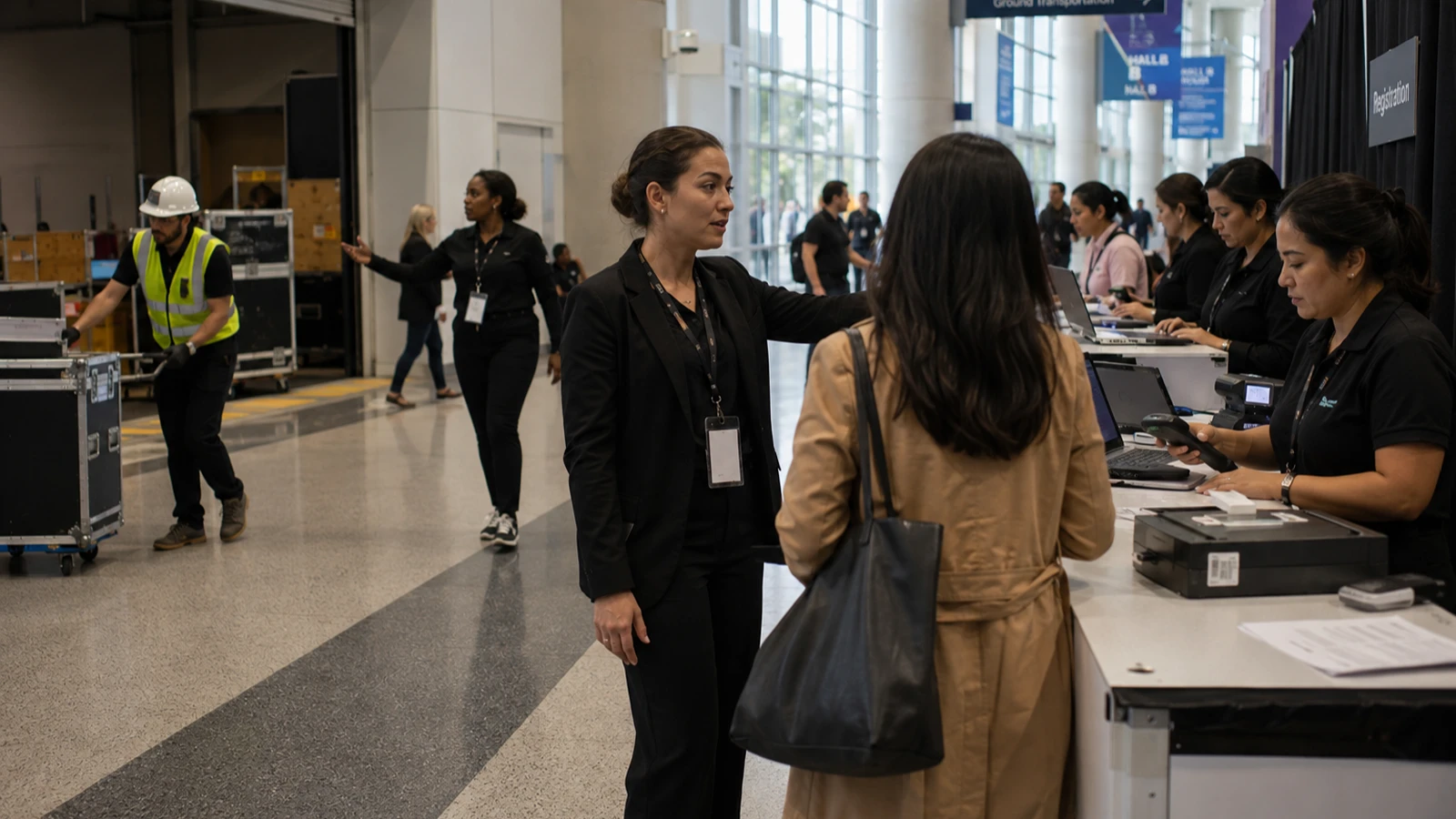
The check-in desk is often the first operational touchpoint of the entire event, which makes registration staff one of the most critical event staff roles.
A well-trained check-in team manages the arrival process quickly and professionally, helping prevent long lines and early frustration among guests.
Registration staff responsibilities typically include:
- Managing digital or printed guest lists
- Scanning tickets or QR codes
- Distributing badges or credentials
- Handling VIP or media check-ins
- Resolving guest list discrepancies
Because arrival patterns often occur in concentrated waves, check-in staffing levels must be calculated carefully. For most events, planners use a ratio of one check-in staff member per 75 to 100 guests during peak arrival periods. Events that involve credentials, badges, or security verification typically require additional registration staff to maintain flow.
Catering Staff
Catering staff manage all food and beverage service operations during an event. These roles are essential for maintaining service speed, cleanliness, and overall hospitality standards.
Typical catering roles include the following:
- Servers responsible for plated service or passing appetizers
- Bartenders preparing and serving beverages at bar stations
- Bussers clearing glassware, plates, and service items from guest areas
- Food runners transporting dishes from kitchen to service points
- Back-of-house support staff assisting with staging and preparation
Different service styles require different staffing ratios:
- Plated dinner: approximately one server per 10 to 15 guests
- Cocktail reception: one server per 25 to 30 guests for passed service
- Open bar service: one bartender per 50 to 75 guests depending on volume
Specifying the correct breakdown between these catering staff roles helps prevent service delays and ensures guests receive consistent hospitality throughout the event.
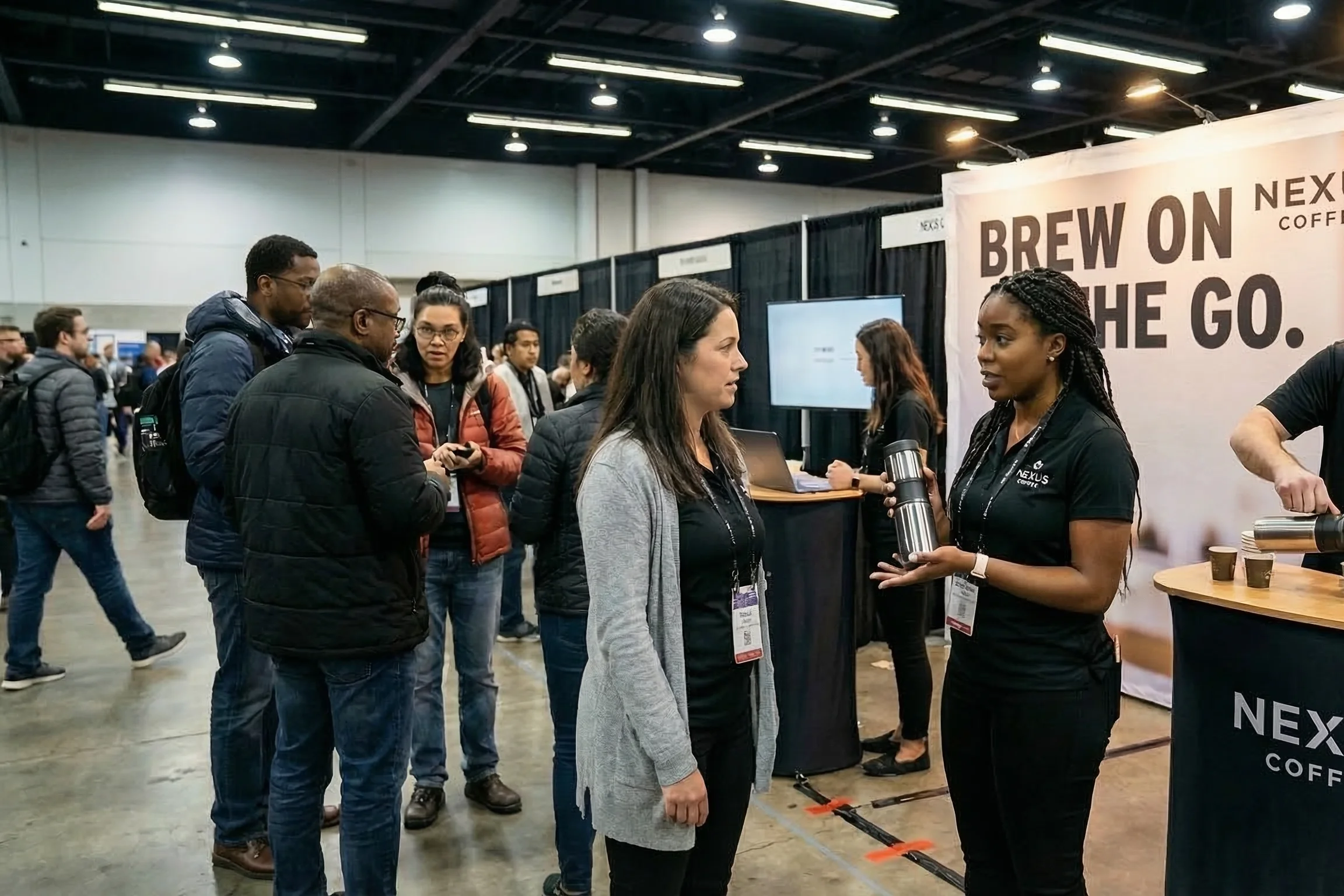
Brand Ambassadors and Promotional Staff
Brand ambassadors represent the marketing and engagement layer of live events. Unlike hospitality staff, whose primary role is guest service, brand ambassadors focus on communication, engagement, and brand storytelling.
The demand for these roles is growing rapidly. These figures make well-trained brand ambassador teams one of the most valuable investments in any experiential campaign.
These event staff roles are commonly used at:
- Product launches
- Experiential marketing activations
- Trade shows and expos
- Pop-up events
- Retail promotions
Typical responsibilities of brand ambassadors include:
- Demonstrating products or services
- Explaining brand messaging and campaign goals
- Encouraging product trials or demos
- Capturing leads or collecting audience feedback
- Creating engaging moments that encourage social sharing
Promotional staff may also support street team campaigns, experiential activations, and booth staffing at conferences or exhibitions. For a deeper look at how these roles drive purchasing decisions, see How Services for Branded Event Activations Influence Buying Decisions.
Because brand ambassadors often represent the public face of a company, they must be trained not only on brand visuals but also on product knowledge and campaign messaging.
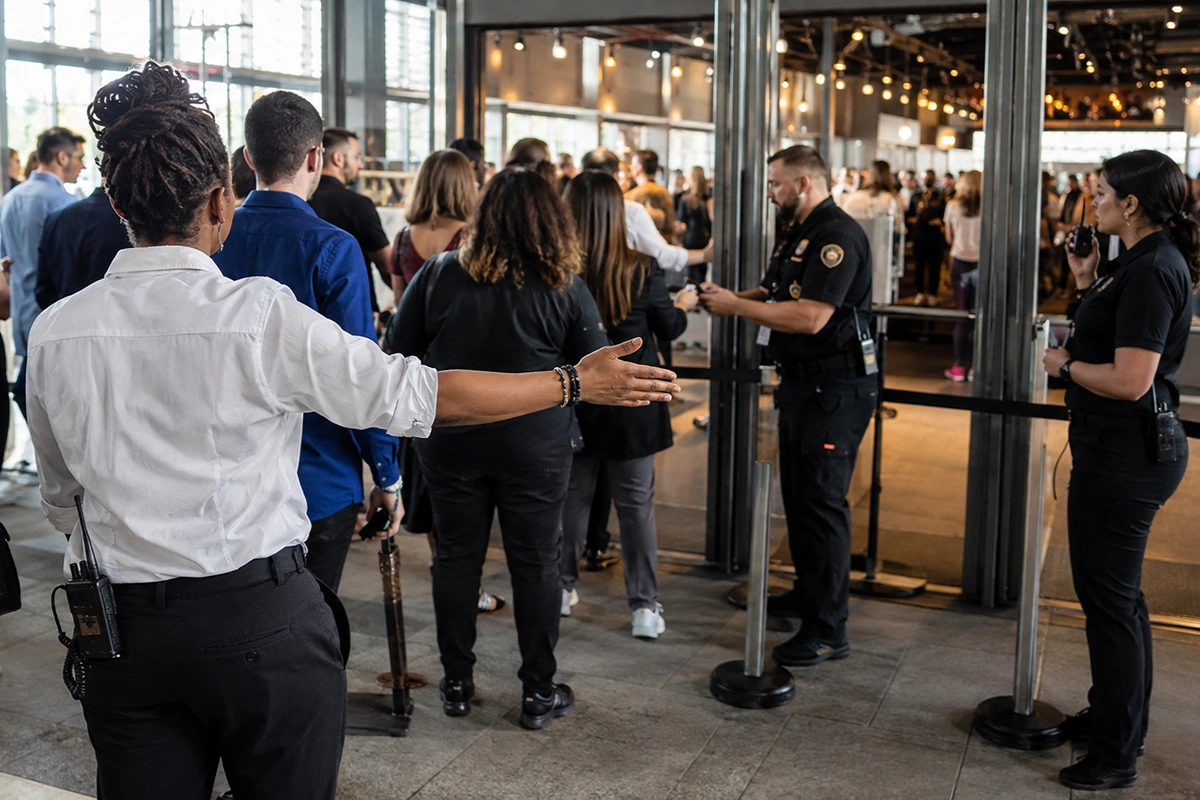
Crowd Management Staff
Crowd management staff focus on guest flow and movement throughout the venue. This role becomes increasingly important as event size grows.
Large gatherings create natural congestion points such as entrances, hallways, bar areas, and transition spaces between programming sessions. Crowd management staff help prevent these areas from becoming bottlenecks.
Typical responsibilities include:
- Directing guests toward entrances, exits, or session rooms
- Managing queues at registration desks or activations
- Monitoring high-traffic areas throughout the venue
- Assisting with wayfinding during session changes or transitions
It is important to note that crowd management staff are different from security personnel. Security teams focus on safety, access control, and emergency response, while crowd management staff focus on maintaining smooth movement across the event space.
For conferences, festivals, and large public gatherings, these roles play a critical part in maintaining both guest comfort and operational safety.
Production and Operations Staff
Production and operations staff work behind the scenes to keep the event running smoothly. These roles support logistics, equipment handling, and coordination across different departments.
While guests may not see these staff members directly, their work enables the visible event experience to function properly.
Common production and operations staff roles include:
- Load-in and load-out crews responsible for setup and breakdown
- Event runners who transport materials and supplies across the venue
- Production assistants supporting stage management or technical teams
- Operations coordinators managing communication between departments
Large-scale events often require close coordination between production staff and guest-facing teams. When both groups operate within a clear structure, the operational layer remains invisible to guests while the experience layer remains smooth and professional.
Understanding these core event staff roles and responsibilities allows planners to build a staffing plan that matches the operational demands of their event rather than relying on a general headcount alone.
How to Match Event Staff Roles to Your Event Type
Different types of events require different combinations of event staff roles. A staffing plan that works well for a corporate conference may not work for a brand activation or a large outdoor festival.
Understanding how event staffing roles change depending on the event format helps planners avoid one of the most common mistakes in event planning. Many events fail not because there are too few staff members, but because the staff roles do not match the operational needs of the event.
The goal is to assign the right event staff positions to the specific moments where they create the most impact on guest flow, service quality, and overall experience.
Below is a practical framework showing how common event types typically structure their staffing teams.
Corporate Conferences
Corporate conferences often involve large guest counts, multiple rooms, and scheduled sessions that create waves of attendee movement throughout the day. For a detailed breakdown of how staffing at these events works in practice, see What Event Staff Do at Corporate Events and Festivals and Event Hospitality Staffing Strategies for Conferences and Festivals.
Priority roles
- Check-in and registration staff
- Session room monitors
- Crowd management staff
- Wayfinding and directional staff
- Hospitality hosts
Roles planners often underbook
- Room monitors responsible for session transitions
- Wayfinding staff positioned in hallways and decision points
Because conferences often involve several hundred or several thousand attendees moving between rooms at the same time, managing guest flow between sessions becomes one of the most important operational priorities.
Brand Activations and Pop-Up Events
Brand activations are designed to create interaction between attendees and a product, service, or campaign message. As a result, the staffing structure focuses more heavily on engagement roles rather than service roles. Research shows that <a href="https://atneventstaffing.com/experiential-event-marketing-statistics-2025/" target="_blank" rel="noopener">66% of consumers say they are more likely to purchase a product after interacting with a brand at a live event</a>, reinforcing why this staffing layer deserves careful investment.
Priority roles
- Brand ambassadors
- Promotional staff
- Hospitality hosts
- Demo specialists
Roles planners often underbook
- Crowd flow support staff
- Floaters who manage queue buildup around activation stations
In experiential marketing environments, brand ambassadors act as the primary connection between the audience and the brand, making training and product knowledge especially important.
Galas and Formal Dinners
Gala events and plated dinners require a staffing structure that prioritizes food and beverage service while maintaining a high level of guest hospitality.
Typical event staff positions used at galas include:
Priority roles
- Servers for plated service
- Bartenders for bar stations
- Food runners and bussers
- Hospitality hosts
- Floor managers
Roles planners often underbook
- Bussers responsible for clearing tables quickly
- VIP attendants assigned to premium guests
Because plated service requires careful pacing between courses, the correct server-to-guest ratio is essential for maintaining service timing and presentation quality.
Music Festivals and Large Public Events
Festivals and large public events involve high attendance volumes and complex crowd movement patterns. In these environments, the most critical staffing priority becomes crowd flow and safety coordination. For a detailed look at the staffing mistakes that derail these events, the post 10 Mistakes Event Hosts Make When Staffing Festivals in Major U.S. Cities is worth reviewing before building your plan.
Key event staffing roles for festivals include:
Priority roles
- Crowd management staff
- Ticketing and entry staff
- Ushers positioned at activity zones
- Wayfinding staff
Roles planners often underbook
- Floaters who can respond to congestion points
- Runner teams supporting multiple activation zones
Managing movement between entry gates, stages, vendor areas, and activations requires a well-planned network of crowd flow staff positioned across the venue.
Trade Shows and Expos
Trade shows and exhibition events involve hundreds of exhibitors and multiple audience interaction points. Staffing is often divided between event operations and brand representation. As outlined in Why Workforce Planning Defines Trade Show Success and The Anatomy of a High-Performing Trade Show Booth Staffing Team, workforce structure at expos is one of the most consistently underprepared areas of trade show planning.
Common event staff roles used at trade shows include:
Priority roles
- Booth staff and brand ambassadors
- Check-in and registration teams
- Hospitality hosts
- Product demonstration staff
Roles planners often underbook
- Lead capture assistants
- Product specialists capable of answering technical questions
For exhibitors, booth staff often serve as the primary sales and engagement team, which makes staff training and product knowledge particularly important.
Hotel Banquets and Hospitality Events
Hotel banquets, weddings, and private hospitality functions typically rely heavily on catering and service staff to maintain a polished guest experience.
Common event staffing roles for banquet events include:
Priority roles
- Servers
- Bartenders
- Runners and bussers
- Hospitality hosts
Roles planners often underbook
- Onsite supervisors responsible for coordinating the team
- Reset crews for multi-course or multi-session service
Because hospitality events often follow strict service timelines, having the correct balance of front-of-house and back-of-house staff ensures that service remains smooth from arrival through the final course.
Outdoor Events and Community Activations
Outdoor events often involve open spaces, multiple activity zones, and larger guest movement patterns. Staffing must focus on navigation, flow, and guest support.
Typical event staffing roles for outdoor events include:
Priority roles
- Crowd management staff
- Hospitality hosts
- Promotional staff
- Wayfinding staff
Roles planners often underbook
- Directional staff positioned at pathway intersections
- Floaters who can respond quickly to shifting crowd patterns
Outdoor venues create unique challenges because guests often spread out across large areas, making clear direction and flow management essential.
Matching event staff roles to the event type is one of the most effective ways to improve both operational performance and guest satisfaction. Once the correct roles are identified, the next step is determining how many staff members are required for each role.
How Many Event Staff Do You Actually Need?

Once you understand the different event staff roles, the next step is determining how many staff members are required for each role. Staffing levels depend on several factors, including guest count, event format, service style, venue layout, and arrival patterns.
Many planners underestimate staffing requirements because they calculate a total headcount instead of assigning specific event staffing roles with appropriate ratios. A team that is too small or poorly distributed across roles can quickly create service delays, guest frustration, and operational stress. The global event industry is projected to grow at 13.5% between 2025 and 2029, which means attendee expectations and event complexity will only increase, making accurate staffing ratios more important than ever.
The following benchmarks provide a practical starting point for estimating how many event staff you need for common event scenarios.
Check-In and Registration Staffing
The arrival process often happens in waves as guests enter the venue within a short time window. Properly staffing the registration desk ensures guests move through the check-in process quickly and start the event with a positive experience.
Typical staffing guidelines include:
- General admission events: 1 check-in staff member per 75 to 100 guests during peak arrival
- Credentialed or badge-based events: 1 staff member per 50 guests
- VIP check-in lanes: Additional staff may be required for separate VIP or media registration
Events with digital ticket scanning, badge printing, or multiple check-in categories typically require additional registration staff to prevent bottlenecks.
Plated Dinner Service Staffing
For formal dinners or gala events, servers must manage multiple tasks including delivering courses, clearing plates, and coordinating timing between tables.
Standard service ratios typically include:
- 1 server per 10 to 15 guests for multi-course plated dinners
- Additional runners to transport dishes from the kitchen to the service floor
- Bussers responsible for clearing glassware and resetting tables
Higher-end service environments often require tighter server ratios to maintain a premium guest experience.
Cocktail Receptions and Passed Service
Cocktail receptions and networking events rely heavily on circulating service staff to distribute food and beverages efficiently.
Typical staffing ratios include:
- 1 server per 25 to 30 guests for passed appetizers
- Additional station attendants if food stations or buffets are present
- Runners who restock trays and maintain service flow
Because guests are mobile in these settings, having enough servers circulating throughout the room helps maintain consistent food availability across the space.
Bar Service Staffing
Bar service staffing depends on the number of bars, the complexity of the drink menu, and the expected volume of orders.
Typical bar staffing guidelines include:
- 1 bartender per 50 to 75 guests at high-volume open bars
- Additional barbacks or runners to restock supplies and glassware
- Multiple bars positioned across the venue to prevent long lines
Events that include specialty cocktails or premium beverage service may require more experienced bartenders and additional preparation staff.
Crowd Management and Guest Flow
Crowd management staff help guide guests through entrances, exits, hallways, and transition areas. Their role becomes increasingly important as guest counts increase.
Typical crowd management staffing ratios include:
- 1 staff member per 100 to 150 guests positioned at key movement points
- Additional staff at entry gates, corridors, and high-traffic zones
- Dedicated wayfinding staff for large venues with multiple rooms
For large conferences, festivals, and public events, these roles help prevent bottlenecks and congestion before they become visible problems.
Brand Activations and Demo Staffing
Experiential marketing events and product activations require enough staff to maintain engagement while managing audience flow.
Common staffing structures include:
- 1 brand ambassador per activation station or demo zone
- 1 floater for every 3 activation zones to assist during peak demand
- Additional staff responsible for lead capture, queue management, or product demos
Because these events rely on interaction rather than service, the focus is on maintaining consistent engagement opportunities for attendees.
Example Staffing Scenario
Consider a 400-guest corporate gala with plated dinner service. A typical staffing structure might look like this:
Check-in team
- 5 registration staff for peak arrival flow
Dining service team
- 33 servers using a 1 to 12 guest ratio
- 4 bartenders for two bar stations
- 6 runners and bussers supporting food and beverage service
Event flow team
- 4 crowd management staff positioned across entry points and guest areas
- 1 onsite supervisor coordinating staff operations
- 2 floaters available for operational support
Estimated total floor team: approximately 55 event staff members
Many planners initially budget for 35 to 40 staff for an event of this size. The difference between those numbers often explains why service quality declines as the evening progresses.
Estimating the right staffing ratios ensures that each event staff role has enough coverage to support both guest experience and operational flow. Once the team structure is clear, the next step is communicating your staffing requirements effectively when working with a staffing partner.
What to Tell Your Staffing Partner When You Book
Once you know the event staff roles and approximate staffing ratios required for your event, the next step is sharing the right information with your staffing provider. The quality of the information you provide directly affects how accurately your team can be matched to the event.
Many planners send a short request such as "we need 20 event staff for Saturday," but this type of request rarely produces the best results. A clear and structured brief allows a staffing agency to recommend the correct event staffing roles, experience levels, and shift structure.
Providing the following details helps your staffing partner build a team that fits your event requirements.
Event Type and Format
Start by describing the overall format of the event. Different formats require different types of event staff, so this information helps determine the correct role mix.
Include details such as:
- Corporate conference
- Brand activation or product launch
- Trade show or expo
- Gala or plated dinner
- Outdoor festival or community event
If the event includes multiple components, such as a conference followed by a networking reception, mention each segment so the staffing plan can account for changing service needs.
Event Date, Venue Name, and Location
Always include the full event location. This helps the staffing agency determine staff availability, travel logistics, and potential venue-specific requirements.
Important details to include:
- Event date
- Venue name
- Full address
- City and state
Some venues have union labor rules, security policies, or credentialing requirements, so sharing the exact venue early helps prevent logistical issues later.
Estimated Guest Count and Arrival Pattern
Guest count is one of the primary factors used to calculate event staffing ratios. In addition to the total number of guests, explain how attendees are expected to arrive.
Key information includes:
- Total expected attendance
- Whether guests arrive in a single wave or staggered over time
- VIP or media arrivals that require separate check-in
Arrival patterns are particularly important for determining the correct check-in staffing levels.
Roles Needed and Headcount Per Role
Instead of requesting a general number of staff, specify the event staff roles required for your event. This allows the staffing provider to assign staff with the appropriate experience and training.
Examples of role breakdowns include:
- 5 check-in staff
- 20 servers
- 4 bartenders
- 3 brand ambassadors
- 4 crowd management staff
- 1 onsite supervisor
A role-based staffing plan ensures that each operational area of the event receives the correct support.
Shift Times and Operational Schedule
Event staffing shifts often begin earlier than the guest arrival time and extend beyond the end of the event for breakdown.
Provide a clear timeline that includes:
- Staff arrival time
- Guest arrival time
- Event end time
- Breakdown or load-out time
This information allows the staffing provider to schedule staff properly and avoid coverage gaps during key operational moments. If you are still building your event schedule, the guide on How to Use a Run of Show Template for Smooth Event Timing walks through how to structure your timeline before briefing your staffing partner.
Service Format
For events involving food or beverage service, describe the service style being used. Different formats require different catering staff roles and staffing ratios.
Common service formats include:
- Plated dinner service
- Cocktail reception with passed appetizers
- Buffet or food stations
- Open bar service
- Specialty cocktail programs
Knowing the service format helps staffing partners assign the right mix of servers, bartenders, runners, and bussers.
Dress Code and Uniform Requirements
Many events require staff to match a specific brand aesthetic or dress code. Sharing these requirements in advance ensures that staff arrive prepared.
Typical dress code details include:
- Formal black tie attire
- Black service uniform
- Branded apparel or promotional clothing
- Business professional attire
For brand activations and promotional events, uniform requirements may also include branded shirts, name badges, or promotional accessories.
Onsite Supervision
For events with multiple staff categories or large guest counts, an onsite supervisor or event captain is often recommended. This person typically coordinates staff deployment across the venue, handles operational issues during the event, and communicates directly with the event planner or production team.
Having a dedicated supervisor helps maintain a clear chain of communication throughout the event.
Venue-Specific Requirements
Some venues include additional logistical considerations that staff must be aware of.
Examples include:
- Union labor restrictions
- Credentialing or badge requirements
- Security check procedures
- Limited parking or loading access
Providing these details early helps the staffing agency prepare staff accordingly.
Your Event Timeline or Run of Show
If available, share your event timeline or run of show. This allows the staffing provider to align staff deployment with key moments in the event schedule.
When staffing teams understand the event timeline, they can anticipate operational needs rather than reacting to them in real time.
Providing this level of detail ensures your staffing partner can recommend the most effective event staffing roles and team structure for your event. A clear brief leads to faster confirmation, better staff matching, and fewer operational surprises on event day.
The Event Staff Roles Planners Most Often Forget
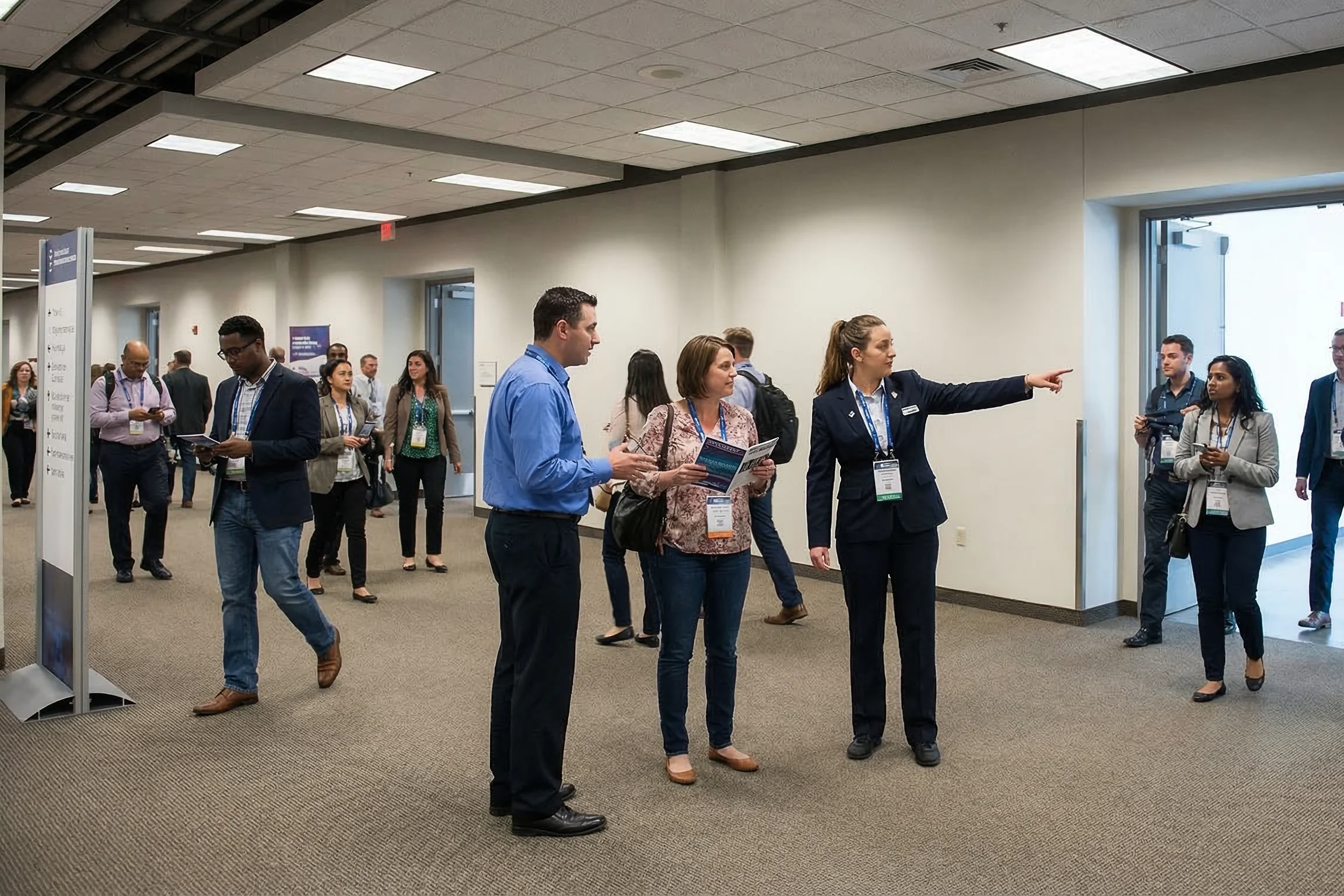
Even experienced planners occasionally overlook a few event staff roles during the initial staffing plan. These roles are not always obvious when planning begins, but they often become critical once the event is underway.
Post-event debriefs frequently reveal the same pattern. The main staffing categories were covered, but a few operational roles were missing. For a look at how this plays out at scale, Understanding Cultural Sensitivity in Large-Scale Event Planning also highlights how role gaps affect the guest experience in ways that go beyond logistics.
Onsite Supervisor or Event Captain
For events with multiple staffing categories, an onsite supervisor acts as the central coordination point for the entire floor team.
Without a designated supervisor, individual staff members often report directly to the event planner or production manager. This can overwhelm the planning team and slow down decision-making during the event.
An onsite supervisor typically manages:
- Staff check-in and shift assignments
- Real-time deployment across the venue
- Communication between staff teams
- Quick resolution of operational issues
For most events with more than 150 guests or multiple staffing roles, having a supervisor ensures that the team operates as a coordinated unit rather than a collection of individuals. The skills required to step into this role are covered in detail in How to Advance Into an Event Team Leader Role.
Wayfinding and Directional Staff
Large venues often include multiple rooms, corridors, and activity zones. Guests who cannot easily find their destination become frustrated and may interrupt staff who are assigned to other responsibilities.
Wayfinding staff are positioned at key decision points throughout the venue, such as:
- Lobby intersections
- Corridor transitions
- Session room entrances
- Outdoor pathway junctions
These staff members guide attendees, answer quick navigation questions, and help maintain smooth movement throughout the space. Although directional staff represent a relatively small addition to the staffing plan, they can significantly improve guest experience and overall event flow.
Reset and Turnover Crew
Events that include multiple sessions, meal periods, or activation cycles often require quick transitions between program segments.
A reset or turnover crew is responsible for preparing the space for the next phase of the event. This allows guest-facing staff to remain focused on service rather than operational tasks.
Typical reset crew responsibilities include:
- Clearing tables and resetting place settings
- Replenishing materials at activation stations
- Rearranging furniture or staging between sessions
- Cleaning and preparing event zones for the next group of guests
Without a dedicated reset team, servers or hospitality staff may be pulled away from their primary roles, slowing down service and reducing guest interaction.
Floaters
Floaters are versatile staff members who are not assigned to a single fixed role. Instead, they move throughout the venue and provide support wherever demand increases.
Common situations where floaters are useful include:
- Unexpected lines at check-in
- Crowd buildup around activations or bars
- Temporary staff shortages in high-traffic areas
- Operational tasks that appear during the event
Because live events are dynamic environments, even the most detailed staffing plans may require adjustments. Floaters provide flexibility and rapid response capability that helps teams adapt in real time. Many experienced planners consider floaters the operational safety margin of an event staffing plan.
Why These Roles Matter
These staffing positions are often overlooked because they do not always appear in early planning conversations. However, they frequently appear in post-event discussions when teams identify what could have improved the operational flow of the event.
Including these additional event staff roles helps:
- Reduce guest confusion and navigation problems
- Maintain consistent service standards
- Prevent bottlenecks during high-traffic moments
- Provide flexibility when conditions change during the event
Adding a small number of these roles can significantly improve how smoothly an event runs from arrival through closing.
Mini Case Examples
Real events often highlight how the right event staff roles and staffing structure can directly influence operational success. When staff positions are carefully matched to the event format, guest flow improves, service delays are minimized, and the overall experience becomes more seamless for attendees.
Corporate Conference | 800 Guests | Chicago
A large corporate conference scheduled multiple breakout sessions across five rooms within a convention venue. The primary operational challenge was managing arrival flow and ensuring that session transitions occurred on schedule.
Staffing structure
- 9 check-in and registration staff
- 5 room monitors positioned at breakout session doors
- 4 wayfinding staff placed at corridor intersections
- 1 onsite supervisor coordinating the floor team
Outcome
Guest check-in moved efficiently during peak arrival with no significant lines. Attendees were directed quickly to the correct session rooms, and session changeovers occurred smoothly throughout the day. The event director reported that it was the first conference in several years where the opening session began on time without registration delays.
Brand Activation | Product Launch | Los Angeles
A consumer product launch required a team capable of maintaining high levels of engagement while managing crowd movement around multiple product demonstration stations.
Staffing structure
- 8 trained brand ambassadors assigned to activation zones
- 2 promotional staff supporting guest engagement
- 3 floaters responsible for queue management and flow
Outcome
Over the course of six hours, the team completed more than 1,200 product demonstrations. Lead capture rates reached approximately 34 percent, significantly exceeding results from a previous activation held at the same venue. The addition of floaters helped prevent long lines at demonstration stations during peak attendance periods.
Outdoor Festival | 3,000 Attendees | Austin
An outdoor festival with multiple stages and activation zones required careful planning to manage large crowd movements throughout the venue.
Staffing structure
- 18 crowd management staff positioned across entry gates and high-traffic areas
- 6 ticketing and entry staff handling admissions
- 5 wayfinding staff supporting guest navigation
- 1 operations supervisor coordinating deployment
Outcome
Entry processing remained efficient, with each 500-guest arrival wave clearing within approximately 12 minutes. Throughout the day, there were no major congestion points across stage areas or activation zones. The operations team credited the event's smooth flow to a pre-event venue walk-through conducted with the staffing supervisor, which allowed staff positions to be mapped based on real traffic patterns.
These examples demonstrate how aligning event staff roles with the operational needs of the event can dramatically improve guest experience, efficiency, and overall event performance.
Build the Right Event Staffing Plan
Successful events are not staffed by headcount alone. They are built around the right combination of event staff roles, staffing ratios, and operational coordination.
When each role is clearly defined, the event floor functions as a system. Check-in teams manage arrival efficiently, hospitality staff support the guest experience, catering teams maintain service flow, and crowd management staff keep movement across the venue organized.
Taking the time to match the correct event staffing roles to your event type, guest count, and service format helps prevent the operational issues that often appear when teams are built too quickly or without clear structure. With the events industry expected to grow by, the standard for well-run events and the teams that support them will only rise.
A well-planned staffing strategy helps the following:
- Reduce registration delays and guest arrival bottlenecks
- Maintain consistent service standards throughout the event
- Support brand engagement and guest interaction
- Keep event operations running smoothly from setup through breakdown
If you are planning an event and want help building the right staffing structure, working with an experienced staffing partner can make the process much easier. The EventStaff team can help you design a role-based staffing plan based on your event format, venue layout, and expected guest flow. By matching the right staff roles to the specific needs of your event, you can create a stronger operational foundation and a better experience for every guest. Get a role-based quote.
Ready to elevate your next event?
Join thousands of event planners who trust EventStaff.com for reliable, professional staffing solutions.
Trusted by event professionals nationwide
1k+
Events Staffed
2 million+
Guests Served
97%
Positive reviews