
CEO Excerpt
"Trade shows are not branding exercises. They are compressed revenue environments where staffing precision determines pipeline quality. The brands that win are the ones that treat trade show staffing agencies as operational partners, not temporary labor." - CEO Event Staff
Trade show staffing mistakes rarely look dramatic, but they quietly drain the pipeline. A missed greeting. A rushed badge scan. A conversation that ends one question too early. In that moment, a high-intent buyer walks away, and your team may not even realize it happened.
This is exactly how trade show staffing mistakes cost brands leads, not through poor booth design or weak foot traffic, but through breakdowns in execution on the floor.
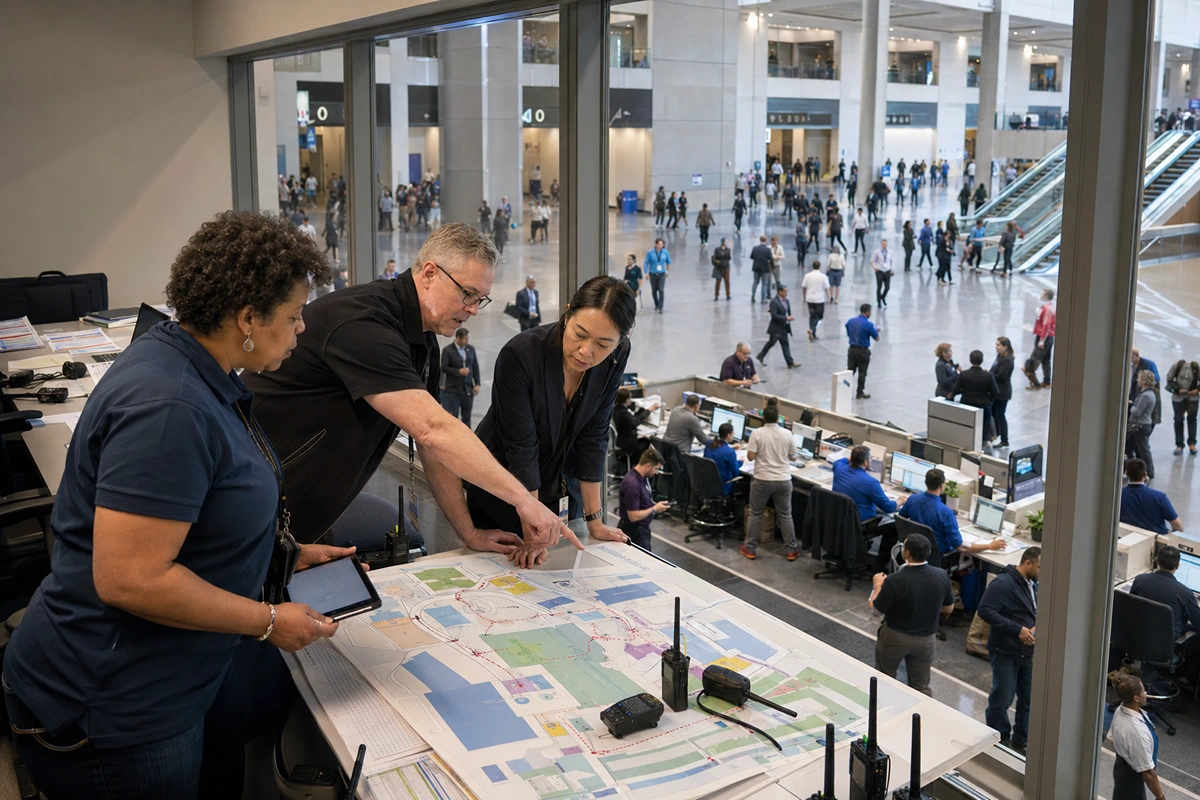
Professional trade show staffing agencies influence far more than booth coverage. They shape how many qualified conversations your team can realistically handle per hour, how accurately lead data is captured, and how confidently sales can follow up after the show. When trade show booth staffing lacks structure, the result is inflated lead counts and an underperforming pipeline.
According to research from the Center for Exhibition Industry Research, a majority of trade show attendees influence buying decisions. That means most people walking past your booth are not casual visitors. They have authority, budget input, or strategic influence.
If the staffing structure fails, you are not losing traffic.
You are losing decision makers.
This guide breaks down the most common trade show staffing mistakes brands overlook and shows what disciplined trade show booth staffing looks like when ROI, lead quality, and follow up velocity are the priority.
Executive Summary
Trade show staffing mistakes cost brands qualified leads through understaffing, unclear roles, weak qualification, and fatigue. Professional trade show staffing agencies improve ROI by staffing for peak flow, separating responsibilities, standardizing lead notes, and supervising execution in real time. When trade show booth staffing is structured around measurable engagement capacity, brands leave events with cleaner data, stronger follow-up velocity, and higher conversion potential.
How Does Booth Staffing Affect Lead Quality at Trade Shows?
.webp)
Booth staffing directly determines how many qualified conversations happen per hour, how accurately intent is documented, and how quickly sales can follow up after the event.
Most brands plan staffing based on booth size. A 10x20 space with two people feels reasonable on paper. But trade shows do not operate on square footage. They operate on flow.
The Math Most Teams Miss
Peak traffic is rarely steady. It spikes:
- After keynotes
- During demo announcements
- Around giveaway activations
- When anchor booths drive aisle congestion
A practical trade show booth staffing plan starts with conversation capacity.
If one meaningful qualification conversation takes 6 to 8 minutes, one staff member can realistically handle:
- 7 to 10 quality conversations per hour
If peak traffic brings 40 to 60 engaged visitors per hour, two staff members cannot manage that volume without:
- Visitors waiting and walking away
- Notes being rushed or incomplete
- High intent prospects slipping through
This is where experienced trade show staffing agencies operate differently. They staff for peak flow, not average attendance.
What Happens When Coverage Slips
When staffing does not match flow, the breakdown is subtle but expensive:
- Buyers hover without being acknowledged
- Sales reps rush discovery
- Lead notes lack intent, timeline, or next steps
- Secondary decision makers leave unnoticed
Over time, that turns into:
- Bloated lead lists
- Low qualification rates
- Slower post-show conversion
Strong trade show booth staffing treats engagement like a throughput system. Headcount is calculated around conversations per hour, not just bodies in the booth.
When lead quality is the priority, staffing structure becomes a revenue decision, not a cosmetic one.
Why Do Untrained Booth Staff Reduce Lead Quality?
Untrained booth staff miss qualification cues, capture thin notes, and let high-intent visitors leave without a clear next step.
You've seen it. Someone asks, "Do you integrate with Salesforce?" The staffer smiles, says something vague, and the moment dies right there. No follow-up question. No routing to sales. No note that the buyer even cares about integrations.
That's how "we were busy all day" turns into "why are these leads junk?"
Professional trade show staffing agencies train for intent, not small talk:
- ICP filters and disqualifiers
- Escalation signals for sales handoff
- Lead notes that sales can actually use
Strong trade show booth staffing turns traffic into a usable pipeline, not a spreadsheet full of maybes. The principles mirror what works in brand activation staffing, where every interaction must convert attention into measurable action. Those starting as ambassadors at major expos quickly learn this distinction.
What Happens When You Understaff a Trade Show Booth?
.webp)
Understaffed booths lose high-intent prospects during peak traffic because no one is free to greet, qualify, or document conversations properly.
Traffic is never steady. It spikes after keynotes, during demo slots, even when someone announces free coffee down the aisle. In those 20 to 30 minute surges, everything compresses. Understanding event flow patterns helps predict when these surges hit hardest.
Here's what breaks first:
- No greeter, so buyers hover and drift
- Sales reps juggle scanning and demos
- Secondary decision-makers slip away unnoticed
Experienced trade show staffing agencies plan ratios around peak flow, often targeting one engagement staffer per 25 peak visitors per hour.
That's what disciplined trade show booth staffing looks like when you're serious about lead capture.
Should Sales Reps Handle All Booth Tasks?
No. When sales reps manage greeting, scanning, demos, and logistics at the same time, conversation quality declines, and lead documentation becomes inconsistent.
Sales is responsible for discovery and revenue progression. When that role gets diluted with operational tasks, qualification depth suffers.
What Happens When Sales Does Everything
When sales reps are stretched across all booth duties, you typically see:
- Shorter discovery conversations
- Fewer follow-up questions
- Surface-level qualification
- CRM entries with names but no context
- Missed escalation opportunities
Instead of focusing on buyer intent, sales begins multitasking. They reset demo screens, search for chargers, scan badges quickly, and attempt to keep traffic moving. Each small interruption reduces listening quality and strategic probing.
The result is predictable. The booth feels active, but the pipeline lacks clarity.
How Role Separation Protects Lead Quality
Strong trade show booth staffing separates responsibilities clearly:
- Greeters manage first contact and direct traffic
- Qualifiers capture structured lead data and intent signals
- Support staff handles logistics and booth operations
- Sales steps in for high-intent conversations and deeper discovery
This structure allows sales to concentrate on what they do best: identifying opportunity, assessing fit, and defining next steps.
Professional trade show staffing agencies enforce this separation even when internal teams resist it. They understand that clean role design protects conversation depth and improves post-show follow-up velocity.
When trade show staffing agencies prioritize role clarity, sales leave the event with fewer but stronger leads that are easier to convert.
Why Are Defined Booth Roles Critical for Lead Capture?
Defined booth roles prevent duplicated conversations, inconsistent scanning, and missing notes that quietly destroy follow-up quality.
When roles aren't clear, everyone talks, and no one owns the data. Two staff members greet the same visitor. Someone assumes the badge was scanned. No one writes down what the buyer actually asked. It feels energetic. It's operational chaos.
Clean trade show booth staffing usually includes:
- One lead qualifier is responsible for documentation
- One demo specialist focused on product flow
- One floater covering breaks and overflow
Professional trade show staffing agencies assign a booth lead or captain who protects that structure in real time. That discipline keeps performance steady when the floor gets loud, similar to how VIP event staffing requires coordination across multiple touchpoints.
How Does Staff Fatigue Impact Trade Show Results?
Multi-day staff fatigue reduces engagement energy and qualification accuracy, which leads to weaker conversations and inconsistent lead capture by Day Two and Day Three.
Day One feels electric. By late afternoon on Day Two, something shifts. Smiles fade faster. Probing questions get shorter. Staff start defaulting to surface answers instead of digging into buyer intent.
With 2026 labor costs up 8 to 12 percent in many markets, brands sometimes trim headcount to protect budget. That decision shows up in performance.
Smart trade show staffing agencies design rotations:
- 90-minute engagement blocks
- Floaters covering breaks
- End-of-day lead reconciliation
Disciplined trade show booth staffing protects stamina, not just coverage.
How Do Trade Show Staffing Agencies Improve Lead Capture?
Trade show staffing agencies improve lead capture by staffing for peak flow, training qualification, standardizing lead notes, and supervising execution on-site.
The best ones don't just send bodies. They build a system that survives chaos.
You'll usually see:
- Staff matched to your audience, not just "outgoing."
- A role map, so greeters, qualifiers, and demo support don't overlap
- A lead capture standard, so notes are usable and consistent
- A supervisor or captain watching pacing, coaching in real time, fixing drift
That's why trade show booth staffing improves when you stop improvising and start operating. The same attention to event logistics and coordination ensures nothing falls through the cracks during execution.
If your goal is pipeline, not just traffic, trade show staffing agencies should be judged on process, not personality.
Quick Checklist: What Should You Fix Before Your Next Show?
Fix these before you hit the floor to reduce lead loss and keep trade show booth staffing stable during peak traffic.
- Staff for spikes: plan coverage for keynote breaks, demo times, and giveaways
- Separate roles: greeting, qualifying, demo support, and logistics can't all live in one person
- Standardize lead notes: require a minimum note on intent, timeline, and next step
- Protect breaks: add a floater so the booth never goes dark
- Run end-of-day QA: reconcile scans and notes daily, not after the show
This is where good trade show staffing agencies earn their keep. They make the plan real, not theoretical.
Final Takeaways for Lead Protection and ROI
Trade shows compress selling into a few intense days. Every minute carries a cost, and every interaction shapes the pipeline. When trade show staffing agencies design structured coverage, define roles clearly, and plan for fatigue, brands leave with cleaner data and stronger follow-up velocity. Weak execution does not announce itself. It shows up later, in low-quality leads and slow conversions. Strong trade show booth staffing keeps conversations intentional, documentation consistent, and sales focused on buyers who matter. If you want a coverage plan built around peak flow, role separation, and measurable outcomes, you can get a Quote and map your next show properly before you step onto the floor.
Ready to elevate your next event?
Join thousands of event planners who trust EventStaff.com for reliable, professional staffing solutions.
Trusted by event professionals nationwide
1k+
Events Staffed
2 million+
Guests Served
97%
Positive reviews