
CEO EXCERPT
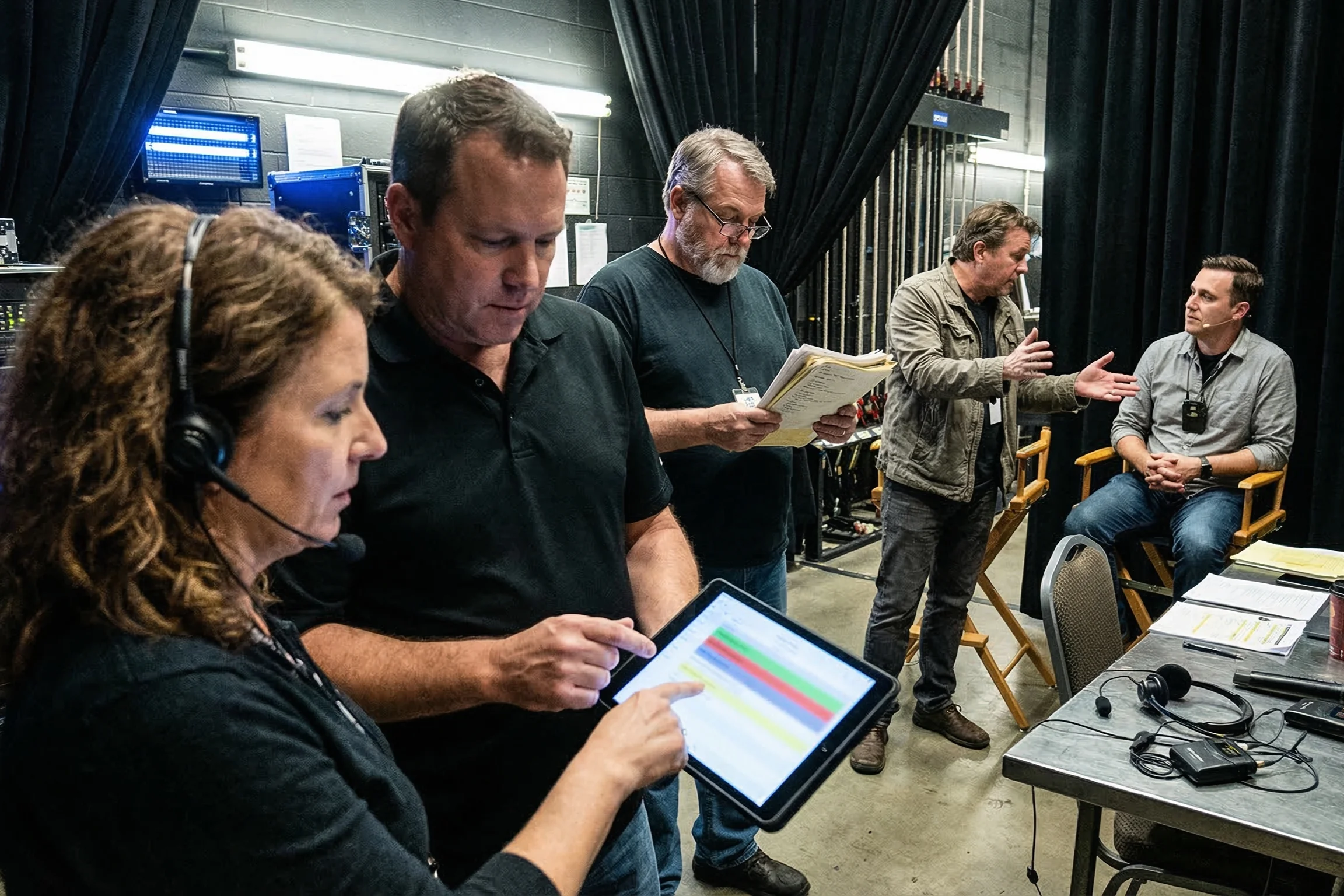
Based on decades of live event execution, I can tell you that trade show booth staffing, not booth design, determines whether an exhibit produces a qualified pipeline or wasted traffic. When roles, ratios, and peak coverage are engineered correctly, booth performance becomes predictable, scalable, and measurably profitable. - CEO Event Staff
A high-performing exhibit is not built on design alone. It is built on a structure. The anatomy of a high-performing trade show booth staffing team determines whether your booth generates a qualified pipeline or simply collects badge scans.
Trade show booth staffing directly impacts greeting speed, conversation depth, demo flow, and lead quality. When roles are clearly defined and coverage is engineered around traffic patterns, engagement becomes consistent and measurable. When structure is loose, performance becomes reactive and unpredictable.
Research from the Center for Exhibition Industry Research shows that a majority of trade show attendees arrive with purchasing authority and defined buying objectives. This means:
- First impressions must happen within seconds
- Qualification must be disciplined and fast
- High-intent prospects must be routed correctly
- Sales conversations must be protected from logistical distractions
If your team is scanning badges, troubleshooting demos, and qualifying leads at the same time, engagement velocity slows, and pipeline leakage begins. When staffing is engineered with the same discipline as campaign strategy, booth performance becomes predictable across every show day.
Executive Summary
Trade show booth staffing determines whether your exhibit generates a qualified pipeline or just foot traffic. When roles are clearly defined, peak coverage is engineered, and sales teams are protected from logistical tasks, engagement stays consistent, lead quality improves, and booth performance becomes predictable across multi-day events.
What is trade show booth staffing, and why does structure matter?
Trade show booth staffing is not about filling shifts it is about engineering engagement velocity.
When greeting exceeds 10 seconds, when qualification drifts, or when closers scan badges instead of advancing next steps, pipeline leakage begins immediately.
Structured trade show booth staffing separates:
- Greeting velocity
- Qualification discipline
- Demo throughput
- Revenue conversations
- Data integrity
When those roles are engineered correctly, performance becomes predictable across every show day.
The stakes are measurable: 72% of attendees are more likely to buy from exhibitors they meet at trade shows, and 46% arrive already in the final stages of their buying decision. That means the window for engagement is tight, and the cost of a slow or disorganised booth is a qualified pipeline walking away.
What does trade show booth staffing actually cover operationally?
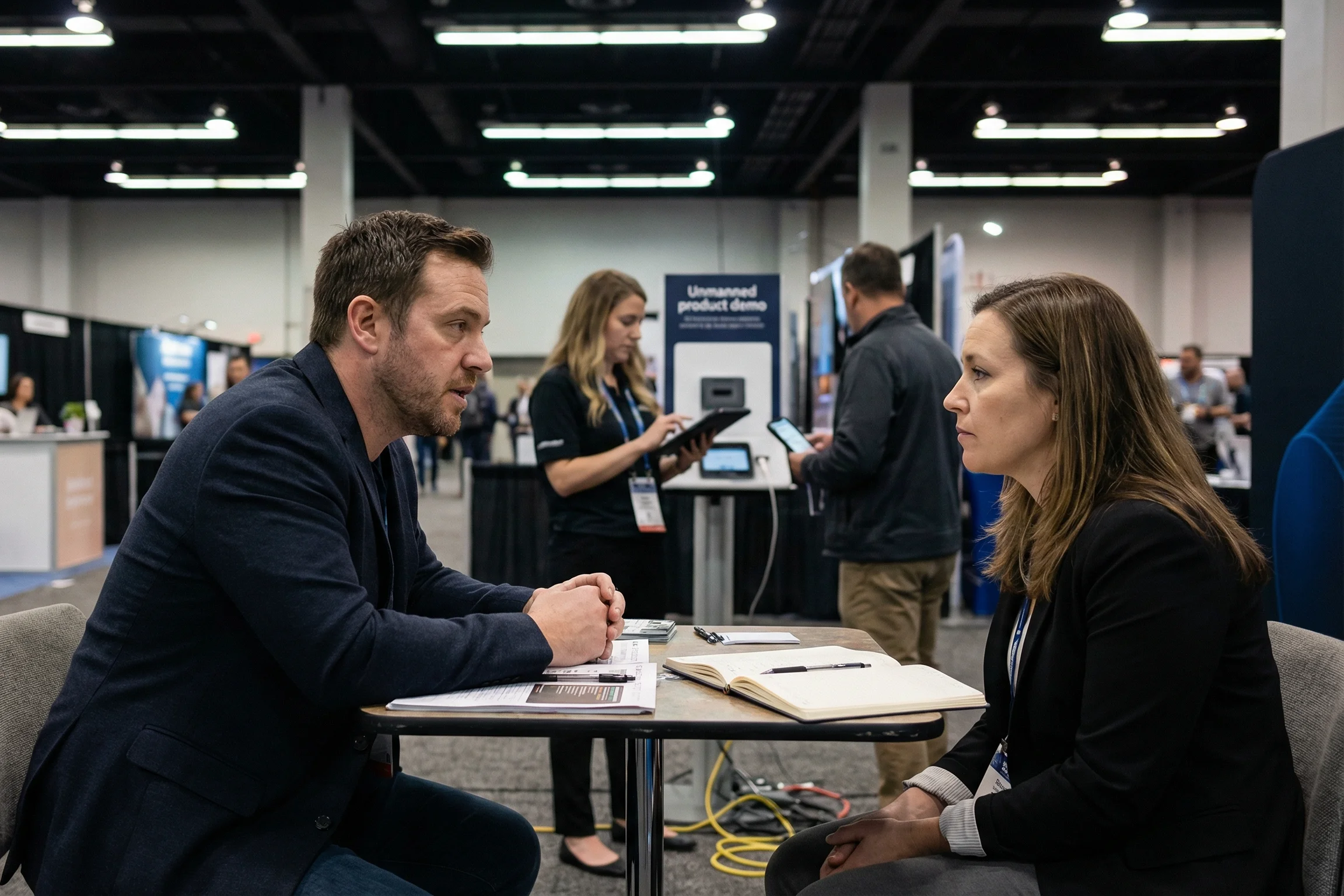
Trade show booth staffing covers greeting speed, qualification, routing, demo pacing, lead capture accuracy, and shift continuity during peak traffic.
Most exhibitors plan trade show booth staffing as headcount. The better approach is workflow. Your booth has a front door, a routing system, a demo engine, and a data capture process, all running under time pressure.
At a minimum, trade show booth staffing must cover:
- Greeting speed: acknowledging viable attendees within 5 to 10 seconds
- Fast qualification: sorting interest level and fit in under 30 seconds
- Clean routing: handing off to the right person without "who can take this?" pauses
- Demo pacing: keeping demos consistent and reset-ready
- Lead capture integrity: accurate scans, notes, and tags that marketing can use
- Shift continuity: breaks and rotations that do not create dead zones
If greeting takes 8 seconds, qualification takes 25 seconds, and handoff takes 15 seconds, you are at roughly 50 seconds before a real conversation begins. During peak windows, one person can only process so many interactions before response time slips and walk-bys increase.
Understanding how attendee psychology shapes movement and dwell time is a core part of this equation. Our breakdown of event flow psychology applies directly to trade show floor dynamics and can sharpen how you position greeters and routing staff.
Trade show booth staffing covers the full on-floor workflow: greeting attendees within 5–10 seconds of approach, qualifying interest in under 30 seconds, routing prospects to the correct specialist, protecting demo flow, capturing accurate lead data, maintaining brand tone across shifts, and keeping sales focused on revenue conversations instead of booth logistics.
Why do trade show booths underperform without structured staffing?
Trade show booths rarely underperform because of design. They underperform because trade show booth staffing lacks defined structure and role clarity.
When responsibilities overlap and no one owns specific functions, small inefficiencies compound into measurable pipeline loss.
Common breakdown patterns include:
- Sales reps greeting while already in active conversations
, - No clear owner for badge scanning and note capture
- Demo stations sitting idle between cycles
- Inconsistent qualification standards across staff
- Peak traffic windows without added coverage
In a medium traffic environment with 120 to 180 viable passersby per hour, even a 10 second delay in greeting can reduce engagement by 5 to 15 per cent. That translates to multiple missed qualified conversations per hour during peak periods.
Technology does not fix structural problems. Faster scanners and digital lead systems only accelerate poor routing if qualification standards are unclear.
Unstructured trade show booth staffing creates:
- Slower greeting response times
- Reduced demo throughput
- Lower engagement leads to lower conversion rates
- Sales teams distracted by logistical tasks
- Inconsistent brand messaging across shifts
When structure is engineered intentionally and trade show temporary staffing is layered appropriately, throughput stabilizes and high intent prospects are protected.
In a medium-traffic environment with 120 to 180 viable passersby per hour, even a 10-second greeting delay can reduce engagement by 5 to 15 percent. That translates to 6 to 12 missed conversations per hour during peak windows. Over a three-day show, the lost pipeline becomes significant. Consider that 81% of trade show attendees have buying authority; these are not casual browsers. Every missed greeting is a missed qualified conversation.
Technology does not solve this. Faster badge scanners only accelerate bad routing if no one owns the qualification discipline.
Booths underperform when trade show booth staffing lacks defined roles, leading to delayed greetings, stalled demos, inconsistent qualification, and sales teams distracted by logistics, which ultimately reduces qualified leads and weakens post-show pipeline performance.
What roles are required in high-performing trade show booth staffing?

High-performing trade show booth staffing separates greeters, demo specialists, sales closers, and brand ambassadors to protect throughput.
When responsibilities are separated, throughput holds and lead quality stay consistent. When roles blur, both collapse.
1. Greeters
Greeters protect first contact timing and control flow.
- Acknowledge attendees within 5 to 10 seconds
- Qualify in under 30 seconds using a simple routing script
- Hand off cleanly, then reset immediately
2. Demo Specialists
Demo specialists keep technical experiences consistent and fast.
- Run demos on a repeatable 3- to 5-minute cycle
- Reset stations quickly between sessions
- Escalate technical questions to the right person without stalling the line
3. Sales Closers
Closers handle high-intent prospects only.
- Drive next steps like meetings, quotes, or follow-up calls
- Avoid scanning, restocking, troubleshooting, or crowd control
- Capture brief notes that explain intent and urgency
4. Brand Ambassadors
This is where trade show temporary staffing adds significant leverage.
- Manage scanning, pacing, line control, and break coverage
- Maintain brand tone and consistency across shifts
- Support peak windows without pulling closers off conversations
Structured Staffing = Throughput Control
A structured model improves:
- Greeting speed
- Engagement ratio
- Demo cycle frequency
- Qualified lead percentage
- Sales team focus
Booths that operate without defined layers typically experience inconsistent lead quality and missed peak traffic opportunities.
Trade show temporary staffing becomes a strategic lever when used to build coverage layers rather than simply increasing headcount.
For a closer look at how professional staffing agencies structure these roles across major shows, our overview of top staffing agencies breaks down how leading firms allocate talent across exhibit teams.
High-performing trade show booth staffing separates greeters for speed and routing, demo specialists for technical flow, sales closers for high-intent conversations, and brand ambassadors for scanning and continuity, keeping throughput stable during peak traffic.
How many staff do you need for a trade show booth?
Most planners either overstaff (wasting budget) or understaff (losing pipeline). The right number depends on traffic volume, booth size, and conversion goals not guesswork.
Here’s a practical framework used by high-performing teams:
Step 1: Estimate Hourly Viable Traffic
Start with realistic numbers. Mid-to-large industry shows often generate:
- 80–120 viable passersby per hour (10x10 or 10x20 booth)
- 150–250 viable passersby per hour (20x20 or larger booth)
Step 2: Apply the 3-Layer Coverage Model
For most growth-focused exhibitors:
Small Booth (10x10 / Light Demo)
Minimum 3–4 staff:
- 1 Greeter
- 1–2 Sales Reps
- 1 Shared Lead Capture Owner
Mid-Size Booth (10x20 or 20x20)
Recommended 5–7 staff:
- 1–2 Greeters
- 2–3 Sales Reps
- 1 Demo Specialist
- 1 Lead Capture Owner
High-Traffic / Product Launch Booth
8–12+ staff with staggered shifts:
- 2 Perimeter Greeters
- 3–5 Sales Reps
- 1–2 Demo Specialists
- 1 Data Lead
- 1 Float/Relief Staff
Step 3: Protect Peak Windows
Traffic is rarely evenly distributed.
Most major trade shows experience:
- Heavy opening hour surge
- Midday spike
- Late afternoon drop-off
Without layered trade show booth staffing during peak windows, greeting delays increase, demos stall, and qualified prospects disengage.
Common Staffing Mistakes
- Using senior sales reps as greeters
- No one assigned to lead data accuracy
- No coverage overlap during lunch breaks
- Assuming internal team alone can handle peak flow
Trade show temporary staffing becomes valuable when it protects your highest-value people from low-leverage tasks.
The Real Formula
Booth staffing is not about “How many people can we afford?”
It’s about:
Traffic volume × Engagement time × Qualification depth ÷ Peak compression.
When those variables are engineered properly, your booth operates like a pipeline engine not a branding exercise.
Baseline trade show booth staffing ratios suggest 3–4 staff for small low-traffic booths, 5–7 for medium steady-traffic spaces, 8–12 for large high-volume booths, and 12–18 for island installations, with additional coverage required for continuous demos, VIP traffic, or surge conditions.
When should you use trade show temporary staffing?
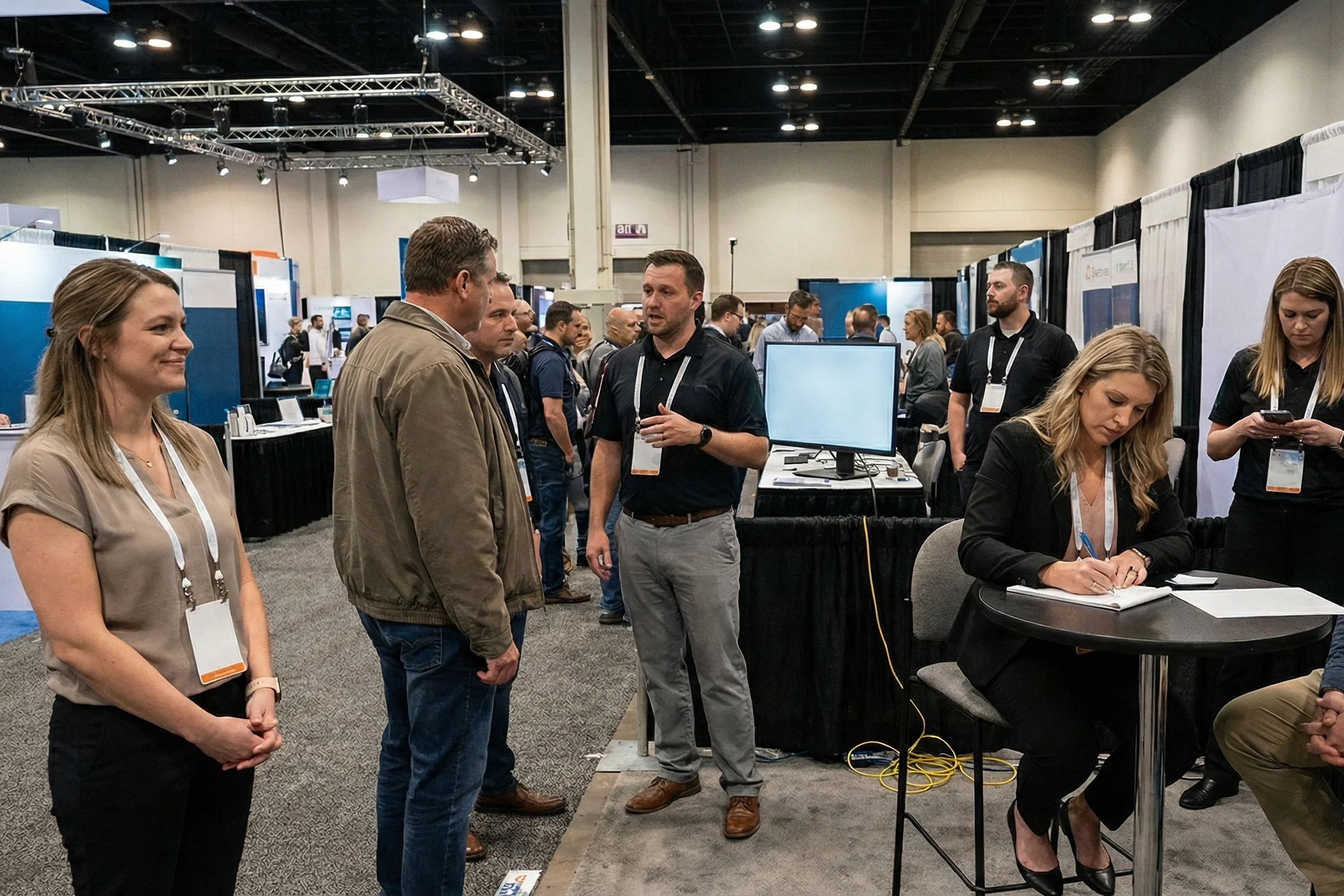
Use trade show temporary staffing when greeting, scanning, and break coverage pull sales reps away from high-intent conversations.
Trade show booth staffing becomes inefficient when high-cost talent handles low-value tasks. The issue is allocation, not headcount.
Trade show temporary staffing is typically assigned to:
- Greeting overflow during peak windows
- Badge scanning and data entry
- Line management and crowd pacing
- Break coverage and shift rotation support
- Light engagement when demos are full
Trade show temporary staffing also improves consistency across multi-day shows. Internal teams fatigue. Tone softens. Qualification standards drift. Dedicated support roles maintain structure and pacing.
This mirrors the same principles that drive guest experience at large-scale events; our guide on hospitality staff impact covers the role-separation logic that translates directly to booth operations. The financial case is just as clear: trade shows increased lead generation for 70% of exhibitors over the past year, but that lift only materializes when the team is structured to capture and convert at pace.
Trade show temmaterialisesporary staffing improves trade show booth staffing by assigning greeting, scanning, crowd control, and break coverage to trained brand ambassadors, protecting sales bandwidth and stabilizing engagement quality across multi-day events.
How should you plan booth staff shifts and coverage?
Rotate high-intensity roles every 60–90 minutes and add peak-hour overlap to keep greeting response under 10 seconds.
Trade show booth staffing often weakens after lunch, not because traffic drops, but because energy does.
Best practices include:
- Rotate high-intensity roles like greeting every 60 to 90 minutes
- Schedule 15-minute recovery breaks every 2 to 3 hours
- Protect peak windows with temporary overlap coverage
- Assign one floater who can step into any role during bottlenecks
Effective trade show booth staffing requires staggered shifts, peak-hour overlap, and disciplined break coverage to keep greeting response under 10 seconds and demo flow uninterrupted throughout long exhibit days.
What is an example staffing plan for a 20x20 trade show booth?
A high-traffic 20x20 booth typically uses 2 greeters, 2 demo specialists, 3 closers, 2 ambassadors, and 1 floater, 10 total.
For a 20x20 island booth at a high-traffic industry expo with two live demo stations and steady mid-day surges:
- 2 Greeters
- 2 Demo Specialists
- 3 Sales Closers
- 2 Brand Ambassadors
- 1 Floater or Lead Support
Total: 10 staff
For a high-traffic 20x20 booth, trade show booth staffing typically includes two greeters, two demo specialists, three sales closers, two brand ambassadors, and one floater, creating stable throughput and protecting high-value conversations during peak traffic.
What metrics should you track to optimise booth staffing?
Track engagements per hour, engagement-to-lead conversion rate, lead quality tags, and next-step capture rate.
Trade show booth staffing improves quickly when you measure operational signals instead of vanity metrics.
Focus on:
- Engagements per hour
- Engagement-to-lead conversion rate
- Lead quality tagging
- Next-step capture rate
The numbers reinforce the discipline: 72% of exhibitors attend trade shows primarily to generate leads [3], yet most booths lack the operational structure to track whether their staffing model is actually delivering. Tying each metric to a specific role, greeters own engagement volume and closers own next-step capture rate, makes optimisation actionable rather than reactive.
Optimising trade show booth staffing requires tracking hourly engagement volume, monitoring engagement-to-lead conversion rates, tagging lead quality at capture, and adjusting staffing ratios based on peak traffic patterns to protect qualified pipeline output.
Implementation Framework
Trade show booth staffing should be calculated, not estimated. Engagement velocity, demo duration, and conversation length determine headcount, not booth size alone. When staffing is aligned to throughput math and fatigue planning, conversion rates stabilize and peak-hour losses decline. If your team is adjusting reactively on show day, get a quote before doors open to implement a structured trade show booth staffing plan built around real traffic projections. Execution improves when roles remain fixed, support coverage is layered correctly, and peak-hour overlap is intentional. Trade show booth staffing, when engineered properly, reduces missed opportunities and increases qualified pipeline output.
Ready to elevate your next event?
Join thousands of event planners who trust EventStaff.com for reliable, professional staffing solutions.
Trusted by event professionals nationwide
1k+
Events Staffed
2 million+
Guests Served
97%
Positive reviews