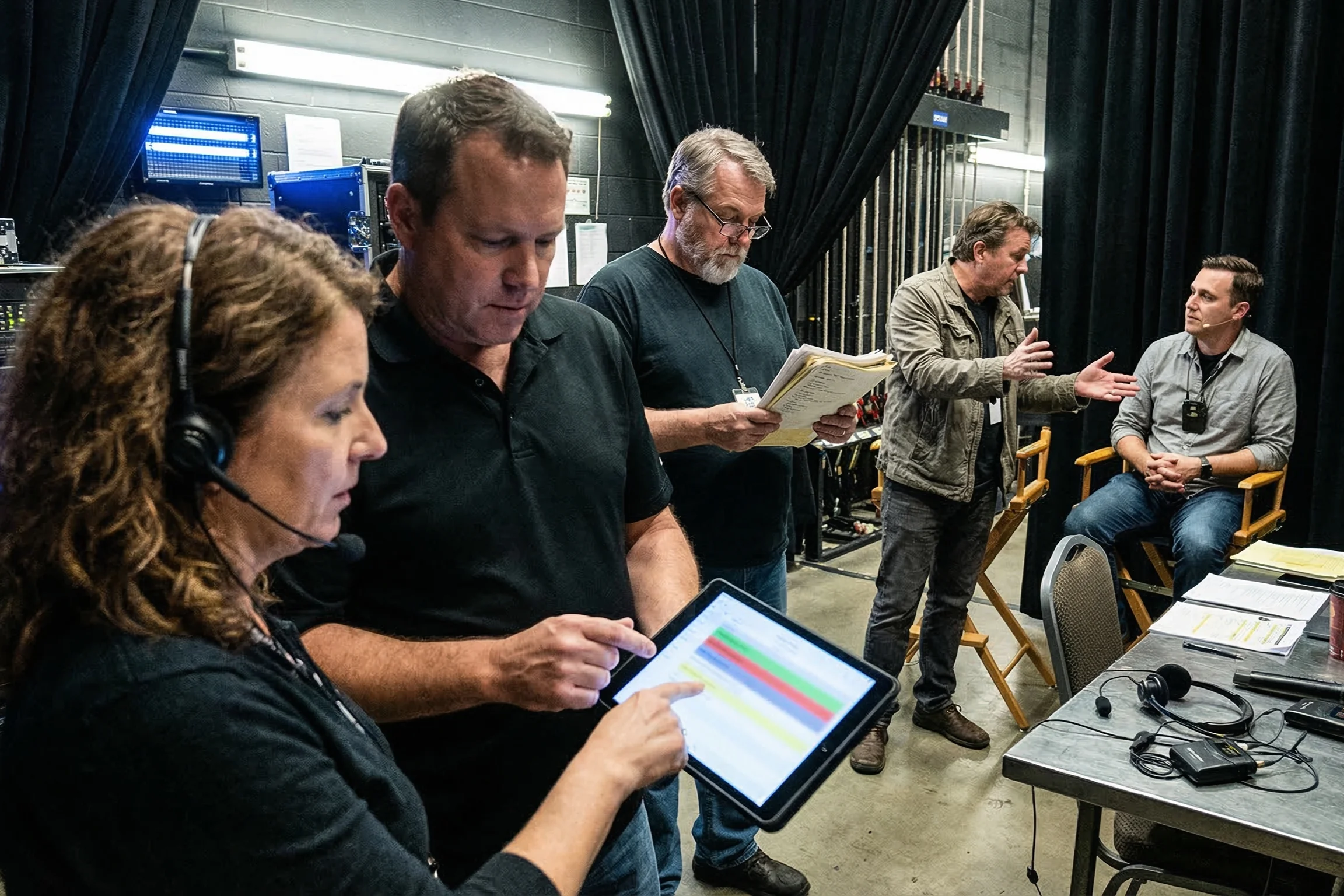

Live Event Staffing Best Practices for Brand Activations
Live event staffing falls apart when the team is present but not useful.
A brand can have enough people on-site and still miss the moment if no one knows who to stop, what to say, when to demo, or when to hand off. This guide is for teams that already know they need staff but want the activation to work better once the crowd actually shows up.
Executive Summary
This guide covers the live event staffing best practices that affect real activation performance: why staffed events still fail, how training changes conversations, why role clarity prevents wasted motion, how field teams adjust during the first two hours, how each staff type needs a different deployment plan, and which live metrics help teams improve before the event is over.
Your Activation Is Staffed, So Why Is No One Converting?
A staffed activation can still feel strangely empty even if the booth has people, the uniforms look right, and your product is on display. Someone is smiling near the table. But the actual work is not happening: no one is pulling aisle traffic, no one is filtering serious prospects, no one is protecting the demo flow, and no one knows when to pass a visitor to the sales or product team.
That's where many live event staffing plans break. You can see this at large trade show environments like CES, where attendees move between product demos, press moments, meetings, and crowded exhibit halls. A team that waits inside the booth for people to walk in will lose attention fast. The issue may look like “bad booth traffic,” but the real gap is usually role ownership.
One person should own the aisle. One should qualify. One should run or support the demo. One should scan, tag, or route the lead. If everyone is simply told to “engage people,” the team may look active while the activation leaks real opportunities.
This is why mapping event staff roles before the event matters. A booth staffer, product rep, brand ambassador, and street team member should not all be briefed the same way.
The same problem shows up outside trade shows, too. A street team can hand out thousands of samples and still miss the right audience. A pop-up can look busy while the checkout line slows down. A product demo can attract a crowd but fail if no one knows how to move interested people to the next step.
Execution Insight
If no one owns the aisle, the demo, the scan, and the handoff, the activation is staffed but not actually controlled.
CEO Excerpt
The biggest mistake brands make is thinking live event staffing is just about having enough people on-site. The real difference is whether each person knows their role, understands the audience, and can adjust when the crowd behaves differently than expected. - Daniel Meursing.
Training Is Where Product Demos Stop Sounding Like Scripts
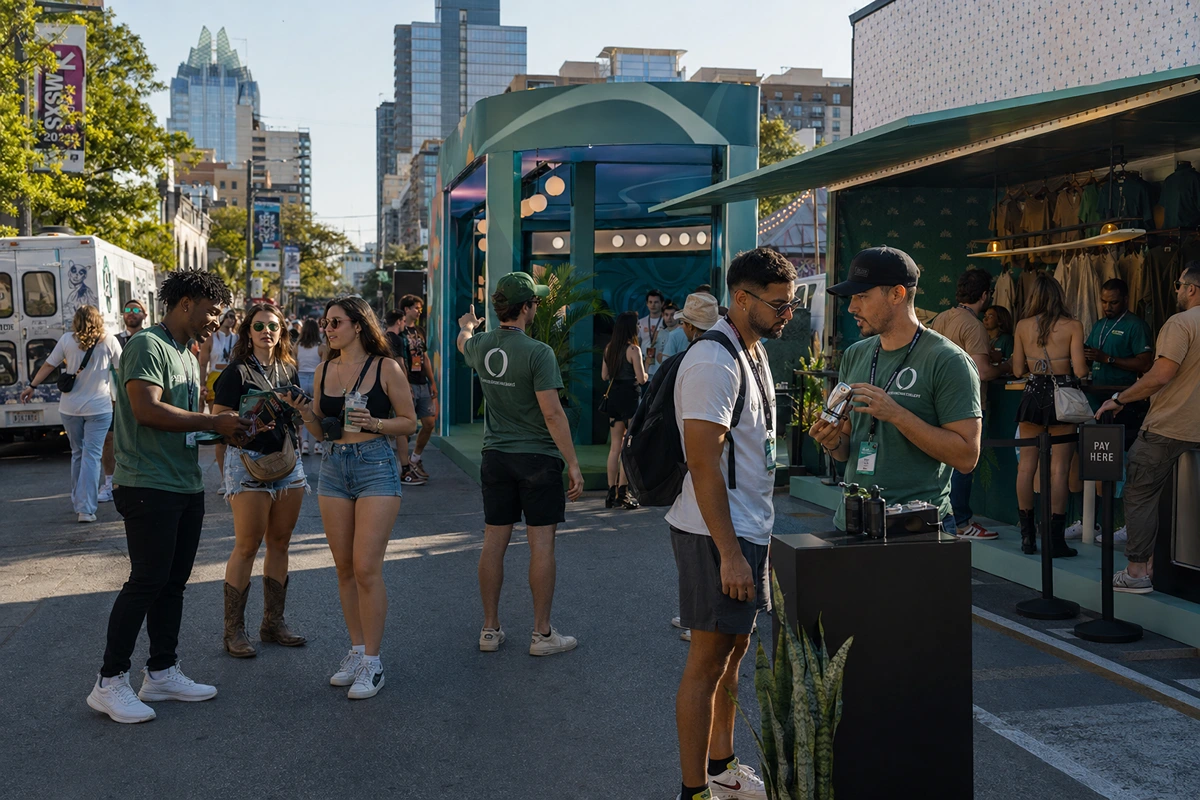
Once you assign people to the aisle, the demo, the scan, and the handoff, the next question is simple: can they actually hold the right conversation when someone stops?
That is where live event staffing often breaks. The team may know the product name, the tagline, and the offer, but that is not enough inside a loud expo hall, a packed popup, or a fast-moving street activation. The staff needs to know how to explain the product in plain language, adjust the pitch by audience type, and answer the first few objections without freezing.
Think about a product demo at Expo West, where food, beverage, wellness, and CPG brands compete for attention in a crowded sampling-heavy environment. A product rep who only says, “Try this; it’s clean label,” will sound like every other booth in the aisle. A trained rep knows how to explain the product quickly to a casual sampler, go deeper with a retail buyer, and hand off serious interest before the line slows down.
That is why training should change by role. A street team needs a fast opener and audience filter. A booth team needs qualification questions. A product rep needs demo control. A brand ambassador needs tone, memory, and guest comfort. The BLS describes demonstrators and product promoters as workers who demonstrate merchandise and answer questions to create buying interest, which is exactly why product knowledge and people skills have to work together at live events. (Bureau of Labor Statistics)
For example, trade show staff should not only be trained to scan badges. They should know which attendee is worth scanning, which one needs a product rep, and which one is only collecting free items. The same logic applies to brand ambassadors, especially when the goal is conversation quality, not just brand visibility.
TRAINING DEPTH CHECK
Level 1: Staff can repeat the product line.
Level 2: Staff can explain the product in plain language.
Level 3: Staff can adjust the pitch by audience type.
Level 4: Staff can qualify interest and hand off the right people.
Level 5: Staff can report what the crowd is actually responding to.
A Training Takeaway For You
A trained live event staffing team does not memorize more words. It knows which version of the conversation fits the person standing in front of them.
“Talk to People” Is the Brief That Makes Staff Miss Leads
Once staff know the product, the next mistake is giving everyone the same job. That is how a live event staffing team ends up looking busy while the real opportunities slip past. One person chats for too long with an unqualified visitor. Another scans every badge without asking a question. The product rep gets stuck answering basic questions instead of handling serious buyers. By the end, the booth has activity, but no clean path from first contact to qualified lead.
At a trade show like Natural Products Expo West, this can happen fast. A food or beverage brand may have sampling staff, booth staff, product reps, and salespeople all packed into one small space. If no one owns the sample line, the qualification question, and the handoff, the team starts stepping on itself.
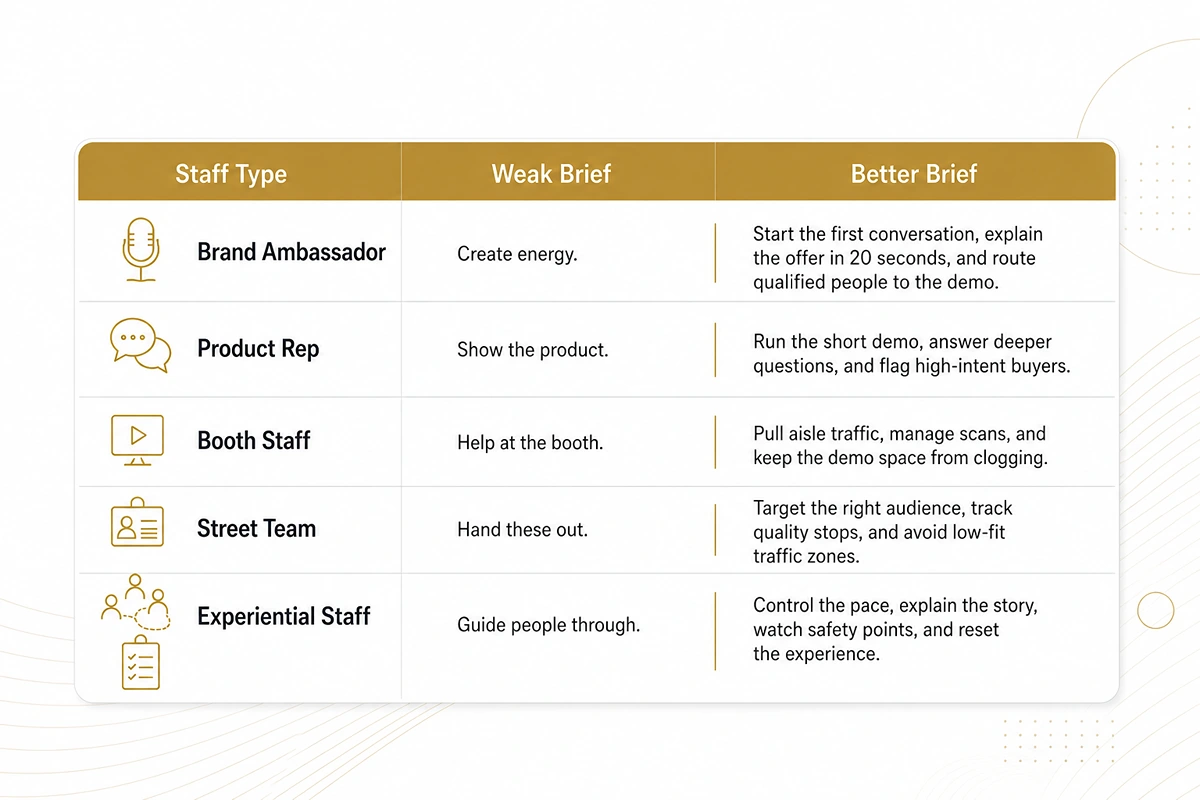
That is why role clarity matters more than general enthusiasm. Booth staff should know whether they are pulling aisle traffic, qualifying visitors, managing the line, or protecting the demo area. Product reps should know when to give the short demo and when to bring in a sales lead. Brand ambassadors should know whether the goal is awareness, sampling, signup, or conversation quality.
The same rule applies outside trade shows. A popup team needs one person watching the line, one handling product questions, and one pushing the next step. A street team needs someone tracking where the best audience is responding, not just how many items were distributed.
Good event staff roles make the activation easier to manage because every person knows what success looks like for their lane.
The First Two Hours Reveal Where Your Staff Should Actually Be
Once every staffer has a clear role, the next test is the live floor and the event map may say traffic should come from the entrance. Reality may say people are stopping near merch, food, rideshare, restrooms, or a sponsor zone instead. If the team keeps following the original plan without adjusting, the activation can lose its best window while everyone is technically “doing their job.”
You see this at large outdoor events like Lollapalooza, where crowds move in waves around set times, food areas, water stations, brand lounges, and exit routes. A street team posted in one location all day may miss the moments when attendees are actually willing to stop. The better move is to watch where people slow down, then shift staff toward higher-intent zones.
The same thing happens at sports activations. A brand team near the entrance may get ignored before kickoff because fans are rushing in. That same team may perform better near concessions, photo moments, or post-game exit flow. This is where festival staffing and gameday activation planning start to overlap: the crowd’s timing matters as much as the location.
LIVE FIELD ADJUSTMENT FLOW
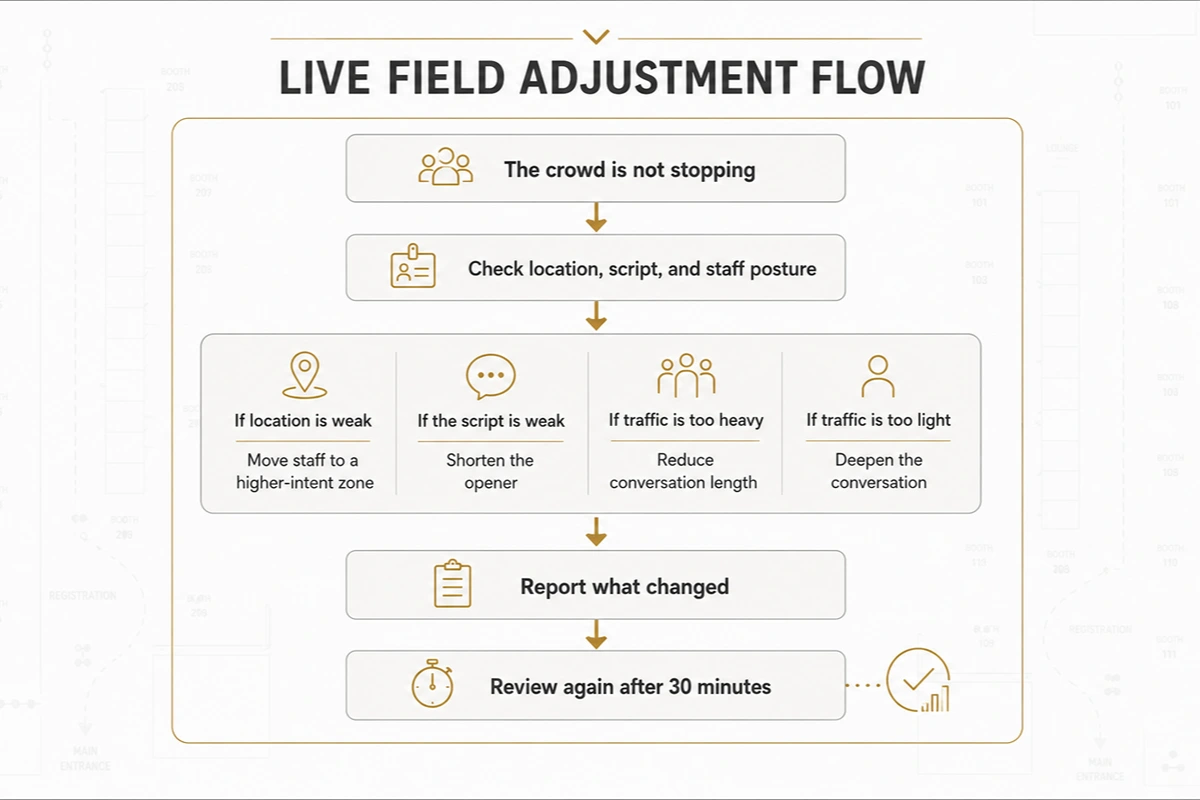
A field lead should be watching for these shifts early: where people pause, where lines form, which opener gets ignored, which product question keeps coming up, and whether staff are creating real conversations or just staying busy.
Each Service Type Needs a Different Deployment Playbook
Once the field lead knows where the crowd is moving, the next mistake is treating every staff type like generic event help.
A street team outside a stadium does not work the same way as booth staff at a trade show. A product rep at Expo West does not need the same brief as experiential staff guiding people through a brand lounge at SXSW. The audience, pace, and handoff are completely different.
That is why live event staffing best practices have to change by service type. Guerrilla marketing teams need speed, location discipline, and a sharp reason to stop someone. Street teams need quick filtering because they may only have a few seconds before the person keeps walking. Product reps need demo control and enough product knowledge to handle real questions. Booth staff need to pull aisle traffic, qualify interest, and protect the demo area from getting clogged. Popup staff need line flow, transaction support, and guest direction. Experiential staff need pacing, story control, and safety awareness.
The problem starts when a brand gives all of these teams the same brief: “Be energetic, talk to people, and represent the brand well.”
That sounds fine until the event starts. A street team needs to know which audience to ignore. A product rep needs to know when a demo is going too long. A popup staffer needs to know when the line is hurting sales. Experiential staff need to know when to slow the guest down and when to move them through.
This is where service-specific planning matters. A team running street team marketing should be judged on audience fit and quality stops, not just how many items they handed out. A team supporting popup staff should be judged on flow, conversion, and whether guests know what to do next.
Do Not Wait for the Recap Deck to Find Out Staff Missed the Mark
After the team is deployed by role, location, and service type, the next question is whether anyone is watching performance while there is still time to fix it.
A lot of brands measure live event staffing too late. They wait for the recap deck, count the scans, look at photos, and then realize the team spent half the event talking to the wrong audience. That does not help when the crowd has already left.
At a trade show like NAB Show, 300 badge scans can look successful on paper. But if only 40 of those scans match the buyer profile, the booth team has a quality problem. A field lead should catch that while the show is still running and adjust the qualifying question, not discover it after the event.
The same applies to activations outside convention halls. If a street team is getting a strong response from one corner and a weak response from another, move the team. If a popup line is building but conversion is dropping, change the staffing split. If an experiential setup has a long dwell time but low signups, the staff may need a clearer closing line.
The metrics should match the staff type:
- Street teams: quality stops, audience fit, response patterns
- Product reps: demo completions, serious questions, qualified handoffs
- Brand ambassadors: conversation quality, sentiment, repeat interactions
- Popup staff: line speed, conversion rate, drop-off points
- Booth staff: badge scans, qualified leads, demo traffic
- Experiential staff: dwell time, completion rate, safety issues
This is where activation ROI becomes more useful. The goal is not just to prove what happened. The goal is to give the team enough information to change what happens next.
Yes, according to the outline we’re following, the last section is:
What to Lock Before Your Live Event Staff Arrive
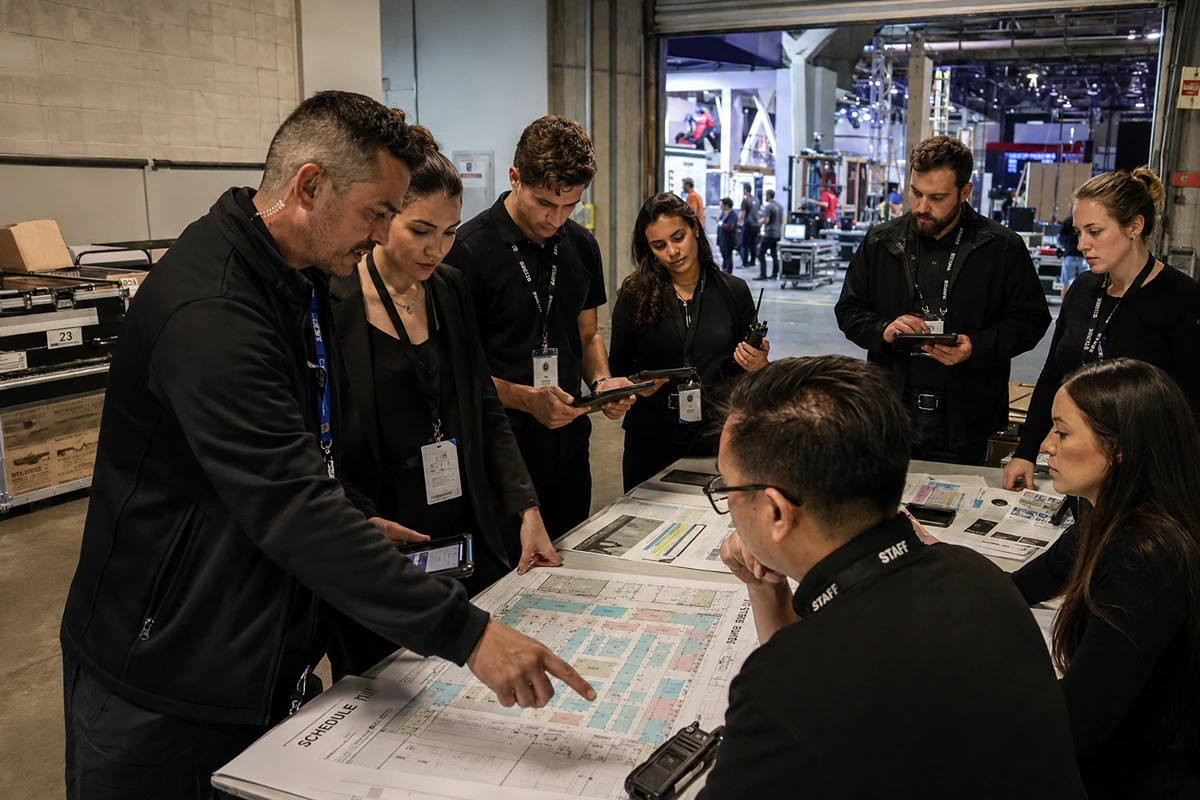
After training, roles, field movement, service-specific deployment, and live measurement, the final step is making sure the staffing plan is clear before anyone arrives on-site.
A strong live event staffing plan should answer the questions that usually create confusion during the event:
- What is the campaign goal?
- Who is the exact audience?
- Which staff type is needed?
- What does each role own?
- How much training is required?
- Where should staff be positioned?
- When should staff hand people off?
- Who is watching the floor in real time?
- What metrics are being tracked during the event?
This is where many brands need to be more specific before they book. Asking for “six brand ambassadors” is not the same as asking for two aisle pullers, two product explainers, one lead scanner, and one field lead. Asking for a street team is not enough either. The plan should define where they are going, who they should stop, what counts as a quality interaction, and when the team should move.
A good event staffing plan gives the team fewer chances to guess. It also helps the brand avoid paying for staff who look active but do not actually move the activation forward.
Ready to execute? Schedule a consultation to plan your activation team deployment.
EventStaff deploys brand activation and promotional staff across 21 cities, including brand ambassadors, product reps, booth staff, pop-up staff, experiential staff, guerrilla teams, and street teams. Get your activation plan for your next live event.
Ready to elevate your next event?
Join thousands of event planners who trust EventStaff.com for reliable, professional staffing solutions.
Trusted by event professionals nationwide
1k+
Events Staffed
2 million+
Guests Served
97%
Positive reviews