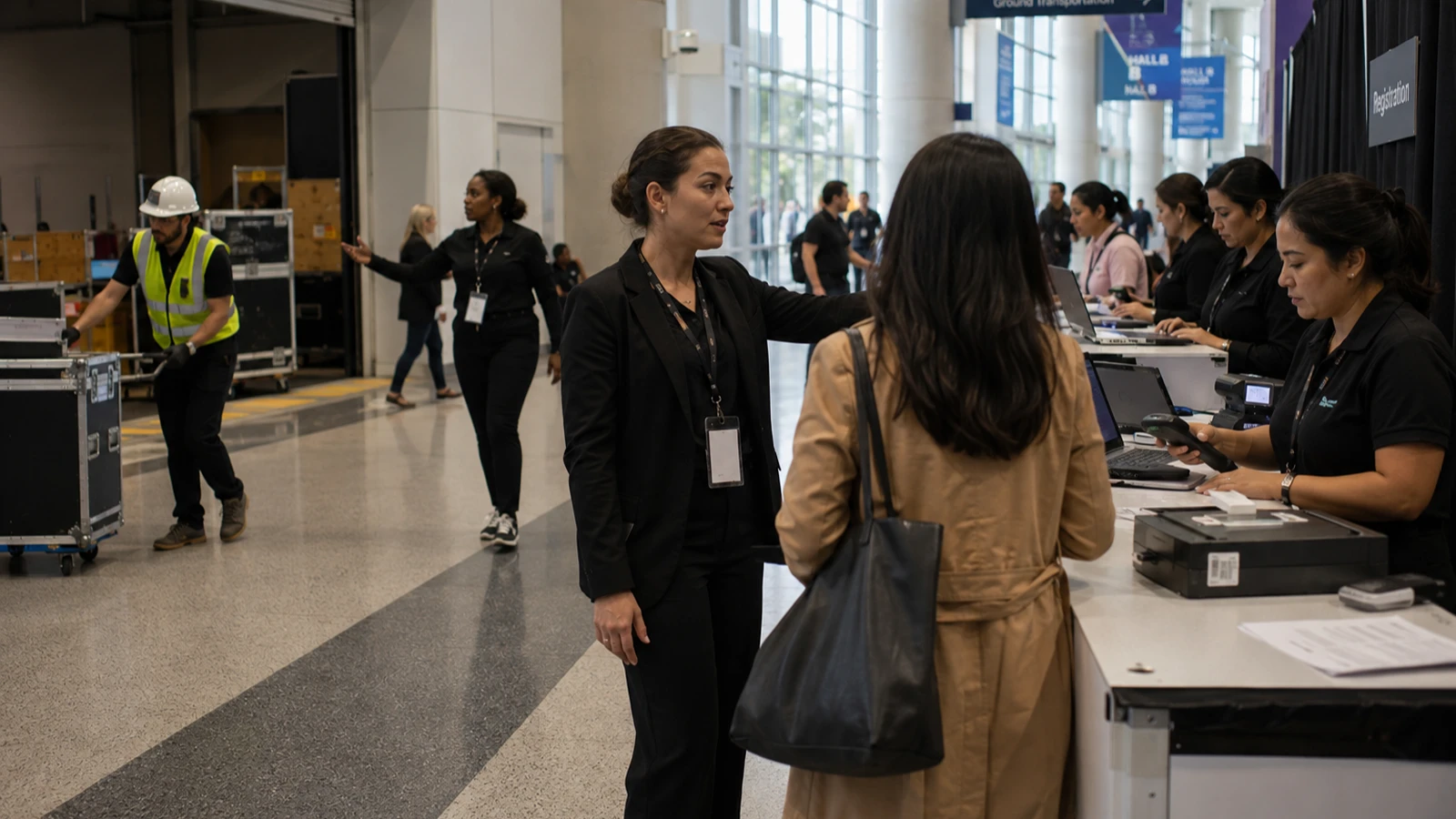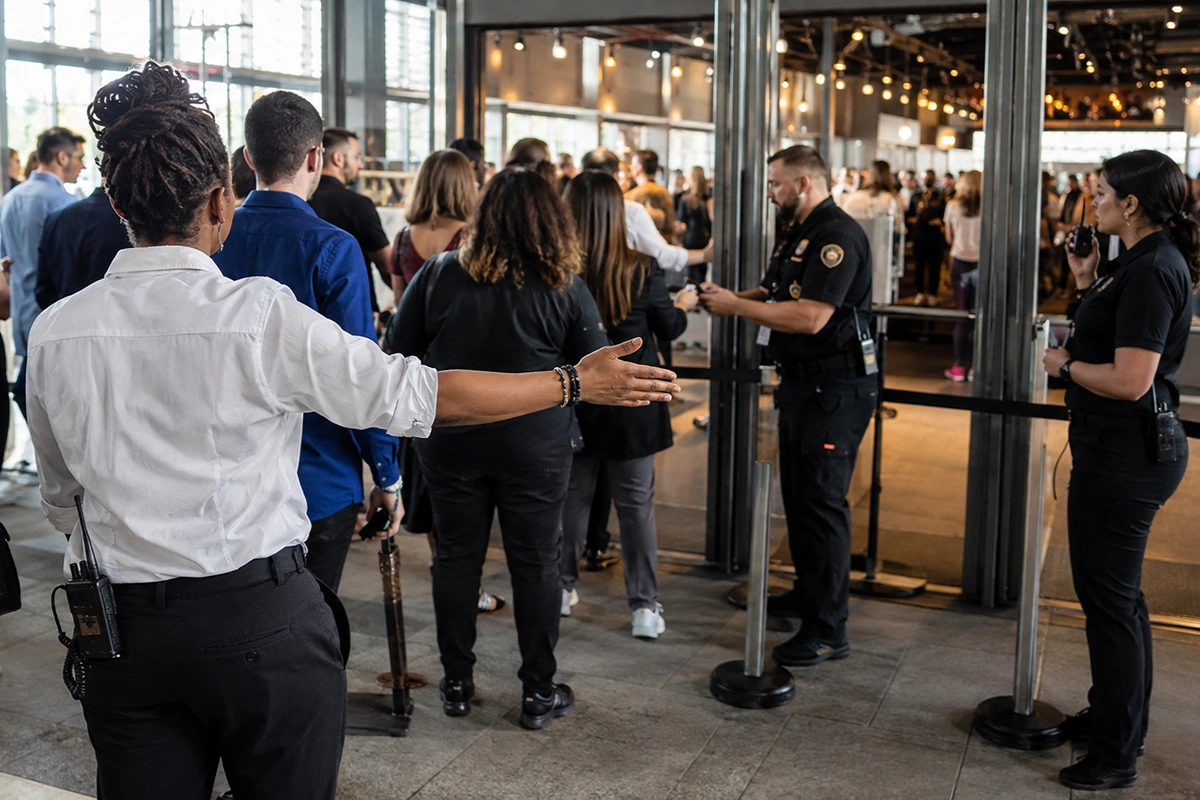

Planning festival staffing for large events is not about filling a spreadsheet with names. It is about building an operating model for entry, queues, guest questions, sponsor activations, VIP zones, backstage support, and real-time recovery when conditions change. That matters even more now because talent and workforce development remains one of the events industry’s most urgent pressure points, according to the Events Industry Council. In other words, staffing is no longer a back-end task. It is a core execution decision.
The short version is simple: plan festival staffing by mapping the site first, forecasting pressure moments second, assigning roles by zone third, and then building backup coverage for weather, callouts, and crowd surges. If you reverse that order and start with a budget number, you usually end up understaffed at the gate, overstaffed in low-value positions, and slow to respond when the event gets stressed.
CEO Excerpt
“Large-event festival operations break down when staffing is treated like generic temp labor. What actually works is zone ownership, trained field leadership, and a team that knows how to move when the crowd or the weather changes. The public only sees whether the event feels organized. Behind that result is a staffing plan that was built early, briefed clearly, and led properly on site.”
What Festival Staffing Actually Covers at Large Events
At large events, festival staffing should be treated as field operations, not casual labor. The CDC defines mass gatherings as events large enough to strain local resources, and it specifically flags risks tied to crowding, sanitation, environmental hazards, and temperature extremes. That is why event staffing for festivals cannot be planned as a stand-alone labor exercise. It has to connect with venue operations, medical response, security partners, transport flow, and vendor logistics.
A complete festival staff planning model usually covers five operating layers.
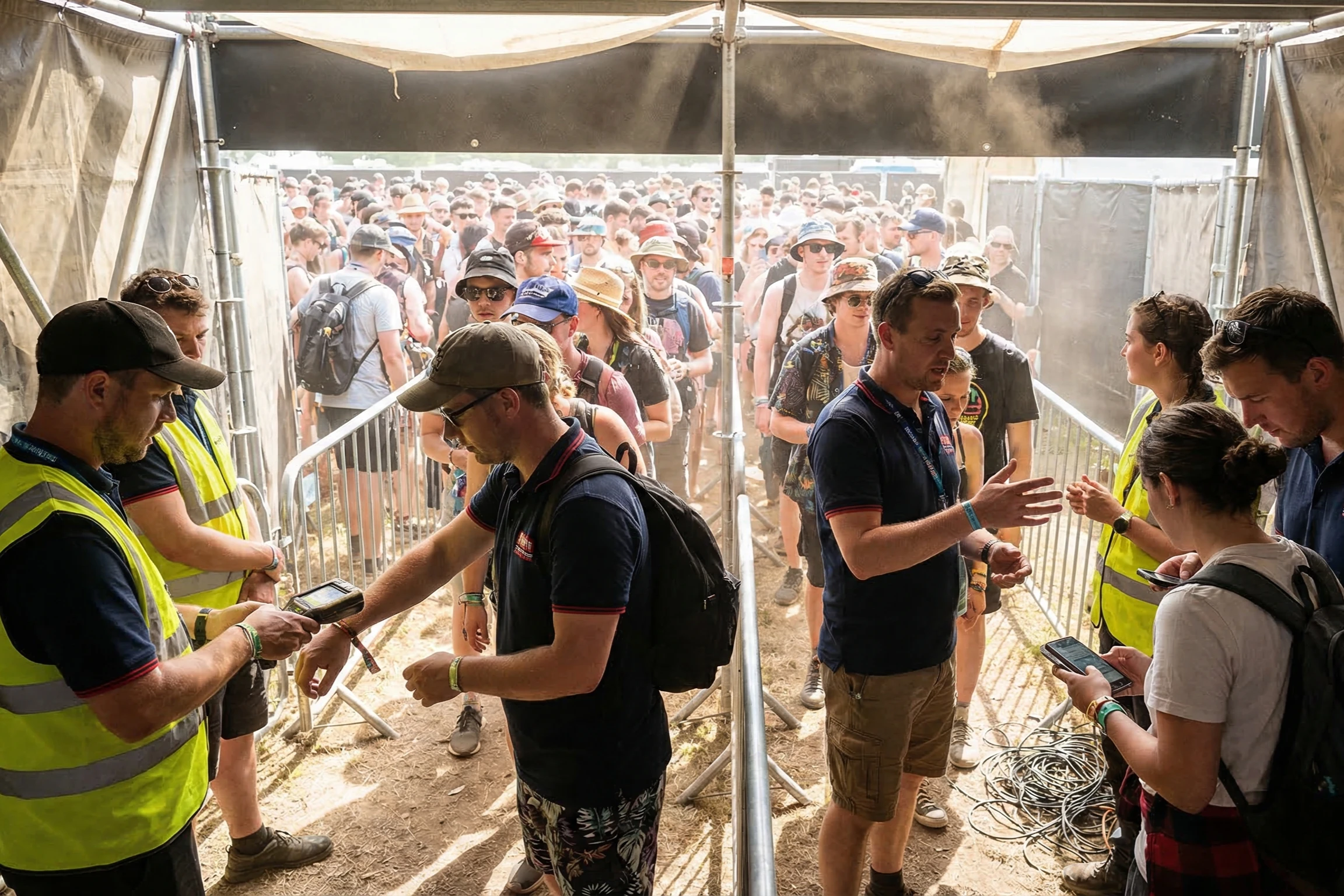
- Gates and check-in are not just ticket scanners standing in a line. They control arrival velocity, resolve exception cases, manage re-entry questions, direct prohibited-item issues, and establish the guest’s first impression within seconds of arrival. If this layer is weak, the rest of your event starts late.
- Movement and information points sit at intersections, queue turns, restrooms, hydration stations, merch clusters, and stage approaches. These staff reduce wandering, answer directional questions quickly, and keep small slowdowns from turning into crowd bunching.
- Guest service and VIP coverage handles the higher-friction moments that planners often underestimate. Credentials, lounge access, sponsor commitments, premium guest recovery, and service complaints all need trained people who can solve problems without escalating everything to management.
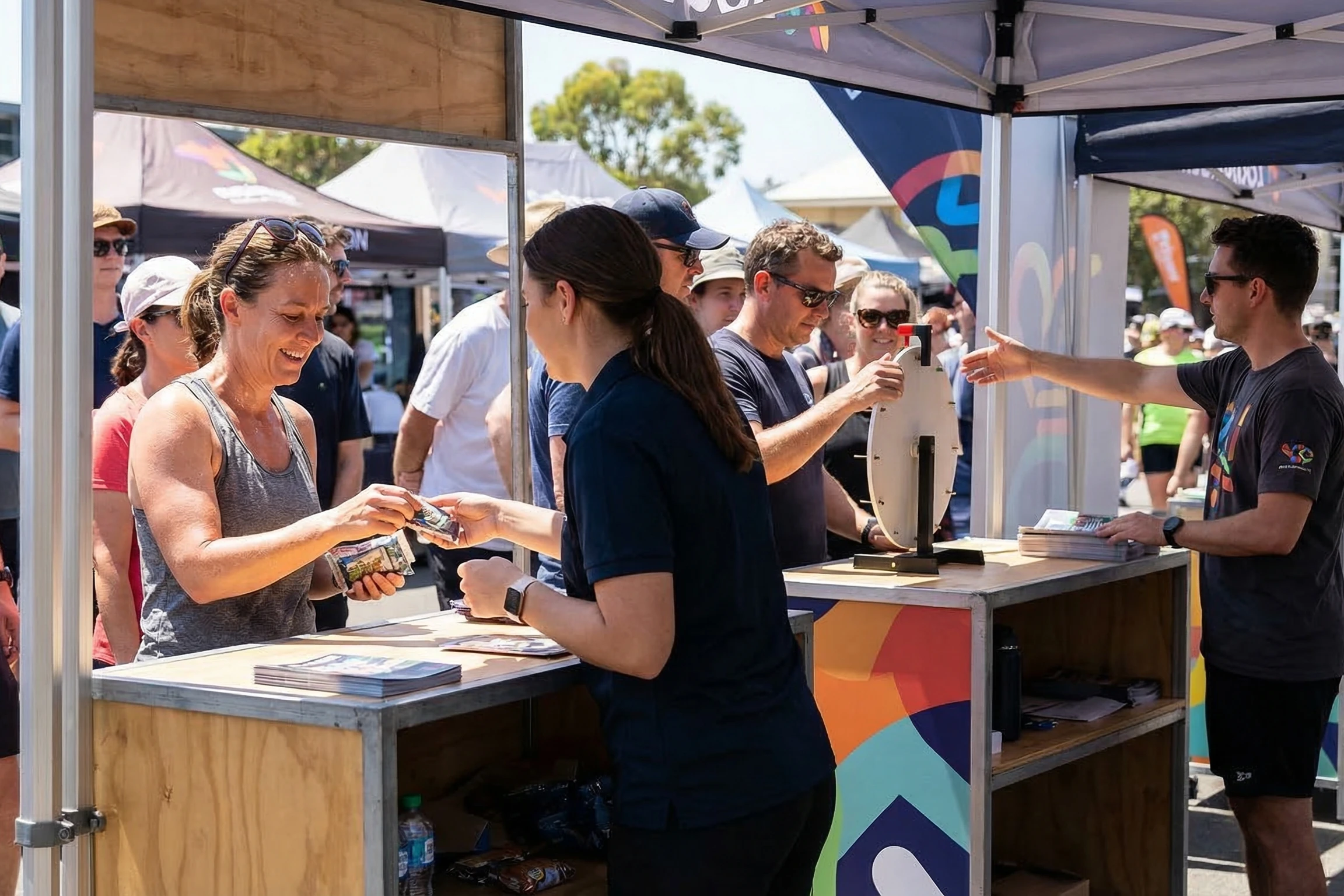
- Brand activation and sponsor support matters more than many organizers admit. If you are selling sponsor packages, your staffing plan must support sampling rules, traffic capture, line order, giveaway control, and brand presentation. This is where trained brand ambassadors can carry real operational weight, not just promotional value.
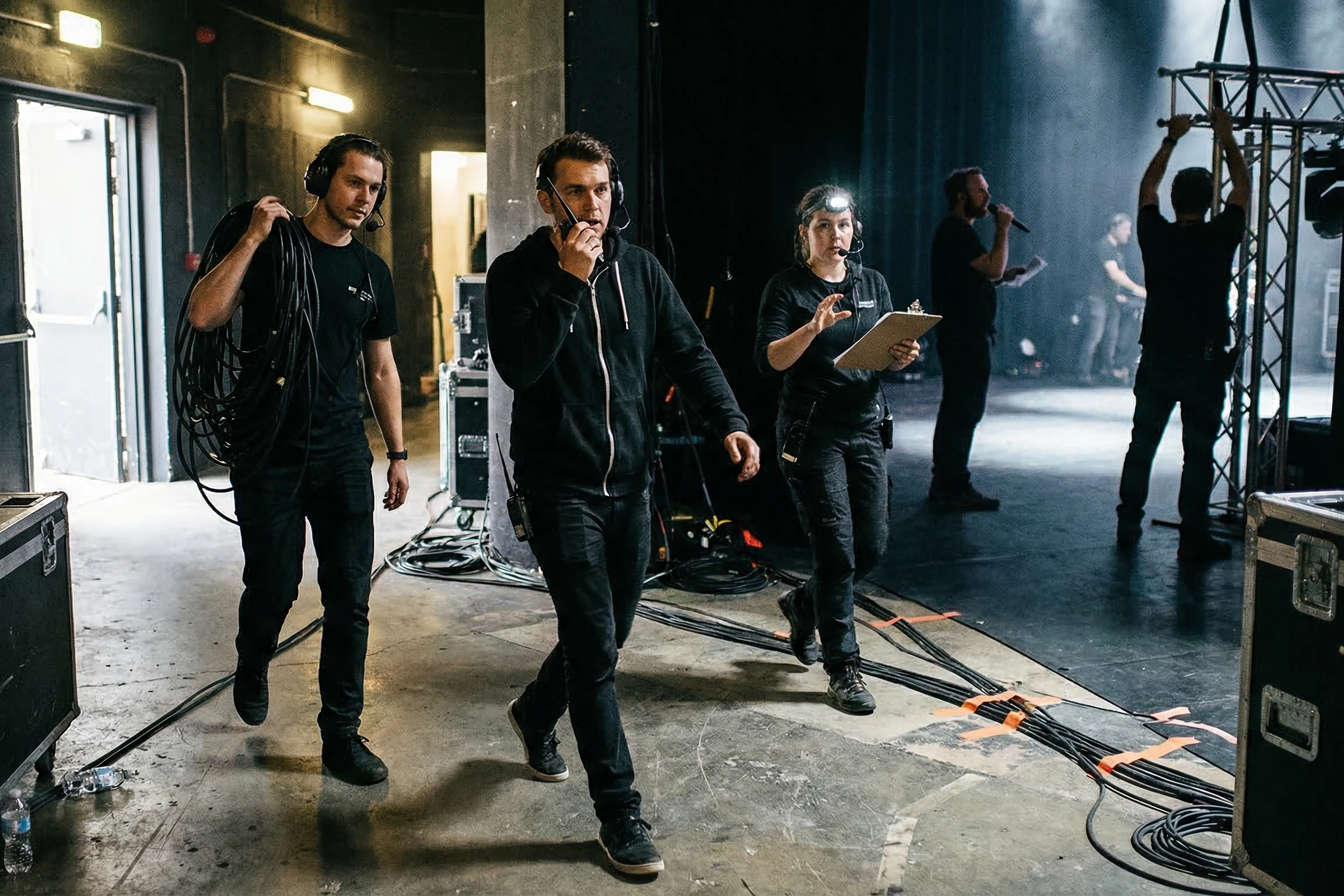
- Back-of-house support includes runners, production assistants, zone leads, dispatch support, and floaters. These are the people who keep delays, missing items, radio calls, vendor confusion, and field adjustments from interrupting the guest experience. Our own read on festival staffing vs. regular staffing is useful here because it frames the difference correctly: festival work is mobile, multi-shift, and supervision-heavy.
Once that scope is clear, the planning process gets much more accurate. You stop asking, “How many people can we afford?” and start asking, “Which zones fail first if they are undercovered?”
Build Your Festival Staffing Plan From the Site Map Up
The fastest way to make large event staffing inefficient is to estimate headcount before you understand how the site behaves. A stronger approach is to build from the map upward.
1. Map the site before you price the team
Start with the real operating picture, not the brochure version of the event. That means your staffing map should show entry and exit points, queue runways, credential checks, primary pedestrian crossings, restrooms, bars, hydration, sponsor activations, vendor loading paths, ADA routes, VIP zones, medical points, backstage access, staff check-in, meal areas, and likely dead zones. FEMA’s special events planning guidance is clear that contingency planning should be a joint effort across the organizations involved in event response, which is exactly why staffing cannot be separated from the rest of the operating plan.
In practice, that means you should walk the site with three questions in mind. First, where will guests slow down? Second, where will they get confused? Third, where will they need staff even when nothing appears to be happening? Those answers usually reveal the staffing roles that matter most: gate support, queue control, directional staff, guest recovery, mobile supervisors, and float coverage.
2. Forecast pressure moments, not average traffic
Most weak festival staffing services plans are built around average attendance. Operations fail during peaks, not averages. Your staffing model should identify at least five pressure windows: gate open, first major performance block, sponsor giveaway or merch rush, weather disruption, and final egress. The National Weather Service’s event tools are designed around this same principle: you need pre-defined trigger points for evacuation, sheltering, and decision timing before weather reaches the venue.
A practical method is to build the day in 30-minute operating blocks. For each block, note expected attendance movement, active zones, likely guest questions, and whether your staffing should be fixed, mobile, or floating. That gives you a real staffing curve instead of one static number for the whole day.

3. Turn zones into roles and a clear chain of command
Once the site and peak moments are clear, convert zones into responsibilities. This is where event staffing for festivals becomes more disciplined. Every zone should have an owner, every owner should know who they escalate to, and every supervisor should understand what authority they actually have to redeploy people.
A solid field structure usually includes:
- gate teams handling scanning, wristbands, line organization, and exception cases;
- crowd-flow staff positioned at choke points and directional intersections;
- guest-service staff handling information, access issues, and problem recovery;
- activation staff supporting sponsors and audience engagement;
- production support staff solving logistics issues behind the scenes;
- floaters and zone leads who can move quickly when a hot spot develops.
If a role sounds vague, it will perform vaguely. That is why clear job design matters. If you need additional role detail, our event staffing services, crowd control teams, and production assistants guide are useful reference points because they break out guest-facing, flow-control, and support responsibilities more clearly.
4. Calculate staffing numbers with active-post math
This is where planners often either overcomplicate the math or make it too simplistic. The best approach is to calculate active posts first, then add relief and reserve coverage.
A workable model looks like this:
- count how many fixed positions must be continuously staffed during each operating block;
- add how many mobile positions are needed to absorb flow and answer questions;
- set a supervisor ratio that matches site complexity, not just headcount;
- add relief coverage for meals, restroom breaks, and redeployments;
- add a reserve layer for callouts, weather changes, and surprise surges.
For example, a medium-to-large gate operation may need six active scanners, two line managers, two exception handlers, one re-entry position, and one supervisor per gate bank during the first arrival wave. If you run that for several hours and do not budget relief or float coverage, your plan is already too thin. That is the real difference between rough scheduling and true festival staff planning.
As a rule, do not schedule the whole team to start at the same time or finish at the same time. A large festival has different labor needs at opening, mid-event, and closing. Your staffing pattern should rise and fall with the event, or you will pay for low-value hours while still coming up short when pressure hits.
.webp)
Build the Timeline Backward From Show Open
Once the operating model is built, the next step is timing. Strong festival staffing is usually visible on show day because it was built correctly weeks earlier.
90 days out: lock the operating assumptions
At this stage, you are not just “booking staff.” You are confirming venue footprint, approval assumptions, likely crowd profile, sponsor obligations, and load-in complexity. This is also the moment to identify which roles require experienced leads rather than first-time generalists. Because workforce pressure remains a live issue across events, waiting too long to secure your leadership layer is risky.
60 days out: assign structure, not just bodies
By this point, you want zone maps, role descriptions, and supervisor assignments taking shape. This is also where cross-training becomes valuable. Staff assigned to gates should know how to support guest flow. Guest-service staff should know the access policy. Activation staff should know the escalation path when a guest issue becomes an operations issue. When teams only know one narrow task, small disruptions create avoidable delays.
30 days out: stress-test the plan
Thirty days out is the right time for tabletop review. Walk through the event hour by hour. Ask what happens if weather changes, a sponsor line doubles in length, a credential issue stalls a VIP queue, or a stage release suddenly shifts pedestrian flow. Large events do not need perfect prediction, but they do need rehearsed decision paths. That is what separates smooth repositioning from reactive scrambling. FEMA’s planning framework is still useful here because it treats contingency planning as part of the operating model, not a separate binder nobody opens.
7 days out and show week: finalize the field brief
By show week, your team should have a real field packet, not a vague call time. That means maps, role summaries, supervisor names, radio channel assignments, emergency escalation steps, break structure, arrival instructions, uniform notes, credential procedures, and a clear contact tree. This is the stage where large event staffing either tightens up or starts leaking confusion into the field.
Show day: manage rhythm, not just attendance
On the day itself, the smartest managers do not simply count people. They manage rhythm. That means checking staffing by zone before gates open, reviewing the first redeployment window before the initial rush hits, confirming break timing before fatigue sets in, and resetting coverage before the headline or final egress period. Good staffing leaders do not wait for a problem to become visible to the public.
Pressure-Test the Plan Before the Public Arrives
This is the step that protects your event from avoidable failure. It is also where festival staffing services earn their value.
Entry breakdowns
Gates do not fail only because they are understaffed. They fail because the wrong people are in the wrong jobs. A scanner line can move quickly while the exception lane quietly creates a bottleneck if nobody owns guest issues, ticket errors, wristband questions, or access denials. Build a separate exception-handling layer so your main scanning flow is not dragged down by special cases.
Heat, weather, and medical escalation
Outdoor event labor needs a real heat and weather protocol. OSHA notes that millions of workers face heat exposure, and that many outdoor heat fatalities occur in the first few days of working in warm environments because acclimatization has not happened yet. That matters for festivals because long shifts, black uniforms, paved surfaces, and repeated walking routes all increase exposure. Your staffing plan should include water, shade access, break cycles, symptom reporting, and supervisor authority to rotate people out early.
Weather needs the same discipline. Use a trigger matrix tied to forecast changes, not gut feel. The National Weather Service’s event guidance exists for a reason: evacuation timing, shelter timing, and communication timing should be decided before the storm cell is visible from the venue.
Communication breakdowns
Radio congestion ruins otherwise solid plans. Not every staff member needs a radio, but every zone needs a reliable reporting line and every supervisor needs authority to solve the first layer of problems without sending everything back to command. A good field communication plan separates urgent traffic from routine traffic and gives staff a fallback if batteries, noise, or dead zones interfere.
End-of-night egress
Some of the worst staffing mistakes happen after the main program ends. Managers relax too early, staff are released too soon, and the event loses structure exactly when thousands of people move at once. Closing requires its own staffing curve: directional support, transportation guidance, crowd split management, VIP exit coordination, vendor protection, and final guest-service coverage. If the departure feels chaotic, guests remember the event as chaotic no matter how well the show went earlier.

High-Value Markets Where Festival Staffing Requires Different Tactics
A strong national plan still needs local adjustment. The same crowd size behaves differently in Miami than in Manhattan. This is where festival staffing becomes market-aware instead of generic.
New York City
New York City remains one of the most operationally demanding live-event markets. The city’s official tourism organization reported 64.5 million visitors in 2024, and street-based events often move through the Street Activity Permit Office, which oversees permits for street festivals, block parties, farmers markets, commercial events, and other public-space uses. That combination matters because it means tighter pedestrian conditions, more layered approvals, more curbside friction, and less tolerance for vague field management.
For event staffing for festivals in New York City, that usually means you prioritize line compaction, directional staffing, multilingual guest communication, curbside coordination, and fast exception handling. Storage is tighter, guest expectations are high, and people will not wait patiently for unclear instructions. Your staffing needs to feel decisive.
Los Angeles
Los Angeles creates a different problem set. The city’s tourism board says 49.1 million people traveled to Los Angeles in 2023, and the market often combines large footprints, heavier production demands, and longer on-site travel distances. On the approvals side, Los Angeles temporary special event permits can require fire approval and an approved safety plan before permit submission in relevant cases.
That affects large event staffing directly. In Los Angeles, planners usually need more runner support, stronger backstage logistics, better checkpoint communication, and more deliberate sun and distance management for staff working long walking routes. A field plan that works in a compact downtown footprint may underperform badly on a spread-out Southern California site.
Miami
Miami is a volume-and-climate market. Greater Miami & Miami Beach reported a record number of visitors in 2024, and Miami Beach’s special event permit framework includes minimum requirements, medical-planning triggers for events with expected attendance of 3,000 or more in some cases, and severe-weather expectations during hurricane season.
That means festival staff planning in Miami has to account for heat, humidity, sudden weather shifts, long outdoor exposures, and a guest mix that often includes tourism traffic unfamiliar with the site. Hydration coverage, shade access, storm triggers, late-night recovery staffing, and visible guest-information points all matter more here than planners sometimes expect.
Las Vegas
Las Vegas demands speed and polish. The LVCVA continues to publish monthly tourism indicators and visitor statistics because the market is built on high-volume travel and event turnover. For organizers, that means compressed setup schedules, strong VIP expectations, late operating windows, and very little room for visible disorganization.
For festival staffing services in Las Vegas, the right team is not just large enough. It has to be composed, presentation-ready, and capable of fast redeployment without losing guest-facing quality. Uniform discipline, late-shift stamina, and supervisor responsiveness matter a great deal in this market.
Real-World Example: Entry Bottleneck Fix
At a 15,000-attendee music festival, entry delays exceeded 40 minutes during peak arrival. The issue wasn’t total staff count it was role imbalance.
After restructuring:
- Added dedicated exception-handling staff
- Introduced queue managers per lane
- Assigned zone supervisors for real-time adjustments
Result:
- Entry time reduced to under 15 minutes
- Guest complaints dropped significantly
- Sponsor engagement improved due to smoother flow
This highlights a key principle: staffing efficiency is driven by role clarity, not just headcount.
How Professional Festival Staffing Improves Event Outcomes
This is the point many planners realize they are not really buying labor. They are buying operational stability. Professional festival staffing improves outcomes because it reduces ambiguity: who owns the gate, who handles exceptions, who moves when a sponsor line spikes, who repositions when weather changes, and who closes out the site without letting egress unravel.
That is also why integrated coverage helps. If your event needs sponsor support, guest services, flow management, check-in, and production coordination, it is more efficient when those layers are designed to work together. Premier Staff’s official service pages reflect that integrated model across event staffing services, crowd management, brand ambassadors, and locations nationwide.
In practical terms, professional event staffing for festivals usually gives you four advantages. You get stronger field leadership, because supervisors are assigned intentionally rather than improvised. You get cleaner guest experience, because staff know the policy and the escalation path. You get better resilience, because float coverage and role clarity make redeployment faster. And you get more reliable brand execution, because sponsor teams are briefed into the same operating picture as the rest of the event.
How We Deliver Festival Staffing for Large Events
We approach festival staffing as an operating system, not a last-minute labor request. Our structure starts with the event map and the pressure points, then moves into role design, supervisor placement, briefing standards, and on-site adjustment. That is consistent with how Premier Staff presents its work publicly: guest-facing roles, crowd-control support, production teams, check-in coverage, and multi-market deployment are all part of the service mix.
For large festivals, we keep the focus on the parts that usually decide whether the day feels controlled or not:
- a field structure with zone ownership and real supervisors, not just a large headcount;
- briefings built around the actual site, not generic role notes;
- guest-facing teams who can handle information, flow, and recovery calmly;
- support staff who can solve operational friction without dragging command into every issue;
- reserve capacity, because the plan always changes once the public arrives.
If you are building a multi-city event calendar, the benefit of working this way is consistency. Your staffing framework can stay disciplined even as market conditions change from Los Angeles to Miami to New York to Las Vegas.
Ready to eliminate bottlenecks, improve guest flow, and deliver a flawless event experience?
Partner with a team that understands festival staffing as a full operational system not just temporary labor.
👉 Get a customized staffing plan tailored to your event size, location, and complexity.
👉 Ensure the right roles, the right structure, and the right leadership on-site.
Start planning your festival staffing today.
Ready to elevate your next event?
Join thousands of event planners who trust EventStaff.com for reliable, professional staffing solutions.
Trusted by event professionals nationwide
1k+
Events Staffed
2 million+
Guests Served
97%
Positive reviews