
Street Team Meaning: What Street Team Marketing Really Is & What Actually Works in 2026
Street team marketing in 2026 is no longer about handing out flyers or free samples. It’s a strategic, data-driven approach to engaging high-intent audiences in real-world environments.
A street team is a trained group of brand ambassadors who move through high-traffic locations events, city centers, festivals to create meaningful interactions, qualify prospects, and drive measurable conversions.
In this guide, you’ll learn:
- What street team marketing actually means today
- When to use it (and when not to)
- How to run a high-performing street team
- Real examples from major 2026 events
- How to hire and measure results
Executive Summary
Street team marketing is a boots-on-the-ground promotional strategy where trained staff engage consumers directly on foot, at venues, or in high-traffic areas to build brand awareness, collect data, and drive conversions. Understanding what street team marketing really is, it's not just handing out samples. It's strategic customer engagement where trained ambassadors represent your brand face-to-face, qualify interest, and capture contact information. Here's what the best street teams did at Q1 2026's biggest events and what to copy.
You've Seen Street Teams Work, But Do You Know What You're Actually Watching?
"Street team," meaning in modern marketing, goes far beyond handing out flyers or samples. A street team is a trained group of brand ambassadors who engage consumers face-to-face in high-traffic environments to build awareness, qualify interest, and drive measurable conversions.
But what is a street team in practice, and why do some activations generate real demand while others get ignored?
Behind that ease is structure. Understanding what street team marketing accomplishes and how it differs from sampling events or booth staff determines whether your activation creates demand or just noise. Here's what won at Q1 2026's biggest events.
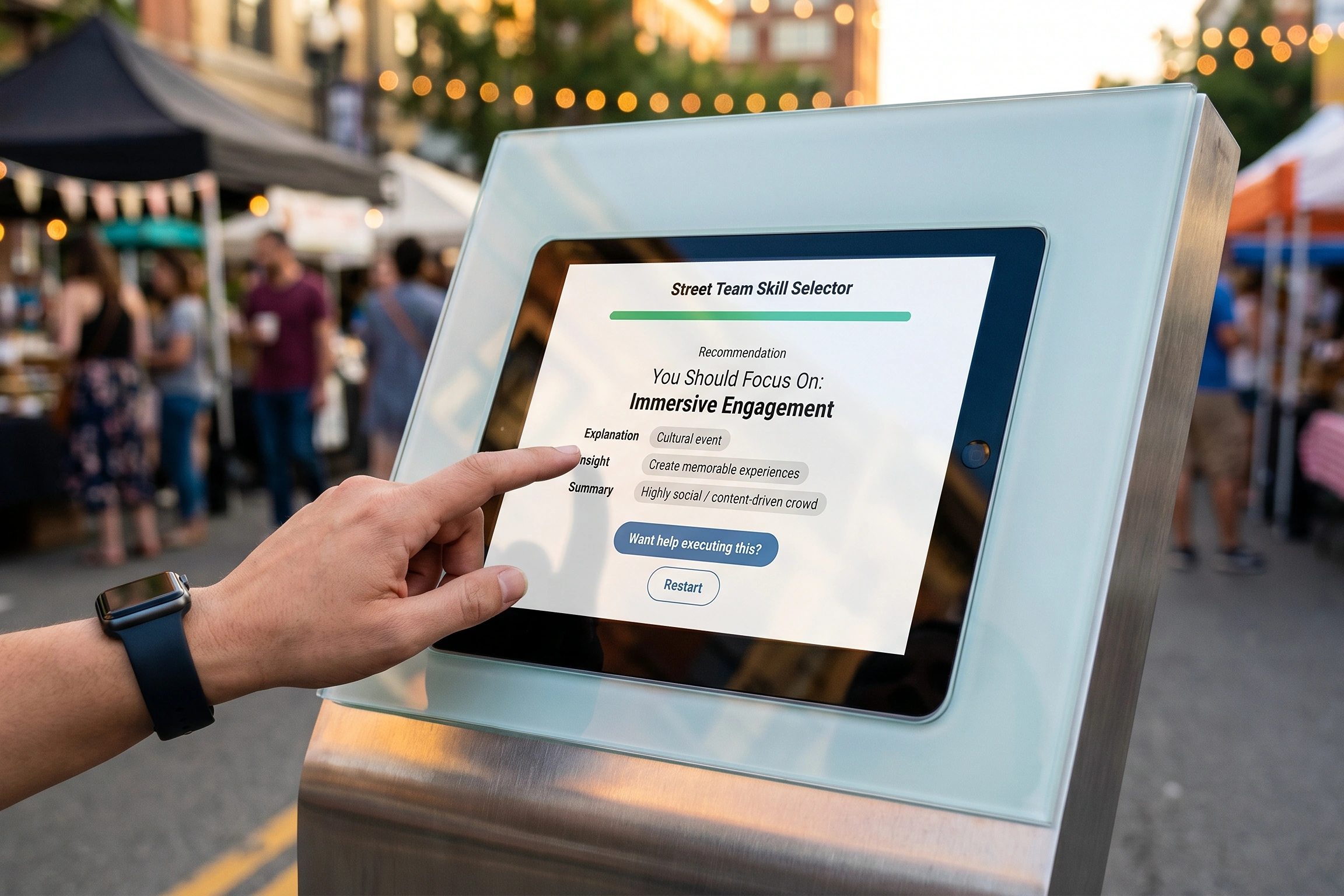
What Is a Street Team?
A street team is a group of trained promotional staff or brand ambassadors who interact directly with consumers in public spaces to promote a brand, product, or event.
Unlike traditional advertising, street team marketing focuses on:
- Real-time conversations
- Personalized engagement
- Lead capture and qualification
This makes it one of the most effective forms of experiential marketing for high-traffic events.
What Street Team Marketing Really Is
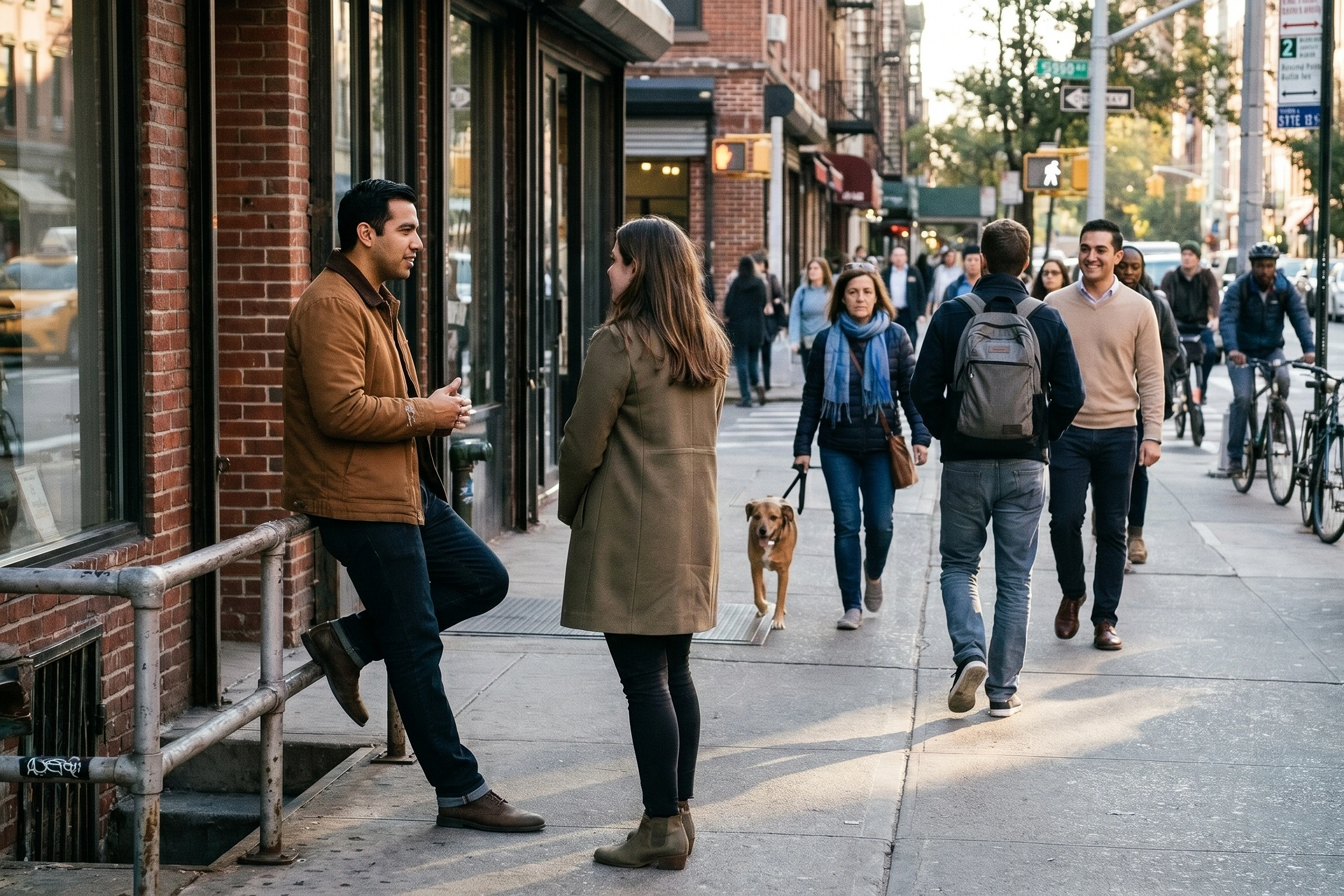
Street team meaning in modern business: a trained group of brand ambassadors who engage customers face-to-face in high-traffic locations, qualify purchase intent, and capture lead information in real-time. Different from booth staff (fixed locations) and sampling staff (volume-driven), street team marketing is about movement, relationship-building, and strategic targeting.
Core jobs: engaging passersby, moving through crowds with purpose, qualifying interest, capturing contact information, and creating memorable moments. This means your team creates demand before customers reach your booth.
How to Run a Street Team Marketing Campaign (Step-by-Step)
Running a successful street team campaign requires more than hiring outgoing staff. It’s about aligning people, location, and messaging.
Step 1: Define Your Objective
Are you driving awareness, lead generation, or foot traffic? Your goal determines your team structure.
Step 2: Choose the Right Locations
High foot traffic doesn’t always mean high value. Focus on where your target audience naturally gathers.
Step 3: Hire and Train the Right Team
Your team should be trained in:
- Pre-qualification techniques
- Brand messaging
- Real-time engagement strategies
Step 4: Script the Outcome, Not the Words
Avoid rigid scripts. Instead, define:
- Who to approach
- What signals indicate interest
- What action to drive
Step 5: Track Performance Metrics
Measure:
- Conversations per hour
- Qualified leads
- Conversion to booth visits or sales
CEO Excerpt
Most street teams fail because they chase attention instead of targeting intent. The highest-performing teams know exactly who to approach before stepping into the crowd. Strategy not volume is what drives real conversions. -Daniel Muersing
Street Team Marketing vs. Booth Staff vs. Sampling: The Difference That Matters
Street team advertising is relationship-driven, qualification, and positioning. Sampling is a volume-driven product trial. Booth staff manage fixed locations. All three are different jobs with different training and different ROI metrics.
5 Street Team Skills That Actually Drive Results
- Skill 1: Pre-Qualification Before the Crowd - Filter high-intent prospects from casual visitors before they're overwhelmed.
- Skill 2: Experience-Driven Positioning - Create moments, not sales pitches. Let the experience drive interest.
- Skill 3: Ambient Integration - Make your team feel like part of the environment, not an interruption.
- Skill 4: Hyper-Local Targeting - Adapt messaging to the specific city, venue, and audience in front of you.
- Skill 5: Curiosity-First Engagement - Build desire to learn more, not pressure to buy now.
Five Real Q1 2026 Street Team Activations and What Winners Learned
#5: CES Vegas Strip Activations (January 2026) - Skill: Pre-Qualification Before the Crowd
CES drew 148,000+ attendees to Las Vegas, and smart brands didn't wait for the convention floor. They positioned street teams on the Vegas Strip during peak hours to intercept decision-makers. Teams asked three questions: "What's your role?" "What problem are you solving?" "Have you seen a solution yet?" Teams that pre-qualified reported 23% higher booth conversion rates.
What to learn: Best prospects are spoken for before the floor chaos hits.
#4: Winter Olympics Immersive Zones (Milan-Cortina, February 2026) - Skill: Experience-Driven Positioning
An athletic apparel brand positioned experiential staff in high-traffic walkways running 3-minute skill demonstrations with no product mention. Just value. Teams delivering experience-driven moments reported strong conversion. What street team means here: creating memories people want to repeat, not selling.
- What to learn: Brands that taught something won over brands that sold something.
#3: SXSW Brand Houses (Austin, March 2026) - Skill: Ambient Integration
A tech brand's street teams positioned outside their brand house with one job: invite people inside. No scripts. No product talk. Teams felt like locals, not marketers. Session times averaged 18 minutes per visitor (vs. 90 seconds at traditional booths).
- What to learn: If your team feels like marketing, you've already lost.
#2: Fashion Week Pop-Ups (NYC, London, Milan, Paris - February-March 2026) Skill: Hyper-Local Targeting
Fashion Week brands used street teams to drive foot traffic to pop-ups. NYC teams focused on fashion professionals with insider language. Paris teams focused on luxury buyers. Different messaging. Different results. NYC: 48% street interaction converted to visits. Paris: 71%.
- What to learn: One-size-fits-all street team advertising doesn't exist.
#1: St. Patrick's Day Street Swaps (Global, March 2026) - Skill: Curiosity-First Engagement
A beverage brand's street teams didn't promote products. They asked: "What's your favorite green thing?" "Where would you travel on St. Patrick's Day?" Teams created connection moments, then offered samples or an email signup. Winning activations felt natural, not forced. 8,000+ consumers sampled across four cities; 34% opted into follow-up.
- What to learn: The moment it feels like a campaign, people disengage.
What These Activations Have in Common
Five events. Five industries. Five audiences. But winners shared three patterns:
Pattern 1: Location beats script. Winning teams knew their venue better than their script. They adapted in real-time.
Pattern 2: Experience beats selling. Teams creating moments outperformed teams pushing products. Street team meaning fails when you lead with "buy this."
Pattern 3: Moving teams creates demand. Mobile teams built relationships. Relationships converted.
Why Street Team Marketing Works
Experiential marketing consistently outperforms passive channels because it creates real human connection.
According to industry research:
- Experiential campaigns can generate up to 70% higher engagement than digital ads
- 65% of consumers say live interactions increase purchase intent
- Face-to-face engagement significantly improves brand recall and trust
Street team marketing works because it combines:
- Human psychology (trust + connection)
- Strategic targeting
- Real-time feedback loops
👉 Unlike digital ads, your team can adapt instantly based on audience response.
How Much Does Street Team Marketing Cost in 2026?
Street team marketing costs vary based on location, team size, and campaign complexity.
Typical ranges:
- Brand ambassadors: $25–$50/hour per staff
- Team size: 3–15 staff depending on event scale
- Campaign duration: 4–10 hours per day
Estimated daily cost:
👉 $500 – $5,000+ per activation
High-performing campaigns invest more in training and targeting, not just headcount.
Plan a Street Team That Actually Converts
If your current strategy relies on generic outreach, you’re leaving conversions on the table.
At Event Saff, we don’t just provide staff we design high-performing street team strategies tailored to your event, audience, and goals.
Tell us:
- Your event type
- Target audience
- Expected foot traffic
👉 We’ll map the exact street team structure you need to drive results.
Start your custom street team plan today.
Ready to elevate your next event?
Join thousands of event planners who trust EventStaff.com for reliable, professional staffing solutions.
Trusted by event professionals nationwide
1k+
Events Staffed
2 million+
Guests Served
97%
Positive reviews