

Why Busy Grand Opening Brand Activations Still Miss the Mark
A grand opening can fool the team in the first hour. The store is full, people are taking photos, samples are moving, and the staff looks busy. Then the recap comes in: weak signups, shallow conversations, low-quality leads. The crowd showed up. The staffing plan just was not built to convert it.
Executive Summary
This guide explains why grand opening brand activation events can look busy but still underperform. It breaks down the staffing mistakes behind low conversion, including weak role ownership, shallow briefing, hour-two drift, poor measurement, and staffing ratios based on crowd size instead of interaction depth.
The Room Is Full. So Why Are Signups Still Weak?
The easiest mistake in grand opening brand activation planning is treating foot traffic like proof. A grand opening crowd is usually curious, not committed. People stop because the store is new, the setup looks interesting, or something free is being handed out. That attention matters, but it does not mean visitors understand the product, join the list, book a demo, buy, or come back.
That is why brand activation events need staff who can move people from “just looking” to a real next step. Glossier’s retail strategy shows how powerful in-person brand experiences can be when the space is designed for connection, not just traffic. Its flagship reopening was framed around physical, in-person brand connection, not simply getting people through the door. Glossy
The problem shows up in the recap: the crowd was there, but the conversion path was not.
Conversion Insight
Attendance tells you how many people showed up. The real question is whether staff gave the right visitors a reason to take the next step.
Five Staffing Mistakes That Make a Busy Launch Fall Flat
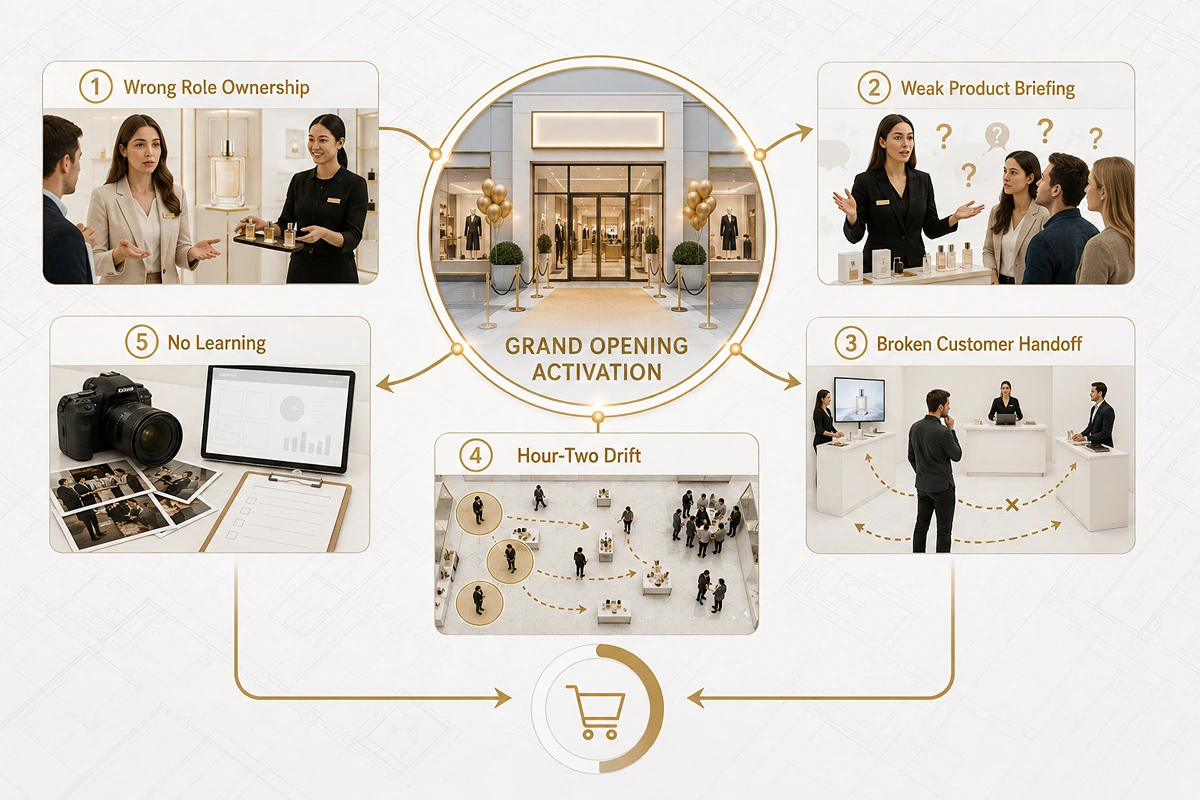
Once foot traffic stops being the win, the next question is where the conversion broke. Most grand openings do not fail in one dramatic moment. They fail through small staffing mistakes that look harmless during the event but show up clearly in the results.
1. The wrong person owns the wrong moment.
A friendly greeter gets pushed into product explanation. A product rep gets stuck handing out samples. A data-capture person ends up answering basic questions. This is why mapping event staff roles before the launch matters.
2. Brand ambassadors are briefed on energy, not product depth.
Energy can stop someone. It cannot answer, “Why should I buy this?” or “How is this different?” For a retail launch, brand ambassadors need product context, objections, audience cues, and a clear next step.
3. No one owns the handoff.
A visitor shows interest, asks questions, and then leaves because no one knows whether to route them to a demo, signup, purchase, or sales conversation.
4. The team drifts after the first rush.
The first hour is controlled. By hour two, staff start reacting to the crowd instead of guiding it.
5. The recap has photos, not learning.
If the team does not collect objections, visitor comments, lead quality notes, or conversion blockers, the next launch starts from zero again.
Retail concepts like Nike House of Innovation show why structure matters. The store experience is built around movement, product discovery, and guided interaction. A grand opening with that kind of environment needs staff who understand flow, not just traffic.
CEO Excerpt
A grand opening can look successful from the outside because the room is full and the brand is getting attention. But attention is not the same as conversion. The real difference is whether the staff know how to stop the right people, explain the offer, capture the next step, and keep the floor moving once the rush starts. - Daniel Muersing
The Staffing Map Most Grand Openings Never Build
After the failure points are clear, the fix is not “hire more people.” The fix is giving every person a conversion job. A grand opening team should work like a simple visitor path:
stop the right visitor → qualify interest → explain the product → capture the next step → route serious interest
That is the difference between general promotional help and conversion-focused brand activation staffing. One creates activity. The other creates movement.
At a retail opening, one person should own the first stop near the entrance. Another should qualify whether the visitor is a casual browser, potential buyer, influencer, local partner, or press contact. A demo specialist should handle deeper product questions. A data-capture person should protect signup quality. An activation lead should watch the whole floor and move staff when the crowd pattern changes.
In a launch environment, the experience gets the pause. The staffing model decides whether that pause becomes a demo, signup, sale, or follow-up. This is also how strong experiential marketing works: the moment is designed, but the staff turns it into action.
Conversion Insight
A grand opening does not need staff who are simply “around.” It needs staff who know what they are moving each visitor toward.
When Brand Ambassadors Have Energy But No Answers
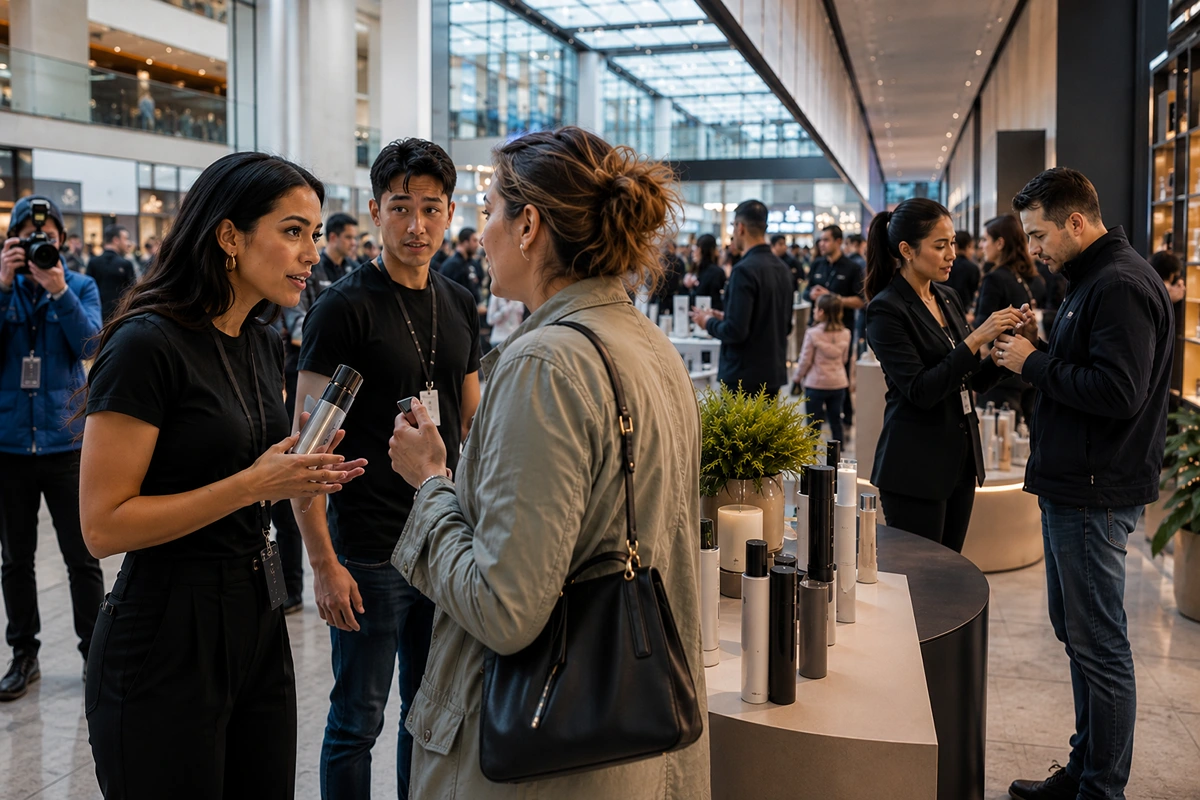
Even with the right roles in place, the launch can still fall apart if staff only get a surface-level brief. A lot of grand opening teams are told the brand story, dress code, and general vibe. That is not enough. Visitors ask sharper questions: “What makes this different?” “Is this available today?” “How much is it?” “Can I try it?” “Where do I sign up?”
That is where unprepared staff starts to sound thin. A strong grand opening brief should give brand ambassadors the conversation, not just the campaign line.
GRAND OPENING STAFF BRIEF
- Product: What it is, who it is for, why it matters
- Audience: Who to prioritize and who to route quickly
- Objections: Price, timing, comparison, quality, availability
- Demo: Short version, deeper version, handoff point
- Data: What counts as a qualified lead or signup
- Escalation: Who handles VIPs, complaints, press, or serious buyers
This is why brands like Lululemon put so much weight on in-store educators, not just retail staff. The person representing the brand has to explain the product in a way that fits the customer standing in front of them.
Briefing Insight
Energy gets people to pause. Product fluency helps the conversation turn into a signup, sale, demo, or return visit.
Hour Two Is When the Floor Starts Slipping
The first hour usually looks strong. Staff are fresh, the crowd is curious, and everyone still remembers the plan. The real test starts after the first rush.
By hour two, the greeter may be stuck in a long conversation. The demo person may start rushing. Lead capture may get skipped because the table is crowded. Samples may pull the team away from signups. The activation still looks busy, but the conversion path starts breaking.
This is common in retail openings and pop-up launches because the crowd does not move evenly. A rush may hit after a local influencer posts, after a nearby event ends, or when people start gathering around a giveaway. At that point, street team marketing and in-store activation start to overlap: staff has to read the crowd, shift positions, and keep the right people moving toward the next step.
Experiential-heavy events like SXSW show how quickly crowd patterns can change. People move between panels, pop-ups, lounges, and brand experiences all day, so a static staffing plan can miss the best traffic moments.
At a grand opening, the activation lead should check for drift every 30–45 minutes: who is staying in position, where visitors are slowing down, whether the demo is too long, and whether lead capture is still clean.
Drift Insight
A grand opening can fail when the crowd gets bigger and the team stops following the conversion path.
What to Track Before the Crowd Walks Out
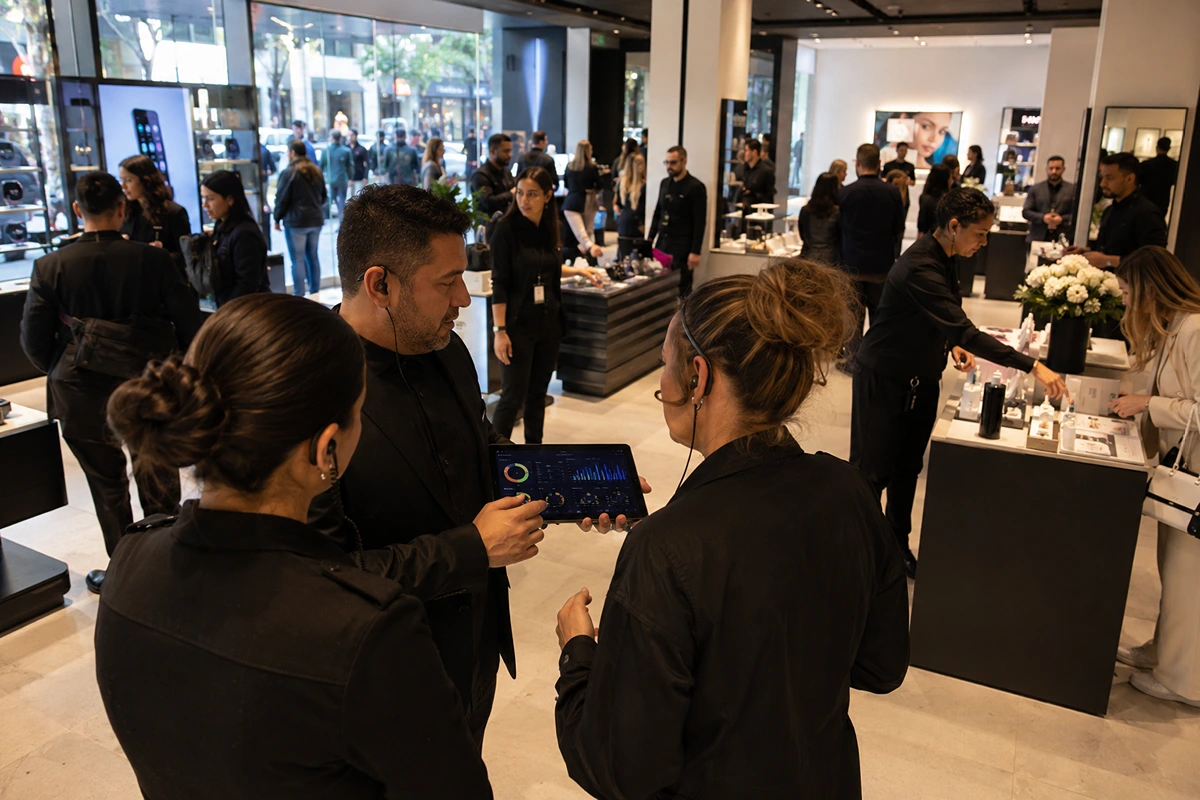
Once staffing drift starts, the fix is not waiting for the recap deck.
The team should watch conversion signals while the grand opening is still happening. If signups are weak by hour two, change the qualifying question. If demos are too long, shorten the opener. If one zone is getting better visitors than another, move staff before the rush is over.
Track the signals that actually help the team adjust:
- qualified conversations
- demo completions
- signup or lead capture rate
- sample-to-signup ratio
- objections heard more than once
- average dwell time
- staff position compliance
- visitor comments worth saving
This is where activation ROI becomes useful. ROI is not only a post-event number. It should help the team change the floor plan, opener, staffing position, or handoff before the crowd leaves.
Shopify’s retail metrics guidance makes the same point in a retail context: traffic only becomes useful when connected to conversion, customer behavior, and revenue signals. A grand opening should work the same way. Foot traffic is the top of the funnel. Staff moves the right visitors deeper.
How Many Staff Do You Need When Every Interaction Takes Time?
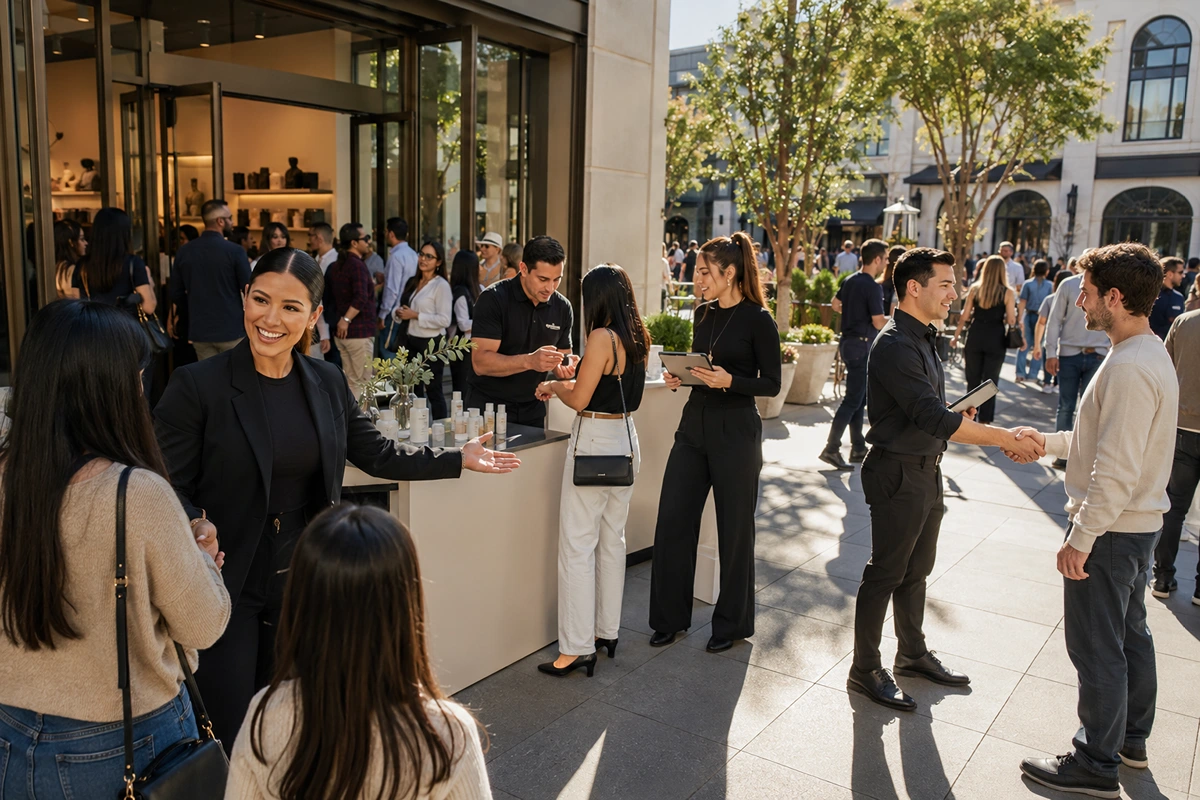
Once you know what to measure, the staffing question gets easier.
Do not start with “How many people will show up?” Start with what you need those visitors to do. A grand opening built around light awareness needs a different team than one built around demos, signups, consultations, sampling, or product education.
Use this as a planning starting point:
For example, a 1,000-person opening with simple samples may not need the same staffing depth as a 1,000-person opening where visitors need to try the product, ask questions, scan a QR code, and join a loyalty program. The second event needs tighter coverage because every interaction takes longer.
This is where event staffing ratios should be tied to the activation goal, not just the crowd estimate. The deeper the conversion ask, the more staff you need per visitor.
Staffing Insight
A grand opening with 1,000 visitors is not one staffing problem. It depends on whether you want people to pass through, pause, try, sign up, buy, or come back.
Do Not Staff the Crowd; Staff The Outcome Instead.
Grand opening brand activation events do not usually fail because no one showed up. They fail because the team was built to manage attention, not turn that attention into something measurable.
If the goal is awareness, staff should create easy first contact. If the goal is product trial, staff should protect the demo flow. If the goal is lead capture, someone has to own data quality. If the goal is sales or appointments, the handoff has to be clear before the doors open.
A strong event staffing plan should define the visitor path before the launch starts: who stops people, who qualifies them, who explains the offer, who captures the next step, and who watches the floor when the first plan stops matching the crowd.
EventStaff helps brands build grand opening teams around the moments that decide conversion: first contact, product explanation, lead capture, floor movement, and follow-up quality.
Ready to elevate your next event?
Join thousands of event planners who trust EventStaff.com for reliable, professional staffing solutions.
Trusted by event professionals nationwide
1k+
Events Staffed
2 million+
Guests Served
97%
Positive reviews


.webp)
.jpg)