
Should You Use Temporary Event Staffing or Hire Permanently?
Temporary event staffing sounds simple until the quote lands in your inbox.
For most event planners, the decision comes down to three things: how much time you have, what kind of event you are running, and how many roles you need to fill at once. The Bureau of Labor Statistics describes meeting, convention, and event planners as people who coordinate services, locations, costs, and attendee experience, which is exactly why staffing belongs inside the planning conversation, not at the very end.
Executive Summary
Temporary event staffing should not start with hourly rates. It should start with timeline, event type, staff count, role complexity, and risk. This guide helps event planners decide when temporary staffing fits, when permanent or internal staff are safer, and how to evaluate vendors before approving a quote.
Your Event Date May Have Already Made the Staffing Decision
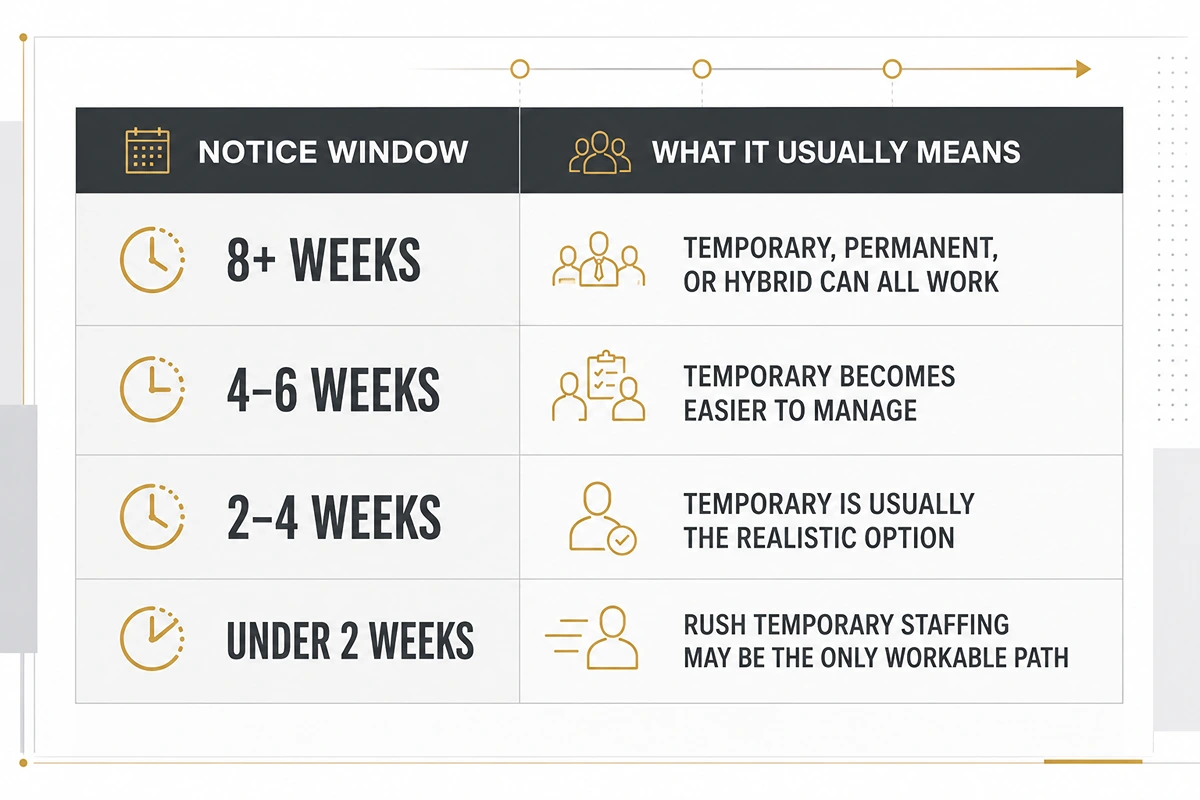
Most hiring managers start with the hourly rate. That is understandable, but the clock usually matters more than the rate. Permanent hiring only works when you have enough time to recruit, interview, onboard, schedule, and train people before the event. That process can make sense for a venue that needs the same hospitality team every weekend. It starts to break down when the event is in two weeks and the staff are only needed for three days.
The Booth Was Approved, but the team was not.
Picture a B2B company getting final approval for a trade show booth 12 days before a major expo in Las Vegas. The booth is already paid for. The sales team is flying in. The problem is the booth still needs two brand ambassadors to pull traffic from the aisle and one lead capture assistant to keep CRM data clean, one product demo support person, and one floater for breaks, water runs, and booth resets.
Hiring permanent staff for that would be pointless. By the time interviews, paperwork, onboarding, and training are done, the show floor is already closing.
This is where temporary event staffing makes sense. Trade show staffing agencies commonly cover roles like booth staff, brand ambassadors, lead retrieval support, product demo help, registration desks, and crowd direction. TempGuru notes standard trade show staffing lead times around 2–4 weeks, with urgent fills possible in 2–3 days for some markets.
For a company that needs quick booth support, temporary staff can handle the event-specific work while the internal sales team focuses on product conversations. EventStaff’s guide to booth staffing explains how booth teams can separate sales conversations from support roles like greeting, scanning, and aisle engagement.
Timeline Check
CEO EXCERPT
The mistake I see is treating temporary event staffing like extra labor instead of a timing decision. If your booth, activation, or festival needs people faster than you can recruit and train them, temporary staff are not a luxury. They are the model that fits the event. - Daniel Muersing
Before You Compare Quotes, Answer These 3 Staffing Questions
Temporary event staffing usually makes sense when the work is urgent, short-term, and easy to brief.
Before comparing quotes, ask three questions:
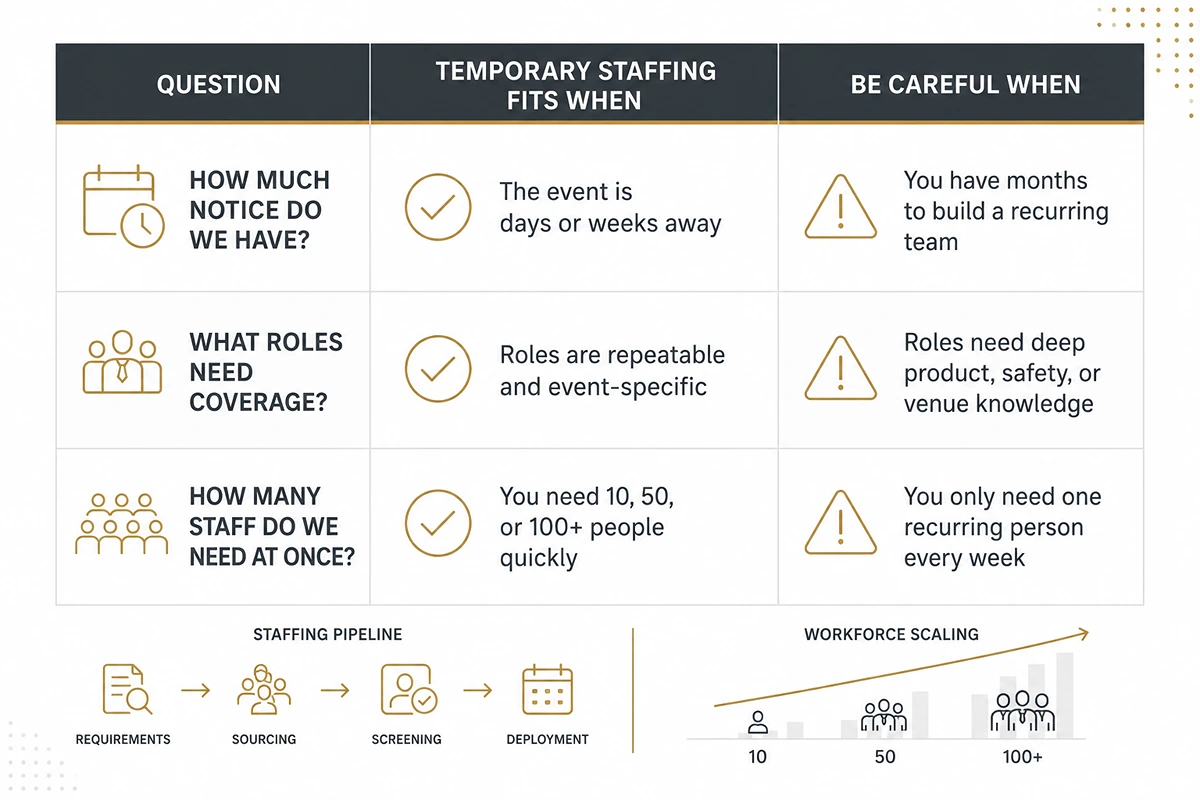
Think about a CES exhibitor in Las Vegas. The internal team may know the product, sales goals, and customer conversations. But they may still need temporary event staff for booth greeting, badge scanning, aisle traffic, material resets, and break coverage. CES exhibitors already deal with show manuals, floor plans, registration, service vendors, and venue requirements, so temporary staff can protect the booth team from getting buried in support tasks through exhibitor resources.
The key is role separation. Your internal team should handle the conversations that require product knowledge. Temporary staff should handle the event-specific support roles that can be trained before doors open. This guide to event staff roles can help separate greeters, floaters, registration support, booth staff, brand ambassadors, and hospitality roles before the event team starts assigning people randomly.
Planner Insight
Temporary staffing works best when the role can be explained clearly before the event, the need is short-term, and the headcount is bigger than your internal team can absorb.
When Permanent Hiring Will Finish After the Event Is Over
The easiest way to choose between permanent and temporary event staffing is to look at the calendar. Permanent hiring needs runway. You need time to post the role, screen candidates, run interviews, complete paperwork, train the team, and build the schedule. That works when you are staffing a recurring venue program or a year-round event operation. It does not work as well when the event is already on the calendar, and the team gap is happening now.
A good example is a major show like the NAB Show in Las Vegas. Exhibitors are not only thinking about booth staff. They are also dealing with booth access, registration, vendor coordination, onsite logistics, exhibitor rules, and show floor timing through exhibitor access resources. If a company realizes three weeks out that it needs extra booth support, registration help, crowd direction, or runners, permanent hiring is usually too slow.
That does not mean every role should be temporary. The internal team should still own the sales strategy, product conversations, sponsor relationships, and executive meetings. Temporary staff is better used for the roles that support the event flow: greeting, scanning, directing, resetting, escorting, and covering breaks.
For larger planning, this is why it helps to build an event staffing plan before the quote stage. The plan tells you which roles can be filled temporarily and which roles need to stay with your internal or permanent team.
Field Note
When an event is less than four weeks away, temporary staffing is often not the backup plan. It is the only staffing model that matches the timeline without dragging your internal team into last-minute hiring.
Some Events Are Built for Temporary Staff, Others Are Not
Temporary event staffing works best when the role is short-term, repeatable, and easy to explain before the event starts.
That is why it fits some event types better than others. A street team activation, trade show booth, festival entrance, or corporate check-in desk can often use temporary staff well because the job is clear: greet, scan, guide, reset, sample, support, or move people through a space.
A venue hospitality program is different. If the same guests return every week, the service standards are complex, or the staff needs deep knowledge of the property, permanent or recurring staff may make more sense.
When a Brand Activation Needs a Crew for Days, Not Months
Think about a brand activation during SXSW in Austin. The event environment is fast, crowded, and spread across multiple venues. Brands are often trying to capture attention in a short window, manage guest flow, support product demos, and keep the experience moving while people are walking between panels, parties, pop-ups, and sponsored events. SXSW itself describes the event as spanning conferences, festivals, exhibitions, and networking experiences, which is exactly why temporary staff can be useful for brand-side teams that only need a large event crew for a few days.
For a brand activation, temporary staff might support guest greeting, line direction, product sampling, QR code scans, lead capture, booth resets, crowd flow, and break coverage for the core brand team. This is different from hiring permanent staff because the activation is not an ongoing operation. The brand needs a trained event crew for a specific place, date, audience, and campaign goal.
That is where temporary staffing is useful. It gives the internal team more coverage without forcing them to hire people for a role that disappears after the event. For brands building pop-ups, sampling moments, or experiential campaigns, EventStaff’s retail activation guide shows how staffing connects to foot traffic, guest engagement, and conversion points.
Corporate conferences often need a hybrid model. The internal team owns speakers, sponsors, VIPs, and the agenda. Temporary staff can support registration, room monitoring, wayfinding, and guest questions. EventStaff’s conference staffing mix guide explains how registration teams, ushers, and room monitors support different parts of the guest journey.
Event-Type Insight
Temporary event staffing is not right because an event is busy. It is right when the work is short-term, repeatable, and teachable before doors open. The more the role depends on continuity, certification, or deep brand knowledge, the more careful you need to be.
When Event Scale Changes the ROI of Temporary Staffing
Temporary event staffing is not always about saving money. For many events, the real value is that you can scale up without carrying the team after the event ends.
That matters more as the event gets bigger.A 300-person corporate reception may only need a few check-in staff, greeters, and floaters. Temporary staffing is simple there because the event is short, the roles are clear, and permanent hiring would make no sense.
A 10,000-person festival is different. Now the staffing need spreads across entrances, guest questions, sponsor activations, backstage areas, VIP zones, vendor support, and post-event exit flow. The event may only run for a weekend, but the labor needs spike across multiple zones at the same time.
When a Weekend Event Needs a City-Sized Staffing Surge
Think about a large U.S. festival like Lollapalooza in Chicago. The City of Chicago notes that the event runs across four days in Grant Park from 11 a.m. to 10 p.m. daily, with city agencies preparing around safety, transit, weather, and crowd awareness.
That kind of event cannot be staffed like a small private event. Even when the core planning team is permanent, the operational labor has to expand for the event window. You may need temporary staff for guest flow, brand activations, sponsor areas, entrance support, directional help, hospitality zones, runners, and cleanup-adjacent support.
This is where scale changes the decision. A permanent core team can own the plan, but temporary staff handle the surge.
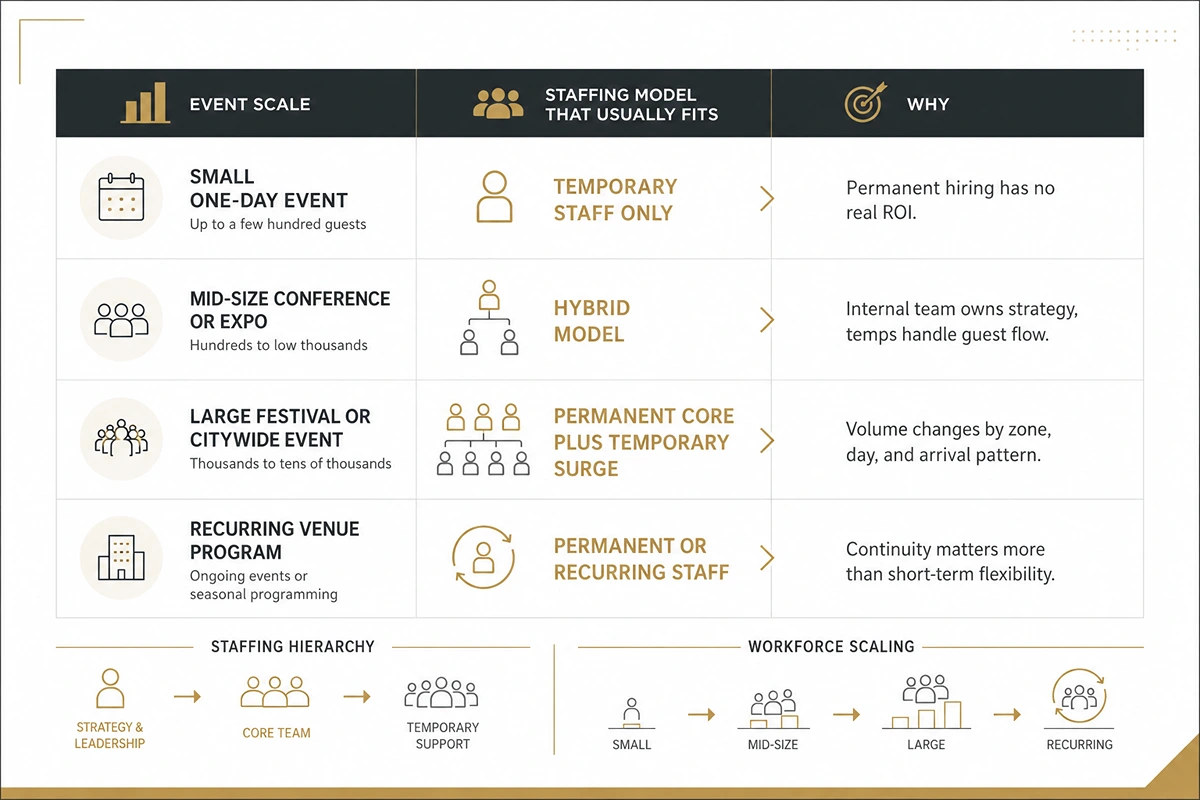
For large events, the better question is not “Can we hire cheaper?” It is: “Can we scale coverage fast without weakening the event?” That is where temporary staffing becomes useful.
If the event has moving parts across registration, hospitality, sponsor areas, and crowd movement, a clear event staffing plan helps separate core roles from surge roles before the quote stage. For large events with moving parts between zones, runners and floaters can also reduce delays because they cover gaps, reset areas, and support teams without pulling assigned staff away from their posts.
Before You Approve the Quote, Check the Risk Behind the Role
Temporary event staffing can solve speed and scale, but it should never be treated like “just send bodies.”OSHA says temporary workers have the same right to a safe workplace as permanent workers, and that both the staffing agency and the host employer share responsibility for maintaining that environment. That matters for events because temporary staff are often placed into fast-moving environments: entrances, crowds, alcohol service areas, vendor zones, backstage spaces, and guest-facing check-in points.
For example, a temporary staffer helping with badge scanning at a corporate conference may need clear rules around guest data and escalation. A festival worker near an entrance may need crowd-flow instructions and a supervisor they can reach quickly. A bartender or food service worker may need certification, local compliance checks, or role-specific training. A venue hospitality role may need more continuity because the guest experience depends on knowing the property, the service standards, and the regular operating rhythm.
Use this checklist before you contact a vendor:
- Notice window: Do you have enough time to hire and train internally, or is the event already too close?
- Event type: Is this a festival, trade show, activation, conference, venue program, or hospitality-heavy event?
- Scale: Do you need 5 staff, 50 staff, or 500 staff at the same time?
- Role complexity: Can the role be explained in a pre-event briefing, or does it require deep product, safety, venue, or compliance knowledge?
- Guest risk: Will temporary staff handle guest data, alcohol, crowd flow, VIP areas, or safety-sensitive situations?
- Training needs: Can the team be briefed in hours, or does the role need weeks of onboarding?
- Frequency: Is this a one-time event, a seasonal surge, or a recurring operation?
Where Temporary Staff Can Help or Create Risk
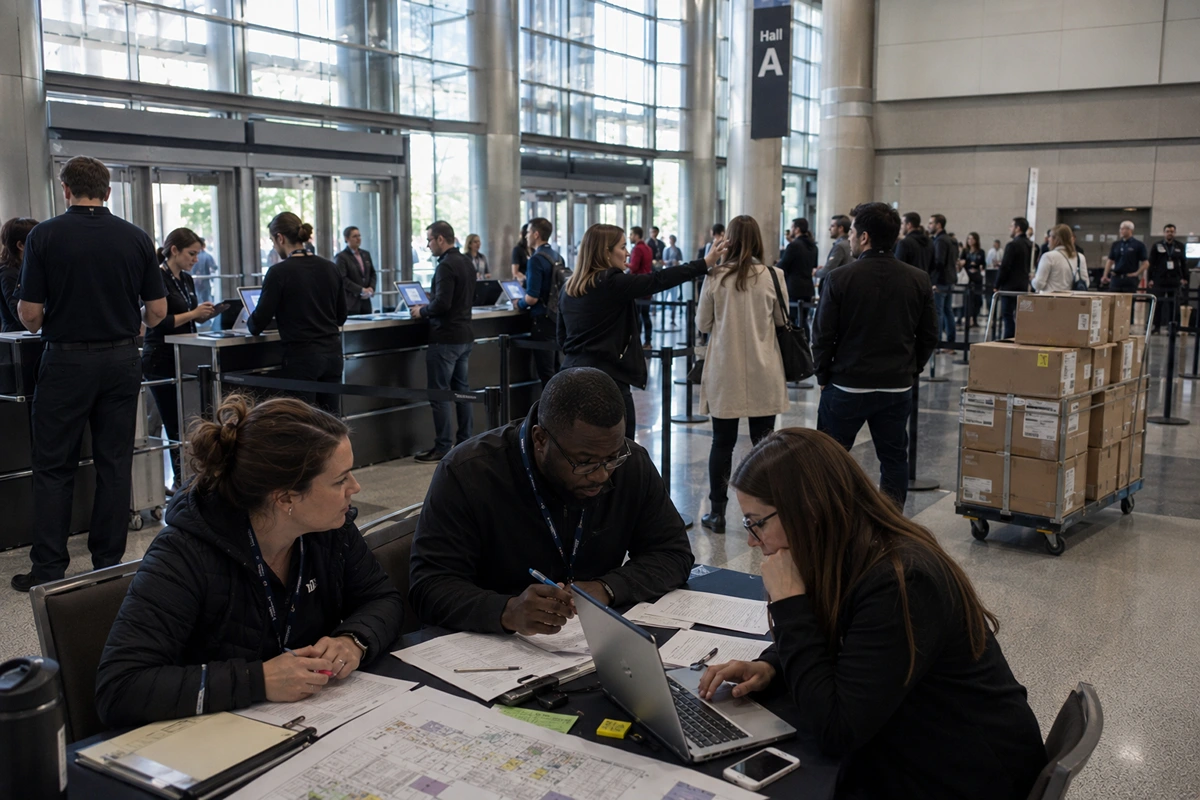
Think about a large U.S. public event with heavy arrivals, lines, sponsor areas, food zones, and exits. Temporary staff may be useful across greeting, wayfinding, scanning, sponsor support, and guest questions. But the closer staff are placed to crowd pressure points, the more planning matters.
OSHA’s crowd management guidance says employers should plan for crowd-related risks before special events, including trained workers, clear communication, emergency planning, and enough staff in busy areas. That is exactly where temporary staffing can help or hurt. The right temporary team adds coverage. The wrong one creates confusion at the worst possible moment.
So the decision is not only about filling open shifts. It is about matching the role to the risk. If your event has entrances, line pressure, fan movement, or exit surges, this guide to crowd management at stadium events gives more context on why placement and communication matter as much as raw headcount.
If the event is short-term, the roles are clear, the timeline is tight, and you need a surge team quickly, temporary event staffing is probably the right choice. If the role needs deep internal knowledge, repeated guest relationships, heavy compliance, or months of training, permanent or recurring staff may be safer.
Plan Your Event Staffing the Right Way
Choosing between temporary and permanent staffing is not just a hiring decision it’s an event success decision.
If you’re planning a trade show, activation, or large-scale event, the fastest way to avoid staffing gaps is to build a clear staffing plan before requesting quotes.
👉 Need help mapping roles, timelines, and staffing models?
Request a custom event staffing plan and get matched with trained staff who fit your event, timeline, and scale.
Ready to elevate your next event?
Join thousands of event planners who trust EventStaff.com for reliable, professional staffing solutions.
Trusted by event professionals nationwide
1k+
Events Staffed
2 million+
Guests Served
97%
Positive reviews