
CEO Excerpt
"In large-scale event operations, rigidity is the enemy. Event runners and floaters provide the essential elasticity that allows a static run-of-show to survive the dynamic reality of a live audience." — CEO, EventStaff
Event runners and floaters are the operational buffer that keeps large venues from stalling when pressure hits. At scale, no run of show survives first contact with live crowds, split floors, and overlapping sessions. Planners feel that risk immediately because failure is public, cumulative, and fast.
When designed correctly, event runners and floaters serve three critical functions:
- Absorb task overflow when core teams are overwhelmed.
- Resolve gaps in minutes to prevent service delays.
- Keep supervisors anchored to oversight instead of firefighting.
Large events rarely fail in one dramatic moment; they fail through accumulation. A missing cable pushes a speaker late, a delayed water restock pulls staff off post, or a single absence during an entry spike widens a queue that never fully recovers.
The fix is not adding more managers. It is controlled mobility, disciplined dispatch, and trained event runners and floaters who close problems before they propagate. For a deeper dive into the risks of underestimating these roles, read about poor staffing costs.
Event runners and floaters are the operational buffer that keeps large venues from stalling when pressure hits. Planners know the anxiety of watching a run-of-show teeter as rooms fill, speakers get delayed, and overlapping sessions collide because every missed handoff or absent staffer can snowball into visible service gaps and reputational risk, and these hidden costs of poor staffing are detailed in EventStaff’s analysis of large-scale events. At scale, no run of show survives first contact with live crowds and split floors unless small issues are absorbed before they cascade. Event runners and floaters serve three critical functions: absorbing task overflow when core teams are overwhelmed, resolving gaps in minutes to prevent service delays, and keeping supervisors anchored to oversight instead of firefighting.
Executive Summary
Event runners and floaters are not merely extra hands; they act as the operational fail-safe that prevents minor logistical gaps from escalating into systemic service failures, ensuring supervisors remain focused on high-level strategy rather than firefighting.
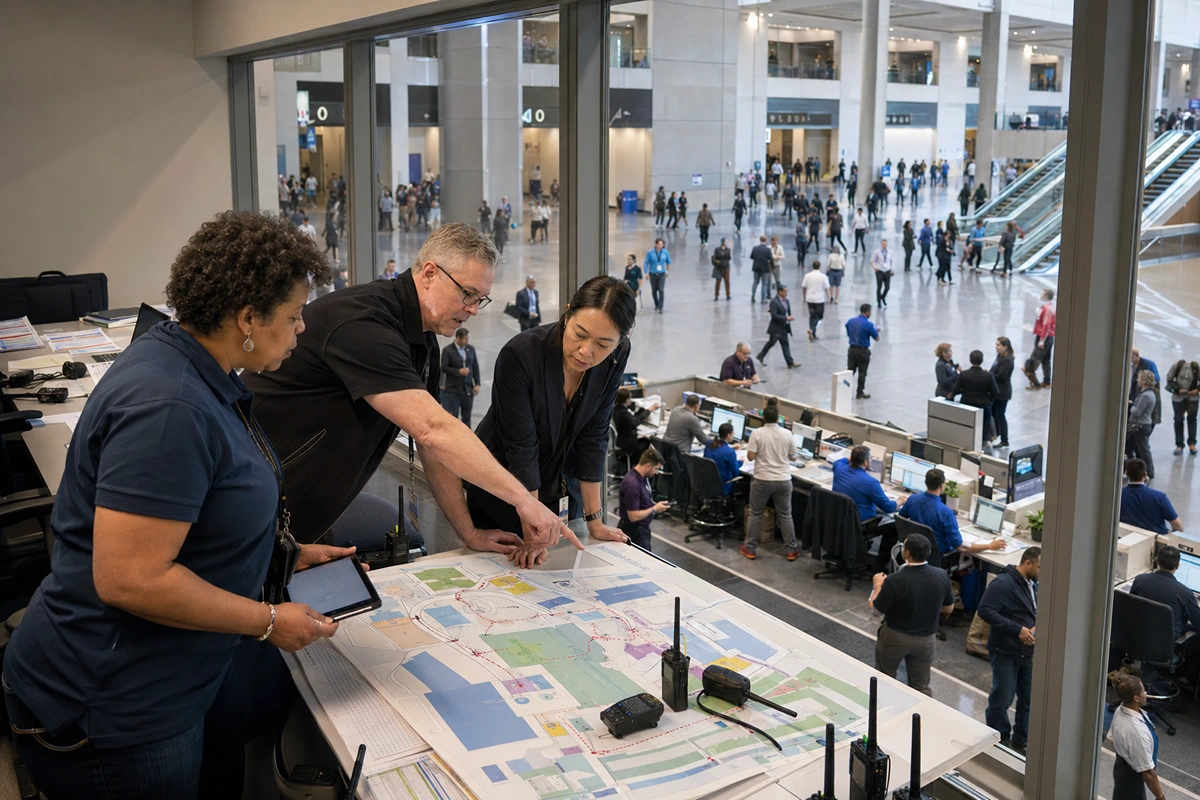
The Runner–Floater Control Model in Practice
.webp)
At high-volume events, event runners and floaters function as a single control system rather than interchangeable labor. Their roles are distinct:
- Runners: Execute defined tasks with speed and precision (e.g., equipment transport, message relay).
- Floaters: Stabilize coverage when assumptions break (e.g., covering breaks, managing unexpected crowds).
- Supervisors: Stay fixed, routing decisions instead of chasing symptoms.
Operationally, one runner can support 8–12 rooms when radio discipline is enforced and walking paths are mapped in advance. However, that ratio collapses when approvals bottleneck or calls come in unstructured.
Floaters are positioned differently. Event runners and floaters are typically staged near known pressure points:
- Registration banks
- Keynote transitions
- ADA access routes
- High-turnover session blocks
The model works because authority stays centralized. Supervisors dispatch, runners close loops, and floaters absorb surges. When event runners and floaters are deployed this way, execution remains predictable even as guest behavior shifts in real time. Planners can reference global event standards to see how elasticity improves ratings.
Runners Handle Immediate On-Site Needs Before They Escalate
Runners exist to eliminate micro-failures before they interrupt flow. Issues like missing supplies, reprinted badges, urgent speaker requests, or last-minute AV connectors are not strategic decisions. They are time-bound fixes where each five-minute delay compounds downstream impact. That is why event runners and floaters are trained to act within scope, not wait for layered approvals.
Venues, rising labor cost bands and minimum shift rules mean runners must close issues on the first pass. Backtracking burns payroll and attention. Effective teams of event runners and floaters:
- Verify inventory locations immediately.
- Confirm room assignments proactively.
- Return with exactly what is needed on the first trip.
This ensures sessions stay on schedule and supervisors maintain visibility.
Floaters Reinforce Zones During Surges and Coverage Gaps

Floaters solve a different class of risk. They stabilize people flow when staffing models encounter reality. A floater is not idle labor; they are held in reserve to:
- Cover staff breaks seamlessly.
- Reinforce doors during peak entry.
- Respond to short-notice ADA needs without triggering reassignments.
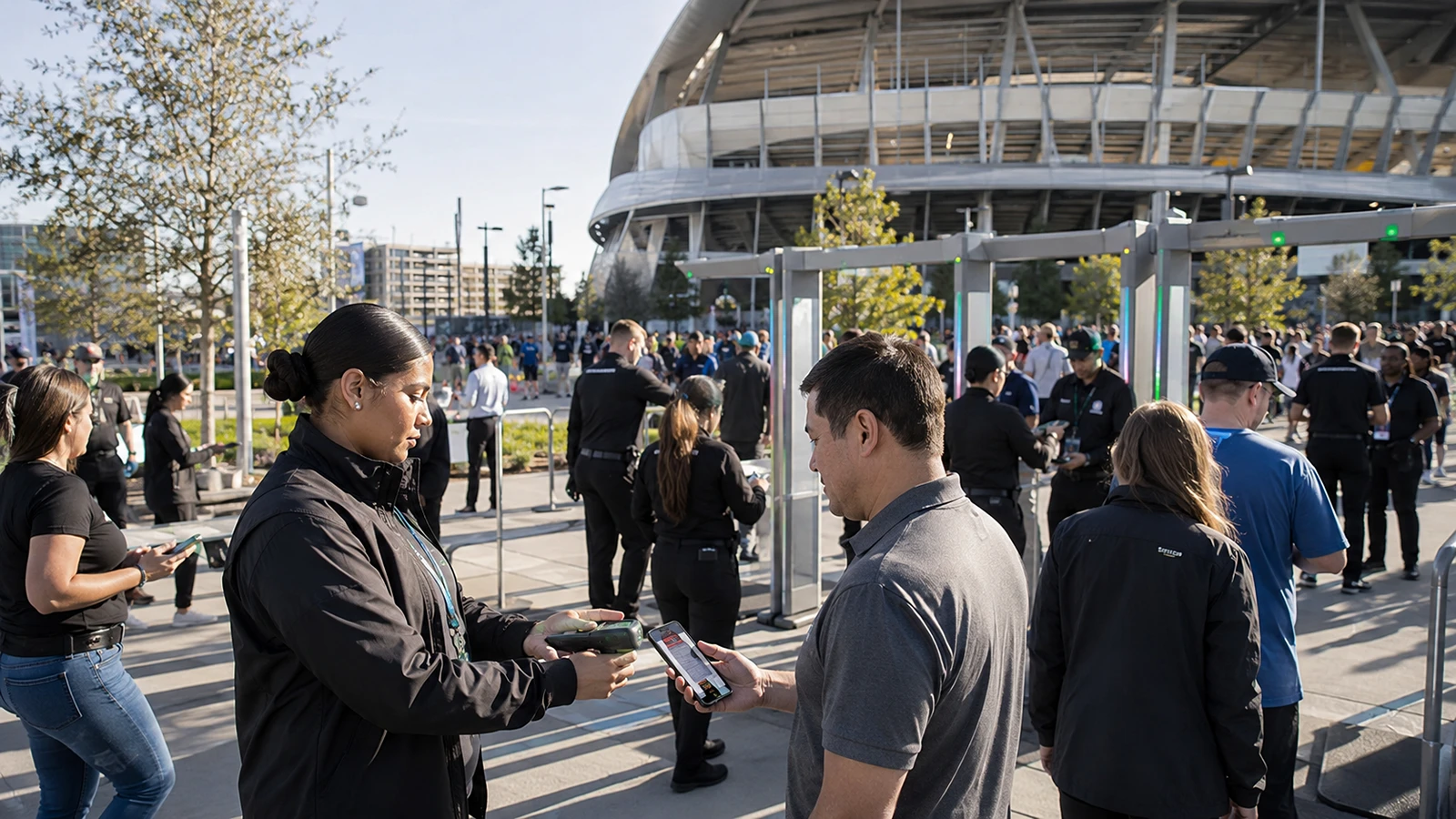
This is where event runners and floaters quietly protect guest experience. At conferences with multiple entry points, a single registration surge can pull staff from secondary areas and create new bottlenecks.
Event runners and floaters move zone to zone based on live conditions, not static schedules. One correctly placed floater can prevent a brief delay from becoming a persistent complaint line. For insights on managing crowd movement, consider stadium event flow.
Runners and Floaters Keep Multi-Room Events in Sync
Multi-room venues break down when coordination fragments. Without mobile support roles, supervisors become messengers instead of managers, leaving floors to solve minor issues and losing oversight where risk concentrates.
Event runners and floaters preserve supervisory control by handling:
- Complex operational handoffs.
- Supply dispatch across large distances.
- Signage shifts for room changes.
- Cross-floor support in multi-level venues.
With clear call signs and task hierarchies, supervisors route work instead of absorbing it. In union venues, where role boundaries are enforced and delays escalate quickly, event runners and floaters protect both compliance and timing. Industry reports regarding workforce management trends highlight this need for agility.
Show-Day Stabilization Checklist
To ensure your operations remain robust, use this deployment checklist:
- One runner per 8–12 active rooms: Adjusted for distance and vertical travel.
- One floater per major entry point: Or surge-prone zone during peak windows.
- Single supervisor dispatch channel: With defined call signs for clarity.
- Pre-mapped supply caches: And established AV fallback paths.
- Clear escalation thresholds: So small issues never reach senior management.
When event runners and floaters are staffed against this checklist, staffing becomes a control mechanism rather than a hope-based buffer.
Why Volunteer and Intern Models Break Under Load
Volunteer and intern models fail under pressure because they lack situational authority and operational context. They often:
- Hesitate to make decisions.
- Escalate unnecessarily to leadership.
- Wait for permission while problems compound.
By the time help arrives, the impact is already visible. EventStaff trains event runners and floaters to identify failure points early and act within defined boundaries. They understand zone maps, supply chains, and communication discipline. Hybrid scheduling tools help forecast demand, but human judgment still closes gaps when reality diverges.
The Strategic Value of Runners and Floaters
Without these roles, small issues stack into visible disruption. With event runners and floaters, operations stay elastic, supply levels stabilize, and guest flow recovers quickly after pressure spikes. EventStaff’s event runners and floaters keep venues stable, supplied, and delay-free. If you need a staffing partner with built-in buffers, backups, and real-time dispatch, you can get a quote today to secure your team. Operations that rely on hope fail; operations that rely on EventStaff succeed.
Ready to elevate your next event?
Join thousands of event planners who trust EventStaff.com for reliable, professional staffing solutions.
Trusted by event professionals nationwide
1k+
Events Staffed
2 million+
Guests Served
97%
Positive reviews