
CEO Excerpt
"Effective crowd management relies on predicting movement to maintain continuous flow. At Event Staff, we train our teams to read density patterns and adjust dynamically, ensuring safety protocols operate seamlessly to protect the fan experience." — CEO, Event Staff
When stadium gates open, crowd movement becomes an active operational system. Tens of thousands of fans often arrive within a narrow time window, and even small delays at security screening or ticket validation can quickly escalate into congestion, safety risks, and a poor guest experience. This is where structured crowd management at events becomes essential.
Effective stadium crowd management relies on advance planning, real-time coordination, and the disciplined deployment of trained stadium event staff. From managing ingress flow at entry gates to preventing concourse bottlenecks inside the venue, staffing decisions directly influence safety, compliance, and overall event performance.
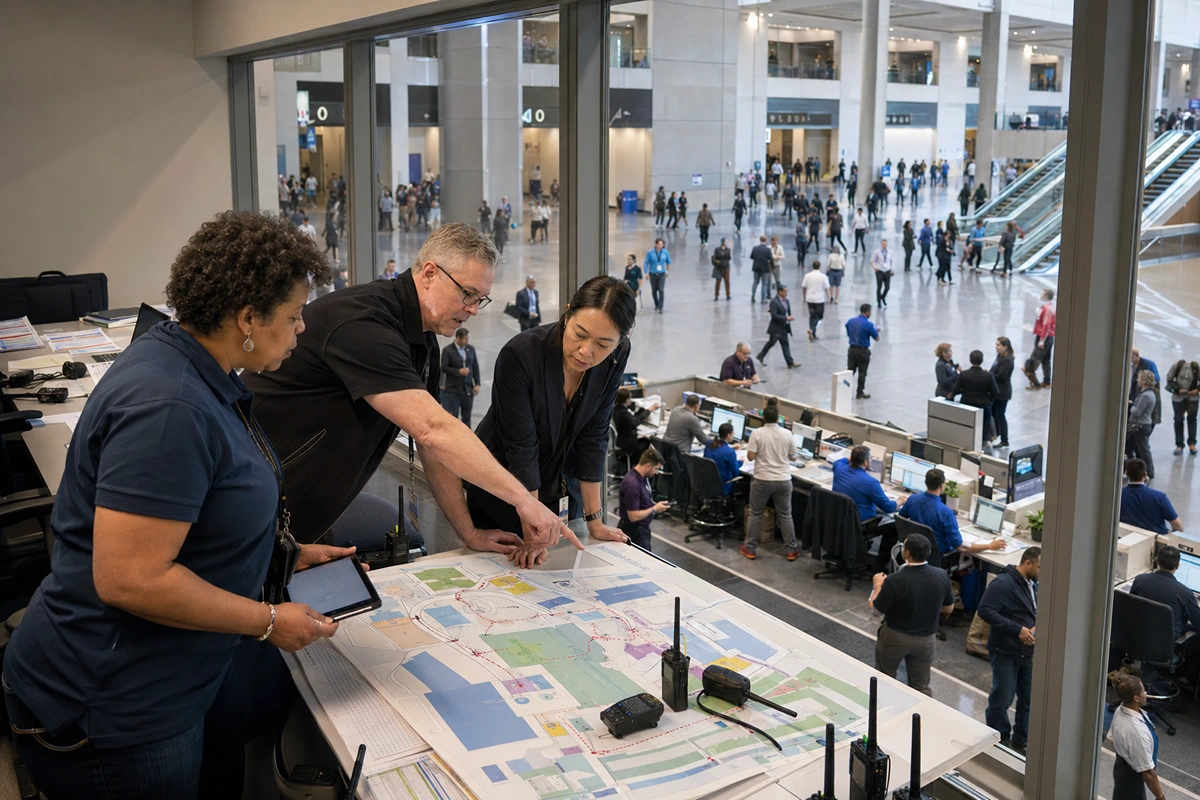
At large-scale sporting events and sold-out concerts, stadium event staff function as the front line of crowd control. Their role is to guide movement, maintain clear pathways, and respond immediately to density changes before issues escalate. When supported by the stadium security team and a clear command structure, professional staff transform unpredictable crowd behavior into a controlled, repeatable process.
This guide explains how crowd management works at stadium events, outlining the core stadium staff roles, common causes of congestion, and proven strategies used to maintain smooth entry, circulation, and exit at high-capacity venues.
Executive Summary
Stadium event staff function as the central nervous system of any large-scale venue, regulating crowd flow and mitigating risk by aligning specialized roles with high-density zones. By utilizing data-driven deployment strategies, venue managers can transform chaotic ingress into a predictable, safe operation that protects the guest experience.
Why is stadium crowd management critical for safety?
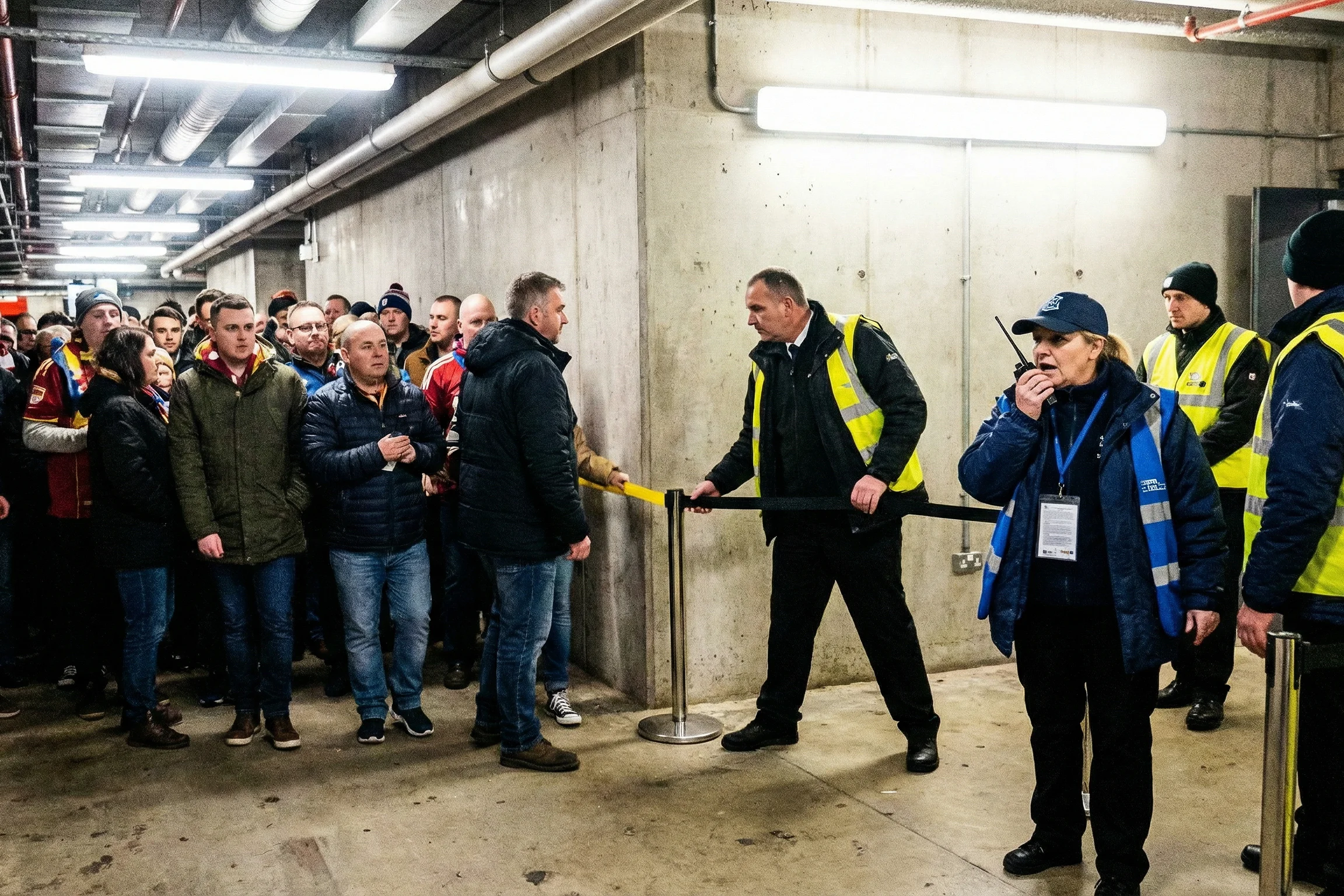
Stadium crowd management is a safety-critical function at any large-scale event. When crowd movement exceeds a venue’s designed capacity, risks increase rapidly, including blocked emergency routes, crowd surges, heat-related stress, and delayed emergency response. Effective stadium safety management focuses on prevention rather than reaction.
Professional crowd management at events is built around controlling flow during peak movement periods such as ingress, halftime, and post-event exit. Trained stadium event staff are positioned to identify early signs of congestion and intervene before conditions deteriorate.
Key safety outcomes of effective stadium crowd management include:
- Maintaining clear ingress and egress pathways at all times
- Monitoring density levels in concourses, stairwells, and seating transitions
- Reducing pressure at security screening and ticket scanning points
- Supporting the stadium security team with real-time situational awareness
When stadium staff are trained to read crowd behavior and respond quickly, they act as an early-warning system. This proactive approach allows venue operators to stabilize movement, protect guests, and ensure that safety protocols remain fully operational throughout the event.
What causes crowd bottlenecks at stadiums?
Crowd bottlenecks form when the volume of people moving through a space exceeds the flow capacity of that zone. At stadium events, this most often occurs at entry gates, bag check stations, ticket scanning lanes, and high-traffic concourse intersections. Without proper event crowd control, small slowdowns can quickly compound into large-scale congestion.
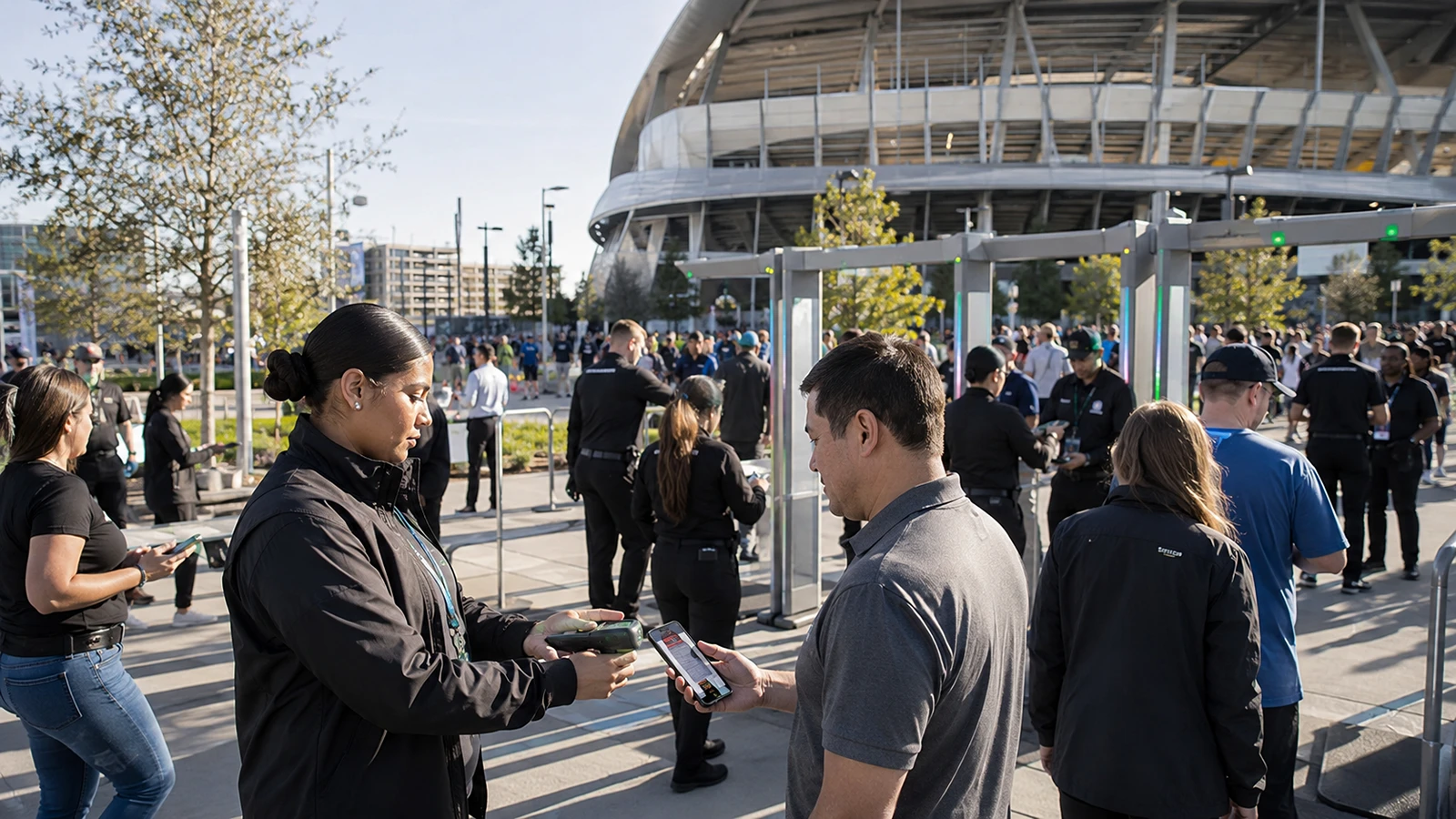
A common cause of bottlenecks is misalignment between security screening speed and ticket validation throughput. When these processes are not synchronized, lines build faster than they can be processed, placing additional strain on stadium event staff and the stadium security team.
Operational Benchmark
Bottlenecks most frequently emerge when throughput exceeds 40 to 50 people per minute per lane, particularly during peak ingress periods.
Early warning signs of developing congestion include:
- Lines are forming faster than expected at entry points
- Staff are unable to redeploy quickly to pressure zones
- Guest confusion around wayfinding, restricted areas, or alternate routes
For a deeper dive into stabilizing these high-pressure zones, read our analysis on queue management science.
How many staff do you need for a stadium event?
Stadium staffing ratios depend on venue size and risk, typically ranging from 1 staff member per 100 to 250 guests depending on event complexity.
Precise calculation is essential. Assign stadium event staff based on stadium size and expected crowd density.
Recommended Stadium Staffing Ratios:

Data Insight: According to 2025 industry benchmarks from the Event Safety Alliance, increasing gate staff by just 10% during ingress reduces average entry time by nearly 18% due to faster screening throughput.
What are the core roles in stadium crowd management?
Core roles include entry gate staff for access control, safety monitors for bottleneck prevention, and concourse teams for maintaining clear walkways.
To maintain control, group stadium event staff duties by function for clarity:
- Entry & Exit: Ticket scanning, gate control, directional guidance
- Safety Monitoring: Identifying bottlenecks, emergency response, and first aid support
- Concourse Flow: Concessions management, restroom access, signage guidance
- VIP / Special Areas: Escorting VIPs, restricted zone monitoring
Best practice: Assign a lead coordinator at a central ops desk to dispatch staff and monitor flow.
How should you assign staff zones in a stadium?
Assign staff to specific density zones with predictable patrol routes, using unassigned 'floaters' to respond instantly to sudden crowd surges.
Once you have your roles, map them to specific zones or seating sections.
- Use predictable patrol routes for monitoring.
- Include floaters to handle sudden crowd surges or emergencies.
This reduces response times and improves coverage accuracy. If a specific gate gets slammed, floaters move in to open auxiliary lanes without leaving other zones unmonitored.
How do you manage staff breaks during peak ingress?
Effective break management requires overlapping shifts during peak ingress and using floater staff to cover rotations without leaving zones unmonitored.
Fatigue is a major risk factor in event crowd control.
Risk Metric: Recent OSHA safety data on high-stress environments indicates that incident response accuracy drops by ~22% after 4 hours of continuous standing without a break.
To combat this:
- Rotate high-demand zones to prevent fatigue.
- Overlap shifts during peak entry/exit periods.
- Use floaters to cover breaks while maintaining safety.
See how this applies specifically to Midwest venues in our guide on staffing arena events.
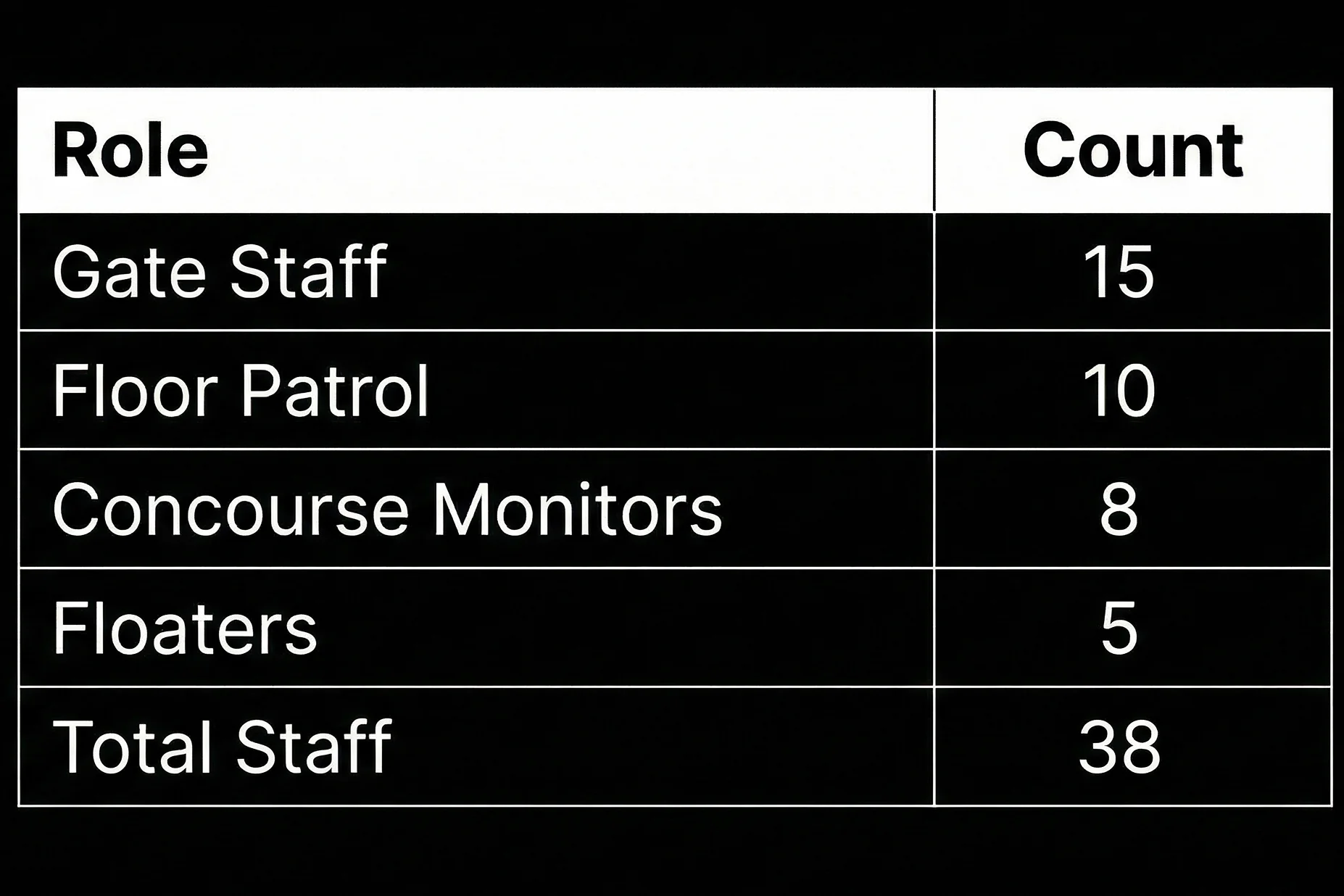
Example Crowd Plan: Mid-Sized Stadium
Scenario: 25,000-seat stadium, single entry concourse.
Plan Your Next Stadium Event With Operational Confidence
Crowd safety at stadium events is not accidental. It is the result of trained personnel, precise deployment, and disciplined execution across every phase of crowd movement. For high-attendance events, the quality and coordination of stadium event staff directly affect entry times, safety outcomes, and overall guest satisfaction. If you are planning a major sporting event or large-scale concert, align your staffing strategy with your venue layout, crowd volume, and risk profile. A professionally structured approach to crowd management at events helps reduce congestion, maintain compliance, and protect the fan experience from gate open to final exit. Get a quote today to secure experienced stadium event staff who specialize in crowd control, stadium staff roles, and compliant stadium safety management.
Ready to elevate your next event?
Join thousands of event planners who trust EventStaff.com for reliable, professional staffing solutions.
Trusted by event professionals nationwide
1k+
Events Staffed
2 million+
Guests Served
97%
Positive reviews