

CEO Excerpt
"Corporate event brand activations to deliver measurable business impact, not just visibility. Success is defined by qualified demand, sales-ready conversations, and clear pipeline influence that can be reviewed alongside other revenue channels."— CEO, Event Staff
Corporate event brand activation is no longer evaluated by foot traffic, booth energy, or social buzz alone. In 2026, leadership teams expect clear evidence of what changed because an activation happened and how it influenced qualified demand, sales conversations, or pipeline outcomes.
For brand managers, event marketers, and agency leads, this shift has raised the bar for how corporate brand activation strategy is planned, executed, and measured. A visually impressive activation that cannot demonstrate impact beyond awareness is now considered a risk, not a win.
This guide explains how to design and execute measurable brand activation events that move beyond exposure and deliver defensible brand activation ROI. It covers how brand activation event management connects on-site behavior to post-event outcomes through clear objectives, intentional experience design, disciplined data capture, and controlled execution on the floor.
By the end of this article, you will understand:
- What measurable ROI actually looks like for a corporate event brand activation
- Why awareness-only activations struggle to justify spend in 2026
- How staffing, flow, and supervision protect data quality under peak traffic
- Which activation formats convert engagement into trackable actions
- How to report brand activation ROI in a way leadership trusts
This is a practical framework for teams that need corporate brand activations to generate measurable business outcomes, not just attention.
Executive Summary
Corporate event brand activation in 2026 requires more than awareness. This guide explains how to design measurable brand activation events by aligning strategy, staffing, and data capture to produce defensible ROI that leadership can trust and scale.
What "measurable ROI" looks like for a corporate event brand activation
A measurable corporate event brand activation produces outcomes that can be tracked from on-site interaction through post-event revenue influence. In high-performing programs, every meaningful action on the floor leaves a usable signal that connects to follow-up, sales activity, or pipeline movement.
Measurable ROI is not a single metric. It is the result of multiple signals working together across the full lifecycle of the activation.

Core outcomes of a measurable corporate event brand activation
At a minimum, measurable brand activation ROI includes:
- Consented identifiers captured on-site
Badge scans, QR check-ins, or registrations that clearly explain the value exchange and meet consent expectations. - Engagement depth signals
Demo completion, dwell time bands, guided actions, or completed experience steps that show more than surface-level interaction. - Qualified leads are defined before the event
Clear qualification criteria tied to role, need, or buying stage, established before doors open rather than inferred after the fact. - Meetings that are held, not just booked
Completed conversations with sales or subject matter experts that reflect real intent. - Pipeline influence is measured within a predefined attribution window
Opportunities created or advanced using agreed rules that connect the activation to downstream revenue.
When these elements are connected end to end, leadership can clearly explain what changed because the corporate event brand activation happened. When even one is missing, reporting becomes interpretive instead of defensible, and brand activation ROI is harder to justify.
What you will learn in this blog
By the end, you will know how to design measurable brand activation events by:
- Setting goals that map to brand activation ROI, not vague impressions
- Building the experience backward from one primary outcome
- Designing data capture so it feels fair to guests and works under peak traffic
- Executing with staffing, flow control, and supervision that protect data quality
- Reporting ROI with clear definitions and metrics leadership trusts
A measurable corporate event brand activation creates a closed loop between on-site behavior and post-event outcomes. That means identifiers are captured with consent, engagement depth is tracked beyond surface interaction, qualified leads are defined upfront, meetings are held rather than just booked, and pipeline influence is tied to agreed attribution rules. If any one of these elements is missing, ROI becomes interpretive instead of defensible.
What makes an activation "successful" in 2026?
A successful corporate event brand activation is one where on-site behavior clearly connects to qualified follow-up, meetings are held, and revenue is influenced. Busy does not equal effective. Measurement does.
In 2026, success is defined by whether the activation produces usable signals that survive scrutiny after the event. That means leadership can answer a simple question with confidence: What changed because this activation happened?
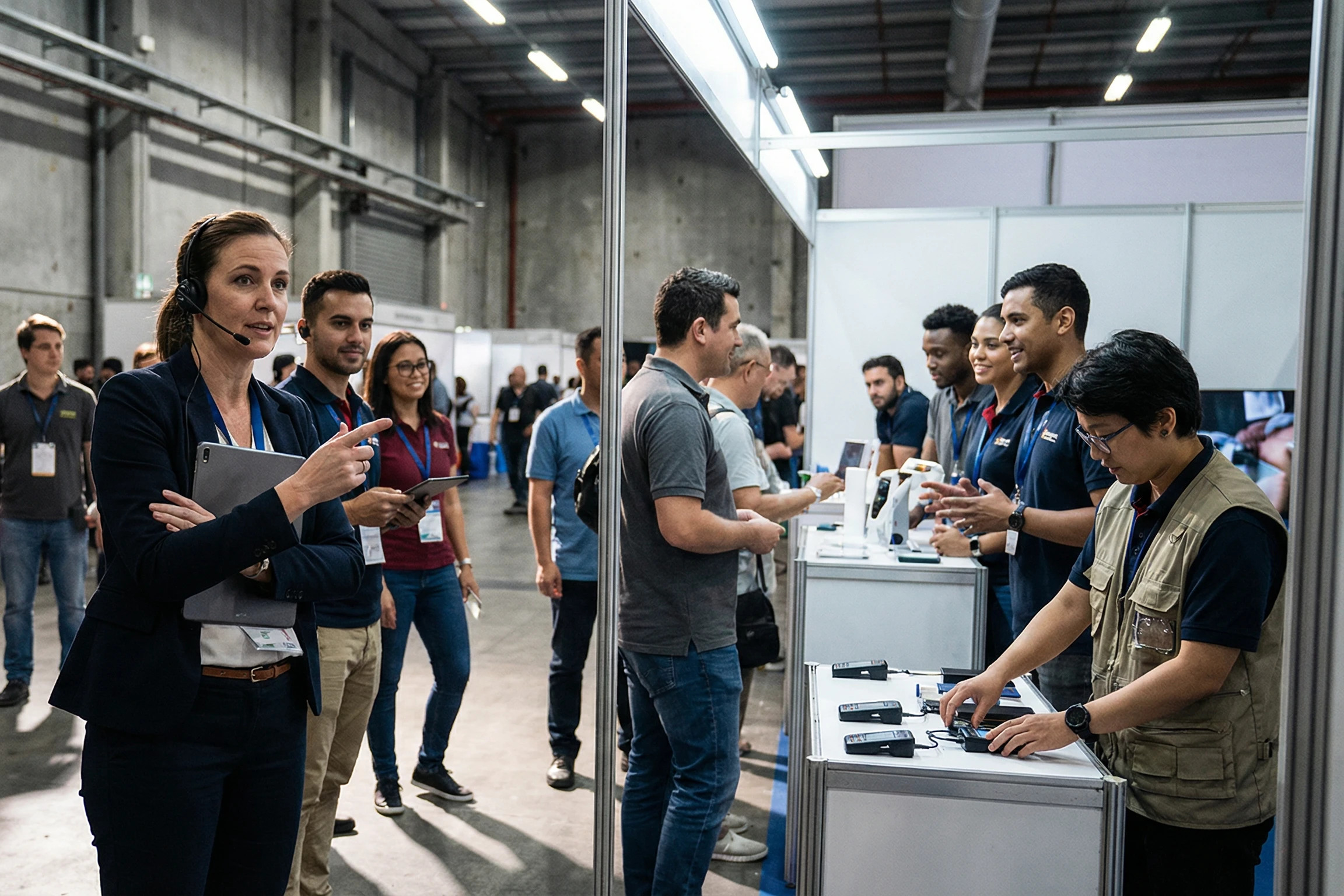
The operational definition of success
A corporate event brand activation is successful when it delivers all of the following at the same time:
Trackable behavior, not just presence
Examples include opt-ins, completed demos, scheduled meetings, or routed follow-up actions.
Clean, consented data capture
Guests understand the value exchange and staff capture information consistently, even during peak traffic.
Qualified outcomes, not inflated counts
Leads meet predefined criteria tied to role, need, or buying stage.
Reliable handoff to sales or follow-up teams
Meetings are booked, held, and logged according to agreed SLAs.
Why this definition matters
Many activations look successful on the floor and fail in the recap. The disconnect usually comes from treating success as a visual outcome instead of an operational one.
When success is clearly defined upfront:
- Brand activation event management can design staffing and flow to protect capture
- Measurement tools receive clean inputs instead of partial or rushed data
- Brand activation ROI can be reported without guesswork or overclaiming
This is the baseline modern corporate brand activation strategy required. Without it, even well-executed activations become hard to defend.
In 2026, a corporate event brand activation is considered successful only when leadership can clearly explain what changed because the activation happened. Visual busyness is no longer a proxy for performance. Success is operational, measured by whether usable data was captured, qualified outcomes were produced, and follow-up moved forward on schedule without data gaps or handoff failures.
What should a corporate event brand activation change, and what won't it fix?
A corporate event brand activation should change observable behavior. It should not be expected to fix structural problems that exist before the event starts.
Understanding this boundary is critical for designing measurable brand activation events and setting realistic expectations with leadership.
What a corporate event brand activation should change
A well-designed corporate event brand activation is built to move attendees from passive awareness to a defined action. That action must be measurable and repeatable on-site.
Common behavior changes include:
- Choosing to engage rather than walk past
- Opting in to share contact information with clear consent
- Completing a demo or guided experience
- Booking a meeting or requesting a follow-up
- Entering a defined nurture or sales workflow
These actions create first-party data and downstream opportunities that can be tracked, qualified, and attributed to the event.
What a corporate event brand activation cannot fix
Even the best execution cannot compensate for issues outside the activation's control, including:
- A broken or delayed follow-up process
- Undefined lead qualification criteria
- Misalignment between marketing and sales teams
- Products or offers that do not match audience expectations
- CRM or attribution systems that are not configured in advance
Expecting the activation to solve these problems leads to inflated expectations and disappointing brand activation ROI.
Why behavior change must be designed, not assumed
Behavior does not change by accident on the event floor. It is shaped by:
- Staffing roles and interaction flow
- Line management and throughput design
- Clear prompts that guide the next step
- Capture moments that feel fair and low friction
When these elements are designed intentionally, the activation functions like a controlled system rather than a creative gamble. That is when a corporate brand activation strategy becomes defensible and scalable.
A corporate event brand activation should be designed to move attendees from passive awareness to a defined, trackable action. It cannot repair broken follow-up processes, unclear qualification rules, or misaligned sales teams. When behavior change is intentionally designed through flow, staffing, and capture moments, the activation becomes a controllable system instead of a creative gamble.
Why do awareness-only activations fail in 2026?
Awareness-only activations fail when traffic, unclear consent, and weak follow-up turn a busy booth into unusable data and stalled outcomes. In 2026, that gap is harder to hide because leadership expects measurable performance, not just visibility.
This is one reason measurable brand activation events are replacing traditional "buzz-first" builds. The activation still needs to look good, but it also needs to capture and route outcomes.

The failure pattern that repeats
Most awareness-only activations break in the same places:
No success metrics beyond impressions
Teams report footfall, photos, or social posts but cannot connect activity to pipeline.
No reliable data capture moment
Guests engage, but no identifier is captured, or capture happens too late in the experience.
No alignment with the sales or marketing funnel
Leads sit untouched because ownership and SLAs were never defined.
Why 2026 makes this worse
Two 2026 realities amplify the problem:
Consent standards are stricter in practice
Guests are more selective about sharing information. If the value exchange is unclear, you get opt-outs or low-quality entries.
AI-assisted measurement needs clean inputs
Tools can surface drop-offs and dwell patterns, but they cannot fix broken flow or inconsistent capture. A floor lead still has to adjust staffing, routing, and interaction steps in real time.
2026 insight: capture time can create line breaks fast
At peak traffic, adding 15 to 20 seconds to each capture interaction can create a line break within minutes. Arrivals stack faster than staff can process, and once the line forms, people bounce.
When the line forms, teams start cutting corners:
- Scans get skipped
- Notes get sloppy
- Qualification becomes inconsistent
This is where brand activation event management determines whether the activation produces measurable outcomes or just a crowded photo. Understanding event flow psychology helps prevent these breakdowns before they cascade.
What to do instead
If you want brand activation ROI, design the activation so the measurable action happens early and naturally:
- Capture identifiers before guests drift
- Keep the interaction flow simple and repeatable
- Route qualified outcomes to the right owner immediately
Awareness-only activations fail because they generate traffic without producing usable signals. In 2026, stricter consent expectations and faster guest behavior amplify this gap. Once lines form or capture is delayed, staff begin skipping steps, data quality erodes, and outcomes stall. This is where brand activation event management determines whether a busy booth produces ROI or just photos.
How do you structure a corporate brand activation strategy for ROI?
A corporate brand activation strategy built for ROI starts with one primary outcome and works backward from there. When the goal is clear, every design and staffing decision becomes easier to justify.
This approach shifts the activation from a creative exercise to an operational system that supports brand activation ROI.
Start with one measurable goal
Every corporate event brand activation should be anchored to a single primary objective, such as:
- Qualified leads that meet defined criteria
- Meetings booked and held during or after the event
- Pipeline influence within a set attribution window
- Repeat engagement or retention signals for existing customers
Secondary goals can exist, but they should not compete with the primary outcome.
Define success before designing the experience
Before the booth layout, tech stack, or staffing plan is finalized, document:
- What counts as a qualified action
- What information must be captured to support follow-up
- Who owns each step after the event
- How success will be reported and reviewed
Without these definitions, measurement becomes subjective and brand activation ROI becomes difficult to defend.
Build the experience backward from the first 15 seconds
A strong corporate brand activation strategy decides what the guest does in the first 15 seconds. That moment determines whether the interaction produces data or fades into noise.
Design the flow so that:
- The value exchange is clear immediately
- Qualification happens early, not at the end
- The next step is obvious and easy to accept
Quick build-backward checklist
Use this checklist to pressure-test the strategy:
- Pick one primary outcome
- Define "qualified" in one sentence
- Choose one primary call to action
- Assign follow-up ownership and SLAs
- Confirm capture happens before congestion sets in
When these pieces are in place, measurable brand activation events become repeatable and scalable across shows and cities. This clarity is why professional event staffing protects ROI from the planning stage through execution.
A corporate brand activation strategy that delivers ROI always starts with one primary outcome and builds backward from it. By defining qualification rules, ownership, and reporting logic before design begins, teams avoid subjective measurement and conflicting goals. This approach turns the activation into an operational system that scales across shows, cities, and teams.
Which activation formats produce measurable actions, not just engagement?
Activation formats that produce measurable actions are designed around throughput and capture, not novelty alone. The best formats make it easy for guests to engage and easy for teams to capture outcomes consistently.
This is where measurable brand activation events separate themselves from visually impressive but untrackable experiences.
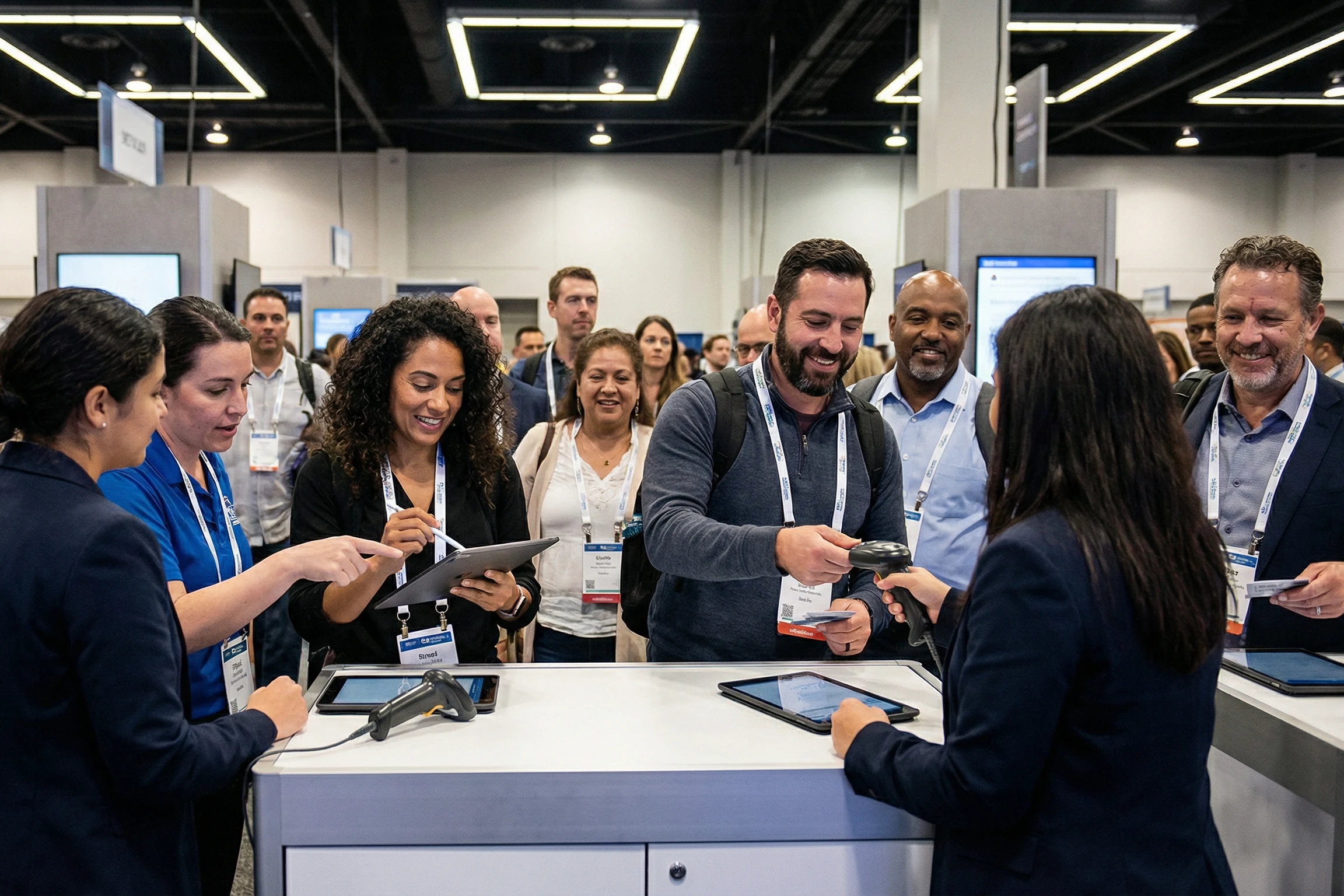
Characteristics of high-performing formats
Formats that support brand activation ROI shares a few traits:
- Clear entry and exit points
- One obvious next step for the guest
- Low-friction data capture with a clear value exchange
- Staff interactions that are short, repeatable, and easy to train
When formats rely on explanation or improvisation, measurement breaks down quickly.
Formats that convert attention into action
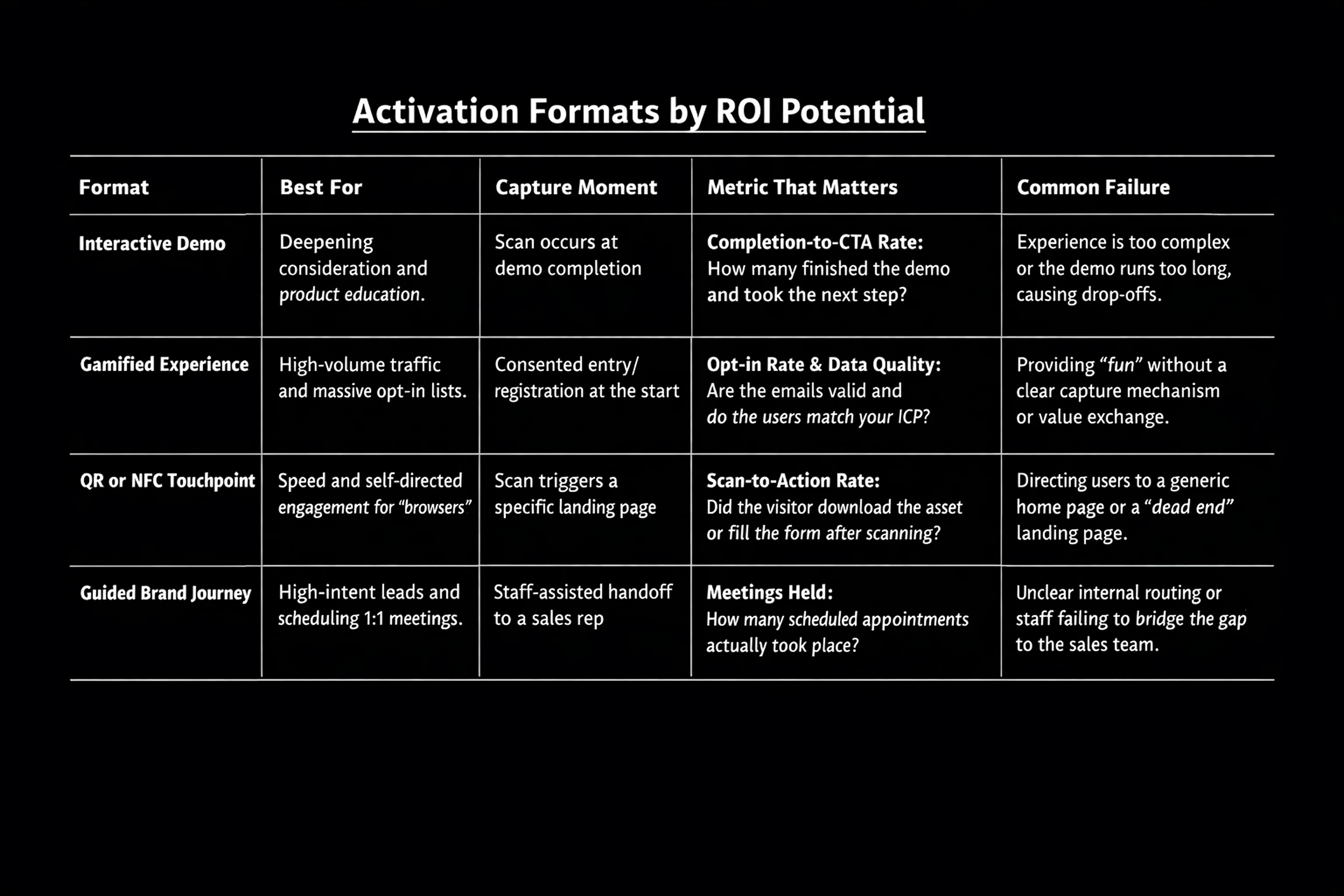
Common formats that support a measurable corporate event brand activation include:
Interactive demos
Best for consideration and education. Measure demo completion and conversion to a defined next step.
Gamified experiences with consented entry
Best for volume and opt-ins. Measure identifier capture rate and data quality, not just participation. Brand ambassadors at large-scale trade shows excel at balancing engagement with capture.
QR, NFC, and RFID touchpoints
Best for speed and self-directed engagement. Measure scan to action rate, not scan volume.
Guided brand journeys with staffed handoffs
Best for meetings and high-intent outcomes. Measure meetings held, not just scheduled.
Activation formats by ROI potential
2026 insight: scanning is not the problem
QR and badge scans still work in 2026. What breaks attribution is what happens after the scan. If the experience ends there, measurement stops.
Choose formats based on the behavior you need to capture, not what looks good in a recap video.
Formats that produce measurable brand activation events share one trait: they make capture easy without slowing flow. Interactive demos, consented gamification, scan-based touchpoints, and guided journeys all work when the next step is obvious and repeatable. When formats require explanation or improvisation, throughput drops and attribution quietly disappears.
What should you measure before, during, and after the activation?
A corporate event brand activation is only measurable if the data stack is designed before the booth is built. Measurement is not a tool choice. It is a sequencing decision.
When teams treat data capture as an add-on, brand activation ROI becomes guesswork instead of reporting.
The measurement stack at a glance
Effective brand activation event management treats measurement as three connected phases:
- Before the event: define rules and thresholds
- During the event: capture clean, consented signals
- After the event: validate outcomes leadership trusts
Each phase depends on the one before it.
Before the event: define what counts
Pre-event setup determines whether data survives contact with the floor.
What must be locked before doors open:
- KPI definitions and thresholds for success
- What qualifies as an engaged visitor
- What qualifies as a qualified lead
- Campaign and UTM structure tied to the event
- CRM fields and routing rules
- Staffing plan aligned to expected traffic volume
If qualification rules are unclear, staff will guess. Guessing produces inconsistent data that cannot be defended later. While 73% of event marketers struggle with lead quality, fewer than half set clear qualification criteria before an event begins. This lack of structure explains why 79% of marketing leads never convert into revenue. By implementing the lead qualification process, filtering prospects to find the ~25% ready to buy, you move from chasing "buzz" to capturing pipeline.
During the event: capture without friction
On-site capture has to feel fair to the guest and repeatable for staff.
Common capture methods that support measurable brand activation events include:
- Registration check-in with clear expectations
- Badge or QR scans explained as part of the experience
- Digital forms tied to a specific CTA
- Staff assisted capture during demos or handoffs
What matters most is engagement depth, not raw volume.
Track signals such as
- Actions completed, not just interactions
- Time spent in defined experience zones
- CTA completion, such as meeting requests or downloads
If capture slows the line, staff will start skipping steps. Data quality drops first. Your event staffing plan should account for peak traffic patterns to maintain capture quality.
After the event: prove impact, not activity
Post-event analysis is where brand activation event management either earns trust or loses it.
What must happen after the show:
- Lead enrichment and deduplication
- Sales acceptance rate tracking
- Meetings held versus scheduled
- Pipeline influence measured inside a defined time window
Pipeline logic must be agreed to before the event so reporting does not turn into a debate.
When the measurement stack works, leadership sees outcomes instead of anecdotes. That is when budgets renew.
Brand activation ROI depends on when decisions are made, not which tools are chosen. Pre-event definitions protect consistency, on-site capture protects data quality, and post-event validation protects credibility. When any phase is skipped or rushed, reporting becomes defensive instead of instructive, and future budgets become harder to justify.
How do staffing and flow make a corporate event brand activation measurable?
A corporate event brand activation becomes measurable when staffing roles and floor flow protect data quality under pressure. Without throughput design, even the best strategy produces inconsistent capture and unreliable reporting.
This is why brand activation event management is not just coordination. It is measurement integrity.
Why execution changes outcomes
Two activations can use the same booth design and the same technology and still produce completely different results. The difference is usually execution:
- Whether guests are routed smoothly or stuck in lines
- Whether staff capture and qualify consistently
- Whether a supervisor identifies breakdowns early
- Whether fixes happen in minutes instead of after the show
When flow breaks, staff improvise. Improvisation is where missed scans, incomplete notes, and inconsistent qualification begin.
Staffing roles that protect measurement
Clear roles reduce confusion and prevent common failures.
A typical activation staffing structure includes:
Greeter or traffic director
Manages entry, reduces bottlenecks, and keeps the first step clear.
Qualifier
Filters guests quickly and routes high-intent visitors to the right station.
Demo or experience staff
Delivers the interaction consistently and supports completion of the key action.
Floater
Handles resets, line breaks, device issues, and coverage gaps before they spread. Event runners and floaters are critical for maintaining flow during unexpected surges.
Supervisor
Watches patterns, enforces the flow, and protects data quality across the team.
Operational baseline (adjust for complexity)
Use this as a starting point, then scale based on traffic and activation complexity:
- 1 greeter or traffic director per entrance point
- 1 qualifier per active demo station
- 1 floater per 3 to 5 staff to handle resets, line breaks, device issues
- 1 supervisor per 8 to 12 staff to protect flow and data quality
If you understaff qualification and supervision, you usually pay for it in two ways: longer lines and weaker data.
Real-time monitoring and five-minute fixes
Measurement breaks fast, so fixes have to happen fast.
The floor lead should monitor:
- Line length and drop-off points
- Scan rate consistency across staff
- Device health and connectivity issues
- Handoff performance for meetings and high intent leads
Escalation should be clear:
- Fix in five minutes: routing, staffing shifts, script reminders, device swaps
- Fix later: CRM mapping changes, follow-up automation, full attribution reporting
2026 insight: assign an owner for data quality
If no one owns data quality on-site, you will find the problem in the report, not on the floor. By then it is too late to recover what was missed.
To ensure your brand activation produces defensible results, you must assign a specific owner for data quality on the floor, as up to 80% of trade show leads are never followed up on due to poor initial capture. Without this on-site accountability, errors only surface during post-event reporting when it is too late to recover lost opportunities. Successful events typically target an ROI between 25% and 34%, but reaching these benchmarks requires the 60% increase in measurement accuracy provided by real-time monitoring and dedicated oversight. By appointing a data quality owner, you transform a self-managed booth into a controlled system that protects your lead integrity and secures your event budget. The average cost to hire event staff includes supervision ratios that protect measurement quality.
This is the point where a corporate event brand activation becomes measurable in practice, not just in planning. Execution either protects ROI or quietly drains it.
Staffing and flow determine whether measurement survives peak traffic. Clear roles, supervision, and real-time fixes prevent missed scans, inconsistent qualification, and broken handoffs. Without an on-site owner for data quality, problems only surface in reporting, when recovery is no longer possible. Execution is what makes a corporate event brand activation measurable in practice.
How do you prove brand activation ROI after the event?
Brand activation ROI is proven after the show, using rules that were defined before the show. Without shared definitions, reporting turns into opinion instead of evidence.
A corporate event brand activation should produce outcomes that survive leadership scrutiny, not just a recap deck.
Start with shared definitions
Before reviewing numbers, confirm that everyone is using the same language.
Use these definitions consistently in reporting:
Engaged visitor: A guest who completed a tracked action such as a demo step, scan, game completion, or CTA.
Qualified lead: A contact that matches your ICP, opted in, and meets agreed criteria such as role, need, or timeline.
Pipeline influenced: An opportunity created or advanced within a defined time window and tied to the activation source.
Clear definitions reduce debate and protect credibility.
Metrics that leadership actually trusts
Not every metric belongs in the headline.
Focus on metrics that connect spend to outcomes:
- Cost per engaged visitor
- Cost per qualified lead
- Meetings held, not just scheduled
- Pipeline influenced inside a defined attribution window
These metrics answer the question executives actually ask: what changed because this activation happened?
Example: defensible ROI structure
A simple structure makes reporting easier to defend:
- Visitors engaged: 1,200
- Qualified leads: 180
- Meetings held: 42
- Pipeline influenced: $1.4M
These numbers only matter if deduplication rules are clear, sales acceptance is tracked, and the attribution window is realistic.
Without those controls, results look impressive but collapse under follow-up questions.
Reporting that survives scrutiny
Effective brand activation ROI reporting includes:
- Dedupe logic explained in plain language
- Sales acceptance rate alongside lead volume
- Time window stated for pipeline influence
- Notes on assumptions and known limits
This level of clarity turns post-event reporting into a planning tool for the next activation instead of a defensive exercise.
When this section is done well, the recap deck changes. Fewer photos. Fewer adjectives. More confidence when leadership asks what the return actually was.
Brand activation ROI holds up when definitions are shared, metrics are limited to outcomes that matter, and attribution windows are stated clearly. Cost per qualified lead, meetings held, and pipeline influenced are credible only when deduplication and sales acceptance are tracked alongside volume. This is how reporting shifts from justification to decision-making.
What to do next if you need ROI, not a recap deck
If you are spending real money on an activation, "busy" cannot be the win condition. The win is clean capture, consistent qualification, and follow-up that happens fast enough to convert intent while it is still warm. That means you set KPIs and routing before the show, you staff for throughput and supervision during the show, and you report with definitions leadership cannot poke holes in. If you want help staffing an activation so flow stays clean and data stays usable, you can get a quote and we will map your traffic, roles, credentialing, and lead capture workflow before doors open.
Ready to elevate your next event?
Join thousands of event planners who trust EventStaff.com for reliable, professional staffing solutions.
Trusted by event professionals nationwide
1k+
Events Staffed
2 million+
Guests Served
97%
Positive reviews