
CEO Excerpt
"I don't build staffing plans for the easy hours. I build them for the 15 minutes where check-in backs up, the client’s asking questions, and everyone’s looking at us to fix it." - CEO Event Staff
Let’s be honest for a second. Everyone wants a magic pill that makes an event run smoothly. We all want to just unlock the doors, smile, and have it work. But in reality, the closest thing we have to magic is a solid event staffing plan, and you usually only notice it when it’s missing.
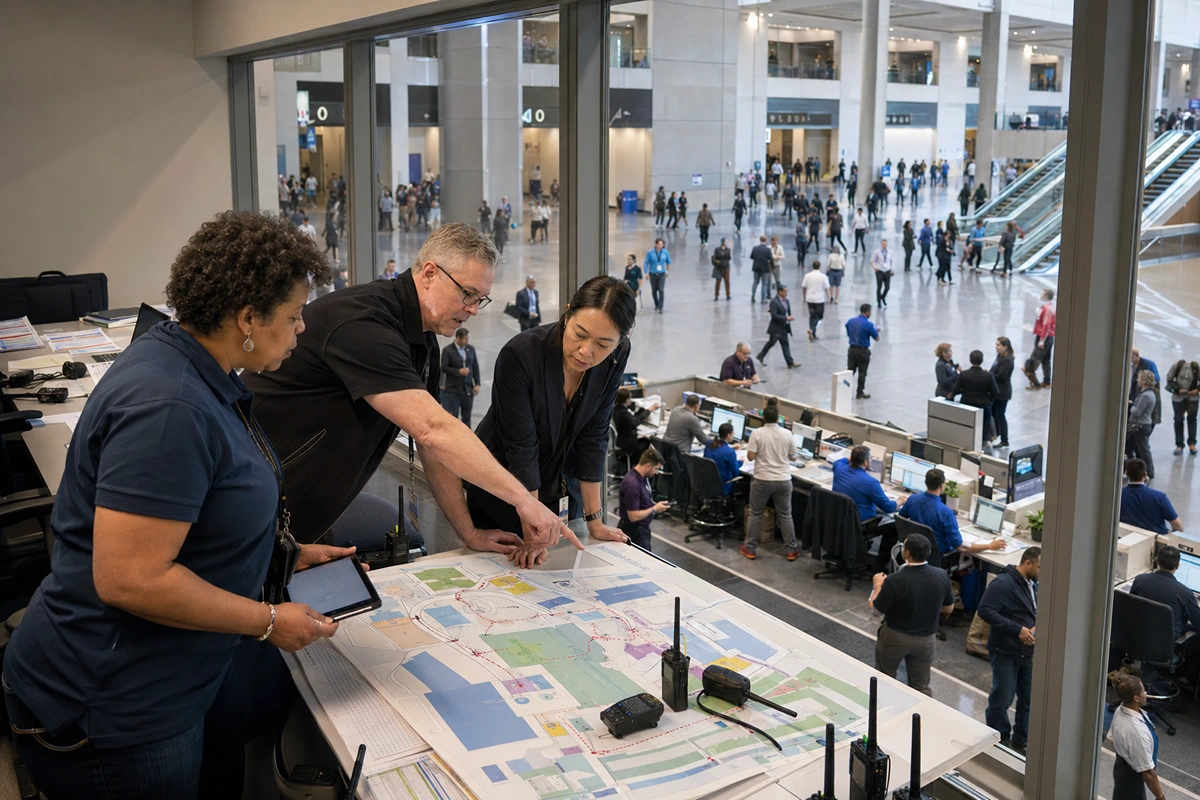
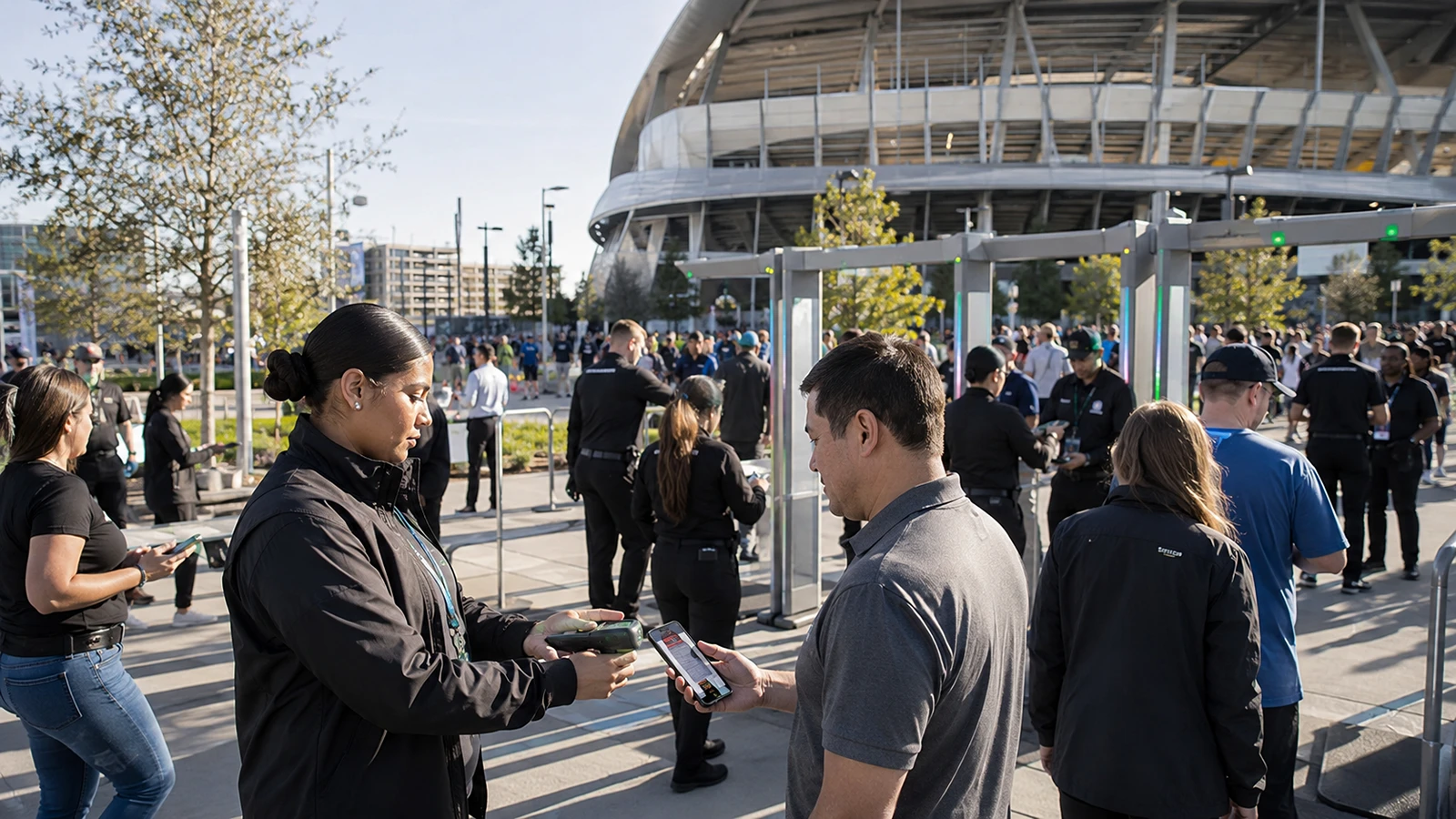
Without one, you’re basically running on guesswork and caffeine. Check-in lines back up, staff end up clustering in the corners (it happens more than you think), breaks go uncovered, and your supervisors are stuck making rushed decisions while their radios are screaming. Creating an event staffing plan is really just deciding who does what, where they stand, and, most importantly, when they’re needed before the doors ever open.
We’re going to walk through building an event staffing plan template step by step, along with a practical event staffing plan checklist to protect your coverage and your sanity when the timing tightens.
Need help building an event staffing plan? Get a ready-made template or talk to our staffing team.
Executive Summary
An event staffing plan is operational insurance for peak moments. Professional templates define roles, zones, and coverage shifts before pressure hits. This guide shares a proven plan and checklist to protect flow, control risk, and maintain client confidence.
What Is an Event Staffing Plan (And Why It Matters)

An event staffing plan is a documented operational strategy not a roster.
It defines roles, headcounts, schedules, zones, break coverage, and contingency paths based on peak stress moments, not ideal conditions. The difference between amateur and professional staffing isn’t headcount—it’s anticipation.
In today’s labor market, staffing unpredictability is higher than ever. Rising wages, tighter availability, and on-demand service expectations mean your staffing plan now functions as a risk-control and cost-control document, not just a logistics file.
A well-built event staffing plan protects four critical outcomes:
- Guest experience during peak flow
- Staff performance under pressure
- Client confidence onsite
- Overall event pacing and safety
_11zon.webp)
Step 1: Define Your Event Staffing Goals
Start with the moment that absolutely cannot break. Is it the doors opening? The lunch flip? The keynote release? Write your outcomes like you’re briefing a captain right before the battle. You need to define what success looks like regarding speed, engagement, and service levels.
If your event staffing plan template doesn’t protect that highest-pressure moment, it’s incomplete. This level of preparation is essential when managing large-scale staffing logistics for complex activations. I’ve seen teams skip this. They staff for "general coverage," then realize too late that check-in needed three people, but they put them on the floor floating around.
A simple rule experienced teams use: list your top three bottlenecks, then staff the bottleneck, not the room. That’s how flow stays stable without bloating your headcount.
Step 2: Identify All Required Event Staffing Roles
Roles are functions, not just titles. Relying solely on software to map these often leads to blind spots. Software is great, but it doesn't know that the west entrance is closed for construction or that the freight elevator is slow.
You need to match the person to the pressure point. Here is a breakdown of the core roles you will likely need:
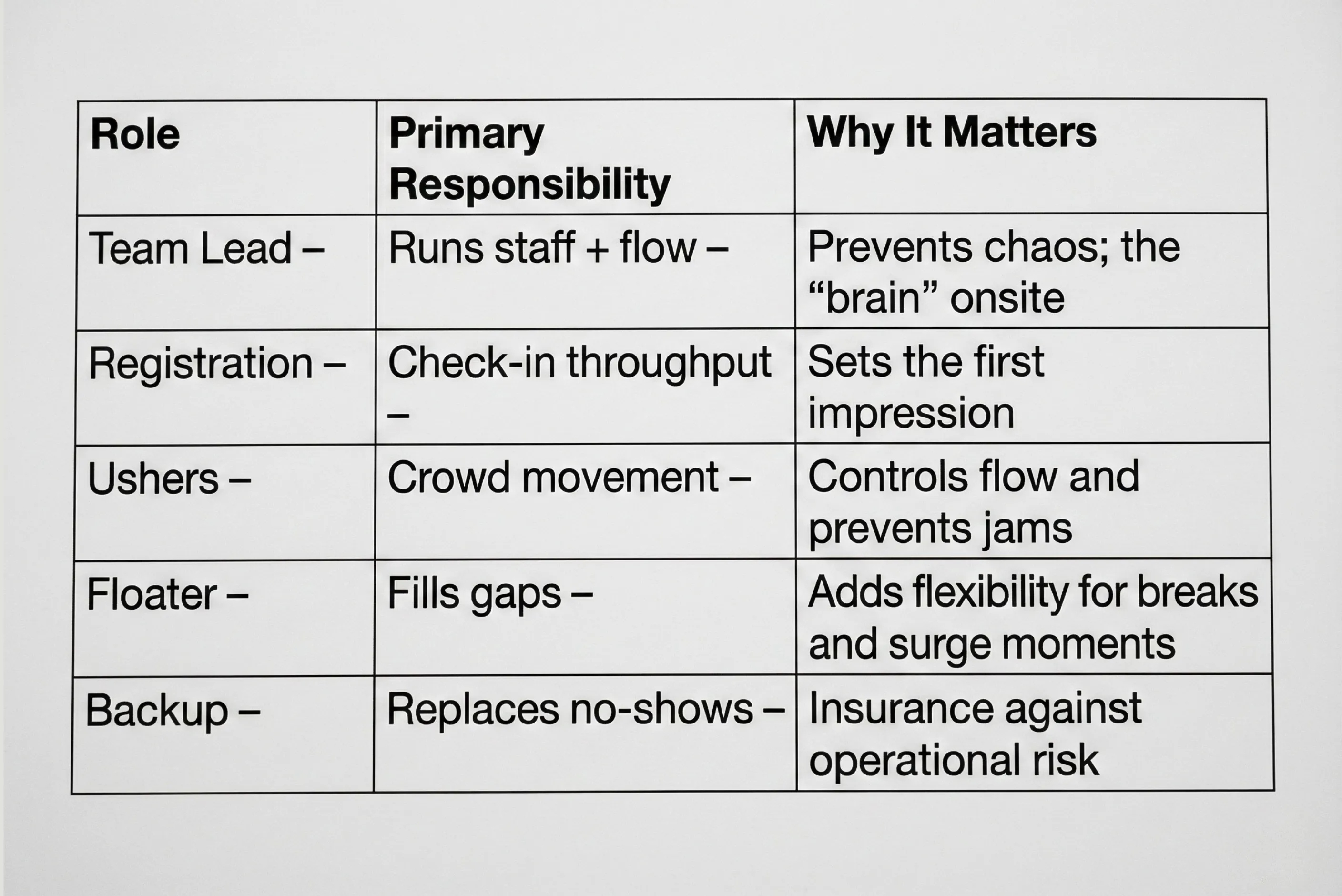
To see how the pros handle this, you should read up on how to prevent operational bottlenecks.
Step 3: Calculate How Many Staff You Need (Headcount Planning)
How many people do you actually need? It depends on peaks, layout, and service level, not just guest count. A common mistake, one that I see constantly, is planning for the average flow rather than the peak arrival window.
Use these ratios as a starting point, but remember to add "complexity multipliers" for things like VIP handling, demo requirements, or payment processing.
_11zon.webp)
Note: Ratios vary. Always plan for the busiest 30 minutes, then work backward.
Step 4: Build the Event Staffing Schedule (Shifts + Coverage)
Your schedule should be staggered. Setup arrives first. Registration arrives before doors. Floaters arrive just before the peak. Overlap shifts at transitions so handoffs don’t create gaps.
And please, don’t just hope breaks work out. Write break rotations and coverage swaps into the schedule. A common failure pattern is two staff members taking breaks at the same time because “it felt slow,” leaving a critical zone naked during a mini-surge.
_11zon.webp)
Step 5: Assign Zones and Ownership
Assign zones deliberately: Registration, Main Floor, Breakouts, VIP, and Back-of-House.
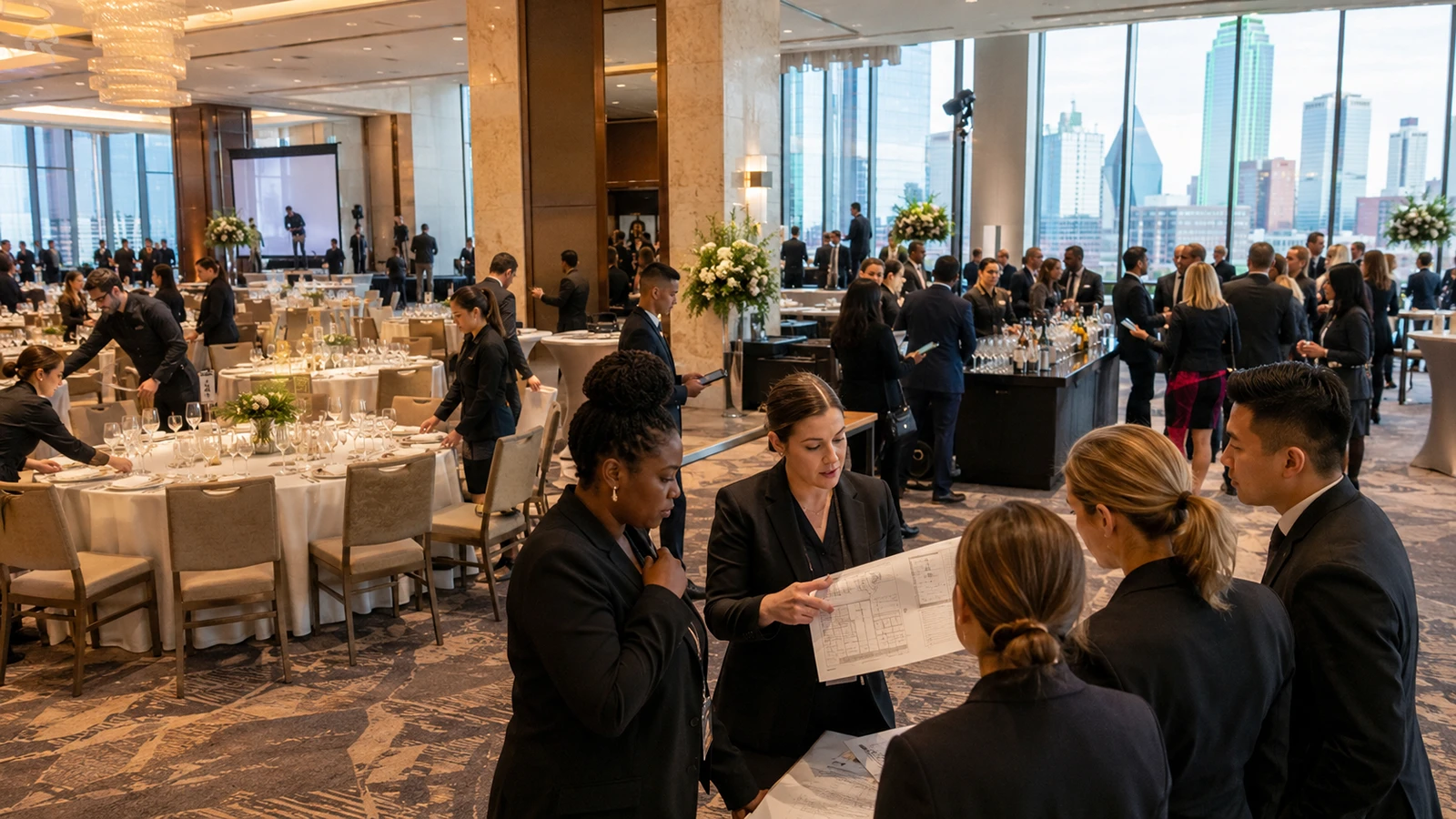
There should be one owner per zone and one backup per critical zone. Put it in the event staffing plan template so it’s visible, not tribal knowledge locked in someone’s head. This reduces confusion and ensures that if a radio call comes in from "The Lobby," everyone knows who owns that space.
Step 6: Add Backup & Contingency Coverage
No-shows happen. Traffic happens. Credential issues happen. Plan for it.
There’s a financial reason to take this seriously: retention report data estimates replacement impact at 33.3% of base salary.
We use the 15–30–60 Backup Rule to keep teams calm:
- 15 minutes: Redeploy and compress (floaters fill the hole).
- 30 minutes: Standby is activated.
- 60 minutes: Replacement is in position or the zone is restructured.
What Professional Event Staffing Plans Do Differently
Professional teams don’t staff for averages they staff for failure points.
Instead of asking “How many people do we need?”, they ask:
- Where does the flow break first?
- What happens if one person doesn’t show?
- Which zones cannot go uncovered even for five minutes?
That’s why experienced teams always include:
- Floaters assigned to pressure zones, not wandering coverage
- Written redeployment triggers (not verbal decisions)
- A documented standby activation timeline
This approach prevents last-minute improvisation and keeps leadership focused on the client, not the chaos.
Step 7: Create the Event Staffing Plan Template
Here is a simple structure you can copy and paste to get started immediately. This structure ensures you don't miss details when building your event staffing plan checklist:
Event Staffing Plan Template Includes:
- Event overview (location, hours, access notes, credential cutoff)
- Staffing goals (pressure moments and service standards)
- Role list + headcount (who, how many, why)
- Shift schedule (call times, overlaps, breaks)
- Zone assignments (map plus supervisor per zone)
- Backup plan (standby, floater placement, 15–30–60)
- Escalation ladder (who decides what)
- Contact list (ops, venue, security, vendors)
Step 8: Use the Event Staffing Plan Checklist Before Event Day
The plan is only as good as the execution. Use this event staffing plan checklist to ensure nothing slips through the cracks.
Pre-Event Checklist
- [ ] Staffing confirmed
- [ ] Backups secured
- [ ] Uniforms communicated
- [ ] Arrival instructions sent
- [ ] Access credentials prepared
Event-Day Checklist
- [ ] Staff checked in (Use a digital check-in staff roster)
- [ ] Briefing delivered
- [ ] Zones staffed
- [ ] Breaks running
- [ ] Issues logged
Post-Event Checklist
- [ ] Staff signed out
- [ ] Equipment returned
- [ ] Incident notes completed
- [ ] Performance feedback logged
Common Mistakes When Creating Event Staffing Plans
Even with a template, things can go wrong if the strategy is off. Avoid these traps:
- Planning for averages: If you staff for the average flow, you will fail during the peak.
- No floaters: Without floaters, a bathroom break becomes a coverage gap.
- Unclear roles: "Help out where needed" is not a role; it's a recipe for staff hiding in the breakroom.
- Missing break coverage: Staff are human. If you don't plan their breaks, they will take them at the worst possible time.
A Realistic Event Staffing Plan Example (500-Person Conference)
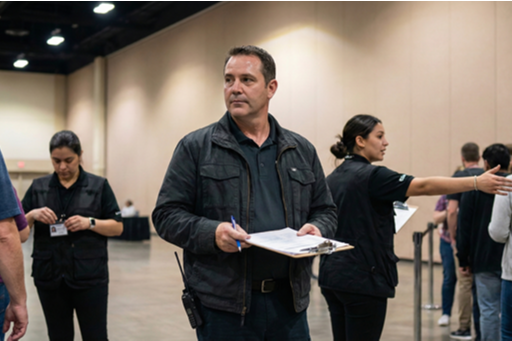
Let's look at a hypothetical event staffing plan example. Assume a 500-person conference with a registration surge, breakout sessions, and a lunch transition.
- Registration is staffed heavier from doors through the first hour, then trimmed and redeployed.
- Ushers hold steady for session releases and hallway flow.
- Floaters sit near the biggest unknown: registration and the main hallway.
- One backup stays on standby for no-show insurance.
At 12:15 PM, lunch releases and the hallway compresses. One floater shifts to corridor flow while registration is trimmed, not abandoned. That trigger is written into the plan, not decided in the heat of the moment.
Site Operations Synopsis
Staffing plans must account for peak operational stress rather than ideal conditions. A documented strategy that identifies pressure points ensures stability during critical moments like check-in surges. By calculating headcounts based on maximum capacity and enforcing the 15–30–60 backup rule, our teams design staffing plans for high-pressure events where coverage gaps aren’t an option. Get a ready-to-use template, backup strategy, and real-world guidance from professionals who staff for peak moments, not hope. Request your event staffing plan template or speak with our staffing team today.
Ready to elevate your next event?
Join thousands of event planners who trust EventStaff.com for reliable, professional staffing solutions.
Trusted by event professionals nationwide
1k+
Events Staffed
2 million+
Guests Served
97%
Positive reviews