

Corporate events operate under compressed timelines, multiple vendors, and high visibility. When decisions slow down or sequencing breaks, the impact shows up fast in guest experience and stakeholder confidence. A production team delivers control onsite, accelerates escalation, and keeps run of show and deliverables intact.
Business-event sentiment has strengthened into 2026, and corporate programs are being approved with more moving parts and more scrutiny than most internal teams want to carry alone.
CEO Excerpt
“At Event Staff, we treat corporate production as a governance problem as much as a logistics problem. The strongest events feel calm because decision rights are clear, communication is disciplined, and every vendor understands how their work connects to the next dependency. Our teams are built to protect that clarity under pressure, so your program stays on time, on brand, and credible in the moments that matter most.”- CEO, Event Staff

Why a Production Team Is the Control Layer Corporate Programs Depend On
Corporate programs rarely drift because people are unprepared. They drift when execution becomes a live negotiation across vendors, stakeholders, and venue rules.
A production team earns its place by keeping three things stable while everything else is moving: decision speed, sequencing discipline, and one operational truth that every lead follows.
What that looks like in real corporate conditions:
- Parallel workstreams stay coordinated instead of colliding. AV, scenic, staging, security, venue ops, food and beverage, content capture, and VIP movement can all be active at the same time. Strong onsite production leadership sequences those scopes so one department does not “finish” work that another department has to undo. You keep momentum during load-in because teams are not waiting on access, power, approvals, or reroutes that should have been settled earlier.
- High-visibility moments stay composed. Executives, partners, and sponsors judge the day in real time. A strong production layer keeps transitions tight, keeps sensitive beats protected from vendor spillover, and keeps guest-facing time calm even when the backend is adjusting. The event feels intentional because cues, timing, and movement stay controlled.
- Commitments stay reliable as conditions shift. Doors, keynotes, sponsor windows, and content windows are commitments that get discussed after the event. The production team makes recovery calls early, when fixes are still clean, and the agenda is still recoverable. That is how small slips avoid compounding into a broken day.
If your program also spans multiple venues or cities, it helps to anchor production within a broader operating model like Enterprise Event Staffing.

Event Production Team Authority That Compresses Decision Time
The fastest way corporate execution breaks is simple: approvals slow down while the floor keeps moving.
An event production team compresses decision time by locking three realities onsite:
- Decision rights are practical, not theoretical. Vendor leads know exactly where a call lands, how quickly it lands, and what happens next. That clarity reduces stalls, prevents duplicated conversations, and keeps teams building instead of waiting.
- Locked versus flexible is defined in operational terms. Corporate programs have non-negotiables, including security requirements, compliance boundaries, executive beats, and sponsor obligations. Strong production leadership also defines where the day can flex so recovery options do not require a full-group debate when minutes matter.
- Recovery goals match stakeholder outcomes. Recovery is not “catch up at any cost.” It is protecting run of show credibility, deliverable windows, and guest experience while regaining time. When that goal is explicit, decisions land faster and communication gets simpler.
FEMA’s Incident Command System training is built around a structure that can be established and adapted as conditions change, including for planned events. FEMA IS-100.c overview () and IS-100.c course materials.
Event Production Staffing Built for Multi-Vendor Execution
Corporate complexity is resolved when capability exists at the points where execution breaks. That is why event production staffing matters more than headcount.
High-performing event production staffing is built around three recurring corporate realities:
- Dependencies are the real schedule. Power affects scenic, scenic affects lighting, lighting affects camera, and camera affects rehearsals. The onsite team manages these dependencies so vendors finish work once, in the right order, with fewer resets and fewer stalled workstreams.
- Site governance has to be consistent across shifts. Access control, route protection, equipment handling, and back-of-house lanes are operational controls. Consistent enforcement keeps conditions predictable as density increases, especially when crews rotate and new vendor teams arrive.
- Change control must create one operational truth. Corporate programs generate constant micro-adjustments. Centralized updates, confirmed approvals, and disciplined communication keep vendors from building off conflicting interpretations.
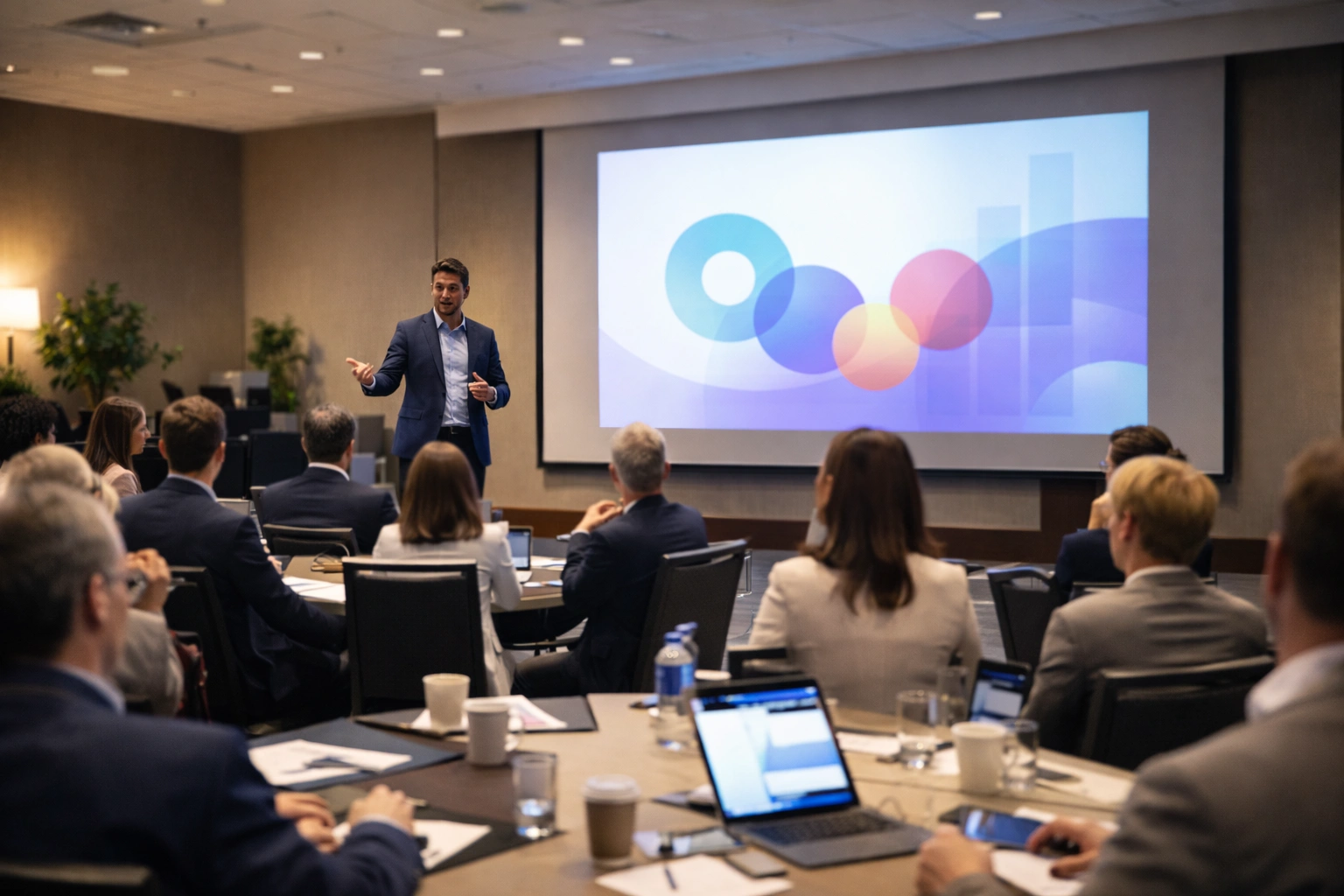
Where Corporate Events Drift and How a Production Team Corrects It
When approvals stall, minutes disappear and guests feel it later.
Approvals slow down when ownership is distributed across brand, legal, venue, AV, security, and internal stakeholders.
The production team shortens the cycle from issue to approved action:
- Escalation arrives with context, not noise. The team frames what changed, what constraint matters, and what the floor needs next so stakeholders can decide quickly. That keeps senior contacts out of the weeds and keeps vendors moving.
- The option presented is executable right now. The team proposes a workable path that respects scope, venue rules, and timing pressure, so approval becomes a decision between viable options, not a debate about hypotheticals.
- The decision is confirmed once and broadcast to every affected lead. Downstream impacts are named, so the floor does not split into competing versions of the plan, and no vendor is building off an older assumption.
When vendors build off different assumptions, rework becomes the default.
Collisions happen when teams build into the same footprint or sequence out of order.
The production team reduces collisions through disciplined change control:
- Updates are centralized so “the latest” is truly shared. Every lead executes the same plan, which cuts the quiet drift that causes resets two hours later.
- Conflicts are resolved with clear ownership and a fast call. The controlling dependency is identified, ownership is confirmed, and the next action is set before the conflict spreads beyond one zone.
- Containment protects momentum. The issue area is isolated so parallel workstreams continue, which preserves build speed under pressure and avoids a floor-wide pause.
Run of show rarely collapses at once. It slips beat by beat.
A mic check starts late, a room flip drags, a cue is missed, and transitions lose energy.
The onsite team protects timing integrity through readiness standards and recovery calls:
- Readiness is verified before start times are committed. The schedule reflects reality, which reduces late pivots that feel disruptive and keeps stakeholders confident in the room.
- Cues and handoffs are made unambiguous. “Ready” is defined for AV, talent, stage, security, and room management so departments stop guessing and stop losing minutes in small, repeated delays.
- Recovery moves protect the most visible beats. Executive moments, sponsor obligations, and high-attention transitions stay defended even when other elements compress.
Movement discipline also matters for life safety and access. NFPA’s Basics of Means of Egress Arrangement explains why exits must remain available and properly arranged.
Miss one deliverable window and the post-event story changes.
Corporate events are measured through sponsor moments, content capture windows, and leadership commitments.
The production team protects those moments through time-window defense and space control:
- The environment is made ready for the moment that matters. Sightlines, audio cleanliness, controlled background movement, and route protection keep the deliverable consistent with brand expectations.
- Readiness cues align AV, scenic, talent, and brand priorities before the schedule commits. Dependencies are satisfied and the environment is stable enough to execute, which is the difference between “we got it” and “we got it, but it doesn’t look clean.”
- Movement and access are controlled so capture stays clean. Routes are protected and spillover is limited, so content quality stays consistent even when other parts of the day are tightening.
Loose access turns crowded minutes into operational exposure.
Back-of-house congestion creates shortcuts, blocked lanes, and last-minute adjustments in tight spaces.
The onsite team corrects this with governance that holds under pressure:
- Access rules stay consistent across shifts. Consistency reduces confusion and reduces the temptation for shortcuts when the schedule tightens.
- Back-of-house lanes remain protected as density increases. Routes stay usable for vendors, talent, and security requirements, preventing congestion from turning into a schedule problem that later becomes a guest-facing problem.
- Escalation happens early while fixes are still simple. Early calls keep problems small, keep routes functional, and reduce the odds that control breaks during the most visible portions of the day.
Event Safety Alliance Standards and Guidance consolidates event-safety guidance emphasizing communication, crowd management, and site design.
What “Precision” Looks Like Onsite When the Production Team Is Strong
You can see production quality early. It shows up as clarity, not noise.
- Decisions land quickly and remain stable. Questions are answered once, documented, and communicated to every lead who needs to act. The day stops losing time to repeated decision loops and partial updates.
- Issues are isolated without freezing the floor. Problems are contained, ownership is assigned, and parallel workstreams keep moving. That containment is what keeps a single conflict from turning into a day-wide slowdown.
- Transitions feel intentional for guests and stakeholders. Readiness is confirmed before commitments are made, cues are clean, and guest-facing time stays composed. The event reads as governed rather than reactive.
- Guest-facing calm holds during backend changes. Movement is clean, direction is clear, and sensitive beats stay protected from vendor spillover. Stakeholders experience confidence because the environment stays controlled.
How Production Teams Scale Across Common Corporate Event Footprints
The execution challenge repeats across footprints: multiple stakeholders, multiple vendors, and timed moments that cannot drift.
- Single-room leadership programs and investor-style sessions. Timing integrity is the product. Strong production keeps cues and transitions tight and protects capture conditions for leadership beats.
- Multi-room conferences and internal summits. Cross-room dependencies create drift. Production leadership manages those dependencies so a delay in one room does not trigger a chain reaction across the agenda.
- Exhibitions and sponsor halls inside corporate programs. Vendor density and longer build cycles raise expectations for operational discipline. The CEIR Index is positioned as representative of the universe of B2B exhibitions in North America.
- Hotel buyouts and campus-style venues. Movement control matters across buildings and corridors. Protected routes, disciplined comms, and early escalation keep the program coherent across zones.
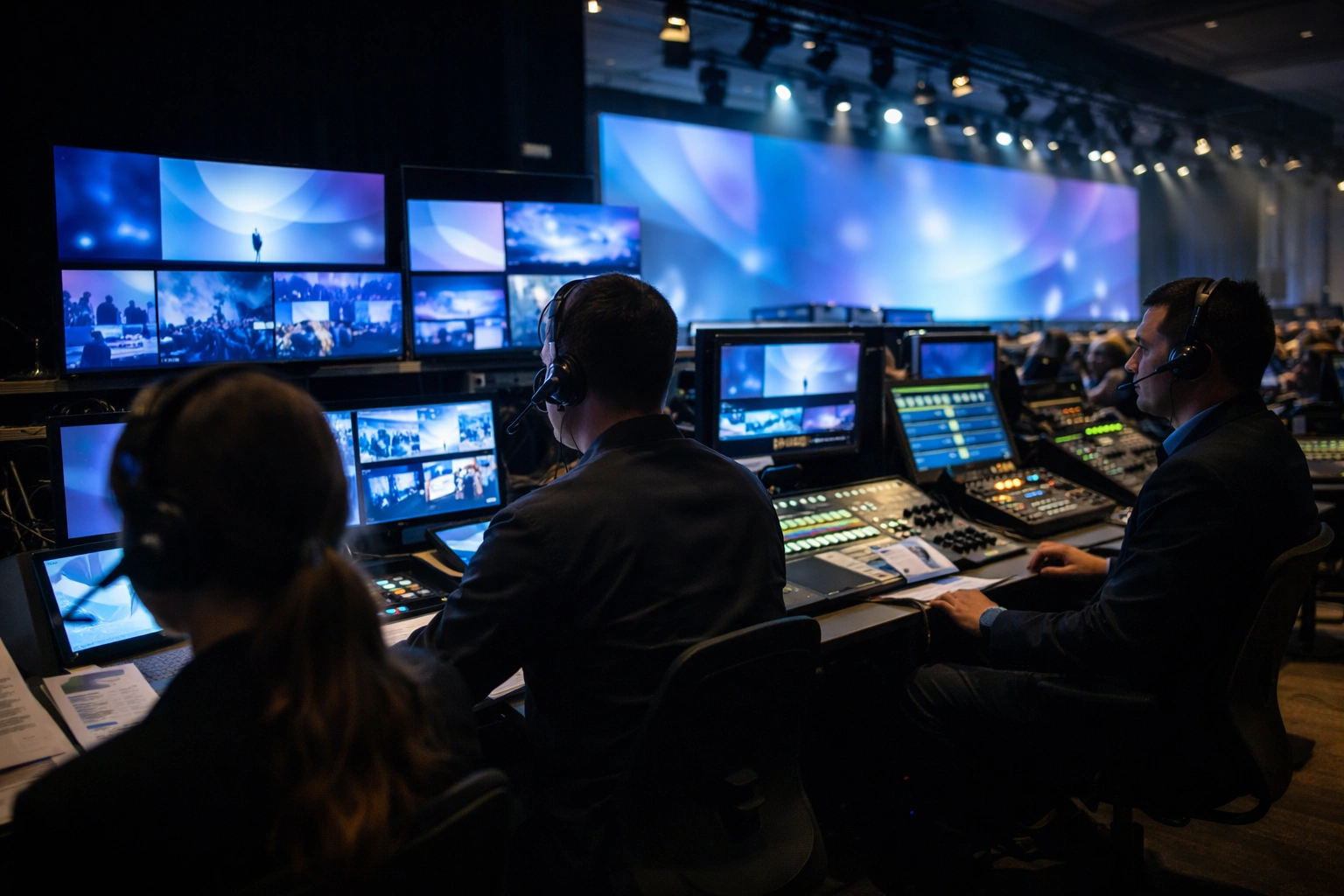
How Corporate Teams Evaluate Production Team Performance After the Event
Corporate stakeholders evaluate events through operational measures and executive perception:
- Schedule integrity across the full day. Review how closely doors, program beats, and transitions ran to plan, and how effectively time was recovered when something shifted.
- Deliverables integrity for sponsors, leadership, and content. Review whether key moments landed in the right conditions, with minimal visible scrambling and stable capture environments.
- Operational control across vendors and departments. Look for clean vendor alignment, consistent updates, and issues contained without guest-facing disruption.
- Safety posture and movement discipline at peak density. Review whether access, lanes, and routes stayed predictable as density rose.
OSHA’s Crowd Control Safety Guidelines for Retailers emphasizes advance planning and trained personnel where large crowds may gather, which maps cleanly to the same operational discipline corporate programs rely on.
How Event Staff Production Teams Deliver Control Under Pressure
Event Staff production teams are built for corporate environments where execution is evaluated in real time. Their job is to protect clarity when priorities compete.
They establish practical authority that vendor leads recognize immediately, then compress escalation paths so decisions land fast. They centralize updates, confirm approvals, and enforce sequencing so vendors stay aligned on one operational truth. When something shifts, they contain the issue, assign ownership, and protect parallel workstreams so momentum holds.
The visible output is consistency. Transitions stay clean, deliverable windows stay protected, and guest-facing time stays calm even when backend conditions are changing.
Final Words
Corporate events run under compressed timelines, overlapping vendors, and high visibility. In that environment, a production team protects pace, confidence, and consistency by compressing decision time, keeping vendors aligned, and maintaining run of show and deliverables when conditions change. If your corporate program includes executive visibility, sponsor commitments, and multi-zone execution, the right production team keeps the event credible in real time.
Ready to elevate your next event?
Join thousands of event planners who trust EventStaff.com for reliable, professional staffing solutions.
Trusted by event professionals nationwide
1k+
Events Staffed
2 million+
Guests Served
97%
Positive reviews