

In Q1 2026, booking windows won’t break everywhere at once; they’ll break first in the markets and weeks where leadership capacity gets consumed early. This planning guide explains where compression starts, which signals predict it (city pressure, collision weeks, role bottlenecks), and what to secure first so execution doesn’t turn into a last-minute scramble. When approvals lag, and lead ratios cross safe limits, supervisor coverage can unwind in days, long before pricing reacts.
Q1 pressure forms early, breaks fast, and hits availability before pricing ever reacts. If you’re planning now, understanding where demand concentrates is how you protect execution before options disappear.
CEO Excerpt:
“Early Q1 2026 demand is projected to compress booking windows by 40% in Tier 1 metros; this forecast identifies the specific overlap weeks and leadership roles that will bottleneck first, helping planners secure critical event staffing demand forecast 2026 assets before availability disappears.”- CEO Event Staff
Executive Summary:
Early Q1 2026 demand is projected to compress booking windows by 40% in Tier 1 metros due to heavy convention overlap; this forecast identifies the specific weeks and leadership roles that will bottleneck first, allowing planners to secure critical staff before availability disappears.
Q1 2026 Demand Snapshot: What Planners Need to Act On Now
Front-Loaded Risk
In Q1 2026, staffing risk peaks earlier than most planners expect. January complexity, followed by February overlap weeks, means decisions made even two weeks late can trigger supervisory gaps that no amount of budget can fix.
Q1 demand doesn’t build gradually; it compresses. January looks manageable on volume, but role complexity is significantly higher, especially for registration, credentialed hospitality, and lead coverage. That combination increases rejection rates even when headcount appears available in scheduling systems.
By February, compression accelerates. Corporate events, large-scale trade expos, and incentive travel programs overlap, shrinking viable booking windows to under three weeks in Tier 1 metros.
- Approvals Lag: Agencies don’t raise rates first; they reduce commitment.
- Leverage Loss: Once commitment drops, planners lose the ability to negotiate.
- Operational Takeaway: Early Q1 risk isn’t cost escalation; it’s capacity failure driven by timing and role friction.
How Event Staffing Demand Is Measured in 2026 (And Why Averages Fail)
Why Forecasts Break
Demand forecasting fails when it treats staff as interchangeable units. Credentialing delays, lead-to-staff ratios, and compliance overrides mean only a fraction of “available” labour can deploy during high-friction weeks.
Modern demand models weigh friction more than volume. Headcount alone doesn’t move events. Qualified headcount does, and that pool is consistently smaller than planners expect.

In 2026, hybrid scheduling platforms surface availability faster, but compliance still governs deployment. Background checks, badge access deadlines, union enforcement, and venue credential cutoffs override algorithmic matching. This is why inquiry velocity routinely outpaces staffed fulfillment during peak weeks.
According to labor market data, the complexity of gig-economy deployment in the events sector is tightening, making compliance a major bottleneck.
This is where the event staffing demand index matters. It reflects pressure created by timing, role scarcity, and compliance constraints, not raw interest. Averages flatten those breakpoints, which is why we emphasize preventing operational bottlenecks rather than just filling slots.
The Event Staffing Demand Index: City-Level Pressure by Month
Direction Beats Score
A city’s average demand score hides the real risk. What breaks staffing plans is directionality, when moderate cities spike suddenly and high-pressure cities never fully release capacity between events.
City pressure behaves differently by market. Las Vegas and Orlando rarely reset between January and March. Conference staff roll from one program into the next with limited recovery time, which keeps supervisory availability tight even in lighter weeks.
Moderate markets introduce a different failure mode:
- Absorption: Cities like Dallas or Atlanta absorb demand until a single overlap week pushes them past capacity.
- The Spike: When that happens, rejection rates jump sharply rather than gradually.
- The Fix: Reading event staffing demand by city means watching movement, not labels.
Planners who track monthly direction catch pressure early, while those relying on quarterly averages usually miss the inflection point. For complex multi-location campaigns, review our guide on building a multi-city event staffing plan to anticipate these regional variances.
Weekly Spike Windows That Break Availability (Not Just Budgets)
The Week That Fails First
Weekly overlaps are where staffing systems fail. When large conventions stack with incentive travel, premium staff disappear first, followed by supervisors, leaving agencies unable to scale even at higher rates.
Week-level analysis matters more than month-level planning. Staffing rarely fails evenly. It fails during collision weeks when multiple large programs compete for the same senior roles.
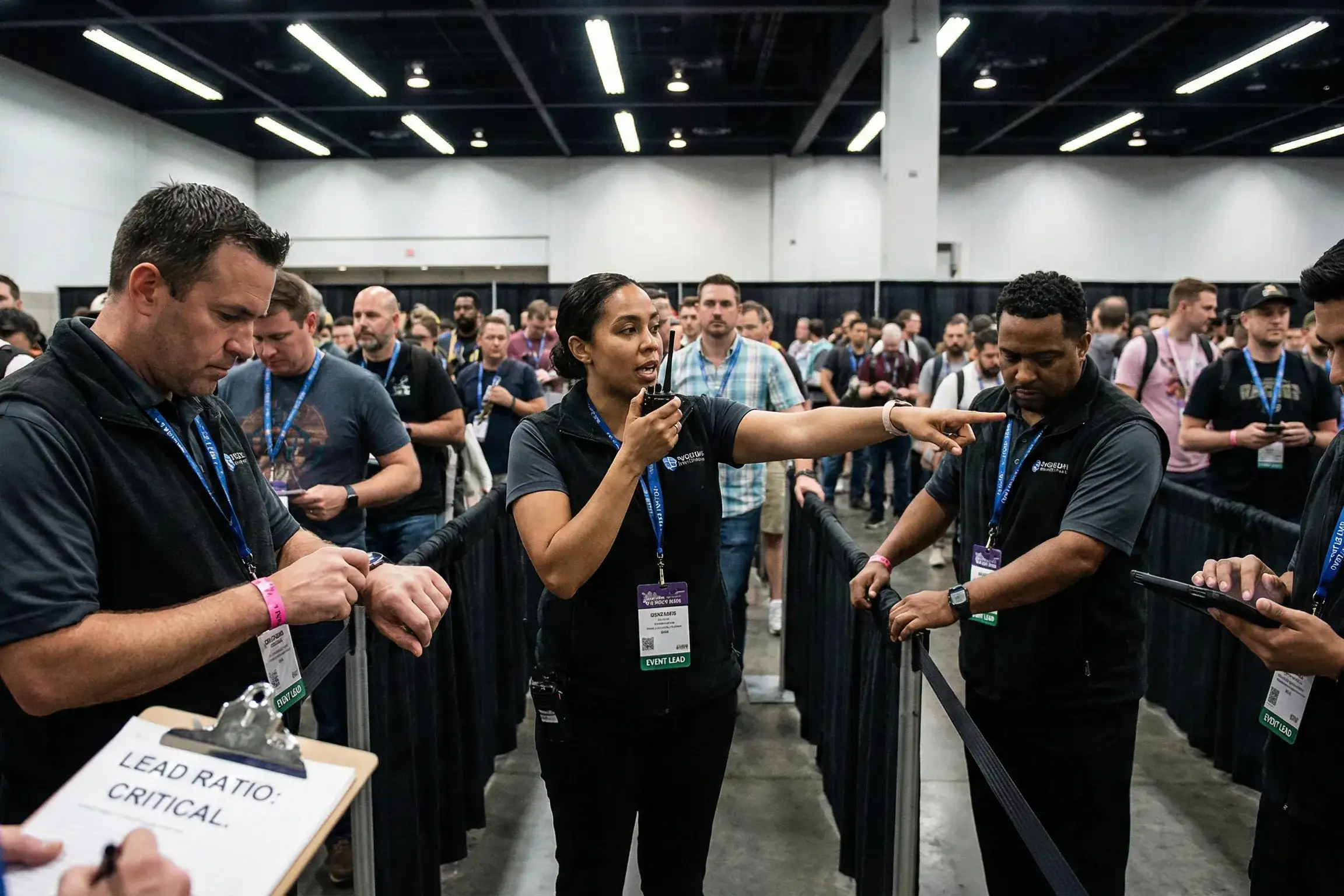
In high-demand event staffing cities, premium talent exits the pool early. Production teams and supervisors follow. General staff may remain, but without leadership density, agencies cap fulfillment. This is why late February in Las Vegas collapses faster than Orlando, where labor pools recover more predictably.
Industry insights from trade show news indicate that Q1 convention density is returning to pre-pandemic peaks, exacerbating these collision weeks. Avoiding these weeks isn’t always possible, but identifying them early is how planners preserve options.
What Demand Pressure Does to Rates, Holds, and Booking Timelines
Availability Moves First
In high-demand Q1 weeks, availability tightens before pricing reacts. Agencies shorten hold windows and reject soft bookings days or weeks before hourly rates visibly increase.
Pricing isn’t the first signal. Commitment is. As staffing demand in Q1 2026 intensifies, agencies reduce how long they can hold labor without confirmation. Seven-day holds compress to 48 hours. Soft bookings disappear entirely.
Rush premiums usually surface inside 14 days, after availability has already narrowed. At that point, planners aren’t shaping staffing strategy; they’re negotiating under constraint. The operational rule holds: when hold windows shrink, demand has already turned. This is particularly true for specialized roles like hostesses or bilingual staff where the talent pool is finite.
Roles That Bottleneck First During Q1 Demand Spikes
Leadership Is the Constraint
Staffing failures rarely start with brand ambassadors. They start when lead ratios slip, credentialed supervisors are unavailable, and one on-site coordinator manages twice the safe span of control.
In Q1, volume doesn’t break staffing plans. Leadership density does. You can still find bodies, but not enough people who can badge legally, manage flow, and make decisions under pressure.
Check in staff leads disappear first. They’re tied to systems access and venue credentialing, not just availability. When a lead stretches from a safe 1:12 ratio to 1:20, queues form quickly and escalate.
Supervisors follow. Many are booked across overlapping programs, and Q1 leaves no recovery weeks. This is why the event staffing shortages forecast should focus on who can run the floor, not who can fill a shift. For high-stakes entry points, understanding wristband credential handling is critical to preventing access failures.
Late Booking Risk Tiers by Metro (And What “Late” Really Means)
“Late” Is City-Specific
Late booking is not a universal timeline. In Tier 1 metros, staffing pipelines break inside 21 days, while Tier 3 cities may tolerate shorter windows without collapsing execution quality.
“Late” isn’t a calendar date. It’s the point where demand overtakes qualified supply. In Las Vegas or Orlando, that point arrives quickly in Q1. I’ve seen event staffing demand forecast 2026 scenarios where fully approved programs still lost supervisors at day 18.
- Tier 1 Risk: Pipelines break inside 21 days.
- Tier 2 Risk: Offers flexibility, but only if role mix is simple. Add experiential staff or premium hospitality, and timelines compress again.
- Tier 3 Risk: Absorbs risk longer, but escalation is sharper once pressure hits.
The takeaway is consistent. In metros that penalize hesitation, approval speed matters more than budget size.
Budget Buffer Math for High-Pressure Q1 Cities

Buffers Protect Supply, Not Margin
In Tier 1 metros during peak weeks, a 15–25 percent staffing buffer isn’t about absorbing cost increases. It’s about preserving access to qualified staff before availability disappears.
Most planners assume buffers manage overruns. In Q1, they preserve access. Once availability tightens, money alone doesn’t reopen the pipeline. Premium roles distort blended rates quickly. One additional supervisor or bilingual lead can outweigh ten general staff.
Multi-day programs compound this because fatigue rules and rest requirements remove people from back-to-back deployment. If buffers are flat across cities and roles, they’re underfunded where risk is highest. We see this often in crowd management scenarios, where fatigue requires higher rotation rates.
Consulting broad global meetings forecast data can help planners align their budget buffers with macro-inflationary trends in the service sector.
Q1 2026 Planning Checklist That Actually Reduces Risk
Planning Is a Sequence
Effective Q1 staffing plans follow a sequence, not a list. Partner alignment, internal rate approvals, and fallback role definitions must be locked before calendars fill, or flexibility disappears.
- Lock the Partner: The first move is locking the staffing partner early, even before final headcount. That preserves optionality.
- Pre-Approved Rates: Pre-approved rates range internally so holds don’t expire during review cycles.
- Define Roles: Define which positions are non-negotiable and where substitutions are acceptable.
- Workforce Planning: Utilize workforce planning strategies to define these roles clearly.
- Use the Forecast: Use the event staffing demand forecast 2026 as a timing tool. It tells you when sequence matters more than speed.
Ensure you have coverage for all specialised needs, from ushers for flow control to brand ambassadors for engagement.
Where Q1 Staffing Plans Usually Break
By the time staffing feels tight in Q1, it usually already is. What breaks programs isn’t demand itself, it’s timing. Leadership roles fill first, booking windows compress quietly, and options disappear before anyone sees a rate increase. Planners who treat demand forecasts as early warning signals keep control, while those who wait end up managing substitutions, escalations, and preventable risk once the calendar stops cooperating. If you want to secure your leadership teams before the Q1 rush hits, you can get a quote today to lock in availability and protect your event execution.
Ready to elevate your next event?
Join thousands of event planners who trust EventStaff.com for reliable, professional staffing solutions.
Trusted by event professionals nationwide
1k+
Events Staffed
2 million+
Guests Served
97%
Positive reviews