

If you are planning a large event, your staffing partner becomes part of your operating system. The right event staffing agencies keep arrivals moving, protect guest confidence, and prevent small issues from becoming public moments. The wrong fit creates uneven standards, unclear ownership, and reactive decision-making that attendees notice fast.
The stakes are higher than most teams admit. U.S. Travel Association reports that in 2024, travelers in the United States directly spent $1.3 trillion and supported more than 15 million American jobs. When your event sits inside that broader expectations economy, execution quality becomes part of how your brand gets judged. Here we break down the five questions that quickly reveal whether an agency can run cleanly at scale.
CEO Excerpt
"The best outcomes rarely come from bigger headcount alone. They come from clear ownership, disciplined planning, and training that holds up when arrival patterns change. When you ask the right questions up front, you can predict show-day behavior, reduce visible scrambling, and protect the guest experience across every zone." - CEO, Event Staff
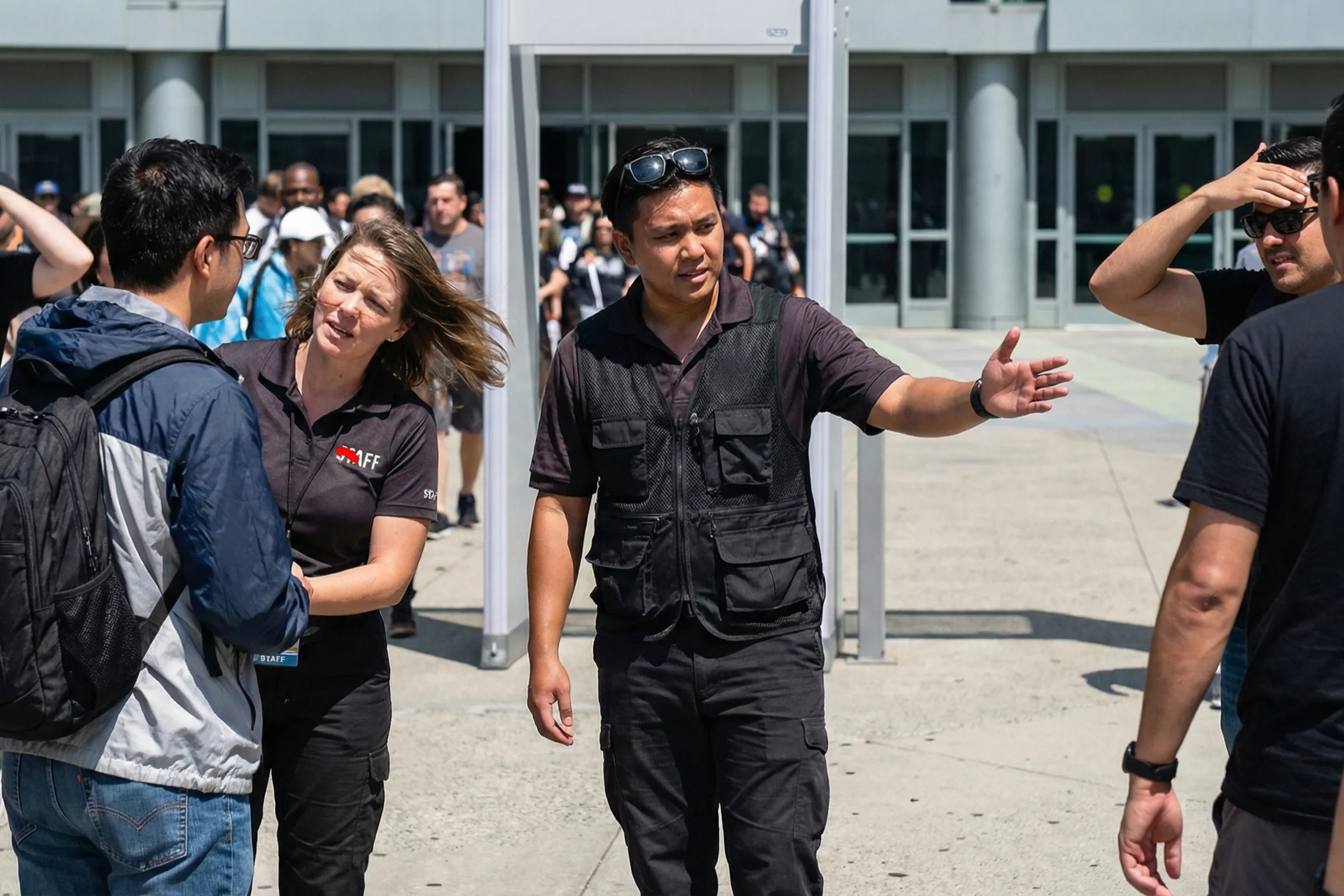
Why event staffing agencies deserve a tighter evaluation at large events
Large events are high-visibility environments where staffing performance becomes brand experience. Trade shows, conventions, and exhibitions remain a major engine for B2B outcomes, and industry tracking like CEIR’s exhibition index exists for a reason: performance shifts reflect real market pressure and operational complexity. You can have a strong program, strong content, and strong sponsors, and still lose trust if guest-facing moments feel unowned.
A useful way to evaluate event staffing at scale is to look for two outcomes that must happen at the same time.
- Flow must stay predictable for attendees. Guests should move through arrivals, questions, and exceptions without needing to “hunt” for answers. When flow is predictable, people feel the event is well-run even during peak surges.
- Optics must stay calm for everyone watching. Stakeholders and attendees read confidence through posture, language, and how issues get handled in public. When staff look uncertain or leadership looks scattered, your event can feel disorganized even if the back-end plan is solid.
Snippet-ready answer (under 50 words): Before you hire event staffing agencies, ask who owns the floor onsite, how they plan zones and peak surges, what role training looks like, how they cover no-shows with standby talent, and how they protect brand standards through escalation etiquette and conduct rules.
Top 5 things to ask before you hire event staffing agencies
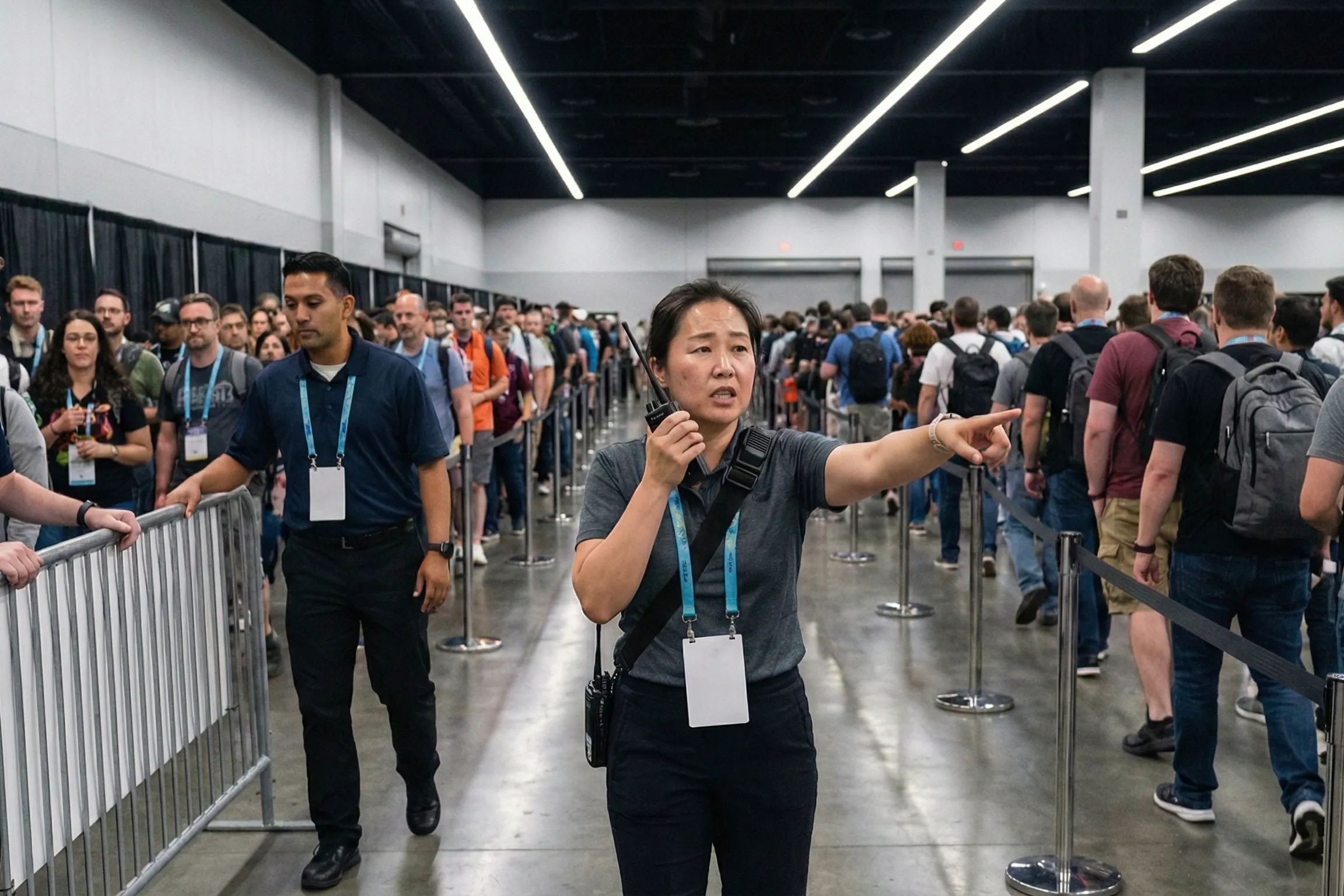
1) Who is the onsite leader, and what do they own minute to minute?
Ask for names, roles, and the chain of command, not just “we will have a supervisor.” At large events, the speed between an issue and a fix often matters more than the issue itself. You want leadership that can make decisions locally, without waiting on someone who is offsite or unfamiliar with the room.
What a strong answer includes:
- A named onsite lead plus zone leads, with clear span of control. They should be able to tell you how many staff each lead manages and what touchpoints each lead owns. You are listening for accountability by area, not a vague promise to “float.”
- A communication rhythm that protects guest-facing zones. They should explain how questions, exceptions, and escalations get routed so entrances and high-visibility touchpoints do not turn into problem-solving huddles. You want issues to move inward to leadership, not outward into the crowd.
- A peak-moment plan, not only steady-state staffing. They should describe what happens when arrivals spike, a VIP list changes, or a venue rule shifts. Strong operators have a plan for reassignment that does not look like scrambling.
What breaks when this is weak:
- Your internal team becomes the escalation layer. When onsite ownership is unclear, every question climbs to your stakeholders, which steals their attention from clients and program outcomes. That also slows decisions because people are pulled into micro-approvals.
- Zones drift and responsibilities blur. When nobody owns an area, small tasks get duplicated in some places and missed in others. Over a few hours, that drift shows up as inconsistent guest handling.
- Issues become public moments. Without an empowered lead, staff hesitate in front of attendees, and problems get solved where guests can see them. That changes the tone of the event.
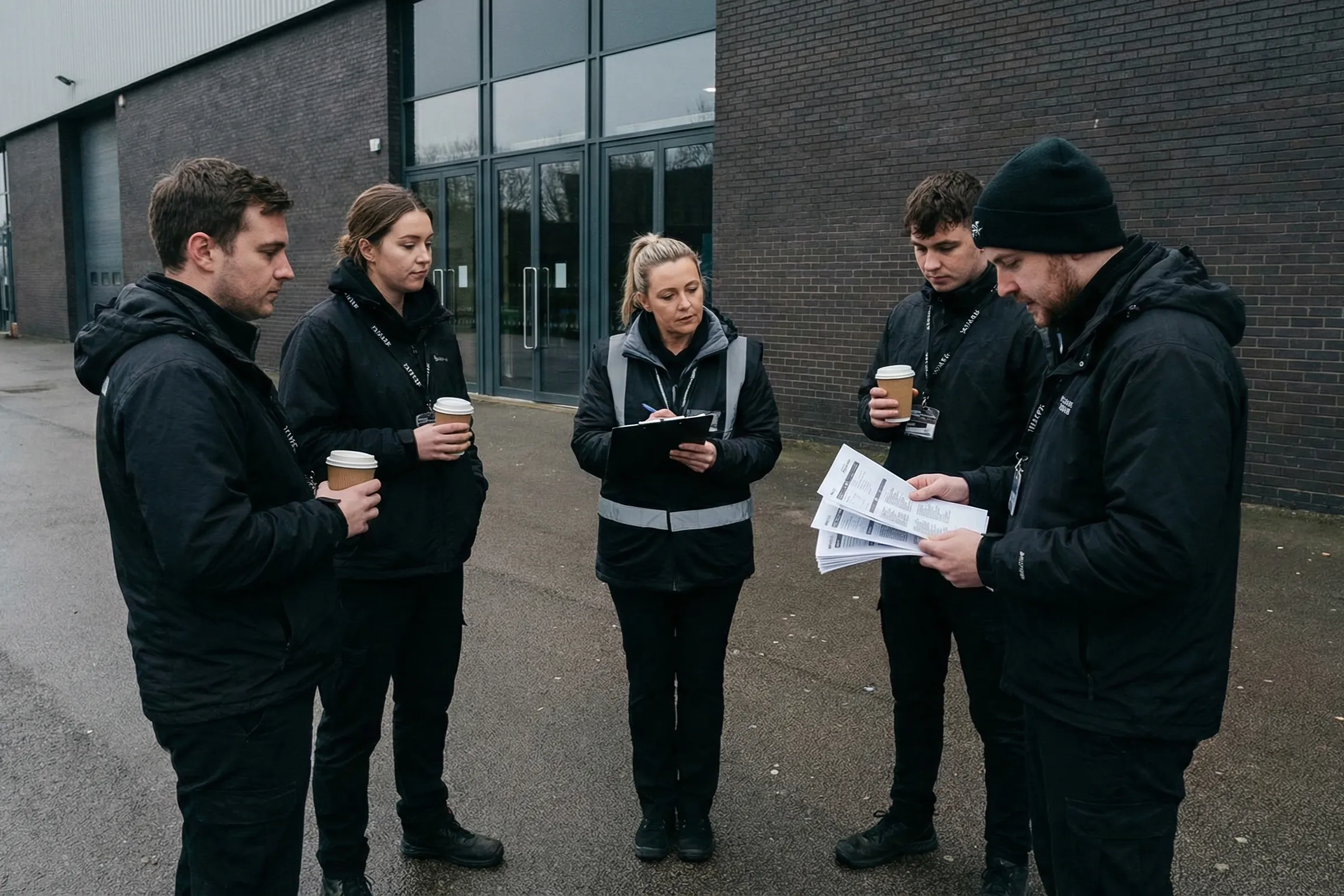
2) How do you build your bench and protect attendance, especially for early call times?
This question is about reliability under real-world conditions. Many sectors that feed event labor still report ongoing staffing strain, which means an agency’s attendance system matters. AHLA reported that nearly two-thirds of surveyed hotels continued to report staffing shortages in its February 2025 survey. You want to hear how the agency confirms attendance, holds standby coverage, and backfills without lowering standards.
What a strong answer includes:
- A clear confirmation cadence and accountability loop. They should explain when confirmations happen, how arrival is verified, and what triggers a replacement call. Strong agencies have a defined point where uncertainty becomes action.
- Standby coverage sized to your risk profile. They should describe how they staff a buffer for high-risk call times and high-impact positions, not only a generic “we can replace.” You want to hear replacement timing and who owns the decision.
- Replacement standards that match the original plan. They should explain how backfills still meet training, appearance, and guest-facing requirements. A replacement is only helpful if it does not introduce a new quality problem.
What breaks when this is weak:
- Your first hour becomes patchwork. Coverage gaps show up at doors and other visible touchpoints because those are the areas that cannot hide holes. That puts pressure on the entire day’s rhythm.
- Supervisors get trapped in logistics instead of floor control. When attendance is unstable, leadership spends time calling, texting, and rearranging rather than owning flow. That reduces proactive management.
- Guest experience changes by shift. When staffing reliability is inconsistent, the event feels different at different times of day. That inconsistency is hard to recover from.
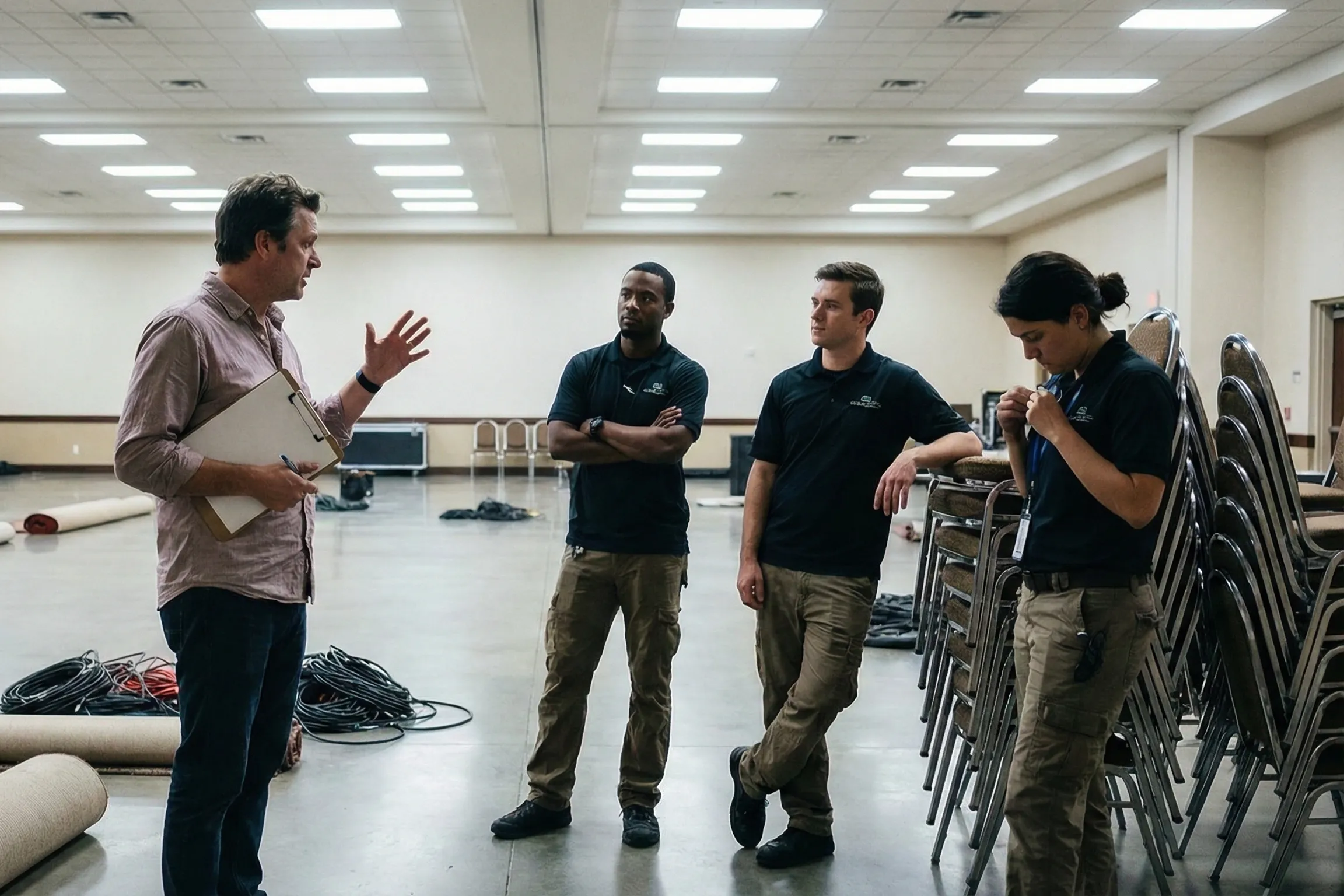
3) What does role-specific training look like before staff ever step onsite?
Staffing quality shows up in language, decision confidence, and how exceptions get handled. If the answer sounds like “orientation,” keep pushing until you hear specifics: what they teach, how they test it, and how they reinforce it onsite. A strong event staffing agency should be able to explain their training approach without hiding behind generalities.
What a strong answer includes:
- Role briefs that match your event reality. They should describe scripts for greetings, directional confidence, and how staff handle common exceptions without improvising. Strong training creates consistent guest language across every entrance and checkpoint.
- Observable behavior standards, not only appearance standards. They should explain how staff manage phone use, posture, visibility, and guest attention during lulls. You want a system that prevents “dead zone” energy in public areas.
- A reinforcement plan led by supervisors. They should describe how leaders run quick refreshes, spot-check interactions, and correct issues discreetly. Training that is never reinforced tends to decay by hour three.
Why this matters: PwC’s customer experience research highlights how strongly people value knowledgeable help and friendly service, and how experience influences purchasing decisions . For large events, staff interactions become a major part of “experience.”
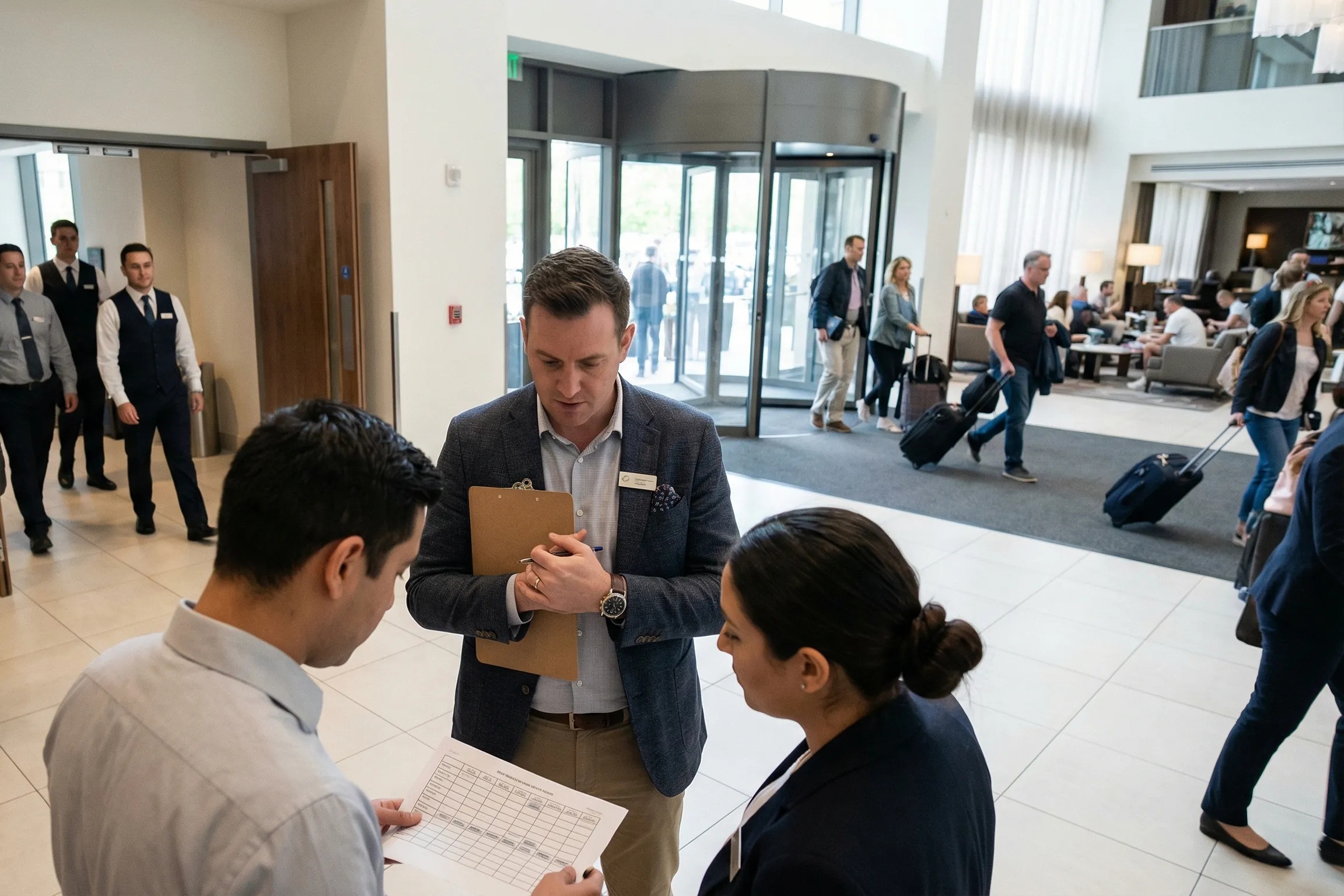
4) How do you plan zones, peaks, and breaks so coverage never collapses?
Many agencies can staff a shift. Fewer can plan the operational shape of your day. Your goal is to hear how they convert your run of show into zone ownership, pacing, and protected coverage.
What a strong answer includes:
- A zone plan tied to real touchpoints and handoffs. They should explain where staff stand, what each position watches for, and how a guest moves from one touchpoint to the next without confusion. Strong plans reduce guest questions because direction is built into the layout.
- Peak-arrival assumptions and surge coverage. They should show how staffing changes by hour, not only a single static number. You want to hear how they protect entrances and lines when arrivals cluster.
- A break model that keeps critical areas stable. They should explain how breaks happen without leaving entry points, lanes, or VIP routing exposed. Strong agencies treat breaks as part of the plan, not as an interruption.
Operational note: Harvard Business School research on “last place aversion” shows that being last in line reduces satisfaction and increases switching or abandonment behavior, which has implications for queue operations. Your staffing plan should protect the psychology of waiting, not only the mechanics.
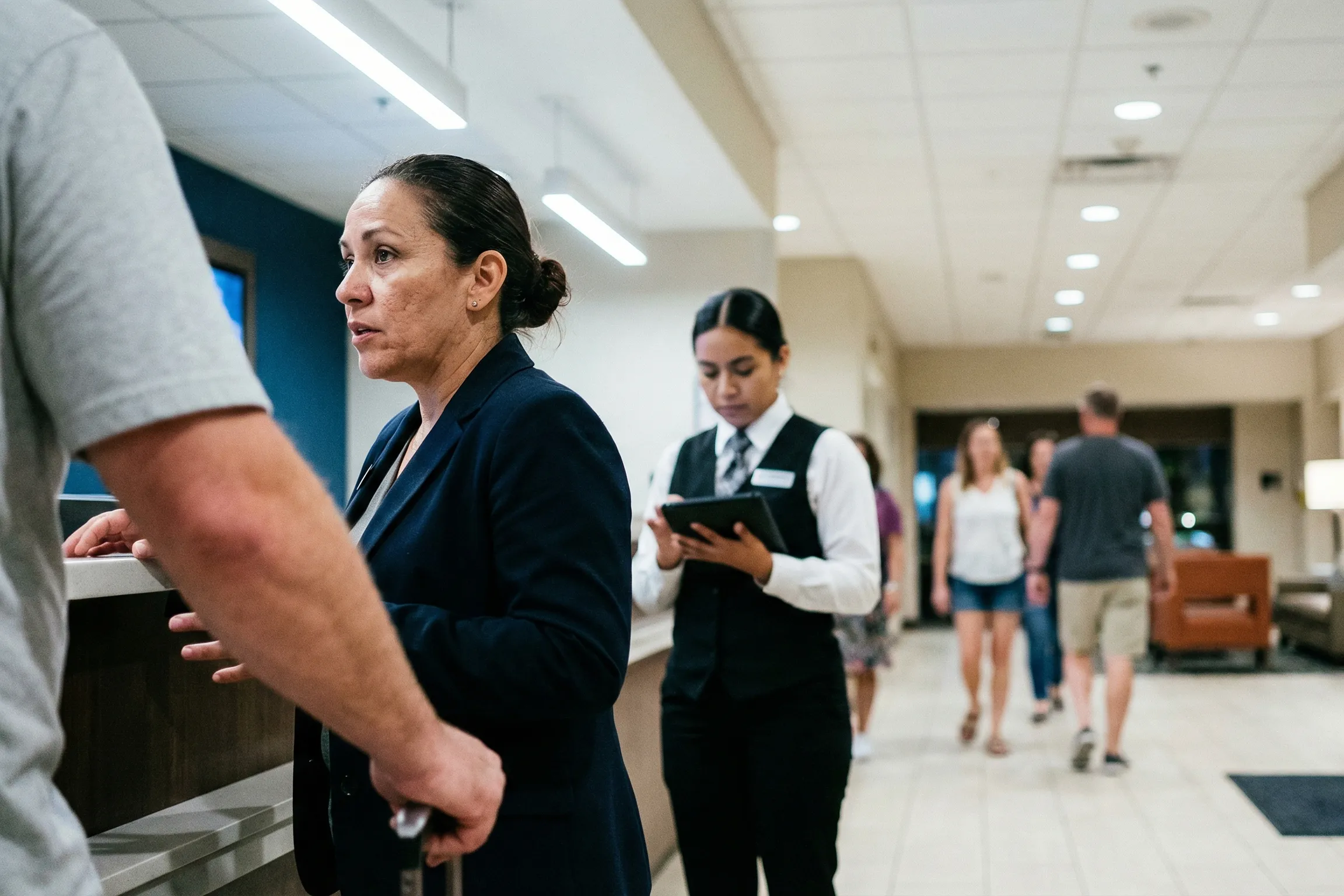
5) What are your brand protection rules and escalation etiquette when something goes wrong?
This question separates agencies that understand optics from agencies that only think in tasks. You want to know how they keep problems quiet, contained, and professional, even when pressure rises. This is where event staffing agencies prove whether they can protect your brand in public.
What a strong answer includes:
- Conduct standards that are specific and enforced. They should explain what professionalism looks like in guest-facing areas and how they handle violations. You are listening for rules plus enforcement, not rules alone.
- Escalation etiquette that keeps issues calm and private. They should describe how staff communicate problems without raising voice levels, clustering visibly, or creating a scene. Strong escalation etiquette protects guest confidence even when something is genuinely wrong.
- Documentation and learning loops you can use. They should explain what gets logged, how patterns get captured, and how post-event learning changes future execution. Reporting is part of brand protection because it prevents repeated failures.
For broader industry context on what planners are dealing with, the Northstar/Cvent Meetings Industry PULSE Survey is a useful pulse-check on current challenges and trends ().
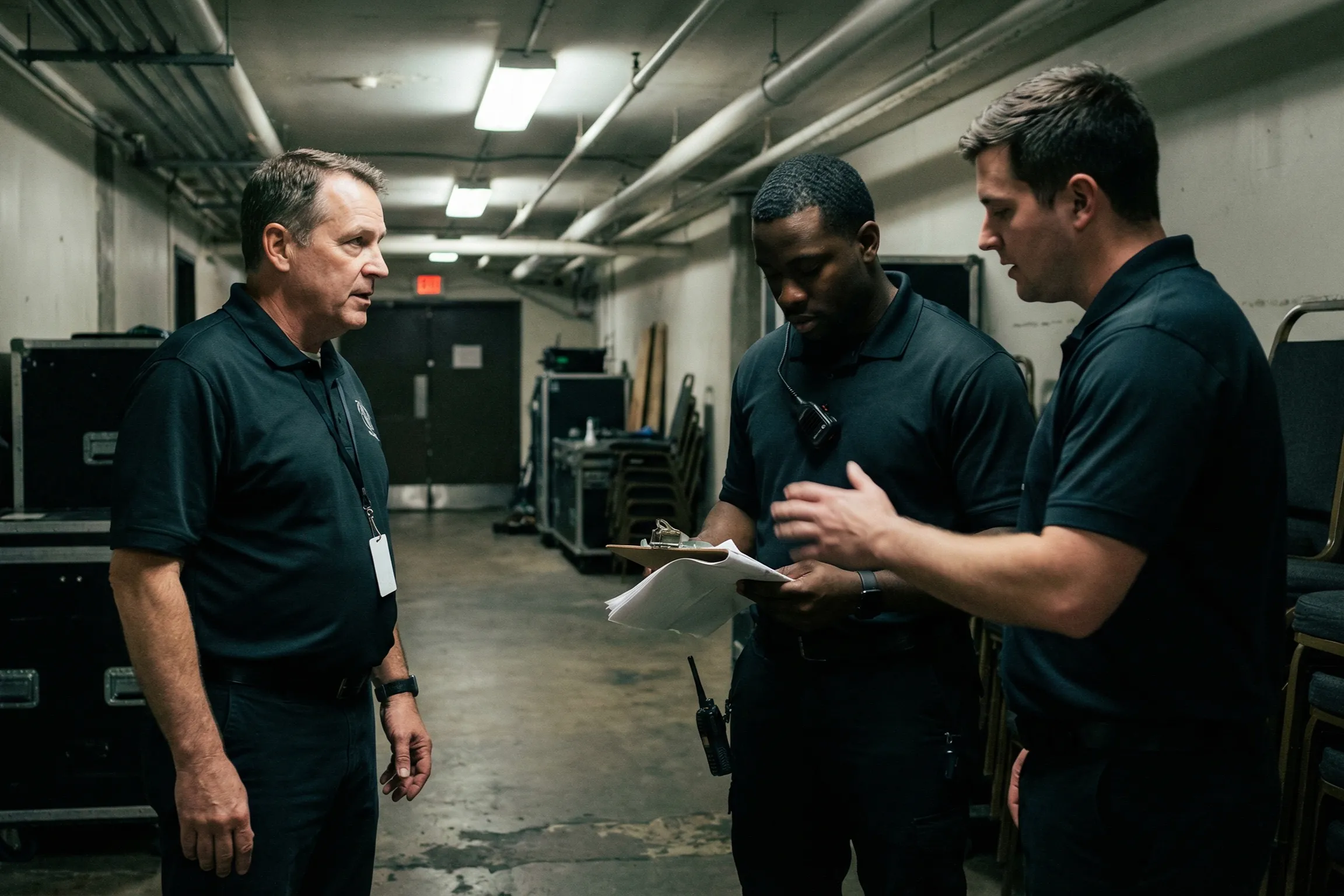
Quick vendor checklist you can copy into your selection doc
- Onsite leadership and ownership
Ask for the onsite lead’s name, their span of control, and how zones are owned across the floor. A strong answer includes supervisor coverage that matches the venue footprint and a clear escalation path that keeps decisions local and fast. - Planning discipline before day one
Request a redacted zone plan plus an hourly coverage grid that accounts for peak arrivals and breaks. If they plan well, they can explain how coverage stays stable when timing shifts, entrances compress, or a touchpoint becomes overloaded. - Role-specific training and behavior standards
Ask what staff are trained to say and do, including scripts for directional help and exception handling. Strong agencies can describe how supervisors reinforce standards onsite through quick refreshes and discreet coaching. - Attendance protection and standby coverage
Ask how call-time confirmations work and what triggers a replacement call. A reliable partner can explain backfill timing, who authorizes redeployments, and how replacement quality stays consistent with the original plan. - Brand risk control and escalation etiquette
Ask for conduct standards and how issues are raised without guest-facing disruption. A strong answer includes discretion rules, calm communication expectations, and documentation that supports after-action review.
Red flags and deal-breakers to watch for
- They cannot name the onsite lead or explain zone ownership. That usually turns into slow decisions and visible confusion during surges. If leadership cannot be described clearly before the event, it rarely becomes clear on show day.
- They say planning happens onsite. For large events, that posture pushes risk into your most public moments and forces your internal team into real-time triage. Strong partners plan the day’s shape before anyone steps onto the floor.
- Training sounds generic and role-free. If they cannot describe scripts, exception handling, and reinforcement onsite, standards will vary by shift and by individual. That variance becomes your guest experience.
- Attendance protection is vague. If confirmations and standby coverage are not structured, you should expect last-minute holes and visible reshuffles. Those reshuffles tend to hit doors and VIP-facing zones first.
- Brand risk controls are weak. If they do not have conduct standards and escalation etiquette, your brand carries the downside when something goes sideways. The issue is rarely the incident alone, it is how it gets handled in public.
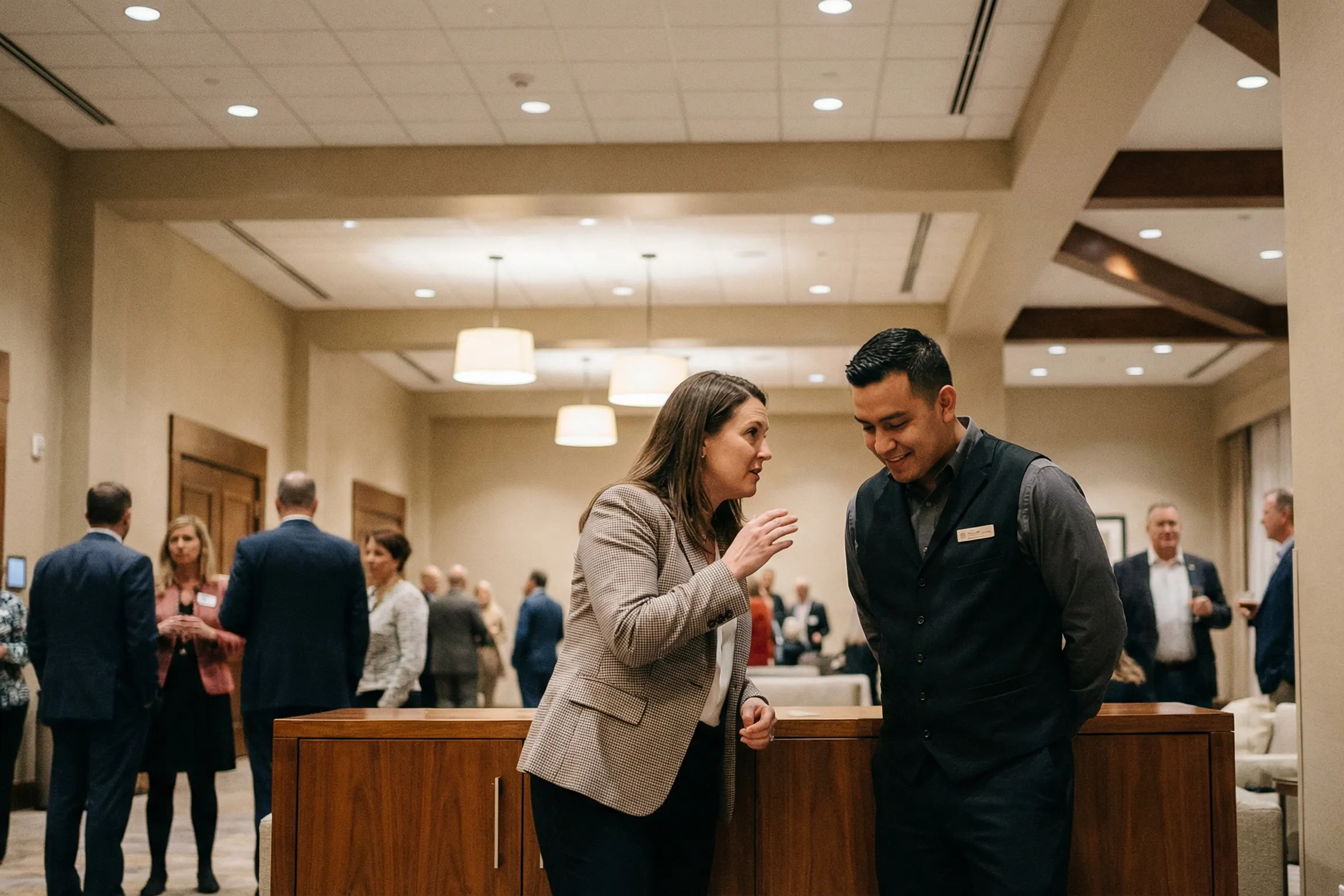
How to use these questions in a real selection process
- Start with a short discovery call and ask questions 1 and 4 first. Leadership and planning reveal maturity quickly, even before you talk about role lists.
- Request examples of their planning artifacts. Ask for a sample zone plan and staffing grid, even if redacted, so you can see how they think.
- Run a scenario test. Ask how they handle a 20-minute arrival spike, a VIP list change, and a missing staff member at call time, then listen for structured responses.
- Confirm training depth and brand protections. Ask what happens before day one and how supervisors reinforce standards during day one.
- Close with reporting expectations so you can run better after-action reviews. Ask what they track, how it is captured onsite, and what a useful recap includes.
If you want a clean way to run your vendor calls, paste the checklist above into your agenda and ask each agency to answer in writing, then on the call. That format makes gaps obvious fast, especially around onsite leadership, peak planning, and how they protect brand optics when conditions change.
Final words
Event staffing agencies can look similar on paper, especially when proposals focus on headcount and role lists. In practice, the difference shows up in ownership, planning discipline, role training, attendance protection, and brand risk control. Those five elements determine whether your event feels calm and intentional or reactive and uneven.
Use these questions as a vendor filter and as a planning tool. Even if you already have a preferred event staffing agency, the answers will surface where you need more structure before doors open. When the agency can prove leadership, planning artifacts, training standards, standby coverage, and escalation etiquette, you are not only hiring staffing. You are hiring operational stability that protects the guest experience.
Ready to elevate your next event?
Join thousands of event planners who trust EventStaff.com for reliable, professional staffing solutions.
Trusted by event professionals nationwide
1k+
Events Staffed
2 million+
Guests Served
97%
Positive reviews