
CEO Excerpt
“As event volumes grow and guest expectations tighten, the first five minutes of entry decide the operational tone for the entire show. Wristband and credential handling is no longer a simple check-in task it’s a high-stakes security function. Only trained credentialing teams can maintain lane integrity at scale, preserve revenue, and prevent the silent failures that untrained labor often misses. At EventStaff, we treat credentialing as mission-critical infrastructure, not an add-on service.”- CEO Event Staff
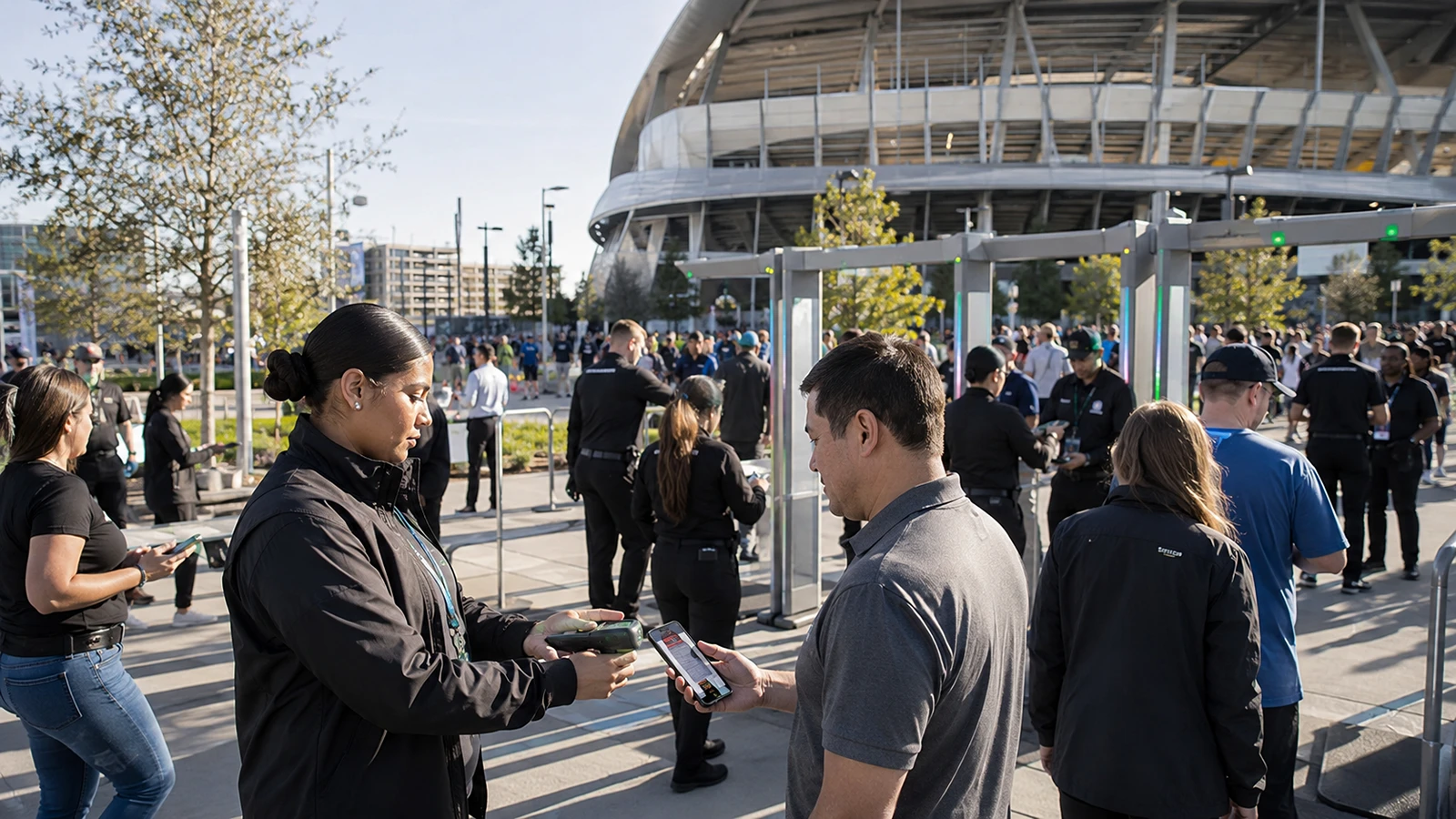
Event wristband handling isn't just a front-of-house courtesy; it's a critical revenue and security checkpoint that untrained staff break instantly. When credentialing fails, throughput can drop 40% in minutes, leading directly to queue collapse and unauthorized entry. Only professional credentialing staff understand tamper-prevention techniques, credential sequencing, and error triage required to maintain entry lane integrity during a surge. This is why credentialing mistakes are one of the fastest ways to compromise safety and profit before the event even starts.
Executive Summary
Wristband and credential distribution is a high-risk operational process. EventStaff deploys highly trained credentialing staff to maintain entry lane integrity, reducing friction errors that cause queue collapse and revenue loss. Trained staff focus on tamper prevention, rapid error triage, and synchronizing access-level verification with throughput goals, ensuring that entry remains fast, secure, and compliant even during peak surge windows.
Why Wristband Errors Disrupt Entry Flow

Misapplied or poorly verified wristbands are the most frequent cause of entry lane friction. This failure point rapidly accelerates delays, as staff must spend up to 45 seconds per guest correcting errors that should have taken three seconds. The primary goal of professional event wristband handling is to reduce this point-of-scan friction.
Misapplication and Wrong Colors
A loose or improperly fastened wristband is not just an aesthetic issue; it's a security vulnerability. If staff fail to cinch the band correctly, it can be easily transferred, circumventing your access control strategy entirely. Furthermore, when untrained staff rush, they frequently apply the wrong zone-color, triggering alarms or requiring time-consuming secondary verification downstream. Professional credentialing staff use a split-lane method, verify zone-color against the ticket type before the application point, and are trained on proprietary fastening techniques to prevent transfer.
Lane Assignment Logic
Untrained staff treat all lanes equally, which is a major mistake. Effective credentialing queue management requires staff to understand lane assignment logic. For instance, a VIP lane processing one guest per minute should never interface directly with a General Admission surge line processing 240 guests per minute. Trained ticket verification staff direct guests into micro-queues based on credential complexity (e.g., RFID vs. QR code vs. Photo ID), minimizing contact time at the final scan point. To maintain flow under intense pressure, see our guide on staff stadium arena events.
Why Credential Mistakes Create Security Risks
The largest financial and compliance risk associated with entry operations is not slowness but failed security. When event wristband handling is managed by casual labor, unauthorized access and forgery risk reduction become impossible tasks. This compromises the integrity of the entire venue.
Unauthorized Access and Invalid QR Codes
The core function of credentialing staff is revenue protection. Every duplicate or invalid QR code that slips through represents a direct loss. Trained personnel are proficient in multi-step ID/QR verification, quickly identifying digital forgery patterns or inactive credentials. They are trained in consistent scanning process protocols that treat every badge or band as a potential tamper-prevention test. This disciplined approach ensures that your revenue and restricted areas are protected, which is essential for large-scale operations. For insights into compliance, review this external resource on venue access control.
Escalation Flow
When a duplicate ticket or an invalid credential appears, the untrained reaction is hesitation, which causes a bottleneck. Professional credentialing staff operate using a clear escalation procedure: immediately flag the issue, call for a supervisor, and move the guest laterally out of the primary flow to the credential error triage area. This ensures the main entry line remains fast-moving, protecting entry lane integrity even when a security risk is being managed. This requires staff to be adept at managing immediate risk, which is a key component of effective credential troubleshooting.
Why Untrained Teams Break Queue Momentum

Surge-moment throughput is the ultimate test of event wristband handling. When thousands of guests arrive following a train schedule or major traffic clearance, untrained staff are overwhelmed, leading to queue breakdown.
Surge Breakdown and ADA Impact
During a surge window, guest density increases rapidly. If wristband distribution mistakes happen at the initial touchpoint, the queue collapses backward. Untrained staff often fail to maintain the physical separation of the ADA pathway, causing adjacent lanes to slow to a near-halt. Trained credentialing staff prevent this by implementing micro-queues, proactively monitoring line geometry, and immediately directing overflow into reserved surge lanes. They understand that guest patience directly correlates with perceived movement, making crowd control a direct result of effective credentialing queue management. To understand the emotional impact of queuing, read this external study on guest patience perception.
Staff Response and Lane Balancing
Effective credentialing staff are not stationary. Supervisors monitor surge-moment throughput in real time, shifting resources to relieve pressure. This lane balancing requires immediate, precise deployment. For example, if a lane drops below the benchmark of 220 guests per hour, a trained floater is deployed to assist the scanner or provide pre-scan coaching, protecting entry credential process speed. They know that this rapid-issue wristband bin deployment is critical to sustaining line speed.
How EventStaff Ensures Credential Integrity
EventStaff approaches event wristband handling as a specialized, security-adjacent function. We select and train personnel based on operational acumen and flow management skills, not just customer service.
Our training focuses on credential sequencing, which dictates the precise order of ID check, ticket scan, wristband application, and activation. We train staff on forgery risk reduction and the importance of wristband event security protocols to maintain the financial integrity of your event. By standardizing every step, EventStaff guarantees a consistent and reliable entry flow. This focus on process ensures that every step of the entry credential process is managed by an expert, minimizing liability and maximizing surge-moment throughput for every client.
Final Insight
Event wristband handling is a non-negotiable compliance point that requires specialized operational discipline, not general customer service. By investing in trained credentialing staff who understand the mechanics of flow, sequencing, and security triage, event producers can guarantee entry lane integrity, protect revenue, and deliver a fast, safe experience. If you are ready to stabilize your next high-volume entry, you can get a quote now. Don't let the first five minutes of your event be defined by a slow, unsecured choke point.
Ready to elevate your next event?
Join thousands of event planners who trust EventStaff.com for reliable, professional staffing solutions.
Trusted by event professionals nationwide
1k+
Events Staffed
2 million+
Guests Served
97%
Positive reviews