

CEO Excerpt
"In event entry, time is not just money; it's crowd safety and brand trust. I built EventStaff around the principle that a guest's first experience shouldn't be a choke point. We don't guess; we engineer flow. Our job is to operationalize the math of queuing theory so that when thousands of guests arrive at once, the system holds. That control is the difference between a successful gate opening and a systemic failure."- CEO Event Staff
Event queue management is the discipline of turning unpredictable arrival waves into stable, controlled entry. When guest volume spikes, queues either absorb that pressure or fail in minutes. Professional teams use demand forecasts, lane design, and real-time decisions to keep movement predictable, so guests enter on time, security stays compliant, and the event schedule doesn’t slip before doors even open.
Executive Summary
Event queue management is a precise discipline that turns volatile arrival patterns into controlled throughput. EventStaff’s approach focuses on operationalizing the process, maintaining a target rate of 220–260 guests per scanner per hour. We use data-driven lane design, specialized roles (Spotters, Wristband Teams), and synchronized security to ensure high-volume entry remains predictable, safe, and efficient, safeguarding the event schedule and guest experience.
Why Queue Management Requires Professional Planning
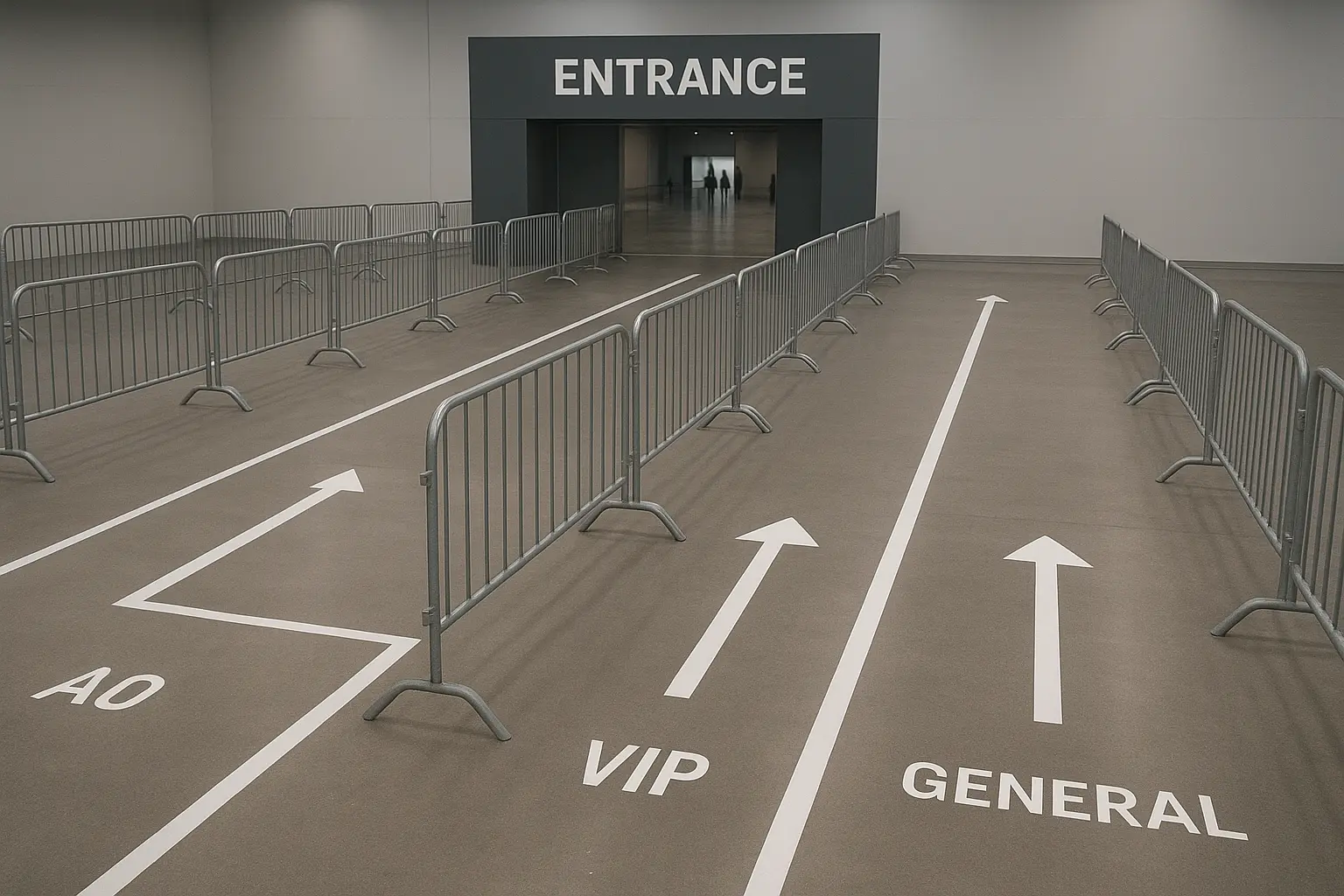
Most failures in event queue management start long before doors open. Planners underestimate arrival clustering, overestimate scan speed, and assign line control as a side duty. Professional queue managers combine transit data, ticket-scan assumptions, and security rules into a lane plan that defines staffing by position and time. A core objective is maintaining a throughput standard of 220–260 guests per scanner per hour. Modern event crowd science feeds event queue management with tested assumptions about arrival waves, lane use, and guest patience, so entry is built on data, not guesses. Understanding the hidden costs of poorly managed flow is the first step toward a robust plan.
Predicting Guest Surges with Real-Time Flow Models
Surges arrive in four to seven minute waves triggered by parking patterns, train timetables, and pre-game activities. With modern tools, event queue management teams review forecasts with only five to ten percent variance. Supervisors adjust lane distribution as density pockets form, protecting primary corridors and keeping perimeter space usable for emergency and operations access.
Understanding Scan Friction and How It Multiplies Delay
Scan friction appears when credential processing takes longer than planned, even by a second. Old devices, mixed QR formats, and guests searching for passes increase handling time at the scanner. Trained scanning leads separate credential types into dedicated lanes, standardize devices, and coach guests before they reach the front. Those changes can cut average processing time by twenty percent and keep upstream lines from stalling. For a deeper dive into crowd behavior, review the psychology of event flow at stadiums.
ADA and VIP Routing as Flow-Stabilizers, Not Exceptions
When ADA lanes are blocked, adjacent lanes slow as guests try to slide around mobility devices. The same pattern appears when VIP and sponsor guests enter general admission lines. Professional queue teams design ADA, VIP, and staff-only paths as protected flows, with clear signage and staff guarding interfaces. That structure protects compliance and stops localized issues from degrading the entire entry plan.
Essential Queue Management Staff Roles
.webp)
Strong event queue management depends on roles that work as a system, not a row of isolated posts. Entry teams need specialized positions for scanning, wristbanding, wayfinding, spotting, and supervision. When those roles are staffed correctly, each lane performs at its designed capacity and small issues stay contained instead of cascading into full slowdowns.
Scanners
Scanners control effective throughput for each lane. A common target is two hundred twenty to two hundred sixty guests per hour per scanner, depending on credential complexity and security posture. Professional event entry staffing teams watch for scan friction, request lane splits, and use verbal prompts so guests arrive with passes ready. That keeps lanes moving and prevents the first checkpoint from becoming the main bottleneck. At complex gates, event queue management and event entry staffing coordinate so scanners always have nearby support.
Wristband Teams
After scanning, wristband application often becomes the slowest step. To prevent long line management issues, trained wristband teams set up two micro-posts on each lane and work in parallel. This cuts dwell time at the wristband point, reduces stop-and-start sequences, and lets scanners maintain their rhythm. Coordinated wristband + scanning staff treat wristbanding as a throughput element, not a purely cosmetic task. In practice, event queue management assigns wristband + scanning staff as one integrated resource that protects downstream speed.
Wayfinding Staff
Wayfinding staff manage line geometry and prevent corridor bleed-over. They keep guests inside marked pathways, protect ADA routes from encroachment, and redirect overflow into secondary lanes when primary capacity nears its limit. Their work supports crowd flow queue control and stabilizes the visual order of the site, so guests always understand where to stand and where to move next.
Queue Spotters
Queue spotters act as early warning sensors. They walk each line, count guests between cones or stanchions, and look for local slowdowns. Spotters alert supervisors when density rises above plan or when flow lag appears in one lane. That allows leadership to add staff, open relief lanes, or rebalance traffic before frustration or safety risks emerge.
Entry Supervisors
Entry supervisors design and protect the system in real time. They coordinate security, scanning, wristbanding, and ticket support into one operational picture. When a problem appears, the supervisor decides whether to reroute a segment, execute a wave release, or escalate to venue control. Treating entry lane operations as part of event queue management means supervisors can adjust posts quickly without leaving gaps.
The Fundamentals of Queue Design
Every strong event queue management plan starts with the lane map. Lane count, spacing, and layout affect capacity and guest perception. Professional teams translate ticket volume, arrival curves, and credential rules into lane arrays that handle peaks without wasting space. That design stage determines how easily the event absorbs late arrivals or unexpected spikes.
- Lane Distribution: Lane distribution is how capacity is split across general admission, premium, ADA, and staff routes. When too many lanes serve low-volume segments, general admission lines grow longer than necessary. Professional queue managers model multiple scenarios, select a base distribution, and define conditions for opening or closing lanes. That creates a controlled, data-driven response rather than improvised changes under pressure.
- Buffer Zones: Buffer zones absorb sudden increases in volume and give staff room to reset lanes. A well designed buffer keeps the scanning zone clear even when long lines are building further back. Without this space, small disruptions at checkpoints push pressure directly into security posture and can compromise screening. Modern queue management for events treats buffer space as essential capacity, not leftover floor.
- Micro-Queue Segmentation: Breaking long lines into micro-queues helps control pressure and expectations. Instead of one massive line, guests move through three to five short segments, each monitored by staff. This allows controlled releases into the scanning area based on live throughput optimization data. The result is smoother perceived movement and better line stabilization, even when total wait time is similar. For best practices in large venues, see our short read on staff stadium arena events.
How Professional Staff Stabilize Entry Flow
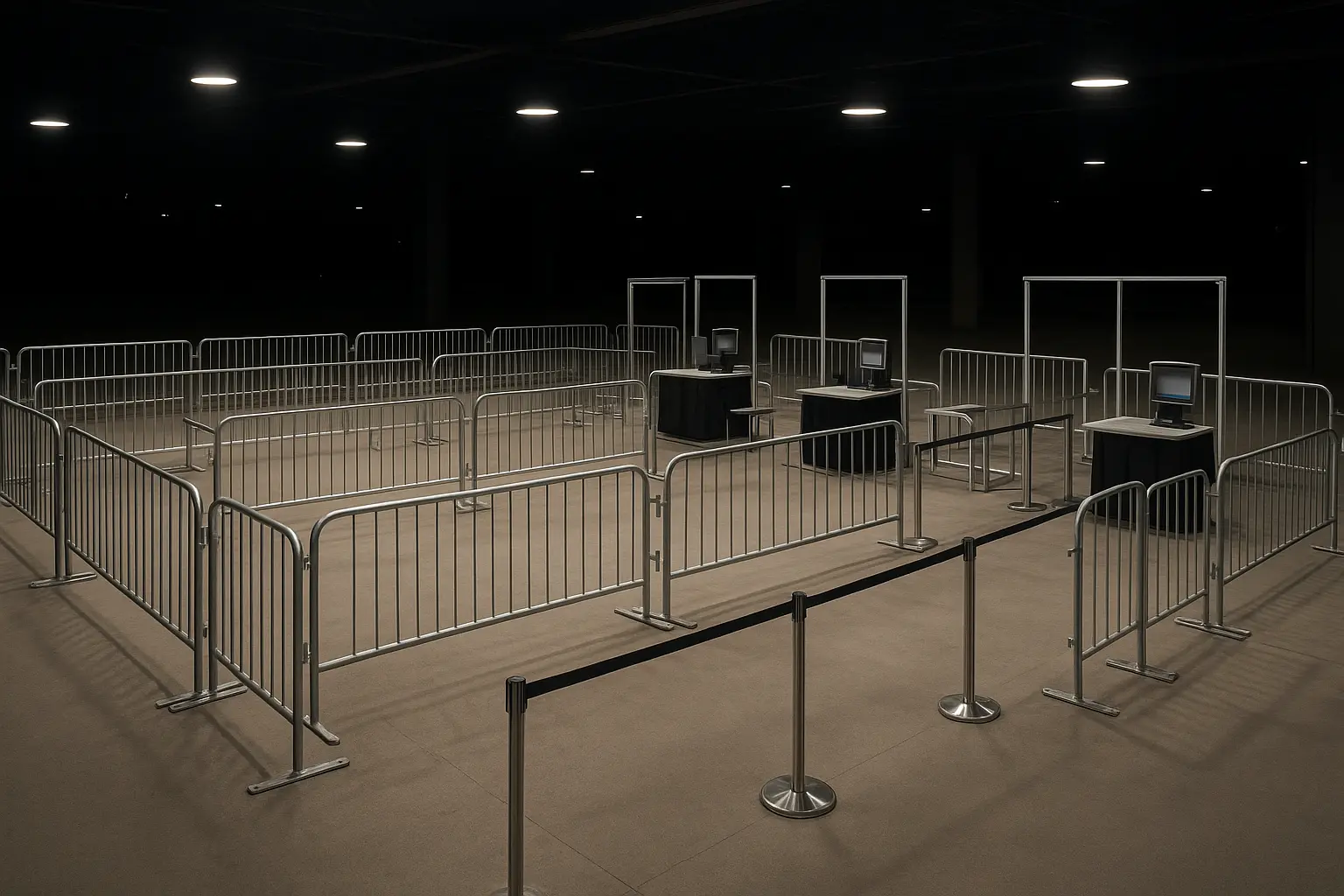
Stability in event queue management comes from staff who recognize early failure patterns and act before they spread. Teams study the first thirty minutes of operation, compare live numbers against the fast entry staffing plan, and adjust lane counts, buffer sizes, or staffing ratios so the system stays within designed limits.
- Bottleneck Prevention Techniques: Professional teams look for first signs of slowdown, not just visible jams. When one lane starts trailing others, supervisors add a second scanner, move experienced staff into that position, or divert a portion of guests to a nearby route. These moves protect the crowd flow queue control plan and stop one bad line from becoming the default choice simply because guests follow the largest group.
- Surge Response Under High-Traffic Conditions: Surge windows often last only a few minutes, yet they define how guests feel about the entire entry process. During these moments, staff expand lanes laterally where space allows, open reserved relief lines, or temporarily repurpose low-volume premium paths to clear general admission. Teams trained in high-traffic event staffing treat these decisions as standard procedures, which keeps response times consistent. For peak nights, event queue management includes specific high-traffic event staffing rules based on realistic worst-case flows, not just averages.
- Guest Communication as Flow Control: Clear instructions reduce hesitation. Staff at key points remind guests to prepare credentials, empty pockets if required by security, and choose the lane that matches their ticket type. This lowers individual handling time and cuts questions at checkpoints. It also supports long line management by showing visible control and reassuring guests that the queue is organized and moving. For a deeper analysis of the factors affecting wait times, read this study on queuing theory.
Synchronizing Bag Check and Credentialing
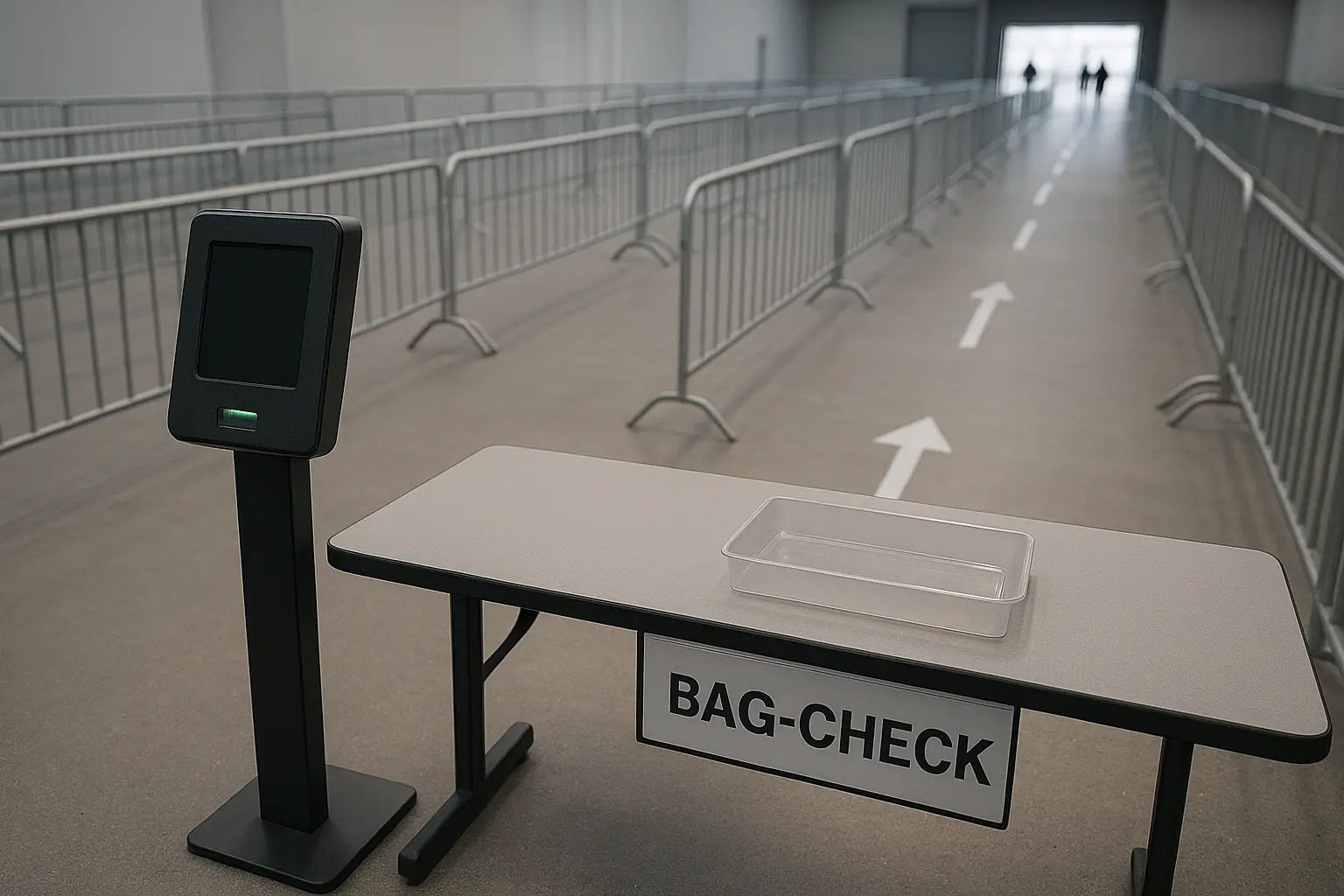
Many entry failures come from a mismatch between bag check speed and scanning speed. If bags are inspected more slowly than tickets are read, pressure builds in front of security. If scanning is slower, cleared guests stack up between zones. Effective event queue management requires a synchronized design where bag check and scanning operate as one system, with clear ratios and communication between teams. Well designed bag check + credential flow keeps security strong without creating avoidable delays.
- Single-Step and Multi-Step Entry Models: Some events succeed with a single-step process where bags are inspected and tickets scanned at the same station. Larger or higher risk shows often need a multi-step model, where guests pass through security before reaching the scanner. Planners choose the model based on threat profile, credential variety, and expected volume, then train staff so each step understands its role and capacity requirement. For large productions, event queue management codifies bag check + credential flow into written procedures instead of informal habits.
- Preventing Upstream Delays Through Sequencing: Sequencing defines the order of security tasks. To keep flow stable, planners often create separate lanes for no-bag guests and heavily loaded guests. They place faster processes first, so brief interactions finish quickly and those guests move away from the zone. That sequencing reduces cross-lane pressure and keeps both types of lanes operating near target throughput.
- Managing ADA, VIP, and Staff Entry: ADA guests, VIPs, sponsors, and staff require separate handling but still draw on shared site capacity. When those flows are poorly designed, they interfere with general admission operations; when planned correctly, they reduce pressure on the main lanes. Clear physical separation, dedicated staff, and explicit routing rules agreed before doors open keep these access types predictable and low-friction. For a comprehensive overview of safety, see this external resource on event safety management.
Queue Management Across Event Types
While the principles stay constant, event queue management looks different for each event type. Festivals use multiple gates across large perimeters, so capacity and staffing must scale horizontally. Conventions rely on badge scanning that creates unique friction, especially during morning arrival peaks. Sports and concerts feature sharp, synchronized waves that demand dense lane arrays and precise gate launch times. Across formats, event queue management uses event crowd science to decide how many lanes to open, when to stage surges, and where to place relief capacity. This strategic planning applies equally to complex events like trade show staffing.
Weather-Responsive Queue Planning
Weather can undermine a solid queue plan if it isn’t built into the model. Heat requires more frequent rotations, hydration near lines, and shade where possible. Rain slows walking speed and ticket handling and can affect device performance. Cold reduces finger dexterity and may require more staff at scanning and bag check positions. Accounting for these factors in the staffing and lane plan prevents avoidable slowdowns and improves guest tolerance when conditions are tough.
How EventStaff Builds Queue Management Teams
EventStaff approaches event queue management as a specialized service. Crews are trained on arrival curves, scanning patterns, and security integration before they reach the site. Supervisors run radio networks tuned to queue behavior and teach staff to report anomalies early, not just emergencies. That preparation gives organizers access to teams who already understand how to manage event queues under pressure and can apply consistent methods across venues. To see how professional teams run complex operations, explore large-scale staffing logistics.
Final Queue Management Checklist
Before doors open, planners can review a focused checklist:
- Lane Mapping: Are lane counts and distributions mapped precisely to ticket types?
- Staffing Confirmation: Is staffing for queue management for events confirmed by hour, including breaks and relief posts?
- Access Route Integrity: Have ADA, VIP, and staff routes been walked end to end?
- Buffer Zones: Are buffer zones, signage, and wayfinding positions clearly marked?
- Supervisor Triggers: Have supervisors agreed on triggers for lane changes, surge actions, and temporary closures?
Conclusion and Next Steps
Strong event queue management protects guest safety, brand perception, and the show schedule. It depends on deliberate lane design, trained staff, synchronized security and scanning, and a realistic view of how crowds behave. When those elements are in place, lines become predictable and peak periods remain manageable. To stabilize your next high-volume entry, partner with EventStaff for queue-focused event entry staffing and get an instant quote today. That expertise has been proven across Festivals, Corporate events, sports, and large public events.
Ready to elevate your next event?
Join thousands of event planners who trust EventStaff.com for reliable, professional staffing solutions.
Trusted by event professionals nationwide
1k+
Events Staffed
2 million+
Guests Served
97%
Positive reviews