

Christmas–New Year event staffing requires elastic labor models to withstand a documented 40% surge in seasonal volatility. Deploying high-mobility floaters neutralizes the specific risks of gridlocked transit and sudden absenteeism common in December. This dynamic approach prevents minor gaps from becoming cascading service failures during peak operational hours. We must first examine the specific stressors driving this instability.
CEO Excerpt
December isn't just busy; it’s volatile. Static rosters break under pressure. The fix? Elasticity. Learn how high-mobility floaters and 'Pivot Protocols' neutralize chaos to protect guest experience during the year's most critical operational weeks.- CEO Event Staff
Part 1: The Anatomy of Holiday Volatility
To really get why floaters are non-negotiable, we have to look at why holiday labor logistics are so shaky to begin with. December has a unique set of pressures that just don't exist in May or October.
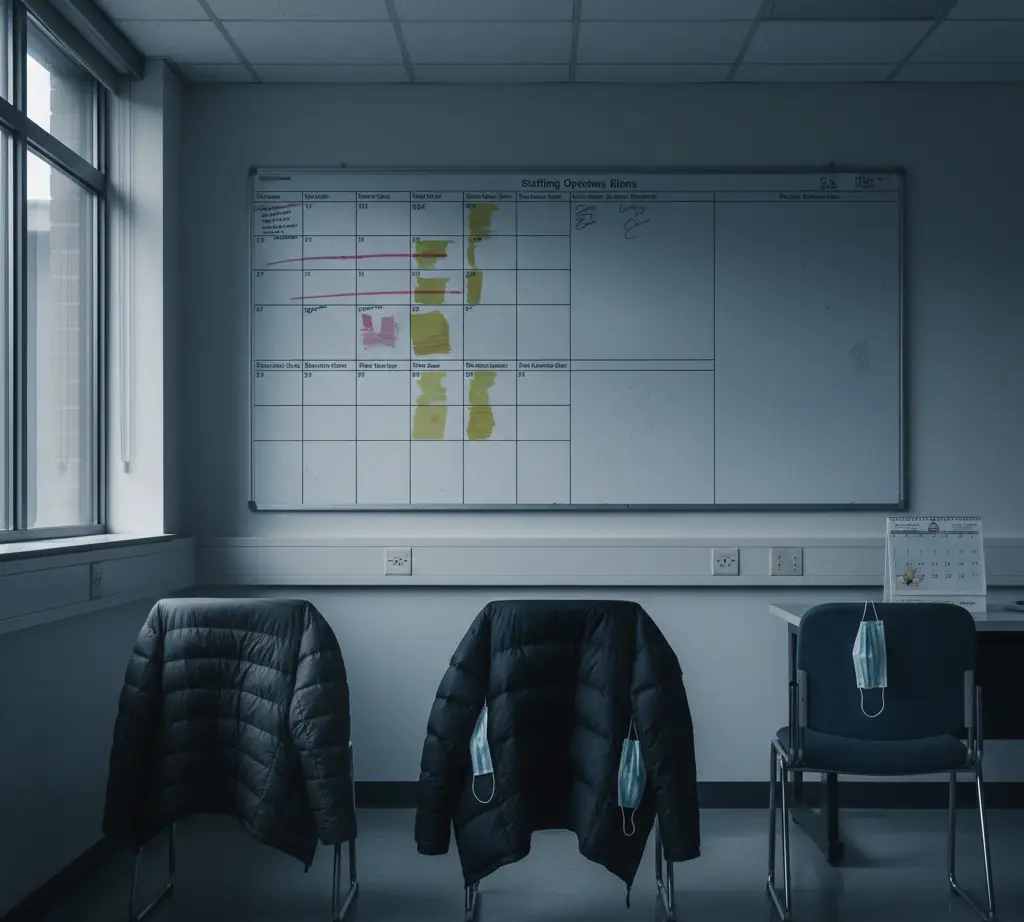
The "Silly Season" Absenteeism Spike
There’s some interesting data on this. According to the Bureau of Labor Statistics, seasonal absenteeism spikes significantly during the final two weeks of the year.
And look, it’s not always because people are being negligent. It’s a perfect storm. You’ve got flu season peaking, transit failures because of holiday schedules, and general fatigue. People are tired. If your staffing plan assumes 100% on-time attendance, your plan is destined to fail. I always tell my clients: in the context of Christmas–New Year event staffing, you have to build the margin of error directly into the roster. You have to assume someone won't show up.
The Transit Variable

If you're in a major hub like New York, London, or Los Angeles, you’re at the mercy of the city. The movement of your staff is dictated by public infrastructure that is barely holding it together. On New Year’s Eve, road closures for security perimeters or fireworks can turn a standard 20-minute commute into a 90-minute ordeal.
I’ve seen it happen a dozen times. Fixed-position staff are late, and it leaves massive gaps in your coverage. Floaters are the patch. They provide that immediate coverage so the guest never sees the backend logistics crumbling. They smooth it over.
The Guest Psychology Factor
Here’s something people forget: Guest expectations during the holidays are hyper-inflated. They paid double the normal ticket price. They want perfection. They’re psychologically demanding it.
Plus, and let’s be real here, intoxication levels are statistically higher. People start drinking earlier. This changes the nature of holiday operations from purely service-oriented to safety-oriented. Your staff needs to be faster, more alert, and way more responsive. A static waiter can’t just leave their section to help a stumbling guest without neglecting their tables. A floater? That’s literally their job.
Key Takeaway: Volatility is inevitable during the holidays due to illness, transit gridlock, and inflated guest expectations. Floaters are not "extra" staff; they are the necessary margin of error that prevents these external factors from collapsing your internal operations.
Part 2: Defining the "Floater" in High-Stakes Environments
In generic event planning, people tend to look at floaters as "runners" or "gophers." You know, the inexperienced staffer you use for grunt work.
That’s a mistake.
In the elite tier of Christmas–New Year event staffing, we flip that definition. The floater has to be your strongest, most versatile asset. Think about it, they need to be able to jump into any role at a moment's notice.
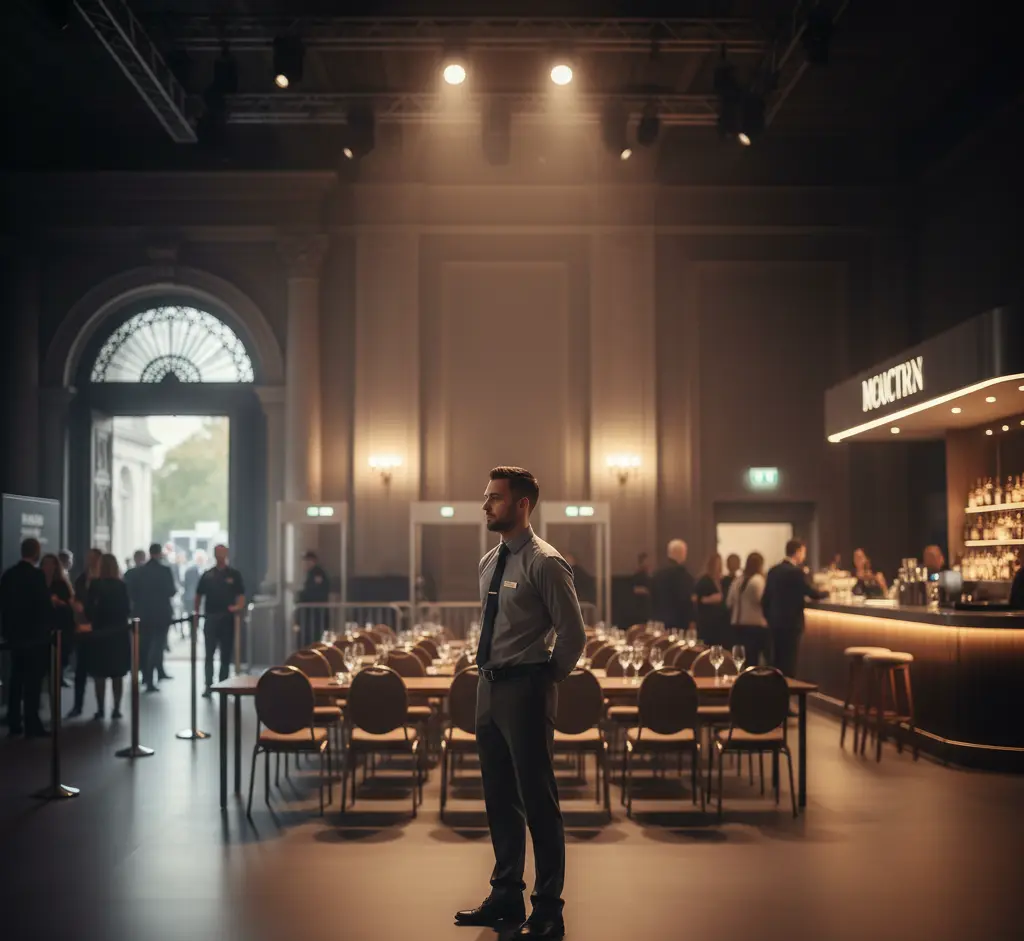
The Skill Matrix of an Elite Floater
A floater deployed for a high-end holiday activation needs what I call "Cross-Departmental Fluency." They need to understand:
- Front-of-House Protocol: Can they greet a VIP and handle the check-in software without panicking?
- Service Mechanics: Do they know how to pour wine correctly? Can they try pass? Can they clear a table efficiently?
- Security Basics: Can they spot a crowd crush forming? Do they know where the egress blockages are?
- Logistics: Do they know where the backup inventory is? Can they work a radio?
When you invest in Christmas–New Year event staffing, you’re paying for this versatility. A floater is a problem-solver who doesn't need a script. They’re basically "Assistant Captains," moving autonomously to where the fire is burning hottest. For a deeper look at the costs associated with specialized roles, check out our guide on hidden staffing costs.
The "Eyes on the Floor" Function
There’s another layer to this. Beyond the physical stuff, floaters are your intelligence network.
Think about your fixed staff. A bartender has tunnel vision; they’re looking at the glass and the taps. A check-in agent is staring at an iPad. But the floater? The floater is looking at the room. They’re the first ones to notice a spill on the dancefloor. They see the fire exit sign that’s getting blocked by a pile of coats. They see the VIP looking confused near the restrooms.
This situational awareness is the hidden value of premium Christmas–New Year event staffing. It’s the difference between catching a problem early and dealing with a disaster later.
Staffing Strategy: Stop viewing floaters as junior runners. Elite floaters possess "Cross-Departmental Fluency," acting as autonomous Assistant Captains who maintain situational awareness while fixed staff focus on task execution.
Part 3: The "Pivot Protocol": Strategic Deployment
Okay, so you hired floaters. Great. But it’s not enough to just have them standing around. You need a doctrine for how to use them.
We call this the "Pivot Protocol." It’s a fancy name for a simple concept: pre-determined triggers that tell your floaters where to go. Without this, I guarantee you they’ll end up congregating in low-stress areas (like the kitchen), which wastes your budget.
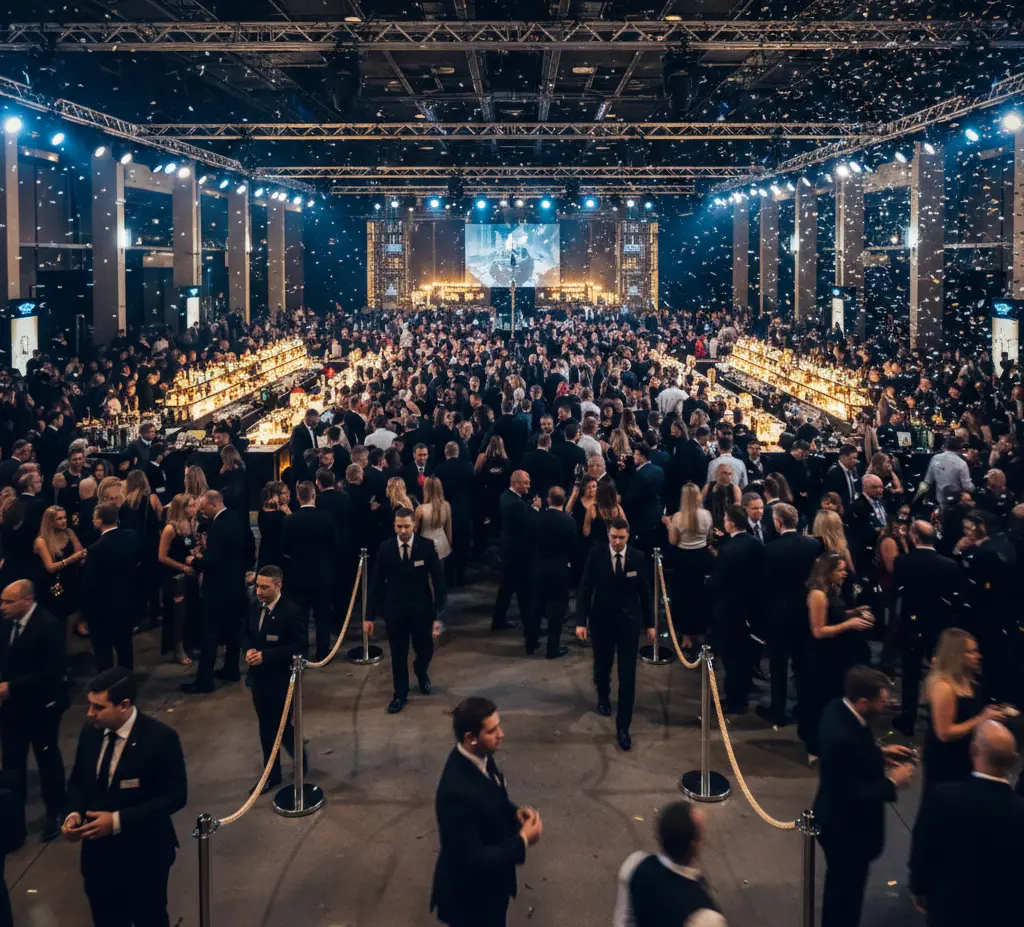
Phase 1: Ingress (Doors Open – Hour 2)
- Deployment Strategy: 70% Door / 30% Floor
- The Mission: Friction Removal. Walking the line outside, checking IDs before guests reach the desk.
- The Pivot Trigger: Entry Line < 10 People.
Phase 2: The Saturation Point (Hour 2 – Hour 4)
- Deployment Strategy: 20% Door / 80% Bar
- The Mission: Line Busting. Taking orders from the back of the line or guiding guests to satellite bars.
- The Pivot Trigger: Bar Line > 4 People.
Phase 3: The Midnight Surge (11:30 PM – Midnight)
- Deployment Strategy: 100% Floor (Safety)
- The Mission: Rapid distribution of glassware followed by crowd safety.
- The Pivot Trigger: 15 Minutes to Midnight.
Phase 4: Egress and Ejection (1:00 AM – Close)
- Deployment Strategy: Pair with security to manage the Check-in Staff queue and ride-share coordination.
- The Mission: Preventing the end-of-night bottleneck.
- Why this matters: A chaotic exit ruins the memory of a great night. Effective peak-season rostering ensures the last impression is just as polished as the first one.
Operational Tactic: Do not leave floater movement to chance. Implement the "Pivot Protocol, a series of preset triggers based on time and crowd density, to ensure resources are automatically redeployed to the highest-friction zones throughout the night.
Part 4: Economic ROI: The Cost of Not Having Floaters
I hear it all the time. "Floaters are just fat in the budget."
That’s a misconception. If you run a deep financial analysis of Christmas–New Year event staffing, you’ll see they are actually cost-saving mechanisms. You just have to look at the numbers differently.
Protecting Secondary Revenue
At a standard open-bar event, you might not see this clearly. But at a cash-bar or upsell event? The math is brutal.
Think about it. If I’m a guest and I have to wait 15 minutes for a drink, I’m probably going to buy one less drink over the course of the night. If you have 500 guests and you lose one drink sale per guest due to slow service... do the math. You’ve lost thousands of dollars in high-margin revenue. A floater who "busts" the line ensures that throughput stays at maximum. Eventbrite industry reports consistently show that streamlined service directly correlates to higher per-head spend. The cost of the floater pays for itself in efficiency.
The Cost of Refunds and Reputation
We live in the age of social media. A "disaster" event gets broadcast instantly on TikTok.
Logistics failures, like lost coats, 40-minute entry lines, and dangerous overcrowding, lead to refund demands. They lead to chargebacks. The insurance premium of adding three floaters to your Christmas–New Year event staffing roster is pennies compared to the cost of refunding 10% of your ticket sales because you messed up the operations.
Mitigating Overtime Risks
Here’s a practical one. Events often run late because the cleanup gets delayed. Your fixed staff is exhausted by 2:00 AM. They’re moving slowly. Floaters, who have been rotating tasks and arguably have had more dynamic movement, can be the fresh energy you need to execute the strike (breakdown) efficiently. This prevents those nasty venue rental overages and staff overtime pay that always seem to plague Christmas–New Year event staffing budgets.
Financial Logic: Floaters are revenue protectors. By maintaining throughput (more drink sales) and preventing service failures (fewer refunds/chargebacks), the cost of a floater is negligible compared to the revenue lost from bottlenecks and reputational damage.
Part 5: The "Golden Ratio" for Holiday Staffing
So, how many do you actually need? The standard 1:20 ratio you use for corporate conferences? Forget it. It’s insufficient for holiday activations.
The Holiday Multiplier
For Christmas–New Year event staffing, I recommend a baseline ratio of 1 floater per 12 core staff members.
But, and this is important, you have to adjust that based on the "Complexity Index" of your venue:
- Multi-Room Venues: Add +1 Floater per separate room. You need them to manage the communication gaps.
- Outdoor/Indoor Splits: Add +2 Floaters. Managing door transitions and temperature-related cloakroom surges is a nightmare without them.
- VIP Heavy Events: Add +1 Floater per 20 VIPs. They need concierge-level requests handled without pulling your service staff off the floor.
The "Ghost Grid" Concept
I use a visualization technique when planning Christmas–New Year event staffing. I call it the "Ghost Grid."
Take your floor plan. Look at your 10 waiters. Now, imagine 2 of them just disappear. Maybe they got sick, maybe they’re overwhelmed. Do you have the coverage to plug those holes instantly? If the answer is no, your ratio is wrong. The floaters fill the "Ghost Grid" when reality strikes.
Planning Rule: Discard the standard 1:20 ratio. Adopt a 1:12 baseline and utilize the "Ghost Grid" visualization to ensure you have coverage for the inevitable "disappearance" of staff due to illness or overwhelming demand.
Part 6: Command and Control: Managing the Floaters
Can one floater cover multiple venues? While it might seem cost-effective, this is rarely viable. Holiday travel is notoriously unpredictable due to transit delays. It is far more effective to keep floaters site-dedicated. If you need items moved between locations, utilize dedicated Street Teams or runners, allowing your floaters to stay focused on guest safety and internal flow.
The "Floater Captain" Role
If you have more than 4 floaters, you need a "Floater Captain" or a "Shadow Lead." This person doesn't have a fixed post. Their sole job is to monitor the radio and the room heat-map.
It sounds like this:
- Radio Call: "Bar 2 is getting slammed."
- Captain Action: Deploys two floaters to Bar 2 immediately.
- Radio Call: "Glass breakage on the dance floor."
- Captain Action: Deploys one floater to guard the spot, one to fetch the cleanup kit.
Technology Integration
Modern Christmas–New Year event staffing relies on comms. Use group chat apps like WhatsApp or specialized headset channels.
I always recommend an "All-Call" channel. Keep the floaters on a separate channel from the waiters. The waiter channel is for orders; the floater channel is for logistics. This keeps the airwaves clear and allows for rapid redeployment commands without confusing the fixed staff.
Command Structure: To maximize efficiency, separate floater communications from standard service channels. Use a "Floater Captain" to monitor the entire room and deploy assets via a dedicated logistics channel, preventing radio clutter.
Part 7: Floaters as Safety & Liability Buffers
Emergency Evacuation Support. God forbid there’s an emergency, a fire alarm, or a power outage. Fixed staff often panic or feel rooted to their posts. Floaters, who should be trained in venue geography and crowd movement, often utilizing principles from crowd psychology research, become your marshals. They act as Crowd Management marshals to guide guests to the nearest exit because they aren't tethered to a specific table. Including this in your staffing plan is a massive compliance advantage.
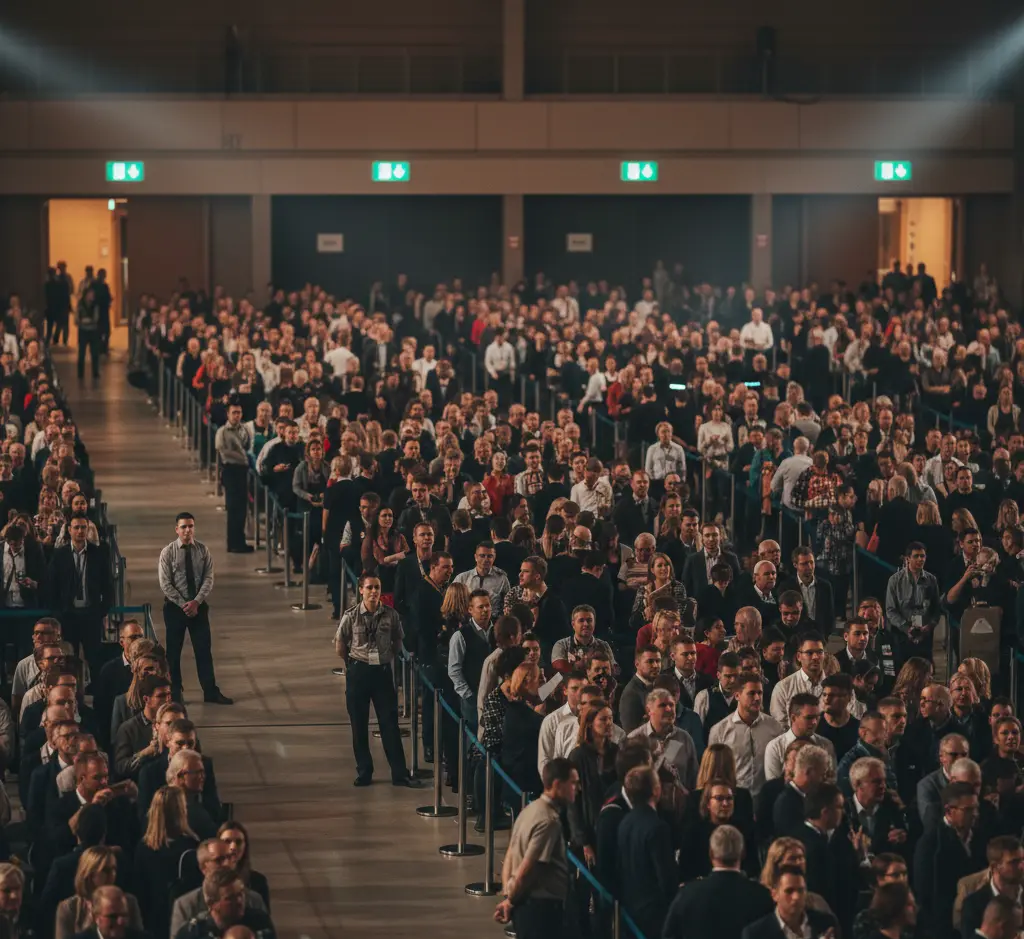
Intercepting the "Red Zone" Guest
A fixed bartender is usually too busy slinging drinks to notice that a guest is rapidly approaching extreme intoxication until they order their next drink. A floater? They’re circulating. They can spot the "wobbly" guest, the aggressive behavior, or the sleepy guest early. They can alert security discreetly.
This proactive layer of Christmas–New Year event staffing is your best defense against fights, sickness, and potential lawsuits.
Emergency Evacuation Support
God forbid there’s an emergency, a fire alarm, or a power outage. Fixed staff often panic or feel rooted to their posts. Floaters, who should be trained in venue geography and crowd movement, often utilizing principles from crowd psychology research, become your marshals. They guide guests to the nearest exit because they aren't tethered to a specific table. Including this in your Christmas–New Year event staffing plan is a massive compliance advantage.
Risk Mitigation: Floaters are your mobile safety layer. Unlike fixed staff who are tethered to service points, floaters can circulate to identify intoxication risks ("Red Zone" guests) early and act as crowd marshals during emergencies.
Part 8: Real World Scenarios
See the difference? That’s what effective peak-season operations do. It turns a crisis into a manageable blip.
Scenario A: The Static Failure
- Event: Corporate Holiday Party, 500 guests.
- Staffing: 10 Waiters, 4 Bartenders, 2 Check-in (No floaters).
- The Incident: 8:00 PM peak arrival. Check-in gets overwhelmed.
- The Result: The Event Manager panics and pulls 2 waiters to help check in. Service on the floor stops. Guests have empty glasses. The bar line grows because waiters aren't taking drink orders. Guests become frustrated. The vibe is killed before it even starts.
Scenario B: The Elastic Success
- Event: Same Corporate Party.
- Staffing: 10 Waiters, 4 Bartenders, 2 Check-in, 3 Floaters.
- The Incident: 8:00 PM peak arrival. Check-in gets overwhelmed.
- The Result: The "Pivot Protocol" triggers. 2 Floaters move to the door to scan tickets with handhelds. 1 Floater moves to the bar to prep glassware. Waiters stay on the floor serving food. The bottleneck is cleared in 10 minutes. The floaters then rotate to clear empty plates. The guest experience is seamless.
See the difference? That’s what effective Christmas–New Year event staffing does. It turns a crisis into a manageable blip.
Case Study: Scenario analysis proves that static rosters lead to cascading failures when one node (like check-in) breaks. Elastic rosters allow for temporary reinforcement that keeps the core service flow uninterrupted.
Part 9: The Hiring Timeline
One last thing, don't hire these people at the last minute. Because floaters require higher vetting (remember the cross-skills?), you can't just pick them up off the street on December 20th.
The "A-Team" Lock-in
Your floaters should be your most trusted staff. Do not assign new hires to be floaters. When organizing Christmas–New Year event staffing, identify your veterans in October. Offer them the "Floater Premium" (maybe a slightly higher hourly rate) to lock them in.
- 8 Weeks Out: Confirm Core Leads.
- 6 Weeks Out: Confirm Floater Squad.
- 2 Weeks Out: Distribute the "Pivot Protocol" and venue maps.
If you wait until mid-December to hire floaters, you will get inexperienced staff who will act as wallflowers rather than tactical assets. For more details on sourcing talent, read our article on large-scale staffing strategies.
Conclusion: Building Resilience
Holiday events don’t fail because of the playlist; they fail because of broken logistics. A rigid Christmas–New Year event staffing plan will inevitably snap under seasonal pressure, but floaters provide the critical elasticity needed to absorb late arrivals and bridge operational gaps. By shifting your focus from static headcount to dynamic mobility, you empower supervisors to lead rather than react. Get a quote that prioritizes a dedicated floater team. It is the definitive investment for a compliant, profitable, and calm December.
Ready to elevate your next event?
Join thousands of event planners who trust EventStaff.com for reliable, professional staffing solutions.
Trusted by event professionals nationwide
1k+
Events Staffed
2 million+
Guests Served
97%
Positive reviews