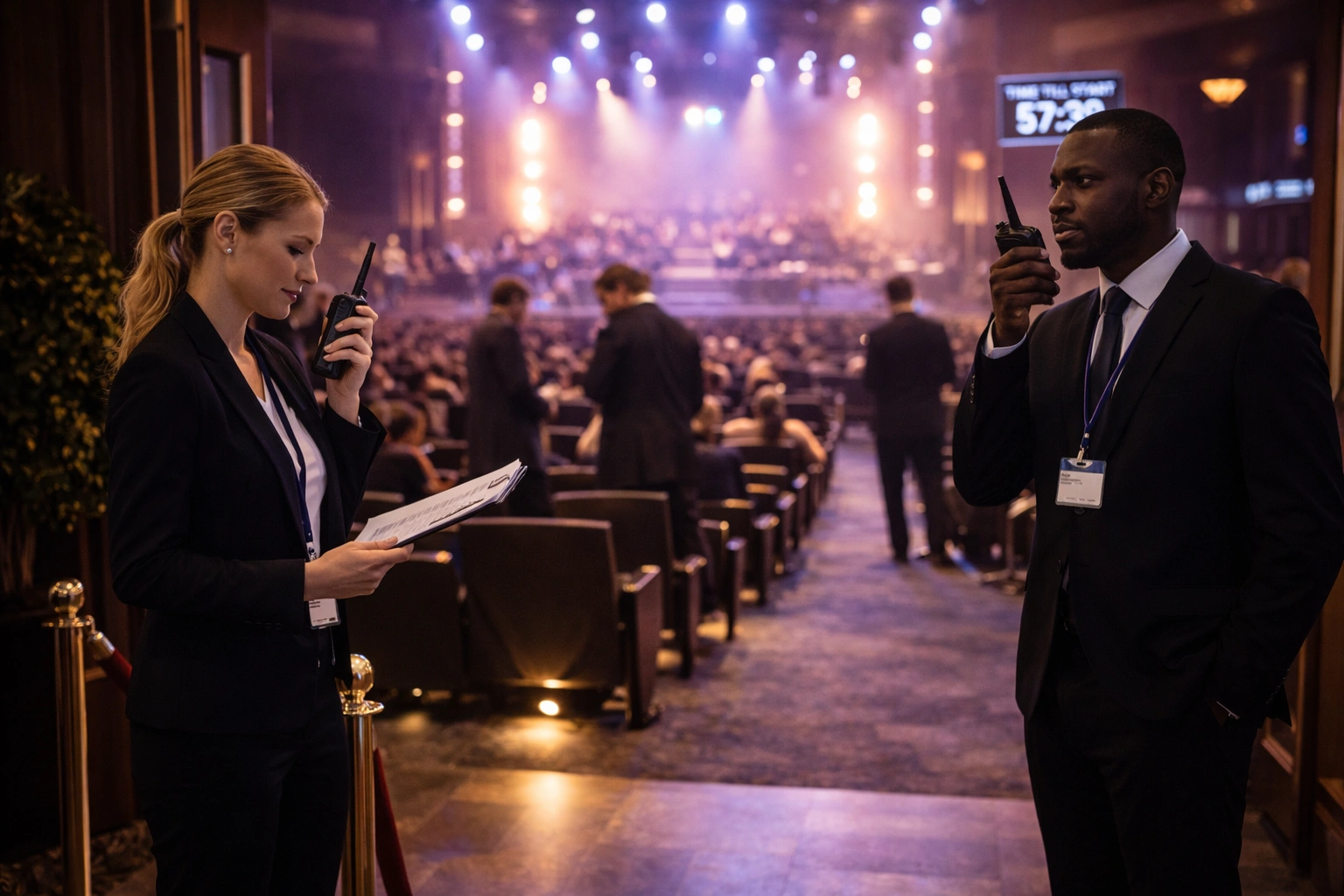
Front-of-House Event Staff for Live Events
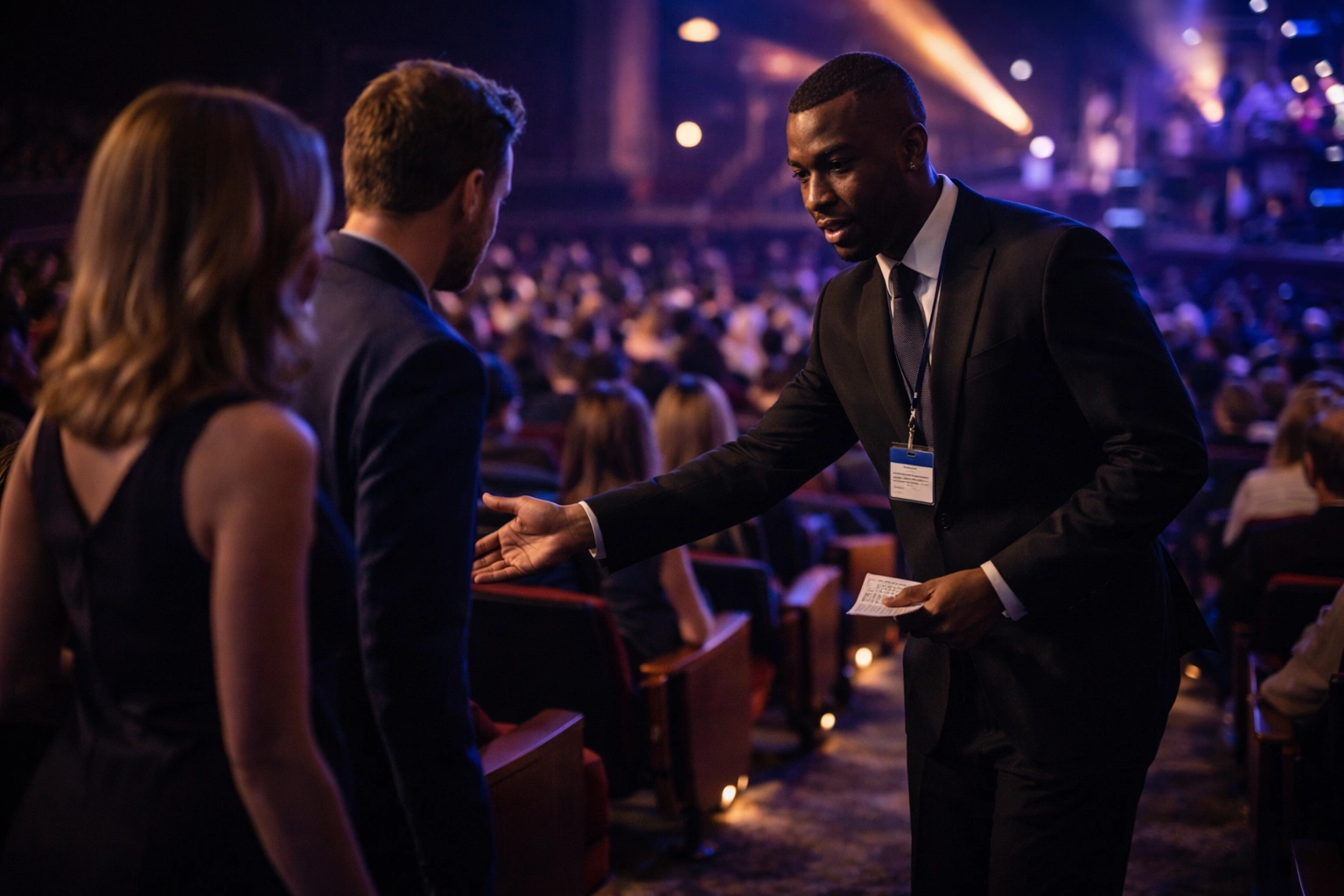
 Ushers vs Greeters

Section Ushers
Ushers

Ushers own what happens once guests enter the room, guiding them from portal to row, helping them find the right seat, and handling core usher duties that keep movement calm and orderly while the program is live.
Event Greeters
EVENT GREETERS

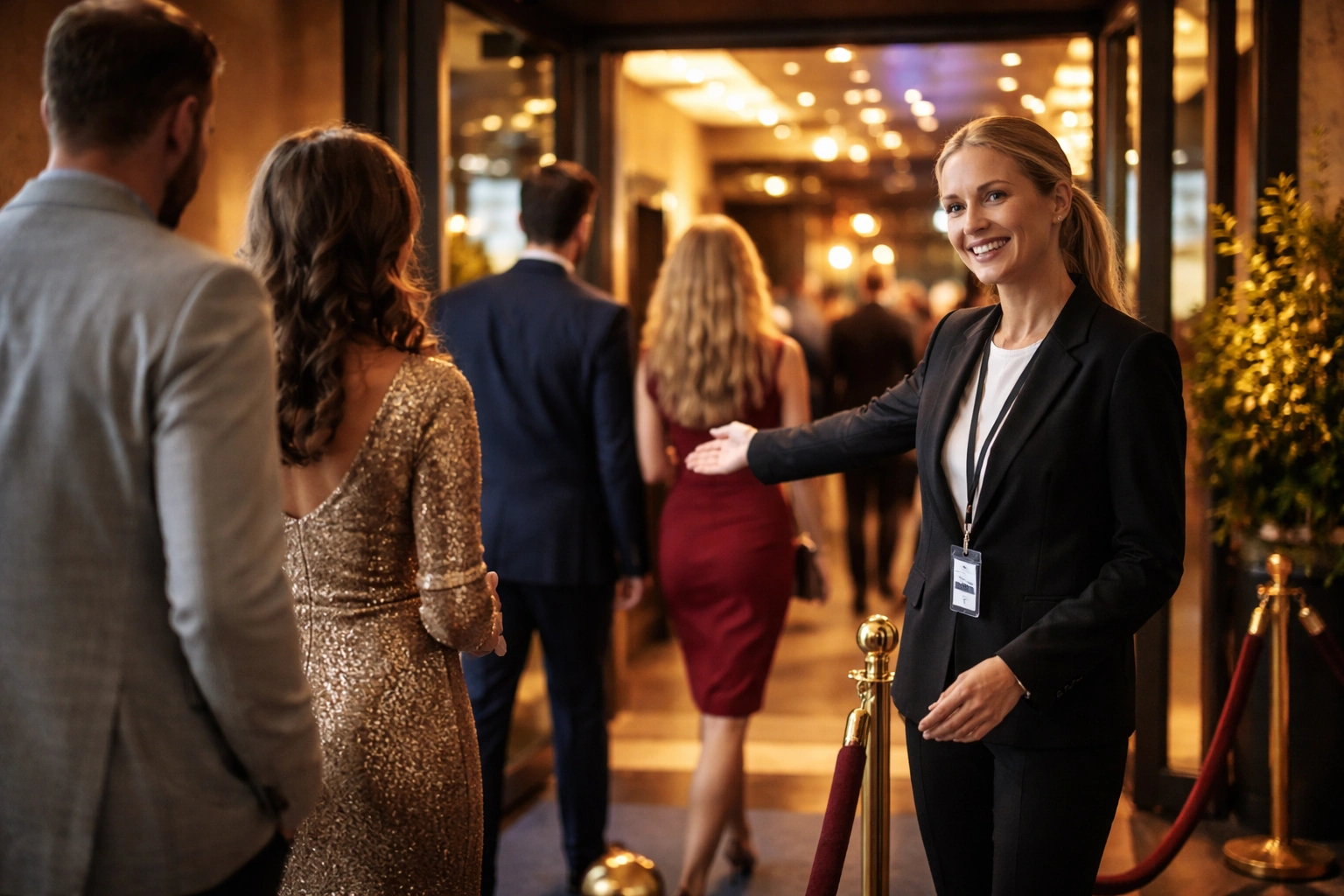
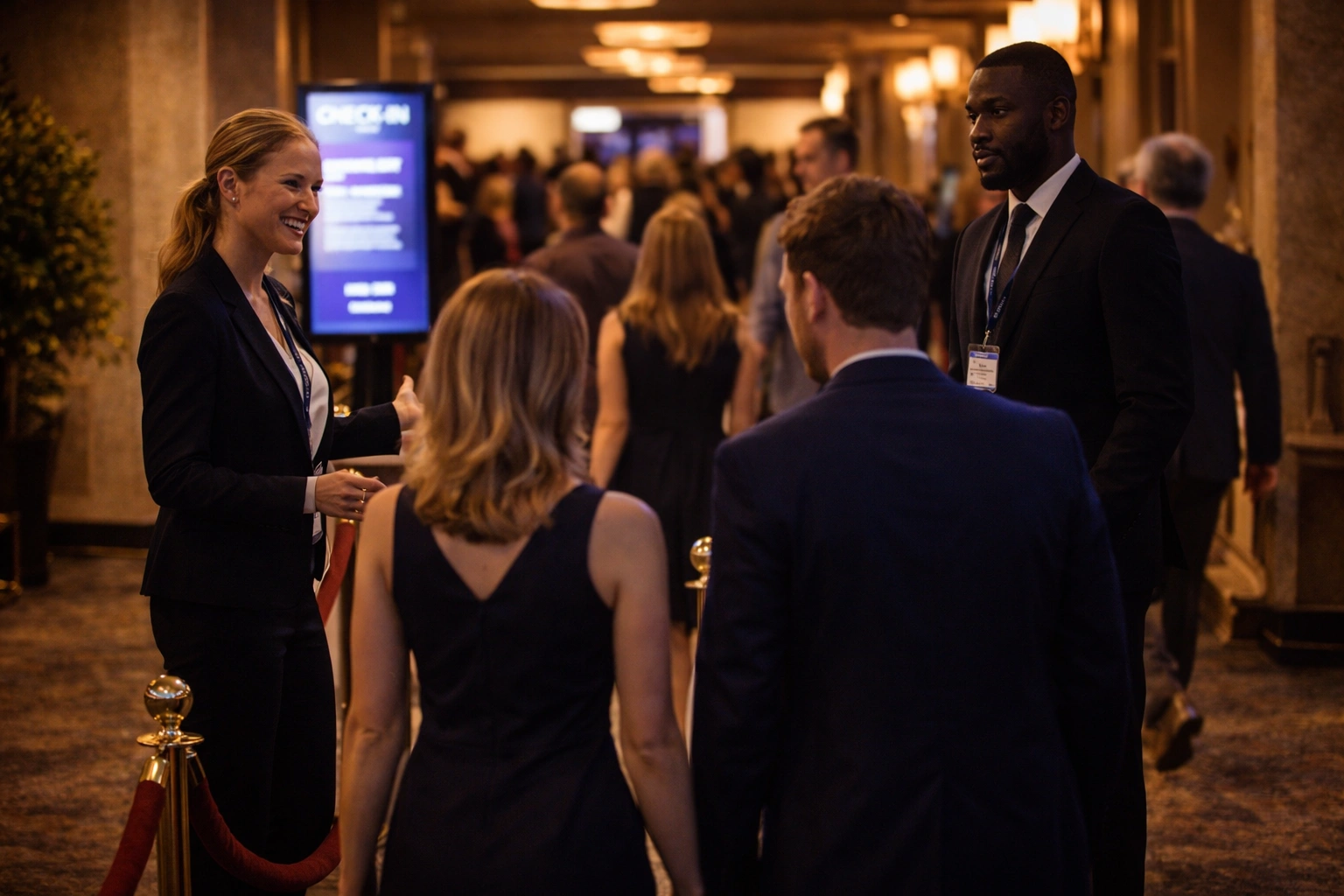
Event greeters own the arrival zone, shaping first impressions, answering fast questions, and directing guests to the right entrance, line, or desk before confusion builds in the lobby.
Operational Timeline

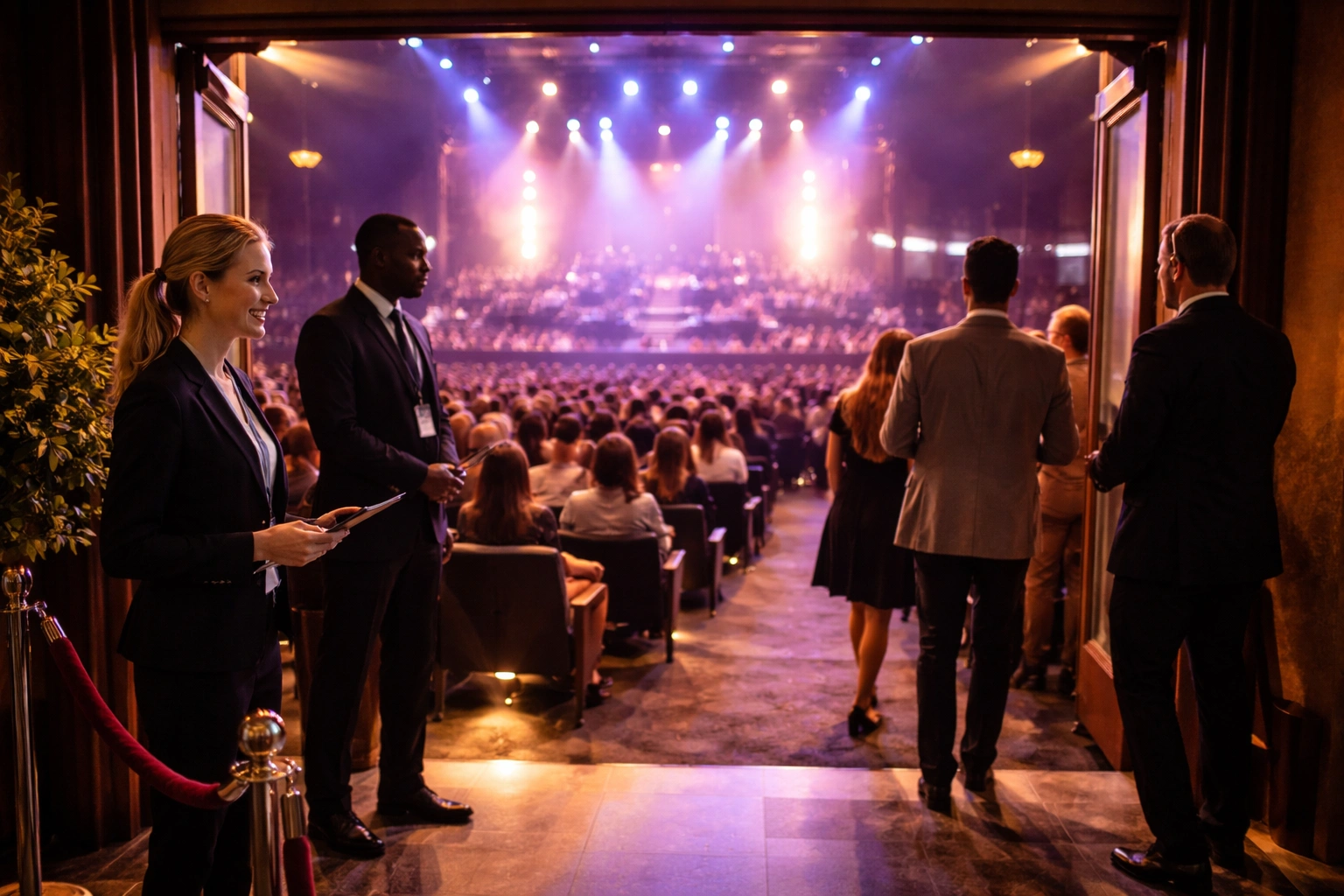
These two roles support the same guest journey at different moments, with one protecting arrival pace and the other protecting in-room control.

Before doors open

Arrival setup

Event Greeters
Event greeters take position at doors, queues, foyers, and first decision points, helping guests understand where to go before the entrance starts feeling crowded or uncertain.
Ushers
Ushers get the room ready for guest movement, checking section entrances, reviewing reserved areas, and preparing for a smooth handoff once guests begin coming inside.

Peak entry

As guests arrive

Event Greeters
Event greeters keep arrivals moving by welcoming guests, answering quick questions, correcting wrong turns, and sending people to the right entrance, line, or desk.
Ushers
Ushers guide guests inside the house, help them enter the correct section, move them toward the right row, and keep aisles from clogging as the room fills up.

 Once guests are inside

Showtime and release

Event Greeters
Event greeters remain active around entry and lobby decision points, helping late arrivals, handling direction questions, and keeping movement clear after the first rush has passed.
Ushers
Ushers manage quiet movement during the program, handle late seating, resolve row confusion, and support an orderly release across aisles, stairs, and exits when the event ends.
Operational Playbook

Real-World Protocols

Operational pressure makes the split clearer, because each role solves a different problem when timing, movement, and guest confidence all matter at once.
The Challenge

A VIP arrives close to show start and needs discreet direction without slowing general guest flow.

Event Greeters
Protocol A
Event greeters intercept early, separate the guest from general traffic, confirm the correct route, and keep the welcome smooth without turning the entrance into a crowd point.
Section Ushers
Protocol B
Ushers receive the handoff inside, protect the reserved seating area, guide the guest to the correct row, and seat them with minimal disruption to nearby sections.
The Challenge

A guest needs the correct accessible path, calm guidance, and fast coordination across multiple touchpoints.

Event Greeters
Protocol A
Event greeters handle the first conversation, guide the guest to the right accessible entry route, and keep the lobby calm while the next support step is coordinated.
Section Ushers
Protocol B
Ushers manage the in-room portion, guiding the final approach to the seating area, helping with row access, and resolving seat-position questions under live event conditions.
The Challenge

A guest has a valid ticket but arrives at the wrong portal and begins hesitating in active guest flow.

Event Greeters
Protocol A
Event greeters reduce this issue upstream by catching directional confusion earlier, answering route questions fast, and steering guests toward the correct entry point before they commit.
Section Ushers
Protocol B
Ushers stop the disruption from spreading inside, verify the section quickly, redirect the guest to the right portal, and protect aisle flow while the correction happens.

Zone Ownership Map

Greeters and ushers support one guest journey, but each role owns different spaces and works best when the handoff between those spaces is clear.

Event Greeters

Event greeters lead the arrival side of the operation, helping guests make the right early decisions before crowding, wrong turns, and repeated questions slow the front entrance.

Curbside
Main Entry
Lobby Queue
Check-In Approach

Shared Zones

Both roles overlap at the points where guests move from arrival help into seating help, especially when someone needs a route change, VIP support, or accessibility coordination.

Entry Threshold
Accessible Handoff
VIP Transfer
Info Point

Ushers

Ushers lead the in-room side of the operation, helping guests move through section entrances, rows, aisles, and exit paths once they are beyond the main arrival area.

Section Portals
Aisles
Rows
Exit Landings
Training & Skills

Curriculum Comparison

The guest experience may feel connected, but these roles depend on different training. If a buyer is comparing an usher job description against a greeter brief, the real difference is the kind of live event pressure each role is prepared to handle.

Event Greeters

Arrival Flow Focus
Core Modules
Welcome scripting
Queue pacing
Directional routing
VIP recognition
Success Outlook
Guests reach the right checkpoint faster, lobby pressure stays lower, and first contact feels calm even when arrivals come in waves.

Ushers

In-Room Control
Core Modules
Portal verification
Row approach
Low-light navigation
Late seating cues
Success Outlook
Strong ushers help guests reach the right section with less hesitation, keep movement quieter once the program begins, and settle the room without extra disruption.
Performance Metrics

By The Numbers

These KPI areas show how each role is judged when the goal is smoother arrivals outside and steadier guest movement inside.

Event Greeters

Arrival and routing
Throughput
450/hr
Redirect Accuracy
98%
These numbers show how quickly arrivals are absorbed, how often guests get onto the right route early, and how well pressure is reduced at the front entrance.
View Deep Dive
Just door-side presence
Anyone can redirect
Route choices shape pace
Early guidance prevents backups
First contact controls pressure

Ushers

Seating and aisle control
Seat Resolution
< 2min
Section Accuracy
97%
These numbers show how quickly guests are guided from portal to row, how often section issues are corrected early, and how well movement stays under control once people are inside.
View Deep Dive
Just point at seats
Aisles manage themselves
Late seating is simple
Section accuracy protects flow
Quiet movement needs control
Seating timing affects program

Frequently Asked Questions

How do you support guests who need extra direction without holding up the line?

click down

At Event Staff, we separate quick directional support from longer guest interactions so one confused guest does not slow everyone behind them. Event greeters handle the first pause point, answer the immediate question, and move the guest onto the right path fast. If the issue continues inside the venue, ushers take over. That split keeps the line moving while still giving the guest enough attention to feel helped, not rushed

How do you structure front-of-house staffing when entry and seating pressures peak at the same time?

click down

We split the workload by decision point instead of treating front-of-house as one blended role. Event greeters absorb pressure outside the room by managing welcomes, route questions, and early guest hesitation. Ushers handle the next layer once guests move inside and need section, row, or seating support. That structure matters most when arrivals come in waves because it prevents one team from getting dragged between entrance pressure and in-room movement at the same time.

How do you cover both wayfinding and seat-finding without overstaffing?

click down

The answer is not adding more bodies everywhere. It is assigning the right role to the right stage of the guest journey. We use event greeters where guests need fast orientation and early direction, then ushers where guests need section and row guidance inside the room. That keeps staffing tighter and more efficient because each person works in the zone where they create the most value instead of duplicating coverage across the whole venue, including seating-side work that often sits inside an event usher job description.

Who helps guests find the right section: a greeter or an usher?

click down

Usually, the usher is the one who finishes that task. If someone is asking what do ushers do at events, this is a big part of the answer: they take over once the guest is inside and needs section-level, row-level, and seat-area help. A greeter may point a guest toward the correct entrance, portal, or general direction earlier in the journey, but ushers take over once the guest is inside and needs section-level help. They are better placed to guide row approach, correct seating-side confusion, and keep aisle movement orderly. So if the question is about the final section and seat area, the usher is usually the right answer.

Can front-of-house staff help prevent congestion without acting as security?

click down

Yes. Good front-of-house staff reduce congestion by shaping movement early, not by policing guests. Event greeters prevent bunching at doors, wrong queues, and stalled decision points by guiding people before confusion spreads. Ushers keep section entries, aisles, and rows from clogging once guests are inside. They are not there to replace security. Their value is flow control, calm redirection, and visible guest guidance that keeps pressure from building into a bigger operational issue.

Ready to elevate your next event?

Join thousands of event planners who trust EventStaff.com for reliable, professional staffing solutions.

Trusted by event professionals nationwide

1k+

Events Staffed

2 million+

Guests Served

97%

Positive reviews