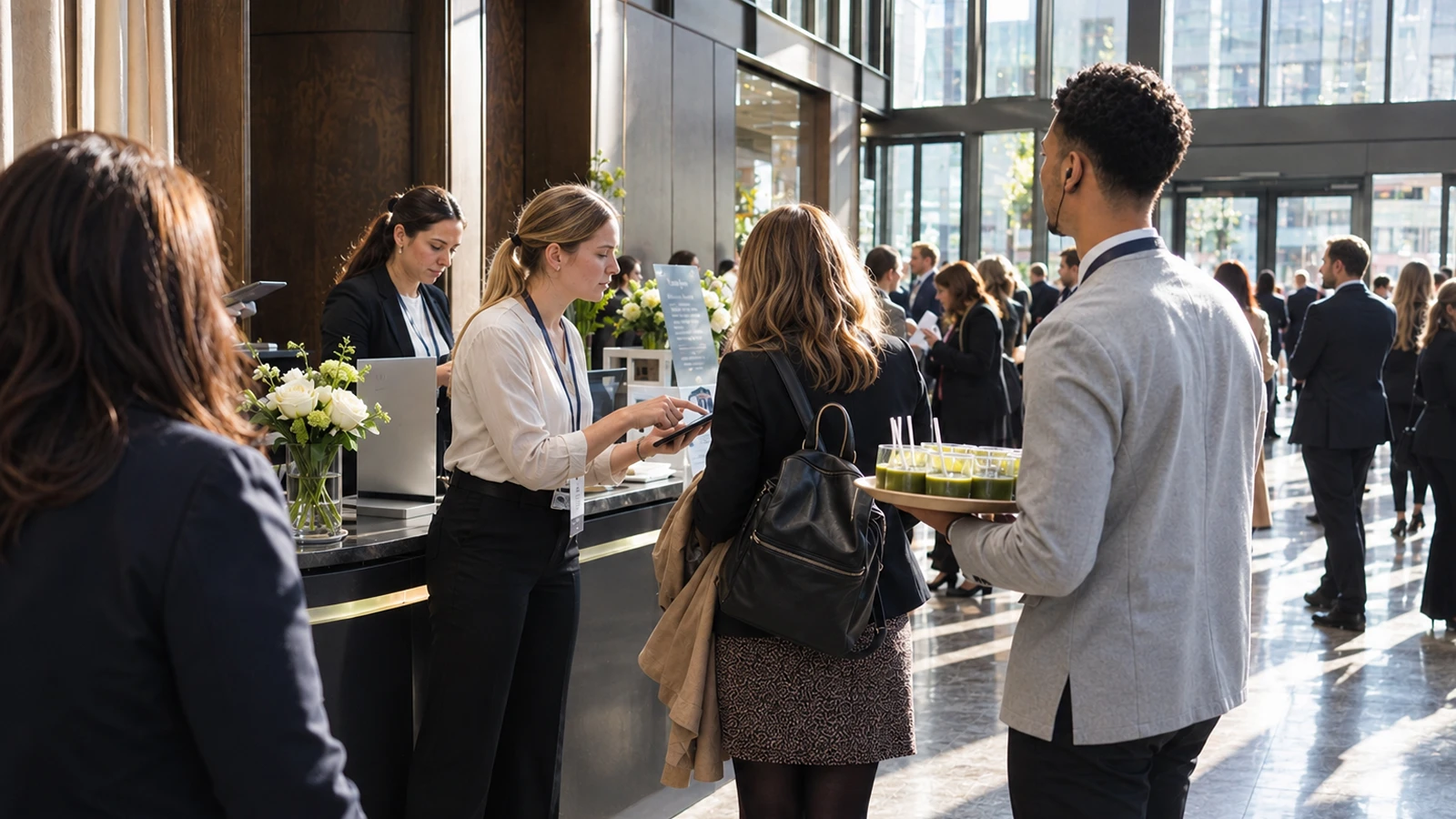

Event staff San Diego reliability isn’t something you turn on the morning of the event. It’s built over time, through W2 accountability, insured coverage, a captain-to-staff ratio around 1:10, and a bench roster that’s actually local. When those systems are missing, small stressors like downtown load-in windows or coastal weather shifts expose the gaps fast, sometimes as simply as a bartender who can’t be replaced within 90 minutes. Lock the controls early, and you avoid the day-of scramble that quietly breaks guest flow.
CEO Excerpt
"In San Diego, the challenge isn’t finding people who want to work, it’s finding teams that understand the friction between downtown access windows and coastal logistics. We don’t just fill positions; we recruit for the 30-minute load-in gap that determines whether your event starts on time." - CEO Event Staff
Executive Summary
Secure event staff San Diego trust by vetting for W2 compliance, strict ratios, and local logistics mastery, ensuring your event succeeds despite downtown friction or coastal complexity.
Why Event Staff San Diego Requires a Specialized Strategy
%20(1).webp)
San Diego looks easy until you actually run an event here. Venues are spread out, parking is expensive, traffic patterns are inconsistent, and load-in rules change block by block.
Micro-scenario: You’re loading into a downtown venue near the San Diego Convention Center. Dock access is booked in 30-minute windows. Badge pickup runs long because security lines back up. Your crew is technically on-site, but the equipment isn’t inside yet. Registration tables go late. That delay becomes a line. The line becomes a crowd. The crowd triggers venue intervention. Your keynote starts late.
San Diego timing traps planners underestimate
Downtown venues don’t usually break your plan with one big failure; they do it with small time leaks. The elevator takes longer than expected, the dock window shifts, the security desk is understaffed, and suddenly your team is “there” but not deployed. Add the parking-to-setup walk, and you’ve lost 20 minutes before anyone touches a table. This is why the best teams build buffers like they’re part of the schedule, not optional padding.
Here’s the timing math that planners often overlook: if staff members need to badge in, wait for a service elevator, and transport equipment to the designated area, you should expect a total of 20–30 minutes from the time they "arrive" until the first station is actually operational. That’s not pessimism, it’s downtown reality.
Venue geography amplifies this. Downtown, Gaslamp, Little Italy, Mission Bay, and coastal locations all operate under different logistics rules. If a provider of event staff San Diego lacks local bench depth, one no-show can cascade into delays across multiple roles. The risk isn’t staff attitude. It’s schedule fragility.
Convention-center and downtown dock venues
These sites run on dock windows, service elevators, and security chokepoints, so staffing has to account for “time to deploy,” not just arrival time. Captains matter here because they’re the ones who keep check-in, bars, and floor coverage from starting late when access shifts. If a provider can’t talk through dock timing and elevator flow, they’re guessing.
Waterfront, park, and beach-access venues
These spaces punish wasted movement, long carries, soft staging areas, and parking that isn’t close to where work happens. You need runners and floaters earlier than you think because restocking and resets take real minutes. If the provider hasn’t staffed coastal layouts before, you’ll feel it first at the bar and stations, not the program.
Tourism surges compound the issue. Fridays through Sundays, especially in spring and summer, the labor market tightens. Workers chase higher tips or accept overlapping gigs. Without tight call-time enforcement, you feel it most at coastal weddings and corporate events where staff must walk long distances with gear. Large weekends create staffing whiplash; during Comic-Con season, check-in volume spikes fast. Lines stretch into hallways, and suddenly you need flow control, not just friendly greeters.
You’ll also feel the squeeze during graduation season (late May through June) when hotels, venues, and vendors stack events back-to-back and crews get split across overlapping call times. It’s not dramatic; it’s just enough demand to expose staffing partners who rely on “available contractors” instead of a managed local bench.
Quick Hiring Workflow (6 Steps)
Confirm venue access rules and real call-time constraints, shortlist providers and verify W-2 status plus insurance readiness, ask for supervisor ratio and bench depth as numbers (not vibes), build staffing from throughput not headcount, lock uniforms/roles and the arrival confirmation method, then confirm the replacement SLA and who updates you day-of, because if any step is vague, reliability is already compromised.
San Diego Access Friction Checklist
Before you finalize your event staff San Diego roster, get three details nailed down in writing:
- Entry Points: Specific dock, side gate, or service elevator instructions.
- True Arrival: Where staff park vs. how long the walk is (coastal venues often have a 15-minute gap here).
- Active Time: What time access opens vs. the official call time. "On-site" doesn’t mean "ready," and if the provider doesn’t ask this first, the delay becomes yours.
Here’s the practical rule: downtown/convention center–adjacent venues need a longer buffer because elevators, security desks, and dock windows create hidden queues, so plan 75–90 minutes from arrival to “ready.” Waterfront parks and bayside spaces often look simple, but parking and gear paths stretch time; plan 60–75 minutes. Beach/coastal venues are the trap: staging limits and long carries add friction fast, so if staff are moving equipment or bar stock, you’re safer at 90 minutes.
What “Reliable Event Staff San Diego” Actually Means
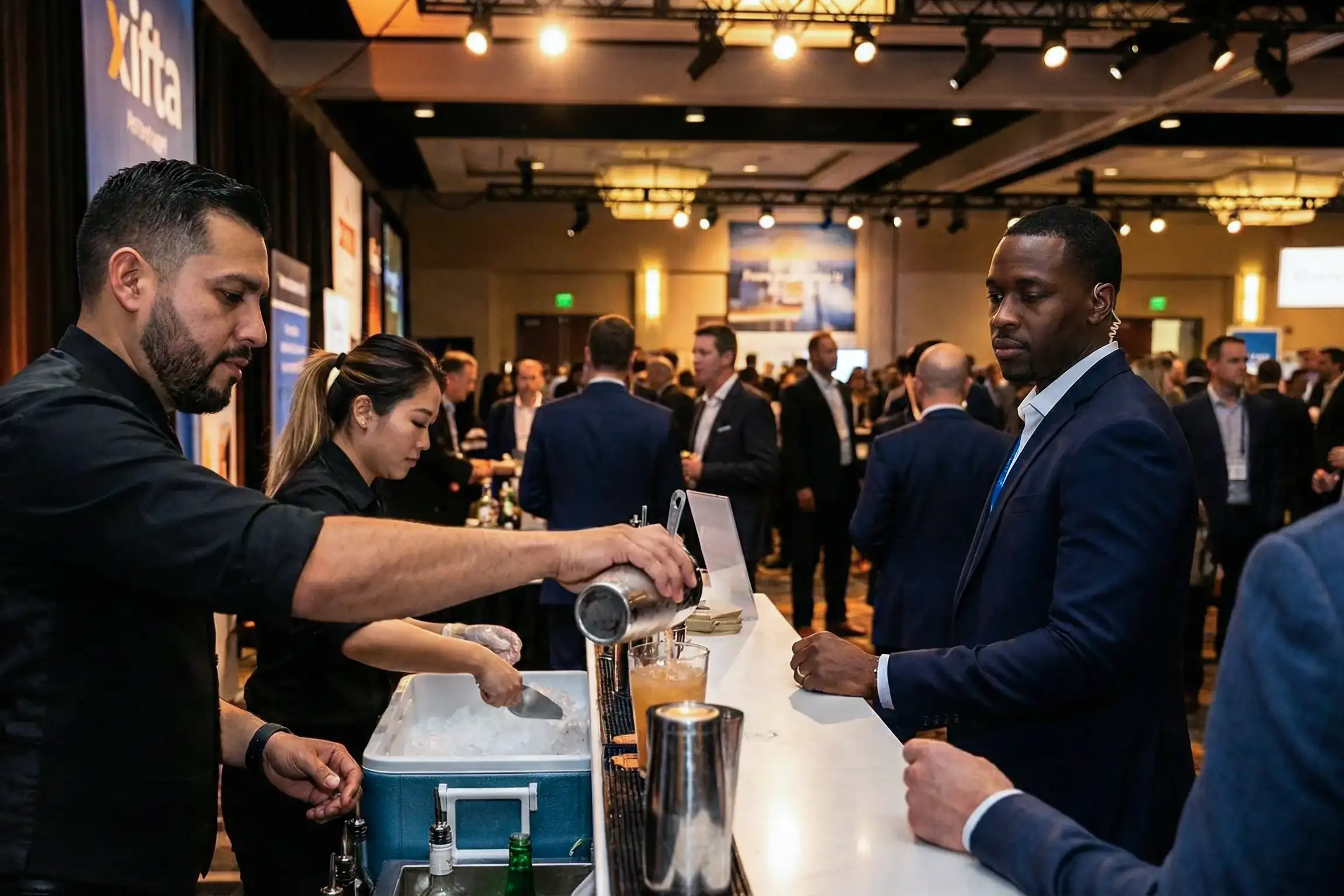
“Reliable” isn’t a feeling. It’s measurable: show rate, training consistency, and on-site control.
Today, reliable event staff San Diego teams include:
- 95%+ show rate backed by a W2 staffing pool.
- Arrival windows confirmed 60–90 minutes before call time.
- Lead-to-staff ratio of 1 supervisor per 8–12 staff.
- Bench capacity of roughly 10–15% for large events.
- Clear escalation authority when something breaks.
San Diego adds constant small disruptions. Fog rolls in, and linen weights matter. Wind shifts buffet layouts. When it’s hot, it’s not just comfort, but break timing, water runs, and shaded staging start affecting service speed and staff endurance. As noted in our guide on planning for weather risks, reliable staff don’t freeze when layouts change. They reroute lines, shift stations, and stabilize high-traffic entry zones to keep guests moving without escalation.
Reliability Signals vs Red Flags
Green flags: They quote COI turnaround in hours, confirm W2 and workers’ comp without dodging, explain a real captain ratio (around 1:8–12), state bench depth as a number, and commit to replacement updates via dispatch; Red flags: “We have people” with no local specifics, replacement promises with no workflow, confusion about additional insured language, or one lead supposedly managing 25+ staff.
Mini Ratio Calculator
Use this as a sanity check before booking. If a plan ignores throughput, you’ll feel it on-site, even when headcount looks fine.
Inputs: Guests | Arrival window (minutes) | Bar stations | Seats | Alcohol (yes/no)
- Check-in: Guests ÷ (arrival window ÷ 30) ÷ 100
- Bartenders: Guests ÷ 75 per bar station
- Barbacks: 1 per 2 bartenders (Add ~20% if alcohol + multiple activations)
- Ushers: Seats ÷ 125 + 1 VIP lead
- Runners: Service stations ÷ 2.5
- Crowd: Guests ÷ 200 (150 if alcohol + tight egress)
- Leads: Total staff ÷ 10
Fast Estimate Box: What Event Staff San Diego Costs
Budgeting here isn’t about hourly rates alone. Costs are driven by shift minimums, travel time, and call-time compression. Cheap quotes are often cheap because they ignore the hidden costs of poor staffing, lacking supervision, or replacement depth, which gets expensive later.
Current SD ranges (approximate):
- Event Servers & Bussers: $28–$45/hr
- Bartenders: $35–$60/hr
- Registration/check-in: $30–$50/hr
- Crowd management/safety: $32–$55/hr
- Leads/captains: $40–$75/hr
Note: Bookings inside 72 hours often carry premiums as providers displace other work to secure bench staff.
How to Evaluate Event Staff San Diego Providers Without Getting Burned
Hiring here isn’t about resumes. It’s about whether a provider can still operate when something breaks. Because something always does.
%20(2).webp)
Independent Staff vs Staffing Agencies
Independent hires can work when the event is simple and you have time to manage people yourself. But you carry the risk. You’re responsible for no-shows, training gaps, and what happens if someone gets hurt. As noted in our analysis of check-in mistakes that slow down entry, that risk compounds fast when entry is tight, because one small check-in snag can turn into a hallway line in minutes. A real agency offering event staff San Diego solutions should give you three things independents usually can’t: risk transfer, execution control, and replacement power.
Insurance & Risk Transfer
Insurance determines whether you can operate, not just staff. At a minimum, that means general liability. If staff are W2, workers’ comp isn’t optional. The failure pattern is predictable: an incident happens, the venue asks for a COI, the staffing company can’t produce it same day, and doors or service pause.
San Diego quirk: downtown hotels and large properties often have separate entities for the venue vs. the management group, and the COI has to match the exact naming the property expects. Even when staff arrive on time, a COI mismatch can slow load-in or stall labor access while someone fixes paperwork.
COI Reality Check
When venues request a COI, they care about correct additional insured language, coverage limits meeting venue minimums, and accurate event dates (including load-in). If this takes days, reliability is broken.
In San Diego, it’s also common for venues, especially downtown hotels and larger event properties, to want the venue entity plus the property/management group listed correctly, which is why fast COI turnaround only helps if the certificate is accurate the first time.
W2 vs 1099 Staffing Models
This isn’t a philosophical debate. It’s about control, coverage, and replacement speed when something goes sideways. As per California labor laws, W2 staffing allows call-time enforcement, clearer accountability, workers’ comp coverage, and faster replacement deployment. 1099 labor behaves more like gig work, flexible, but harder to enforce and slower to correct when someone disappears.
Supervisor Ratios & Command Structure
Supervisor structure predicts whether a team can absorb change. On mixed-role events using check in staff and servers, the practical rule is one captain for every 8–12 staff. That captain verifies arrivals, controls breaks, rotates roles, and handles client changes so small issues don’t leak outward.
Roster Depth & Emergency Replacement
Bench capacity is measurable. Ask for numbers. "Possible" doesn’t help when a bartender doesn’t show. What matters is whether someone is confirmed, dispatched, and en route and whether you’re told before the gap becomes visible.
Replacement SLA (Make It Measurable)
A real replacement SLA defines confirmation time, expected arrival window, who updates you (dispatch vs. captain), and contingency steps. If a provider won’t define these, they can’t control them.
Fast Vetting Workflow (10 Minutes, No Theater)
You don’t need a long call to spot risk.
- Confirm W2 status and workers’ comp.
- Ask about COI turnaround time.
- Verify the supervisor ratio and who the on-site captain is.
- Ask for bench depth as a number.
- Lock uniform standards and break control.
The Event Staff San Diego Roles Most Needed (And Ratios That Work)
%20(The%2072-Hour%20Hiring%20Checklist%20for%20San%20Diego).webp)
Most events don’t fail at the main program. They fail at entry, the first drink, and the bathroom corridors. That’s where throughput breaks.
Registration teams
Ratio: 1 check-in staff per 75–125 guests per 30-minute arrival wave.
Arrival is lumpy. You want enough check-in staff to keep the line from folding into entrances or security, and you want one lead who does nothing but manage flow and handle "not on the list" issues.
Bartenders + barbacks
Ratio: 1 bartender per 60–90 guests, plus 1 barback per 2 bartenders.
Bar production sets the emotional temperature of the room. In San Diego, outdoor bars and multiple activations make demand uneven. Barbacks are what keep bartenders on the rail when one station gets hammered.
Ushers + floor support
Ratio: 1 usher per 100–150 seats, plus 1 lead for VIP sections.
Ushers aren’t just directional; they prevent aisle pileups and manage late seating. In open-air venues, they’re the first to adapt when wind, lighting, or layout shifts force changes midstream.
Hospitality runners
Ratio: 1 runner per 2–3 service stations.
Without runners, service staff disappear to restock, and as detailed in our analysis of event runners and floaters, those 8–10 minute gaps are exactly how a “fully staffed” event starts feeling understaffed.
Crowd management teams
Ratio: 1 team member per 150–250 guests.
This role isn’t about policing. It’s flow control. If you are planning outdoor events, wind and layout shifts force changes midstream. Event staff San Diego teams here must adapt to environmental constraints, not just guest counts.
Why This Staffing Approach Survives San Diego Logistics
.webp)
San Diego doesn’t reward fragile staffing models. The day has little surprises: access shifts, timelines drift, and someone always parks farther than planned. The real question is whether your staffing partner absorbs the variance or makes it louder.
Multi-city network = structured fill reliability
This isn’t “we’ll see who’s free.” It’s a structured roster pull. When local demand spikes, a real operator isn’t relying on last-second texting; they’re pulling from a tracked roster built around availability, skills, and readiness.
Trained W2 staff = higher show rate + cleaner control
W2 staffing changes behavior. Call times matter. Workers’ comp coverage is clear. Replacements can be dispatched without hesitation. That predictability shows up in real places clients actually feel: hospitality staff who know the software and bartenders who follow consistent setup/reset patterns.
On-site supervision reduces drift
As our CEO noted, we staff for the gaps. The captain isn’t ceremonial. They verify arrivals, run breaks, and rotate roles without turning you into the dispatcher. Without that layer, planners end up managing staff instead of managing the event.
Last-minute deployment works because it’s operationalized
"Last-minute" means 24–72 hours out. Inside that window, success depends on bench readiness plus a dispatch workflow that confirms replacements early, not at the moment you’re already on fire.
The 72-Hour Hiring Checklist for San Diego: Preventing Day-Of Chaos
Most chaos starts 72 hours out, when details stay soft and everyone assumes they’ll "finalize it tomorrow."
72-Hour Lock List
Seventy-two hours out, lock call time plus access instructions, parking and the real entry gate plan, final roles and uniform standards, the captain contact tree for day-of changes, and the replacement SLA plus bench confirmation, because if any of that is still “TBD,” chaos isn’t bad luck, it’s scheduled.
The Short, Strict List:
- Confirm COI and venue staffing rules (including “additional insured” needs).
- Lock call time and access opening time (check Port of San Diego rules for waterfront venues).
- Confirm parking + entry instructions with a written drop point.
- Confirm lead-to-staff ratio and who’s the on-site captain.
- Confirm replacement SLA and how bench staff are activated.
- Confirm breaks + rotations are controlled by the captain.
The Part Most Events Get Wrong
If you’re staffing a multi-day or high-exposure event, execution control matters more than the quote. You’re buying compliance coverage, on-site supervision, and emergency replacement capacity. Work with event staff San Diego teams that can explain their roster depth, captain structure, and replacement workflow without hand-waving. Get a quote here to ensure your event is covered before the risk window opens.
Ready to elevate your next event?
Join thousands of event planners who trust EventStaff.com for reliable, professional staffing solutions.
Trusted by event professionals nationwide
1k+
Events Staffed
2 million+
Guests Served
97%
Positive reviews