
CEO Excerpt
"The first ten minutes define the guest experience. We train staff to spot event check-in mistakes like queue drift and tech lags before they cause delays. Our goal is invisible logistics that keep lines moving and guests happy from the start." - CEO Event Staff
Event check-in mistakes create the delays that planners fear most, especially when early guests push through doors before teams stabilize movement. These patterns trigger slow event entry when queues expand faster than the scanning pace. Trained crews prevent check-in queue delays by controlling routing, pacing, and troubleshooting from the moment doors open.
Executive Summary
This guide identifies the top three event check-in mistakes, from unstructured queues to credential errors, and details the specific staffing protocols required to prevent slow event entry and stabilize guest flow.
Mistake #1: Unstructured Queues Create Instant Bottlenecks
Unstructured queues remain one of the highest-impact event check-in mistakes at corporate events, expos, and conferences. Guests form unregulated clusters that disrupt the linear feed required for stable lane movement. These "blobs" create slow event entry conditions before the first badge is scanned. They also compound check-in queue delays in narrow lobbies where line drift pushes guests into doorways or registration tables.
Line Drift Blocks Throughput
Line drift happens when lines lose shape and begin flattening into wide formations. This drift causes uneven scanning rhythm and exposes more event check-in mistakes as staff struggle to direct guests. Understanding queue psychology is key; as noted in studies on queue management, perception of wait time doubles when lines are disorganized. This dynamic increases check-in queue delays because lanes lose consistent forward pressure.
ADA Misrouting Creates Risk and Dwell-Time Jumps
ADA guests require clear routing from the start, following ADA accessibility standards. Ambiguous signage forces ADA guests into general lines, which leads to event check-in mistakes that slow down every lane. These errors create dwell-time spikes and multiply check-in queue delays. When routing is unclear, staff must extract ADA guests out of dense groups, which slows event entry again.
How Trained Staff Structure Queues Before Scanning Starts
Trained crews stop many event check-in mistakes before scanning begins. Staff shape lines, segment lanes, and position micro-regulators at pinch points to maintain order, applying principles from understanding the psychology of event flow. ADA and VIP segmentation stabilizes movement and prevents early slow event entry patterns. Early structure also supports entry flow optimization by creating predictable feeder lanes.
Outcome: Clear queues eliminate the earliest event check-in mistakes and give planners a controlled start.
Mistake #2: Credential Troubleshooting Isn’t Isolated
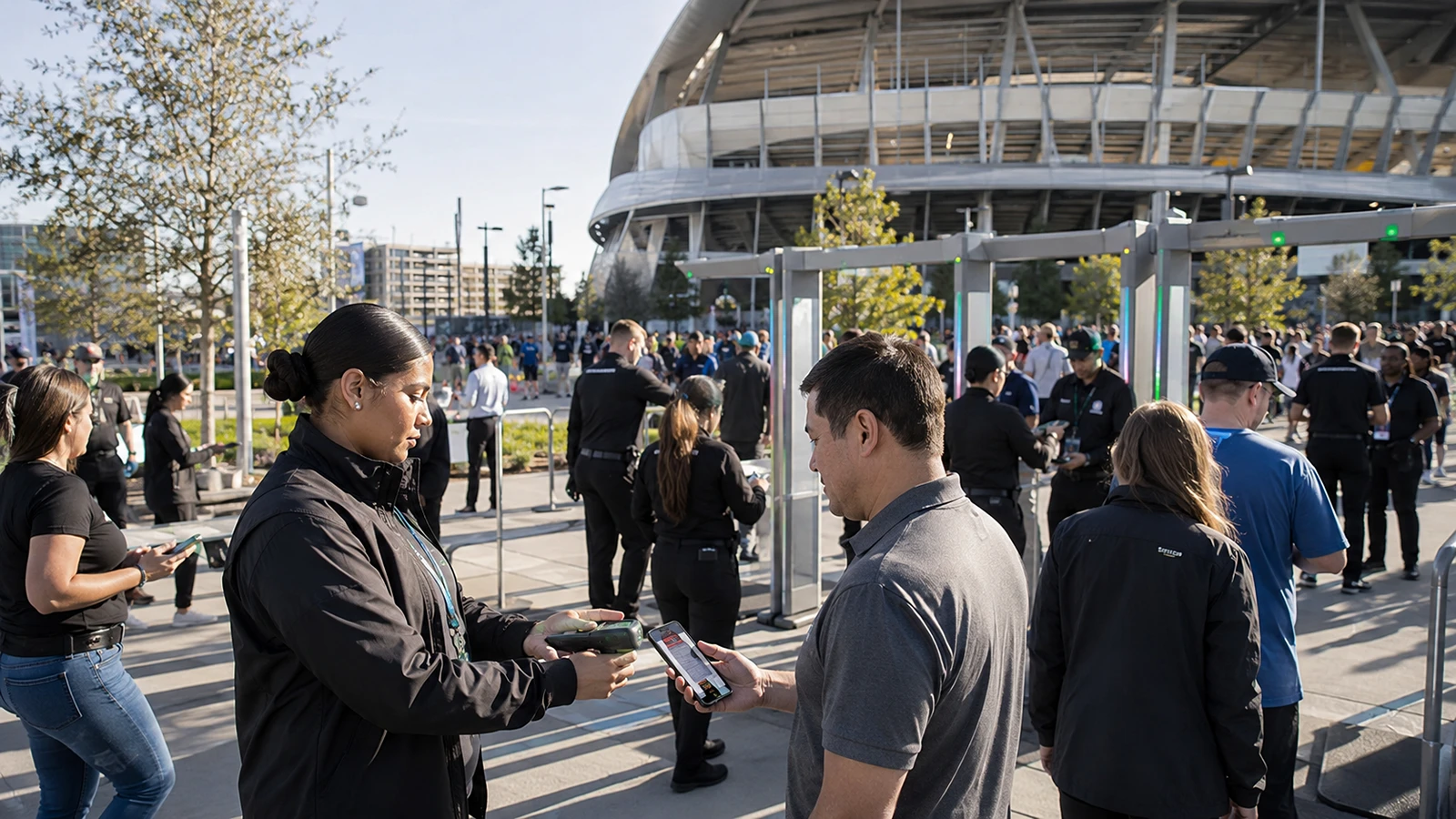
Credential issues represent the most common mid-lane event check-in mistakes. Mixing troubleshooting with active scanning disrupts the pace of ready guests. These failures are responsible for most recurring slow event entry patterns.
QR Code and Badge Pull-Up Issues
Wrong QR codes, low phone brightness, and multi-registration screens remain widespread credentialing issues. These issues rank among the highest-frequency event check-in mistakes at technology conferences and expos, a common challenge in trade show staffing essentials. One unprepared guest can cause check-in queue delays that ripple through the entire line. Scanning teams lose rhythm when forced to problem-solve inside active lanes.
Wristband or Badge Slowdowns
Wristband bins and mixed-role badge rules extend dwell time. Disorganized bins cause the type of event check-in mistakes that slow event entry during peak windows. VIP, speaker, and staff badge checks also belong outside the main lane because they introduce extra confirmation steps. When mixed into general lines, these steps create compounding check-in queue delays.
How Dedicated Troubleshooting Teams Prevent Slow Event Entry
Troubleshooters isolate issues without disrupting primary lanes. This isolation prevents the most damaging event check-in mistakes from affecting ready guests. Parallel resolution supports how to speed up event check-in by separating unprepared guests from active scanners. Rapid-replace systems help event scanning staff maintain a consistent pace. These teams keep throughput stable regardless of credential friction.
Outcome: Removing troubleshooting from active lanes prevents the most persistent event check-in mistakes.
Mistake #3: No Surge-Window Strategy for High-Volume Arrivals
Surge windows expose check-in systems to concentrated stress. Without a plan, surge windows magnify existing event check-in mistakes and cause slow event entry spikes across the site.
Crowd Spikes Hit at Predictable Times
Crowd spikes occur during morning openings, pre-keynote transitions, and post-lunch returns. These windows reveal hidden event check-in mistakes created earlier in the day. They create slow event entry conditions when teams do not adjust their staffing ratios. These patterns also increase check-in queue delays when guests arrive in concentrated pulses.
Lane Misbalance Amplifies Delays
Lane misbalance happens when one lane clears faster than another due to uneven scanning pace. This imbalance is one of the most preventable event check-in mistakes. When left uncorrected, misbalance increases slow event entry risk because one queue stalls while another empties. This imbalance causes compounding check-in queue delays that affect all guests.
Supervisor-Led Redirection and Surge Control
Supervisors read live arrival curves and adjust scanning teams. They reposition staff to stabilize pace and prevent repeated event check-in mistakes. Overflow scan points activate when dwell time grows beyond target thresholds. These actions support how to speed up event check-in during peak surges. Lane shifts and micro-redirection stop slow event entry patterns from escalating.
Outcome: Surge-control protocols eliminate the event check-in mistakes that cause peak-time failures.
How EventStaff Trains High-Performance Check-In Teams
EventStaff trains teams to recognize and prevent event check-in mistakes before they surface. Crews learn micro-queue shaping techniques and lane discipline. Training covers QR pattern recognition, ADA-first routing, and troubleshooting separation. Supervisors practice escalation flow so they can identify event check-in mistakes and correct them immediately. These methods reduce slow event entry conditions and protect schedule flow.
Outcome: EventStaff delivers predictable entry performance for conferences, expos, and large-format events.
Secure the First Ten Minutes
Your entry experience defines the attendee journey before a single session begins. Preventing these friction points requires more than just technology; it demands a disciplined, human-led strategy that anticipates bottlenecks before they form. When you are ready to secure a team that understands these dynamics, you can get a quote from our operations team to build a custom deployment plan. We ensure your first impression is flawless, efficient, and secure.
Ready to elevate your next event?
Join thousands of event planners who trust EventStaff.com for reliable, professional staffing solutions.
Trusted by event professionals nationwide
1k+
Events Staffed
2 million+
Guests Served
97%
Positive reviews