

What happens when a sudden storm hits your event at peak entry time?
Outdoor event staffing is not just about filling roles, it’s about preparing for constant environmental change. Heat, rain, wind, and cold don’t just affect comfort, they directly impact crowd flow, safety, and operational timelines.
The difference between a controlled event and total disruption often comes down to how well your staffing team anticipates and responds to these conditions in real time.
This guide breaks down how professional outdoor event staffing works, the roles required, and how weather-driven planning protects both guest experience and event performance.
CEO Excerpt
“Outdoor events fail when teams react to weather instead of planning for it. I’ve seen timelines collapse in minutes. Our job is to train staff to read conditions early, adjust routes fast, and keep guests moving safely every time.”- CEO, EventStaff
Executive Summary
Outdoor event staffing depends on anticipating how heat, rain, wind and cold change movement, risk and staffing ratios. Directors who treat weather as an operational system, not an interruption, keep entry flow stable, protect vendors and reduce safety incidents at high-traffic outdoor programs.
Why Outdoor Events Require Specialized Staffing
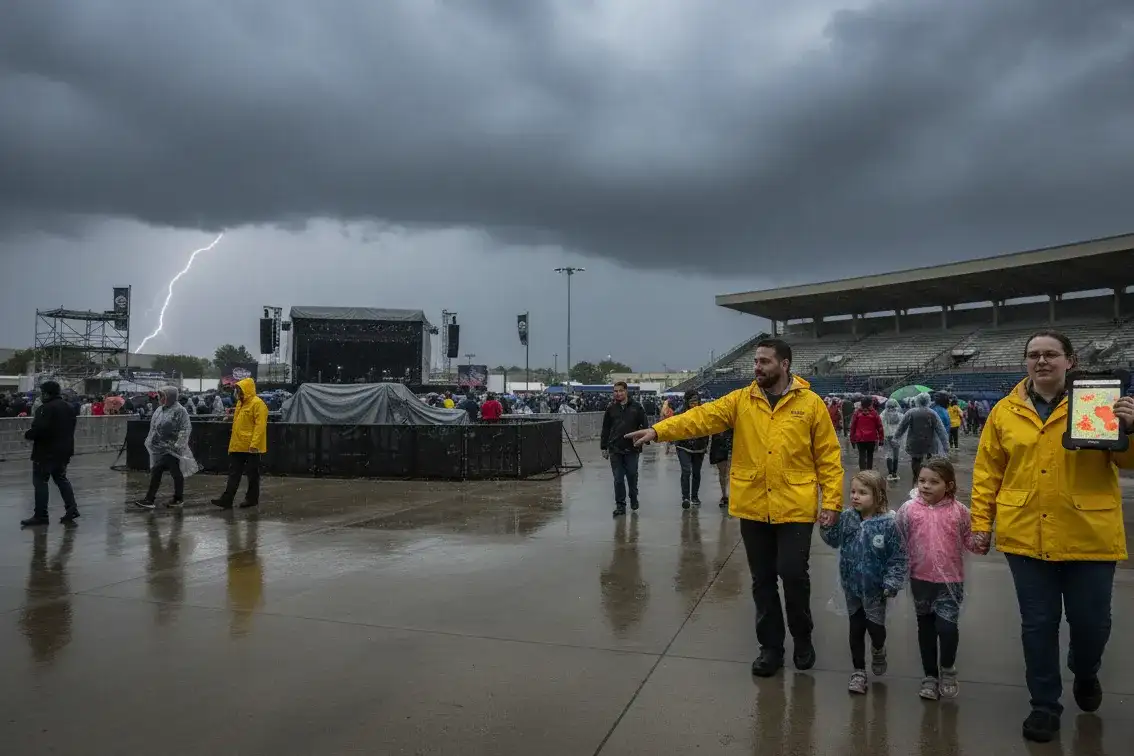
Outdoor events need staff trained to treat weather as a live variable, not a last minute surprise.
Outdoor event staffing becomes critical when the environment starts changing faster than the schedule. Temperature swings hit guest comfort and crew stamina. Sudden rain or wind reshapes queue paths, vendor operations and even where people decide to stand. If your team checks the forecast once at call time and never revisits it, you are already behind. When planners treat weather as a core design input, operations stay predictable and compliance issues drop sharply.
Weather Unpredictability
Build teams for multiple weather outcomes so you never rely on one fragile scenario.
Weather shifts create gaps wherever staff do not know what to do next. One rain cell or wind jump can change how guests queue and how safe temporary structures are. Teams need clear direction on wind load considerations, queue geometry changes and walkway conditions. Most forecasts still carry variance, so supervisors prepare two or three practical staffing and routing scenarios instead of betting everything on a single predicted pattern. That mindset limits schedule damage when the weather turns at the exact wrong time. To reduce the chance of chaos, focus on creating a safety plan.
Guest Safety and Comfort
Staff who manage hydration, shade and shelter cues quietly reduce medical calls and line aggression.
Heat, cold and rain change how long guests can stand, how fast they move and how patient they feel. Staff track hydration risk, slowing movement and early shelter seeking behavior instead of waiting for visible distress. Trained teams use weather-trigger thresholds to switch on cooling, shade routing or rerouted paths at defined index levels. When those thresholds are normal practice, medical incidents decline and entry flows stay more stable even in difficult conditions.
Higher Incident Probability
Outdoor layouts increase slip, fatigue and visibility risks, so staffing must scale with exposure.
Outdoor terrains introduce hazards that polished indoor floors do not. Grass turns to mud, pavement becomes slick, and lighting changes as weather moves through. Staff monitor surface hazard monitoring zones and act before guests reach high risk patches. Larger events need additional floaters and supervisors dedicated to these checks. A scalable outdoor event staffing plan protects guests, protects the brand and keeps safety reporting grounded in control rather than luck. For more on this operational requirement, see our guide to enterprise event staffing solutions.
Outdoor events demand staff trained to treat weather as a live operational variable that reshapes risk, flow, and timelines in real time.
Essential Staff Roles for Outdoor Events
.webp)
Assign roles that exist to read weather impact and adjust movement, not just “stand at the gate.”
Outdoor events need more than generic security and ticket takers. Roles must be tuned to weather response, terrain changes and extended exposure. When each position understands how weather changes its tasks and priorities, you get a unified structure that keeps movement predictable.
Entry Operations
Entry teams protect throughput when cold, rain and gear add seconds to every check.
Entry teams adjust to slower scanning and credential handling in cold or wet conditions. Gloves, umbrellas and soaked phones all add handling time. Staff implement rain queue re-routing protocols when guests crowd under canopies and block intended approach paths. They shorten certain lines, extend others and shift signs so scanners keep a clear sightline. Those small adjustments stop bottlenecks from forming just as volume peaks.
Hydration and Relief Staff
Hydration and relief staff keep guests upright and crews effective through long, hot runs.
High temperatures demand staff who understand hydration cycles, break schedules and shade capacity, not just where coolers sit. They encourage rotations through water and shade points, watch for flushed faces, confusion or heavy breathing, and escalate early when patterns look off. When relief areas are consistently staffed and monitored, attendance remains steadier and you avoid mid show drop off driven purely by heat fatigue.
Flow Spotters
Spotters give supervisors early, specific intel on where weather is quietly breaking your layout.
Flow spotters walk the site, watching for visibility degradation, congestion pockets and guests who start clustering under any available cover. They flag where lines fold on themselves or where people stack near shelter points. That information lets supervisors change queue shapes, move barricades or open alternate paths before flow collapses. It is usually cheaper to move a line early than to clear a jam later.
ADA and Mobility Support
Weather sensitive terrain makes ADA lanes fragile, so dedicated staff keep them clear and genuinely usable.
Moisture, slopes and uneven surfaces hit mobility impaired guests harder. Staff track wet-ground movement control issues and protect ADA lanes from encroachment when general lines swell. They redirect guests away from problem patches and coordinate with medical or mobility transport if conditions worsen. This attention turns written accessibility plans into real, on site support. For expert guidance on ADA compliance in event planning, consult the U.S. Access Board FAQs.
Supervisors and Weather Monitors
Supervisors translate weather data into timed, clear instructions crews can actually act on.
Supervisors direct zone changes and coordinate storm pause procedures when conditions hit defined thresholds. Their decisions rely on inputs from weather monitors who track radar, wind readings and lightning distance from trusted sources. The goal is not to act as meteorologists but to turn technical updates into specific orders for gate teams, vendors and security. That coordination supports consistent safety decisions across the site.
Weather-ready outdoor operations rely on clearly defined roles that actively monitor conditions and adjust movement, not just manage access points.
How Weather Conditions Influence Staffing Plans
Different weather profiles change staffing ratios, lane design and vendor support, not just wardrobe.
Weather alters the math on staffing ratios, lane counts, vendor support and travel time between zones. Heat, rain and cold all slow movement, but they do it in different ways and in different parts of the site. Directors who build those differences into the staffing model hold their schedule more often than teams that treat weather as an add on.
Heat
Heat adds medical risk and friction, so more staff must protect shade, water and queue design.
Heat reduces walking speed, raises medical call risk and shortens tolerance for long waits. Staff apply heat index mitigation plans by expanding shade, shortening exposed queue segments and staging more water near high density areas. Many events add floaters per entry zone during heat waves to manage routing and proactively move vulnerable guests. When outdoor event staffing expands intentionally in high heat, entry windows and show calls stay closer to plan.
“Heat typically reduces walking speed and queue tolerance, requiring staffing buffers to prevent stall points at entry.”
Cold
Cold slows hands, scanning and simple decisions, so staff must actively help guests complete basic tasks.
Cold reduces dexterity and makes credential handling clumsy. Staff trained on cold-weather event staffing assist with gloves, bulky coats and slower bag access. Entry supervisors add staff at scanning positions and bag check points so delays do not stack through narrow choke points. A modest staffing increase here often prevents a full schedule slide.
“Cold conditions often add handling time per scan, which compounds quickly at peak arrival.”
Rain
Rain changes where people stand, how they move and how long it takes to check anything they carry.
Rain raises slip risk and reshapes how guests choose shelter and queues. Teams activate rain plan staffing to patrol walkways, call in extra custodial or safety support and protect scanning and POS equipment. Umbrellas, ponchos and wet bags slow checks, so staff coordinate canopy placement and temporary detours to drier ground. Without that layer, your carefully drawn layout gets replaced by whatever shelter guests can find.
“Rain-driven shelter clustering can block primary corridors if rerouting is not activated early.”
Wind
Wind turns tents, signage and loose kit into real risk, so staff must stabilize, monitor and redirect.
Wind hits tents, canopies, signs and light gear hard. Staff trained on tent + vendor flow adjustments help vendors secure tie downs, reorient setups and recover blown materials. Supervisors watch gust readings and deploy staff to high risk perimeters where unsecured items could cause injury or block exits. Solid outdoor event staffing practice assumes some level of wind and sets clear limits and responses. For detailed guidance on wind and temporary structures, see resources from the Special Event Structures safety code.
“Wind frequently shifts vendor lines into stake and tie-down zones, creating both flow and safety risks.”
Lightning
Once lightning crosses your trigger distance, staff must start shelter plans without debate.
Lightning triggers defined safety policies. Teams start shelter routing and escalate to supervisors when strikes reach your prescribed distance threshold. Staff guide guests through sheltered access points while supervisors coordinate with municipal safety teams and venue control. Clear protocols mean staff spend time moving people, not arguing over criteria.
Heat, cold, rain, wind, and lightning each change staffing ratios and task load differently, requiring condition-specific deployment plans.
Weather-Triggered Staff Procedures
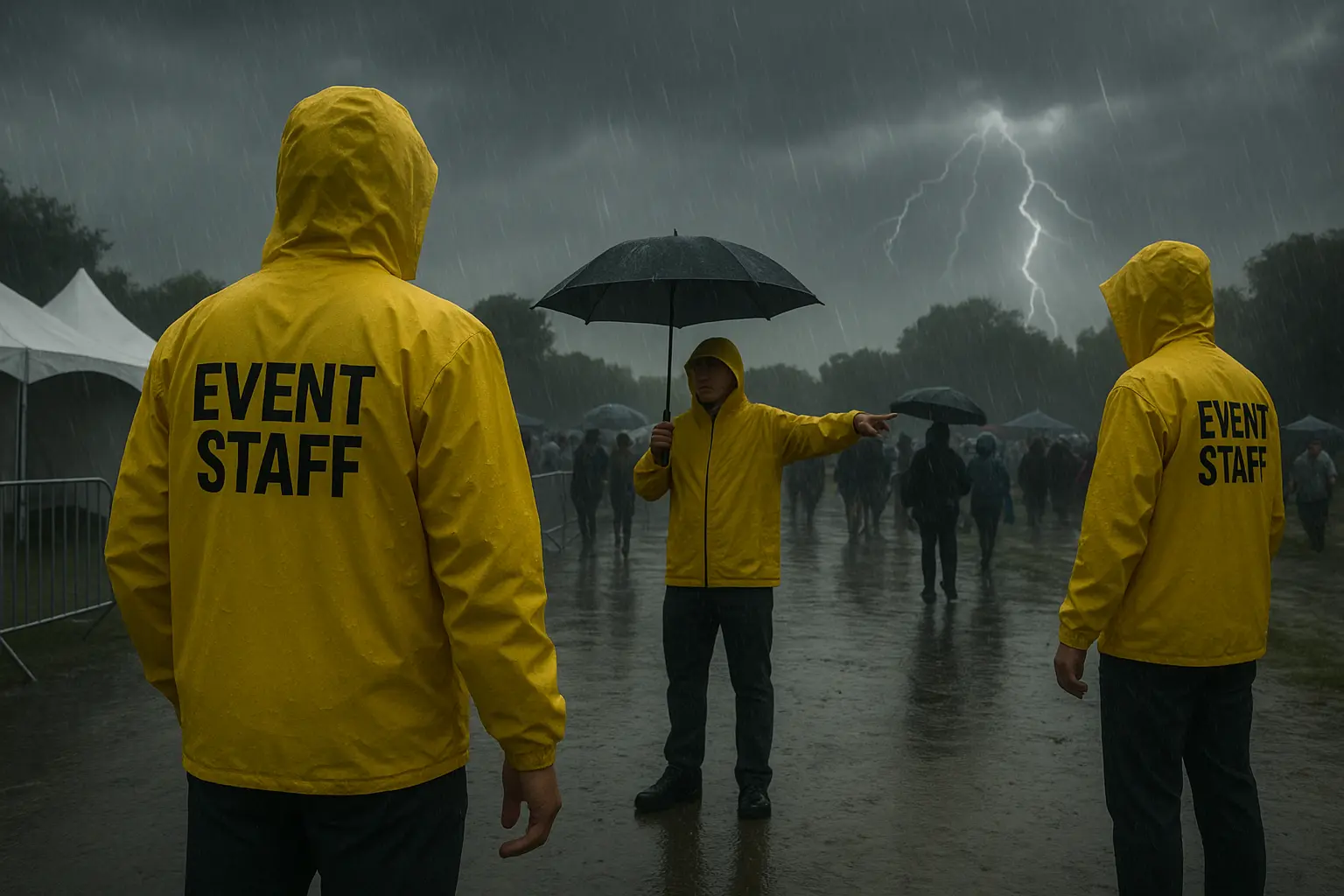
Triggers and scripts remove hesitation once conditions cross a line the team already agreed on.
Staff respond to weather changes using pre written procedures, not individual improvisation. When conditions cross agreed thresholds, they know which steps to take, in what order and whom to notify. That structure keeps decisions fast, consistent and easier to audit later.
Heat Index Responses
When the index spikes, staff shorten exposure time and multiply cooling touchpoints.
When temperature and humidity push the heat index past your trigger, staff open extra cooling zones, adjust queue length and accelerate water access. Teams trained in heat management event staff responsibilities know early signs of heat stress and move people to shade or medical attention before it becomes a public incident.
Rain Routing
Rain routing protects movement and equipment by reshaping lines around where people actually shelter.
Rain pulls guests under any structure they can find and can choke critical walkways. Staff use rain queue re-routing plans to keep travel lanes open around shelter areas and prevent backflow into emergency paths. They reposition signs and barriers and keep scanners and POS equipment dry so throughput does not collapse as soon as the first shower hits. This is vital to managing the flow at large scale outdoor festival staff deployments.
Wind Mitigation
Wind protocols keep temporary structures secure and prevent small objects from becoming injuries.
Teams assist with tent + vendor flow adjustments and signage stabilization as gust speeds rise. They remove or secure light items, tighten fastenings and monitor vendor lines where flapping materials become distractions or hazards. A few targeted mitigation steps here often prevent structural failures and minor injuries that would otherwise trigger wider shutdowns.
Lightning Protocols
Lightning protocols align staff, guests and partners around a single, clear decision path.
Lightning activates the weather contingency plans events sequence. Supervisors call for shelter movement, gate teams pause entries and staff guide guests to pre approved indoor or covered spaces. Communications with municipal partners and venue control stay coordinated so the whole site follows the same timing and rules.
Predefined triggers and response scripts remove hesitation and keep teams aligned when weather crosses operational risk thresholds.
Outdoor Guest Flow Management
Weather changes how people move and where they cluster, so staff must reshape routes instead of watching jams form.
Outdoor movement patterns shift as soon as conditions change. Guests slow down, cluster near shelter or move toward exits earlier than expected. Staff who understand these patterns adjust routes, queue shapes and holding zones instead of letting congestion build until it becomes unmanageable.
Queue Shape Changes
Smart teams shrink, bend or split queues to cut exposure and pressure without losing order.
When weather disrupts standard straight lines, staff reconfigure shapes to reduce time in full exposure. They shorten queues, move barricades and sometimes divide lines into micro-queues that feed a shared checkpoint. That allows small, controlled releases into staff managed areas. It also makes it easier to clear a section quickly if conditions shift again.
Shelter Seeking Patterns
Crowd behavior changes fast when people chase shelter, so staff must defend exits and key corridors.
Rain and heat both drive shelter seeking behavior. Guests crowd under canopies, near stages or in vendor rows that feel protected. Staff guide these movements so they do not block exits, fire lanes or primary medical routes. Well planned outdoor event staffing keeps at least one safe, visible path through every dense cluster.
Weather alters how crowds cluster, move, and pause, so staff must continuously reshape routes to prevent compaction and blockage.
Vendor and Back of House Adjustments
Weather ready events staff vendor and back of house areas as actively as front of house queues.
Vendor zones become more complex when conditions change. Mud, pooled water and wind all affect where guests stand and how staff can move equipment. Teams support outdoor crowd control staffing needs by guiding guests away from unsafe or closed vendor locations and helping operators adjust layouts. Staff watch surface hazard monitoring indicators for tents, risers, cables and back of house routes and escalate when infrastructure no longer meets safety tolerances.
Real Time Weather Monitoring for Staff
Monitoring has value only when it produces clear, timely instructions the crew can execute.
Supervisors track radar, humidity, wind speeds and lightning distance from trusted tools, then convert that into plain language orders for their zones. They focus on weather emergency support staff deployment, changes to show timing and shifts in acceptable exposure windows. Staff also track temperature and humidity for their own rotation cycles, so crew safety and performance remain stable across long shifts.
How EventStaff Prepares Weather Ready Teams
.webp)
EventStaff trains crews on what weather does to operations, not just what the forecast says.
EventStaff builds weather ready teams through structured training, detailed briefings and scenario drills. Trainers cover outdoor event staff responsibilities, expected local weather patterns and specific response actions. Staff learn how weather planning for events ties into staffing ratios, lane design and vendor placement. Supervisors use weather-responsive event staffing scenarios in pre shift talks so teams know which triggers to watch and what each trigger activates.
EventStaff also adds redundancy with floaters assigned explicitly to weather tasks and supports markets that run outdoor shows most of the year. This positions EventStaff as the best staffing agency for outdoor events for directors who want crews that already understand weather operations, ADA obligations and local permitting constraints when they arrive on site.
EventStaff trains crews to understand how weather changes operations, so response becomes automatic rather than improvised.
Outdoor Event Weather Readiness Checklist
A written, tested checklist keeps everyone aligned when the sky ignores your ideal plan.
A practical weather ready plan usually includes:
- Staffing ratios adjusted for heat, cold, rain and wind
- Clear weather contingency plans events triggers and radio phrases
- Defined ADA routing and mobility support for difficult surfaces
- Vendor flow controls and tent + vendor flow adjustments steps
- Entry modifications for visibility degradation and slower mobility
- Slip and water level monitoring assignments
- Pre approved shelter paths with named staff owners and expected capacities
When this checklist is briefed and rehearsed, teams respond faster with fewer conflicting decisions, and incident reports become easier to defend with regulators and venue partners.
Plan a Weather-Ready Event with Expert Staffing
Outdoor events demand more than basic staffing, they require teams trained to respond to real-time conditions, protect guest flow, and maintain operational control under pressure.
EventStaff provides experienced, weather-ready crews who understand how to adapt instantly to changing environments while keeping your event running smoothly.
Talk to our team today to build a staffing plan that performs in any condition.
Ready to elevate your next event?
Join thousands of event planners who trust EventStaff.com for reliable, professional staffing solutions.
Trusted by event professionals nationwide
1k+
Events Staffed
2 million+
Guests Served
97%
Positive reviews