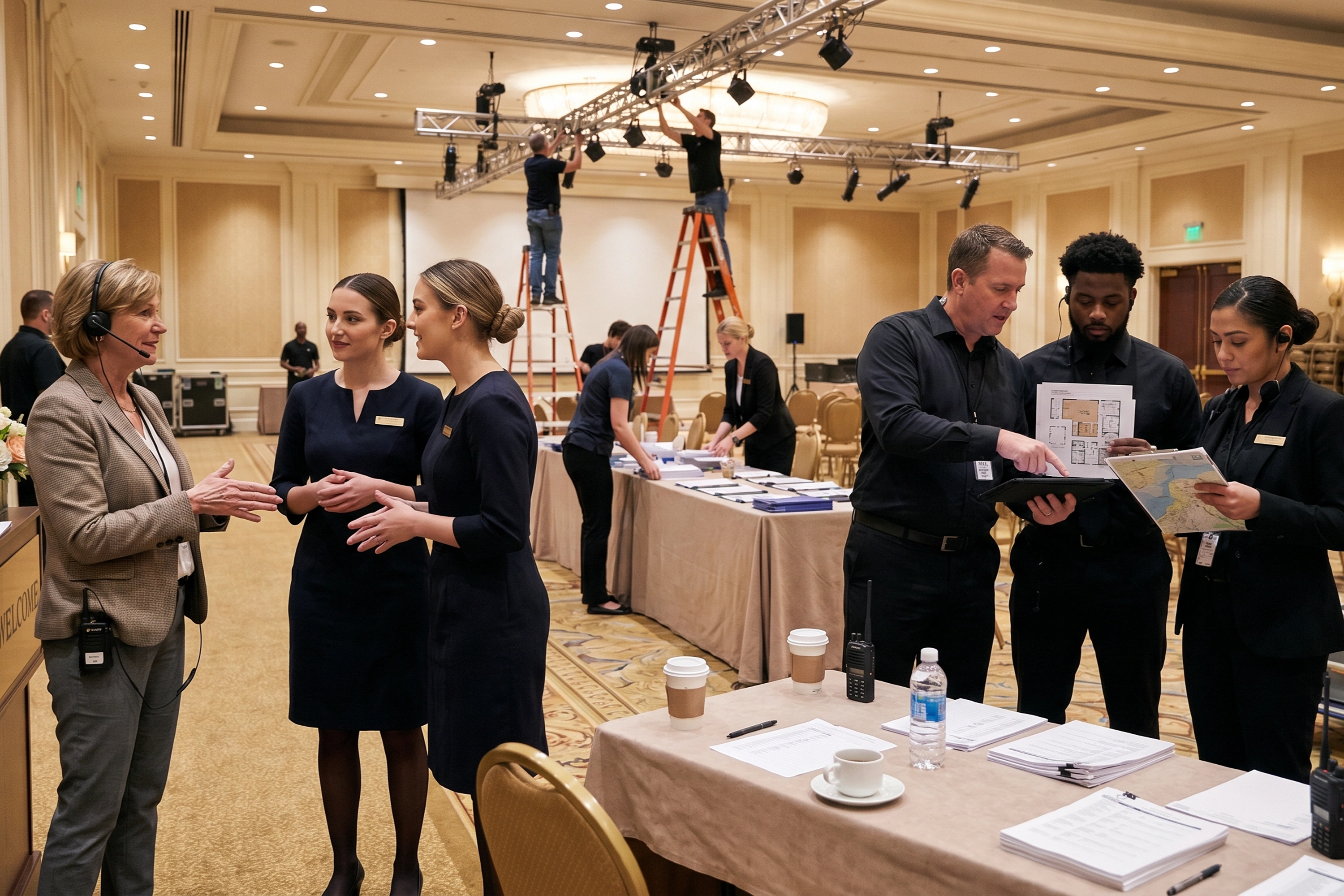
Front-of-House Arrival Guide

Hostesses vs Greeters

Section Ushers
Hostesses

Hostesses elevate the arrival experience with polished presentation, poised guest handling, and a more premium front-of-house presence.

Event Greeters
Greeters

Greeters keep arrivals moving with warm first contact, clear direction, and steady welcome flow at the entrance.

Operational Timeline

These roles support the same entrance, but they shape arrival in different ways.

Pre-Doors

Entrance Readiness and Guest Positioning

Hostesses
Hostesses prepare the welcome point, align on guest tone, VIP handling, and presentation standards, and get the front entrance ready to feel refined from first contact.
Greeters
Greeters prepare entry routes, queue starts, directional points, and fast-answer positioning so guests can be welcomed and moved cleanly once arrivals begin.

Doors Open

First Contact and Arrival Build

Hostesses
Hostesses welcome guests with a more polished, composed presence, helping the entrance feel premium, attentive, and suited to higher-touch guest expectations.
Greeters
Greeters welcome guests quickly, answer first questions, point people to the right line or checkpoint, and keep early hesitation from slowing the entrance.

Peak Entry Window

Flow Protection and Ongoing Guest Handling

Hostesses
Hostesses continue supporting VIP-facing arrivals, guest reassurance, and polished front-of-house presence when the event needs first impression to stay elevated under pressure.
Greeters
Greeters continue shaping movement, redirecting wrong turns, managing quick questions, and keeping guests flowing toward the next zone without crowding the entrance.
Operational Playbook

Real-World Protocols

Live arrival pressure makes the difference between polish and flow much clearer.
The entrance needs to feel polished and high-touch because guests, clients, or VIPs are arriving with elevated service expectations.

The Event Needs a More Premium Front Entrance

Hostesses Response
Protocol A
Hostesses lead here by setting the tone at first contact, presenting the event with more composure, and helping guests feel received rather than simply processed.
Greeters Response
Protocol B
Greeters can support the entrance, but their strongest value is usually in movement, first questions, and quick directional control rather than presentation-led hosting.
The entrance has multiple lines, checkpoints, or next steps, and guests need quick clarity before confusion starts spreading.

Guests Need Fast Direction the Moment They Arrive

Hostesses Response
Protocol A
Hostesses can help maintain calm at the front, especially in premium settings, but they are not usually the primary role for protecting line logic and welcome flow at scale.
Greeters Response
Protocol B
Street Teams support field attribution through route tracking, QR links, offer codes, contact counts, and shift-based reporting. Their work helps make outreach easier to compare across locations and timing blocks.
The entrance needs to look elevated for important guests, but it also needs fast direction and controlled movement for general arrivals.

The Event Needs Polish and Strong Flow at the Same Time

Hostesses Response
Protocol A
Hostesses hold the tone of the entrance, support higher-touch guest handling, and protect the visual and social quality of the first impression.
Greeters Response
Protocol B
Greeters protect the movement around that first impression, keeping lines clear, reducing hesitation, and helping general arrivals reach the right next point quickly.
Training & Skills

Curriculum Comparison

The training changes once you separate elevated hosting from flow-led welcome support.

Hostesses

Presentation-Led Hosting
Core Modules
VIP greeting tone
Guest composure
Reception etiquette
Escalation awareness
Success Outlook
Strong execution from hostesses makes the entrance feel polished, attentive, and aligned with a more premium event standard from the first few seconds.

Greeters

Welcome Flow Control
Core Modules
Queue direction
Fast-answer handling
Route guidance
Entry pacing
Success Outlook
Strong execution from greeters keeps the front end easy to understand, reduces hesitation, and helps guests reach the right checkpoint without unnecessary delay.

Zone Ownership Map

Both work near the entrance, but each owns a different kind of guest need.

Hostesses

Hostesses mainly own the polished guest-facing edge of the entrance, especially where presentation, reception quality, and higher-touch arrival moments matter most.

VIP Entry
Reception Point
Photo Arrival
Guest Welcome

Shared Zones

Shared zones are where first impression and guest movement overlap, especially when arrivals need both a warm reception and clear next-step direction.

Main Entrance
Queue Start
Lobby Front
Info Point

Greeters

Greeters mainly own the movement side of the entrance, helping guests choose the right route, line, or checkpoint before confusion slows the front end.

Entry Route
Queue Approach
Checkpoint Turn
Direction Point
Performance Metrics

By The Numbers

These KPIs compare presentation quality with welcome-flow performance.

Hostesses

Presentation and Reception
Guest Response
96.8%
VIP Handoff
> 90 seconds
 These measures reflect how well higher-touch arrivals are received, how smoothly premium guest moments are handled, and how consistently the entrance feels polished.
View Deep Dive
Just decorative presence
Any greeter can host
Polish has no impact
Presentation shapes perception
Tone affects guest comfort
Premium arrivals need poise

 Greeters

Direction and Flow
Redirect Speed
< 30 seconds
Route Accuracy
97%
These measures reflect how quickly guests are routed correctly, how often confusion is stopped early, and how well entrance flow stays controlled under volume.
View Deep Dive
Just say hello
Anyone can direct
Warmth alone is enough
Direction protects flow
Early clarity prevents backups
Welcome pace shapes entry

Frequently Asked Questions

Do I need hostesses, greeters, or both for my event?

click down

That depends on what your entrance is being asked to deliver. If the priority is a more polished, premium guest-facing experience, hostesses are usually the stronger fit. If the priority is faster welcome flow, clear direction, and clean arrival movement, greeters are usually the better choice. Many events need both. Hostesses help shape how the entrance feels, while greeters help control how the entrance functions once guest volume starts building and multiple guest needs appear at the same time.

How does Eventstaff decide whether hostesses or greeters are the better fit?

click down

Eventstaff looks at the entrance as an operating zone, not just a welcome point. We assess guest type, arrival volume, venue layout, checkpoint complexity, VIP expectations, and how much of the first impression depends on presentation versus movement. That lets us recommend the right staffing split based on the event itself. Some entrances need stronger polish, some need stronger routing, and some need both working together so first impression and guest flow stay equally protected from the start.

Why book Eventstaff instead of asking internal staff to cover the entrance?

click down

Internal teams often have the right intent but not the bandwidth to protect the entrance properly once live arrivals begin. That usually leads to uneven guest reception, slower direction handling, and core event staff getting pulled into front-door tasks instead of event delivery. Eventstaff gives you dedicated front-of-house coverage with clearer role ownership. Hostesses can hold the presentation side of arrival, while greeters can manage flow, first questions, and routing so the entrance feels intentional instead of improvised under pressure.

What usually goes wrong when events only book hostesses for the entrance?

click down

The entrance can look polished but still become operationally weak if guest volume is high or the route into the event is not simple. Hostesses can absolutely support first impression, but they are not always the best role for sustained directional pressure, queue starts, or repeated traffic handling. When that flow work builds around them, hesitation increases, questions repeat, and movement slows. The front end still looks elevated, but it may stop functioning with enough speed or clarity during peak arrival windows.

How should hostesses and greeters be positioned on the day?

click down

The cleanest setup gives each role a distinct job at the entrance. Hostesses should hold the more visible guest-facing points where reception quality, tone, and higher-touch interactions matter most. Greeters should be placed slightly wider across arrival paths, queue starts, or directional decision points so they can catch confusion early and keep people moving. That separation works well because it prevents presentation-led hosting from getting overloaded with traffic-control work once arrivals begin to compress and guest questions increase.

Ready to elevate your next event?

Join thousands of event planners who trust EventStaff.com for reliable, professional staffing solutions.

Trusted by event professionals nationwide

1k+

Events Staffed

2 million+

Guests Served

97%

Positive reviews

Experience professionalism through Event Staff