
What Event Staffing Roles Do First-Time Conference Organizers Miss?
Executive Summary
First-time conference organizers usually budget for speakers, AV, and venue logistics, but overlook the operational conference staff roles that actually control attendee flow throughout the event. Weak conference staffing plans create registration backups, dead sponsor zones, crowded transitions, confused attendees, and teardown delays that quietly damage the event experience. Strong conference event staff systems are built around movement, transition pressure, and real venue behavior, not generic staffing ratios. This guide breaks down the overlooked conference planning staffing roles that prevent operational bottlenecks before they happen and explains how experienced planners structure staffing differently for smoother conferences, stronger sponsor engagement, and fewer attendee complaints.
Why Do First-Time Conference Organizers Miss Critical Conference Staffing Roles?
Speaker coordination gets attention early.
Venue walkthroughs get attention early.
AV testing gets attention early.
But operational conference staffing usually gets treated as a last-minute checklist item.
That is where problems begin.
The hidden issue is that conferences are movement-heavy environments.
People are constantly:
- entering sessions
- leaving sessions
- switching floors
- finding sponsors
- asking for directions
- checking schedules
- arriving late
- crowding transition points
Without trained conference staff, attendee movement breaks down fast.
Experienced planners build staffing around friction points.
First-time organizers usually build staffing around headcount alone.
That difference changes the entire attendee experience.
Why Do Registration Complaints Happen Even With Enough Conference Staff?

Registration problems are rarely caused by "too few people."
They are caused by a poor staffing structure.
Many first-time organizers assign the same conference registration staff team to:
- badge pickup
- troubleshooting
- QR scanning
- walk-in registration
- VIP handling
Everything collapses when one issue slows the line.
Experienced conference event staff teams split registration into separate operational lanes.
EventStaff internally uses a "surge split" model for conferences where attendee arrivals compress heavily inside the first 30 to 45 minutes.
The staffing structure usually separates:
- scan-only attendees
- badge corrections
- VIP check-in
- walk-up issues
That operational separation matters more than simply adding random staff members.
According to PCMA event operations guidance, attendee frustration spikes sharply once registration wait times pass 8 to 10 minutes.
That early frustration follows the event all day.
CEO Excerpt
“Most conference failures aren’t caused by poor planning; they’re caused by poor staffing structure. When conference staff is aligned to attendee movement instead of headcount, the entire event experience transforms.” - Daniel Muersing
Why Do Attendees Get Lost Between Sessions at Large Conferences?
Conference venues create transition confusion faster than planners expect.
Especially when events include:
- multiple breakout rooms
- split ballrooms
- sponsor halls
- hotel wings
- escalator traffic
- stacked session schedules
This is where directional conference staff becomes critical.
Not volunteers standing with signs.
Operationally trained staff who understand attendee flow.
Experienced conference planning staffing systems usually position wayfinding staff at:
- escalator exits
- ballroom forks
- hallway bottlenecks
- elevator banks
- sponsor-entry zones
One overlooked issue:
Guests rarely ask for help immediately.
They pause first.
That pause creates traffic clustering.
Then, session delays begin.
One properly placed directional staff member can reduce hallway congestion more effectively than adding extra registration personnel.
That is why strong conference staffing plans prioritize transition flow, not just front-desk coverage.
Why Does Sponsor Traffic Collapse After Lunch?
This is one of the most common conference complaints sponsors never say publicly.
Morning booth traffic feels strong.
Afternoon traffic disappears.
Usually, because nobody controls post-session movement.
Why Do Sponsor Areas Feel Empty During Active Conferences?
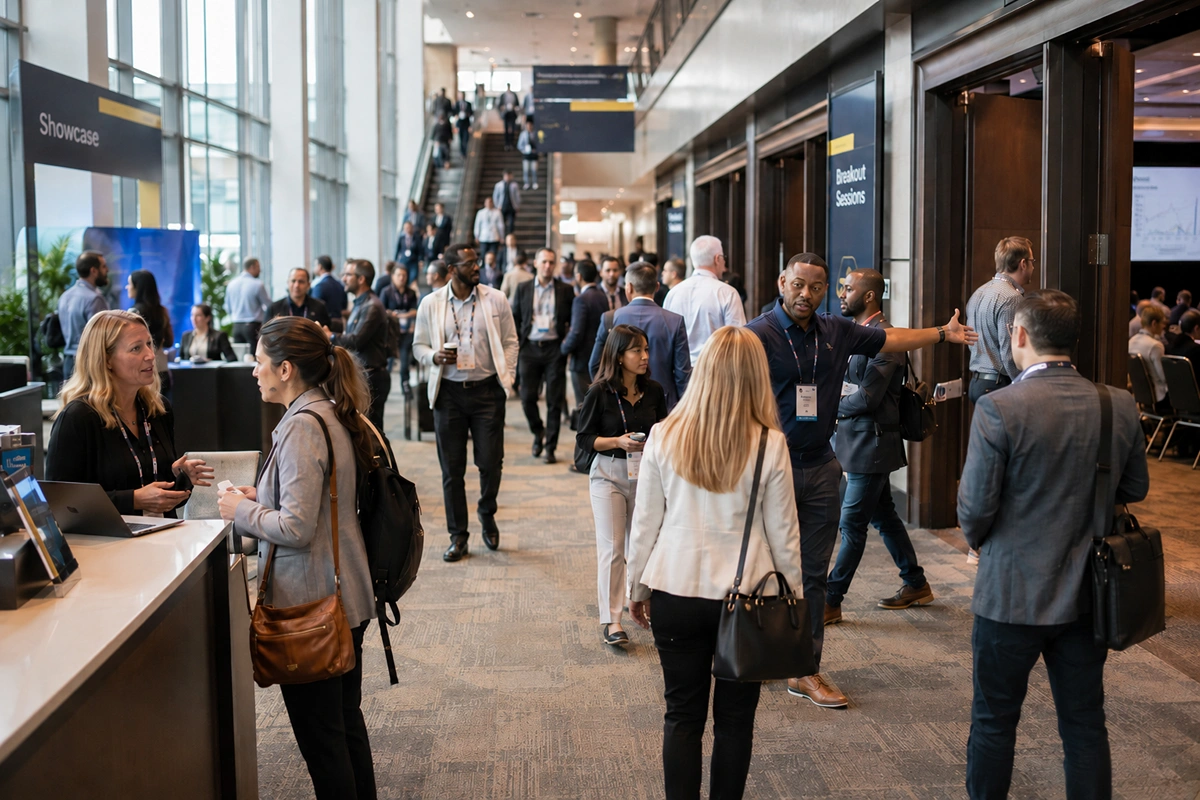
Attendees naturally drift toward:
- coffee areas
- charging stations
- lounges
- exits
- hallway conversations
unless movement gets redirected intentionally.
Experienced conference event staff teams use transitional aisle greeters between breakout rooms and sponsor rows to redirect attendee momentum before people scatter.
This is not "selling."
It is traffic shaping.
Freeman engagement research has repeatedly shown that attendee interaction rates drop sharply when transition guidance disappears between sessions.
That means sponsor engagement problems often begin with weak staffing flow, not weak sponsorship packages.
First-time organizers rarely realize that.
Experienced planners absolutely do.
Why Do Conference Teardowns Take So Long?
Closing operations are usually underplanned.
Front-facing staffing gets prioritized.
Breakdown logistics get ignored.
That creates overtime problems fast.
Why Should Event Crew and Conference Staff Stay Separate?
Conference hospitality staff should not also handle teardown labor after working attendee-facing shifts all day.
That destroys efficiency.
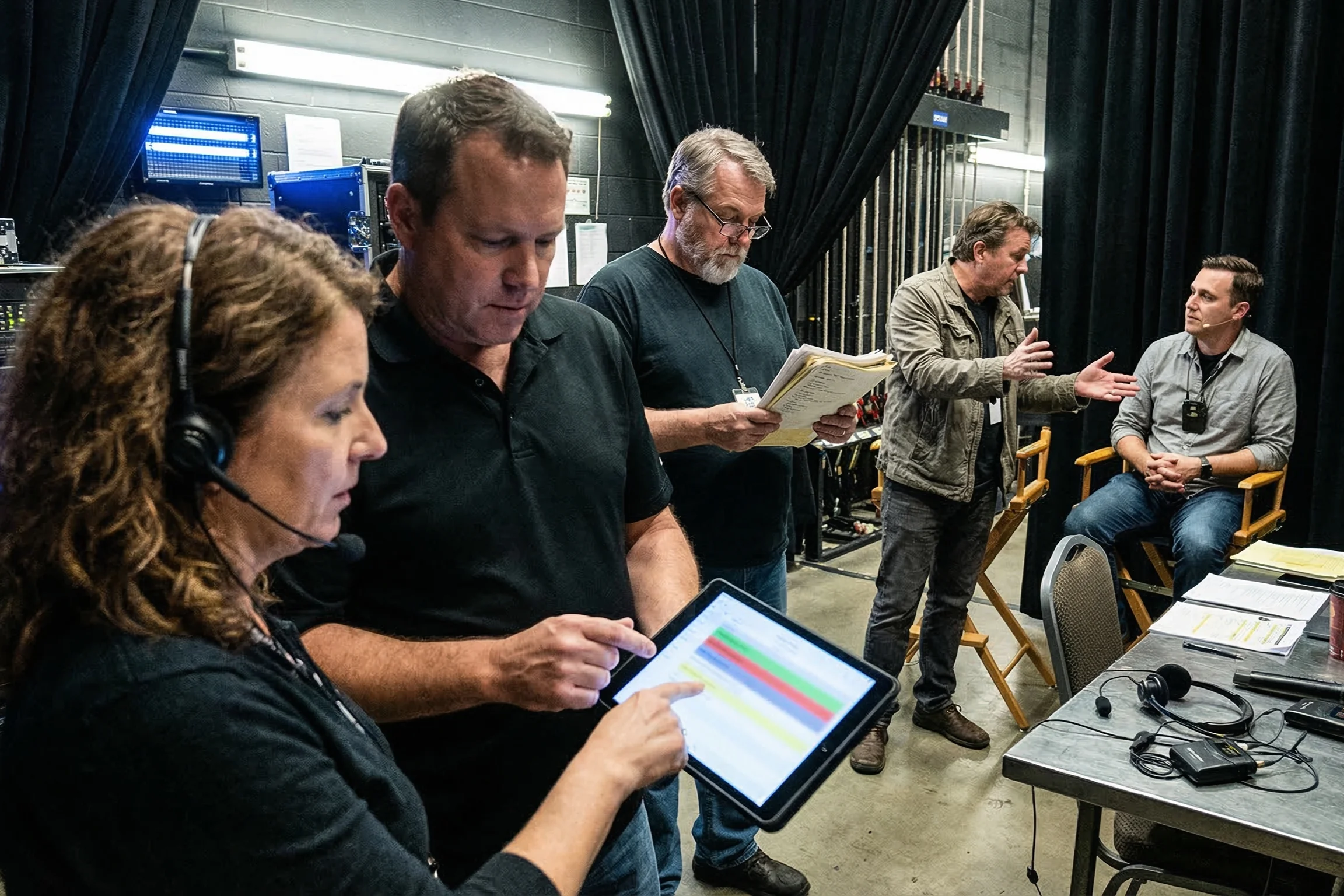
Professional event crew teams handle:
- signage removal
- vendor load-out
- ballroom resets
- booth strike
- cable clearing
- production movement
while conference staff continues handling attendee exits, sponsor support, and guest-facing operations.
Mixing those roles creates operational confusion.
Experienced conference staffing systems separate hospitality flow from production flow before event day even begins.
That structure protects venue timelines and prevents expensive overtime windows.
What Conference Staffing Structure Actually Works for 500 and 1,000 Attendees?
Generic staffing ratios rarely work well for conferences because attendee movement changes by schedule density, venue shape, and breakout structure.
Still, experienced planners usually benchmark operational staffing approximately like this:
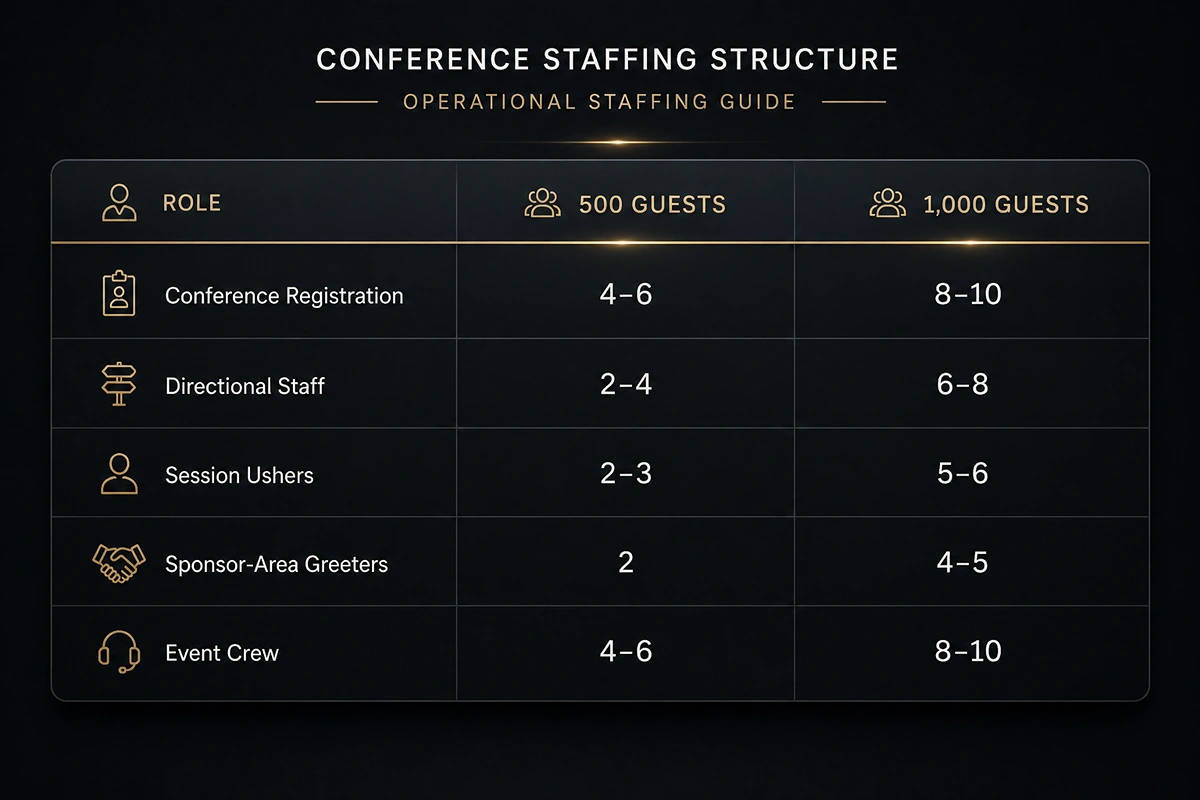
The goal is not overstaffing.
The goal is to reduce operational friction before attendees feel it.
That is what separates smooth conferences from chaotic ones.
Need professional conference staff? EventStaff designs staffing plans tailored to your venue zones.
Why Strong Conference Staffing Feels Invisible When It Works
Guests rarely compliment staffing directly.
They simply describe the event as "organized."
That usually means the operating system worked.
Strong conference staff quietly prevent:
- hallway backups
- registration collapse
- sponsor dead zones
- session delays
- overcrowded transitions
- breakdown overtime
That is why experienced organizers invest heavily in an operational conference staffing structure long before event day begins.
Not because attendees notice good staffing.
Because attendees immediately notice bad staffing.
Ready to elevate your next event?
Join thousands of event planners who trust EventStaff.com for reliable, professional staffing solutions.
Trusted by event professionals nationwide
1k+
Events Staffed
2 million+
Guests Served
97%
Positive reviews