

High-footfall trade shows are where brand visibility, demand, and deal momentum converge. When traffic surges at the right moments, after a keynote, during peak aisle flow, or around a major activation, the upside can be significant. The booths that win in these conditions are not just well designed, they are staffed to convert attention into structured conversations and qualified leads.
This guide focuses on trade show booth staffing strategies for high-footfall events, where volume arrives in bursts rather than at a steady pace. In these environments, generalist teams struggle, not because interest is low, but because too many attendees arrive at once. Proven expo booth staffing strategies solve this by separating greeting, qualification, demos, and trade show lead capture so each function operates at full speed, even during peak traffic windows.
If you are planning a busy expo and need an expo booth staffing strategy that holds up under pressure, this is built for you, especially if you are deciding between internal staffing and trade show staffing companies for surge coverage.
CEO EXCERPT
"In my experience overseeing large-scale event logistics, I’ve found that high-footfall success is a calculation of processing power rather than simple interest. When an aisle floods after a keynote, million-dollar booths fail because generalist teams collapse under the 'burst density' of the crowd. By enforcing strict role layering and a 1:4 staffing ratio during peak surges, we transform high-traffic chaos into a predictable, high-value lead engine that stops revenue leakage at the perimeter.", CEO, Event Staff
Executive Summary
To stabilize high-footfall booth performance, you must layer roles by separating greeting, qualifying, demoing, and scanning to prevent bottlenecks while planning trade show booth staffing for peak blocks using a 1:4 ratio.
What Counts as a High-Footfall Trade Show Booth?
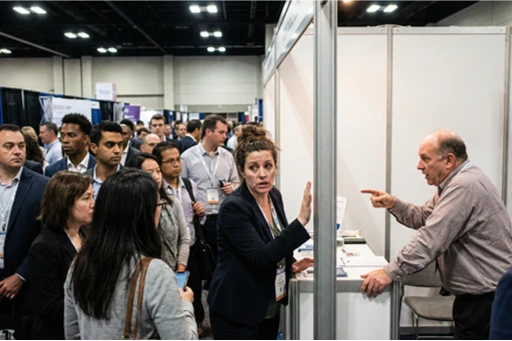
A high-footfall trade show booth is defined by surge pressure, not by how busy the aisle looks. Many aisles remain crowded all day without causing problems. Booths fail when multiple attendee groups arrive at once, and the trade show booth staffing team cannot acknowledge, route, and process them fast enough.
From an operational standpoint, a booth enters high-footfall conditions when traffic arrives in clusters rather than as a steady flow. At that point, generalist staffing models break down and structured expo booth staffing strategies become essential.
The Practical Definition
You are operating in a high-footfall condition if:
- Four or more attendee groups arrive at your booth within five minutes.
- Your team cannot greet each group within ten seconds consistently.
If either condition is met, generalist staffing fails and role separation becomes mandatory to prevent the booth from "leaking" attendees.
Why Burst Density Breaks Booths
High-traffic trade show booths do not fail because of crowd size alone. They fail because of burst density, moments when attendees arrive simultaneously while key staff are already engaged.
Common failure points include:
- Demo reps trapped in long conversations while new prospects wait unacknowledged
- Badge scanning is delayed until after the demos, causing data loss
- Qualifiers pulled into demos, leaving the booth perimeter uncovered
Without clearly separated trade show booth staffing roles, the booth stops processing prospects efficiently and begins losing them to nearby competitors.
The Financial Cost of Leaking Leads
When trade show booth staffing collapses under surge pressure, the loss isn't just a "branding" issue; it is a measurable hit to revenue. Qualified prospects walk away unrecorded, and the quality of your data degrades.
- Cost Per Lead: To understand the financial impact, view CEIR data on lead values. In 2026, the average cost per lead has climbed significantly.
- Purchasing Power: According to recent reports, 81 percent of trade show attendees hold purchasing authority.
In high-traffic trade show booths, the prospect left waiting is often a decision-maker. This demands a specialized expo booth staffing strategy to ensure that surge windows don't result in permanent revenue leakage.
The 5-Minute Surge Test
If 4+ groups hit your booth within 5 minutes and your trade show booth staffing team can’t greet them within 10 seconds, you are in high-footfall conditions. If badge scans lag, your trade show lead capture quality will slide, and it won't fix itself after the show.
How Should You Structure Roles in a High-Traffic Booth?
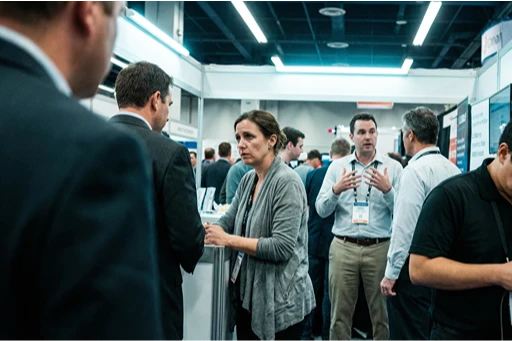
High-traffic trade show booths cannot rely on the idea that everyone can do everything. During surge windows, generalist trade show booth staffing creates bottlenecks because greeting, qualifying, demoing, and scanning all compete for attention. The fastest way to stabilize performance is to layer roles by function so attendee flow stays predictable and trade show lead capture stays complete.
Trade show staffing agencies structure booths like systems. Each role has a single job, a defined position, and a clear handoff point. That is how an expo booth staffing strategy holds up when traffic arrives in bursts.
Why role separation matters in high-footfall environments
In a surge, your booth is either processing attendees or losing them. When one person is responsible for greeting, qualifying, demoing, and scanning, the system slows immediately.
Common breakdown patterns include:
- Demo reps get stuck in long conversations and cannot reset for the next prospect
- Badge scanning falls behind, so leads are not captured at the moment of intent
- High-value prospects wait too long and walk away
- Unqualified conversations trap your most valuable staff
Role separation prevents these failures by keeping every function moving in parallel.
The high-traffic role flow
A proven expo booth staffing strategy for high-footfall conditions follows a linear path that moves attendees forward without confusion:
- Greet: acknowledge attendees within ten seconds and stop walk-bys
- Qualify: run a fast screen to determine fit and urgency
- Demo: deliver a controlled, time-bound overview
- Scan: capture the lead with required context
- Handoff: assign ownership and confirm next steps
This flow protects throughput and prevents the booth from becoming a conversation cluster.
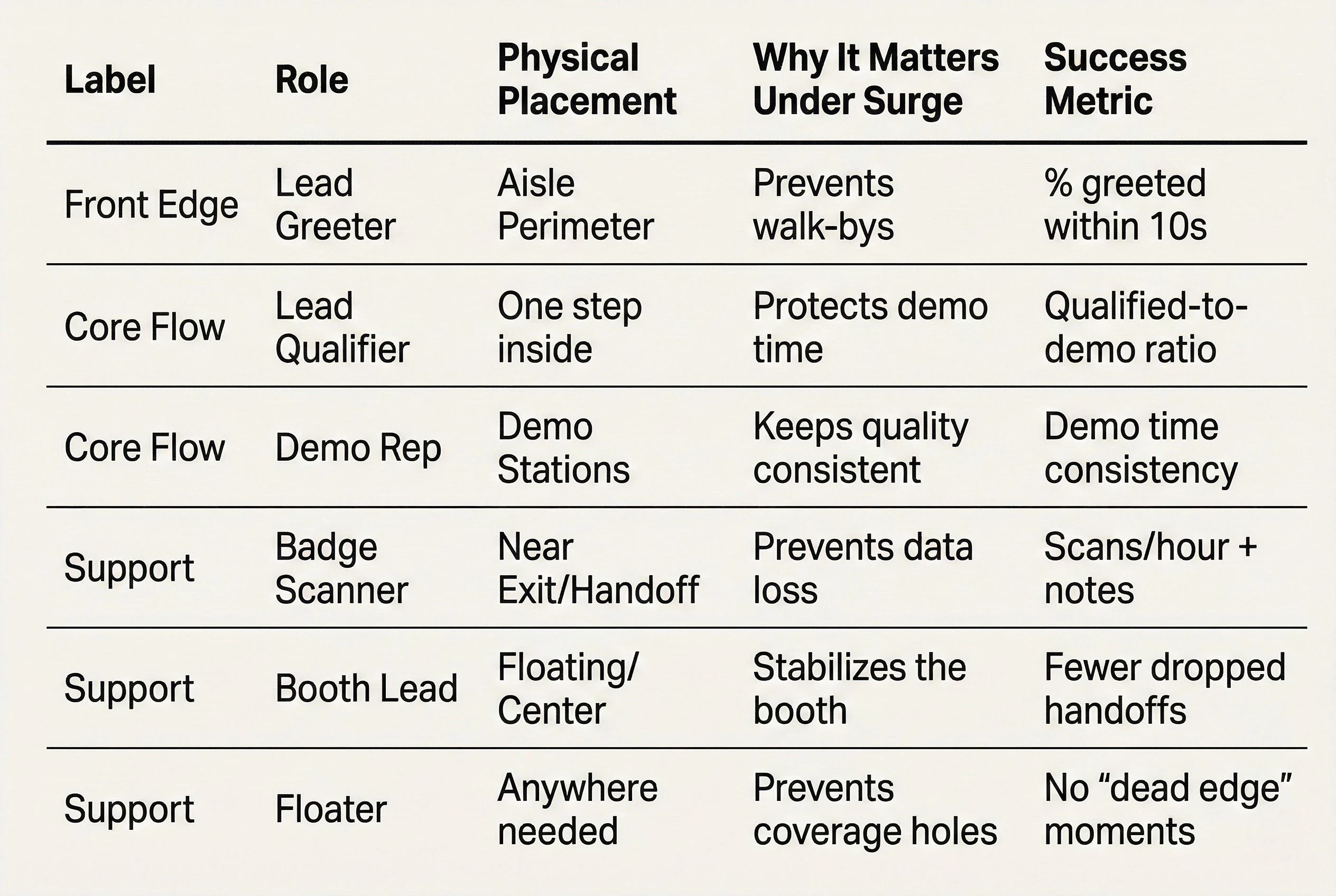
Core staffing roles for peak throughput
Quick check: is your structure surge-ready?
If any of the following is true, your current trade show booth staffing structure needs role separation:
- Greeters step away to scan or demo during busy moments
- Badge scans happen late, or without notes
- Prospects enter the booth but do not get routed
- Demo reps cannot end conversations cleanly to reset for the next attendee
In high-footfall conditions, structure is what keeps speed and quality aligned.
How Many Staff Do You Need for a High-Footfall Booth?
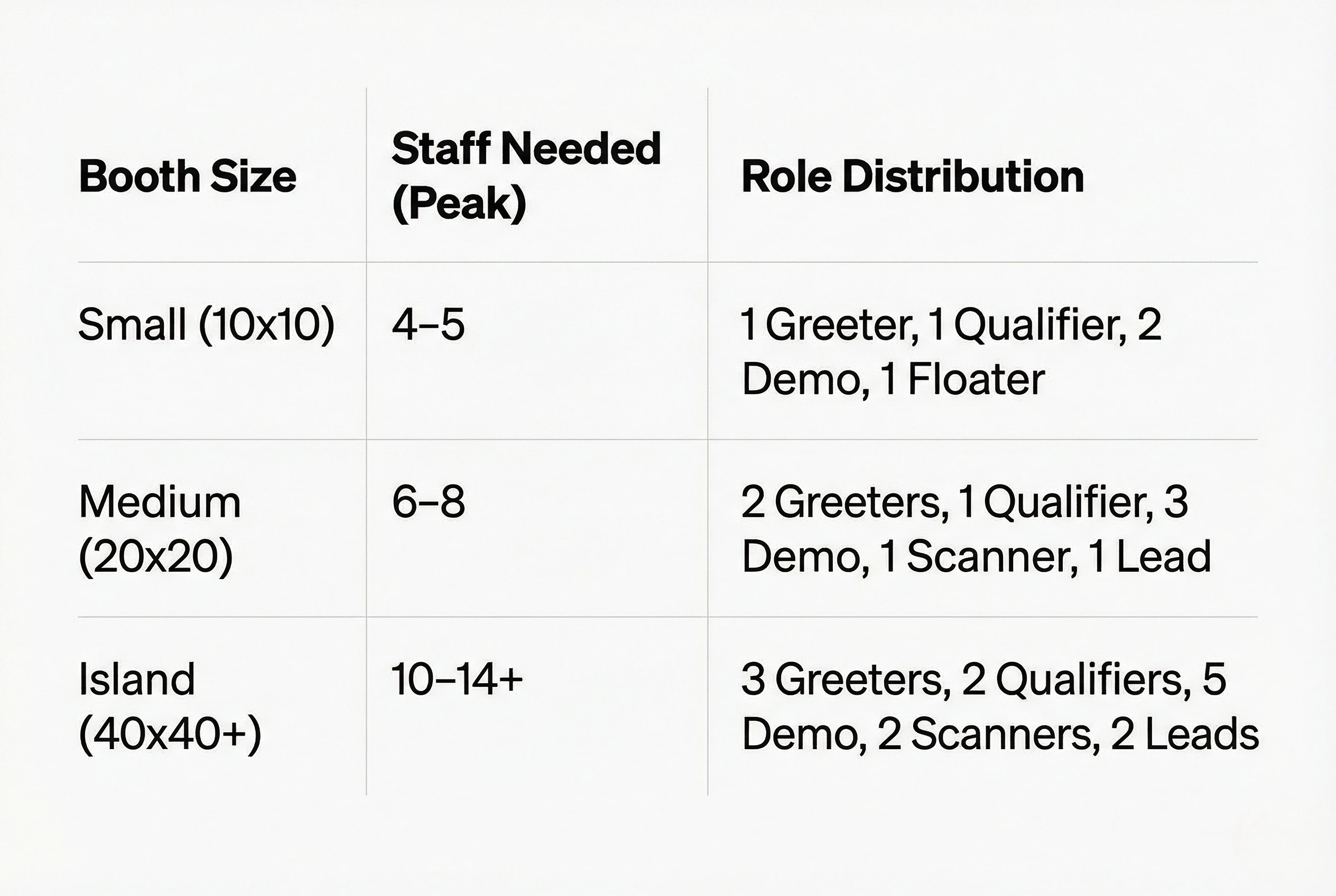
High-footfall trade show booths must be staffed for peak blocks rather than daily averages. Success depends on workforce planning that accounts for large-scale staffing logistics and high-density guest management.
Staffing Ratios by Booth Size for Peak Periods
Why under-staffing shows up late
One of the biggest mistakes exhibitors make is staffing for the average hour instead of the busiest fifteen minutes. Early signs of understaffing include:
- Greeters abandoning the perimeter to help inside the booth
- Scanners are falling behind and capturing incomplete data
- Demo reps extending conversations because no one is waiting
- By the time these symptoms are visible, trade show lead capture quality has already dropped.
In-house teams vs trade show staffing agencies
Internal teams can work in high-footfall booths when traffic is predictable, and demos are short. However, when surge windows are sharp or frequent, trade show staffing agencies add value by:
- Scaling headcount only for peak blocks
- Maintaining strict role discipline under pressure
- Providing trained staff who can rotate without disrupting flow
For high-traffic trade show booths, staffing flexibility is often more important than raw headcount.
How Do You Schedule Shifts and Breaks Without Losing Leads?
In high-footfall environments, break planning is not an HR task; it is coverage control. Even a perfectly sized trade show booth staffing team will fail if breaks create gaps during surge windows, making event floor support staff essential to prevent flow backups.
The Two-Exit Rule
To prevent coverage failure, enforce the Two-Exit Rule during all high-traffic periods.
- No more than one anchor role may be off the booth at any time
- Anchor roles include Lead Greeter, Badge Scanner, and Booth Lead
If one of these roles exits, the others must remain in place until coverage is restored. This rule is widely used by trade show staffing companies to prevent invisible gaps that lead to missed conversations and incomplete trade show lead capture.
Quick test for break safety
Your break plan is not surge-safe if:
- Greeters or scanners leave the booth during busy moments without replacement
- Demos continue while new attendees wait unacknowledged
- Lead capture slows or notes are skipped during breaks
In high-footfall trade show booths, break discipline is what protects both lead volume and lead quality.
How Do You Capture Leads Fast Without Losing Context?
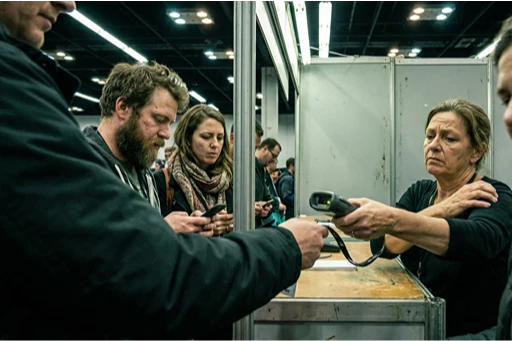
In high-footfall environments, speed without structure destroys value. A badge scan alone is just contact data. Effective trade show lead capture requires speed and context so sales teams know who the prospect is, what they want, and what should happen next.
High-traffic trade show booths succeed when trade show booth staffing roles treat lead capture as a controlled handoff, not an afterthought. This is one of the biggest differences between ad hoc internal staffing and the disciplined workflows used by trade show staffing agencies.
Why lead capture breaks in high-traffic trade show booths
Trade show lead capture quality usually collapses for one of three reasons:
- Scanning becomes a bottleneck: scanners fall behind, so leads are captured late or not at all
- Context is skipped: staff scan quickly but leave no notes, making follow-up ineffective
- Ownership is unclear: no one assigns next steps, so leads stall after the event
A strong expo booth staffing strategy prevents these failures by setting a minimum data standard and keeping capture near the end of the flow.
The Minimum Viable Data Standard
Regardless of booth size, staffing model, or scanner tool, every captured lead should include three required fields:
- Interest Area: what the prospect wants, in their words when possible
- Urgency: timing or buying stage, such as “this quarter” or “exploring”
- Next Step: what will happen after the show, and who owns it
If any of these are missing, the lead is incomplete. Many trade show staffing companies train scanners and qualifiers to treat these as non-negotiables.
The 20-second note rule
To keep trade show lead capture fast during surges, apply a simple constraint:
- Notes must take 20 seconds or less per lead
- If note entry takes longer, the workflow is too complex for high-footfall conditions
This rule forces clarity. It also keeps scanners from becoming a choke point during peak periods.
Where to place lead capture for maximum throughput
In high-traffic trade show booths, lead capture works best when scanning is positioned as a final step:
- Place the Badge Scanner near the exit zone or a natural transition point
- Keep the scanner out of the demo area so demos stay time-bound
- Use the Lead Qualifier to feed only high-fit prospects into demos
- Use the Booth Lead to enforce handoffs and prevent staff clustering
This design supports the core goal of trade show booth staffing in surge windows, keep flow moving while protecting data quality.
A simple lead capture script that works in surges
To capture context quickly without sounding transactional, train staff to use a consistent prompt:
- “What brought you over today?”
- “Is this for an active project, or future planning?”
- “What would a useful next step look like after the show?”
These questions map directly to Interest Area, Urgency, and Next Step, and they fit naturally into high-footfall conversations.
Eliminating Traffic Bottlenecks in High-Footfall Trade Show Booths
High-footfall trade shows reward teams that treat staffing as an operational system rather than a headcount decision. When attendee volume arrives in bursts, success depends on how well your trade show booth staffing strategy manages flow, protects key roles, and captures lead context at speed. Clear role separation, peak-period staffing ratios, disciplined break coverage, and a simple lead capture standard are what allow high-traffic trade show booths to perform consistently. Whether you use internal teams or partner with trade show staffing agencies, the goal is the same, eliminate bottlenecks before they appear and turn traffic surges into qualified pipeline. If you want to ensure your next booth is built for high-volume performance, request a Staffing Assessment. We will evaluate your expected footfall, staffing model, surge windows, and lead capture workflow, and deliver clear recommendations to help your trade show booth staffing perform at its best when traffic is highest.
Ready to elevate your next event?
Join thousands of event planners who trust EventStaff.com for reliable, professional staffing solutions.
Trusted by event professionals nationwide
1k+
Events Staffed
2 million+
Guests Served
97%
Positive reviews