
CEO Excerpt
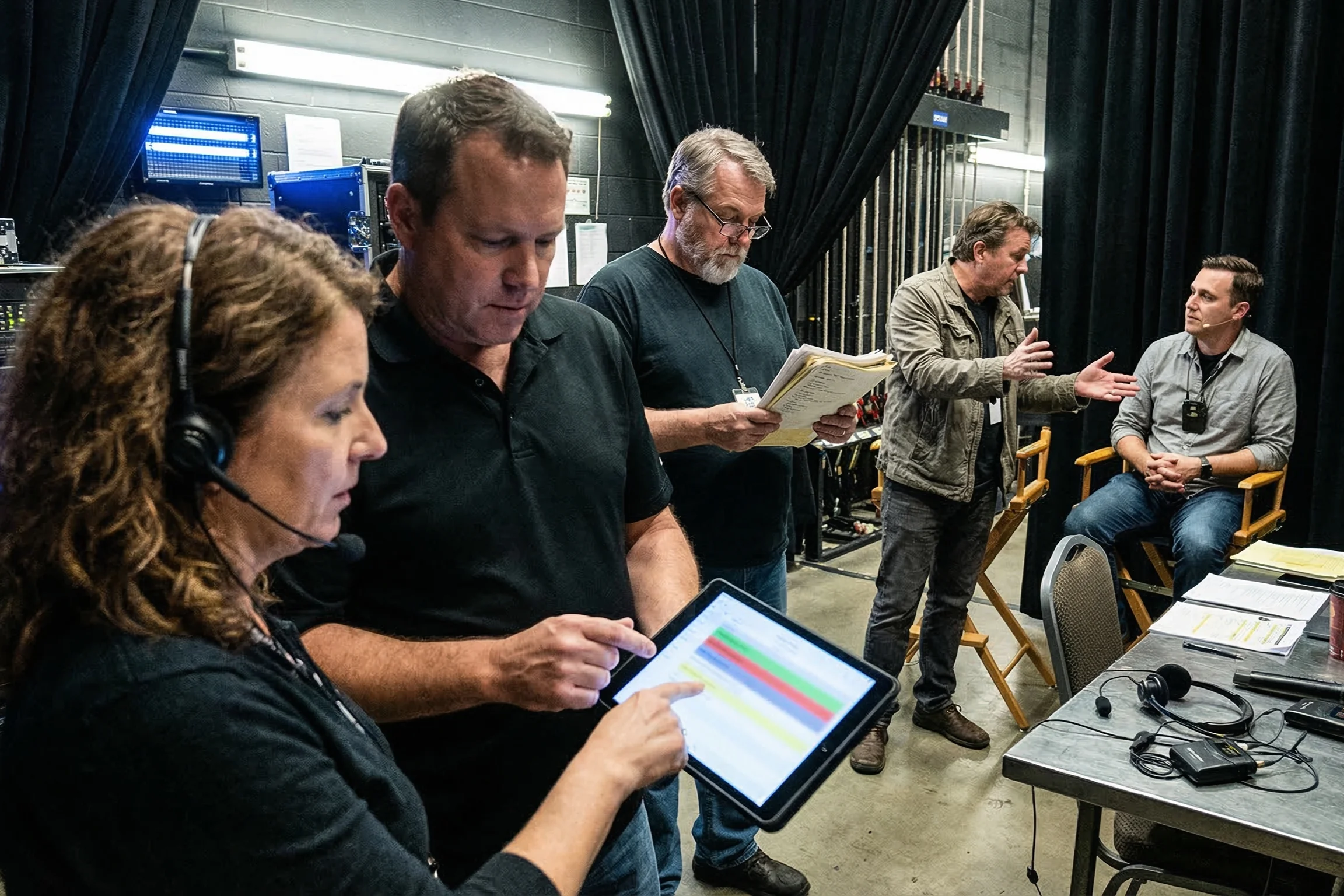
After overseeing hundreds of live programs, I can tell you that services for branded event activations only influence buying decisions when proof, flow, staffing, and capture are engineered before doors open. The activations that drive revenue are not the loudest ones; they are the ones built with disciplined sequencing, protected throughput, and supervision that holds under pressure. - CEO Event Staff
Branded event activations influence buying decisions when guests get fast proof, clear value, and a simple next step while intent is still warm.
Here’s what actually moves someone from “interesting” to “I’d buy this.”
It’s not the LED wall. It’s not the DJ. It doesn't show how many people are standing around.
It’s the moment a guest tries the product and thinks,
“Oh. That’s better than what I’m using.”
That’s the shift.
When someone can test it quickly, understand why it matters to them, and see what to do next, hesitation drops. Not emotionally. Practically. They’ve answered their own internal objection.
And that’s what buying decisions really are. A stack of objections quietly getting resolved.
If you don’t resolve them on-site, they follow the guest home. And once they’re home? You’re competing with inboxes, group chats, and 12 other brands. (And yes, digital competition is relentless: U.S. retail e-commerce accounted for 16.1% of total retail sales in 2024.)
So yes, traffic matters. Energy matters. But proof matters more.
Executive Summary
Services for branded event activations influence buying decisions when hands-on proof, structured guest flow, disciplined staffing, and frictionless lead capture are engineered before doors open. The highest-performing programs don’t rely on spectacle; they design conversion systems. This guide breaks down the activation formats, staffing roles, throughput modeling, and measurement chains that consistently turn live engagement into attributable revenue.
Why Do Some Branded Activations Feel Busy but Don’t Convert?
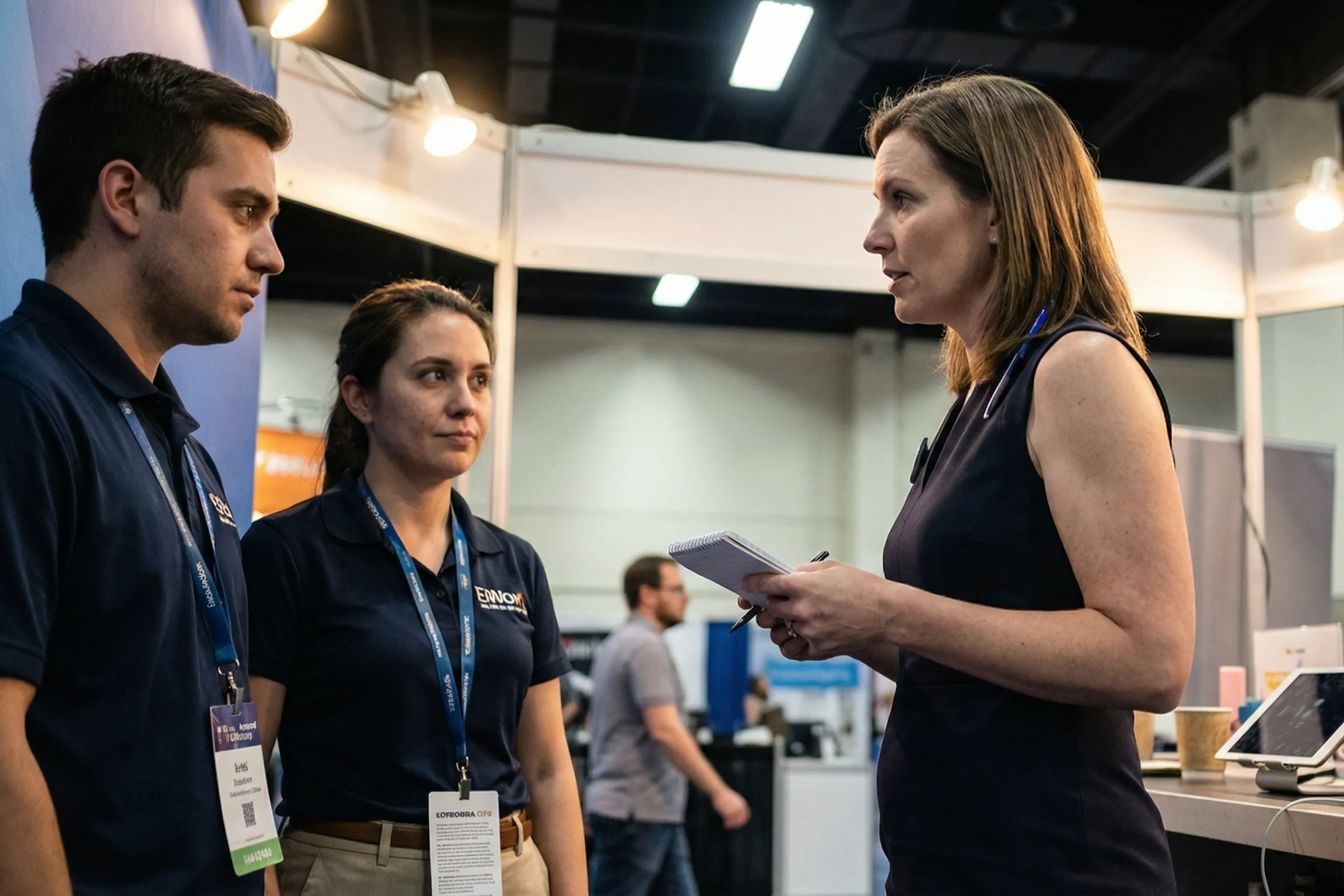
Activations underperform when spectacle comes first, and clarity comes late, leaving guests entertained but still uncertain.
I’ve seen this play out too many times.
Big build. Huge visuals. Great music. Crowd forms. Photos everywhere.
Then a guest steps in and asks a simple question:
“So how is this different from what I already use?”
And the answer… wanders.
That’s the leak.
Sensory engagement works. Touch builds trust. Sampling helps. Social proof absolutely matters. But sequence is everything.
If guests don’t get clarity within the first minute, the energy fades fast. They smile. They nod. They drift.
Here’s how I think about it:
- Excitement gets attention.
- Understanding creates intent.
And understanding only happens when someone connects the product to their life in plain language. Not brand language. Human language.
When that connection clicks, you can feel it. The questions shift. They stop asking “what is it?” and start asking “where do I get it?”
That’s when it’s working.
What Sequence Actually Increases Purchase Intent at Events?
Purchase intent increases when guests move through fast hands-on proof, clear explanation, social validation, and one frictionless next step.
Most buying influence on-site follows a simple stack. Nothing fancy. Just disciplined.
Here’s what actually works:
- Fast proof
Get the product in their hands within seconds. Not minutes. Seconds.
The longer they wait, the more doubt creeps in. - Clear meaning
One clear explanation. Not a feature tour.
If staff is listing specs, you’ve already lost momentum. - Social validation
People look sideways before they lean in. If others are engaging smoothly, hesitation drops. - One obvious next step
Not three options. One. Make it easy. Make it fast.
That’s it.
Quick Activation Clarity Check (60 seconds)
If a guest steps in cold, can your team answer these without rambling?
- What is it (in 7 words)?
- Who is it for (one person)?
- What problem does it remove (one sentence)?
- What should they do next (one action)?
- What’s the proof moment (touch/try/see)?
This is where execution earns its keep: keeping the proof → meaning → CTA sequence intact under real traffic.
You can have a crowd and still have weak conversion. I’ve seen it. Looks successful. Feels successful. Reporting tells a different story.
What Is the Ideal On-Site Activation Flow?
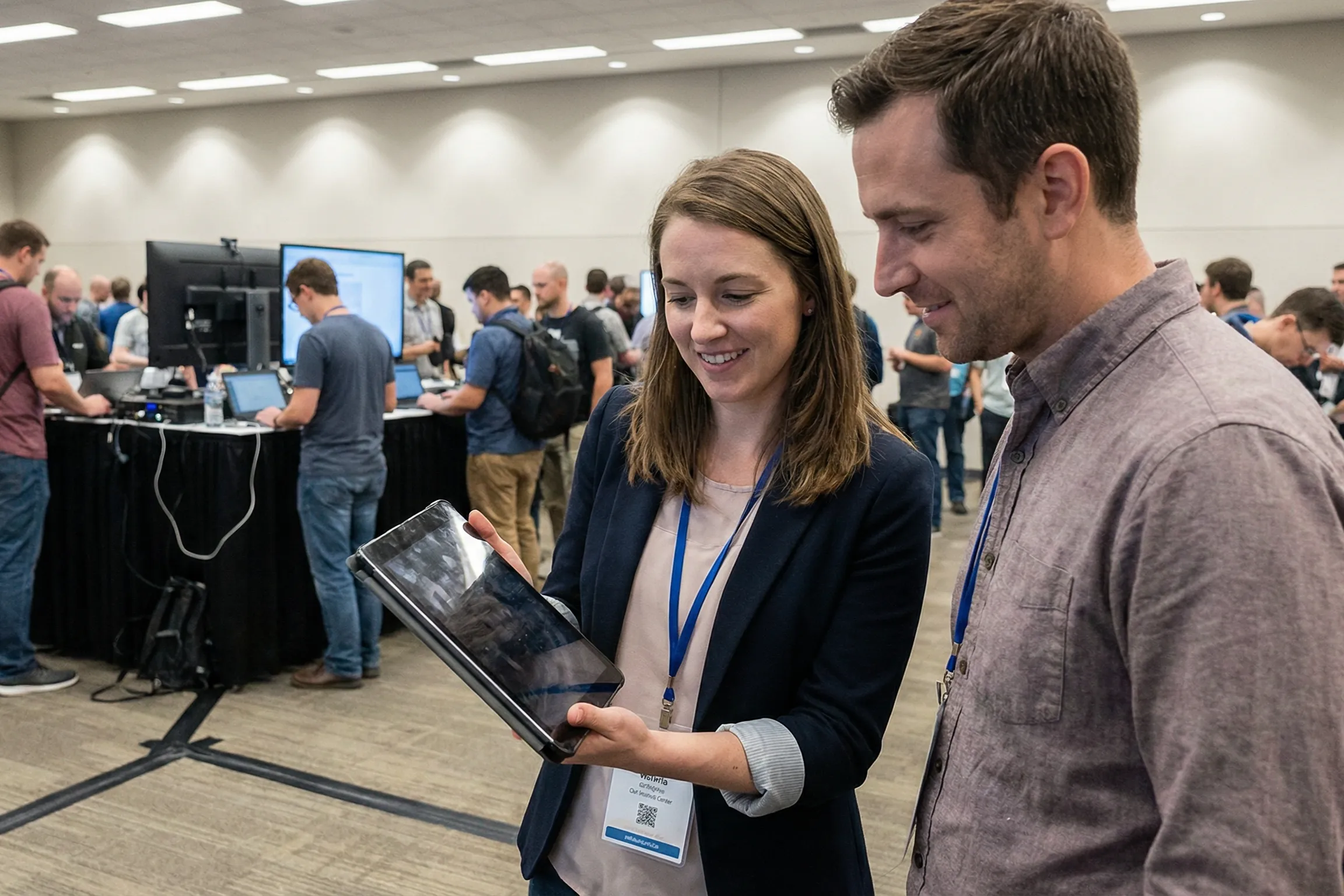
High-converting activations follow a tight flow: greet, qualify, demo, handle one objection, present one CTA, capture cleanly.
Keep it simple. Protect the order.
- Greet and qualify with one real question
- Move into guided hands-on immediately
- Address the most common objection naturally
- Offer one clear next step
- Capture while the intent is still warm
Miss the order, and things get messy.
What usually happens?
Lines build. Staff rush. Objections don’t get handled. Capture feels awkward. Someone skips it “just this once.”
That “just this once” turns into 40 missed captures by the end of the day.
Here’s something most teams don’t model: timing friction.
- Waiting for a demo reset? That’s friction.
- Staff searching for the right talking point? Friction.
- Wi-Fi lag during QR scans? Friction.
Each one feels small. Combined, they erode intent.
And a quick tangent: if guests keep asking the same three questions all day, that’s not annoying. That’s diagnostic. That’s your doubt map. Tighten the talk track around those questions, and you’ll feel conversion lift almost immediately. (If you run high-volume environments, studying stadium flow psychology helps you spot where friction hides before it shows up on your numbers.)
When services for branded event activations are built around flow and timing, guests don’t just feel something.
They understand something.
And understanding is what reduces hesitation.
Which Activation Formats Convert Best?
High-converting activations prioritize hands-on proof over aesthetic spectacle, actively shortening the gap between curiosity and confidence. While some formats look impressive, the following five consistently drive measurable revenue:
1. Product Trials and Guided Demos
These are converted by transforming hypothetical interest into tangible proof. A successful demo forces messaging clarity; if staff cannot explain the value within two minutes, the offer requires refinement.
The Operational Reality: Demos are highly throughput-sensitive. Underbuilding capacity creates bottlenecks, which erode guest patience and directly decrease conversion rates.
2. Experiential Pop-Ups with Guided Paths
Pop-ups only generate ROI when built around a structured, intentional journey: what the product is, why it matters, and what the guest should do next.
The Operational Reality: Flow control supersedes aesthetics. Allowing guests to wander aimlessly leaks intent, and unmanaged traffic compression quickly degrades the quality of staff interactions.
3. Tech-Enabled Brand Experiences
Digital integrations (AR, matching tools, smart sampling) work only when they accelerate clarity and reduce friction. If the technology becomes the primary focus rather than a supporting tool, conversion suffers.
The Operational Reality: Hardware and network failures are inevitable. Staff must be trained with offline fallback protocols to keep interactions moving seamlessly when screens freeze or Wi-Fi drops.
4. Educated Sampling
Sampling without context is merely product distribution. Sampling paired with a single, clear use case actively drives purchase intent, particularly in the FMCG and lifestyle categories.
The Operational Reality: Messaging consistency is paramount. If three different ambassadors deliver three varying product explanations, brand credibility quietly erodes.
5. Influencer-Integrated Activations
While on-site influencers rapidly generate traffic and social proof, they also create severe spatial compression.
The Operational Reality: Sudden crowd surges overwhelm demo stations, forcing rushed data capture and staff fatigue. These activations require dedicated line management and "floater" staff to protect throughput during traffic spikes.
If you don’t treat it like a mini-show with crowd control and reset planning, you’ll burn through opportunity. (This is also where VIP lounge staffing becomes a quiet advantage, controlled space, controlled pacing, controlled conversation.)
Top Converting Brand Activation Formats: The most effective brand activation formats prioritize hands-on proof over visual spectacle to actively drive purchase intent. The top-performing formats include product trials and guided demos, experiential pop-ups with structured paths, tech-enabled brand experiences, educated sampling, and influencer-integrated activations. By collapsing imagination into a tangible experience, these specific formats consistently yield the highest ROI because they reduce buyer hesitation, force messaging clarity, and seamlessly remove friction from the lead capture process.
How Does Throughput Impact Conversion at Live Activations?
If demo capacity doesn’t match traffic volume, lines build, staff rush interactions, and conversion quality drops fast.
Throughput is conversion insurance. If the capacity can’t absorb peak traffic, the system collapses in predictable ways.
If one demo station can handle 12 meaningful interactions per hour, and you expect 500 guests across three hours… you’re not “a little tight.”
You’re building a bottleneck.
Rule of thumb: if your line regularly exceeds 3–5 minutes, your team starts rushing explanations and quietly skipping capture.
And what happens next is predictable:
- Staff shorten demos
- Objections don’t get handled
- Capture gets skipped because the line feels awkward
- Reporting looks thin despite high traffic
You end up defending energy instead of outcomes.
This is where services for branded event activations justify their cost. Capacity planning. Headcount modeling. Supervision. Not glamorous. Very profitable.
Why Do Branded Activation Costs Increase with Supervision and Staffing?
Activation costs rise with added staff and supervision because protecting throughput and data capture requires trained coverage, not just presence.
When planners ask why pricing climbs, it’s usually about protection.
- More stations protect throughput.
- More trained staff protect consistency.
- Supervision protects capture quality.
And yes, services for branded event activations cost more when you layer supervision. But supervision prevents drift. By hour five, even strong teams loosen their talk track. It’s human. (If you want the budgeting side without guessing, see activation staffing costs.)
Premium execution isn’t louder. It’s steadier.
If your goal is awareness, almost any format can work.
If your goal is conversion, you design for proof, flow, and capture from the start.
Budgets are tighter now. Stakeholders don’t want vibes. They want a clean operational story tied to outcomes.
And that changes format decisions fast.
How Does Staffing Impact Activation ROI?
Staffing drives ROI because trained ambassadors build trust fast, handle objections clearly, and protect lead capture when traffic spikes.
People close the gap between interest and action. Not the build.
I’ve watched gorgeous setups underperform because the team couldn’t explain the product in plain language. And I’ve seen tiny, simple booths win because the staff was calm, sharp, and consistent.
Same venue. Same crowd. Different outcome.
That’s why staffing is where the conversion story starts.
Why Is the First Hour of an Activation So Important?
The first hour is your cleanest intent window, and if it’s wasted on confusion or weak roles, performance drifts all day.
The first hour is usually the easiest hour.
Staff is fresh. Guests are curious. Questions are direct. No one’s tired yet. No one’s improvising yet.
If that hour gets eaten by warm-up confusion, unclear roles, clumsy handoffs, and inconsistent messaging, you don’t get it back.
You just normalize lower performance for the rest of the day.
And yeah, that sounds harsh. It is. But it’s true.
The Importance of the First Activation Hour. The first hour of a brand activation is the most critical window for conversion because it captures peak guest intent and maximum staff freshness. If this initial 60-minute period is wasted on logistical confusion, clumsy handoffs, or inconsistent messaging, that degraded quality immediately becomes the accepted operational baseline for the remainder of the event. Capitalizing on this early window ensures high-impact interactions before staff fatigue sets in, ultimately protecting your overall capture rate and daily event ROI.
What Staffing Roles Do High-Converting Activations Need?
High-converting activations use defined roles: greeter, demo lead, closer, capture lead, floater, so quality stays consistent under pressure.
When everyone does “a bit of everything,” capture gets skipped and messaging drifts. It always happens.
A clean staffing structure looks more like a sales floor than a street team:
- Greeter/qualifier: pulls people in, asks one quick question, routes them
- Demo lead: guides the hands-on moment, keeps pacing tight
- Closer: handles objections, makes the offer feel natural
- Capture lead: owns consent, scan flow, and data quality
- Floater: resets product, troubleshoots, manages line spikes
That sounds rigid on paper. In real life, it creates freedom.
Because once roles are clear, staff stop improvising and start executing. (If you’re building a team for booths and demos, trade show ambassadors are a solid reference point for what “ready” looks like.)
Why Does Training Drift Happen, and How Do You Prevent It?
Training drift happens as staff fatigue builds, so micro-coaching and on-site supervision protect talk track consistency and capture rates.
By hour six, even good staff drift.
Talk track gets looser. Capture becomes “optional.” People skip steps to keep the line moving. No one thinks they’re doing damage. They’re just trying to survive.
This is where strong programs protect themselves:
Drift Prevention Loop:
- 90-second reset every 2 hours (talk track + CTA + capture)
- One supervisor checks 5 interactions per staffer per hour
- Capture rate posted live (so drift is visible)
Premium execution is quite controlled. Consistency. The kind that holds when the day gets messy.
What Metrics Actually Prove Activation ROI?

Strong services for branded event activations do not measure success by crowd size or social impressions alone. They track operational signals that connect live engagement to downstream revenue.
High-performing brand activation event management teams measure ROI across four structured layers.
1. Operational KPIs
These protect conversion quality during peak traffic.
- Demo duration
Target: 2 to 3 minutes under peak load - Line wait time
Keep under 3 to 5 minutes - Interaction to capture rate
Percentage of meaningful interactions that result in completed capture
If demo time expands or wait time spikes, staff rush explanations and skip capture. Conversion erosion follows quickly.
2. Engagement KPIs
These indicate whether the activation is influencing intent, not just generating foot traffic.
- Meaningful interactions, not walk-by traffic
- Objection types logged throughout the day
- CTA completion rate by interaction type
Logging objection patterns reveals friction points. When three questions repeat all day, that is a signal to tighten the talk track.
3. Capture KPIs
Data quality determines follow-up effectiveness.
- Completed consent rate
- Assisted capture versus QR-only split
- Capture abandonment rate
QR-only systems often inflate traffic but reduce completed data quality. Assisted capture increases reliability during compression windows.
4. Revenue KPIs
This is where services for branded event activations justify investment.
- Follow-up response rate within 3 to 5 days
- Downstream purchase tied to interaction type
- Cost per meaningful interaction
If follow-up lands weeks later, memory fades and intent cools. Timing is leverage. Fast follow-up preserves product recall and increases conversion probability.
Why This Structure Matters
Without layered measurement, ROI conversations drift toward impressions and energy.
With layered measurement, you can explain:
- Why demo interactions convert higher than passive walkthroughs
- Which CTA performs best under compression
- Which staffer maintains the strongest capture rate
- How the interaction type correlates with purchase behavior
Services for branded event activations that track this chain move from anecdotal success to defensible revenue performance.
How Should You Measure Branded Event Activation ROI?
Measure ROI with a clean chain: meaningful interaction, captured next step, fast follow-up, and downstream purchase signals tied to interaction type.
Measurement is where good activations prove they worked. It’s also where weak systems get exposed.
On-site conversions matter, signups, redemptions, and booked demos. But a lot of revenue impact shows up later, especially for higher-consideration stuff.
So your measurement plan can’t stop at “we scanned a bunch of badges.”
If follow-up hits three weeks later, intent is gone. People don’t remember the product moment. They remember they’re busy.
If follow-up lands within a few days, while the interaction is still fresh, conversion probability jumps. Not magically. Just because the memory is still warm.
Timing isn’t a detail. It’s leverage.
And the upside is real: research from Freeman found 95% of attendees trust brands more after participating in an in-person event, and 87% visited the brand’s website and wanted to engage online after attending.
What Measurement Chain Works Best for Brand Activations?
Strong programs track interaction → capture → follow-up window → downstream conversion signal, so attribution stays clean and decisions get easier.
- Meaningful interaction (not just "walked by")
- Captured next step (with consent)
- Follow-up within a defined window
- Downstream purchase signal tied back to interaction type
Break the chain anywhere, and attribution gets fuzzy. And when attribution gets fuzzy, budgets get smaller next quarter.
What Should You Track On-Site to Prove Performance?
Track operational signals like interaction type, timestamp, staffer ID, CTA used, capture method, and consent, so results can be explained, not guessed.
Here's what's worth capturing:
- Interaction type: demo, sample, consult
- Timestamp: peak vs off-peak patterns
- Staffer ID: coaching and consistency insights
- Offer presented: Which CTA actually converts
- Capture method: QR, tablet, assisted entry
- Consent status: compliance + follow-up eligibility
That data tells a story you can act on. Maybe demos convert 2x better than passive walkthroughs. Maybe afternoons outperform mornings. Maybe one script quietly underperforms. Without this, you're just guessing with confidence.
What's Different About Activation Execution in 2026?
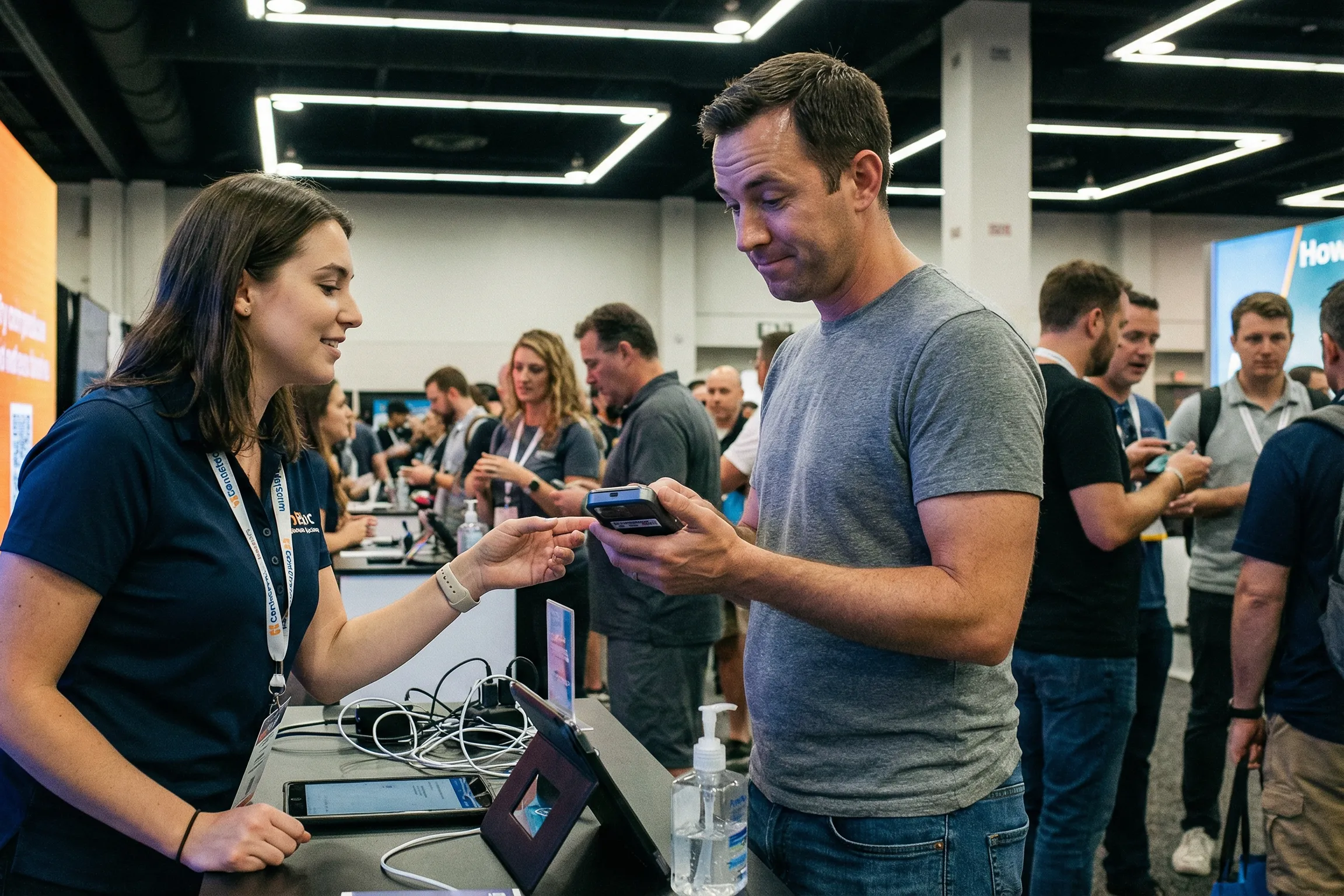
In 2026, teams win by forecasting peak traffic, staffing for compression moments, and adjusting on-site fast, because variability is the norm.
Larger programs are leaning into hybrid oversight, forecasting peak windows with data, and then adjusting with humans on the ground.
- Fewer under-staffed spikes
- Better coverage during compression moments
- More consistent interaction quality when it matters
And yes, that directly affects conversion. Not as a theory. As a daily operational reality.
When Is Brand Lift Useful vs Revenue Tracking?
Brand lift matters when it connects to behaviors you can act on. Without a trackable next step, the lift becomes a nice chart with no leverage.
Lift without behavior is a compliment. Behavior is the business case.
You want both, but you need at least one clean revenue signal you can tie back to how the activation ran. And to be blunt: buying is messy right now. Forrester's 2024 research found more than 80% of buyers are dissatisfied with the provider they choose at the end of a purchase process, a loud signal that clarity and experience matter more than ever.
Why Do Branded Activations Fail to Convert?
Branded activations fail when guests don't get hands-on proof, a clear CTA, and frictionless capture before intent cools.
It's rarely the big idea that fails. It's the system leaking in small, unglamorous places.
Mistake 1: Optimizing for Photos Instead of Proof
If guests can't quickly try the product and connect it to their life, visual impact won't convert into buying intent.
Warning signs:
- Guests can't touch or test quickly
- Staff talk brand story before the use case
- The space looks busy, but interactions feel shallow
Fix it fast:
- Move the product physically forward
- Shorten the path to hands-on
- Lead with one use case, then personalize
Mistake 2: No Clear CTA
When there's no single defined next step, staff improvises, and inconsistency quietly destroys reporting and ROI.
No defined CTA → messaging drifts → capture varies → reporting gets messy → leadership questions ROI → next budget shrinks. It doesn't explode. It erodes.
Fix it fast:
- Pick one CTA that matches buyer stage
- Script it cleanly and repeat it
- Make it completable in under 15 seconds
Mistake 3: Lead Capture That Adds Friction
Capture fails when it feels like work, long forms, QR-only systems, and weak Wi-Fi, so assisted and offline options are essential.
Fix it fast:
- Use assisted capture for high-intent guests
- Keep forms purpose-driven and short
- Have offline fallback ready before doors open
- Don't "plan" the backup. Actually test it.
Mistake 4: No Clear Post-Event Follow-Up Owner
When follow-up ownership isn't defined before the event, intent cools and attribution becomes impossible to defend.
Marketing assumes sales will follow up. Sales assumes the agency will handle it. The agency assumes the brand will push something out. Days pass. Intent fades.
Fix it fast:
- Assign one follow-up owner before launch
- Define the follow-up SLA (days, not weeks)
- Tie messaging directly to the interaction type
What Three Things Prevent Intent Loss On-Site?
Lock in one CTA, one reliable capture method, and one supervisor accountable for consistency throughout the day.
- One CTA.
- One capture method that works even when Wi-Fi doesn't.
- One supervisor is responsible for keeping the system tight.
Clarity compounds. Confusion compounds faster.
If your team can't explain the next step in one sentence and complete it in 15 seconds, you built a museum, not an activation. You built a museum.
What Does a High-Converting Brand Activation Look Like in Practice?
A high-converting activation runs like a short sales cycle: qualify fast, demo quickly, handle one objection, capture cleanly, and follow up within days.
Example outcome (anonymized): A wearable launch shifted from "long demos + QR-only" to "2-minute demo + assisted capture." The team reduced average wait time, increased completed captures, and improved follow-up response because guests remembered exactly what they tried.
Step 1: How Do You Greet and Qualify Without Slowing Things Down?
One question. That's it. "Are you using a tracker today, or is this your first one?" It instantly tells staff whether they're talking to a switcher or a first-timer. No guessing. No rambling intros.
Step 2: How Long Should a Demo Take at a High-Traffic Activation?
Aim for a 2-minute guided demo with an optional longer path for high-intent guests.
- The guest tries the feature that removes the biggest doubt
- Staff narrates outcomes, not features
- Demo lead keeps pacing tight so the line doesn't build
Step 3: How Should Staff Handle Objections Without Sounding Scripted?
Answer one objection clearly, tie it to a real use case, then move forward.
- Acknowledge the concern
- Tied toa real scenario
- Give a specific, believable reason
- Bridge to the next step
Important note: don't make performance claims you can't support. The structure is what matters, specific, grounded, useful.
Step 4: What's the Best CTA for On-Site Conversion?
Not three CTAs. One. "Want the event offer? I can send it to you now." That line works because it's a bridge, not pressure.
Step 5: How Do You Capture Leads Without Breaking the Moment?
- Assisted capture on tablet for high-intent guests
- QR option as backup, not the only path
- Consent captured cleanly, so follow-up is usable
This is where brand activation event management earns its keep, protecting data quality when staff rotate, Wi-Fi drops, lines get long, and the crowd gets loud.
Step 6: When Should Follow-Up Happen After an Event?
Best-case flow:
- Same-day sync to CRM if possible
- Follow up within a few days
- Messaging tied to the interaction: "You tried X feature; here's the offer."
That's how the event becomes a measurable sales cycle.
How Do You Staff for Peak Traffic Without Killing Conversion?
If peak traffic exceeds demo capacity, you need more stations, floaters, and a supervisor; lines force rushed demos and skipped capture.
You also need:
- Floaters to reset devices and troubleshoot
- Line management so guests don't block entry
- A supervisor watching pacing + capture consistency
The staffing plan isn't about looking busy. It's about protecting the moment of proof.
What Logistics Issue Can Ruin an Activation Day in 2026?
Tighter credentialing and security can shrink load-in time, so delays can wipe out prime traffic and force the day into recovery mode.
Credentialing, security checks, and tighter load-in windows can steal setup time. If gear isn't ready at opening because access got delayed, you lose prime traffic, and the team starts the day in recovery mode. That's not a creative issue. It's logistics.
What Actually Makes Branded Event Activations Worth It?
Branded event activations are worth the investment when operational control turns live engagement into measurable revenue. They influence buying decisions when they’re engineered, not improvised. That means staffing ratios set before doors open, one clear CTA protected all day, talk tracks that don’t drift, lead capture that works even on bad Wi-Fi, and follow-up that lands while product memory is still sharp. None of it is flashy. All of it drives results. When structure protects proof, you don’t defend “vibes” in review meetings; you defend numbers tied to real downstream behavior. If your next activation needs to prove revenue instead of just generate buzz, start with a custom event staffing strategy and a quote that protects ROI from the first interaction to final follow-up.
Ready to elevate your next event?
Join thousands of event planners who trust EventStaff.com for reliable, professional staffing solutions.
Trusted by event professionals nationwide
1k+
Events Staffed
2 million+
Guests Served
97%
Positive reviews