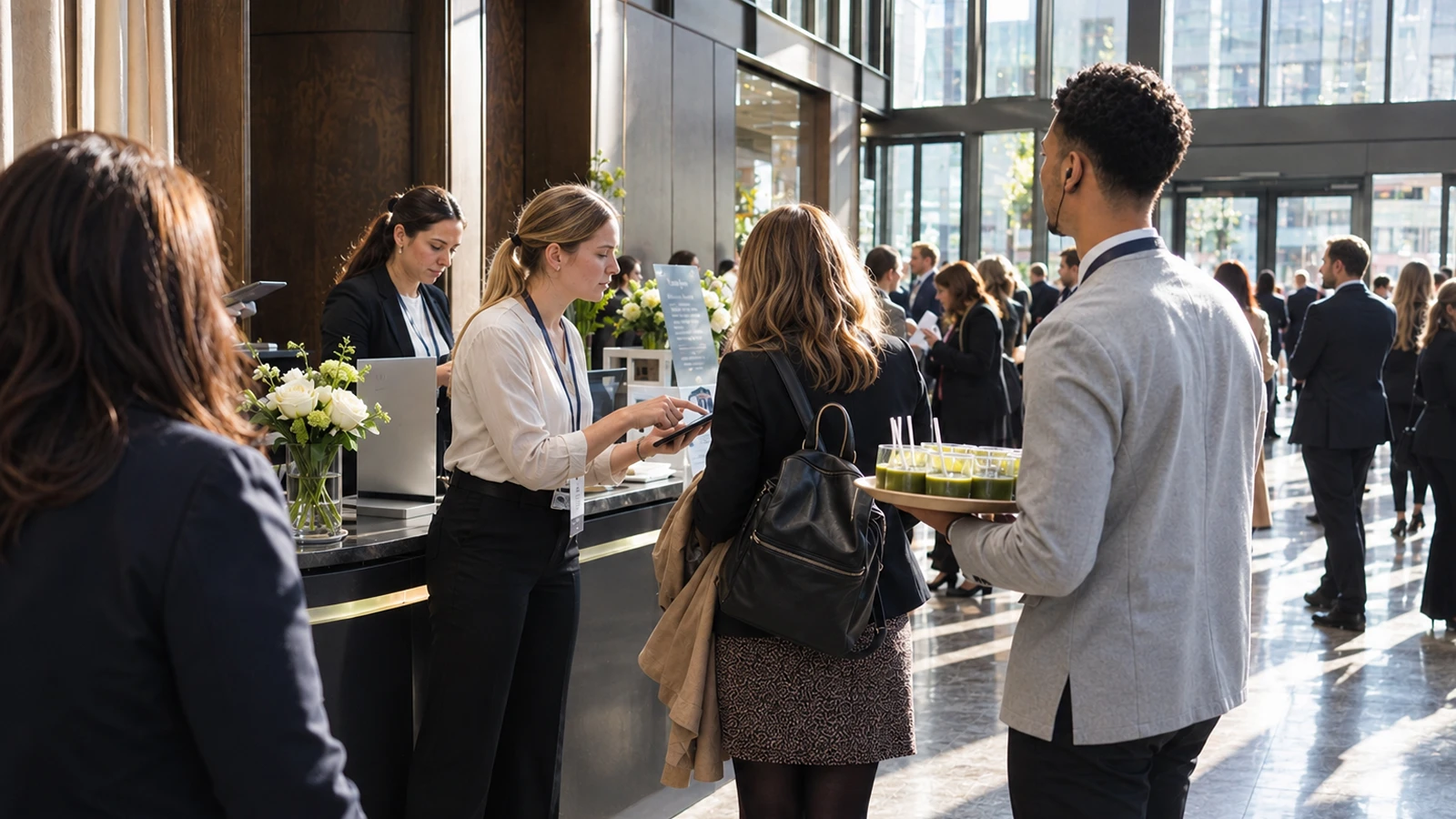

CEO Excerpt
"Hospitality operates as a connected system where every movement counts. At Premier Staff, we empower the 'invisible' roles, runners, captains, and floaters, to keep the operation moving, ensuring front-line staff remain focused exclusively on the guest." - Event Staff Premier Staff
Event hospitality staffing is not about how many people you put on the floor. It is about how service moves through the room. The roles you choose, how they are positioned, and when they activate determine whether guests experience smooth, premium service or visible friction.
In hospitality events, guests judge the experience in minutes, not hours. The first check-in interaction, the speed of the first drink, how quickly food is replenished, and how calmly issues are handled all shape brand perception. When event hospitality roles are unclear or under-prioritized, the results are immediate and visible: long bar lines, overwhelmed servers, cold food, stalled guest flow, and staff pulled in too many directions at once.
High-performing event hospitality staffing focuses on service flow, not headcount. Experienced hospitality staffing services prioritize bartenders, runners, captains, and floaters alongside servers to protect speed, replenishment, and recovery during peak moments. This approach keeps front-line hospitality staff for events focused on guests instead of problem-solving behind the scenes.
This guide breaks down which event hospitality roles matter most, how staffing for hospitality events should be prioritized by event type and size, and how professional hospitality staffing services structure teams to protect guest experience, service consistency, and brand credibility from arrival through close.
Executive Summary
Event hospitality staffing succeeds or fails based on service flow, role clarity, and timing, not simply total headcount. High-performing hospitality events prioritize bartenders, runners, captains, and floaters to protect speed, replenishment, and service recovery during peak moments. By structuring staffing for hospitality events around arrival, peak rushes, and recovery instead of averages, experienced hospitality staffing services prevent bottlenecks, maintain brand perception, and keep visible service calm even when demand spikes.
What roles matter most in event hospitality staffing?
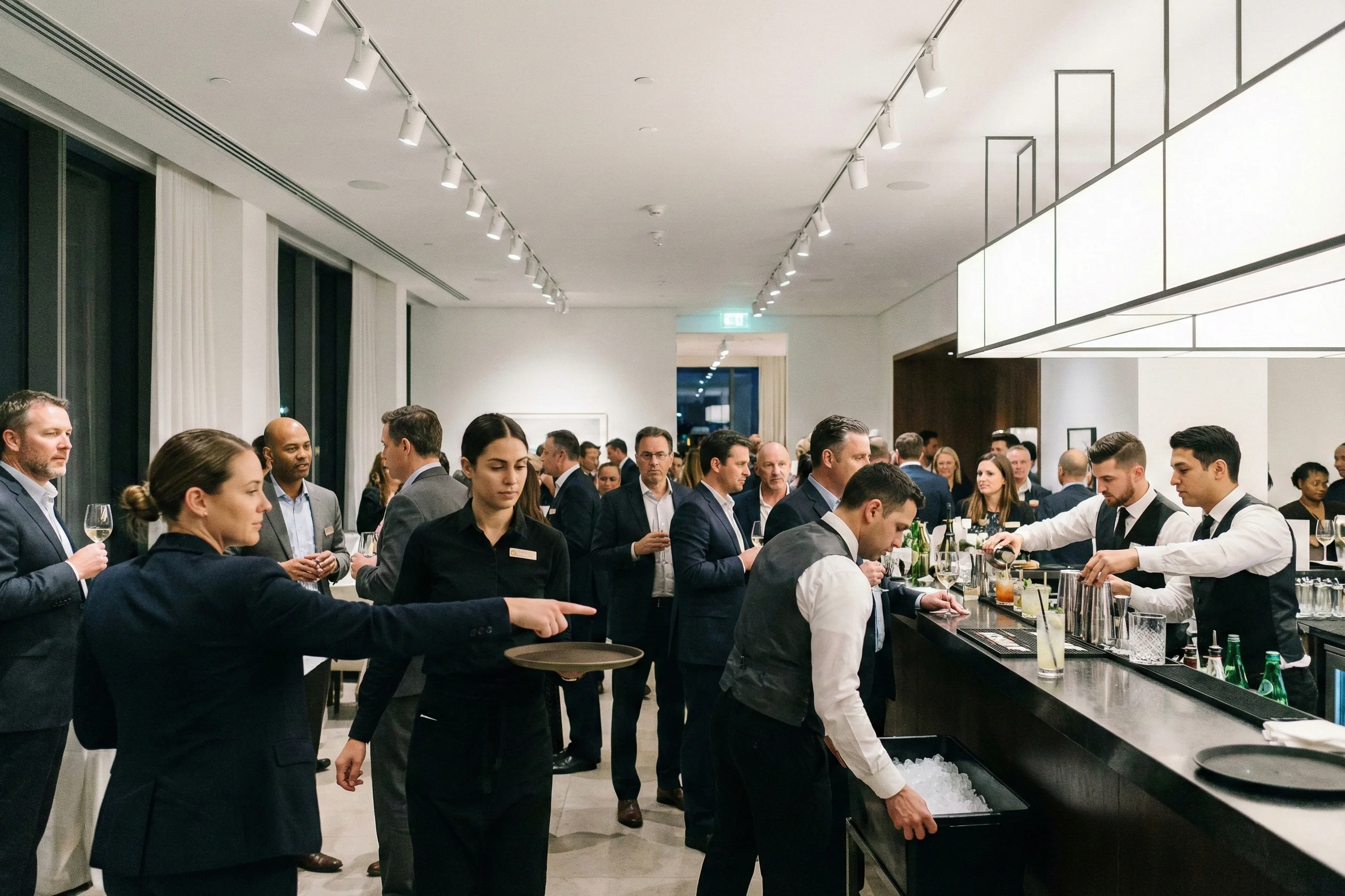
Event hospitality staffing works when roles are clear, so guest flow stays fast, stocked, and calm, even when the room surges. Success for hospitality event staff relies on role placement, timing, and service flow, not simply the number of people on the floor.
Guests don’t walk in counting people. They walk in counting moments. The first thirty seconds. The first drink. That tiny pause where someone wonders, “Am I in the right place?” and nobody catches it.
Once friction shows up, it spreads. People bunch up. Lines form where they shouldn’t. Staff can’t move. Service slows everywhere at once. Like traffic, one bad merge and suddenly the whole room is honking.
When event hospitality roles aren’t clearly defined, you see it fast:
- long bar lines
- overwhelmed servers
- cold food
- frustrated guests
- one staffer doing three jobs (and quietly dying inside)
You’re not staffing a room. You’re staffing a service journey, arrival → first drink → peak rush → replenishment → recovery.
Why this matters right now: Guest experience is the business. WTTC projected Travel & Tourism could contribute $11.1T and support ~348M jobs globally in 2024.
If you’re planning a complex, high-visibility build (think big brands, tight timelines, high scrutiny), steal a few logistics habits from Fortune 500 logistics.
What does event hospitality staffing include beyond servers and bartenders?
Event hospitality staffing includes every role required to move food, beverages, and guests smoothly through an event. Staffing for hospitality events goes far beyond servers and bartenders and must be planned as a single, connected system.
Professional hospitality staffing services focus on how service flows, not just how many people are scheduled. The goal is to keep visible service fast and calm while invisible support prevents breakdowns behind the scenes.
Core Coverage Areas in Event Hospitality Staffing
Food Service
- Tray pass, buffet, plated, and VIP service
- Timing, replenishment, and coordination with the kitchen or catering teams
- Visual presentation and service rhythm throughout the event
Beverage Service
- Bar service, roaming drinks, and VIP bottle service
- Throughput speed, station balance, and glassware control
- Support roles that keep bartenders behind the bar during peak windows
Guest Flow and Seating
- Arrival direction, line management, and entry control
- Seating guidance and congestion prevention
- Early intervention when guests hesitate or cluster
Replenishment and Back-of-House Support
- Ice, glassware, napkins, garnishes, and station resets
- Clearing and trash management to keep service areas functional
- Preventing front-line hospitality staff from leaving stations
Issue Resolution and Service Recovery
- Handling spills, shortages, guest complaints, and last-minute changes
- Escalation paths so problems are solved without slowing service
- Floaters and leads assigned to absorb disruptions quietly
Event hospitality staffing succeeds when these areas are covered deliberately. Without dedicated support roles, servers and bartenders are forced to do multiple jobs, and service speed drops exactly when guests expect it to be fastest.
The invisible work that saves the event: Guests don’t compliment replenishment. They just don’t notice empty napkins, missing glassware, or a bartender vanishing to find ice. That’s the win.
Stat for planners negotiating labor
Banquet service levels can range from 1 server per 8 guests to 1 per 40, depending on service style and expectations.
If you want a deeper read on what causes entry points to choke (and how staffing prevents it), skim queue management science.
Which roles should you prioritize first for staffing for hospitality events?
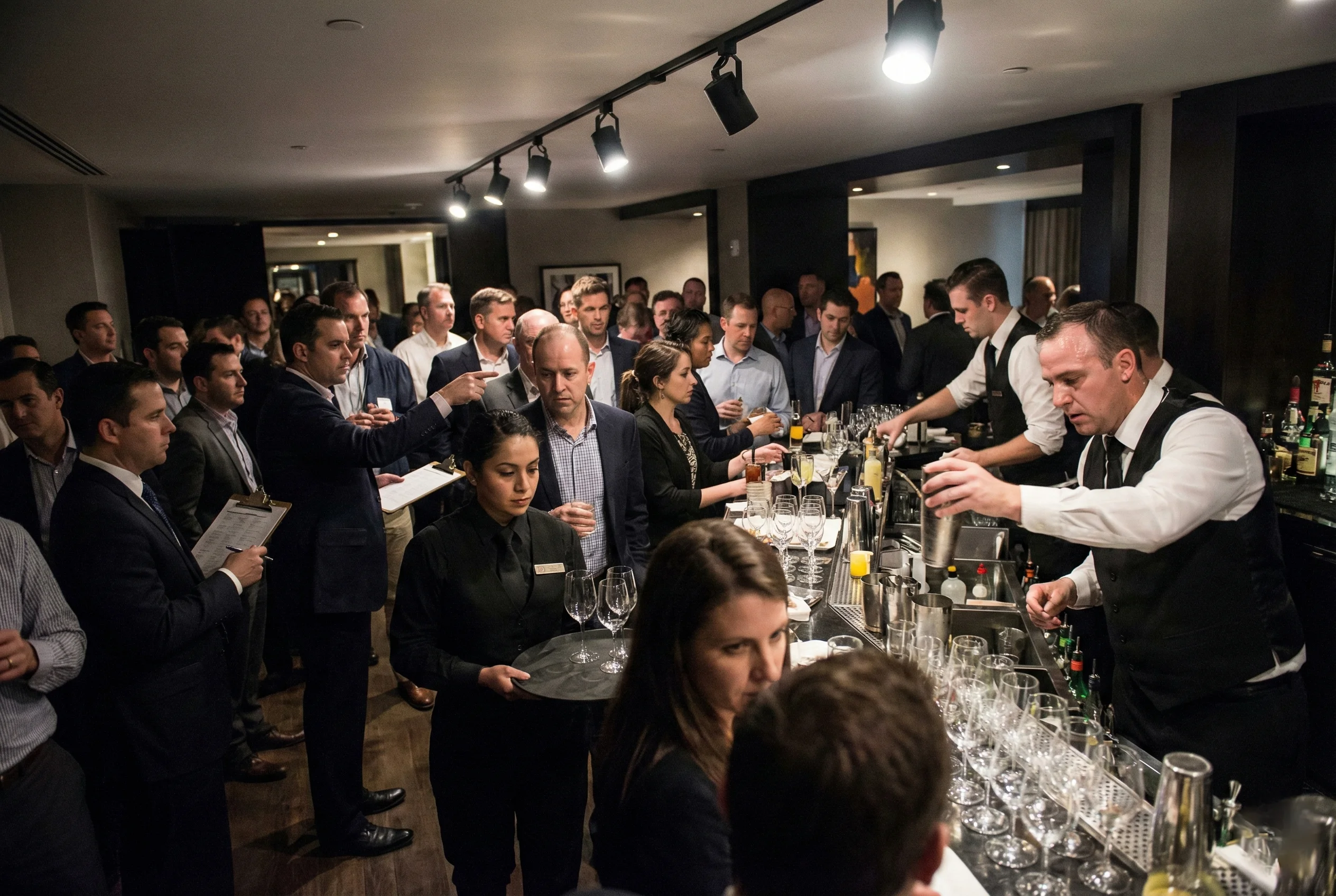
Prioritize bartenders, servers, runners, captains, and floaters first; these protect speed, replenishment, and oversight in peaks. When defining your core event hospitality roles, prioritize leadership and replenishment before adding general headcount.
Quick Answer (the version you can copy into a run-of-show):
- Bartenders + beverage support
- Floor servers
- Runners / back-of-house support
- Service lead/captain
- Floaters (peaks + breaks)
Why this order works: it protects the three things guests punish you for immediately, waiting, emptiness, and confusion.
What each priority protects
- Bartenders: early speed + guest perception
- Servers: continuous touchpoints (tray pass, clearing, questions, guidance)
- Runners: keep stations stocked so everyone else stays in role
- Captains: standards + zone balance + fast decisions
- Floaters: pressure relief (breaks, spikes, service recovery)
And yes, here’s the sentence planners don’t love, but future-you will: For staffing for hospitality events, prioritize bar speed, replenishment, and leadership before adding “more servers.”
Waiting changes behavior: One service-operations study found that eliminating waiting in a restaurant simulation increased total revenue by nearly 15%. Events aren’t restaurants, but the psychology is identical: waiting kills momentum.
Need hospitality staff who can handle peak service windows? Request availability.
What guest experience moments should hospitality staff protect most?
Protect arrival, peak rushes, replenishment cycles, and service recovery; these moments shape guest memory more than décor ever will. If you are hiring hospitality staff for events, ensure they are briefed to protect arrival and peak service windows above all else.
Guests don’t experience events evenly. They experience them in spikes. Protect the spikes, and the event feels smooth. Miss them, and you’re playing catch-up all night.
- Arrival + first drink
The first two minutes decide whether guests relax or stay tense. They’re silently asking: where do I go, and how fast can I get a drink? If check-in isn’t obvious, people stall. If the bar isn’t moving, they stack up. Then the entrance clogs and everything downstream suffers.
- Peak service windows (cocktail hour, intermissions, session breaks)
Peak moments are predictable. We just like to act surprised by them. Cocktail hour hits. Intermission hits. Session breaks hit. Everyone wants the same thing at the same time. Staffing has to surge with demand, or service buckles and mood drops.
- Replenishment cycles
Empty stations kill confidence. Guests notice missing glassware, napkins, garnishes, and water. Even if you’re fully stocked “in the back,” the visible emptiness becomes the story.
- Service recovery
Something will go wrong. Always. Spills. shortages. guest complaints. last-minute changes. That’s normal. This is why floaters and leads matter so much. If bartenders and servers stop serving to handle problems, the whole room slows down.
Guests remember delays more than décor.
Guest memory bias: People forget the florals. They remember the bar line and the empty tray pass, long enough to decide if your event felt premium.
What are the core event hospitality roles, ranked by impact?
The highest-impact roles are bartenders, servers, runners, captains, and floaters, each prevents a different kind of service failure. Not all event hospitality roles pull the same weight. Some shape perception. Some prevent collapse. Some keep problems invisible.
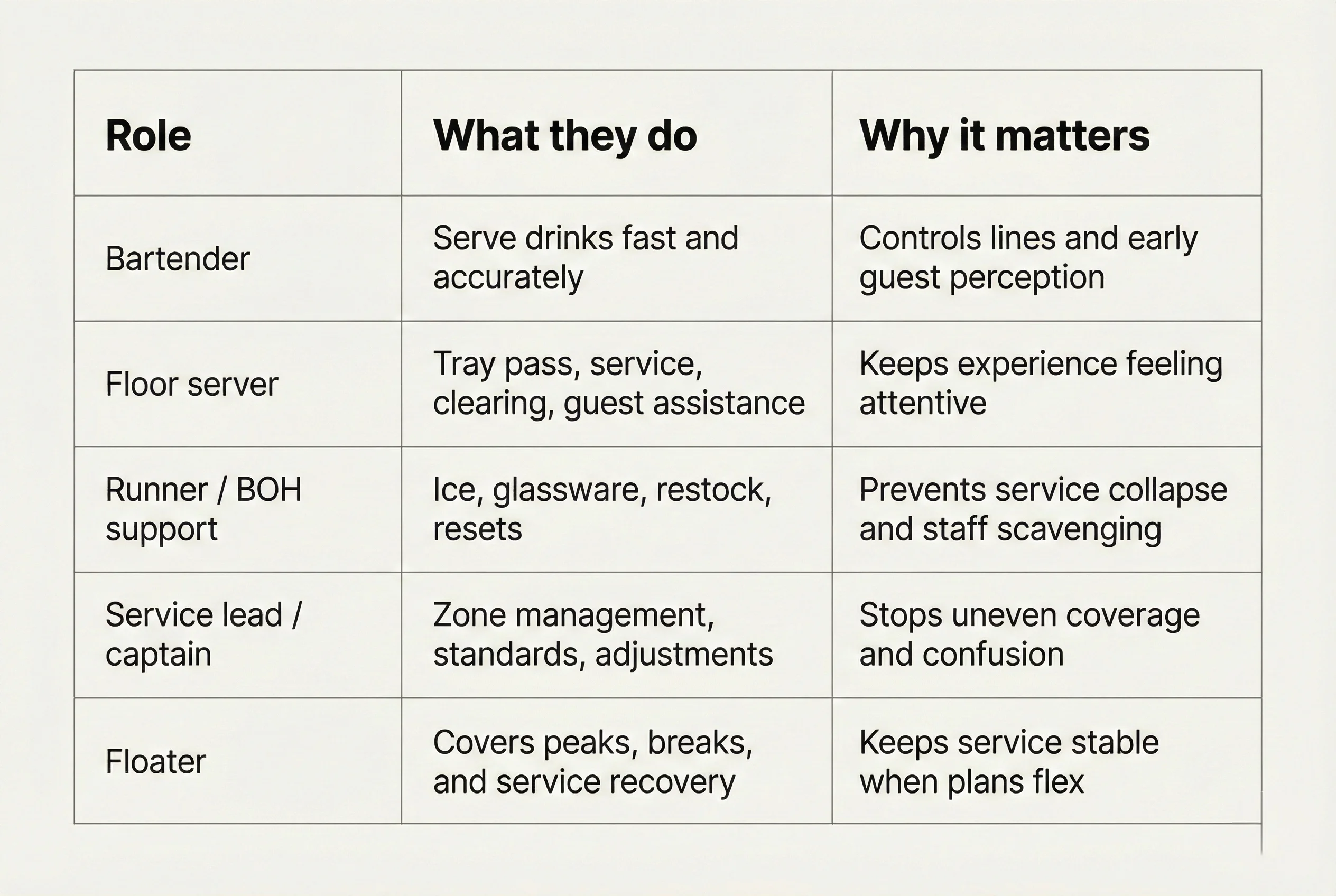
If you’re unsure whether to budget for support roles, read runners and floaters before you decide.
How do hospitality staffing priorities change as event size grows?
As guest counts rise, staffing must add zoning, runners, and leadership faster than headcount, or service collapses in one corner. Top hospitality staffing services know that scaling isn’t linear. Doubling guests doesn’t mean doubling the same plan. Complexity grows faster than the spreadsheet thinks it will.

What are the most common event hospitality staffing mistakes?
The biggest mistakes are understaffed bars, no runners, no captain, uneven zones, and unplanned breaks; friction spreads fast. One of the biggest mistakes hospitality event staff face is understaffed bars that create visible failure points immediately.
Most mistakes don’t look like mistakes until the doors open. Then they’re loud.

How do hospitality staffing agencies structure successful events?
Agencies win by designing service flow, supplying trained leads, and building backup coverage so small problems stay invisible to guests. Hospitality staffing services win by focusing on structure and backup coverage.
The best teams don’t “work harder.” They work cleaner.
They:
- design guest flow before staffing numbers
- assign zones so coverage doesn’t drift
- staff replenishment so bartenders/servers stay in role
- use trained captains to enforce standards
- bring backup coverage because reality happens (late arrivals, call-outs, timeline shifts)
They’re not improvising. They’re executing a plan.
What should you cover in a 10-minute pre-event staff briefing?
Cover tone, menu, zones, replenishment, escalation, and breaks in 10 minutes, so staff move confidently without guessing mid-service. Briefing your hospitality staff for events isn’t hype; it is stabilization.
A briefing isn’t hype. It’s stabilization. Ten minutes now saves an hour of chaos later.
10-minute briefing agenda :
- Tone: formal vs relaxed, high-touch vs fast-moving
- Menu + drinks: what’s featured, what’s limited, what guests ask about
- Zones: who owns what area, who floats
- Replenishment: where supplies live, who refills what
- Escalation: who handles issues, when to call a lead
- Breaks: when they happen, who covers
What does a sample event hospitality staffing plan look like?
For 300 guests, start 6 bartenders, 10 servers, 4 runners, 2 captains, 2 floaters, then adjust for layout and menu complexity.
Numbers aren’t magic. But they stop you from guessing.

Gala dinner note: plated service lives on rhythm. Too slow feels sloppy. Too fast feels rushed. Captains call tempo. Runners keep resets moving.
Get a hospitality staffing plan built around guest flow and service speed.
Designing for Peak Service
Smooth events don’t feel busy. They feel calm. That calm comes from prioritizing the right roles: bars that move, runners who reset before anyone notices, leads who rebalance zones quietly, and floaters who absorb pressure without drama. It’s not about adding bodies. It’s about adding support where friction lives, and when you’re budgeting, it helps to sanity-check average staffing costs mid-plan so your coverage doesn’t get cut at the exact wrong time. If you want a staffing plan built around guest flow, peak windows, and service recovery, you can get a quote, and we’ll map roles to your layout, menu complexity, and event size.
Ready to elevate your next event?
Join thousands of event planners who trust EventStaff.com for reliable, professional staffing solutions.
Trusted by event professionals nationwide
1k+
Events Staffed
2 million+
Guests Served
97%
Positive reviews