
Corporate Retreat Staffing: How Many Staff Do You Actually Need?
Corporate retreat planning often breaks down at one critical point: staffing.
Most teams underestimate how many staff a corporate retreat actually needs. They copy a conference model, reduce headcount, and assume it will work. It does not.
Corporate retreat staffing requires tighter coordination, higher visibility coverage, and a stronger staff-to-guest ratio because the entire group moves together. One delay is not isolated. It becomes everyone’s experience.
In this guide, you will learn exactly how many staff you need for a corporate retreat, what staff-to-guest ratio works best, and how to build a staffing plan that protects the entire retreat experience.
Executive Summary
Corporate retreat staffing is not just corporate event staffing with fewer guests. Retreats need tighter staff-to-guest ratios because the group moves together, service gaps are more visible, and staff are expected to notice needs before guests ask. This guide explains how many staff you need for a corporate retreat, why the corporate retreat staff-to-guest ratio is closer to 1 staff per 4–6 guests, where retreat staffing usually breaks first, and how to evaluate vendors who understand anticipatory service staffing instead of basic conference coverage.
Retreat Staffing Is Not Smaller Than Conference Staffing
At a conference, staff can usually wait for someone to ask for help. A guest walks up, asks where Ballroom C is, and the staff member points them there. That works because conferences are spread out. One delay does not become the whole group’s experience.
At a retreat, the group moves together. If breakfast is slow, everyone sees it. If the CEO is waiting for coffee, everyone really sees it. That is when the room starts doing its favorite corporate activity: silently judging the planning.
Conference Staff React
Conference staff usually support visible needs:
- check-in questions
- room directions
- badge help
- session flow
- basic guest support
For larger meetings, this conference staffing mix can work because guests are distributed across rooms and sessions.
Retreat Staff Anticipate
Retreat staff need to notice the need before the guest says it out loud:
- Refill the water before the speaker pauses for it
- guide people before they wander toward the wrong room
- Notice when a meal station is backing up
- quietly handle dietary or VIP needs without making it awkward
This is closer to premium hospitality. The Ritz-Carlton Leadership Center describes its service values around responding to both expressed and unexpressed guest needs, which is exactly the mindset retreat staff should borrow.
Key takeaway: A retreat needs staff who scan the room, not staff who wait behind a desk.
How Many Staff Do You Need for Corporate Retreat Planning?
Most planners ask this question too late.
For effective corporate retreat planning, staffing should be calculated based on guest count + agenda complexity + service expectations, not just headcount.
A reliable starting point:
- 1 staff per 4–6 guests for retreats
- Adjust upward for:
- Multi-room agendas
- Executive-level attendees
- High-touch hospitality expectations
- Evening programming
If your retreat includes multiple transitions, meals, and breakout sessions, staffing demand increases by 20–40% compared to a static schedule.
How Many Staff for a Corporate Retreat Is Actually Enough
The short answer: a retreat usually needs a tighter ratio than a conference because staff are supporting the whole group at once.
For corporate retreat planning, the corporate retreat staff-to-guest ratio should not be based on headcount alone. Staff is watching the room, guiding transitions, supporting meals, and preventing small delays from turning into group-wide friction.

For comparison, a conference can often run closer to 1 staff member per 15–20 guests because guests are spread across sessions. A retreat usually works with 1 staff member per 4–6 guests because the group moves together. If you are still mapping the roles, this guide to event staff roles helps separate greeters, hospitality staff, coordinators, and support roles.
Key takeaway: If one staff member is expected to watch 15–20 retreat guests, you are probably using a conference model.
Why Your Corporate Retreat Staff Count Starts With the Agenda
Guest count gives you the baseline, but the agenda tells you where staff actually need to stand.
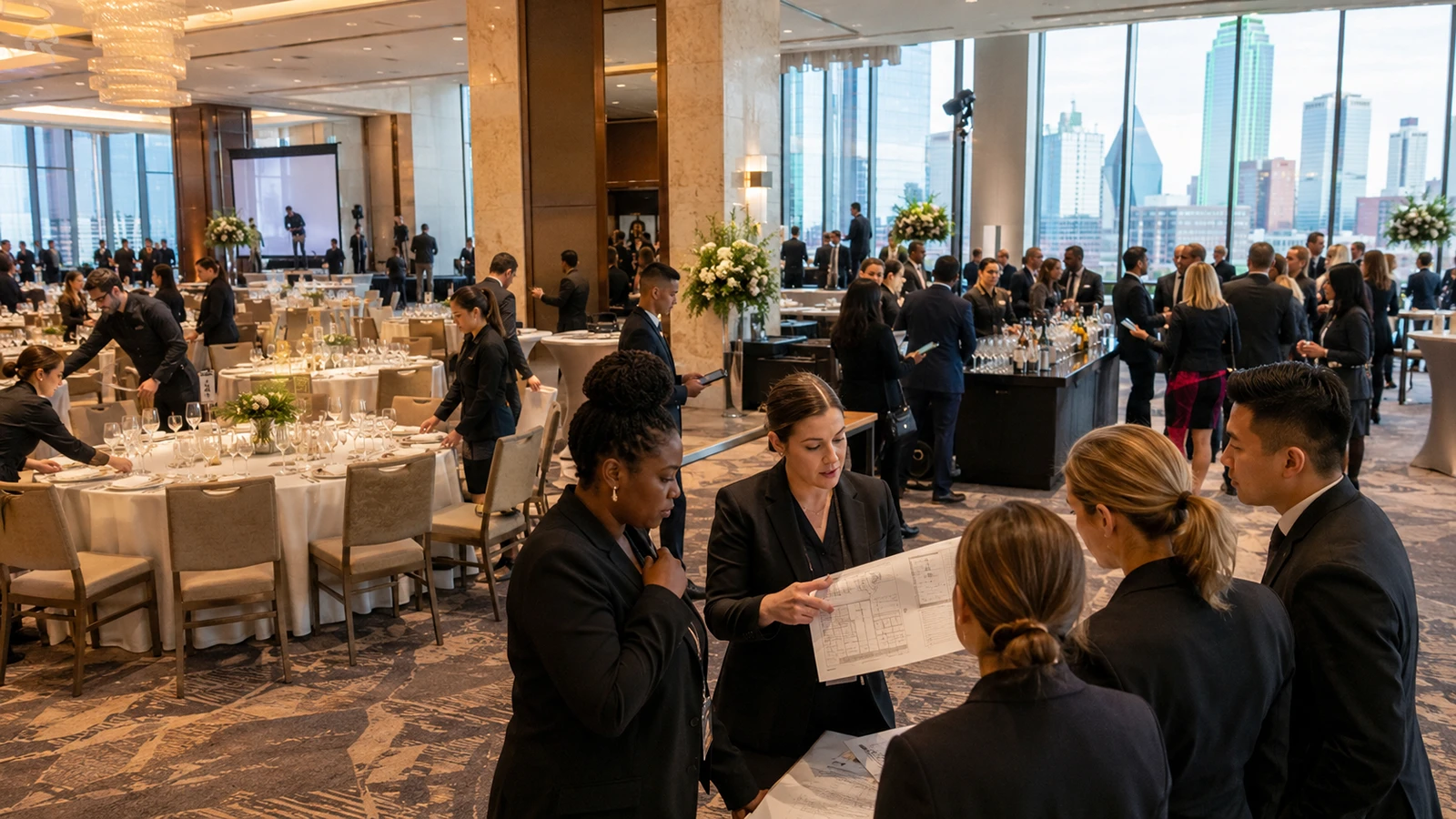
A 50-person retreat with one ballroom, one meal area, and no evening program may need 8–10 staff. The same 50-person retreat with arrivals, breakfast, breakouts, lunch, an executive dinner, and an evening activity may need 12–14 staff because more moments need coverage.
Use this quick check:
- How many rooms are active at the same time?
- Are meals plated, buffet, or grab-and-go?
- Do executives need separate support?
- Are guests moving between indoor and outdoor spaces?
- Is there an evening program after the main sessions?
A clean event staffing plan should follow the retreat agenda, not just the guest list. If the schedule has tight transitions, a run of show helps show where staff coverage needs to flex.
Point: Do not ask, “How many people are attending?” first. Ask, “Where can the retreat feel unsupported?”
Why Anticipatory Service Staffing Matters at a Corporate Retreat
The real difference in corporate retreat staffing is not the uniform. It is the timing.
At a normal corporate event, staff can wait for someone to ask for help. At a retreat, it feels too slow. The whole point of anticipatory service staffing is that the team notices friction before the guest has to point it out.
Harvard Business Publishing says leadership offsites should be designed around outcomes like how the team should feel and what behavior should shift after the session. That means staffing should support the retreat goal, not just the schedule.
For a leadership retreat, that might mean keeping the room calm before a strategy session. For a sales retreat, it might mean making the evening program feel hosted instead of random. For a wellness retreat, it might mean hospitality staff who notice comfort before anyone asks.
Key insight: Anticipatory service is not fancy service. It is how a retreat feels intentional instead of stitched together five minutes before each session.
What Happens When Corporate Retreat Staffing Is Underestimated?
A 120-person leadership retreat scheduled back-to-back strategy sessions with shared coffee breaks.
The staffing plan used a conference ratio of 1:12.
What happened:
- Coffee lines delayed sessions by 10–15 minutes
- Executives waited for service during breaks
- Breakout transitions became disorganized
Fix (Day 2):
- Increased staffing to a 1:5 ratio
- Added floaters for transitions
- Position staff at decision points
Result:
- Sessions started on time
- Flow improved immediately
- Leadership feedback scores increased significantly
Insight: Small staffing gaps compound quickly when the entire group moves together.
Where Corporate Retreat Staffing Breaks Before Anyone Says It Out Loud
Retreat staffing usually breaks in the quiet moments, not the big keynote.
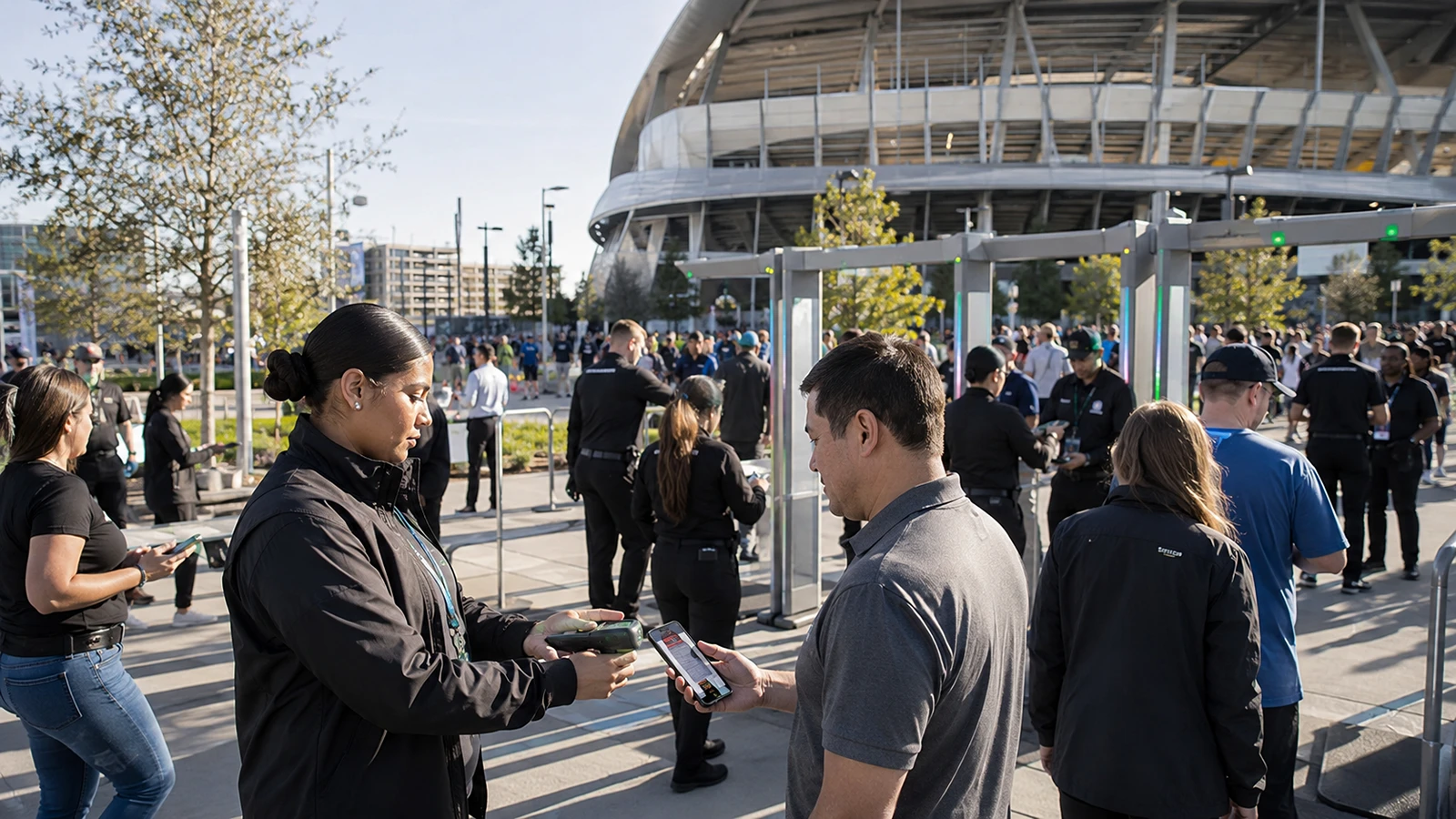
The risky parts are the transitions: arrival, coffee, meals, breakout movement, evening programming, and executive support. These are the moments when people expect the day to feel smooth without having to think about it.

For a 150-person retreat, one understaffed coffee station can delay the next session and make the whole day feel behind. If your retreat has setup-heavy or evening programming, plan setup and teardown staffing early too.
Key takeaway: At a retreat, small service gaps do not stay small because the whole group moves through them together.
How to Know a Corporate Retreat Staffing Vendor Is Guessing
The wrong retreat staffing vendor will treat your retreat like a smaller conference.
If the vendor only asks for guest count, hours, and location, they are probably building a basic coverage plan. A strong vendor should ask about the retreat schedule, audience level, meal flow, breakout transitions, executive expectations, and where the day would feel awkward if staff were missing.
Look for these red flags:
- They quote one flat number without asking about the retreat agenda.
- They use the same ratio for registration, meals, breaks, and evening programming.
- They say two weeks is enough for premium retreat staffing without explaining the trade-off.
- They cannot explain how their staff handles anticipatory service.
- They treat greeters, hospitality staff, and coordinators as interchangeable.
A better vendor will walk you through the service model. They should explain where staff will be placed, which moments need higher coverage, how they brief the team, and what happens if a key role is missing. If you are comparing vendors, use these questions to ask before hiring event staffing agencies before signing.
Point: If the vendor cannot explain how retreat staffing differs from conference staffing, they may just be sending available staff in nicer shirts.
Corporate Retreat Staffing Should Protect the Experience, Not Just Cover the Room
A corporate retreat does not succeed because the room technically had enough staff. It succeeds because the staff knows where friction will happen before the group feels it.
If your retreat includes executives, meals, breakout transitions, evening programming, or premium service expectations, do not use a conference-style staffing plan. Build the team around the experience you want people to remember.
EventStaff can help you plan corporate retreat staffing around the right staff-to-guest ratio, service model, briefing process, and on-site coverage so your team is supported from the first arrival to the final session.
Ready to elevate your next event?
Join thousands of event planners who trust EventStaff.com for reliable, professional staffing solutions.
Trusted by event professionals nationwide
1k+
Events Staffed
2 million+
Guests Served
97%
Positive reviews