
HOW TO PREPARE A HOTEL OR VENUE SPACE FOR AN EVENT
EXECUTIVE SUMMARY
When you prepare a hotel or venue space for an event, success hinges on three things: timing, coordination, and readiness checks. Most event planners focus on the event itself, the speakers, the catering, and the attendee experience. But the real foundation happens weeks before guests arrive. Preparing a hotel or venue space for an event means working through a phased approach: pre-event planning, setup logistics, live-event management, and post-event reset. This guide walks you through each phase, explains the staffing you'll actually need, covers vendor coordination workflows, and shares the readiness checks that prevent on-the-day chaos. By the end, you'll have a practical framework to manage venue preparation from weeks out through breakdown.
Why Preparing a Venue Space for an Event Isn't Just a Checklist

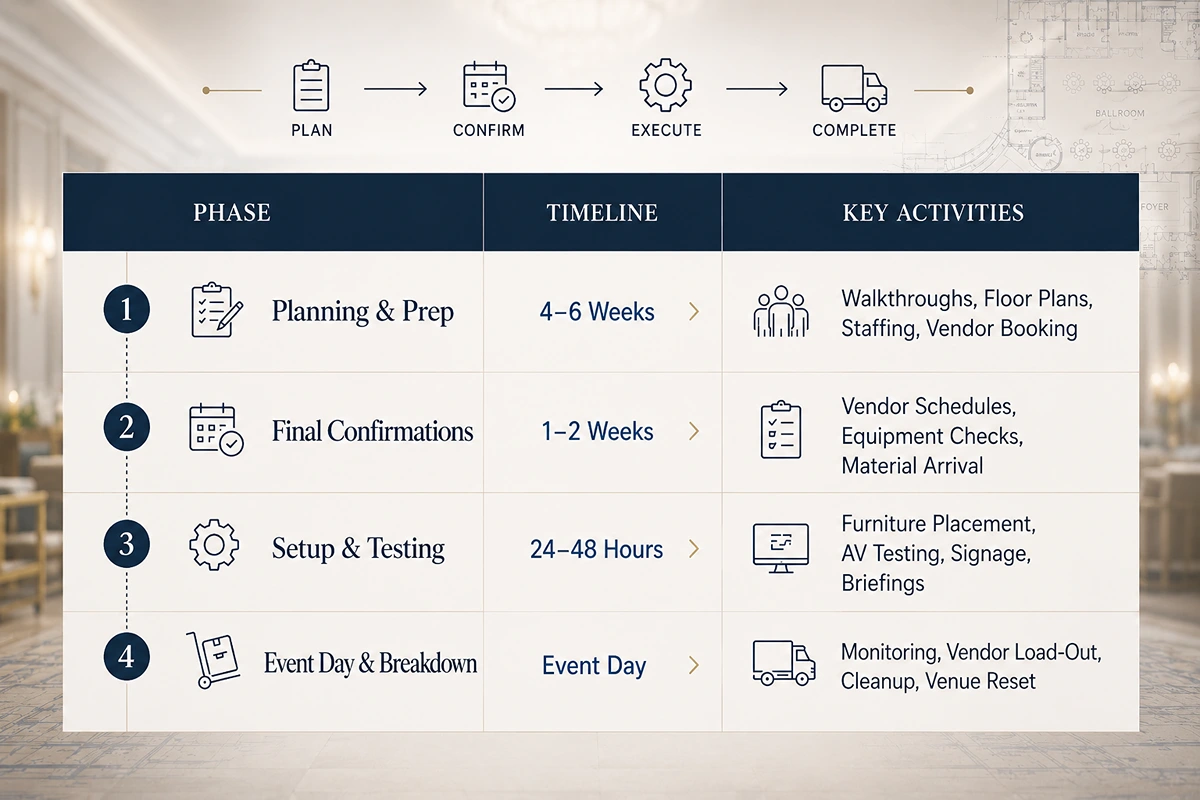
Here's what most people get wrong: they treat venue preparation as a to-do list they check off the morning of the event. Wrong move. Preparing a hotel or venue space requires systematic planning, sometimes starting 4–6 weeks in advance. According to Events Industry Council guidance, successful event operations depend on coordination across multiple teams, clear timelines, and contingency planning. When you skip proper venue preparation, you're not just risking a late start. You're risking guest experience, safety compliance, vendor delays, and staff confusion.
The teams that execute smoothly? They prepare differently. They build realistic timelines. They know exactly who does what. They anticipate problems before they happen. That's what separates a polished event from one that feels disorganised despite good intentions.
The Four Phases of Venue Preparation (Timeline Overview)
Build Your Four-Week Venue Preparation Timeline Before Setup Day
Start by conducting a thorough venue walkthrough. This isn't a casual stroll. Map out room layouts, confirm power outlets and AV connections, identify guest-flow bottlenecks, and check accessibility requirements. You're answering real questions: Where does registration actually go? Can AV cables reach the stage? Where will the catering be set up? What's the backup power situation?
Next, create your master timeline. Break it into milestones: vendor confirmation deadlines, material delivery dates, setup day schedule, and staffing arrival times. Assign clear ownership. Who owns the floor plan? Who manages vendor communication? Who's responsible for safety checks? Vague ownership creates vague execution and disaster on event day.
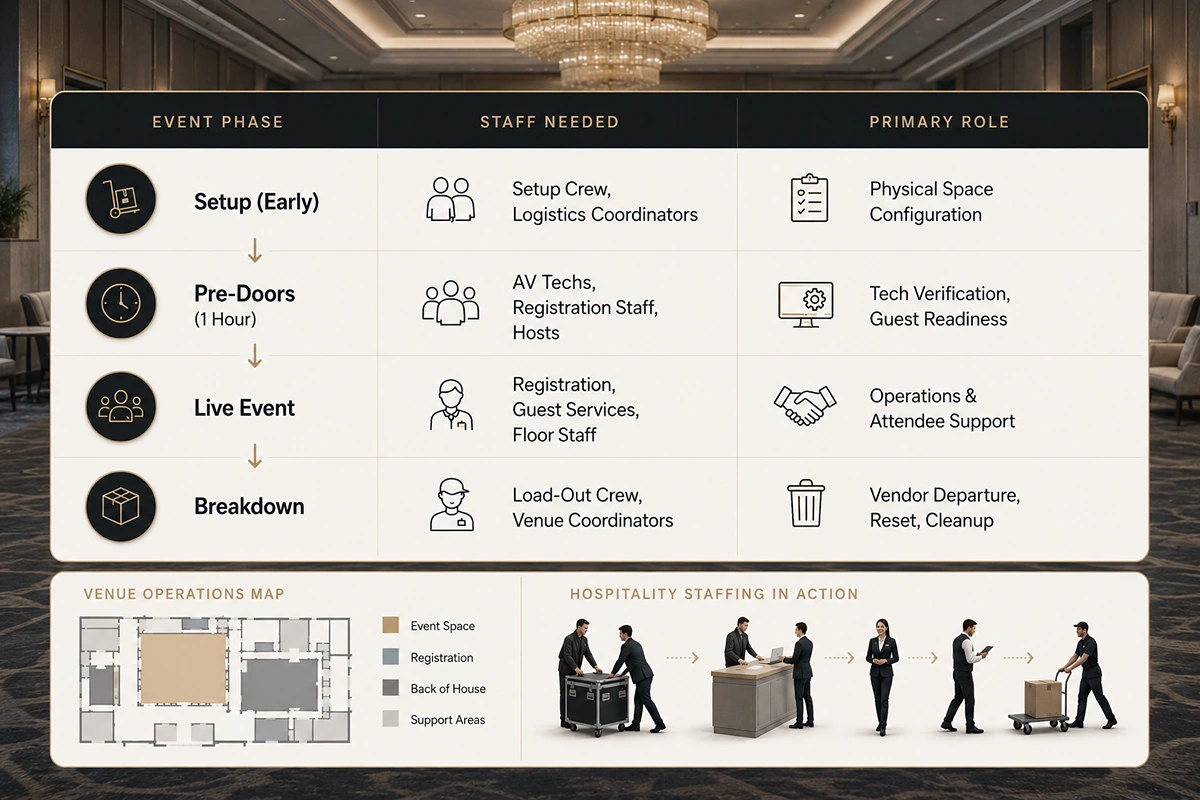
According to Meeting Professionals International, vendor coordination is where most preparation fails. Start vendor outreach early. Confirm arrival windows, load-in procedures, access points, and parking. A catering team arriving without setup space, or AV technicians blocked by furniture placement? That's a preparation failure, not an event-day surprise. For large-event staffing, coordinate early with your staffing partner to ensure setup crews and logistics teams are assigned and briefed.
Finalize Your Event Logistics in the Week Before Venue Setup
Five days out, shift into confirmation mode. Call vendors. Verify schedules. Confirm equipment arrivals. Check that registration technology is installed and tested. Walk through the space again. Note any changes. Brief your team on any last-minute shifts.
This is when you test everything:
- AV systems (projectors, screens, audio, streaming)
- Registration technology (badges, check-in stations, WiFi)
- Safety systems (emergency exits, lighting, accessibility)
Problems found here get fixed calmly. Problems found on the event morning? Chaos. When planning your event logistics, consult resources like Cvent's planning guides to verify your setup sequence and timing.
Why Hotel Cleaning Services Are Critical in Event Venue Preparation
Most event planners focus on staging, AV, and guest flow but overlook one of the most critical operational layers: cleanliness. Professional hotel cleaning services play a direct role in guest experience, safety compliance, and brand perception.
Before setup begins, cleaning teams must deep-clean high-traffic zones, restrooms, entryways, and backstage areas. During the event, rapid-response cleaning staff ensure spills, waste, and restroom conditions are managed in real time. Post-event, they handle fast turnaround resets so the venue is ready for the next booking.
In large-scale events, poor cleaning coordination can lead to negative guest impressions within minutes, especially in restrooms and dining areas. That’s why experienced event teams integrate cleaning crews into the core setup and staffing plan, not as an afterthought.
Match Your Event Staffing to Each Phase: Setup Through Teardown
CEO EXCERPT
Preparing a hotel or venue space for an event isn't about last-minute scrambling. It's about phased execution: weeks of planning, days of confirmations, and hours of setup coordination. When event venues prepare systematically with clear timelines, assigned roles, vendor communication, and safety checks, attendees show up to a polished, organized experience. That's the difference between an event that feels chaotic and one that feels intentional. - Daniel Muersing
Execute Your Event-Morning Venue Preparation Workflow Flawlessly
Arrive early. Like, really early. Set up furniture first, get it out of the way. Then install signage, set up registration, test AV, and brief staff. As Daniel M., CEO of EventStaff, advises, "Most venues think preparation is about having everything ready. What actually matters is having your people coordinated and confident about their role. If staff don't know what they're doing, guests feel it immediately."
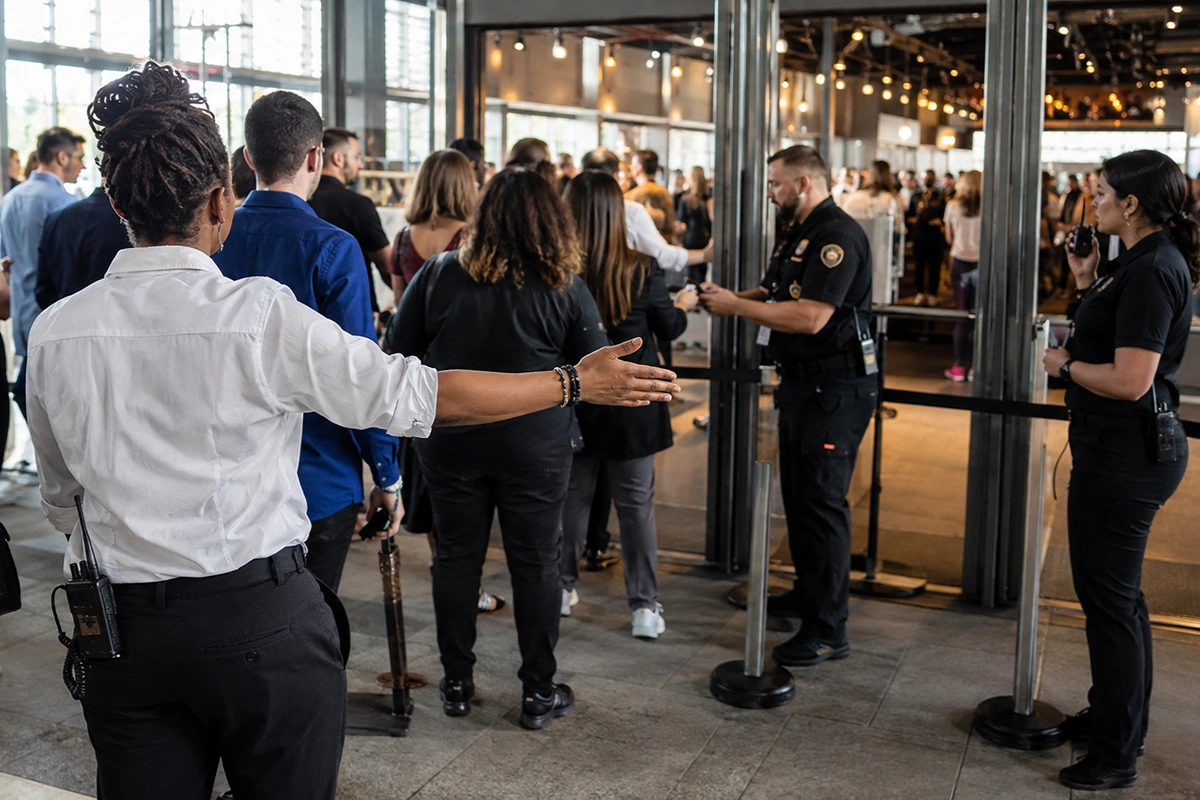
That's the real work of preparation: making sure your team knows the plan, understands the contingencies, and can execute calmly when things shift. For venues managing large attendance, ensuring crowd management is coordinated before guests arrive prevents guest-flow disasters.
Your 24-Hour Event Venue Readiness Checklist That Prevents Disasters
- [ ] Furniture placement finalized; no obstacles in guest flow
- [ ] AV tested end-to-end (projectors, screens, audio, microphones)
- [ ] Registration system live and tested with sample data
- [ ] Emergency exits clear; accessibility confirmed
- [ ] Signage installed (wayfinding, directional, session info)
- [ ] Catering setup confirmed; vendor arrival window locked
- [ ] Staff briefing completed; roles clear; contact numbers shared
- [ ] Contingency plans reviewed (AV backup, weather, vendor delay)
- [ ] Restroom facilities checked; supplies stocked
- [ ] Final walkthrough complete; all teams positioned
Why Vendor Coordination Breaks Most Event Venue Preparations
Vendor delays tank event days. You prevent them by over-communicating. Create a load-in schedule. Share it 48 hours before setup. Include: arrival time, parking, access point, setup space, power requirements, load-out time, and an emergency contact. When you prepare this thoroughly, vendors show up ready to work, not hunting for information.
Brief your venue team on vendor dependencies. If the decor vendor needs to set up before catering, that's a sequence issue. If AV needs stage access but the setup crew is placing furniture, that's a coordination gap. Smart preparation maps these dependencies so they flow, not collide. For events requiring specialized vendor coordination, hospitality-staff teams often bridge communication gaps between vendors and your venue.
According to IAEE event operations standards, exhibitor coordination and vendor access planning are critical success factors. When vendors know the plan and your team is coordinated, delays drop dramatically.
Design Contingency Plans That Actually Stop Event Setup Failures
Prepare for three failure scenarios:
- Equipment failure: Backup projector, backup microphone, backup registration tablet. Test them.
- Vendor delay: Know who arrives last and who can flex. Have a vendor contact backup.
- Staffing gap: Cross-trained team members. Someone who can jump to registration if needed. The difference between a smooth event and a stressed one often comes down to setup and teardown planning, having enough hands at the right times.
Plans don't prevent problems. They prevent panic. And panic is what actually breaks events.
What Happens When Venue Preparation Goes Wrong (Real Scenario)
At a 500-attendee corporate event, the AV team arrived on time but couldn’t access the stage because the furniture setup was still in progress. Meanwhile, catering arrived early with no designated prep area. The result? A 45-minute delay, frustrated vendors, and a rushed guest experience.
The root cause wasn’t execution; it was poor coordination during venue preparation.
High-performing event teams avoid this by:
- Mapping vendor dependencies in advance
- Assigning clear setup zones
- Creating staggered load-in schedules
This is why preparation isn’t just planning; it’s orchestrating multiple moving parts without conflict.
Reset Your Event Venue After Each Event
Coordinate vendor load-out. Secure equipment. Oversee initial cleanup. Document what worked and what didn't. This data feeds the next event's preparation. That's how preparation gets better over time. According to BLS meeting planner data, event professionals who document post-event outcomes improve coordination significantly on subsequent events.

Ready to Execute a Flawless Event Without Last-Minute Chaos?
The difference between a smooth event and a stressful one comes down to preparation, coordination, and having the right team in place at every stage.
Event Staff helps you eliminate setup delays, staffing gaps, and vendor confusion so your event runs exactly as planned.
👉 Whether you need setup crews, registration teams, or full-scale event staffing, we’ll help you execute with precision. Talk to Event Staff today and ensure your next event is seamless from setup to breakdown.
Ready to elevate your next event?
Join thousands of event planners who trust EventStaff.com for reliable, professional staffing solutions.
Trusted by event professionals nationwide
1k+
Events Staffed
2 million+
Guests Served
97%
Positive reviews