
How to Keep Conference Attendees Engaged With Better Staff Training
Day 1 of a conference usually has momentum built in. People arrive curious, sponsors are fresh, and registration has its biggest push. The harder part starts after lunch on Day 2, when attendees begin choosing what they can skip.
Weak conference staffing shows up fast here: slower help desks, quieter sponsor areas, passive session doors, and attendees drifting between rooms. For a multi-day event, staffing cannot be a one-day plan repeated across three dates. The team has to keep people moving after the opening rush is gone.
Executive Summary
This blog explains how conference staffing keeps attendees engaged after the opening-day energy fades. It focuses on the Day 2 and Day 3 drop-off, when registration slows, staff energy dips, session rooms feel less guided, sponsor areas lose traffic, and attendees start skipping parts of the program. The article breaks down how a stronger staffing plan uses lobby monitoring, day-by-day coverage changes, staff rotation, session monitors, sponsor-area movement, and active floor leads to keep a multi-day conference from going quiet after Day 1.
Day 1 Energy Is Easy. Day 2 Is the Real Staffing Test.
A packed opening session can hide a weak staffing plan. Day 1 has novelty on its side. Attendees are checking in, collecting badges, finding the main ballroom, meeting colleagues, and figuring out the venue. Even a basic staff setup can look good because the crowd is already moving.
Day 2 is different. Attendees have learned the venue. They know which sessions feel useful, which sponsor areas are worth visiting, and which parts of the agenda they can probably miss. If the staffing team is tired or passive, the conference starts to feel optional.
You see it in small ways first. Greeters stop stepping forward. Session monitors wait at doors instead of pulling people into the next room. Registration staff answer questions, but no longer notice confused attendees before they ask. Sponsor aisles lose energy after lunch because no one is guiding attendees back through them.
Meeting fatigue is a real conference problem, not just a soft complaint. Meeting Professionals International has even addressed the tension between attendee engagement and fatigue in meeting design, which is exactly why staffing must be treated as part of the engagement plan, not just the check-in plan.
A stronger conference staffing plan is built for the day people are most likely to disengage. Day 1 tells you whether people showed up. Day 2 tells you whether the floor team can keep them moving.
Why Does Conference Engagement Drop After Day 1?
Conference engagement drops after Day 1 because attendee behavior changes. The event becomes optional.
Attendees:
- Already understand the venue
- Prioritize only high-value sessions
- Skip sponsor areas unless guided
- Experience fatigue from continuous sessions
At the same time, staff energy often drops, and coverage remains static.
This combination creates a silent decline in engagement. Without an adaptive event staffing strategy, even a well-planned agenda can lose impact.
CEO Excerpt
I never judge a multi-day conference by how it looks on Day 1. Day 1 has natural energy. The real test is whether the floor still feels active on Day 2 afternoon, when people are tired, sponsors need traffic, and attendees are deciding what they can skip. - Daniel Meursing.
The Lobby Shows the Drop-Off Before the Agenda Does
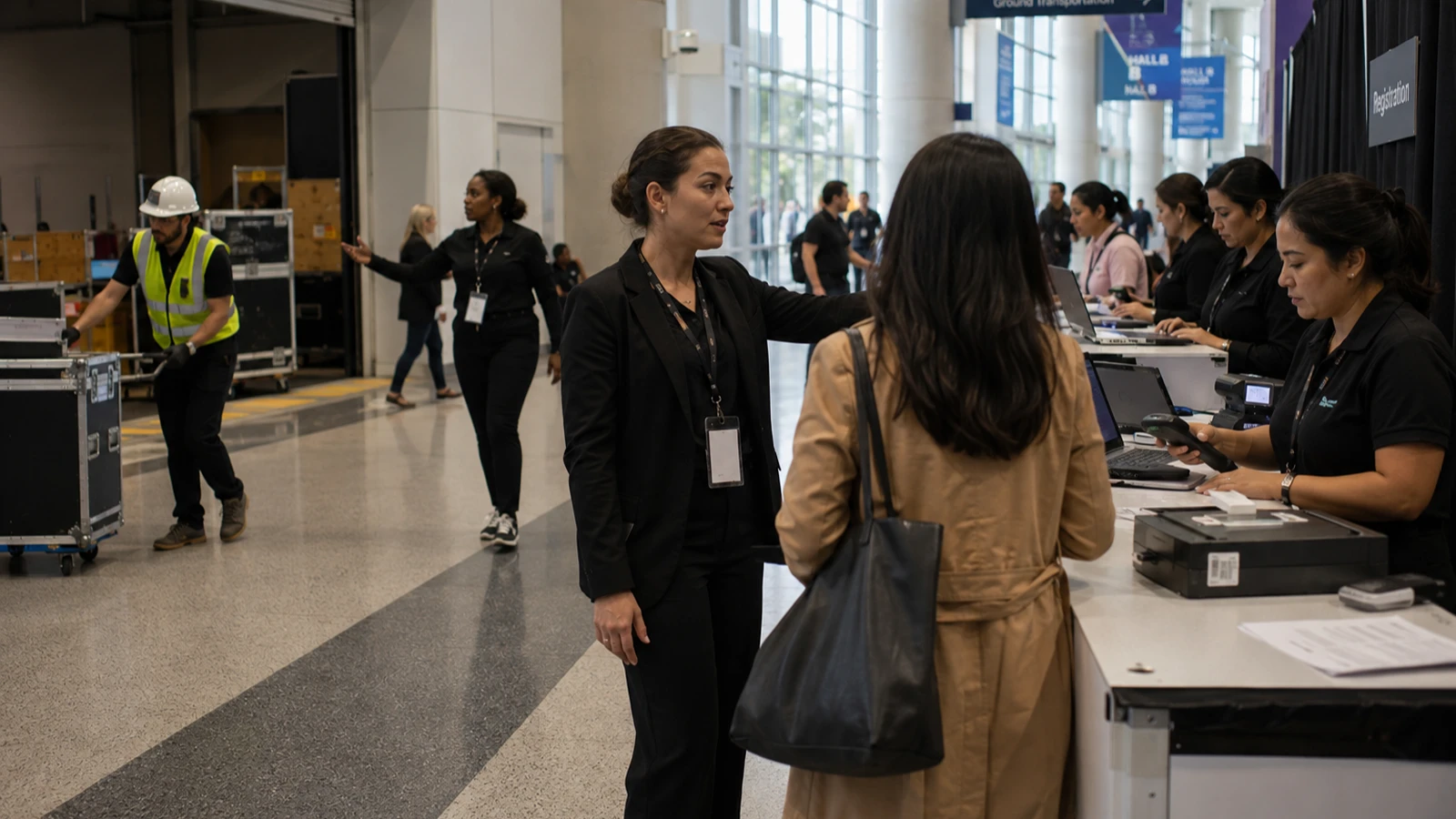
The first signs of a tired conference rarely show up inside the keynote. They show up in the lobby, at the help desk, near the badge table, and around the signs people keep staring at because they are still not sure where to go.
Day 1 registration has a clear job: move people through quickly. Day 2 registration is different. Staff are now dealing with badge fixes, room changes, sponsor questions, speaker requests, late arrivals, and attendees who are deciding whether the next session is worth the walk. If the desk feels slow or distracted, people start the day with friction before they even reach the room.
A good floor team notices small signs before they become complaints:
- attendees pausing too long near signage
- the same room question being asked again and again
- badge corrections piling up
- sponsors asking staff where traffic has gone
- speakers looking for the wrong room
- hallway clusters forming before sessions start
A generic staffing plan treats the lobby as a check-in point. A stronger multi-day plan treats it like the conference’s early warning system. If the lobby looks confused on Day 2 morning, the agenda is already fighting an uphill battle.
Copying the Day 1 Staffing Plan Is How Conferences Go Flat
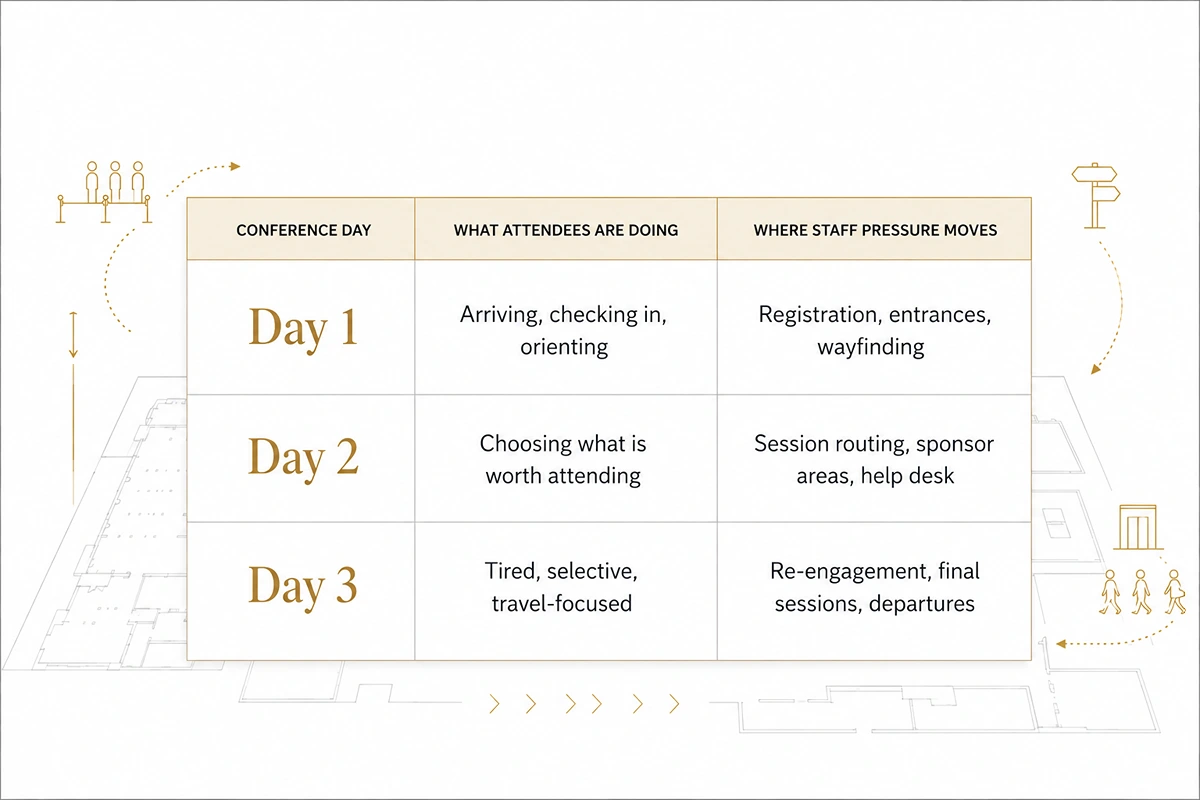
Many multi-day conferences keep the same staffing map across every day because it feels efficient. Same desk. Same doors. Same hallway posts. Same number of people. On paper, that looks organized. In the venue, it can miss how attendees actually behave after the first day.
Day 1 is about arrival. People need badges, directions, schedule help, and a clear first impression. Day 2 is about choice. Attendees decide which sessions, sponsor areas, meetings, lounges, and networking moments are worth their time. Day 3 is about retention. People are tired, watching flights, checking out of hotels, and skipping anything that feels optional.
A copied staffing map ignores those shifts.
Multi-day conference planning advice often focuses on pacing the agenda, white space, and session variety. Those details matter, but the staffing map has to follow the same logic. vFairs makes this point in its guidance on running multi-day conferences, noting that pacing and attendee experience change across the event rather than staying flat from day to day.
A better event staffing plan changes by daypart. Morning arrival does not need the same coverage as the post-lunch sponsor lull. A keynote transition does not need the same staff behavior as final-day checkout. Copying Day 1 is easy. Planning for Day 2 and Day 3 is where the conference stays alive.
Staff Rotation Should Happen Before Attendees Notice the Dip
Most conference teams think about rotation too late. They wait until someone looks tired, then move them. By that point, attendees have already felt the drop: the greeting is weaker, the answers are shorter, the registration desk is slower, and session doors feel less watched.
For multi-day conference staffing, rotation should be planned around the roles that burn energy fastest. Registration staff, greeters, help desk teams, and session monitors carry hundreds of small interactions across the day. Even strong staff lose sharpness if they are kept in the same high-contact post for too long.
The fix is not rotating everyone at once. That creates its own problem. A full shift change during a session transition can leave the floor confused, especially if new staff do not know which rooms are running late, which speakers need help, or which sponsor area needs traffic.
A stronger rotation plan protects both freshness and continuity:
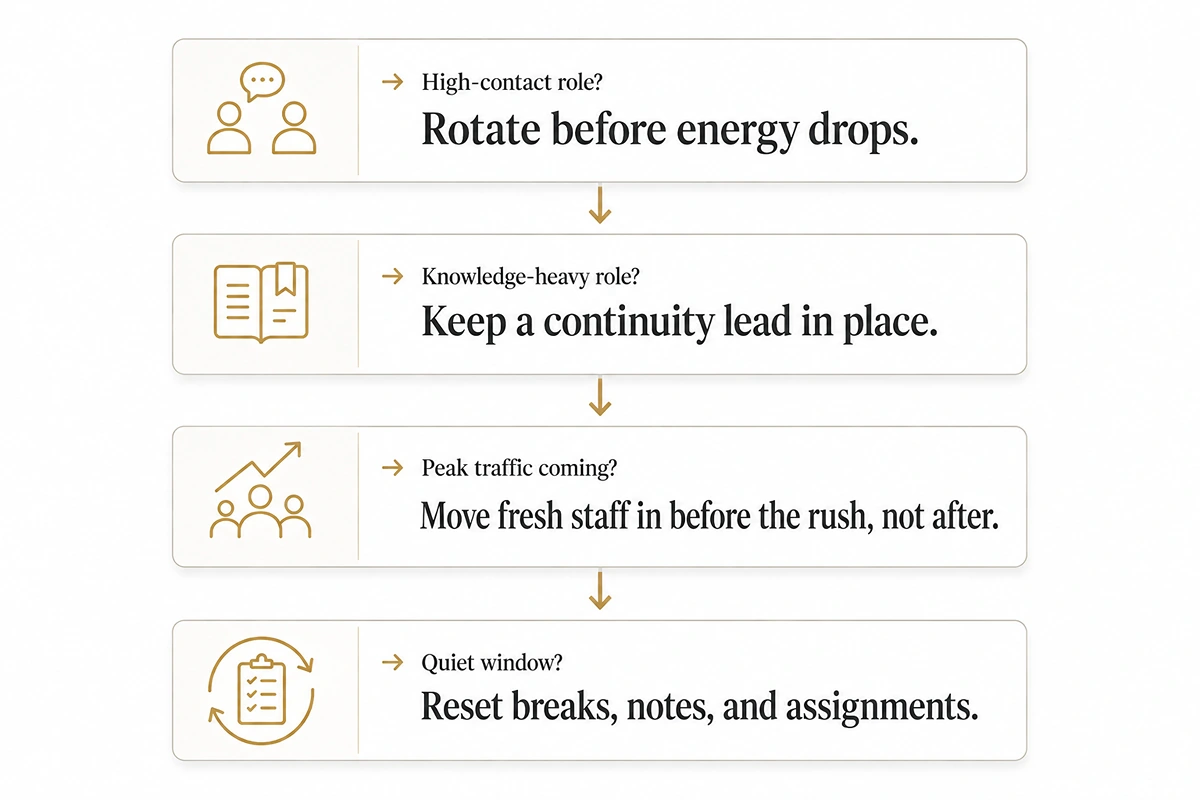
A registration lead may stay consistent while support staff rotates around them. A room monitor may stay near the same track because they understand speaker flow, while greeters rotate after the morning rush. A sponsor-area staffer may move back into the hallway after lunch when traffic starts thinning.
Air Fresh Marketing’s guidance on multi-day conference staffing also points to the risk of fatigue, message drift, and weak shift transitions across three- to five-day events. The useful lesson is simple: long conferences punish staffing plans that assume energy stays fixed. Air Fresh Marketing
Mistake to avoid: do not build staff rotation only around labor breaks. Build it around the moments where attendee-facing energy cannot afford to dip.
Session Monitors Can Save a Room Before It Feels Empty
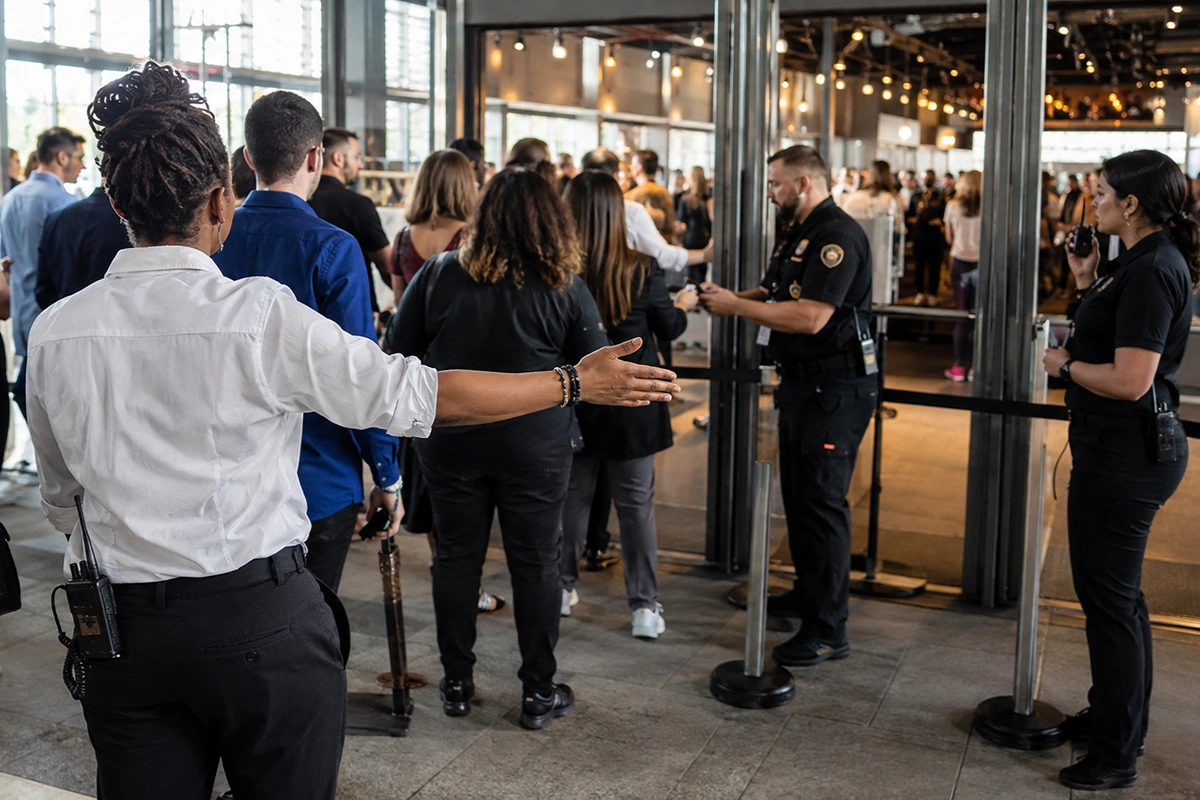
Session monitors are often treated like bodies at the entrance: check badges, count seats, close the door, wait. That misses the real value of the role. In a multi-day conference, a session monitor can protect the room from losing energy before the speaker even starts.
A good monitor knows when a hallway is moving too slowly, when a popular session is about to overflow, when attendees are confused by room changes, and when the speaker or AV team needs someone to escalate fast. That person is not just standing near the door. They are reading the room before the room becomes a problem.
Think about a software conference with a packed product workshop. The room fills early, late attendees keep arriving, and people start hovering near the entrance. A weak setup leaves one staffer repeating, “The room is full.” A stronger setup has the monitor redirect people to overflow, alert the floor lead, keep the doorway clear, and protect the speaker’s start time.
Session monitors should watch for:
- late starts that push the rest of the track behind
- attendees wandering between similar session rooms
- popular rooms filling before staff expect it
- speakers waiting for AV or runner support
- unclear signage outside breakout areas
- hallway crowds forming after high-demand sessions
- empty seats in sessions the organizer expected to be full
Eventbrite’s event data points to interactive and collaborative formats as a major draw for corporate events, but those formats only work if attendees can actually get into the right rooms, find the right workshops, and move between sessions without losing patience.
For larger conferences, large-scale event staffing often has to cover more than entrances. It has to protect the moments where people decide whether to stay in the program or drift back to email, the hotel lobby, or the airport.
Sponsor Areas Go Quiet When No One Moves the Crowd
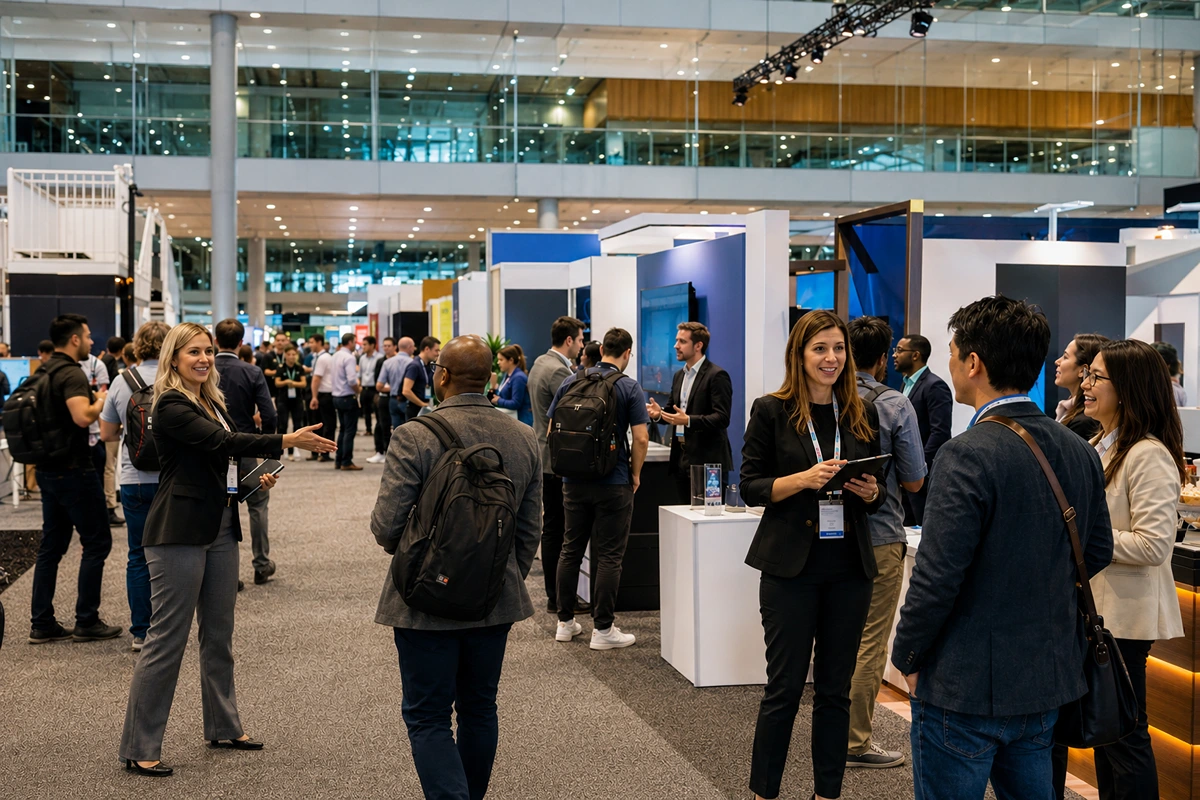
Sponsors often feel the Day 2 dip before the organizer does. The keynote may still look fine, but the sponsor aisle gets quieter after lunch. People take shorter routes to sessions. Demo stations sit open. Staff near the lounge wait for attendees to wander in instead of guiding them back toward the area.
That matters because sponsor visibility is one of the first places conference value gets judged. A sponsor paid for access to the audience across the full event, not only the opening rush. If floor staff stop directing movement after Day 1, the sponsor zone becomes passive. It depends on chance traffic, not conference flow.
A strong staffing plan keeps sponsor spaces alive in small ways:
- guiding attendees through sponsor areas after meals
- reminding guests about scheduled demos or prize draws
- moving people from crowded hallways into active zones
- routing qualified questions to the right sponsor contact
- watching which areas go quiet after agenda changes
- telling the floor lead when traffic patterns shift
For a 2,000-person conference, one hallway change can drain a sponsor area for half a day. If attendees start using a shorter path from lunch to breakout rooms, staff have to notice quickly. Otherwise, sponsors may read the problem as poor attendee interest when the real issue was floor movement.
A smarter activation ROI discussion should include this layer. Sponsor traffic is not only about booth design or signage. Staff movement affects whether attendees return to the sponsor zone after the novelty fades.
Sponsor insight: the sponsor area does not die all at once. It usually gets quieter in the gaps between agenda blocks, when no one is actively pulling people back into the room.
The Floor Lead Should Catch Problems Before Attendees Complain
A multi-day conference needs someone watching the floor as it changes, not just checking whether every post is filled. The floor lead should know where attendees are slowing down, which staff roles look drained, which session rooms need support, and which sponsor areas are losing traffic.
This role is easy to underuse. Some teams treat the lead like a schedule checker: confirm staff arrived, answer a few questions, and handle emergencies. That is too passive for a conference that changes every hour. A strong floor lead reads the event like a live room, then moves staff before attendees feel the gap.
An hourly floor read should cover:
- Which staff roles are losing energy?
- Where are attendees clustering?
- Which question keeps getting repeated?
- Are session doors staffed before transitions?
- Are sponsors seeing traffic or waiting?
- Is registration still clean, or are fixes piling up?
- Which area needs one extra person for the next block?
The patter: A stronger event staffing plan gives the floor lead authority to shift coverage during the day. Without that, the event may technically be staffed while the wrong areas carry all the pressure.
Staff the Conference for the Day People Are Most Likely to Leave
A conference staffing plan should be built around the weakest part of the event, not the strongest one. Day 1 has arrival energy, novelty, and full rooms working in its favor. Day 2 afternoon and Day 3 morning usually do not. That is when attendees start choosing sleep, email, client calls, hotel checkout, or an early flight over another session.
The safest plan puts extra attention on the moments where people quietly drop out:
- post-lunch session movement
- final-day registration and help desk coverage
- sponsor areas after the first rush is gone
- breakout rooms that compete with networking time
- long walks between rooms
- attendee questions that repeat because the layout is unclear
A multi-day event does not need staff who only hold positions. It needs people who can keep the room from going passive. Greeters should pull people back into the program. Session monitors should protect room flow. Registration staff should fix issues without slowing the line. Floor leads should move coverage before one weak area starts draining the rest of the event.
EventStaff builds conference staffing around the full event arc: arrival, session movement, sponsor traffic, staff rotation, and final-day retention. A conference that stays active after Day 1 usually has one thing behind the scenes: someone planned for the day attendees were most likely to leave.

Keep Your Conference Active Beyond Day 1
Most conferences don’t fail on Day 1 they lose momentum on Day 2.
The difference is not the agenda. It’s the staffing strategy behind it.
EventStaff helps you plan and execute conference staffing that adapts in real time from registration flow and session movement to sponsor traffic and final-day retention.
👉 Get a custom conference staffing plan tailored to your event size, venue, and audience.
👉 Request a quote today and keep your attendees engaged from start to finish.
Ready to elevate your next event?
Join thousands of event planners who trust EventStaff.com for reliable, professional staffing solutions.
Trusted by event professionals nationwide
1k+
Events Staffed
2 million+
Guests Served
97%
Positive reviews