

How to Clean Up Venues After Juneteenth Weekend Events
EXECUTIVE SUMMARY
Planning post-event cleanup after a Juneteenth festival is more than just trash pickup—it's a phased operations strategy that starts before the first vendor arrives and continues through venue restoration. This guide walks you through the full post-event cleanup process, including event cleanup services selection, cleanup crew sizing, festival cleanup timelines, event waste management, and cost forecasting. Whether you're managing a neighborhood gathering or a city-wide Juneteenth event cleanup, understanding these phases helps you avoid expensive last-minute scrambles and deliver a cleaner venue for next year's event.
Why Juneteenth Weekend Events Create Unique Post-Event Cleanup Challenges
Juneteenth celebrations aren't one-size-fits-all events. They span multiple days often Friday setup through Monday restoration across multiple zones: parade routes, vendor areas, performance stages, family activities, parking lots, and community gathering spaces. Each zone generates different waste streams: food packaging, beverage containers, vendor cardboard, decor, signage, and lost items.
Here's what makes Juneteenth event cleanup different from generic events:
- Multiple venues: Parades downtown, concerts in parks, food festivals in civic centers
- Food-heavy waste: Trucks, booths, and outdoor dining create grease, compostables, and packaging
- Peak attendance windows: Saturday afternoon to Sunday evening spike means concentrated litter and restroom demand
- Outdoor restoration needs: Parks and public spaces need turf checking, power-washing, and hazard removal
- Weekend/holiday labor costs: Monday holiday rates (if applicable) increase crew expenses
A typical mid-size festival cleanup can generate 50–150 bags of trash per 1,000 attendees, plus recycling and compost streams. Without a structured post-event cleanup plan, venues face next-day damage claims, delayed reopening, and inflated disposal costs. That's why building an event staffing plan well in advance is critical to execution success.
Understanding the Full Scope of Post-Event Cleanup After Juneteenth
Most event organizers think post-event cleanup means "remove trash and reopen." That's barely 30% of the work. True venue cleanup includes five distinct layers:
1. Litter & Waste Collection: Trash removal, recycling sorting, and compost management across all zones.
2. Vendor Breakdown Support Cardboard consolidation, pallet removal, grease trap servicing, and equipment accounting.
3. Restroom & High-Touch Surface Cleaning: Deep cleaning, disinfection, and paper stock replenishment.
4. Spill Response & Hazard Removal Broken glass, liquid spills, sharp objects, and debris in high-traffic areas.
5. Venue Restoration: Turf inspection and repair, pressure washing, signage removal, and final safety sweep.
According to the BLS janitors data, janitors and building cleaners handle tasks like emptying trash, cleaning restrooms, removing spills, sweeping and mopping floors, and disinfecting surfaces. These same duties scale up significantly for event waste management after large gatherings. Understanding which tasks require specialized crews versus general labor helps you budget properly and avoid gaps during execution.
CEO Excerpt:
Post-event cleanup after Juneteenth festivals requires phased execution: live patrols during the event, aggressive closing sweeps within the first two hours, overnight deep cleaning and waste hauling, and a final next-day inspection. Without this timeline, venues face damage claims and delayed reopening costs.- Daniel Muersing
Building Your Post-Event Cleanup Timeline
The difference between a smooth cleanup and a chaotic one is when crews start. Here's the phased approach:
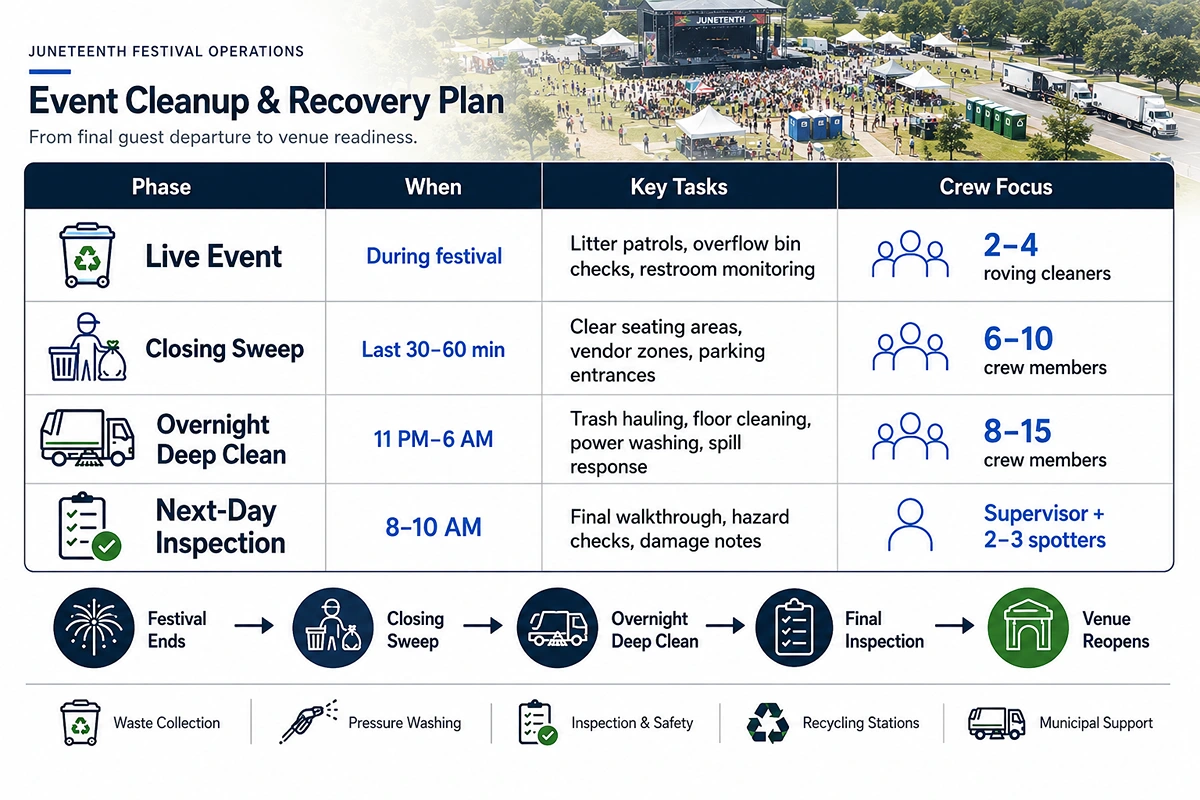
Understanding Large-Scale Cleanup Realities
To understand the scale of cleanup needed, consider real-world examples. An Oakland Juneteenth celebration drew roughly 5,000 attendees, requiring coordinated waste management and safety monitoring. At a larger scale, a major festival cleanup operation collected 581 metric tonnes of waste, deployed 300+ sanitary workers, and used 109 vehicles across multiple shifts. These examples show why crew sizing and phased planning aren't optional; they're essential for safe, efficient execution.
How Many Cleanup Staff Do You Need for Juneteenth Festival Cleanup?
There's no magic formula for cleanup crew size it depends on venue layout, attendance, vendor count, and cleanup aggressiveness. But here's the framework EventStaff uses:

Pro tip: Crew size isn't just headcount, it's zone coverage. Divide your venue into 4–6 zones (stage, vendor row, restrooms, parking, parade route, family area). Assign 2–3 crew members per zone during the closing sweep and overnight phase. One supervisor coordinates across zones. When planning large event staffing, focus on role clarity and zone accountability rather than total headcount alone.
Waste Management Strategies for Festival Cleanup After Juneteenth
Event waste management after Juneteenth isn't just landfill. The EPA waste hierarchy recommends reducing, reusing, and then recycling or composting. Here's how that works in practice:
Three-Stream Waste System
- Landfill: Non-recyclable items, food-soiled paper, broken items
- Recycling: Cans, bottles, cardboard, paper, some plastics
- Compost: Food scraps, plant material, compostable serviceware
Vendor-Specific Waste Streams
Food trucks generate grease, cooking oil, and food waste these need separate handling and often require specialized disposal contractors. Merchandise vendors produce cardboard, pallets, and shrink wrap. Beverage stations create high-volume bottle and can recycling.
Label your bins clearly (landfill, recycling, compost) and position them at vendor exits, food courts, and high-traffic zones. Without clear signage, attendees default to landfill, inflating disposal costs. Reference your event staff roles guide to assign dedicated crew members to waste-station monitoring. This single role reduces contamination by 20–30%.
Event Cleanup Costs and Budget Planning

Post-event cleanup costs vary widely, but here are the primary cost drivers:
- Labor: $17–$22/hour (based on janitor wage benchmarks) × crew hours. Weekend/holiday rates add 25–50%.
- Waste disposal: $150–$400 per ton (varies by landfill and diversion goals).
- Equipment rental: Dumpsters ($250–$500), pressure washers ($100–$200), portable restrooms ($150–$300).
- Specialized services: Grease trap pumping ($300–$600), hazardous material removal ($200–$500).
A typical mid-size festival cleanup runs $2,000–$8,000, depending on attendance, duration, and venue condition. Budget aggressively if you're planning event cleanup services in areas with high waste disposal fees or limited vendor prep. To benchmark realistic costs for your city and event type, consult your local venue staffing rates.
Common Post-Event Cleanup Trade-Offs Venue Managers Face
Every event manager balances cost, timing, and quality. Here are the real decisions:
Smaller crew + longer timeline = lower labor cost but delayed reopening (risks next-day bookings).
Larger crew + overnight finish = higher labor cost, but venue ready by 8 AM (protects future revenue).
Volunteer support + professional crew = cost-neutral but unpredictable (volunteers tire, miss details).
Aggressive recycling = environmental win, but operational complexity (requires sorting discipline and vendor education).
Most venues find success with a core professional cleanup crew (to handle speed and standards) + volunteer support during less-skilled phases (initial litter sweeps, bin placement).
Should You Hire Professional Event Cleanup Services?
Signs you need professional event cleanup services:
- Attendance over 1,000
- Multiple vendors or food trucks
- Public park or civic space (liability concerns)
- Tight reopening deadline
- Outdoor venue with turf restoration needs
Professional venue cleanup teams bring structure: pre-event zone planning, live crew coordination, overnight capacity, waste-hauler relationships, and post-event reporting. They cost more upfront, but prevent emergency cleanup expenses and damage claims. When you understand event staffing roles and resource allocation, it becomes clear why professional teams excel at phased, high-pressure execution. According to HSE guidelines for crowd management, cleanup should be coordinated with security and venue access procedures to prevent hazards during teardown and ensure safe egress for attendees.
Your Post-Event Cleanup Action Plan
Before your next Juneteenth event cleanup, answer these:
- How many zones will you divide your venue into?
- Which crew size matches your attendance estimate?
- What's your three-stream waste plan (landfill, recycling, compost)?
- When will your crew start (during the event or immediately after)?
- Do you need overnight deep cleaning, or can you finish by midnight?
For venues pursuing sustainability credentials, reference ISO 20121 standards for sustainable event management. This framework guides waste diversion goals, vendor requirements, and post-event reporting metrics that protect both environmental impact and your budget.

Ready to Execute Your Post-Event Cleanup?
Post-event cleanup after Juneteenth festivals doesn't have to be stressful. With the right event cleanup timeline, adequate cleanup crew staffing, and a clear post-event cleaning checklist, you can restore your venue, protect your next booking, and deliver a professional experience that keeps organizers coming back. Whether you handle it in-house or partner with professional event cleanup services, the framework stays the same: plan early, assign zones, staff aggressively, and inspect thoroughly.
EventStaff handles staffing solutions for cleanup operations, crew coordination, and post-event logistics. Let us know how we can assist with your next festival cleanup.
Ready to elevate your next event?
Join thousands of event planners who trust EventStaff.com for reliable, professional staffing solutions.
Trusted by event professionals nationwide
1k+
Events Staffed
2 million+
Guests Served
97%
Positive reviews


.webp)
.jpg)