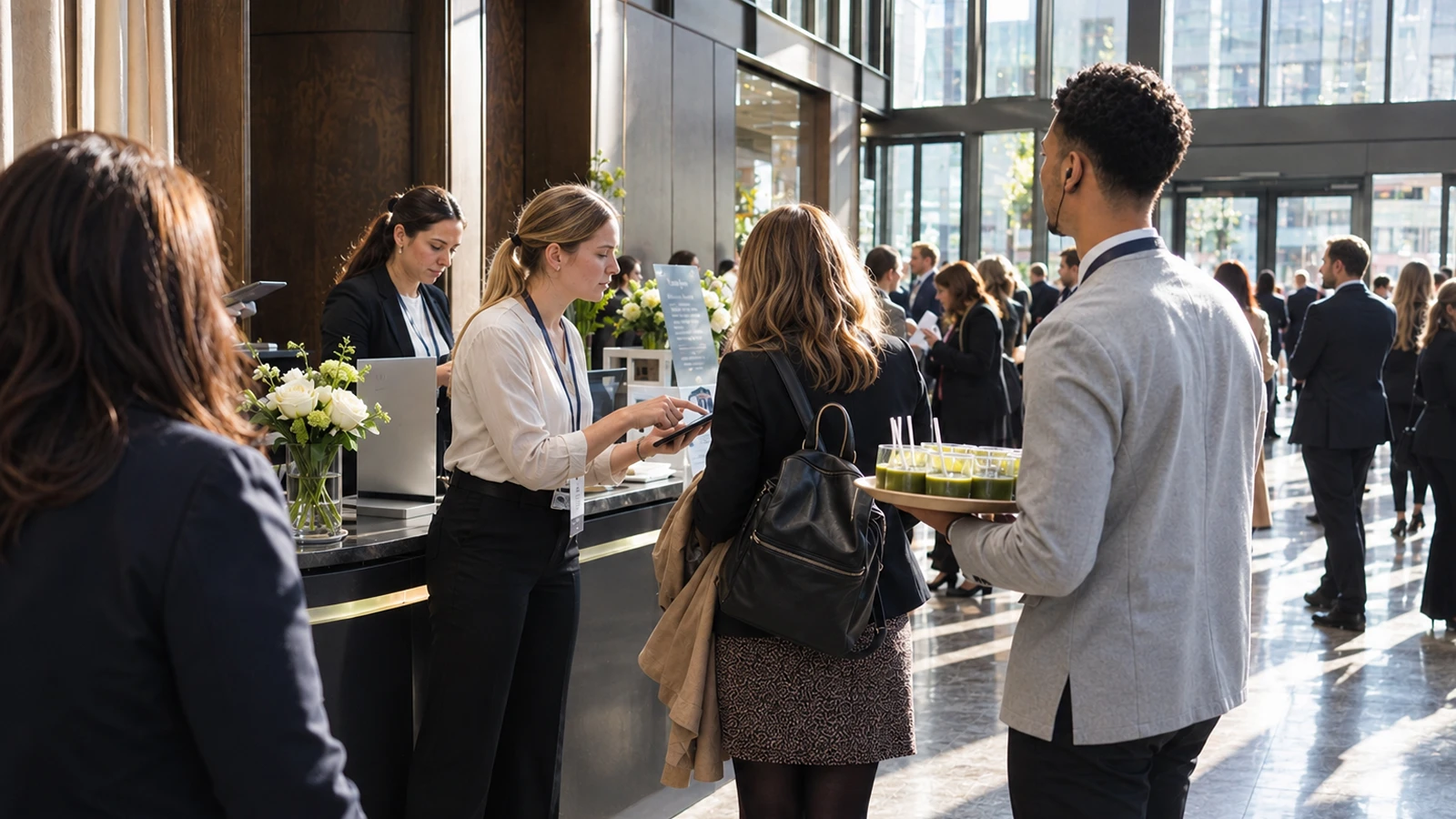

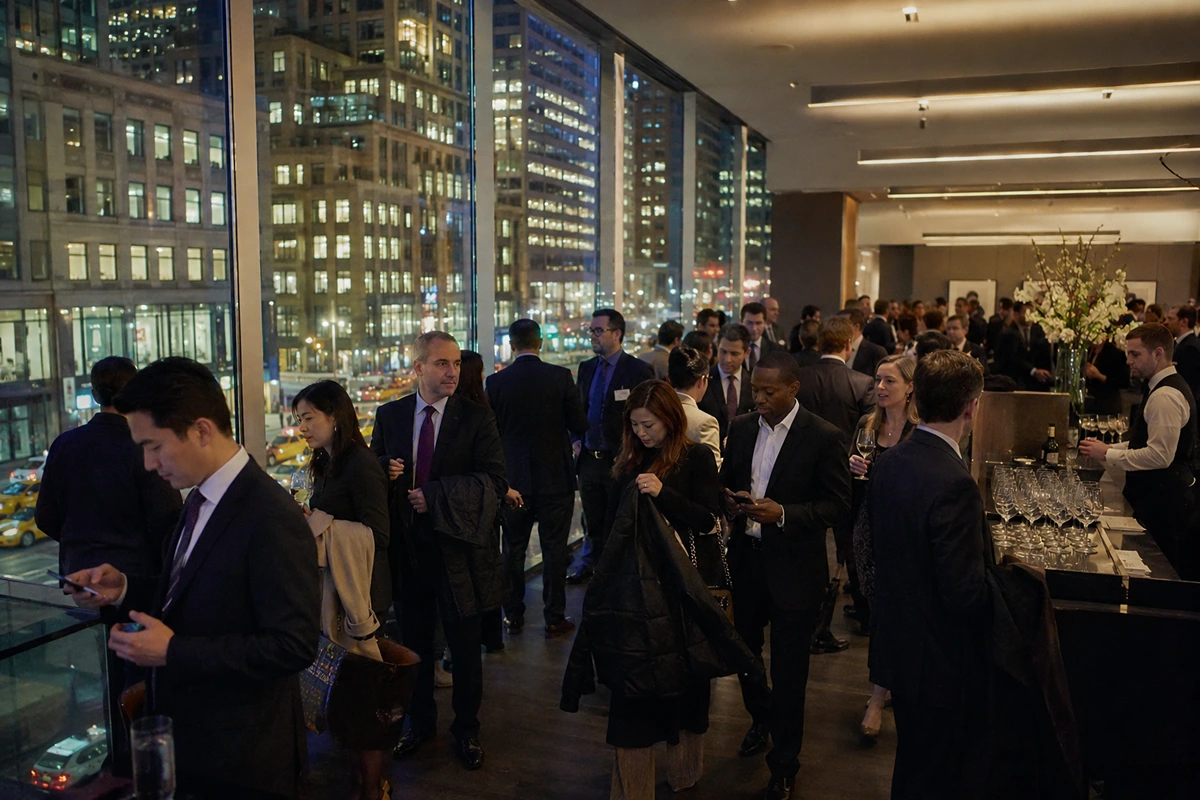
Crowd flow management inside a packed Midtown room often comes down to how well waitstaff can move. A reception may begin with open paths, clean highboys, organized food service, and a room layout that looks easy to serve. Twenty minutes later, guests have formed conversation circles near the entry, elevator bank, buffet points, sponsor areas, lounge seating, and the most visible corners of the room.
That shift changes the entire service experience. Waitstaff can no longer move trays through the room at the same pace, used glassware starts to collect on surfaces, passed bites reach only the easiest parts of the floor, and guest flow begins to feel tighter than the planner expected. In Midtown, where many events sit inside hotels, office towers, private clubs, rooftops, restaurants, and corporate reception spaces, trained waitstaff are often what keep a crowded room feeling polished.
CEO Excerpt
“Great waitstaff understand the room before they move through it. In a dense Midtown reception, service quality depends on timing, awareness, and the ability to keep hospitality visible without interrupting the guest experience.” - Daniel Meursing, CEO, Eventstaff
Where Midtown Rooms Lose Their Service Lanes
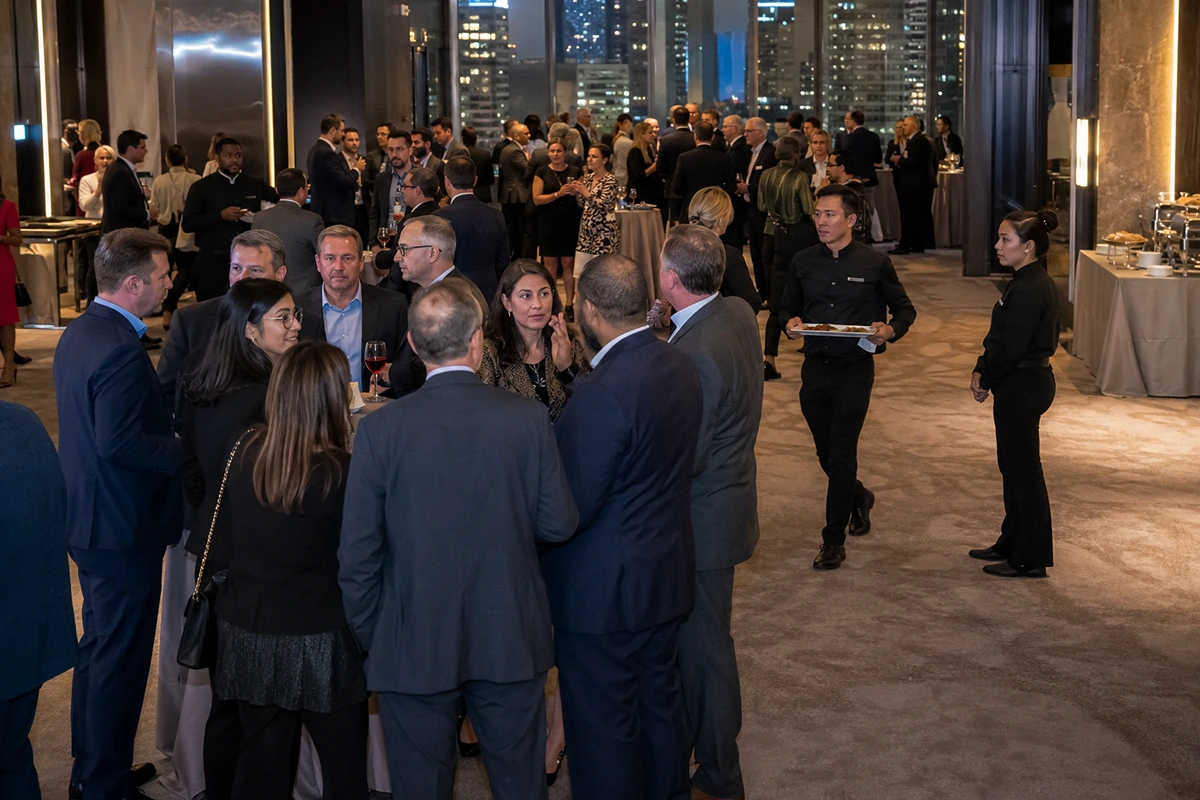
Midtown receptions rarely fill in a slow, even pattern. Guests may arrive after a board meeting ends, after elevators release a large group from an upper-floor office, after a conference session breaks nearby, or after commuters come in from Grand Central, Penn Station, Times Square hotels, and surrounding office corridors. The room can move from half-full to tight very quickly, especially when the first arrivals claim the easiest standing areas.
Once guests settle, the service lanes waitstaff need can disappear. Highboys become conversation anchors. Lounge seating creates soft edges that people stand around. Buffet points and passed food stations draw short bursts of movement. Sponsor displays, step-and-repeat areas, and window views can pull guests into corners that were meant to stay open enough for service.
For waitstaff, that creates a practical challenge. A tray route that worked during setup may no longer work once guests are holding drinks, turning toward conversations, checking phones, greeting colleagues, and stopping in narrow paths. The team has to adjust without making the room feel crowded, rushed, or over-managed.
This is where service discipline matters. Waitstaff need to know when to take a wider path, when to pause, when to approach a cluster from the side, and when to clear a surface before it becomes a visual problem. In a packed Midtown room, those small decisions shape how easily guests receive food, find space, and stay comfortable.
Why Crowd Flow Management Depends on Waitstaff Movement
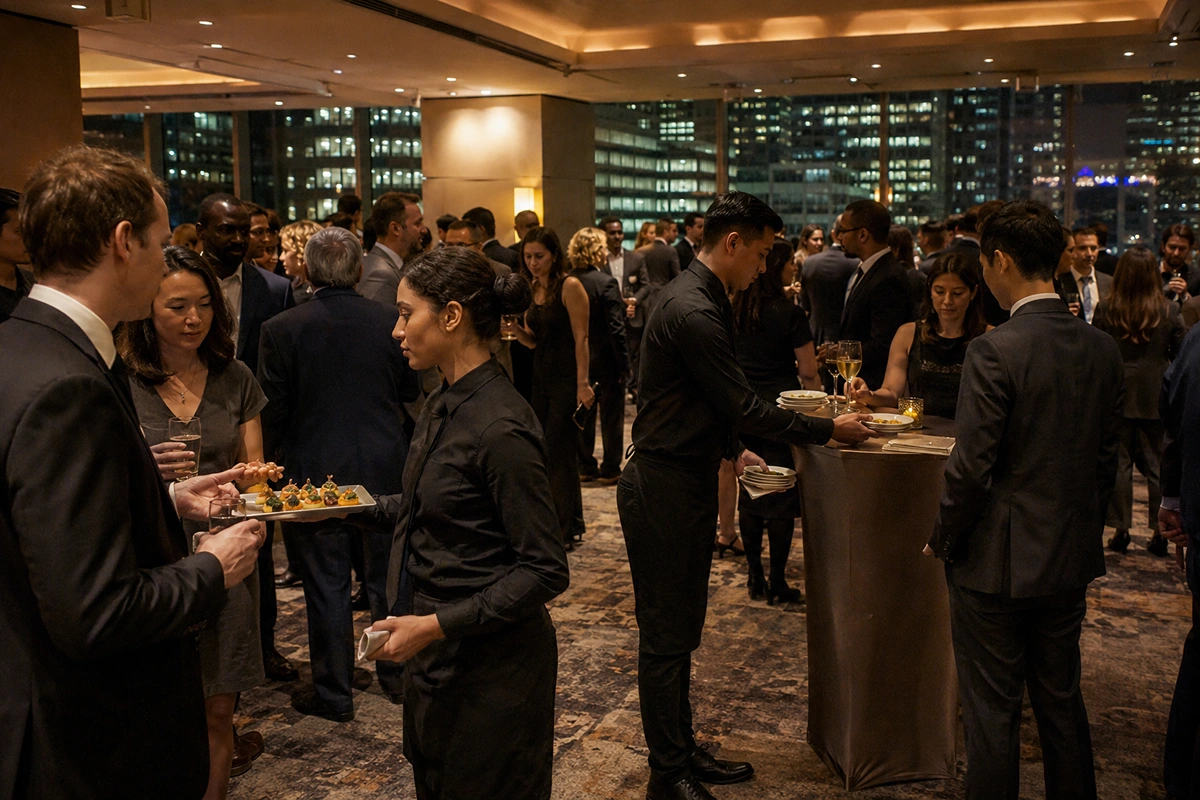
Crowd flow management at a reception is shaped by how service moves through the room. Waitstaff influence the experience through tray direction, clearing rhythm, surface control, station support, and the way they read guest behavior in real time.
Passed service is one of the clearest examples. If waitstaff keep returning to the same open area, the most accessible guests receive repeated service while tighter pockets of the room get missed. If staff try to force trays through the densest clusters, they can interrupt conversations and make the room feel cramped. The best approach is controlled circulation, where waitstaff keep food visible across the room while adjusting routes as guest clusters change.
Clearing is just as important. Used plates, napkins, skewers, glassware, and empty cups can quickly make a reception feel neglected, especially in rooms with limited highboys or shared surfaces. When waitstaff clear early and consistently, guests have more usable space, event photos look cleaner, and food service feels more attentive.
Midtown venues often have little room for visible service friction. A private event near Bryant Park, a hotel reception near Times Square, or a corporate gathering close to Grand Central may include clients, executives, partners, sponsors, or out-of-town guests. When service movement feels smooth, the room feels more intentional. When waitstaff struggle to move, the event can feel tighter than the guest count alone would suggest.
How Guest Flow Changes When Food, Networking, and Seating Compete for Space
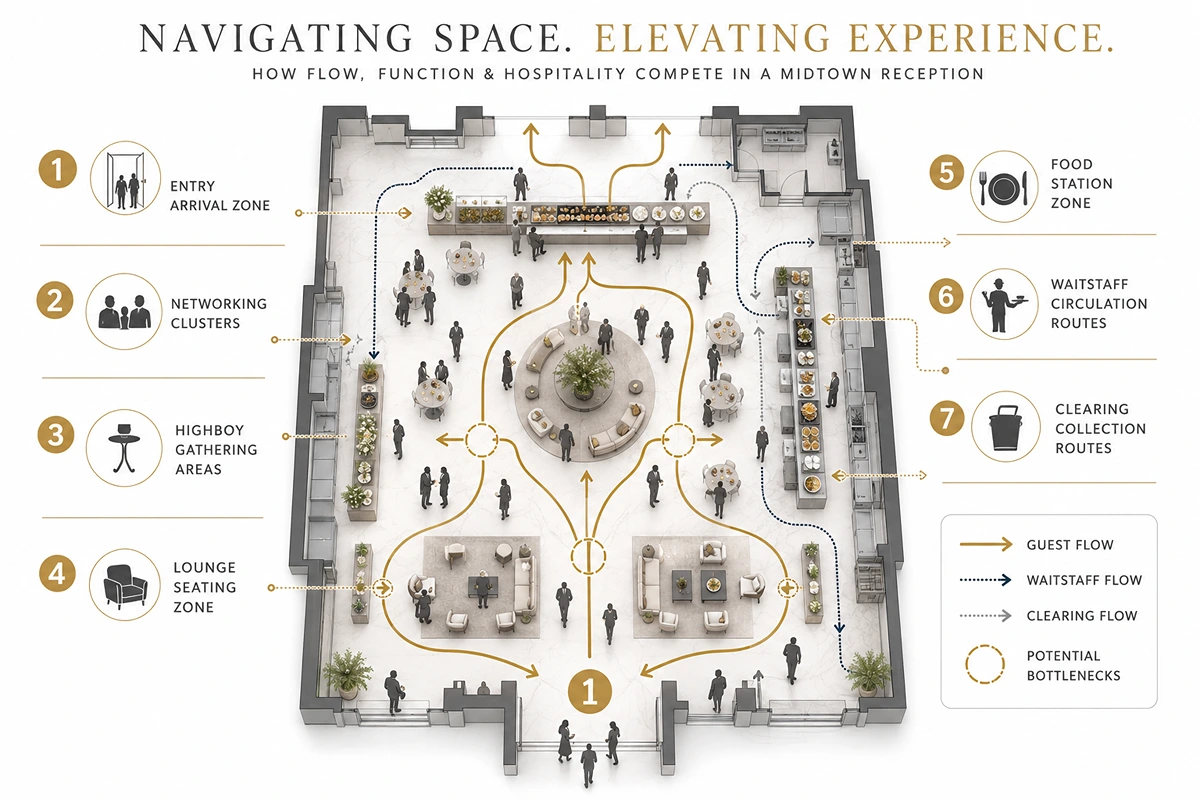
Guest flow inside a Midtown reception changes as soon as people choose where to stand. In a networking-heavy room, guests rarely spread themselves in a way that helps service. They gather around familiar faces, visible decision-makers, open food areas, comfortable corners, and any surface that gives them a place to set down a drink or small plate.
That pattern affects waitstaff directly. A group standing between a buffet station and the kitchen path can slow replenishment. A conversation circle near the entry can make arriving guests stop too soon, which compresses the room near the door. A cluster around lounge seating can leave trays with no clean approach. None of these issues look dramatic at first, but they build into a room that becomes harder to serve.
Food service also affects how people move. If passed items only appear near the front of the room, guests may stay there longer. If used plates are not cleared quickly, guests may avoid certain surfaces. If a food station feels crowded, people may wait in awkward positions that cut across service routes. Waitstaff help soften those pressure points by moving food and clearing items in a way that encourages better room use.
The bar can be one part of the pattern, but it should never be the whole story for waitstaff. In many Midtown receptions, the larger issue is how all hospitality touchpoints compete for the same square footage. Passed food, clearing, seating, sponsor areas, registration remnants, elevator arrivals, and guest conversations all affect movement. Waitstaff protect guest flow by managing the service layer that runs through all of it.
Why Midtown Makes Reception Service Harder to Keep Smooth
Midtown adds pressure because movement starts before guests enter the room. New York City treats pedestrian comfort and sidewalk movement as core mobility issues, and the NYC DOT Pedestrian Mobility Plan gives that outside environment a useful frame. Guests arrive from crowded sidewalks, subway exits, office lobbies, rideshares, commuter rail, hotels, and nearby meetings before they ever step into the reception.
That outside pace often carries inside. People arrive with a Midtown rhythm: fast, focused, and already moving from one commitment to another. A guest coming from a Fifth Avenue office, a Grand Central meeting, a Times Square hotel, or a conference session may enter the room with little patience for confusion. If food service is hard to find or clearing feels slow, the event can feel less organized than the planner intended.
The Grand Central Business Improvement District covers roughly 70 square blocks in the heart of Midtown Manhattan, with landmarks, restaurants, retail, and major commercial activity woven through the area. That density matters for receptions because Midtown events often pull mixed guest groups from multiple nearby settings, including offices, hotels, restaurants, private venues, and transportation hubs.
Venue style adds another layer. Midtown receptions may happen in rooftop spaces, hotel event rooms, executive floors, private dining areas, galleries, or multi-use lounges. ART Midtown, for example, presents a rooftop private event environment in the heart of Manhattan, which reflects the kind of vertical, destination-style venue planners often use in this part of the city. Spaces like these can be impressive, but waitstaff still have to manage service paths once views, seating, food, and guest clusters compete for attention.
How Eventstaff Waitstaff Keep Service Moving Across the Room
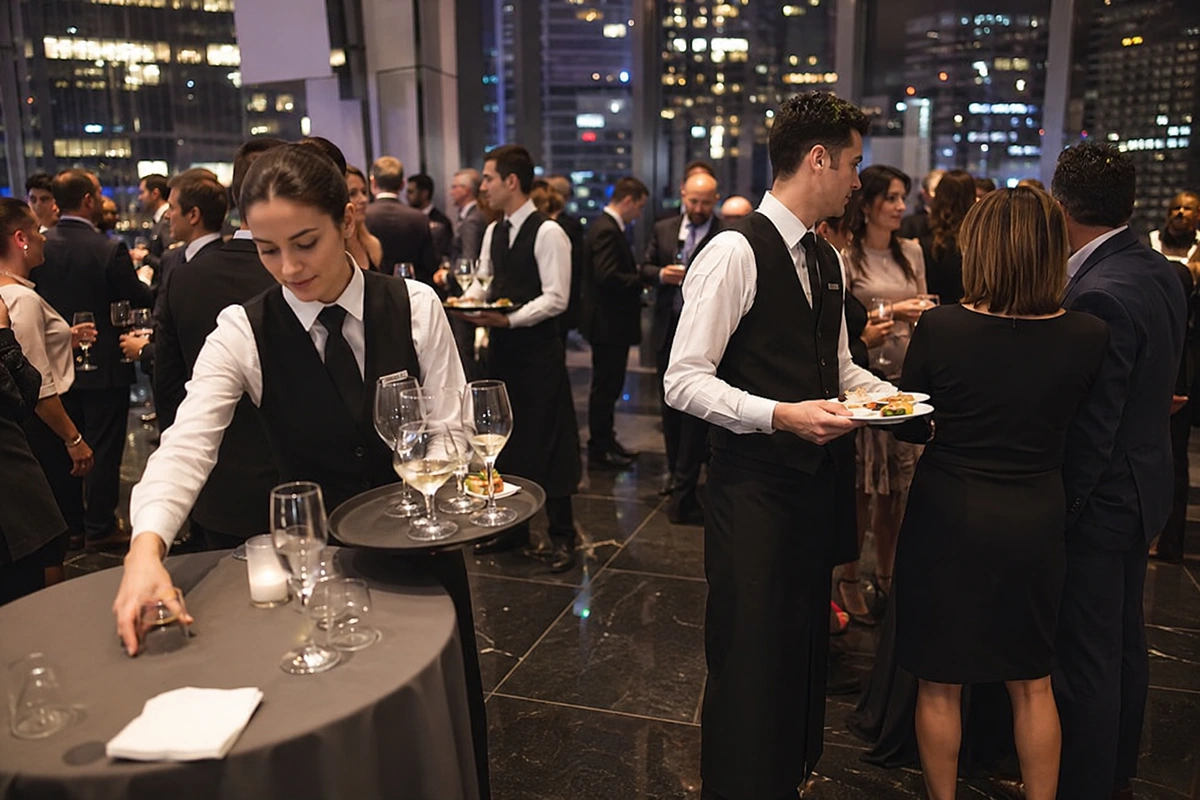
At Eventstaff, we provide waitstaff who understand that polished service depends on movement as much as presentation. Our waitstaff are trained to read a room, adjust service routes, support food circulation, clear surfaces early, and keep guests comfortable without making the event feel heavily managed.
For Midtown receptions, our team focuses on how service actually moves once the room fills. That includes identifying tray-passing routes, noticing where guests are clustering, keeping passed items visible across the full room, and helping prevent one section from receiving all the attention while another section waits. When a room gets tight, our waitstaff know how to change direction without disrupting conversations.
Clearing is handled with the same attention. Our waitstaff remove used plates, napkins, glassware, and service items before they make highboys, lounge tables, and shared surfaces look cluttered. That protects the guest experience because people have cleaner places to pause, talk, and set down items without feeling like the room is falling behind.
We also coordinate with captains, kitchen teams, venue contacts, and event leads so service decisions match the timing of the event. If a reception has remarks, a sponsor moment, a buffet opening, or a shift from passed bites to dessert, waitstaff need to understand what is coming next. That awareness keeps service from feeling reactive.
The goal is simple: keep hospitality moving while the room stays comfortable. In a packed Midtown environment, waitstaff help protect guest flow by making service feel present, calm, and available across the room.
Bottom Line
Crowd flow management in a packed Midtown room depends heavily on waitstaff movement. When guests cluster around food, seating, entry points, highboys, and conversation areas, the event can lose service lanes long before anyone notices a major problem. That affects passed food, clearing, guest flow, and the overall polish of the reception.
Eventstaff provides trained waitstaff who help keep Midtown receptions moving with stronger service routes, cleaner surfaces, better food circulation, and guest-aware movement. When the room is tight and the guest experience depends on smooth hospitality, the right waitstaff can make the event feel controlled without making guests feel managed.
Ready to elevate your next event?
Join thousands of event planners who trust EventStaff.com for reliable, professional staffing solutions.
Trusted by event professionals nationwide
1k+
Events Staffed
2 million+
Guests Served
97%
Positive reviews