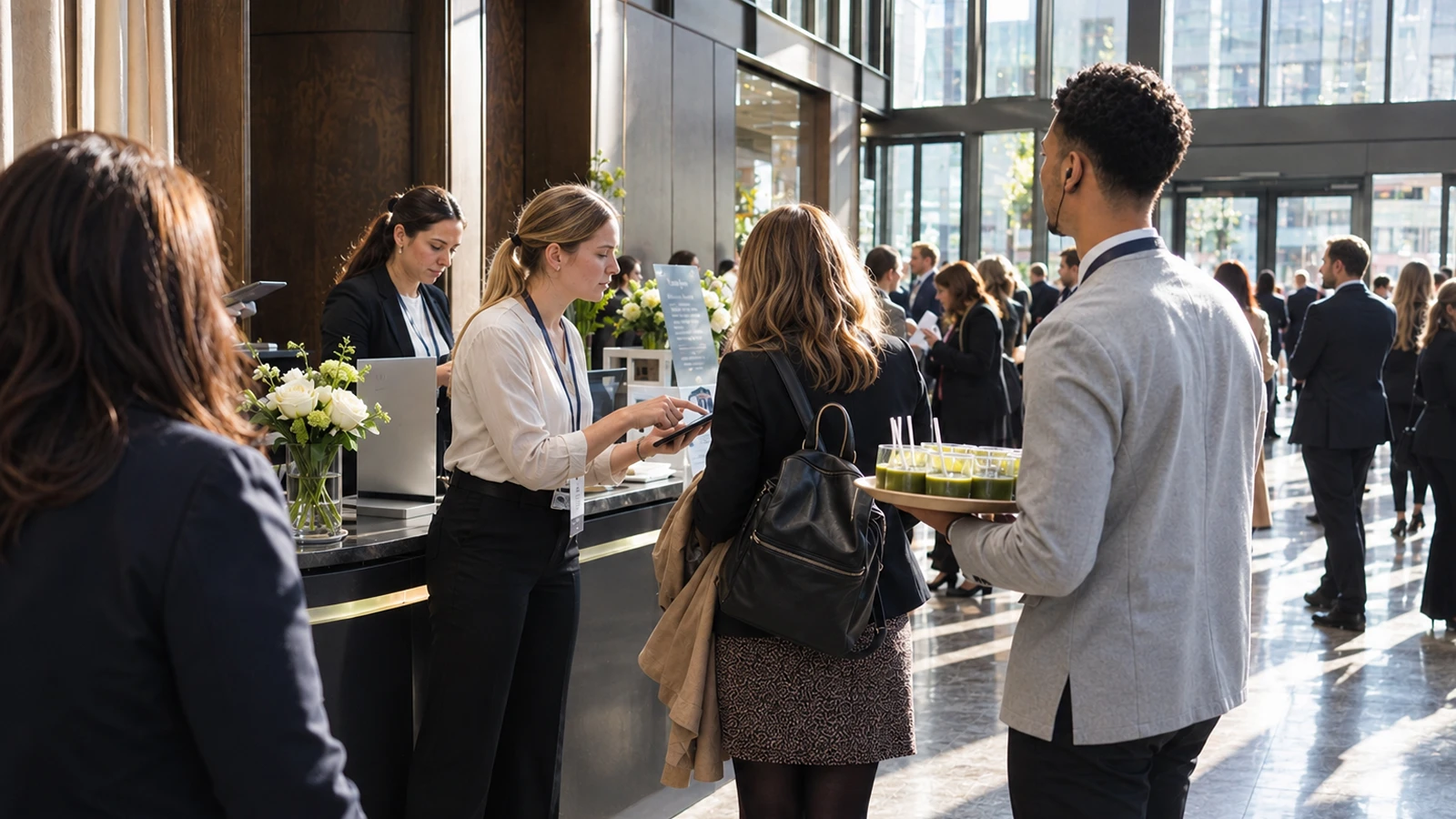

Service flow in a tight Manhattan event room can fall behind before the room looks messy to the guest. A few used plates sit too long on a highboy, empty glasses gather near a food station, napkins get left beside a lounge area, and the clean surfaces guests expected start disappearing. Once that happens, bussing has already become part of the guest experience.
For event servers & bussers, the work is bigger than removing used items. In Manhattan rooms where square footage is limited, clearing speed affects how guests move, where they stand, whether stations stay approachable, and how polished the room feels. A compact reception, dinner, or corporate event can lose comfort quickly when bussing routes, return paths, and reset timing are not protected from the start.
CEO Excerpt
“Bussing is one of the quietest parts of service, but guests feel it when it falls behind. The best teams keep the room reset in real time so hospitality stays polished, comfortable, and easy to experience.”- Daniel Meursing, CEO, Eventstaff
Where Tight Manhattan Rooms Make Bussing Visible
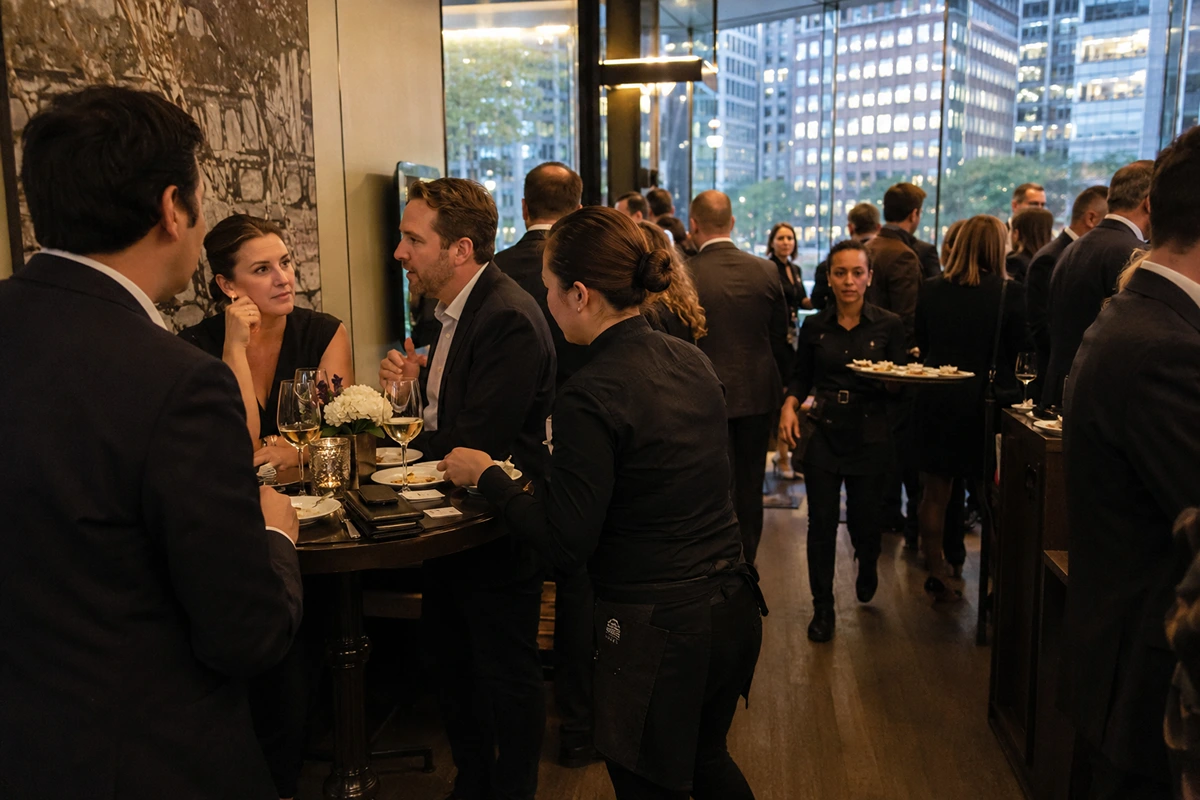
Manhattan event rooms often ask a lot from a small footprint. A private dining room may need to hold arrival drinks, passed bites, seated conversation, and a dessert station. A gallery reception may need to keep sightlines open while guests use every available ledge and surface. A rooftop lounge may have views, seating, food service, and sponsor moments all competing for the same usable space.
In larger venues, slow bussing can hide for a little while. In a tight room, it becomes visible almost immediately because every surface has a job. A highboy might support drinks during networking, small plates during passed service, and guest belongings during a speech. When used items remain there too long, that highboy stops helping the room function.
The same issue shows up around food stations. Guests may leave small plates near the station because they do not see a clear place to put them. Other guests then hesitate to approach, or they reach awkwardly around clutter. Event servers trying to replenish or guide service have less space to work, and bussers have to clear without making the area feel busy or intrusive.
That is why bussing in Manhattan has to be proactive. Waiting until surfaces look crowded means the room has already started to feel crowded. Event servers & bussers need to keep resetting the room while guests are still using it, not after the event has visibly fallen behind.
Why Service Flow Depends on Faster Clearing
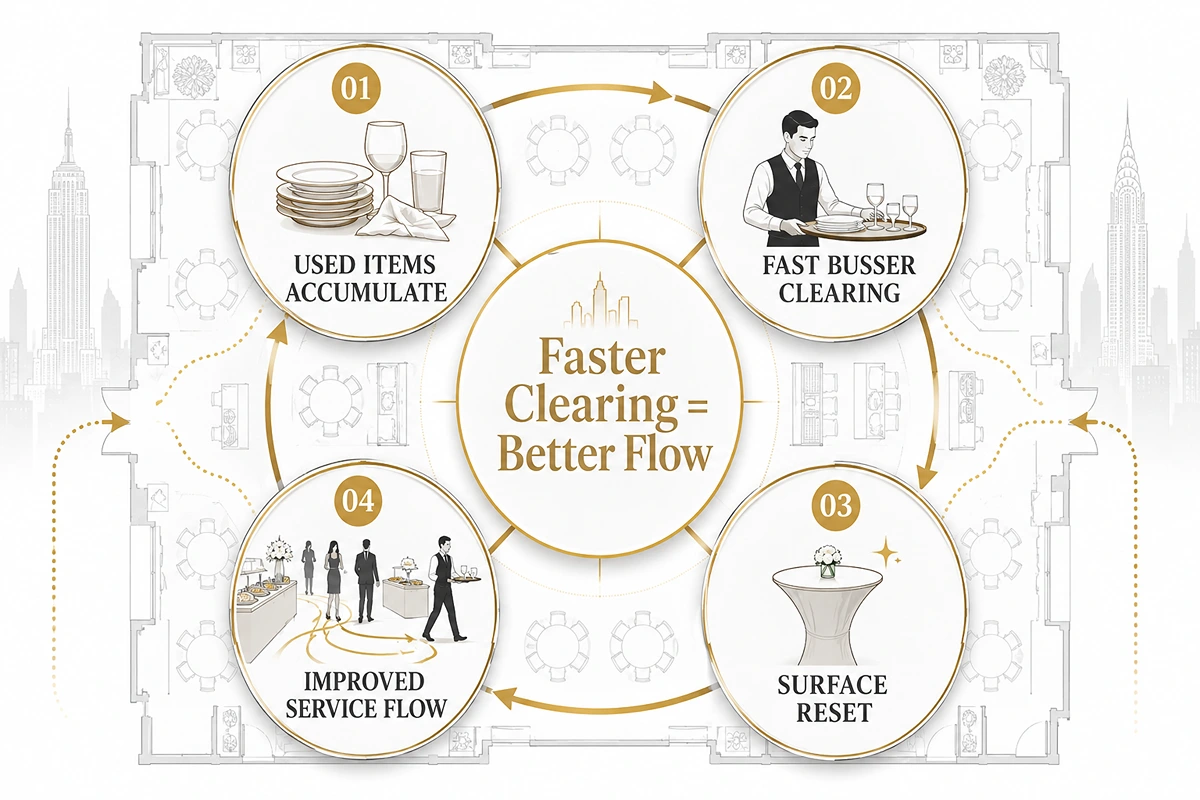
Service flow is shaped by how quickly used items leave the guest-facing space. Plates, glasses, napkins, skewers, tasting cups, serving pieces, and station waste all create friction when they stay in circulation too long. They reduce usable surface area, slow staff movement, and make guests more aware of the room’s limits.
Faster clearing helps the entire service team. Event servers can move with cleaner trays and fewer obstacles. Bussers can return items before back-of-house areas become overloaded. Captains can make timing decisions with a clearer view of what the room needs next. Guests can keep using highboys, station areas, and shared surfaces without feeling like they are working around the event.
In tight Manhattan rooms, the return path matters as much as the clearing itself. A busser may need to move from a crowded reception space to a service corridor, elevator-adjacent back area, dish return point, or kitchen access path that is narrow or shared. If those returns are delayed, used items start collecting at the front of house because there is nowhere easy for them to go.
Strong service flow depends on rhythm. Bussers clear early, return quickly, reset key surfaces, and come back into the room before clutter becomes the guest’s problem. Event servers support that rhythm by noticing where items are collecting, communicating with bussers, and keeping stations from becoming static piles of used serviceware.
How Event Hospitality Changes When Surfaces Stay Cluttered
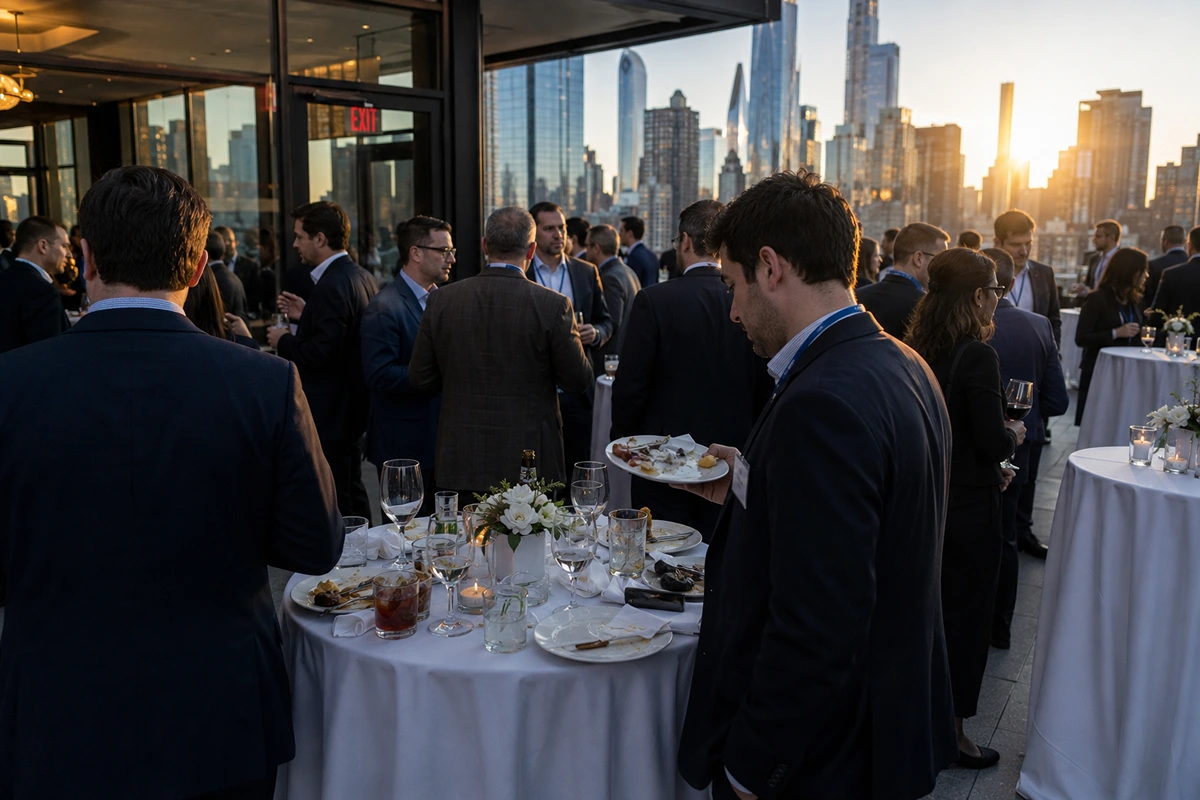
Event hospitality is often judged through details guests do not stop to name. They may not say the bussing was slow, but they notice when a table is too crowded for their drink, when a food station looks used, or when they have to hold a plate longer than they want. Those moments change how comfortable the room feels.
Clutter also changes guest behavior. People avoid highboys that look full, place used plates on windowsills or side ledges, and crowd around the few clean surfaces left in the room. They may stay too close to food stations because they do not see a natural place to move next. The room then feels tighter, even if the guest count is technically manageable.
That reaction matters in Manhattan because many events are built around perception. A corporate reception near Grand Central, a private dinner near Bryant Park, a gallery event downtown, or a client gathering in a Midtown hotel room may involve guests who are used to high service standards. When surfaces stay clean and stations reset smoothly, event hospitality feels intentional. When bussing falls behind, the event can feel less premium without any single dramatic failure.
The strongest event servers & bussers understand that clearing is guest-facing work. They remove items at the right moment, avoid interrupting conversations, and reset surfaces so guests feel looked after rather than monitored. That balance is especially important in compact rooms where staff presence is always close to the guest.
Why Manhattan Leaves Less Room for Service Delays
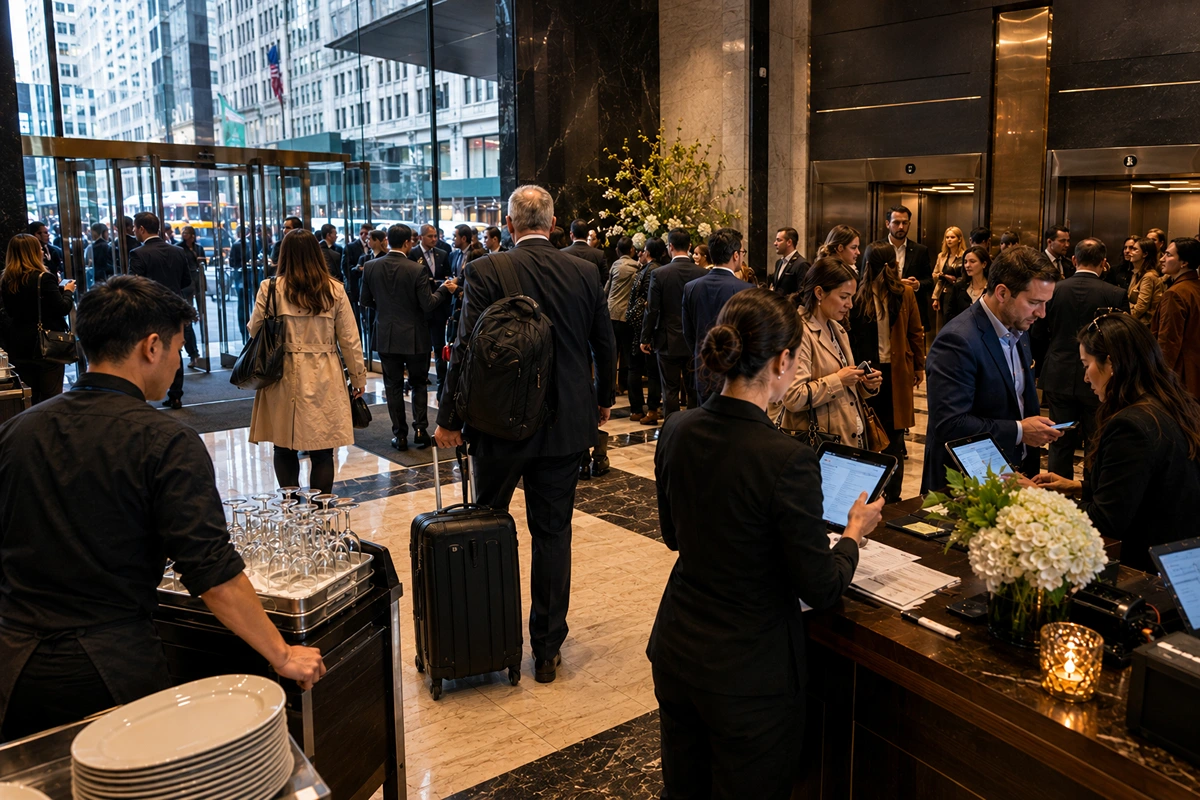
Manhattan movement does not begin at the event room door. Guests arrive through crowded sidewalks, subway exits, hotel lobbies, rideshare drop-offs, office elevators, and building security desks. NYC DOT’s pedestrian mobility planning focuses on comfort and convenience for people moving through city sidewalks and streets, which reflects the wider movement environment surrounding Manhattan venues.
That pace follows guests inside. A reception in Midtown may fill after a workday ends, a meeting breaks, or a conference group arrives from a nearby venue. The Grand Central Business Improvement District spans roughly 70 square blocks in Midtown Manhattan, from 35th to 54th Streets and Second to Fifth Avenues, with 76 million square feet of commercial, residential, and retail building space. In that kind of setting, guest arrivals often come in compressed waves.
Venue style also affects bussing pressure. Manhattan Center’s private event spaces are positioned for corporate events, galas, media events, association events, and social gatherings with flexible layouts. Flexible rooms are useful for planners, but each layout changes where plates collect, how servers move, and where bussers can return used items without crossing the room awkwardly.
The local challenge is not only density. It is the combination of density, vertical movement, limited service storage, fast guest arrivals, and premium expectations. When a room is compact and the guest list is important, bussing delays become visible through surfaces, stations, and guest behavior. Manhattan gives teams less time to recover once service flow starts slipping.
How Eventstaff Event Servers & Bussers Keep the Room Reset
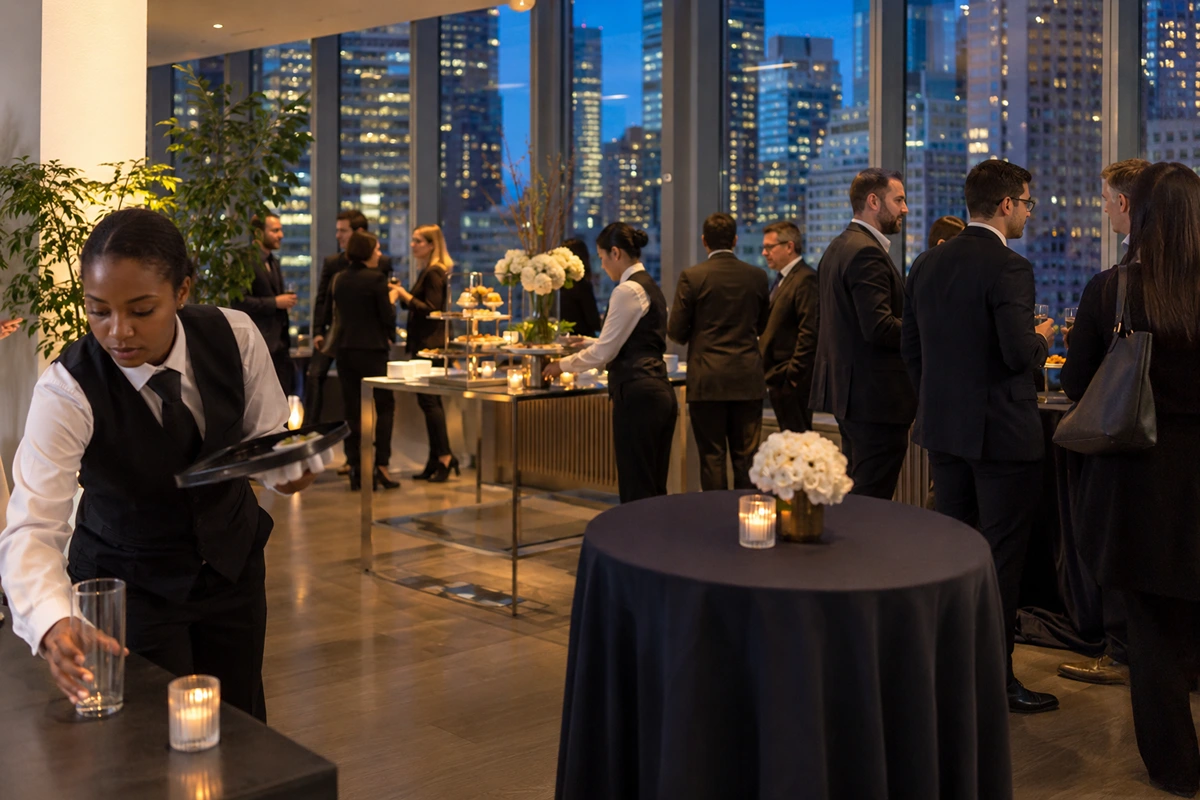
At Eventstaff, we provide event servers & bussers who understand that clearing is part of the event experience. Our teams help keep tight Manhattan rooms functional by removing used items early, resetting surfaces, supporting station areas, and keeping the path between front-of-house and back-of-house moving.
Our event servers & bussers do not wait for the room to look cluttered before acting. They watch where guests are placing plates, which highboys are getting heavy use, where station traffic is slowing, and how return paths are holding up. That lets the team respond before clutter changes how guests move through the room.
We also focus on coordination. Bussers need to know where used items should go, how quickly dish return areas can receive them, and when the event will shift from one service moment to another. Event servers need to understand when to support clearing, when to protect a station, and when to communicate a reset need to the captain or lead.
For Manhattan events, that coordination is especially important because the room may have limited back-of-house space. A busser may be working around a service elevator, a narrow corridor, a shared kitchen access point, or a temporary staging area. Our team plans around those constraints so guest-facing spaces stay cleaner and service feels steadier.
The result is simple but important. Guests have cleaner surfaces, servers have better movement, stations stay more approachable, and the room holds its polish longer. In a tight Manhattan setting, that is the difference between an event that feels compressed and an event that feels well-run.
Bottom Line
Service flow breaks down in tight Manhattan rooms when bussing falls behind because the room has no extra space to absorb clutter. Used plates, glassware, napkins, and station items do more than look untidy. They reduce usable surfaces, slow staff movement, affect guest flow, and weaken the standard of event hospitality.
Eventstaff provides trained event servers & bussers who keep compact rooms reset through faster clearing, cleaner return paths, station support, and guest-aware timing. When a Manhattan event depends on polished service in a room with limited space, dedicated bussing support helps protect the experience before clutter becomes visible.
Ready to elevate your next event?
Join thousands of event planners who trust EventStaff.com for reliable, professional staffing solutions.
Trusted by event professionals nationwide
1k+
Events Staffed
2 million+
Guests Served
97%
Positive reviews