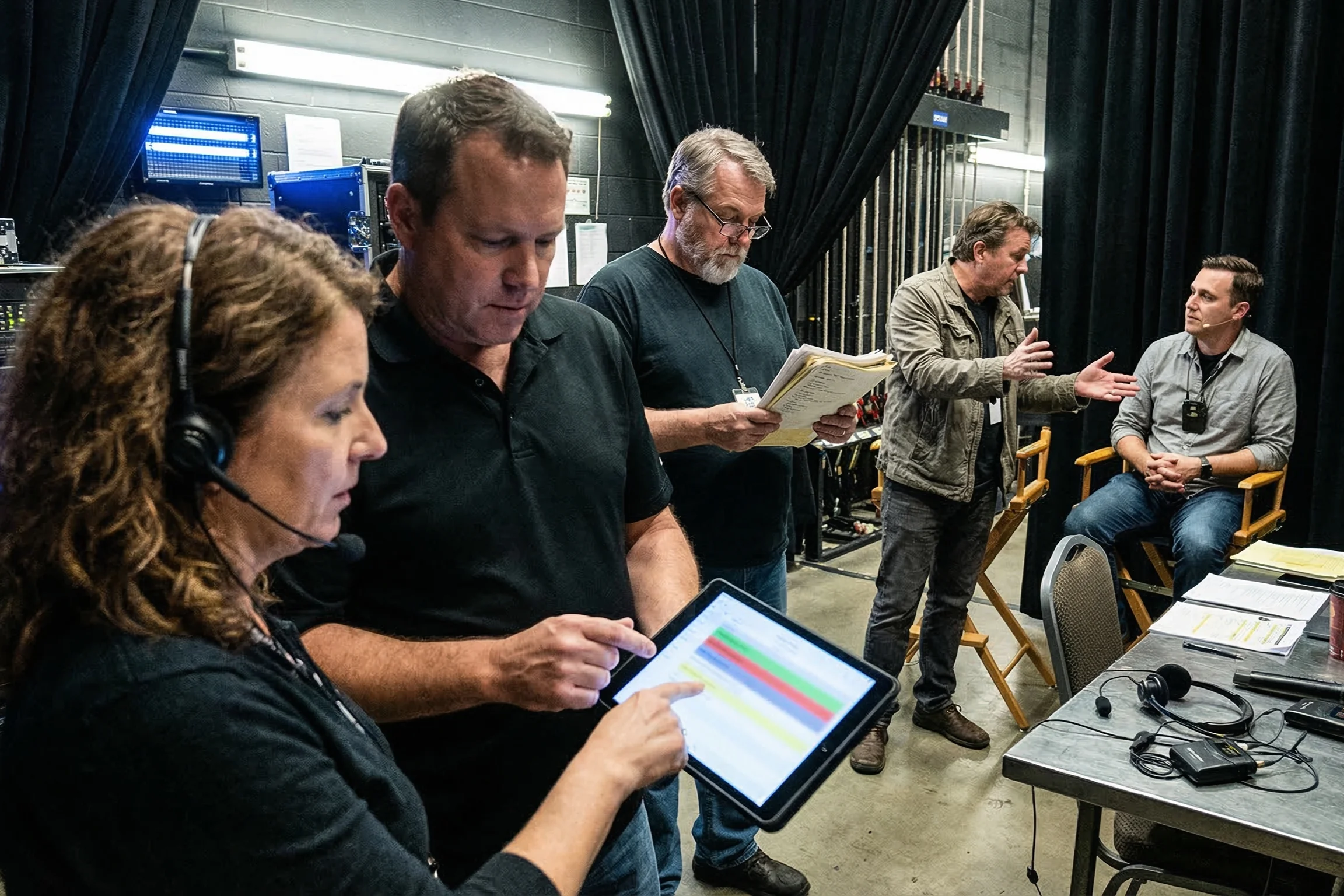

At Metropolitan Pavilion, line management starts before the first badge is printed. A trade show can still be technically on schedule while the registration area is already absorbing early buyers, exhibitors, sponsors, press, speakers, and VIP arrivals in the same narrow window.
That is where the badge desk starts losing time. The desk may have the right scanners, laptops, lists, and signage, but if every attendee reaches the same point with a different question, the opening hour begins with avoidable friction. For Check-In Staff, the real work starts before the attendee reaches registration.
CEO Excerpt
“Strong check-in support is about protecting the first hour of the event. When guests arrive with different needs, the staffing plan has to sort those needs before they reach the desk. That is how organizers create a smoother opening and give every attendee confidence from the first interaction.” - Daniel Meursing, CEO, Eventstaff

Why the Badge Desk Can Back Up Before Metropolitan Pavilion Opens
Metropolitan Pavilion is a well-known Chelsea venue for trade shows, product launches, expos, fashion events, tech events, brand activations, luxury showcases, meetings, and corporate gatherings, which makes it flexible for planners but demanding during arrival windows. The venue’s official event profile highlights that range of uses, from trade shows and expos to product launches and luxury showcases.
That flexibility creates different arrival behaviors. Buyers may show up early to walk the floor before scheduled meetings, while exhibitors may still be solving team credential questions. Press and sponsors may need a more specific point of contact, and VIP guests may expect a faster handoff than the general attendee lane can provide.
The backup often begins when those categories are treated as one audience. A QR-ready buyer, a speaker with a changed arrival time, a sponsor guest with a name issue, and an exhibitor who needs a replacement badge can all reach the same desk within minutes. The desk then becomes a decision point instead of a processing point.
At a Chelsea venue, that matters quickly because the registration area does not have the same campus-style buffer as a large convention center. A small delay can become visible near the entrance, elevator path, or lobby flow before the event team realizes the line has changed shape.
Why Line Management Has to Start Before Guests Reach Registration
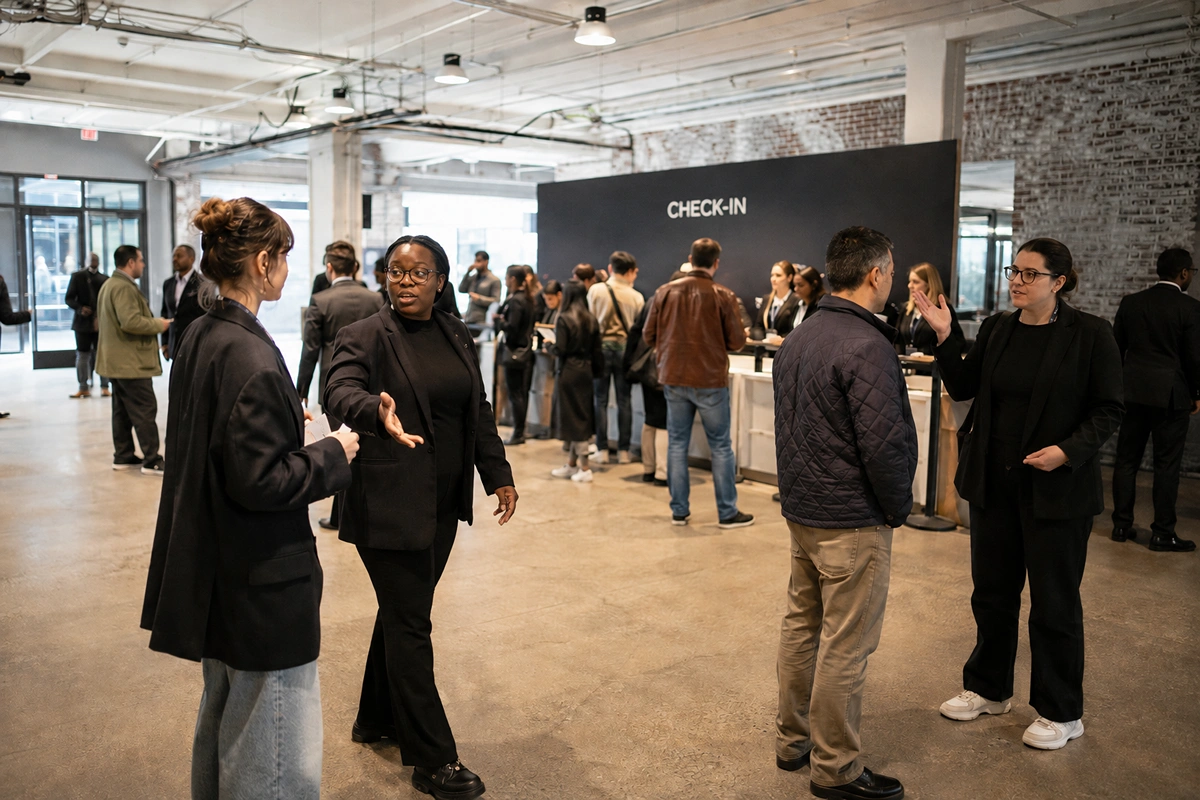
Good line management at Metropolitan Pavilion starts before attendees enter the registration queue. The goal is to resolve common questions and direct guests to the correct path before those issues reach the badge desk.
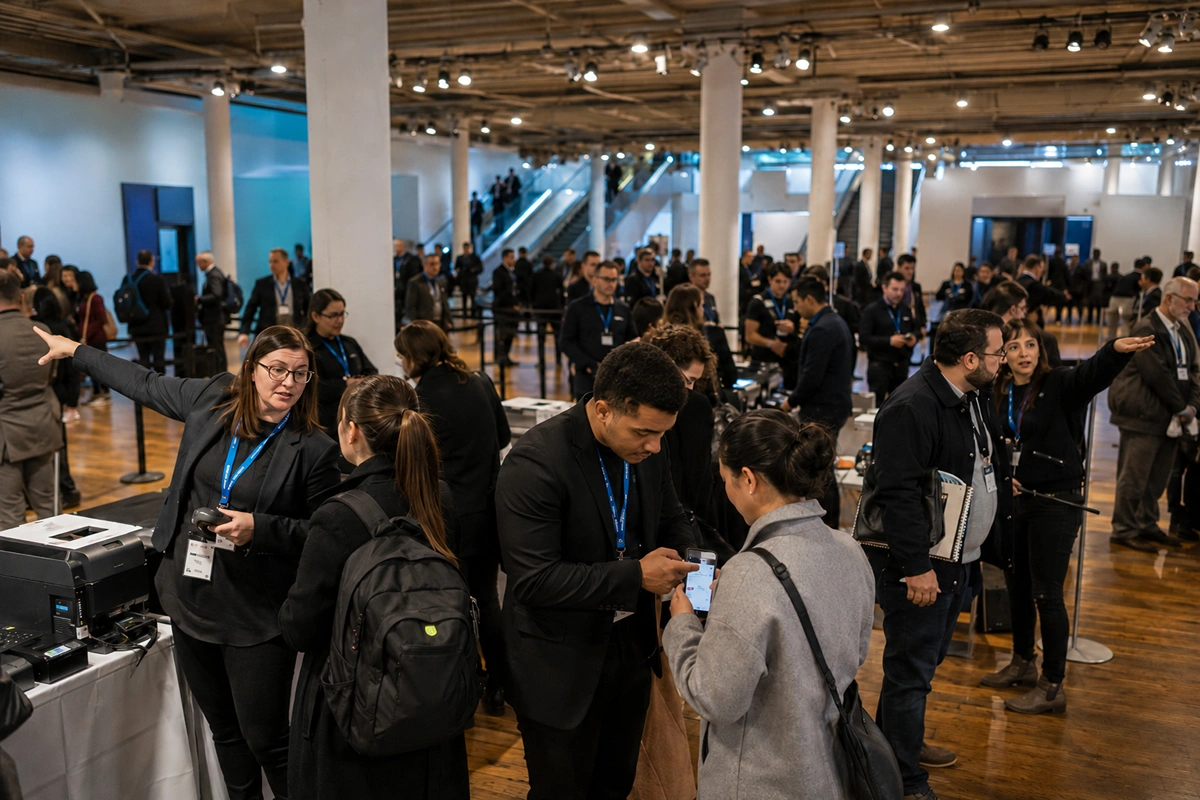
Check-In Staff can identify QR-ready attendees before they reach a scanner. They can direct pre-registered guests to the fastest lane, separate badge reprints from standard pickups, and move people with list issues toward a help point instead of letting them hold the front of the line.
That one adjustment protects the registration team. The people behind laptops should be scanning, confirming, printing, and moving the line forward, while trained staff ahead of the desk handle the arrival decisions that slow down processing.
The most useful staff positions are often slightly before the visible bottleneck. At Metropolitan Pavilion, that may mean placing staff near the entrance, near the first registration split, and near any point where attendees pause to check email confirmations, open QR codes, ask which lane they need, or wait for colleagues.
When line management starts early, the badge desk can stay focused on completed actions. Guests get a clearer next step, exhibitors avoid competing with buyers in the same lane, and the first wave of arrivals does not turn into a visible hold before the floor opens.
Where Trade Show Check-In Slows Down When Attendee Types Mix
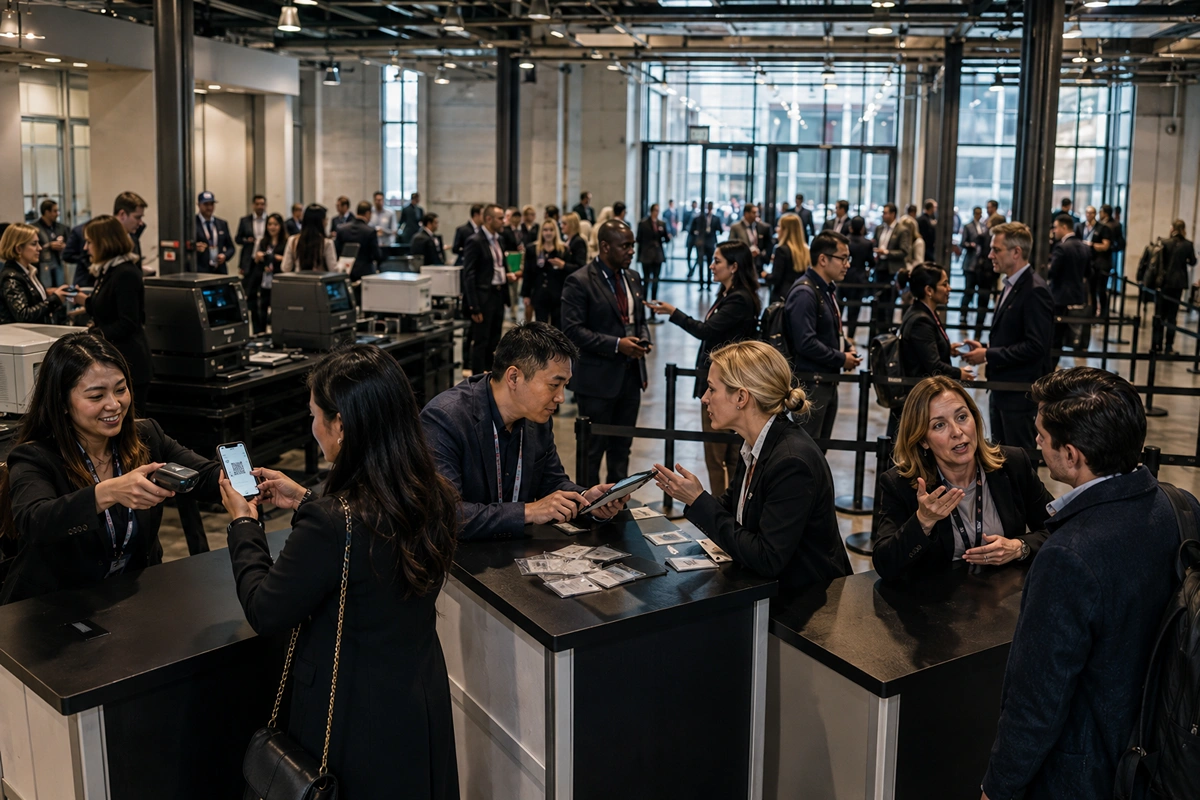
Trade show check-in slows when the desk is asked to process several different attendee journeys through one visible path. The attendee may see one registration area, but the event team knows that buyers, exhibitors, press, sponsors, speakers, and VIPs often need different handling.
A buyer usually wants speed. They may have a meeting on the floor within minutes of opening, so their check-in path should be simple if they are pre-registered and QR-ready. Any delay caused by name changes, exhibitor issues, or help desk questions makes the buyer experience feel less controlled.
Exhibitors bring a different kind of pressure. They may arrive as a group, need team badge confirmation, ask about additional credentials, or coordinate with colleagues still setting up. If those questions are handled in the same place as standard attendee scanning, the main line absorbs every delay.
Press, speakers, sponsors, and VIP guests create another layer. These attendees may need list verification, contact with a show lead, separate credentials, escorted direction, or a handoff that protects the tone of the event. Strong trade show check-in keeps those paths from colliding.
The issue is rarely the badge printer alone. More often, the slowdown comes from unresolved decisions arriving at the printer. Check-In Staff help prevent that by sorting categories early, guiding guests with confidence, and keeping exceptions from becoming the front desk’s full-time problem.
Why Chelsea Makes the Registration Rush Feel Tighter
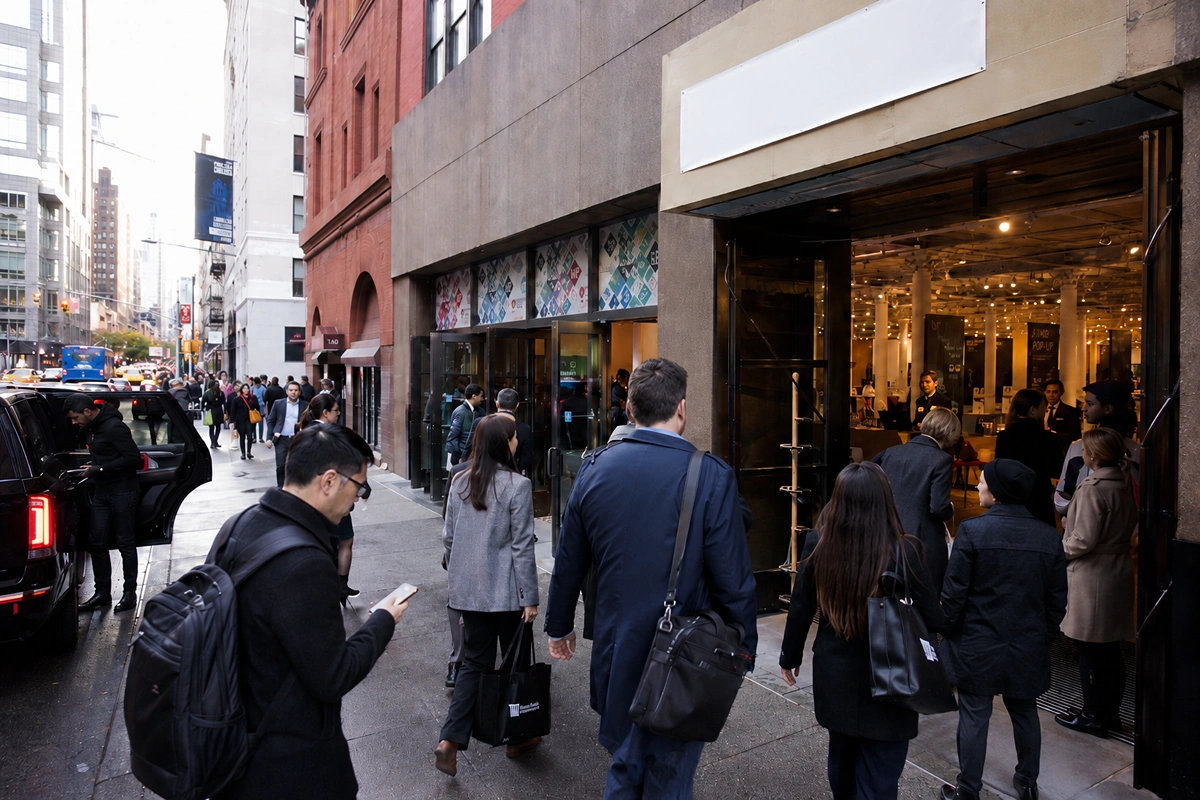
Chelsea adds pressure because event arrivals share space with a dense Manhattan workday. Guests may come from the 1, C, E, F, M, and PATH-connected travel patterns nearby, while others arrive by rideshare, walk from Flatiron or NoMad hotels, or come across town from Midtown meetings.
The MTA reported 1.195 billion subway trips in 2024, with average weekday subway ridership reaching 3.376 million, which reinforces how much Manhattan event movement is still shaped by transit timing. For a venue like Metropolitan Pavilion, even small shifts in train arrival timing can place a large number of attendees near check-in at once.
The nearby Flatiron and NoMad district also matters because it is an active business, retail, cultural, educational, and residential area, with the Flatiron NoMad Partnership describing the district as a center of activity. That means event arrivals are not moving through an empty event campus. They are entering through a working city environment with office traffic, shoppers, local workers, hotel guests, delivery movement, and other pedestrians already using the area.
This is why a Chelsea badge desk backup can feel tighter than the same headcount in a larger venue footprint. The pressure is not only inside the registration lane. It affects how people pause at the entrance, where they check confirmations, how quickly they understand the correct lane, and whether the first few minutes of the event feel organized.
How Eventstaff Check-In Staff Keep the First Hour Moving
At Eventstaff, we support Check-In Staff planning by focusing on the moments before the badge desk becomes overloaded. Our staff are trained to guide attendees into the right path, identify registration exceptions early, and help the event team keep the first hour of the show moving.
For Metropolitan Pavilion, that means placing staff where guests actually make decisions. One staff member may help attendees open QR codes before they reach the scanner, while another separates badge reprints from standard pickup. A third may direct exhibitors, press, speakers, or VIPs toward the correct contact point before they create a delay in the main lane.
Our staff also help protect the registration team from repeated interruptions. When attendees ask where to go, what line they need, whether their guest is listed, or how to handle a missing confirmation, those questions can be handled before they slow the person printing badges.
The result is a cleaner opening experience. Buyers reach the floor faster, exhibitors get routed without holding up standard check-in, and sponsors or VIP guests receive the right handoff without creating confusion at the public desk. That is the real value of line management for a Chelsea trade show: the desk keeps working because the decisions around it are already being managed.
Bottom Line
A Metropolitan Pavilion badge desk can back up before the floor opens because the first arrival wave carries more than simple badge pickup. Buyers, exhibitors, press, speakers, sponsors, and VIPs may all arrive with different expectations, and Chelsea’s active event environment gives the registration team little room for hesitation.
The right Check-In Staff plan keeps line management focused on the actual pressure point: the decisions that happen before the desk. When Eventstaff supports trade show check-in, we help organizers separate attendee types, reduce avoidable delays, and keep the opening hour moving with more control.
Ready to elevate your next event?
Join thousands of event planners who trust EventStaff.com for reliable, professional staffing solutions.
Trusted by event professionals nationwide
1k+
Events Staffed
2 million+
Guests Served
97%
Positive reviews