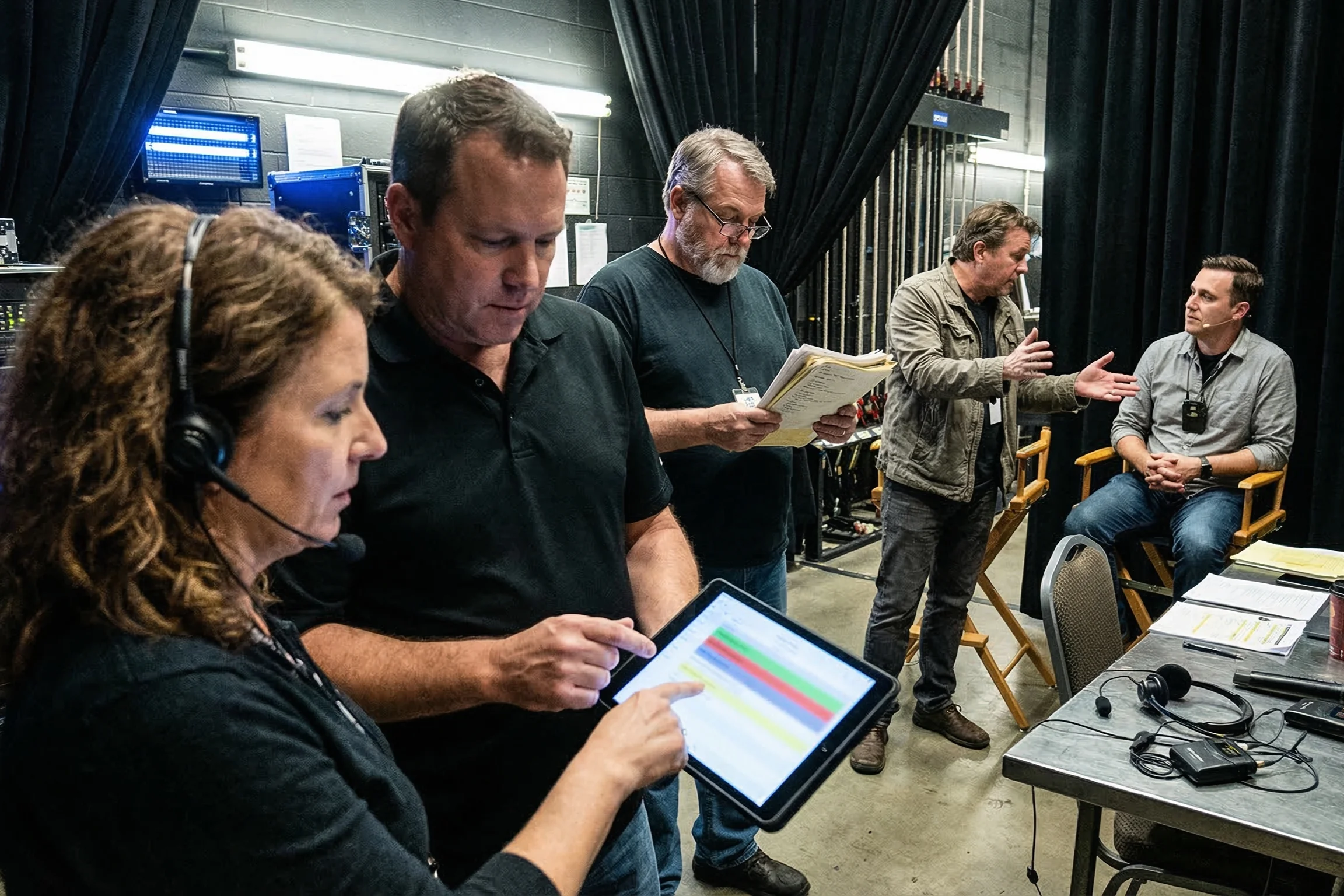

Guest management often succeeds or fails before the guest reaches the event room. In Manhattan, that moment frequently happens inside a lobby where a VIP has entered the correct building but still does not know where to go, who is expecting them, or whether they should approach security, reception, elevators, or an event check-in table.
For high-value guests, that pause matters. A sponsor, investor, executive, speaker, board member, press contact, or private client should feel expected from the first human interaction. When the lobby experience feels unclear, the event starts with hesitation instead of confidence.
CEO Excerpt
“VIP guests read the room before they ever reach the event room. In Manhattan, that first impression often happens in the lobby, where a clear welcome and a confident handoff tell guests the host is prepared. Strong hostess support gives the arrival experience structure without making it feel rigid.”-Daniel Meursing, CEO, Eventstaff
Why Manhattan Lobby Arrivals Can Feel Unclear for VIP Guests
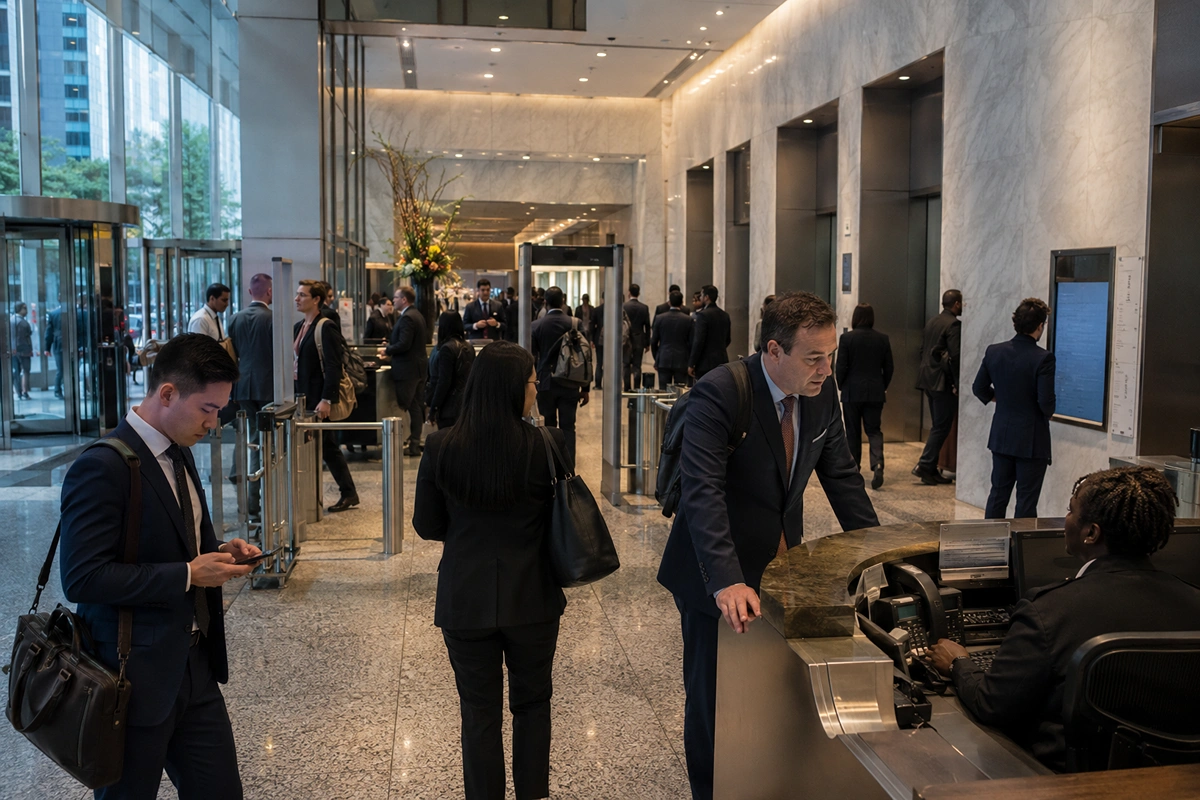
Manhattan venues often sit inside buildings that are already managing their own daily traffic. A private breakfast, product preview, executive reception, panel, or investor event may share the same lobby with office tenants, hotel guests, restaurant visitors, building staff, security teams, and people passing through for unrelated reasons. The guest may be in the right place, but the event’s presence can still feel invisible.
That issue is especially common in Midtown, Midtown East, Rockefeller Center, Bryant Park, Hudson Yards, Park Avenue, and FiDi. These areas use layered arrival systems: street entrance, lobby desk, access control, elevator bank, floor reception, and room entry. If a hostess is only placed near the final event door, the VIP may have already spent several minutes trying to interpret the building.
The Grand Central Business Improvement District covers more than 70 square blocks in the heart of Midtown and includes major landmarks, offices, restaurants, retail stores, and transit-facing movement. That density helps explain why Manhattan lobbies need clearer event-facing direction. Guests are entering active business environments, not isolated event venues.

How Guest Management Protects the First Hosted Moment
Guest management is strongest when the guest feels recognized before they have to explain themselves. For VIP arrivals, the first hosted moment should confirm three things quickly: they are expected, their next step is clear, and someone is responsible for guiding them. A trained hostess helps create that reassurance without making the experience feel heavy or over-managed.
This matters because many VIP guests arrive with limited time and high expectations. They may be coming from another meeting, stepping out of a car at the curb, arriving with an assistant, or moving between nearby buildings. If they have to stop and ask multiple people where to go, the event can feel less prepared than it actually is.
A hostess positioned in the lobby can welcome by name or guest category, confirm the event, direct the guest toward the correct elevator or floor, and coordinate with check-in or event leads. That small amount of front-of-house structure helps internal teams avoid last-minute scrambles. It also gives VIPs a smoother path before the event’s formal experience begins.
Where Visitor Flow Starts to Lose Control
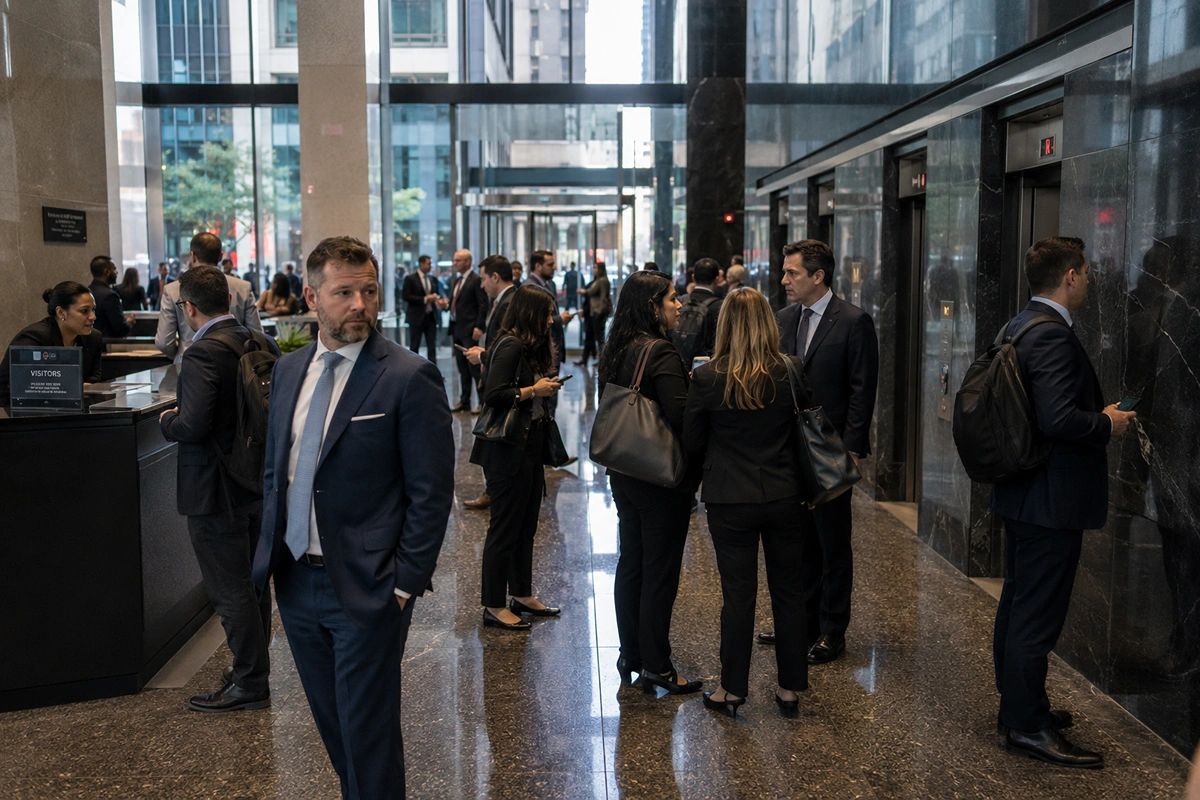
Visitor flow starts to lose control when too many arrival decisions happen in the same space. In a Manhattan lobby, those decisions can include security clearance, badge pickup, elevator access, guest list confirmation, plus-one handling, and directional questions. If no trained person is guiding that sequence, guests begin creating their own route through the building.
The first issue is usually hesitation near the entrance. A VIP may walk in, scan the lobby, look toward security, and wait for someone to signal the next step. That pause can feel minor, but it becomes more visible when several guests arrive within the same short window.
Elevator banks create another pressure point. Manhattan events often take place above street level, and guests may need to know which bank, floor, or access point applies to the event. A hostess placed near the elevator path can prevent confusion from collecting near security or reception.
Visitor flow also suffers when exceptions are handled in the same lane as standard arrivals. A missing name, late speaker, sponsor guest, private client, or assistant with a separate credential can slow the entrance experience for everyone behind them. Hostesses help separate routine direction from higher-touch guest handling so the lobby continues to move.

Why Manhattan Venues Need Lobby-Level Hostess Planning
Manhattan event planning has to account for how people actually enter buildings. A guest may be dropped off at the curb, arrive from Grand Central, walk from a nearby hotel, come through a connected concourse, or enter through a lobby that serves several tenants. The event team may control the room, but the guest’s first impression starts before that room is visible.
Grand Central Partnership publishes pedestrian count reports for the district, including current monthly reports that track movement across key Midtown locations . That kind of local movement matters for private events because a lobby can be receiving event guests at the same time it is handling commuter, office, retail, and visitor traffic. The arrival plan needs to fit the building’s daily rhythm.
Rockefeller Center also shows how Manhattan private event spaces often sit within iconic, mixed-use environments. Its corporate event venues are promoted as spaces for parties, receptions, team-building, and business gatherings in the heart of New York City. That setting is valuable for planners, but it also raises the standard for arrival polish.
Lobby-level hostess planning is especially important when the guest list includes senior executives, clients, sponsors, press, creators, celebrities, investors, or board members. These guests notice whether the event feels ready for them. A clean lobby welcome helps protect perception before the agenda, service, entertainment, or presentation begins.
How Eventstaff Hostesses Improve VIP Guest Management
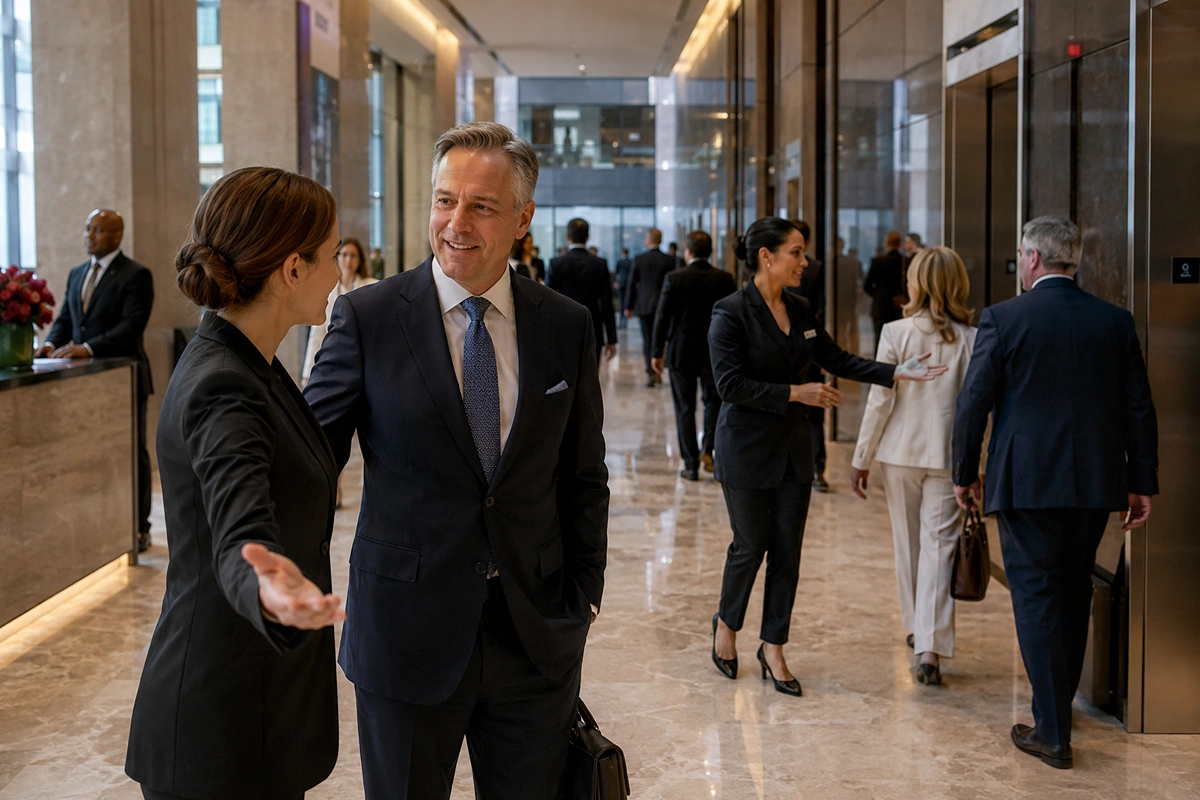
At Eventstaff, we provide trained hostesses who support the guest-facing moments that shape the arrival experience. In Manhattan, that often means placing staff before the formal check-in area, not just inside the event room. Our hostesses can welcome guests in the lobby, direct them toward elevators, confirm event details, coordinate with reception, and help VIPs move through the building with less uncertainty.
Our hostess teams are especially useful when the venue has shared entrances, private floors, controlled access, or multiple guest categories. They help prevent VIPs from waiting in the wrong place, asking building teams for event-specific answers, or arriving upstairs already unsure of the process. That gives the host a more polished first impression without pulling internal staff away from clients or executives.
We also help protect visitor flow when arrivals compress into a short window. A hostess can keep standard arrivals moving while another team member handles an exception, late speaker, sponsor contact, or private guest. That separation keeps the lobby from turning into an informal waiting area.
For Manhattan events, the goal is a guest experience that feels clear from the street-level entrance to the final room handoff. Our hostesses make that possible by adding human guidance where signage, security desks, and building protocols may not be enough. The result is a calmer arrival path and a stronger sense that every important guest has been expected.
Bottom Line
The Manhattan lobby moment can quietly undermine guest management when VIPs enter the right building but still feel unsure about where to go. Shared entrances, security desks, elevator banks, and active business-district traffic can make visitor flow harder to control before the event officially begins.
Eventstaff helps planners solve that front-of-house gap with trained hostesses who welcome, direct, reassure, and hand off important guests with polish. For Manhattan corporate events, private receptions, executive gatherings, and premium guest lists, that first hosted moment can shape how the entire event is perceived.
Ready to elevate your next event?
Join thousands of event planners who trust EventStaff.com for reliable, professional staffing solutions.
Trusted by event professionals nationwide
1k+
Events Staffed
2 million+
Guests Served
97%
Positive reviews