
On an April evening in 2025, Lorde texted fans to meet her in a New York park, and several hundred showed up. Then police stopped the show because the organizers had neither a sound permit nor a parks permit. Brands still chase moments like that, since EventTrack 2026 found that 59% of attendees capture content at live experiences and 82% tell friends or family about what they saw. That's the upside. The downside is the day itself, with a shutdown, a crowd you can't handle or a team that doesn't know what to do. These guerrilla marketing examples show how each stunt handled it. For every campaign, you'll see where and when it ran, who worked it, what permission it needed, and what it achieved. You'll also get recent US stunts, three classics and a side-by-side table to plan from.
Quick summary for guerrilla marketing examples
- What you'll see: 10 guerrilla marketing examples, each broken down by place, crew, permission, run time, and result.
- What every stunt needed: permission for the space, a plan for the crowd and the right people on site.
- What you can use: a side-by-side table to plan from and four trade-offs to weigh before launch.
What the best guerrilla marketing examples have in common on the ground
Every one of these examples of guerrilla marketing leans on the same three things: permission, a crowd plan, and the right people on site. Here's what each one looks like in practice.

Getting permission for public space
The cheapest line item can cancel a stunt. In New York, streets and sidewalks go through the Street Activity Permit Office, parks go through NYC Parks, and sound goes through the NYPD. A $45 sound permit filed at the local precinct at least five days ahead is what Lorde's organizers skipped, along with a parks permit, and the police stopped the show. A guerrilla stunt can surprise the public, but it can't surprise the city. Filing early can leak the surprise, while skipping it risks a shutdown, so plan for both. Permit rules vary by city, and this example covers New York only.
Planning for the crowd you attract
Crowds are the good problem that turns bad fast. Several hundred fans packed Lorde's park show, and more than 100 people tried to kick through 3M's bus shelter glass. A solid crowd plan answers three questions:
- Where do people stand, so walkways and entrances stay clear?
- How do they leave, and where does that crowd go next?
- Who decides when to pause, and who do they tell?
Settle those before launch so the surprise stays fun.
The people who run it on the day
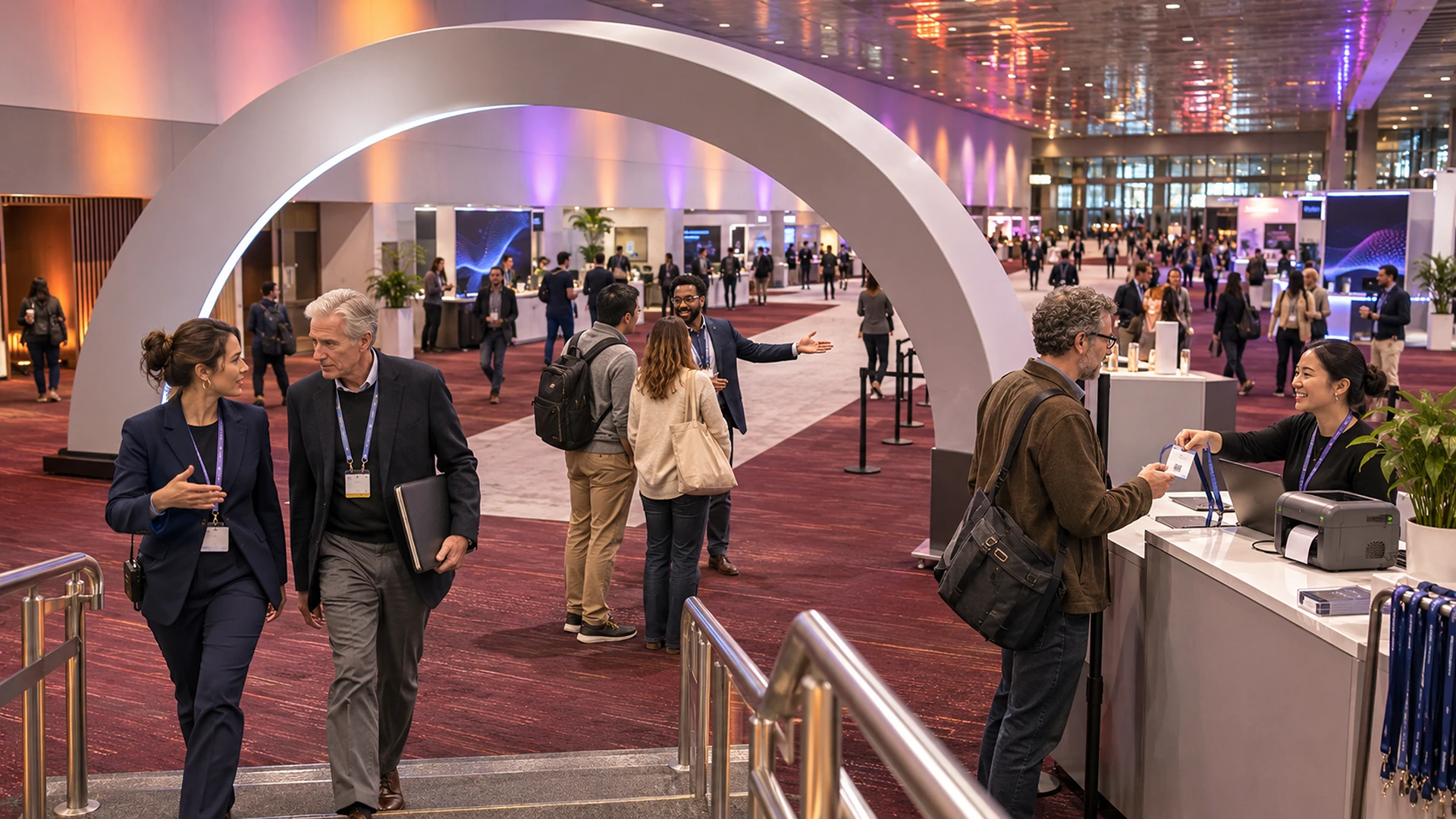
The famous face is rarely the person working the day. The Severance cast worked about three hours of a two-day run while stand-ins covered the rest, and 3M's stunt ran on one contracted guard. Whoever staffs the hours in between carries the brand, so many brands bring in guerrilla marketing teams to cover that stretch. This rests on press reports of two campaigns, so check it against your own plan.
CEO Excerpt
"Before a stunt goes live, every person on site should know who talks to police or the property manager, and it should only ever be one person. They should also know exactly when to pause the activity and who makes that call. Last, plan the reset. If a crowd builds or a piece of the setup breaks, the team needs a clear way to get back to a calm starting point." -- Daniel Meursing, CEO, EventStaff
Guerrilla marketing examples built around street installations and murals
These five guerrilla marketing campaigns turned a piece of the street into the stunt itself.

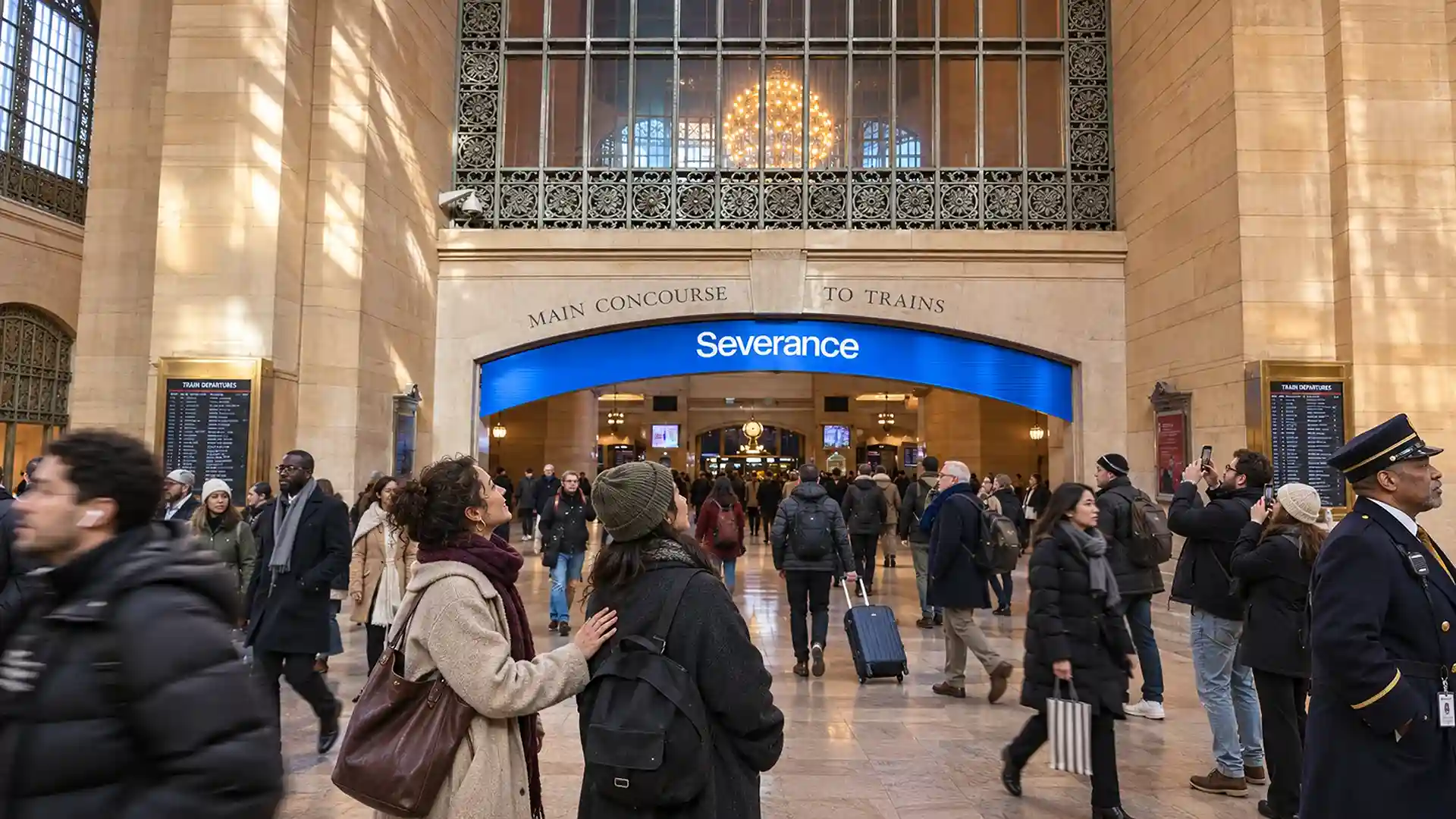
Apple TV+ Severance office
Grand Central Terminal, New York, January 2025.
Stand-in extras covered most of this Apple TV+ pop-up, while the main cast worked about three hours. Commuters could watch Lumon-style office work happen behind glass.
On the ground
- Setup: a glass cube with four cubicles.
- Run: two days, closing at 8 PM on day two.
Result: AppleInsider called it a first for Apple TV+, and no figures were reported.
Charli XCX Brat Wall
Brooklyn, San Francisco and Los Angeles, 2024 to 2025.
Atlantic Records and Charli XCX painted a brat green wall in Brooklyn and livestreamed it from 6 AM on day one. Fans learned the time and place that evening, and she performed in front of the wall at 7:15 PM.
On the ground
- The Brooklyn wall ran May 2 to July 7, 2024, with seven creative changes.
- San Francisco joined the run in 2024, and Los Angeles got a mural in 2025.
- The budget was $113,000.
Result: Colossal reports more than 300 million press impressions, a self-reported figure.
Heinz Smack for Heinz dispensers
Chicago, April 2024.
Heinz put smackable billboards outside restaurants known for skipping ketchup. Smack the bottle on the board, and ketchup packets drop out.
On the ground
- Where: outside The Wieners Circle and a fast-food spot at Navy Pier.
- When: up for one week, April 2 to 9.
- Crew size and permits: not reported.
Result: no results were reported, but the stunt tied Heinz to Chicago's long argument over ketchup on hot dogs.
Netflix billboard house
Sunset Boulevard, Los Angeles, August 2026.
Netflix built a house-shaped billboard about 30 feet above the street to promote The Last House and put an actor inside. Entrepreneur reports he'd spent more than 24 hours up there with no phone, no Wi-Fi and a whiteboard to talk with people below.
On the ground
- One actor, Nathan Shoop, lived in the billboard.
- He had air conditioning in roughly 90-degree heat.
- Permits and crew size: not reported.
Result: neither the safety measures nor the results were reported.
3M Security Glass
Vancouver, 2005.
A contracted guard stayed beside the bus shelter the whole time, and the stunt cost about $6,000. The shelter held a case of mostly fake cash with $500 real on top, and passersby could try to kick through the glass.
On the ground
- More than 100 people tried to break it, using only their feet.
- It ended after one day, when the guard noticed the metal frame had weakened.
- Permits: not reported.
Result: nobody broke through, and Daily Hive reports an estimated $1 million or more in free media.
Guerrilla marketing examples built around surprise appearances
These three guerrilla marketing campaigns ran on surprise, whether a pop-up show or a hidden camera.
Lorde's pop-up show
Washington Square Park, New York, April 2025.
Lorde posted a snippet of a new song the week before, then texted fans that Tuesday afternoon to meet her at the park at 7 PM. Several hundred people gathered around the central fountain, some climbed trees, and the crowd chanted for her. NYPD said a sound and parks permit is required for a concert in a city park; the organizers had neither, and the show was stopped.
On the ground
- Police were alerted to an unscheduled event at about 6:47 PM, and around 7 PM Lorde told fans on Instagram that police were shutting it down.
- Many fans left, while others stayed and held their own dance party.
- Around 8 PM, producer Dev Hynes ran through the crowd with a speaker playing the new track and led fans toward Electric Lady Studios.
- Lorde came back later that night, stood next to a speaker in the fountain and performed the song while the crowd filmed.
Result: AV Club reports the song, What Was That, still reached fans that night and came out the following Friday as the lead single from an album that hadn't been announced yet.
Charli XCX and H&M secret show
Times Square, New York, November 2024.
H&M billed it as an H&M and New York City Secret Event, with hints on an event page written in Brat green. It posted on social media only 30 minutes before the start to confirm Charli XCX would play in Times Square wearing the H&M Holiday Collection. The show came on the Monday after she hosted Saturday Night Live.
On the ground
- How fans found out: hints on an event page, then an H&M social post 30 minutes ahead.
- Set list: five songs, starting with a remix of 365, then 360, Von Dutch, Apple and a remix of Guess.
- Background: H&M had already worked with her in 2024, including an August campaign launch and a London performance on September 12.
- Crowd size, permits and security: not reported.
Result: Billboard's footage shows a sizeable crowd, and no results were reported.
Coca-Cola Happiness Machine
Queens, New York, video posted January 2010.
Coca-Cola and its agency Definition 6 placed a modified Coke machine in a student cafeteria and filmed it with five hidden cameras over two days. The machine kept handing out more than a drink, and the students' reactions were unscripted. It was part of the Open Happiness campaign that started in 2009.
On the ground
- Where: the student cafeteria at St. John's University in Queens.
- What it handed out: flowers, pizzas, sunglasses, a twelve-foot sub and a seemingly endless supply of Coke.
- Run: two days of filming with five hidden cameras.
- Permissions: not reported.
Result: according to Coca-Cola, the video went on YouTube on January 12, 2010, passed 2.2 million views by May 28, a 30-second edit aired during the American Idol finale week, and it won a CLIO Gold Interactive Award on May 27, 2010.
Guerrilla marketing examples that took over whole city spaces
These two guerrilla marketing campaigns needed the city itself to say yes.

Domino's Paving for Pizza
22 cities in 22 states, 2018.
Domino's asked people to nominate their town for pothole repairs and got more than 137,000 nominations. The towns with the most nominations became eligible for $5,000 grants, and city crews did the paving with Domino's signage on site.
On the ground
- Some cities needed council or city attorney approval before the check went out.
- Domino's sent jobsite signs, magnetic truck signs and stencils for the crews.
- In Milford, Delaware, 40 potholes were fixed in 10 hours.
Result: by early November, 22 cities in 22 states had started paving, and Domino's had granted $110,000.
Sony BRAVIA Balls
San Francisco, 2005.
Sony dropped about 250,000 bouncy balls down a hill for a BRAVIA ad, though reports vary on the count and TechRadar says 300,000. The shoot happened only after the location scout won over the neighbors and the city issued a permit.
On the ground
- Permit: granted after the team promised to fix any damage.
- Safety: crew in Kevlar with riot shields, nets at the bottom of the hill and covered drains.
- Backup: a glass repair company on site with replacement panes.
Result: $74,000 in window damage, according to SFGATE as cited by Axios.
What these guerrilla marketing campaigns needed to run
Crew, permits, and run time side by side

The best-documented stunts planned permission and people as carefully as the idea. The campaigns with the most blanks in the table are the ones where the coverage talked about the idea and skipped the logistics.
Trade-offs to plan for before launch
Plan for these four trade-offs before you borrow any of these guerrilla marketing ideas:
- Shutdown risk: filing a permit early can leak the surprise, while skipping it can end the show before it starts, as it did for Lorde. Permit rules vary by city, and this example covers New York only.
- Budget and reach: 3M's stunt cost about $6,000 and earned $1M+ in free media, while the Brat Wall cost $113,000 and logged 300M+ press impressions. The two are nearly 20 years apart and both results are self-reported, so they can't be compared as a straight return on spend.
- Run time and crew upkeep: most of these ran from one evening to one week, while the Brat Wall ran about nine weeks with seven changes, which means repeat crews and upkeep. Durations come from press coverage, and crew sizes were not reported.
- Damage cover: Sony had a glass repair company on site and still ended with $74,000 in broken windows, so budget for repairs before you launch.
If your stunt needs people on the ground for more than a few hours, street teams can cover the stretch between the big moments. When you're ready to plan the people side, see how EventStaff supports brand activation.
Ready to elevate your next event?
Join thousands of event planners who trust EventStaff.com for reliable, professional staffing solutions.
Trusted by event professionals nationwide
1k+
Events Staffed
2 million+
Guests Served
97%
Positive reviews