
Event Hostess vs Greeter vs Check-In Staff: Which Role Your Event Needs
You might ask for an event hostess when you need someone to welcome guests at the entrance. Another planner might use the same title for someone receiving executives, escorting speakers and managing last-minute seating changes. Both requests sound reasonable, but they describe different levels of responsibility and preparation.
That distinction matters when you are deciding what to book. You can spend unnecessarily on personal hosting at a simple directional post, or leave a greeter handling a VIP arrival they were never briefed to manage. Meanwhile, registration and seating still need attention.
Freeman's 2025 research with The Harris Poll found that 95% of attendees reported greater brand trust after an in-person event. That finding concerns the whole experience, but it gives planners a reason to take guest-facing interactions seriously.
Understanding what an event host does alongside greeters, registration staff and ushers helps you assign those interactions properly. Start with the guest's needs, then decide who should take responsibility for each one.
Executive Summary
An event hostess provides personal guest attention, while greeters handle welcomes and directions, check-in staff manage registration, and ushers support seating. Hostesses earn their cost when arrivals require recognition, escorts or informed introductions. Use the decision table to build your mix, then brief each role around clear responsibilities and handoffs.
What an event hostess does at an event
An event hostess looks after guests through an agreed part of their visit, often involving personal recognition, an escort or an introduction. Hosts and hostesses can perform the same assignments; gender does not determine the duties or level of experience required.
The important question is how much responsibility the person takes for the interaction. Giving directions to a speaker lounge is a general welcome task. Meeting a speaker, confirming that the program team is ready and accompanying them to that team is a hosting assignment with a defined outcome.
Where an event hostess works on the day
You do not need a hostess at every doorway. Position hosts where the guest needs attention that goes beyond a welcome and a direction, and make sure their next point of contact is clear.
- VIP and speaker arrivals. A host meets named guests at the agreed entrance, confirms their destination and introduces them to the person expecting them. This prevents a speaker or executive from having to explain their arrangements to several unfamiliar people.
- Green rooms and holding areas. Hosts welcome guests, explain waiting arrangements and pass on confirmed program updates. They coordinate movement with the program team so a delayed session does not produce conflicting instructions about when to leave.
- Dinners and award shows. Hosts help named guests find assigned tables and handle personal questions about their seating arrangements. They refer changes to the planner and coordinate with ushers responsible for the wider room.
- Trade show booths. Hosts welcome visitors, establish their interest and make a relevant introduction. A useful handoff tells the sales representative why the visitor has stopped, allowing the conversation to continue without another round of basic questions.
Skills that set an event hostess apart
These assignments require judgment as well as a welcoming manner. A guest who arrives early may need somewhere appropriate to wait; someone arriving just before their speaking slot needs a prompt escort and confirmation that the program team knows they are there.
Look for people who can read those situations, use the current guest list and remain composed when instructions change. Ask a hostess agency how it evaluates discretion and relevant experience, including how staff handle an unexpected companion or a seating request they cannot authorize.
There is a reason to value personal attention. Freeman's 2025 findings linked peak experiences with stronger return intent: 85% of attendees reporting a peak moment said they were more likely to return. This vendor study uses attendee self-reports and does not isolate hostess performance. It supports thoughtful guest interaction, rather than a promise that hiring hosts will produce repeat attendance.
Event hostess vs greeter vs check-in staff vs usher
The four roles compared side by side
Once the hosting assignment is clear, the surrounding roles become easier to specify. Their skills overlap, but the person you book should know which responsibility takes priority when guests need several things at once.
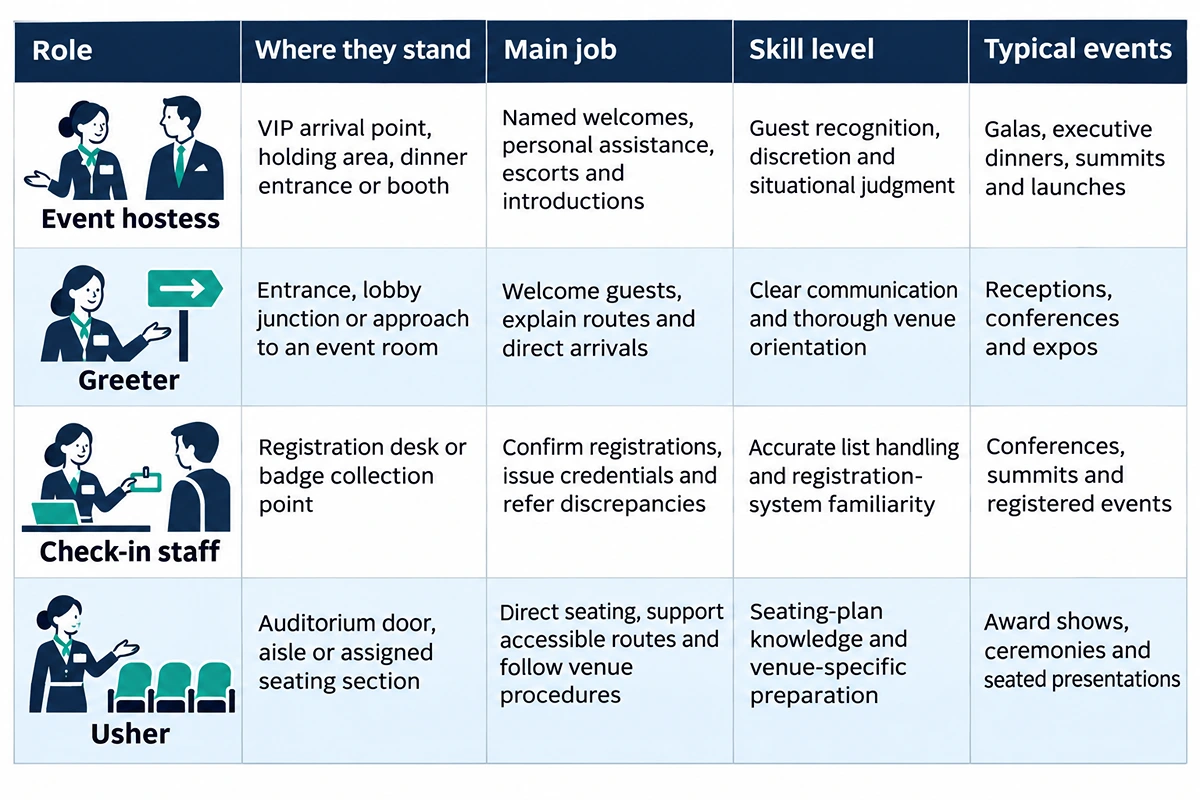
Assign check-in staff to registration and ushers to seating coverage. O*NET's 2026 occupation profile includes disability-related assistance and safety-rule responsibilities alongside seating duties. It describes entertainment venues broadly, so agree the actual scope with your agency and venue.
If your main requirement is welcoming arrivals and helping them find the right room, discuss event greeters with EventStaff. Describe the entrances and decision points they need to cover so the booking reflects your layout.
Where the roles overlap and where they do not
A greeter and a hostess can both welcome a guest, but a personal escort takes someone away from their post. If you assign that duty to the only person covering an entrance, the next arrivals lose their welcome and directions while the escort is underway.
That directional coverage matters. Freeman's 2025 findings identified confusing expo layouts as friction for 30% of attendees, compared with 13% of organizers anticipating the issue. The published reporting does not disclose the sample size, so use it as directional evidence for placing event greeters where guests need help.
Registration has a different concentration requirement. Protect fast check-in by giving the desk an escalation contact for missing names and special arrangements, rather than expecting the same person to leave and escort speakers.
At the room entrance, ushers need seating and accessible-route instructions even if hostesses are receiving VIPs nearby. A personal welcome cannot replace that coverage. Define how the teams work together, including who receives an escorted guest and who resolves a disputed seat.
CEO Excerpt
"I would settle ownership of the VIP list before discussing where everyone stands. The person holding the current version needs authority to confirm changes and a clear way to reach the planner. Then I would separate the welcome, registration, escort and seating assignments. If a host leaves with a speaker, someone must still be responsible for the entrance. Those handoffs need to be agreed before guests arrive." - Daniel Muersing
When an event hostess earns their cost
VIP and speaker arrivals
The case for personal hosting becomes strongest when an arrival depends on several people having the same information. A speaker may be expected by the organizer, the program team and an executive who wants to meet them before the session. Without an assigned host, the speaker can arrive successfully at registration while everyone else remains unaware.
A hostess closes that gap by confirming the arrival, checking the next destination and completing the introduction. For executive guests, this can also prevent sensitive arrangements from being discussed at a busy public desk.
Freeman's 2025 research associated a meaningful connection with return intent of 51%, compared with 30% previously reported. These attendee self-reports do not establish the effect of VIP hosting; the practical relevance is giving worthwhile personal interactions time and attention.
Reserve dedicated escorts for named guests who need that coordination. They require more coverage than a stationary welcome post, so ask who handles general arrivals while the host is away and whether several expected guests may arrive together.
Galas, award shows and executive dinners
At a formal seated event, an arrival decision can affect the program and other guests. Moving an executive to a different table may displace a sponsor, while admitting late arrivals during a presentation may interrupt the room. Hosts need to understand those consequences before offering a solution.
A 2026 PEOPLE account of a Grammy seat filler described show requirements including afternoon check-in before the ceremony, phone collection, strict attire and commitments exceeding ten hours. The account concerns seat fillers, rather than documenting the staff running the show; it illustrates how detailed participation rules can become.
For your event, translate that level of detail into clear guest instructions and approval routes. Agree where late arrivals wait, who answers dress-code questions and when guests can enter the seating area. Hosts can explain the arrangements while ushers maintain room coverage.
Tight control only works when staff also know how to request an exception. Give them a reachable decision-maker rather than asking them to choose between refusing a reasonable request and quietly overriding the seating plan.
Trade show booths and brand launches
At an exhibit, personal hosting has a commercial purpose: helping visitors reach a relevant conversation. A welcoming booth host adds limited value if they cannot explain the offer or identify which representative should handle a serious enquiry.
CES 2026 recorded 148,392 participants in its independently audited attendance figures. That establishes the scale of the exhibition, although total attendance does not predict the visitor flow at an individual booth.
Show requirements also affect the booking. CTA's attire policy, announced in 2019 for CES 2020, prohibited sexually revealing clothing for booth personnel regardless of gender. Treat that as a historical example and check the current exhibitor manual before approving staff attire.
The same preparation should cover product knowledge and handoffs. Give the host a concise explanation of your offer, a few useful opening questions and a named sales contact. If you need technical demonstrations or detailed lead qualification, specify those skills separately so the agency can assess them.
How to choose the right front-of-house mix for your event
Match the role to the guest moment
Build your request around what happens to the guest, then check where those moments overlap. A modest executive dinner may need separate welcome and escort coverage, while a larger reception with straightforward arrivals may mainly need well-briefed greeters.

Use this table to discuss responsibilities before asking for a final headcount. Walking distances, simultaneous arrivals, breaks and program transitions determine whether a person can realistically cover more than one assignment.
Confirm what the venue already provides, too. Your booking should connect with its registration, seating or guest-service arrangements, with named handoffs wherever responsibility moves between teams.

Brief your event hostess team before doors open
Once the mix is agreed, your brief should explain how it works in practice. A hostess agency can supply relevant experience, but it cannot infer private guest arrangements or decide which version of your seating plan is authoritative.
- VIP list and approved photos. Include pronunciation notes, expected arrival windows and relevant companions. Share recognition photos where appropriate, and designate who updates the list so late changes reach the people receiving guests.
- Run of show. Mark arrival periods, holding times and the points when guests need to move. Identify who confirms changes so a delayed speaker receives an agreed instruction rather than several conflicting estimates.
- Seating plan. Show reserved places and the contact authorized to approve adjustments. Explain where a hostess hands an arriving guest to an usher, particularly when personal escorts and general seating happen together.
- Dress code and show rules. Confirm staff attire and the guest requirements staff should explain. Identify restrictions on photography, entry and movement, along with the contact who decides exceptions.
- Who to call when plans change. Provide names, responsibilities and a working communication method. Walk through an unexpected companion or missing registration so everyone understands when to resolve an issue and when to refer it.
Finish with a venue walk-through wherever possible, checking the actual entrance, holding area and receiving point. An event hostess who has walked the route can give a confident welcome and complete the escort without stopping to ask directions.
Share your guest journey with EventStaff to discuss event hostesses and the roles supporting them. The strongest booking gives each guest need an owner and each staff member a clear next step.
Ready to elevate your next event?
Join thousands of event planners who trust EventStaff.com for reliable, professional staffing solutions.
Trusted by event professionals nationwide
1k+
Events Staffed
2 million+
Guests Served
97%
Positive reviews