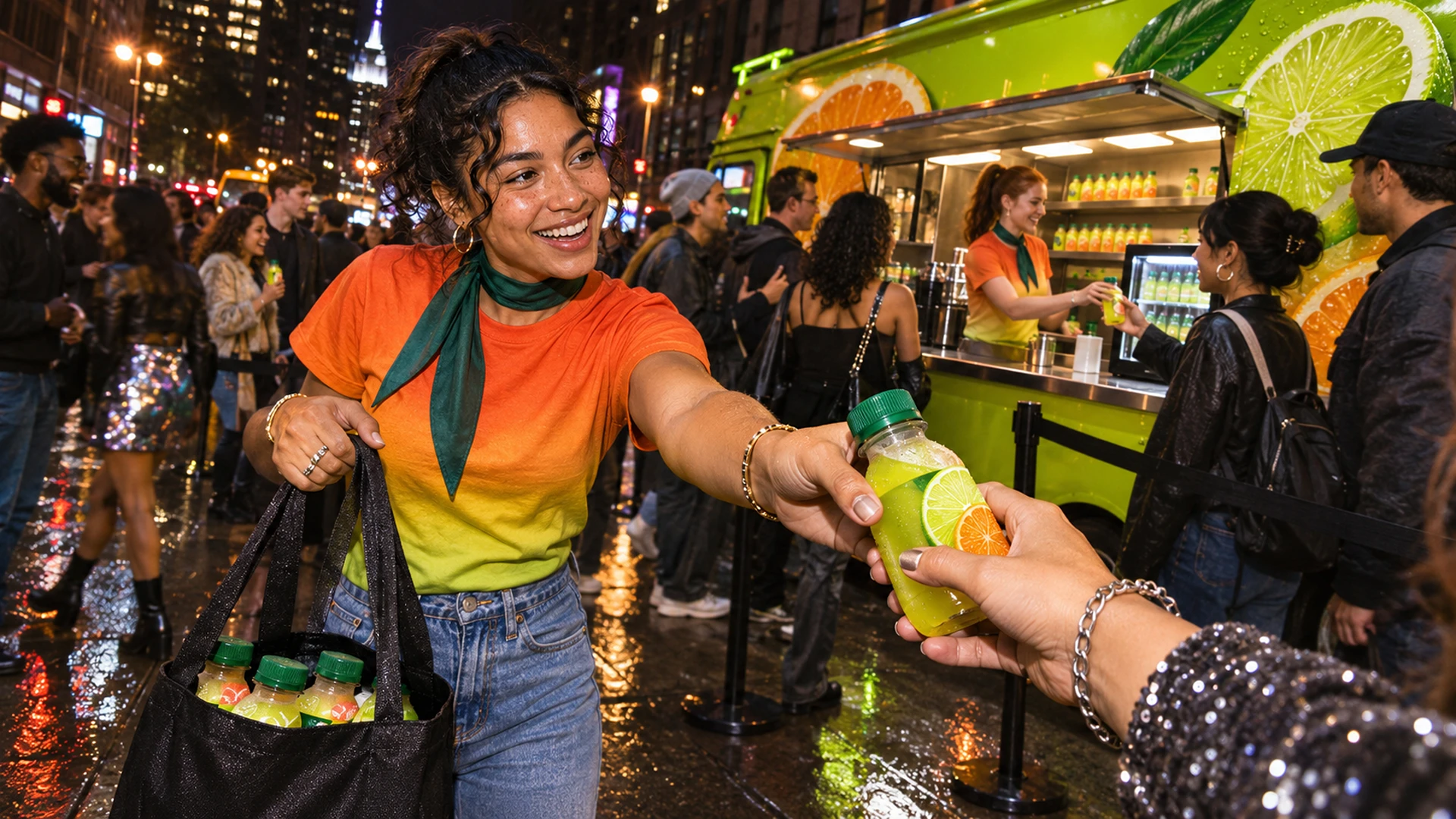

Most guides to product sampling talk about mail-outs, sample boxes and online offers, which is handy if you're shipping to a list. The programs that move product in a single day put a sample in someone's hand, with a person standing beside it who can answer questions. From September 24 to November 1, 2026, Starbucks planned to hand out nearly 500,000 bottles of its Refreshers drinks in New York from sampling trucks at Grand Central, Union Square and Herald Square, plus evening stops outside Madison Square Garden until midnight, according to Time Out. That's the in-person side of product sampling, and it comes with its own permits, staff and math. This guide covers the three settings brands use, what each one needs, a four-step plan for running a sampling program, and how to measure it after the day ends.
Executive Summary
Product sampling works best in person when the setting, permits and staff are planned together. This guide covers in-store demos, event sampling and street sampling, the permits and staffing each one needs, a four-step run plan, and how to measure results past day one.
What product sampling is and why it works in person
Product sampling means giving people a free taste or trial of your product so they can decide whether to buy it. You can do it by mail, online or face to face, and each route trades reach against depth.
How in-person sampling differs from mail and digital sampling
Mail and digital reach more people for less per sample, but you lose the conversation where most questions get answered.
What the data says about sampling and buying
Here's what the research shows about sampling and sales:
- In a 2008 Arbitron survey of 1,857 people reported by Adweek, 35% of shoppers who tried a sample bought the product on that trip, and 58% said they'd buy it again.
- A 2009 household panel study by research firm KN/PDI, covered by QSR, found in-store sampling lifted sales of the sampled items by 475% on the event day and by 74% over the next 20 weeks. Repeat purchases rose 11%, and shoppers who sampled spent 10% more per basket.
- In Event Marketer's EventTrack 2026 research, 61% of consumers said a live experience made them more inclined to buy.
Most of that lift lands on the day of the demo, so a taste on its own doesn't hold the shopper for long. That's why every program needs a coupon, QR code or sign-up that turns one taste into a second purchase.
Types of in-person product sampling
Each setting below covers where it works, staffing, permits, an example and a trade-off.
In-store demos
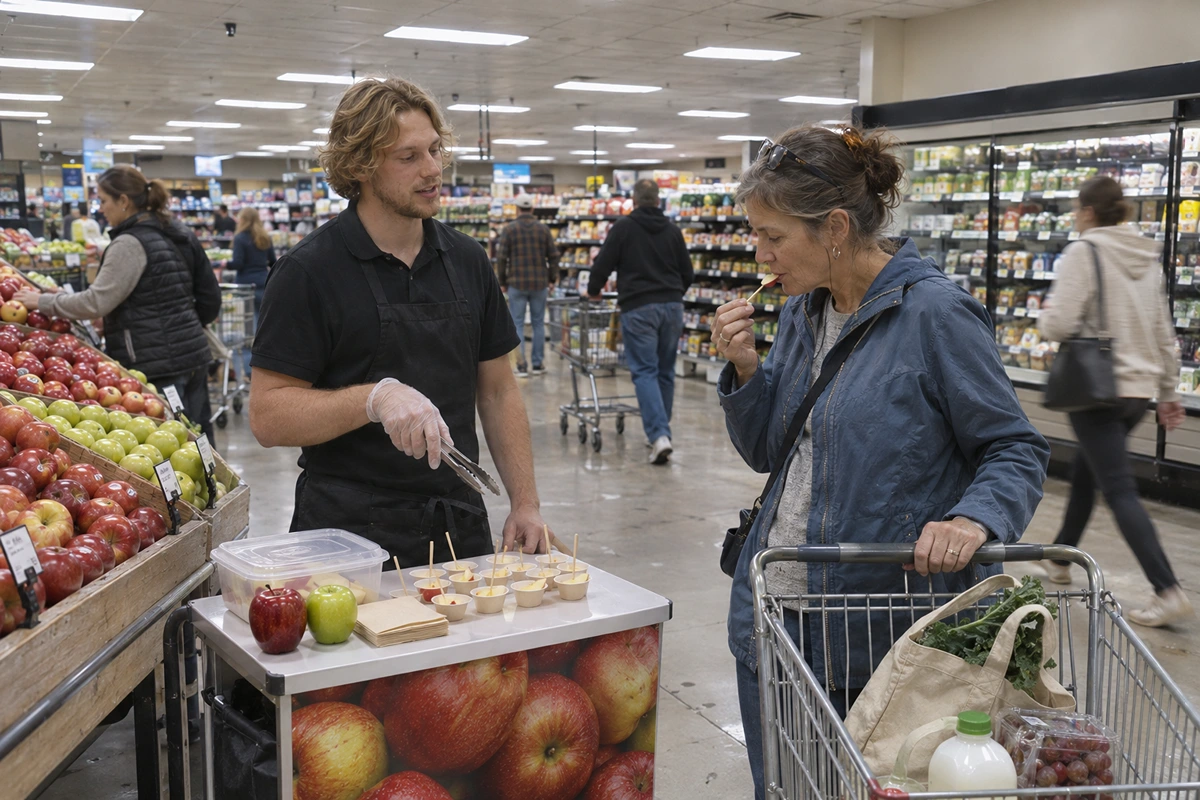
- Where it works: at the shelf in grocery and big-box stores, where shoppers can pick up the product a few steps from the table.
- Example: Apple and Pear Australia (APAL) ran 286 in-store sampling sessions between March and June 2025 for its "No Snackgrets" campaign and handed out 22,880 samples, according to FreshPlaza. 82% of participants tried a new apple variety, and 40% said they were very likely to buy it. That's about 80 samples per session.
- Staff it needs: one or two demonstrators per table who know the product and can portion samples safely. Most of what goes wrong here comes down to people, which our guide to demo mistakes covers.
- Permits and food handling: the retailer approves the demo and sets its own rules on prep, portions and hand washing.
- Trade-off: In-store demos reach shoppers right at the shelf, but each session reaches fewer people and needs retailer approval first.
Sampling at events and trade shows
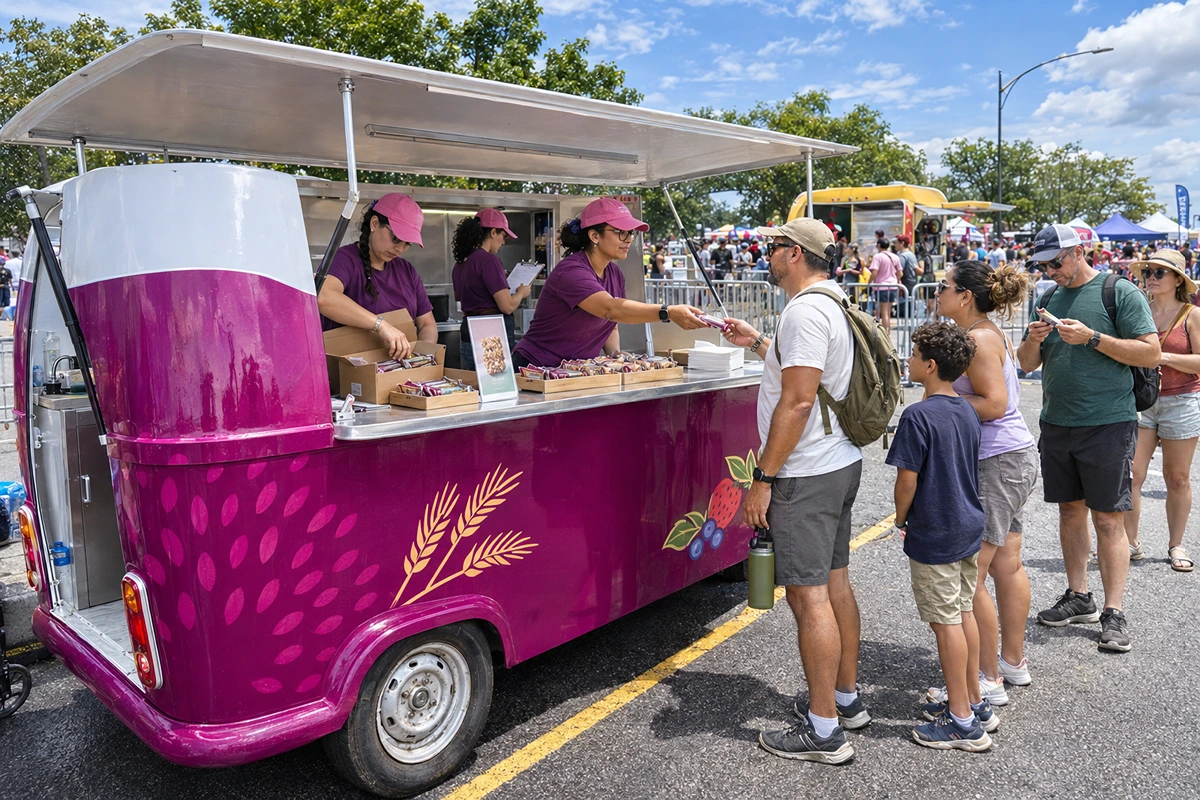
- Where it works: sampling events like festivals, games, beaches and conventions, where a crowd is already moving past your table.
- Example: Nature's Bakery's 2024 Summer Sidekick Tour took its snack bars to beaches, festivals, sporting events and parks in 14 cities, from Atlanta and Dallas to Boston and Chicago, with 750,000 snacks lined up for sampling in the brand's tour announcement. The tour's recap reports more than 750,000 samples handed out over an estimated 4,000 sampling hours.
- Staff it needs: an event lead in each city plus a team that can hand out fast through long outdoor days.
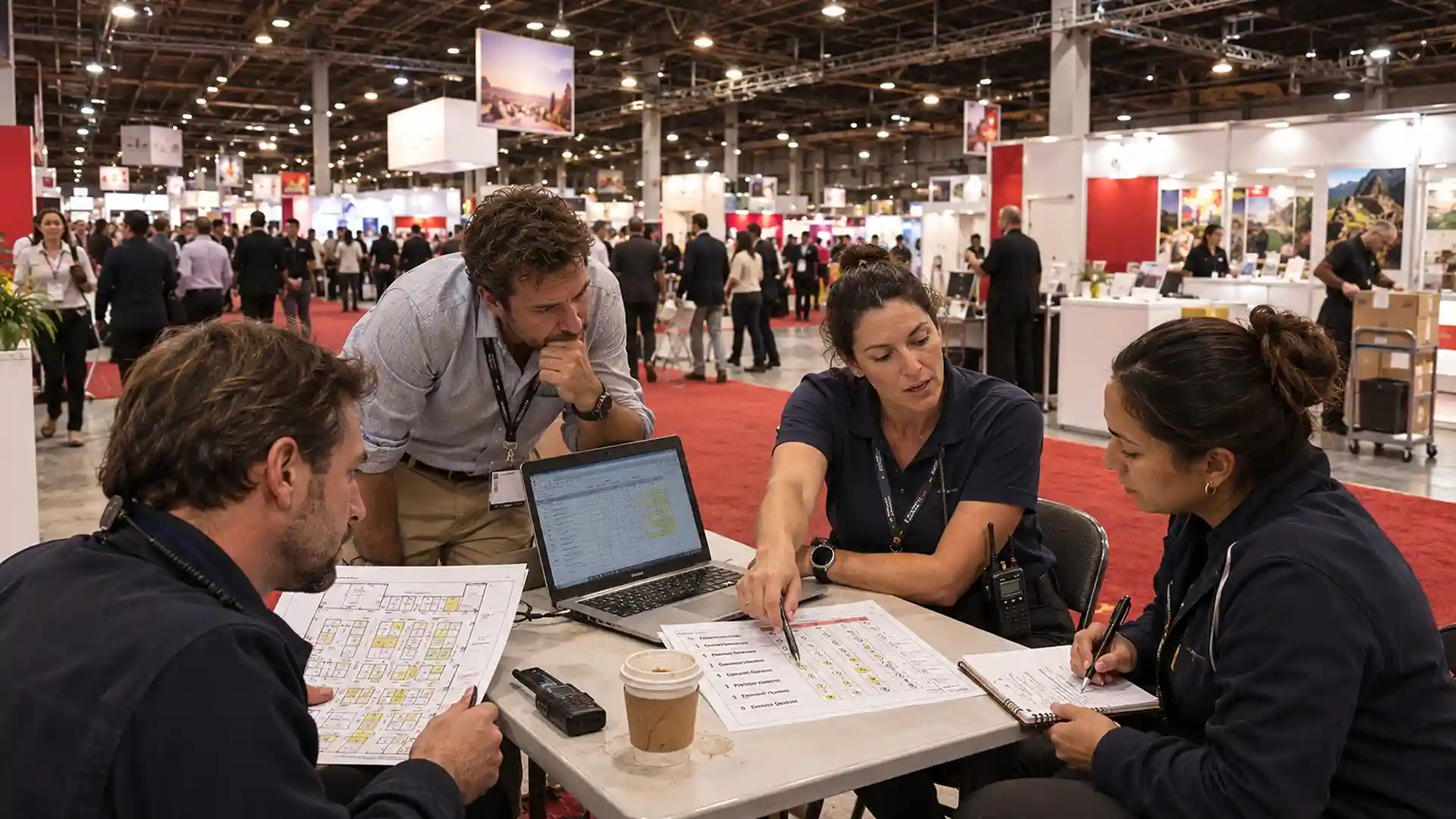
- Permits and food handling: the venue and the county both set rules. At the Los Angeles Convention Center, the venue guidelines cap food samples at 2 oz and non-alcoholic drinks at 4 oz, and you'll need your own hand-wash sink, $1 million in liability insurance and the in-house caterer's written approval. LA County lists its food demonstrator permit at $59, and the show organizer applies at least 30 days ahead. For a show there, our LA brand ambassadors can work inside those rules.
- Pace: Nature's Bakery's numbers work out to about 190 samples per sampling hour, against APAL's 80 or so per in-store session. APAL didn't publish its session length, and the tour's hours may count each staff member separately, so treat both as rough planning figures.
- Trade-off: Events give you a crowd in one place, but the venue and the county both set rules and timelines.
Street and high-traffic sampling
- Where it works: transit hubs, plazas, campuses and arena crowds.
- Example: Starbucks planned nearly 500,000 bottles for its 2026 Refreshers truck tour in New York. Daytime stops at spots like Grand Central, Barclays Center and Hunter College ran about six hours, and evening stops near Madison Square Garden ran from 6 p.m. to midnight on Wednesdays, Fridays and Saturdays.
- Staff it needs: two jobs covered at once, handing out and managing the line and the sidewalk around it. At a six-hour stop outside Grand Central, the person handing out bottles can't also keep the crowd clear of the subway stairs. The coverage doesn't describe Starbucks' own staffing, so treat this as what the format needs, and it's how our NYC street teams are planned.
- Permits: San Francisco's Free Sample Merchandise permit from Public Works comes with a $500 bond, and food or drink needs a separate health permit on top. The sidewalk permit covers the samples in your hand, but not the table they sit on.
- Trade-off: Transit hubs give you huge volume, but people are rushing, so the conversation is short and the capture step has to take seconds.
"A team that only hands out product gets you a busy table and very little to show for it afterwards. The teams that sell start with a question about the shopper and hand over the sample while they're still talking. Once someone has tasted it and smiled, that's the moment to ask for the scan or the sign-up, before they walk off. Brief your team on that exact moment and practice it until it feels natural." -- Daniel Meursing, CEO, EventStaff
How to run a product sampling program step by step
Set the goal and the sample count
Pick one goal first, because it decides everything else:
- Trial: count samples handed out and how many people tried something new.
- Sales: count coupon or QR redemptions and sales in the sampled stores.
- Sign-ups: count opt-ins, and plan the capture step before anything else.
Then work the sample count backwards from your pace. Using the rough figures above, 1,000 samples in a day takes about 12 or 13 in-store sessions at APAL's pace, or a little over five hours at a busy grab-and-go table. Order extra for spills and repeat tasters.
Get permits, retailer approval and food handling sorted
Run through this before you book staff:
- Venue or retailer approval in writing, including the house caterer's sign-off at convention centers
- Health permit from the local health department. New York City's health department needs a food permit no matter how the food is offered, from a booth, table, stand or cart, and event organizers have to notify it 30 days before the event
- City sampling application where the city has one. Chicago treats food sampling at events as its own application type, offers a 180-day license for brands sampling at several events, and wants your kitchen inspected within six months of applying
- Sidewalk permit for street sampling, plus a separate permit for any table or cart
- Insurance, hand washing and portion caps, which venues like the LA Convention Center spell out
In LA, the permit clock starts 30 days out, so paperwork sets your date before staffing does. Rules vary by city and venue, and LA's fees may have changed, so check with your local health department before you lock a date.
Staff and brief the sampling team
Your brief should cover:
- Product knowledge: ingredients, allergens, price and where to buy, so nobody has to guess
- The opening line: a question about the shopper that leads straight into the sample
- The capture step: when to ask for the scan or sign-up, and what the shopper gets for it
- Restock roles: who refills, who watches the cooler and who covers breaks
- Line management: who keeps the line moving so the sampler can keep talking
Brief them to prompt a share as well. In a 2022 survey of more than 1,000 people aged 13 to 25, 6 in 10 said they'd likely post about a good sample on social media. A company that runs sampling programs carried out that survey, so read it as a signal about younger shoppers, but a friendly "tag us if you liked it" costs nothing. If you're sampling in New York, our product reps can be briefed on your product and capture step before the first shift.
Run the day: pacing, restocking and data capture
- Set up before peak so the table's ready when the lunch or commuter rush starts
- Track samples per hour with a tally or counter, and check it against your plan every hour
- Restock before the table runs dry, with one person watching stock levels
- Log questions and objections, like price or allergens
- Reset between waves by wiping down, refilling and checking portions before the next rush
How to measure a product sampling program
What to track on the day
Measuring sales lift afterwards
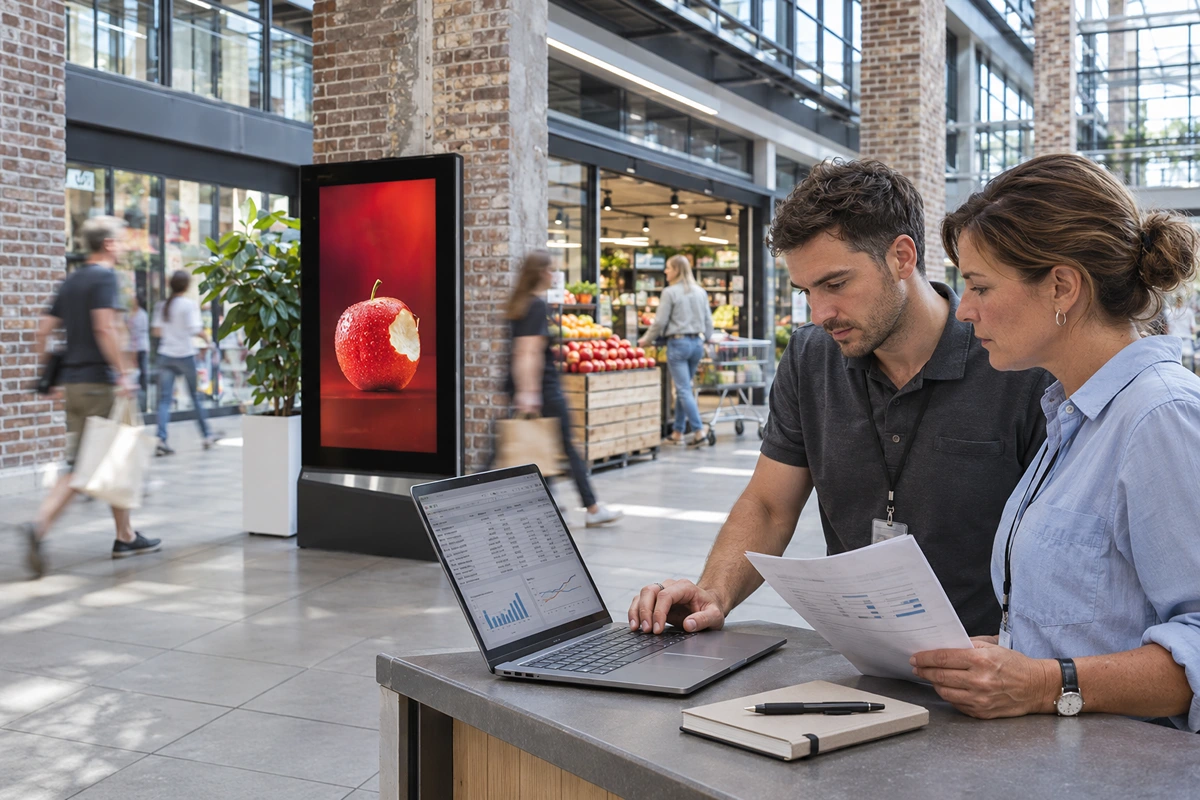
Compare sales in the stores or areas you sampled against similar ones you didn't, over the same weeks. Track redemptions by location, and watch repeat purchases for several weeks, since the 2009 study saw the event-day spike shrink over 20 weeks.
APAL shows why that comparison matters. Its campaign ran in-store sampling and online retail ads together, and Woolworths reported higher sales while Coles saw more customers than the year before. The sales growth APAL's retailers reported came from the online ads, according to the report. The sampling side measured trial and buying intent, so if you run ads and demos together, you'll need sampled and unsampled stores to tell which one moved the number. If you'd like a sampling program planned with that measurement built in, get in touch.
Ready to elevate your next event?
Join thousands of event planners who trust EventStaff.com for reliable, professional staffing solutions.
Trusted by event professionals nationwide
1k+
Events Staffed
2 million+
Guests Served
97%
Positive reviews