Thank You

Our team will contact you within 25 minutes, talk soon!
Oops! Something went wrong while submitting the form.
+
Hire our event security staffing team: crowd managers, crowd control staff, greeters and ushers, all vetted and supervised on site. We handle the crowd side of your event, keeping people moving and your exits clear all night.
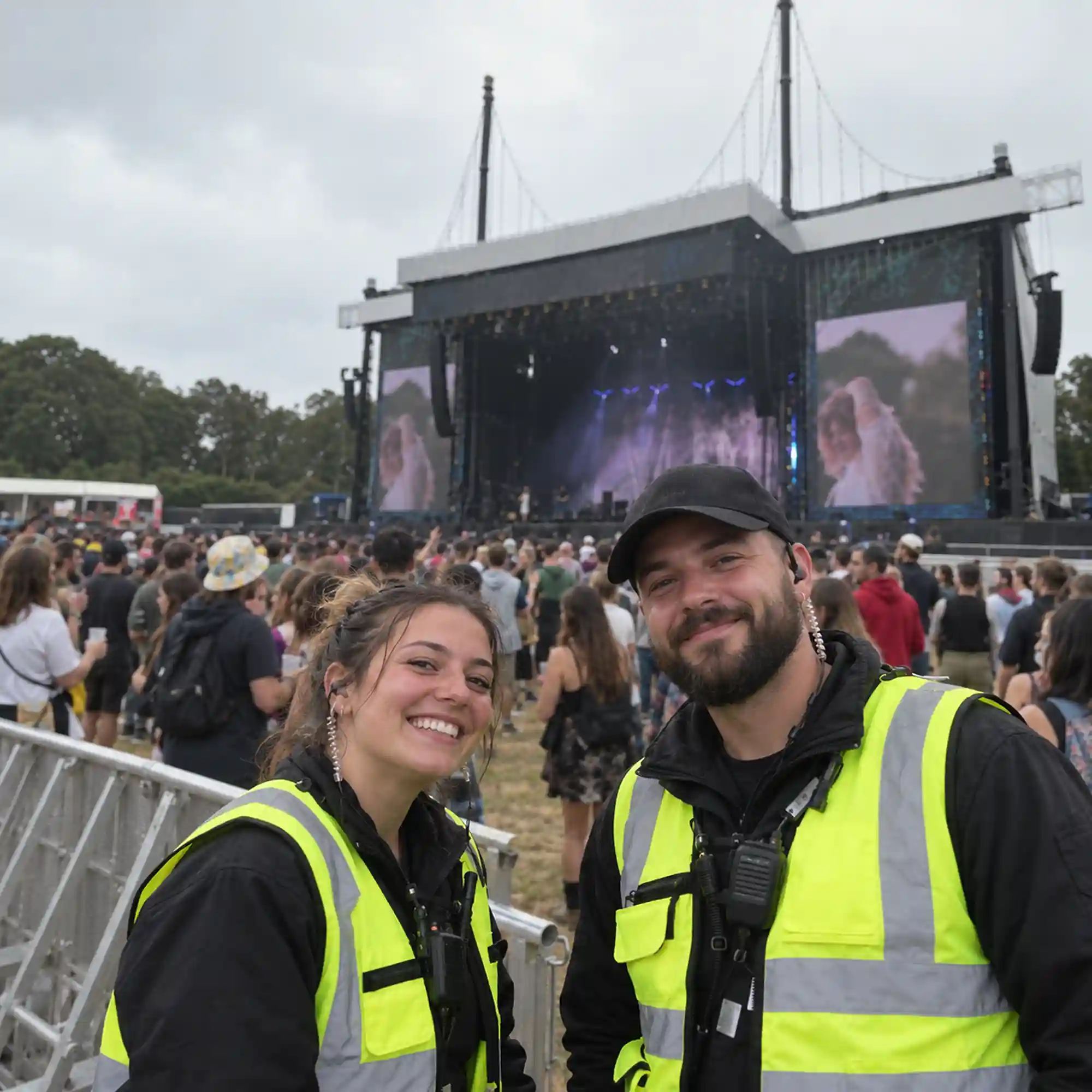

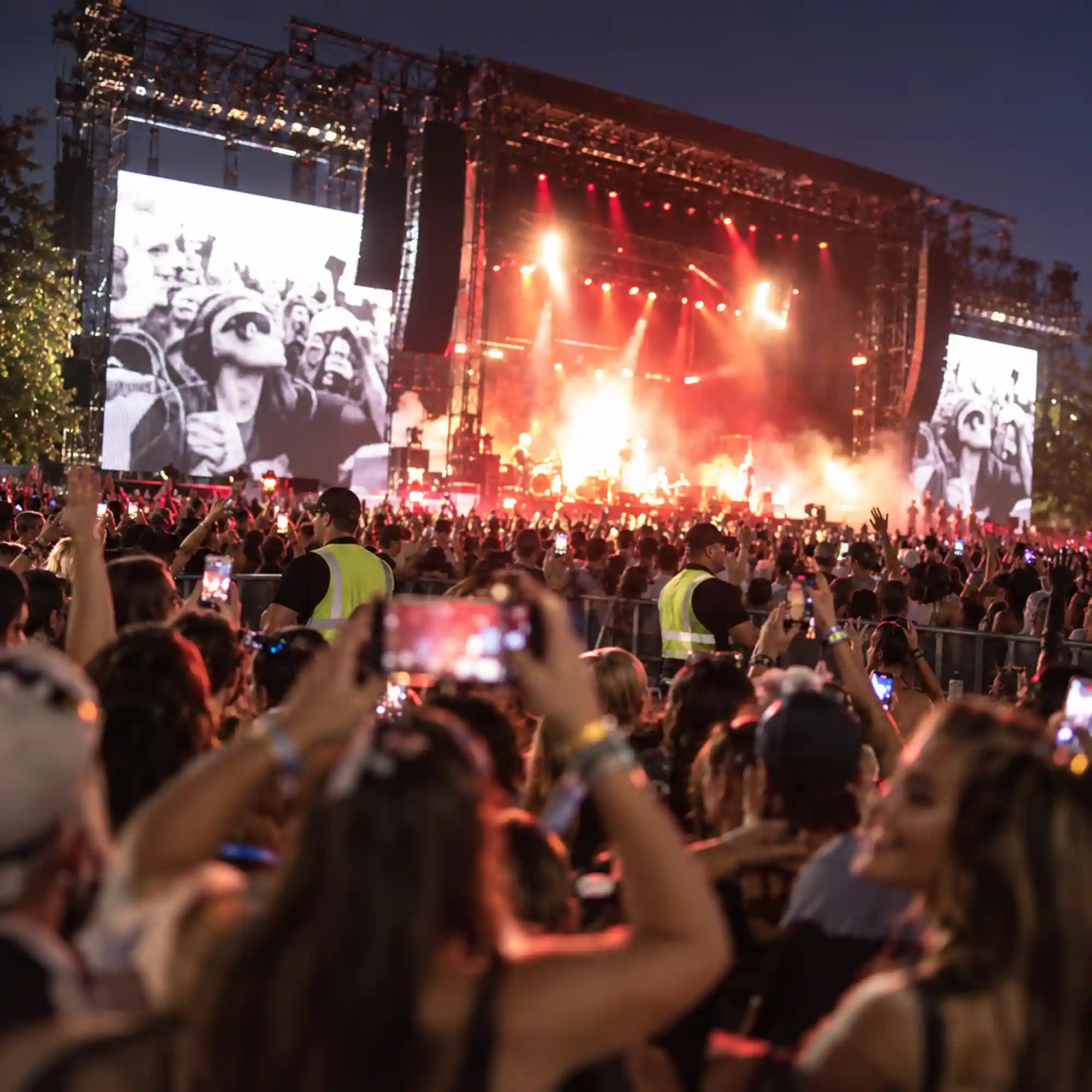
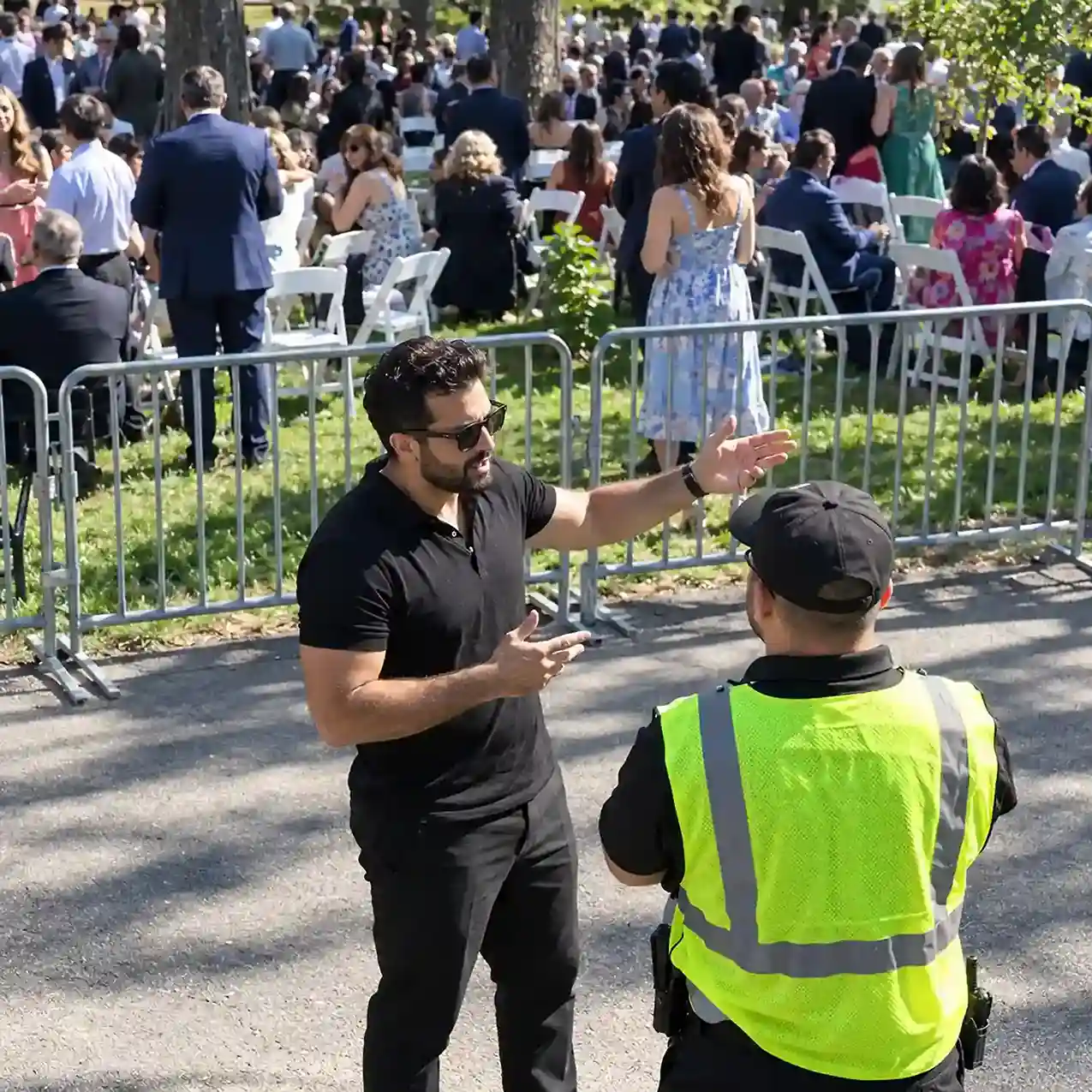















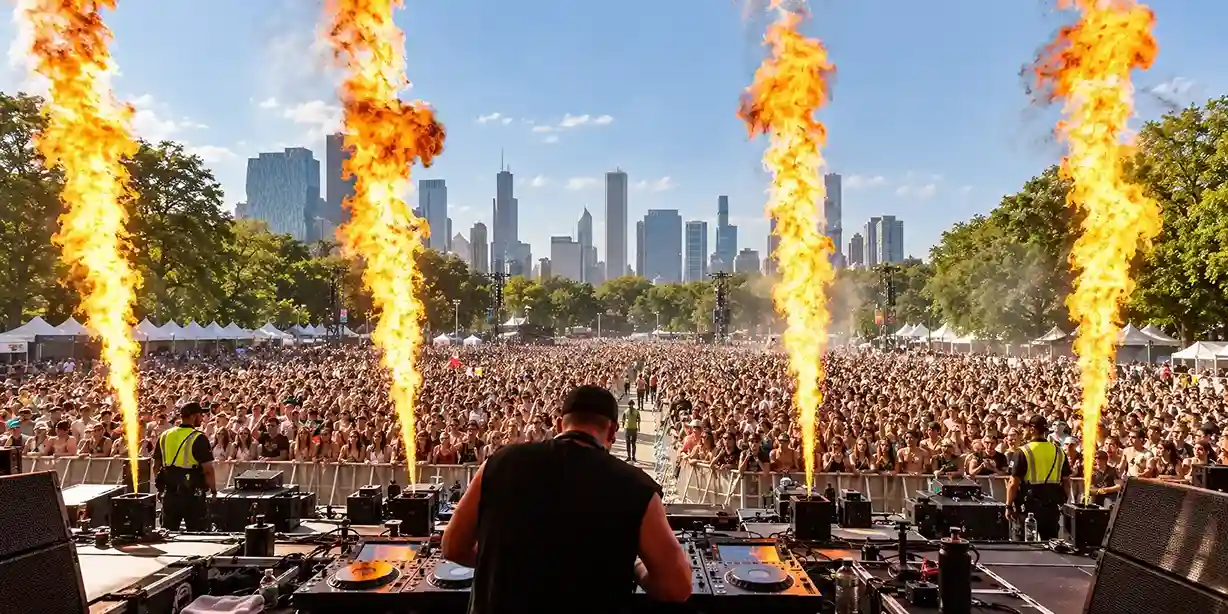
Crowd management and security guarding get lumped together, but a real event security agency treats them as two different jobs. One keeps a room moving and safe. The other handles threat and access.
Most organisers never hear about this until it's almost too late to plan around properly. It's a genuine requirement, not a nice-to-have, and once you know your expected headcount, we can tell you exactly what your event needs and get a team booked well before your date fills up.
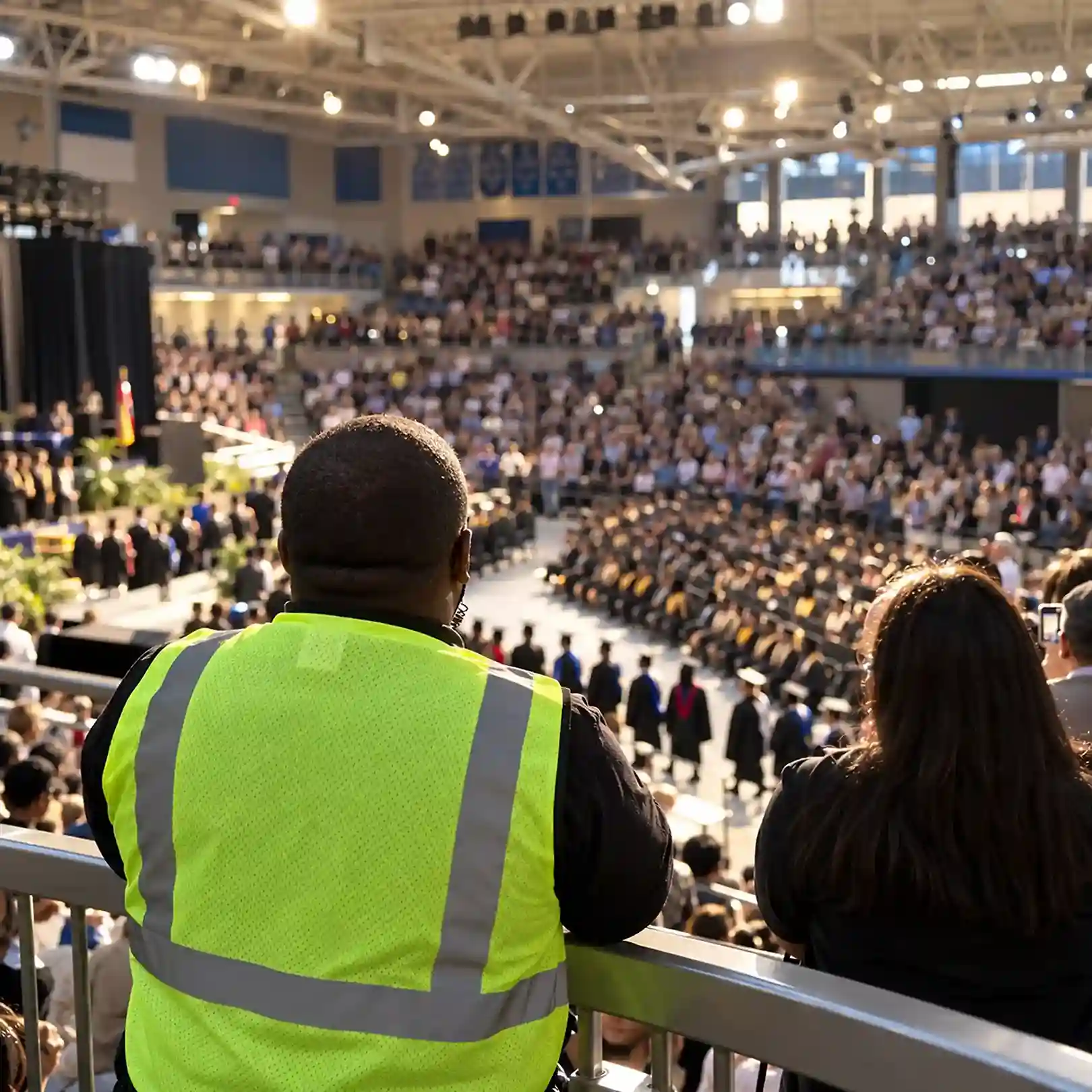
Our event security staff includes crowd managers, crowd control staff, greeters and ushers. On site, that means watching occupant load and keeping an eye on the exits for as long as your event actually runs.
The numbers that set your event security agency's headcount, straight from the fire codes.
Crowd management keeps a room moving and its exits clear once things get busy. That takes a specific kind of training, built for occupant flow rather than general security work.
Every staff member is screened and employed directly by us, not pulled from a gig marketplace the week of your event.
Behavioural crowd management, which is what most assembly occupancies actually need under the fire code, not a guard.
Staff placed at entrances, exits and the points where flow actually breaks down once a room starts filling up fast.
The same team handles wayfinding and guest questions too, so you're not running two separate crews for one event.
One person who owns the rotation and makes the call the moment something on site actually needs a decision made.
Crowd management and crowd control from one team, positioned wherever your event needs eyes on flow and exits.
We staff events all year long across the country, and our event security staff handle crowd management as core work, not an add-on, backed by the same team behind every large-scale event we take on nationwide.
Most people come to us asking for event security staffing and find out partway through the call that the actual requirement is something different. We help work out which one applies, and often it's both, from two separate suppliers.
One conversation is usually enough. We work out your occupant load, size the team to it, and have everyone briefed before your doors open to the public.


Typical market rates for the roles an event security agency provides, with final numbers in your quote.
Watch the occupant load and keep the exits clear, which is the whole point of the code.
Shape the queue and keep people moving once the room fills up faster than expected.
Greet each person at the door and help them find whatever they're looking for.
Cover seating and sections, and keep the aisles workable through a long event night.
Own the rotation and make the call the moment something on the ground needs one made.
The floor here is published by code, not estimated. Here's what it works out to by attendance.

Three clear stages, each with a named owner and a date, run by your event security agency.
Confirm your occupant load with the venue, and what your local fire marshal requires. That number sets the team size before anything else moves.
The team is briefed on exit routes, capacity holds and who calls a stop if something changes, with everyone screened and cleared ahead of time.
A named lead covers every shift, with positions held at each entrance and exit, and a clean handover to the venue once the whole event wraps.
We build coverage around your event, with trained event security staff instead of a generic headcount.


A crowd manager is a fire code role, focused on occupant load, flow and clear exits during an event. A security guard is a licensed role, focused on threat, access and enforcement. They're trained differently, licensed differently, and they do genuinely different jobs. Most event security staff cover one or the other, not both, so most events that need one also need the other from a separate supplier. Confusing the two is common, since most search results are actually selling licensed guarding, not crowd management.
The code sets a floor once attendance passes 500 people: not fewer than two, plus one for every 250 above that. A 1,000-person event needs four, a 2,500-person event needs ten, and a 5,000-person event needs twenty under that formula. Adoption and exact thresholds vary by jurisdiction and code edition, so confirm your occupant load and the local requirement with your venue and fire marshal before you finalize any booking.
Most assembly occupancies, meaning gatherings of 50 people or more, need at least one trained crowd manager on duty. Above 500 attendees the requirement becomes explicit: two minimum, plus one for every 250 above that threshold. Outdoor events under 1,000 people are generally exempt, though your venue or local authority may still ask for cover. Event security staffing isn't legal advice, and your local fire marshal has the final word on what applies to your event.
No. When people search for event security staffing, most results sell licensed guarding, but that's not what we do. We supply crowd management, crowd control, greeters and ushers, the behavioral side of keeping an event safe and moving. We do not supply armed or licensed security guards, door supervisors, bouncers, or fire watch personnel of any kind. If your event needs licensed guarding too, that comes from a separate, licensed provider working alongside our team.
Crowd managers typically complete a short certified course covering occupant load, exit routes and crowd behavior under pressure, distinct from the licensing a security guard holds. Course length, provider and requirements vary by state and jurisdiction, since not every region adopts the same code edition. If certification specifics matter for your event security staffing plan or your insurance, confirm directly with your provider and your local fire marshal rather than assuming one standard applies everywhere.
Tell us your footprint and panel schedule. You get a headcount, a shift plan and a rate sheet — usually within one business day.
