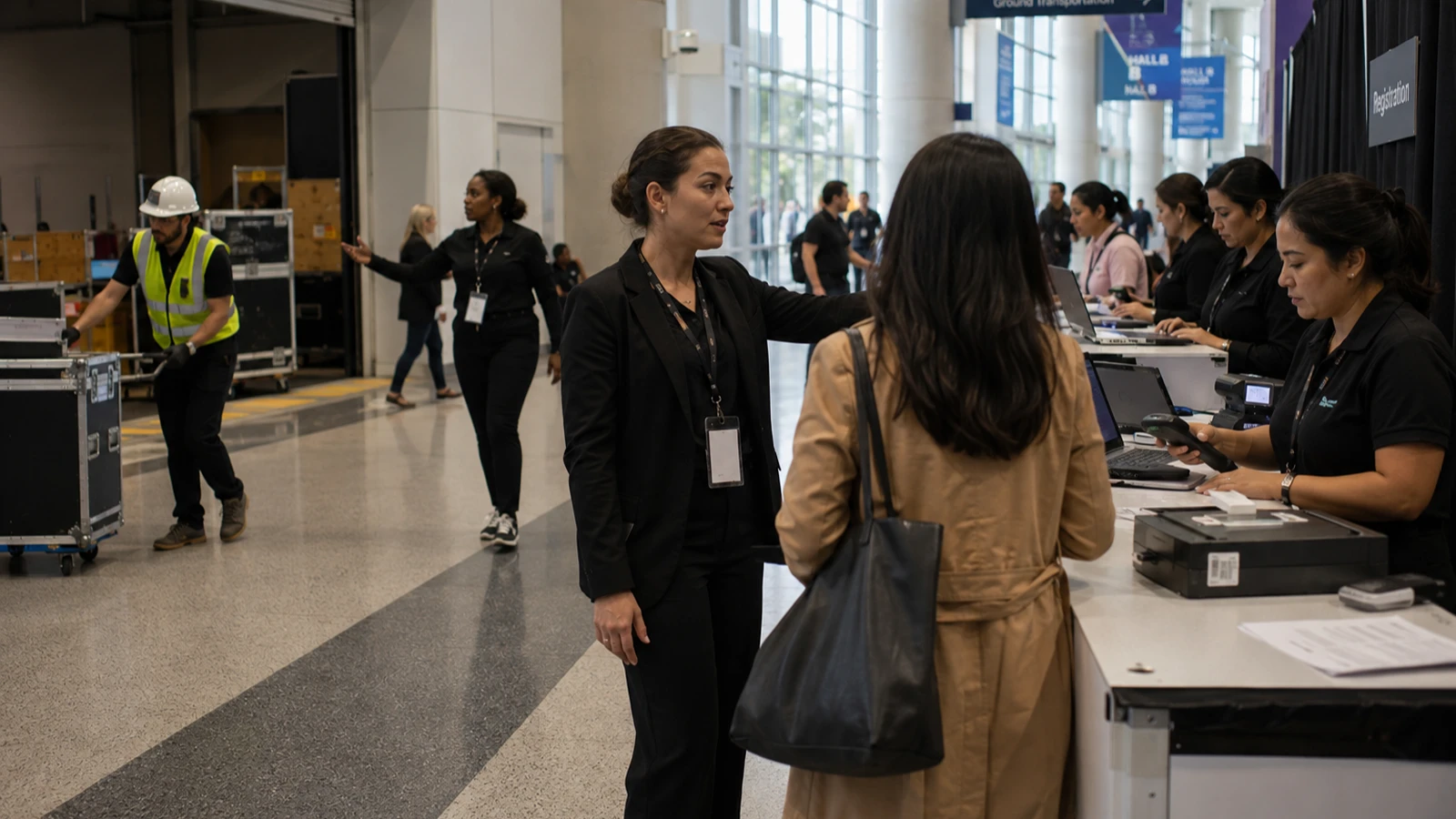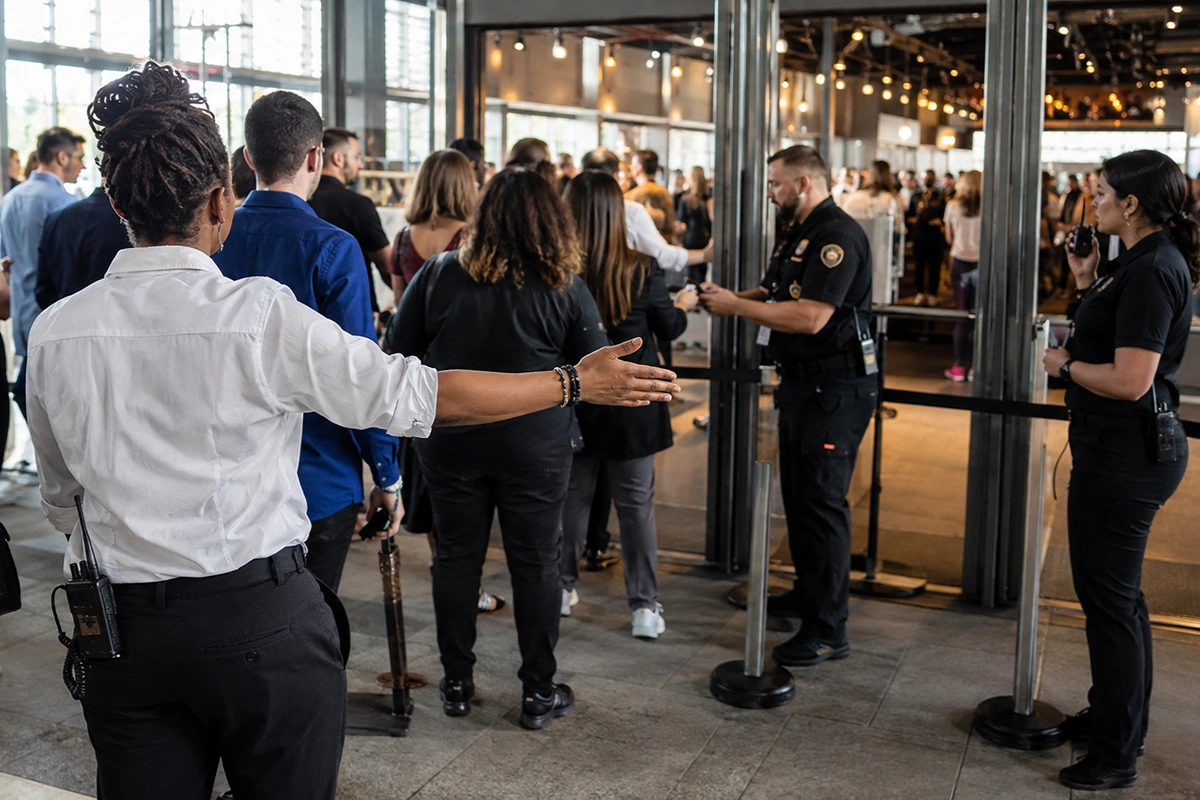

Freedom 250 gives planners a very specific Washington DC staffing problem. Public celebration activity, National Mall programming, World Cup fan-zone energy, sponsor receptions, VIP hospitality areas, corporate viewing events, public pavilions, and guest services can all sit inside the same summer window.
That is why event staffing in Washington DC has to be planned around guest journeys, public access, zone coverage, and event-day communication. The real issue is not simply booking staff for an event. It is deciding how different staff roles support large public celebrations, civic events, public-sector gatherings, sponsor hospitality, and large-scale event operations without confusing the guest experience.
This article focuses on staffing for large public celebrations and civic events, especially when public programming and private hospitality activity overlap around the National Mall and nearby Washington DC venues.
Quick Answer
Freedom 250 will test event staffing in Washington DC because planners may need to support public arrivals, wayfinding, guest services, sponsor receptions, VIP hospitality, fan activity, public pavilions, and event operations during the same civic celebration window. The strongest staffing plans should be built by zone, guest type, and escalation path.
CEO Excerpt
“Large civic events need staffing plans that respect both the public setting and the guest experience. In Washington DC, that means clear wayfinding, prepared guest services, careful VIP routing, and staff who understand when to answer, when to guide, and when to escalate.”- Daniel Meursing, CEO, Eventstaff
Why Freedom 250 Is a Staffing Window, Not a Single Event
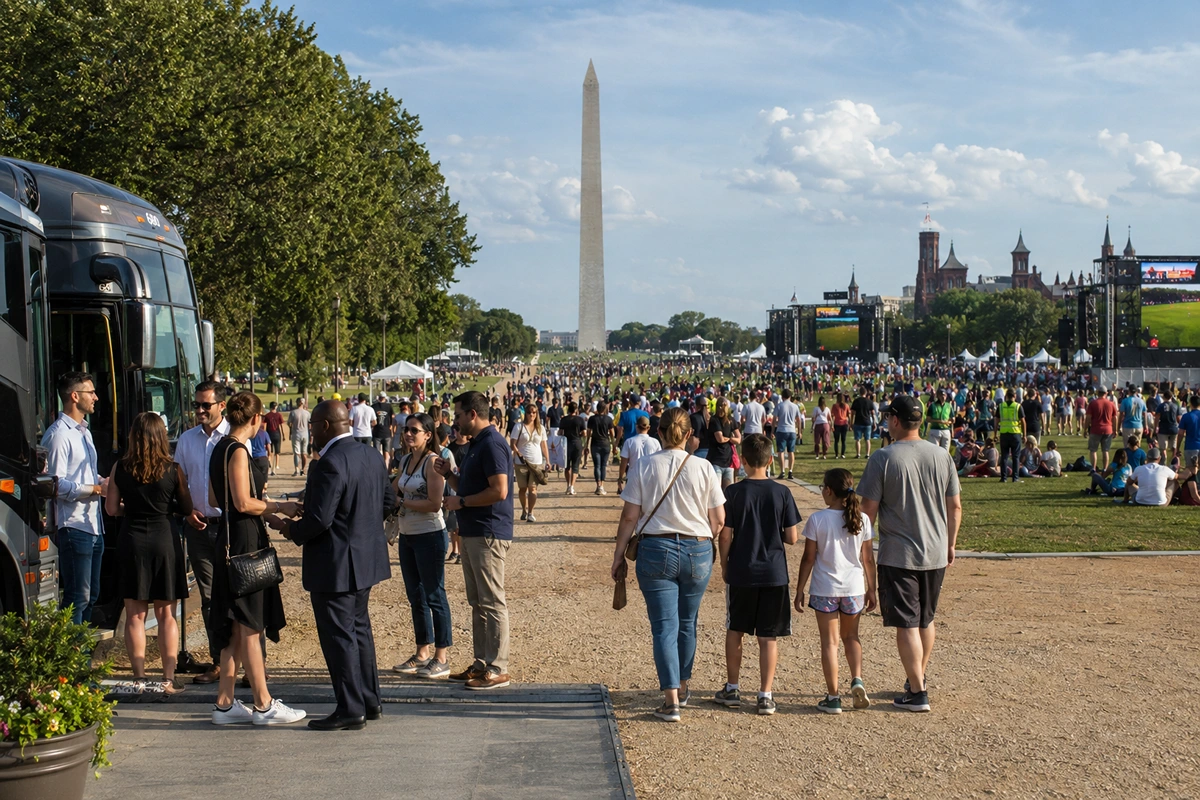
Freedom 250 should be treated as a planning window because several kinds of activity can happen around the same public calendar. The FIFA World Cup 2026 Fan Zone Washington, D.C. is listed as a National Mall experience tied to the World Cup and Freedom 250, with live match broadcasts, interactive activities, food, and entertainment through Freedom 250’s event page.
The District’s own DC250 site also describes the FIFA DC Fan Fest as running from June 11 to July 19 on the National Mall, with jumbotron match broadcasts, music, food, and cultural programming through the DC government event page. That date range matters for planners because staffing demand can come from repeated event days, not just a single peak moment.
For agencies, sponsors, hospitality teams, civic partners, and corporate hosts, the planning question becomes wider than “How many staff do we need?” A better question is: “Which guest journeys could overlap, and which staff roles need to own each one?”
A fan arriving for a public watch party has a different need from a sponsor guest heading to a private reception. A family looking for a public pavilion has a different need from a VIP guest trying to find a hospitality entrance. A corporate group moving from a hotel to a viewing event may need different support than visitors walking across the Mall after a public program.
This is where event operations staffing for large-scale public gatherings becomes important. The staffing plan has to support multiple layers of movement, information, access, and guest expectation. In Washington DC, the stakes are higher because the public setting, civic tone, federal backdrop, and visitor mix all shape how staff should communicate.
Public Celebrations Create Multiple Guest Journeys at Once
The strongest way to understand Freedom 250 staffing is to separate guest journeys. During a civic celebration window, there is rarely one audience moving in one direction for one purpose.
A public celebration may include families, tourists, soccer fans, civic guests, public-sector attendees, sponsors, executives, vendors, media, volunteers, and corporate groups. Some people may be attending free programming. Others may have invitations, credentials, or private hospitality access. Some may need general information, while others need discreet routing or a clear host handoff.
This matters because staffing for large public celebrations and civic events cannot rely on a single guest-service script. A staff member placed near an arrival point may need to answer public questions, direct guests toward a fan activity area, explain where a reception entrance is, and escalate a lost credential issue to the right lead. Without role clarity, that staff member is forced to improvise.
The practical staffing implication is that planners should identify guest types before assigning staff. Public guests, sponsor guests, VIP guests, media guests, corporate guests, vendors, and staff arrivals may all need different routing. If the staffing plan treats all of them the same, the first visible guest-service point becomes overloaded.
For planners, this means the staffing model should begin with three questions:
- Who is arriving, and what do they already know?
- What destination or decision point are they trying to reach?
- Which staff role owns the next step if the answer is not simple?
That exercise creates a clearer staffing plan than a flat headcount. It also helps avoid one of the most common issues at civic events: staff who are polite but cannot move the guest closer to the right destination.
Freedom 250 Event Staffing Zone Map
A public celebration window works best when staff are assigned by zone. The table below shows how planners can think about staffing across public and private event areas.

This zone map prevents planners from thinking about staffing as a single pool of people. A staff member at a sponsor entrance needs a different briefing than a staff member at a public pavilion. A wayfinding staff member needs different answers than a VIP greeter. A staff lead needs enough operational context to make decisions when a route changes, a guest list issue appears, or front-line staff receive the same question repeatedly.
For planning purposes, each major zone should have one clear owner. That does not always mean one dedicated person for every small area. It means no important guest moment should be left to whoever happens to be nearby. When guests are moving between public programming and private hospitality, ownership matters because confusion can travel quickly from one area into another.
Where Guest Services and Wayfinding Carry the Experience
The National Mall is familiar to many visitors, but that does not make every event path obvious. Large open civic spaces can make guests feel close to an event while still being unsure about where to enter, where to wait, where to find food, where to meet a group, where public programming begins, or where a private reception entrance sits.
That is why wayfinding is one of the most important staffing layers for Freedom 250-adjacent planning. Signage helps, but signs cannot answer every live question. Guests may approach from Metro stations, rideshare points, museums, hotels, side streets, public programs, or other event areas. They may also arrive at different times depending on match schedules, reception times, public programming, or July celebration activity.
A good wayfinding plan places staff before guests become uncertain. If staff only appear at the final check-in point, guests may already be confused, late, or moving in the wrong direction. This is especially important when a private event sits near public activity. A sponsor guest may need to know how to move past general public flow without feeling abandoned inside a larger crowd.
The staffing implication is that wayfinding staff need more than a venue map. They should know the public event context, nearby landmarks, entrance points, private event routing, accessibility considerations, and escalation contacts. They should also understand which questions they can answer directly and which questions should move to a supervisor or official event contact.
This is where crowd management staffing for national celebrations should be understood carefully. For Eventstaff, the role is guest-facing support, movement guidance, queue assistance, and public information. It should not be confused with law enforcement, security command, or official public-safety authority. The staffing value is helping guests move more clearly through the event environment while keeping the guest experience organized.
Sponsor Receptions Need a Separate Hospitality Layer
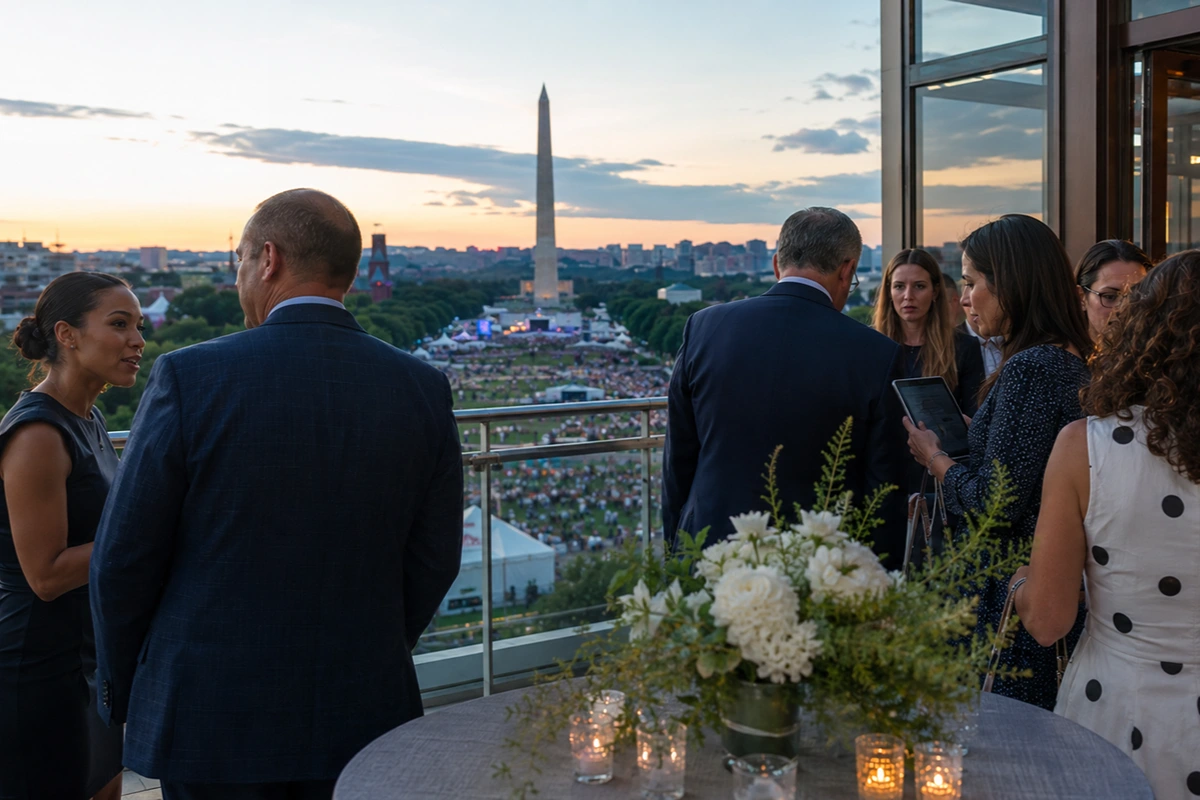
Sponsor receptions and corporate viewing events need a different staffing layer from public fan activity. A public zone may be built around general access, information, programming, and movement. A sponsor reception may require check-in, guest-list handling, VIP routing, host notification, credential review, hospitality support, and controlled access.
If the two are staffed as one environment, confusion starts quickly. A VIP guest may arrive at a public-facing information point and receive a generic answer. A sponsor guest may wait in the wrong line. A corporate host may lose time answering access questions that staff could have handled with the right briefing.
For Freedom 250-adjacent receptions, the planning risk is the overlap between public excitement and private expectation. Guests may be arriving because of a public celebration, but their invitation may be for a curated hospitality experience. They still need a polished first touch, clear check-in, and a confident handoff.
A practical staffing model for sponsor receptions should include:
- A visible greeting point before the formal check-in area. This helps invited guests feel expected before they begin asking questions, especially when the surrounding area has public movement.
- Check-in staff who understand guest tiers, list exceptions, plus-one rules, and escalation contacts. Public celebration windows often bring late changes, and staff need a clear path for resolving them quietly.
- VIP hospitality staff who can route executives, sponsors, speakers, media guests, or private invitees without sending them through general flow. This protects the tone of the reception before the guest reaches the room.
- A staff lead who can coordinate with the host, venue contact, security team, or event manager when information changes. This keeps front-line staff from making decisions they are not authorized to make.
This is where event staffing for government and public sector events can overlap with corporate hospitality. Staff should be polished and helpful, but also careful with language, boundaries, and escalation. They should not guess about official programming, security decisions, public access, or policy questions. Their job is to support the guest journey and move issues to the correct authority.
Public Sector Events Require Tone, Boundaries, and Escalation Clarity
Washington DC civic events require a specific service tone. Staff need to be clear, neutral, calm, and useful. They may be helping guests near federal landmarks, public institutions, civic programming, government-adjacent events, or public-sector receptions. That setting affects how staff should answer questions and represent the event.
For event staffing for government and public sector events, the issue is often what staff should and should not say. A staff member may be asked about security, timing, access, public programming, elected officials, transportation, or restricted areas. Some questions can be answered with a prepared response. Others need escalation.
A strong staffing brief should define three categories of answers:
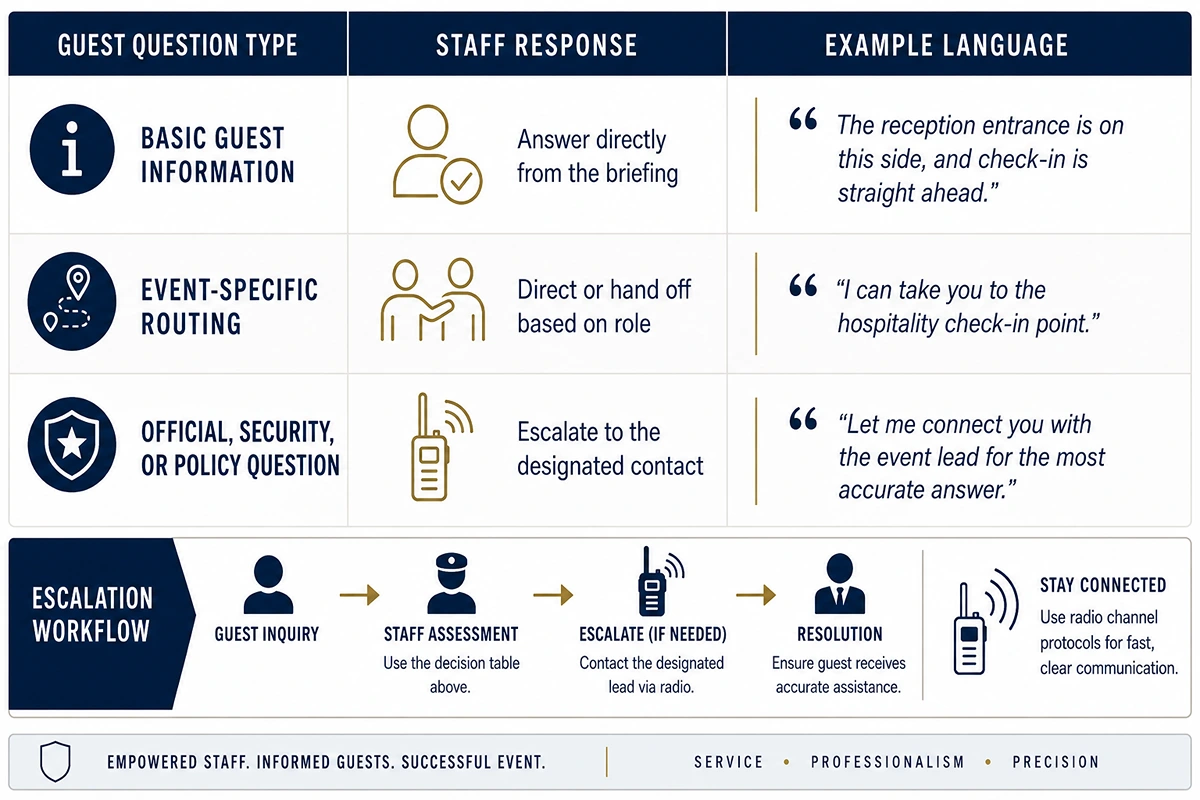
This prevents staff from overstepping. It also protects the planner, sponsor, and guest experience. A well-meaning but unofficial answer can create confusion when public programming, access rules, or event timing changes.
For planners, the practical action is to build escalation into the staffing plan before the event day. Staff should know who to call, where the operations lead is, what radio or messaging channel is used, and which issues should never be handled casually at the front line.
Crowd Management Staffing Starts with Movement and Information
The phrase crowd management staffing for national celebrations can sound broad, so it needs to be applied carefully. In this context, the staffing value is movement support, line clarity, queue assistance, guest information, and timely handoff when a guest issue needs escalation.
Large public celebrations often create uncertainty at transition points. Guests pause near entrances because they are unsure where to go. Families gather near path intersections to decide on a meeting point. Sponsor guests look for a private entrance while public attendees move toward fan programming. Visitors ask the same schedule question repeatedly because information is spread across different public zones.
When no staff role owns those transition points, small pauses can become visible clusters. A cluster near an access point can slow movement, block sightlines, and increase frustration. Clear directional staff reduce that friction by giving guests an answer before they create their own path.
For planning purposes, crowd management support should be placed near:
- public arrival points where guests first need orientation. This is where uncertainty appears before guests know which question to ask.
- path splits between public programming and private events. These points matter because one wrong turn can delay a sponsor guest or send a public attendee toward a private access area.
- queue starts where guests need to know whether they are in the correct line. A staff member can prevent guests from waiting in a line that does not match their destination.
- pavilion entrances where guests need context. Staff can explain participation, timing, and next steps before the area becomes crowded.
- sponsor or VIP access points where private routing begins. This protects the private experience without making public guests feel dismissed.
Staff should also be briefed on repeated questions. If 50 guests ask the same thing in the first hour, the staffing plan should adapt. A staff lead may need to reposition support, update language, or coordinate with the event manager.

Large-Scale Public Gatherings Need Event Operations Staffing
Freedom 250-adjacent events may require strong front-line staff, but they also need operational support behind the guest-facing team. That is where event operations staffing for large-scale public gatherings becomes important.
Operations staff help keep the staffing plan alive once the event begins. They monitor check-ins, shift coverage, staff placement, recurring guest questions, queue changes, VIP arrivals, and communication between front-line teams and event leads. Without that layer, front-line staff may be left to solve problems individually.
The need becomes sharper during multi-day or multi-week programming. The DC250 site describes Washington DC’s semiquincentennial year as a yearlong celebration with events, cultural experiences, museums, restaurants, hotels, neighborhoods, and monumental moments through DC250’s official visitor-facing celebration site. That wider calendar matters because staffing planning may need to account for repeated activation days, surrounding hospitality events, and changing visitor patterns.
A practical operations plan should include staff check-in and briefing before each shift, clear zone assignments, a staff lead for each major guest-facing area, escalation contacts for access issues, scheduled breaks that do not empty key guest-service points, and a daily recap of repeated questions and bottlenecks.
This is where many large-event plans weaken. They place enough people on site, but no one is clearly responsible for adjusting the plan once real guest behavior appears. Event operations staffing gives the planner a way to manage the staffing team during the event, not just before it.
What Planners Usually Miss During Civic Celebration Windows
The biggest staffing mistakes during civic celebration windows usually come from underestimating how many different experiences are happening at once.
They assume every guest is attending for the same reason.
A family attending public programming, a World Cup fan looking for a screen, a sponsor guest heading to a reception, and a public-sector guest attending a civic function may all enter the same general area. They do not need the same guidance. A single generic guest-service script leaves staff underprepared for the real visitor mix.
The fix is to brief staff by guest type. Staff should know the difference between public guests, private guests, VIPs, media, vendors, and internal teams. That allows them to route quickly and avoid sending people into the wrong flow.
They place staff only at entrances.
Entrances matter, but many guest questions happen before and after the entrance. Guests need help when they arrive from transit, when public programming overlaps with private hospitality, when they move between zones, and when they leave after a major moment.
A stronger plan places staff at decision points. These are the places where guests naturally pause, ask questions, choose a route, or create a small crowd because the next step is unclear.
They mix public guest services with VIP hospitality roles.
Public guest services and VIP hospitality require different tone, information, and routing. If the same staff member is asked to answer public questions while also managing a sponsor guest list, both experiences can suffer.
The better approach is to separate public information roles from private hospitality roles where possible. When roles must overlap, staff need a clear priority order and a designated escalation contact.
They underplan staff leads.
Large public gatherings need staff leads because front-line staff will face questions that are not in the briefing. A staff lead can adjust placement, clarify answers, approve handoffs, and keep communication moving.
Without staff leads, every small uncertainty becomes a front-line decision. That slows response time and creates inconsistent answers across the event.
They give staff facts without boundaries.
Staff need information, but they also need limits. At civic events, a staff member should know when to answer, when to direct, and when to escalate. Boundaries protect both the guest and the planner.
A good briefing should include approved language for common questions and clear instructions for sensitive questions. That is especially important near public-sector activity, sponsor events, and large civic programming.
How to Apply This to Freedom 250-Adjacent Events
Planners should begin by mapping zones and guest journeys before assigning staff count. For a Freedom 250-adjacent event, that map may include public arrival points, private reception entrances, sponsor lounges, fan activity areas, pavilions, hotel pickup points, rideshare zones, public transit routes, and internal operations areas.
A useful planning timeline looks like this:
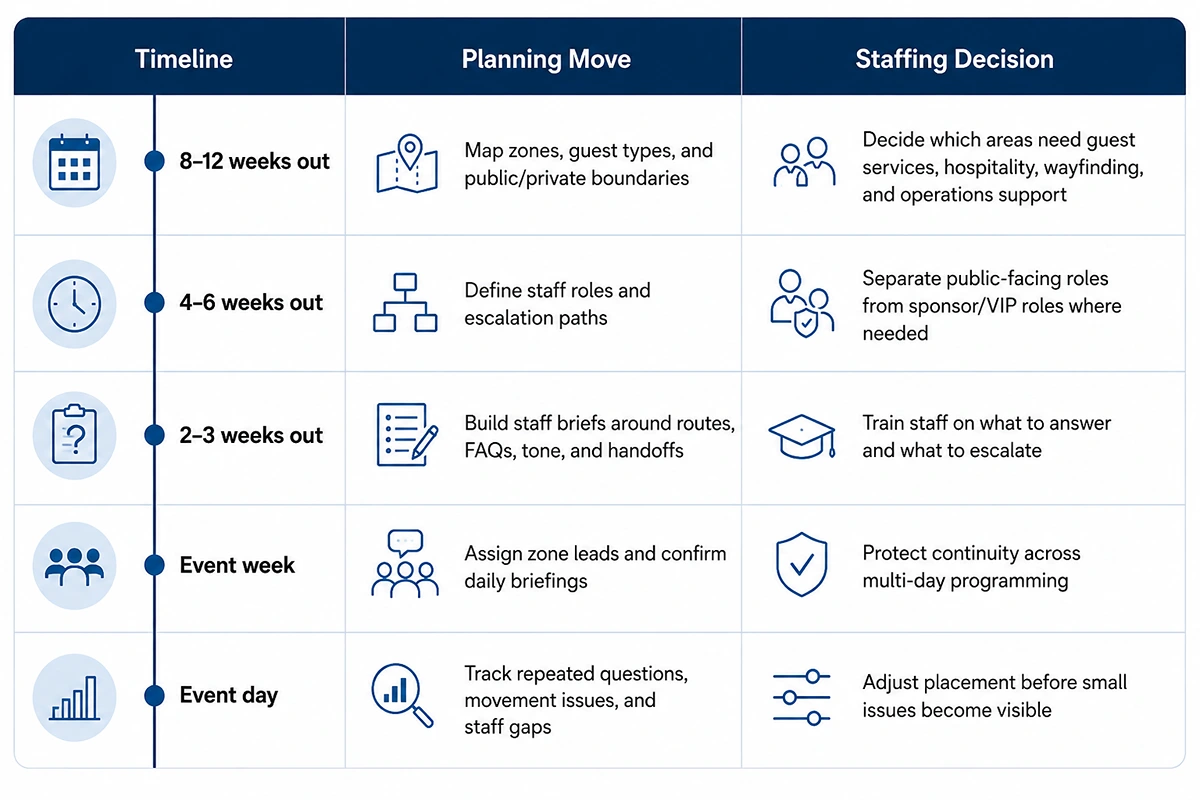
This timeline gives planners a practical way to move from idea to execution. It also prevents staffing from becoming a late-stage vendor line item. In a civic celebration window, staffing is part of the guest experience design.
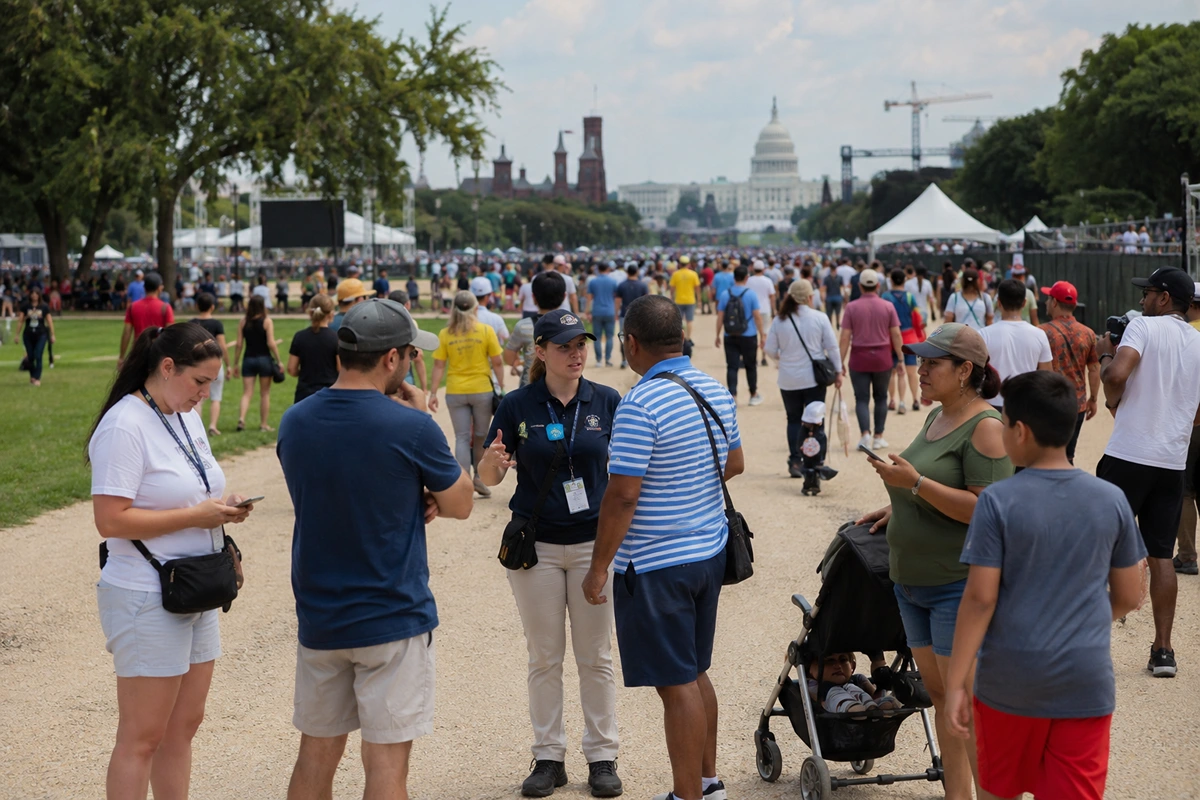
Common Mistakes to Avoid
Treating a sponsor reception like a normal private event.
A sponsor reception near public celebration activity may have private-event expectations, but the surrounding environment is different. Guests may arrive through public traffic, rideshare congestion, fan activity, or civic programming. If the reception plan only covers the door, invited guests may feel unguided before they reach check-in.
The staffing fix is to plan the approach path, not just the entrance. Greeters, directional staff, and check-in support should understand how guests are likely to arrive and where confusion may appear.
Relying on signage alone.
Signage is useful, but it cannot answer layered questions. A guest may know the general direction and still need help finding the correct line, pavilion, hospitality entrance, or meeting point. During public celebration activity, signs can also compete with crowds, screens, barricades, public programming, and street-level distractions.
Staff turn signage into guidance. They can confirm the guest is in the right place, adjust language when the same question repeats, and alert a lead when the route itself needs support.
Giving guest services staff unclear authority.
Front-line staff should know what they are allowed to solve. Can they direct a guest to a private entrance? Can they radio a host? Can they approve an exception? Can they answer schedule questions? Can they move a line?
Unclear authority leads to hesitation or overreach. Both create problems. The briefing should define what staff can answer, what they can decide, and what must move to a lead.
Staffing by headcount instead of zones.
A large team can still fail if everyone is placed in the wrong area. Public-event staffing should be planned around zones, guest paths, and high-question areas. A smaller team with clear zone ownership can often perform better than a larger team with vague assignments.
For Freedom 250-adjacent events, the staffing map should identify public arrival, private reception, VIP hospitality, information, queue, and operations zones before the final headcount is approved.
Forgetting that long celebration windows need continuity.
A single-day staffing mindset can weaken a multi-day or multi-week event window. Questions change, staff fatigue builds, guest patterns shift, and public programming can affect private events differently from day to day.
The practical fix is daily briefing and recap. Staff should begin each day with updated information and end each day with notes on what guests asked, where flow slowed, and which roles need adjustment.
Why Eventstaff Fits This Need
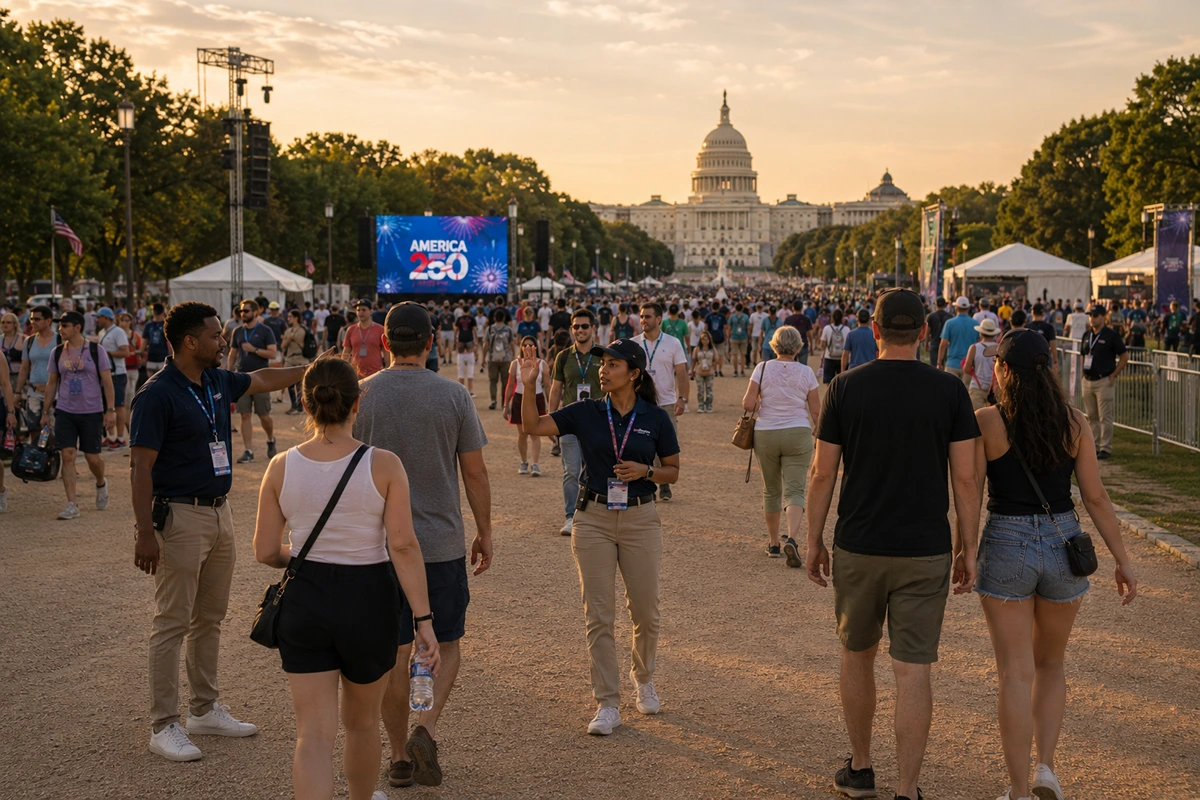
Eventstaff supports Washington DC events with trained guest-facing staff who can be briefed by zone, guest type, and event role. For Freedom 250-adjacent planning, that means teams can support wayfinding, check-in, guest services, sponsor receptions, VIP hospitality areas, public pavilions, and event operations.
This role clarity matters because civic celebration windows can place public and private experiences close together. Staff need to understand where public guest support ends, where private hospitality begins, and when an issue should be escalated to the event lead, venue contact, or official authority.
For event staffing in Washington DC, Eventstaff’s value sits in disciplined placement and communication. The right team helps planners keep public-facing support, VIP routing, sponsor hospitality, and event-day operations aligned during a celebration window where guest expectations can shift by zone and by hour.
Bottom Line
Freedom 250 will test event staffing in Washington DC because public celebration activity, fan programming, sponsor receptions, VIP hospitality, civic events, and large-scale public gatherings can overlap across the same summer window. The strongest staffing plans will be built around guest journeys, not generic headcount.
For staffing for large public celebrations and civic events, planners need staff who can support public arrivals, information points, wayfinding, pavilions, and guest movement. For event staffing for government and public sector events, staff need clear tone, boundaries, and escalation paths. For crowd management staffing for national celebrations, the practical focus should be movement, queues, information, and guest support. For event operations staffing for large-scale public gatherings, planners need staff leads, daily briefings, shift coverage, and communication systems that keep the event team aligned.
Freedom 250 is a reminder that civic-event staffing should be planned by zone, guest type, and handoff. That is how planners keep large public moments organized without losing the details that shape each guest’s experience.
Ready to elevate your next event?
Join thousands of event planners who trust EventStaff.com for reliable, professional staffing solutions.
Trusted by event professionals nationwide
1k+
Events Staffed
2 million+
Guests Served
97%
Positive reviews