
CEO Excerpt:
"In high-volume environments, hospitality is a system of precision where a single bottleneck degrades the entire guest experience. Our hospitality labor hire strategy provides specialized professionals who protect your service standards when pressure is highest. At scale, the difference between success and operational failure is the quality and agility of your people." - CEO Event Staff
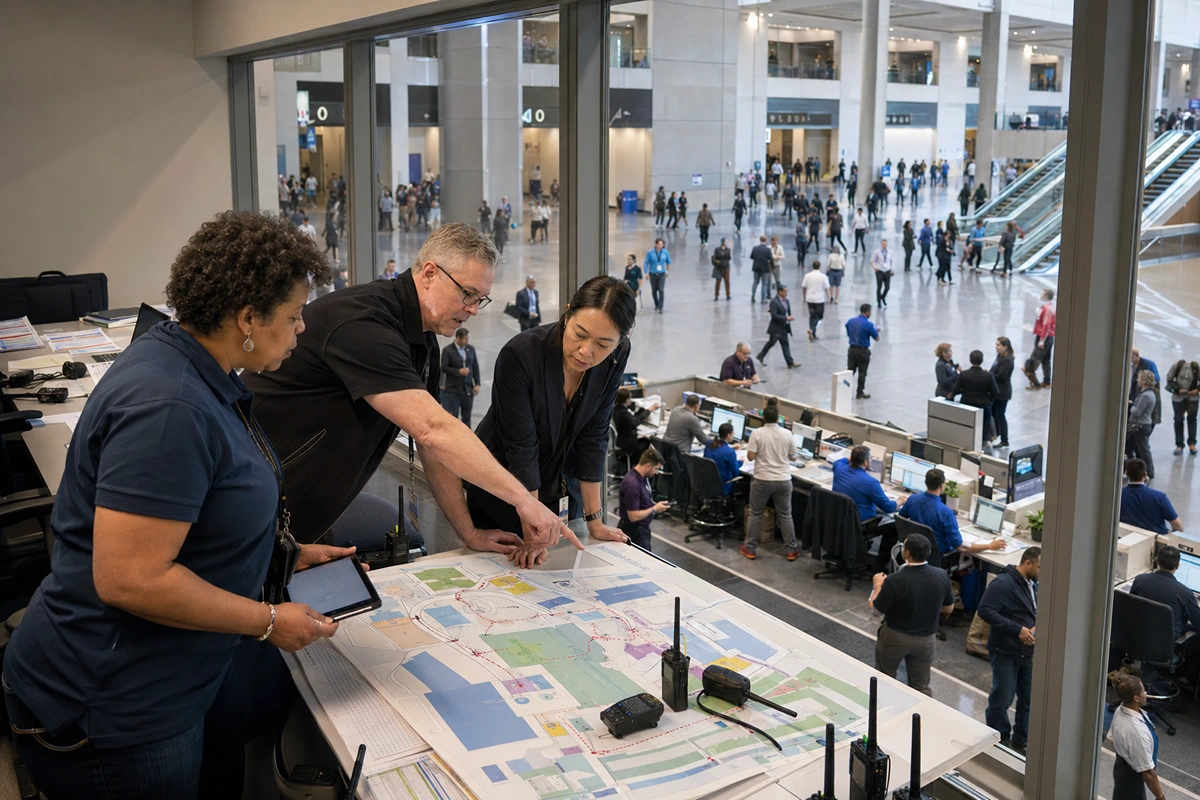
Hospitality labor hire keeps high-volume events moving when guest counts spike, service points multiply, and timing windows shrink. If your event exceeds 1,000 guests, even minor delays compound quickly, and queues become visible operational failures.
Permanent teams are typically structured for baseline service, not surge compression across multiple zones. Once guest volume crosses four digits, internal staffing depth alone rarely absorbs variability without overtime or service breakdowns. Hospitality labor hire becomes the elasticity layer that protects flow, stabilizes staffing ratios, and prevents predictable escalation under pressure.
This guide covers staffing for hospitality events with practical ratios, role allocation, and hospitality staff planning for peak periods, showing where temporary hospitality staff, event catering staff, and high-volume event labor make the decisive operational difference.
Executive Summary
Professional hospitality labor hire eliminates service bottlenecks by deploying scalable, pre-vetted teams that maintain operational flow and guest satisfaction during high-volume demand spikes.
What Does Hospitality Labor Hire Actually Prevent?
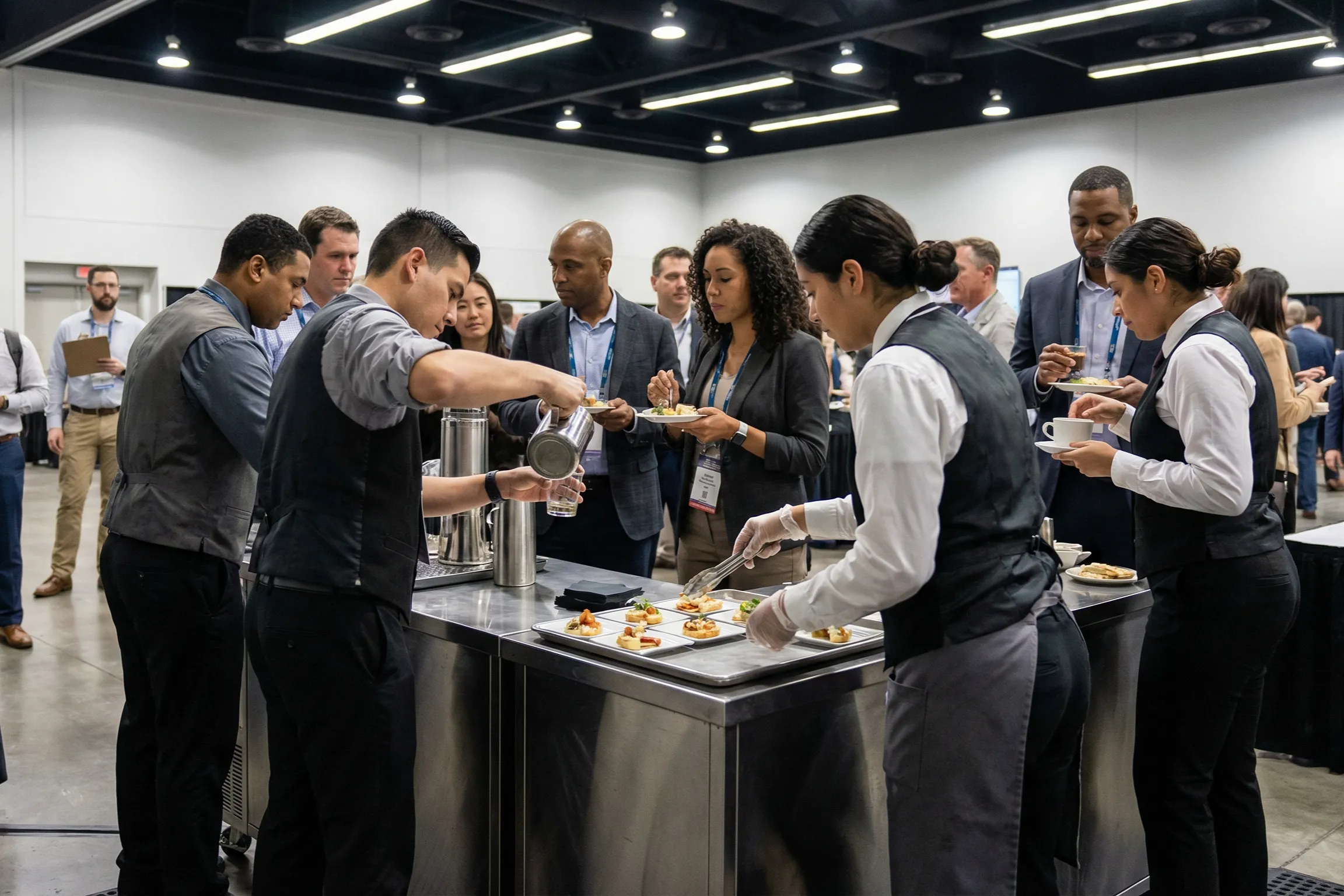
Hospitality labour hire prevents service bottlenecks by stabilizing staffing ratios, protecting supervisors from task overload, and absorbing peak demand before queues form. At high-volume events, failure usually begins at the transaction point:
- A bartender manages payment and prep alone.
- A buffet attendant restocks while serving.
- A runner is pulled from back-of-house support.
The slowdown does not stay contained. One stalled station creates a queue. Queues slow adjacent zones. Supervisors step in to assist instead of overseeing timing and compliance. Understanding which positions carry the most operational weight is critical before finalizing deployment. This roles that matter explains how specific assignments directly impact throughput and control.
Layered correctly, staffing for hospitality events separates execution from supervision. High-volume event labour absorbs compression so leads maintain control rather than firefight cascading delays.
Signs You Need Additional Hospitality Labor
High-volume events rely on hospitality labor hire when demand becomes uneven across zones and internal teams start reallocating reactively. The earliest warning signs show up before guests complain.
Look for these indicators:
- Long queues at food and drink stations that persist beyond a single rush
- Staff leaving posts to retrieve stock or cover another station
- Back-of-house support pulled forward mid-service
- VIP areas borrowing staff from general service zones
- Supervisors stepping into service instead of managing timing and quality
These signals mean your staffing model is running on improvisation. Once zones start borrowing from each other, delays compound and recovery costs escalate. Tight hospitality staff planning and the right mix of temporary hospitality staff correct the pattern early, before service gaps become the main guest experience.
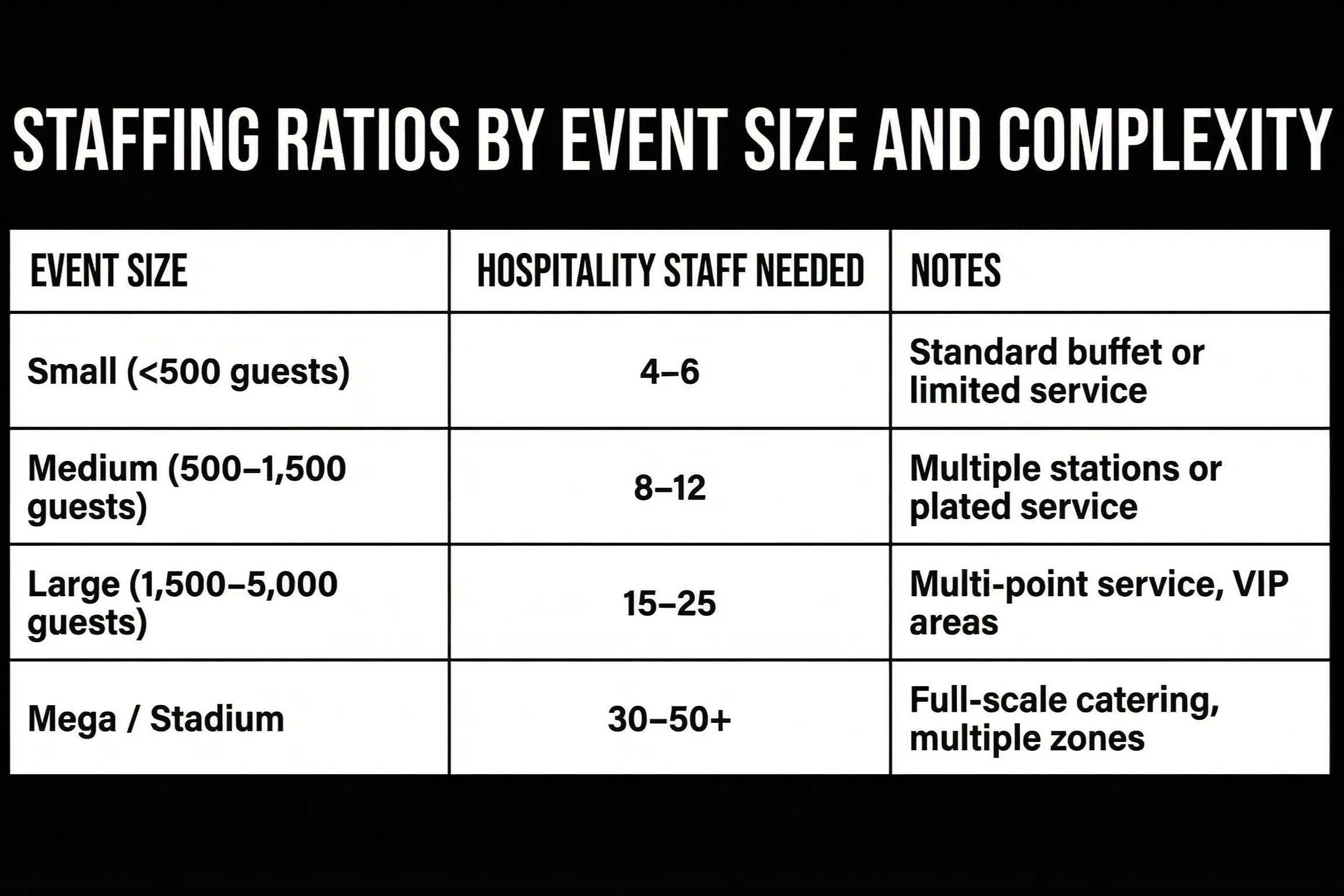
Staffing Ratios by Event Size and Complexity
Plan a minimum of one hospitality staff member per 100 guests, plus 10% floaters to protect flow during peak service windows. The ratio exists because high-volume service fails from compression, not averages. When transaction and replenishment cycles slow even slightly, queues form and spread across zones.
The 10% floater buffer is not optional padding. Floaters protect break coverage, restocking, and surge response so stations do not collapse when even a small portion of the team rotates off the floor.
According to BLS Job Openings and Labor Turnover data, accommodation and food services workers quit at a rate of 3.7–5.3% per month, more than double the national average, which is why pre-vetted temporary labor is critical at scale.
Pro Tip: Increase event catering staff by 15% to 30% for multi-course menus, VIP areas, or complex layouts where travel time slows replenishment cycles.
Pro Tip: Increase event catering staff by 15% to 30% for multi-course menus, VIP high-profile guest areas, or complex venue layouts.
Hospitality Roles and Task Categories
Divide teams into defined service categories with assigned zones to prevent overlap and confusion.
Hospitality Roles and Task Categories (Revised to Reinforce Zone Dependency)
High-volume events rely on clearly defined role separation because cross-coverage slows throughput and increases error rates under pressure. Zone ownership is not administrative. It is structural control.
To keep your event running smoothly, you should divide your teams into clear service categories. This helps everyone understand their role and stay focused during the event. It also improves coordination and reduces confusion on-site. When each team knows its responsibility, service becomes faster and more professional.
- Start with the Food & Beverage team. This group includes servers, bartenders, and buffet attendants. They handle all food and drink service for guests. Because they are highly visible, their efficiency and attitude directly impact the guest experience.
- Next, assign a Guest Services team. This includes coat check staff, reception desk teams, and information support. They are often the first point of contact for guests. As a result, they set the tone for the entire event.
- You should also organize a Back-of-House Support team. This group manages dishwashing, food prep, logistics, and runner duties. Although guests may not see them, they are essential to keeping operations smooth. Without them, front-end service would quickly slow down.
- Finally, create a VIP or Event Host team. This includes concierge staff, special assistance personnel, and guest escorts. They focus on high-priority guests and special requirements. Their attention to detail ensures a premium experience for key attendees.
Each temporary hospitality staff member should own a primary zone. When roles blur, replenishment timing slips, and supervisors are forced into reactive correction.
The same zoning logic applies in other high-traffic environments. Booth staffing strategies demonstrate how defined role boundaries prevent overlap and maintain control in compressed service windows.
Planning for Peak Periods and Break Coverage
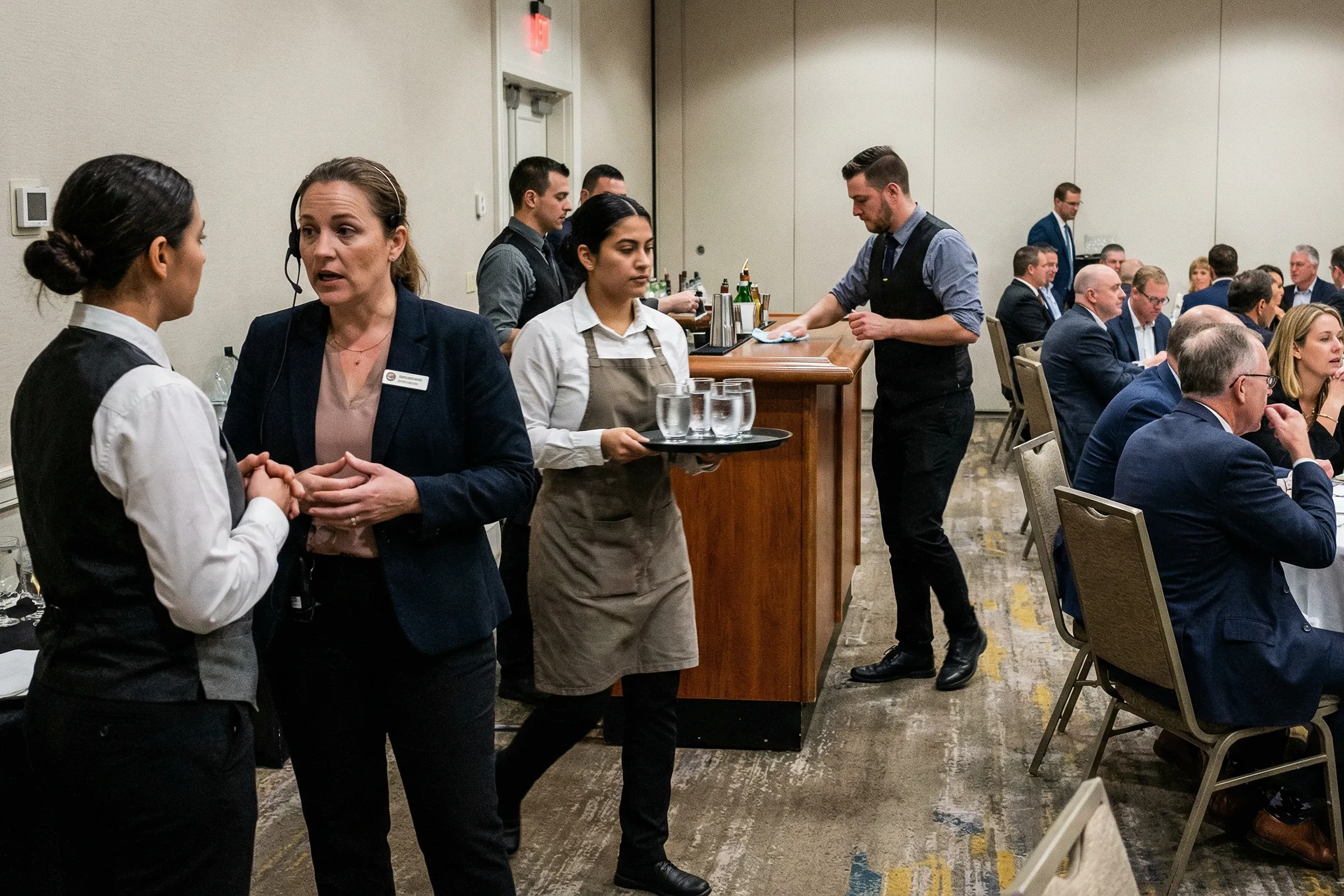
Overlap shifts 30 to 45 minutes before peak demand and assign at least 10% floaters to maintain service during mandatory breaks. If even 10% of staff rotate out without coverage, capacity drops instantly.
- Rotate high-demand stations to prevent fatigue.
- Overlap shifts during meal rushes or peak arrival waves.
- Use floating staff as surge insurance, not just extra hands.
A 2024 workforce planning report found that organizations with structured shift overlap protocols reduced service gaps by up to 23% during peak windows.
Example Hospitality Labor Plan: Conference Gala
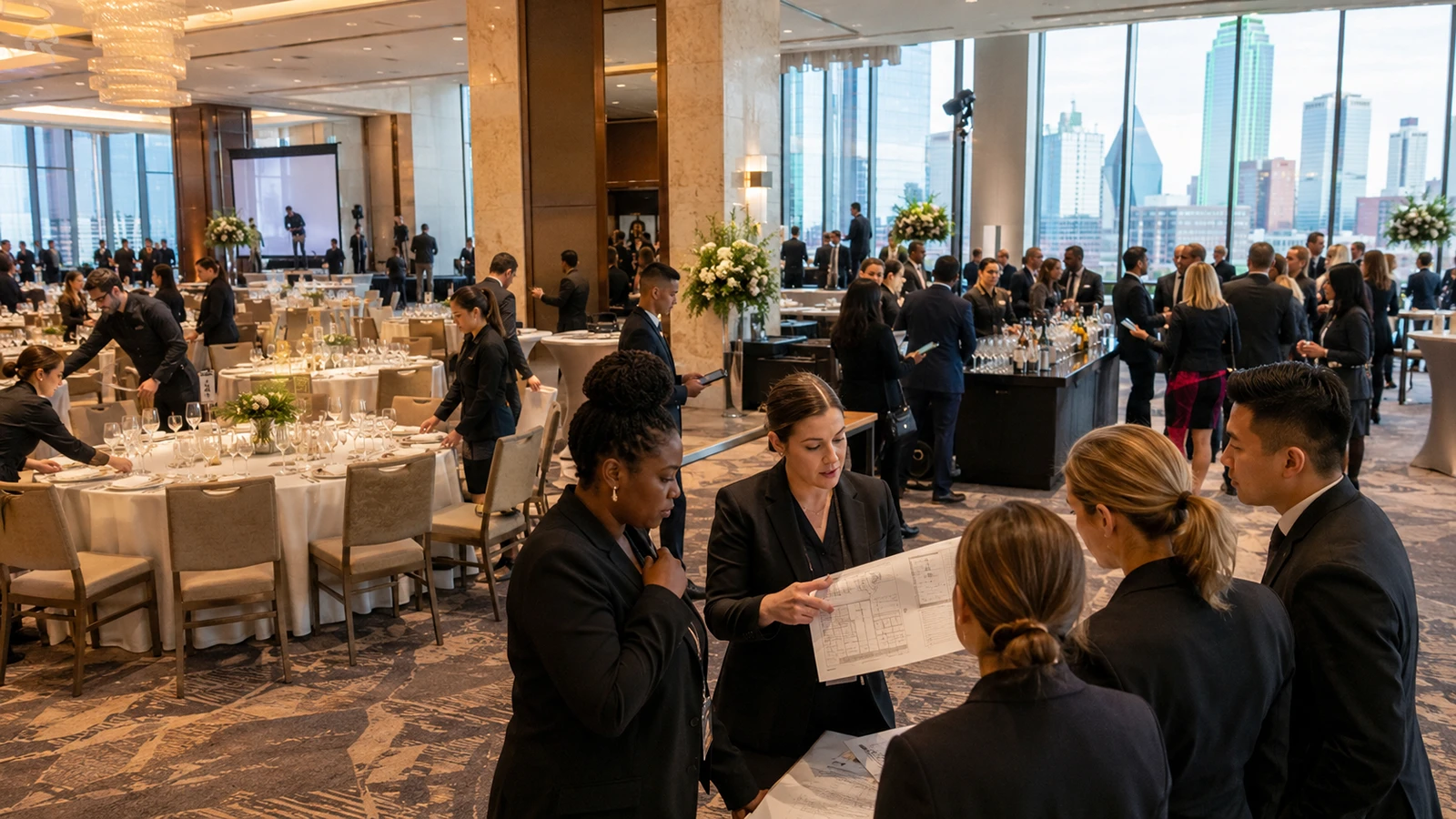
For an event with 1,500 guests, 3 food stations, 2 VIP lounges, and a 90-minute service window, the real risk isn’t the total headcount; it’s execution during peak pressure.
In this setup, the most critical factor is whether the team can hold their assigned zones during the busiest 20 minutes without breaking service timing. That peak window determines guest experience, queue length, refill speed, and overall event flow.
To manage this structure effectively, the staffing plan would include 8 servers handling food stations and guest circulation, 3 bartenders managing beverage flow, 2 dedicated VIP hosts overseeing lounge service and guest attention, and 3 floaters positioned to support high-traffic zones or step in where pressure builds.
In total, 16 staff members are deployed not randomly, but strategically across zones.
The success of this event depends less on the number of guests and more on whether each zone remains stable during surge moments. When staffing is aligned to peak load rather than average flow, service timing holds, VIP areas remain controlled, and operational gaps are prevented.
In large-scale events, structure protects experience.
Why this mix works:
- Servers maintain station continuity across service surges.
- Bartenders protect transaction speed, which prevents queues from spreading.
- VIP Hosts prevent premium areas from pulling staff from general zones.
- Floaters cover breaks, restocking, and rapid redeployments without collapsing stations.
If credential verification matters at your venue, staffing certifications worth knowing outline which credentials translate directly to operational reliability.
The Staffing Multiplier Effect
Hospitality labor hire acts as a force multiplier because high-volume events are defined by variance, not averages. Demand arrives in compressed waves, service points compete for the same support resources, and small delays compound across zones. Without labor elasticity, internal teams either overspend on overtime or accept predictable service breakdowns. Trained teams, zoned assignments, and peak-ready hospitality staff planning convert surge pressure into controlled execution. High-volume event labor is the buffer that keeps supervisors supervising and stations stable. To tailor your workforce to your venue layout and peak windows, you should get a quote to pressure-test your deployment plan before finalizing. Reliable staffing for hospitality events is not an optional add-on at scale. It is the operating layer that protects guest experience, compliance, and cost control.
Ready to elevate your next event?
Join thousands of event planners who trust EventStaff.com for reliable, professional staffing solutions.
Trusted by event professionals nationwide
1k+
Events Staffed
2 million+
Guests Served
97%
Positive reviews