
CEO Excerpt
"Effective queue management isn't about moving people faster; it's about stabilizing the unpredictable. At Event Staff, we train line captains to act as the structural firewall between arrival surges and your entry gates." - CEO Event Staff
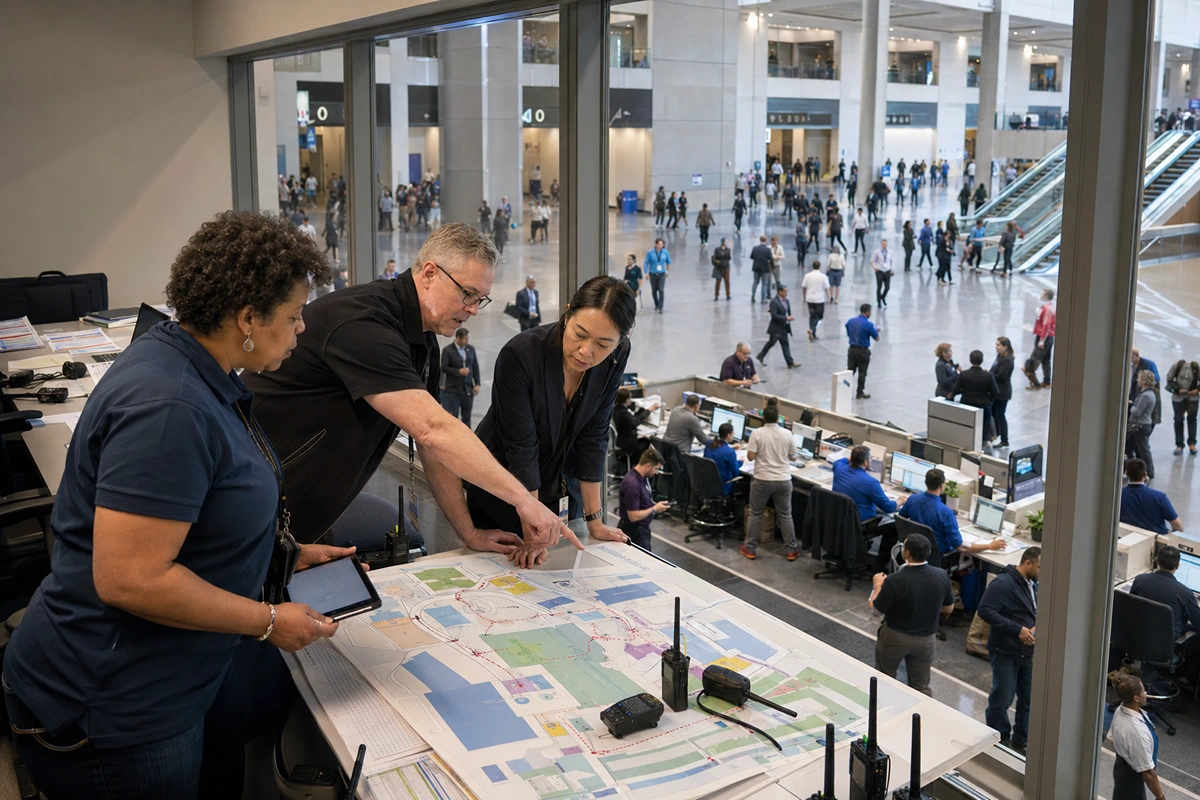
Event line captains are the staff members responsible for keeping high-volume entry lines structured, paced, and operational when arrival rates exceed scan capacity. At conferences processing 2,000 guests per hour or festivals releasing 8,000 attendees at the gate opening, unmanaged queues fail quickly. The difference between steady flow and hallway gridlock usually comes down to one trained role controlling structure and pace before collapse begins.
Executive Summary
Event line captains act as the operational firewall between high-volume arrivals and entry failure, enforcing pacing and lane integrity to prevent the gridlock that destroys guest experience before it begins.
Maintaining Queue Integrity Under Pressure
.webp)
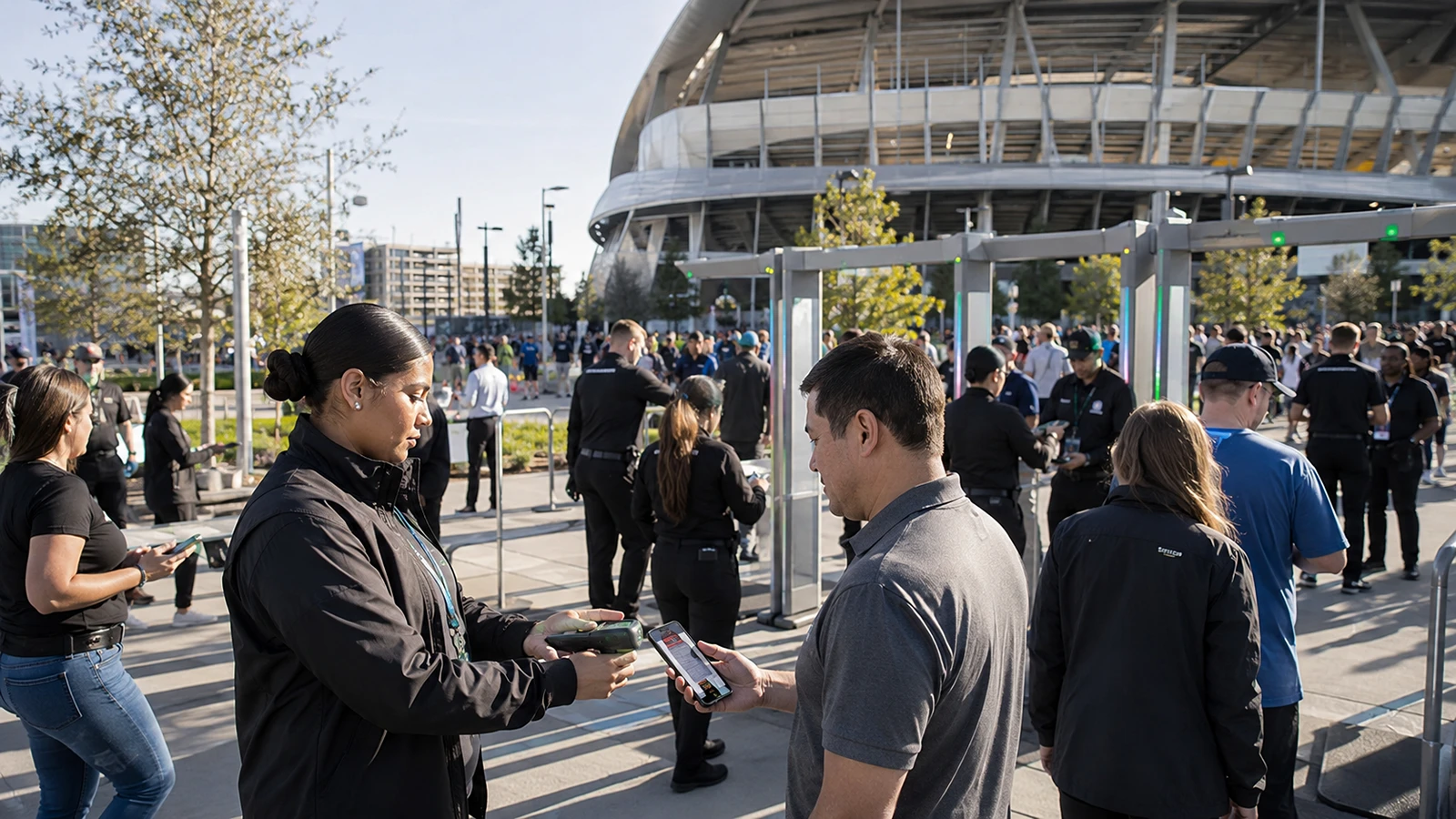
Unsupervised lines do not self-regulate. They bow outward, absorb groups from incorrect angles, and block cross-traffic that venues rely on for safety compliance. In most convention centers, once a queue extends more than four feet beyond its stanchion footprint, it creates a fire marshal exposure that can trigger immediate capacity reductions or significant municipal fines.
Event line captains prevent this by shaping lanes continuously, not guarding them passively. Their focus is structural integrity under pressure. Core controls include:
- Real-time stanchion angle adjustments to prevent outward drift.
- Enforcing ADA and VIP lane separation so protected routes remain usable for all guests.
- Active merge-point management near doors where compression spikes.
The objective is density control, not visual neatness. Compression beyond five guests per linear meter consistently slows scan compliance and increases visible frustration. Professional queue management staff intervene while the structure still holds, unlike volunteers who react after failure is visible. This proactive approach is detailed further in our breakdown of the science of queue management, where stabilizing density is key to throughput.
Pacing Controls That Prevent Downstream Bottlenecks
Most entry failures don’t originate at the scanner. They originate upstream. When guests arrive faster than scanners can process credentials, micro-stalls stack into stop-start motion that destroys perceived efficiency.
Event line captains regulate pace using controlled micro-holds and wave releases. In practice, a two-second pause every 10 to 12 guests keeps scanners operating at true capacity without overflow. This matters when scanners average 6 to 8 seconds per credential and labor costs make overstaffing unsustainable.
This efficiency yields tangible ROI. By clearing entry queues just 30 minutes faster, you provide attendees an extra half-hour of engagement time on the expo floor, which directly correlates to higher lead scan rates and onsite spend.
Effective pace control requires coordination, not guesswork. Skilled event line captains sync release timing with scanning leads based on live throughput, not assumptions. This prevents the visible backups that trigger guest complaints, one of the common check-in mistakes that slow down event entry.
Stabilizing Operations During Peak Arrival Surges
Surges are predictable. Their impact is not. Keynote start times, festival gate openings, and badge pickup deadlines all compress arrivals into short windows that static plans cannot absorb.
.webp)
During high-density moments, event line captains shift from pacing to surge management:
- Activate secondary lanes before compression reaches door thresholds.
- Redirect overflow into predefined holding zones rather than allowing spillback.
- Preserve clear sightlines to entry so guests understand movement is controlled.
At festivals, this often means splitting arrivals into parallel lanes before guests reach the gate. At conferences, it means protecting check-in line coordination so badge printers don’t become the choke point. This is where a trained line control team stabilizes flow without stopping entry entirely, acting as a critical layer of Crisis Management to keep high-density crowds safe.
Eliminate Entry Gridlock at Your Next Event
When event line captains are deployed correctly, planners see cleaner lanes, faster scans, and fewer guest complaints. More importantly, they gain predictable entry timelines even during peak surges. That stability protects schedules, staffing budgets, and guest experience simultaneously. If you want to ensure your next event avoids the gridlock that defines poor planning, you can get a quote today to secure trained line captains who understand how to keep your queues moving.
Ready to elevate your next event?
Join thousands of event planners who trust EventStaff.com for reliable, professional staffing solutions.
Trusted by event professionals nationwide
1k+
Events Staffed
2 million+
Guests Served
97%
Positive reviews